REVIEW 3 major objections 4 minor 24 references
Unconventional Superconductivity in Correlated, Multiband, and Topological Systems
T0 review · 3 major / 4 minor · reviewed 2026-08-11 · deepseek-v4-flash
Pith's one-line read Loop currents within a unit cell cannot supply the pairing glue for superconductivity: even-parity currents stay weak and odd-parity ones break pairs.
desk verdict A serious three-part theory thesis: the even-parity loop-current result is solid and important, the odd-parity pair-breaking claim is plausible but needs a retarded check, and the dipole mechanism and Sr2RuO4 analysis are worth engaging. read the letter →
The pith
A machine-rendered reading of the paper's core claim, the machinery that carries it, and where it could break.
The reading
What carries the argument
The load-bearing object is the Cooper-channel pairing interaction $W_{BA}(p_m,k_n)$, built from the static boson susceptibility $\chi(q,0)$ and a pairing form factor $F_{BA}(p_m,k_n)$ that measures how a Cooper pair at $(k,-k)$ scatters to $(p,-p)$. Near an intra-unit-cell quantum-critical point, $\chi(q,0)$ is peaked at $q=0$ and would naturally make $\lambda$ diverge; the argument turns on whether the form factor survives at forward scattering. Symmetry analysis shows that parity-times-time-reversal-odd purely orbital orders have $F_{BA}(k_n,k_n)=0$, suppressed as $(p-k)^2$, while odd-parity loop currents make the form factors strictly positive so the $q=0$ divergence becomes a repulsive Coulomb-like interaction. Applied through the linearized BCS gap equation, this form-factor analysis is what separates loop currents from nematic, ferromagnetic, and altermagnetic orders, and it also supplies the classification of particle-hole bilinears in the three-orbital cuprate model.
What would settle it
Solve the retarded Eliashberg equations at the loop-current quantum-critical point with the same order-parameter couplings and including boson damping; if the odd-parity loop-current channel yields an attractive pairing eigenvalue that diverges as $r\to 0$, the central claim fails. A simpler empirical check would be to tune a material through an odd-parity intra-unit-cell loop-current quantum-critical point and measure whether $T_c$ is suppressed there rather than enhanced.
Extended reading notes
Core claim
The core discovery, stated for a general itinerant Fermi liquid coupled to a soft order-parameter field, is a symmetry result about the Cooper-channel interaction. For quantum-critical intra-unit-cell order in two dimensions without spin-orbit coupling, the pairing eigenvalue $\lambda$ is enhanced as $r\to 0$ only if the forward-scattering form factor is attractive and nonvanishing; combined parity and time-reversal symmetry forces that form factor to vanish as $(p-k)^2$ for even-parity loop currents, turning the would-be divergence of the susceptibility into a finite $\lambda$. For odd-parity loop currents the interaction is repulsive at all transferred momenta and strongly peaked at $q=0$, so the largest attractive eigenvalue is driven to zero near the quantum-critical point, just as pairing is suppressed by unscreened Coulomb repulsion. The thesis therefore concludes that intra-unit-cell loop currents, including the odd-parity order proposed for the cuprate pseudogap, are not an effective pairing glue, while staggered finite-$q$ loop currents remain viable. In the same volume it establishes a new electronic pairing mechanism from electric dipole fluctuations in quasi-2D parity-mixed systems and narrows the pairing state of Sr$_2$RuO$_4$.
Load-bearing premise
The negative verdict on loop-current pairing rests on approaching the quantum-critical point from the disordered Fermi-liquid side and treating the boson-mediated interaction as static and instantaneous; if retardation and damping of the fluctuating order parameter are important enough near the critical point to invalidate that extrapolation, the pairing verdict could change.
Editorial extensions
If this is right
- If the central claim is right, the odd-parity intra-unit-cell loop-current order proposed for the cuprate pseudogap cannot simultaneously be the source of the high-temperature superconducting dome; it would suppress rather than generate pairing near its quantum-critical point.
- Even-parity loop currents may still coexist with superconductivity, but only as a subordinate order; they provide no reason for $T_c$ to peak near their quantum-critical point.
- The same analysis leaves staggered (finite-$q$) loop currents, of the $d$-density-wave type, as a viable pairing glue, since no symmetry forbids the $q=Q$ scattering that would enhance pairing.
- In doped Bi$_2$Se$_3$ and SnTe, the proposed dipole mechanism predicts unconventional odd-parity superconductivity that should be visible as a feature in the out-of-plane optical conductivity.
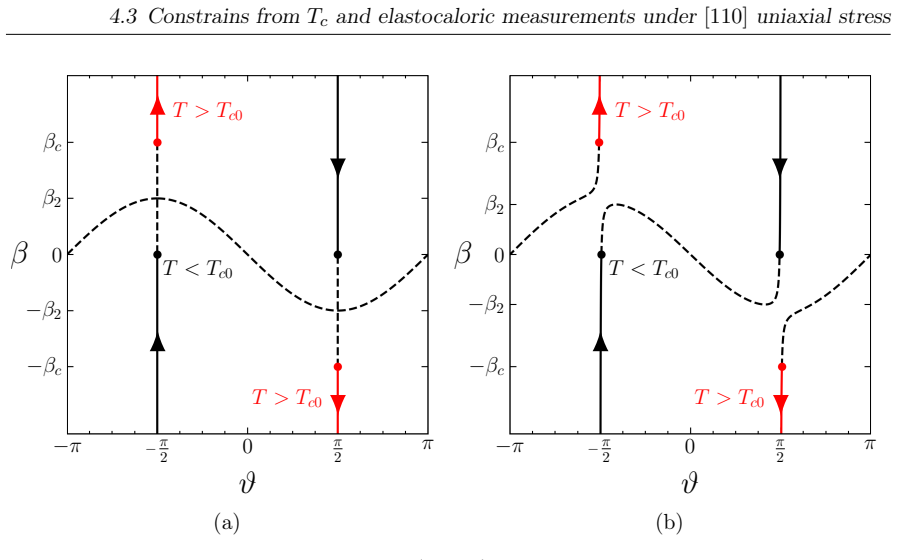
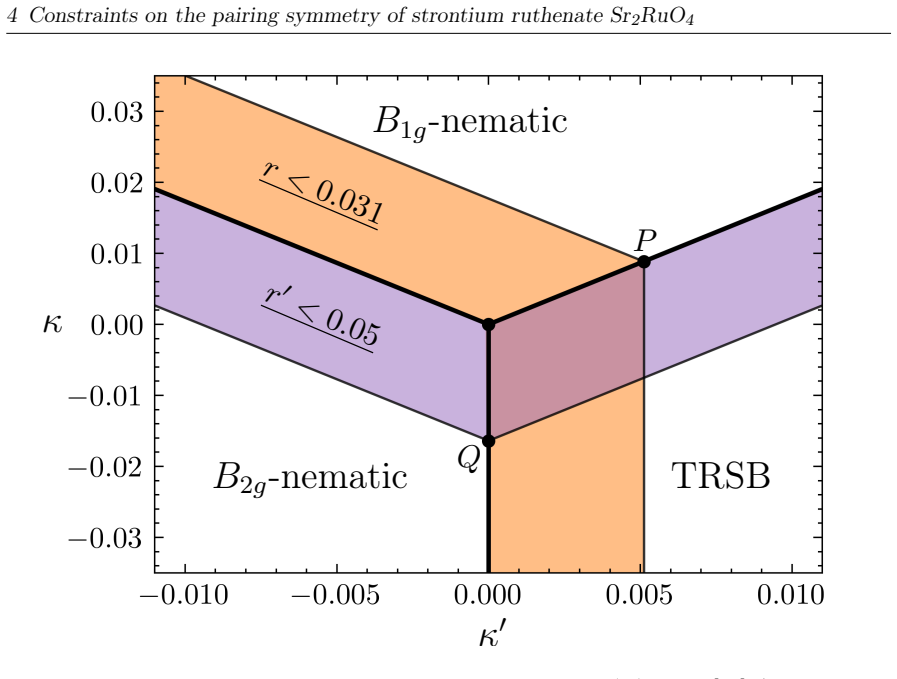
- For Sr$_2$RuO$_4$, the pairing state must contain $s$, $d_{x^2-y^2}$, or body-centered $d_{xz}+i d_{yz}$ admixtures; a bulk two-component state is only consistent with ultrasound and elastocaloric data under heavy fine-tuning.
Reading between the lines
- A sharper experimental test than the thesis states directly: in a material tuned through an odd-parity intra-unit-cell loop-current quantum-critical point, $T_c$ should dip or vanish as the critical point is approached, in contrast to the dome expected near nematic or magnetic quantum-critical points.
- The form-factor mechanism likely generalizes to other particle-hole orders beyond those tabulated, so the classification can serve as a screening tool: any order whose forward-scattering form factor is symmetry-forbidden should be parametrically weak regardless of material details.
- The electric-dipole pairing proposal implies that the search for unconventional superconductivity should be extended to low-carrier-density parity-mixed metals without strong correlations, using the out-of-plane optical conductivity to measure the pairing glue directly.
- The Sr$_2$RuO$_4$ constraints suggest that future uniaxial-stress experiments along other directions could distinguish the three allowed states by their distinct nodal structures.
Editorial analysis
A structured set of objections, weighed in public.
Referee Report
Summary. This dissertation examines pairing mechanisms and pairing symmetries in three classes of unconventional superconductors. Chapter 1 develops a general symmetry-based weak-coupling analysis of pairing mediated by intra-unit-cell (IUC) order-parameter fluctuations near their quantum-critical points (QCPs). The central result, summarized in Fig. 1.4, is that even-parity IUC loop currents do not produce enhanced pairing near the QCP because parity-times-time-reversal symmetry forces the forward-scattering form factor to vanish [Eq. (1.124)], while odd-parity IUC loop currents act as parametrically strong pair-breakers because their time-reversal-odd repulsive interaction is peaked at q = 0. Chapter 2 applies this framework to the three-orbital Emery model of the cuprates, classifies all IUC particle-hole bilinears, and concludes that neither of the two proposed loop-current orders gives d_{x^2-y^2} pairing and that odd-parity loop-current fluctuations suppress superconductivity. Chapter 3 proposes a pairing mechanism based on electric monopole-dipole interactions in parity-mixed, spin-orbit-coupled quasi-2D Dirac metals, predicting odd-parity pseudoscalar pairing and an out-of-plane optical-conductivity signature.
Significance. If the central loop-current results are correct, they overturn a prominent proposal that quantum-critical IUC loop-current fluctuations are the pairing glue of the cuprates; the classification in Tab. 2.5 and the Sr_2RuO_4 symmetry analysis are also likely to become useful reference results. The thesis has real strengths: a generalized Bloch-Kirchhoff theorem, symmetry arguments that do not rely on uncontrolled numerics, extensive analytic and numerical solutions of the linearized gap equation, a systematic classification of bilinears, and falsifiable predictions such as the optical-conductivity signature of dipole pairing and the absence of a cusp or transition splitting under [110] stress. The main correctness risk is not in the symmetry algebra but in the extrapolation of static weak-coupling eigenvalues to the QCP for the odd-parity loop-current channel; the paper explicitly acknowledges that the static BCS treatment is valid only away from the QCP, and the negative-direction claims lack the retarded/Eliashberg or numerical cross-checks that the paper cites for the positive-direction cases.
major comments (3)
- [Sec. 1.3.3.3, Fig. 1.4, Eqs. (1.22) and (1.92)] The odd-parity branch of the central claim, namely that IUC loop-current fluctuations are parametrically strong pair-breakers at their QCP, is inferred from the static linearized BCS eigenvalue obtained with χ(q,0) [Eqs. (1.22) and (1.92)]. As the thesis itself states in Sec. 1.3.1, this instantaneous approximation is controlled only away from the QCP; at the QCP the frequency dependence of the boson propagator precludes a BCS treatment of the low-frequency sector. The complementary analytical and numerical references cited in Sec. 1.3.3.3 validate the positive-direction inference, that a diverging attractive λ implies strong pairing near the QCP, but they do not establish the two negative-direction inferences needed here: that a non-divergent attractive λ implies no strong pairing, and that a diverging repulsive eigenvalue implies pair-breaking at the QCP. For the even-parity loop-current branch, Eq. (1.124) is a property of the electron-boson vertex that is independent of boson dynamics, so that branch is robust to retardation. For the odd-parity branch, I ask for a concrete check: solve the linearized Eliashberg equation for the odd-parity loop-current vertex with a Landau-damped propagator χ(q,iΩ) = 1/(q^2 + ξ^{-2} + γ|Ω|/|q|), including the frequency-dependent self-energy, and report whether the leading attractive eigenvalue remains suppressed at the QCP. Absent such a check, the claim should be stated as a weak-coupling result away from the QCP rather than as a verdict on the QCP itself.
- [Sec. 1.3.3.3, final paragraph] The closing paragraph states that 'the absence of a strong attractive pairing interaction at the QCP justifies a posteriori the weak-coupling analysis employed in our analysis.' This justification is not independent: in the odd-parity loop-current case the weak-coupling eigenvalue does diverge as r → 0, albeit with a negative sign, so the weak-coupling framework breaks down there by the paper's own criterion. The asymmetry between treating a diverging attractive eigenvalue as evidence for a superconducting dome and treating a diverging repulsive eigenvalue as evidence for pair-breaking needs explicit support, for example from a calculation of the pairing susceptibility or of T_c at the QCP in the odd-parity loop-current channel. Without such support, the 'a posteriori justification' does not add evidential weight beyond the static BCS calculation.
- [Sec. 1.3.3.3, Table 1.2] The uniqueness claim, that odd-parity loop currents are 'unique among all orders' as parametrically strong pair-breakers, is established in the strict zero-spin-orbit-coupling limit, where the derivation of Eqs. (1.122)-(1.124) assumes purely orbital Γ matrices of the form γ ⊗ σ_0. The text asserts in one sentence that strong pairing and strong pair-breaking 'continue to be so with SOC,' but no calculation or estimate of the crossover scale in spin-orbit-coupling strength is provided. Since the cuprate application in Chapter 2 explicitly neglects spin-orbit coupling, the cuprate-specific conclusion may be safe; however, the general statement about all systems would be strengthened by estimating the SOC scale at which the forward-scattering suppression is lifted and the odd-parity repulsive kernel is weakened.
minor comments (4)
- [Secs. 2.1.2 and 4.3] There are several typographical errors: 'bare in mind' should be 'bear in mind' (Sec. 2.1.2), 'purpler region' should be 'purple region' (caption context near Fig. 2.2), and the title of Sec. 4.3 reads 'Constrains' instead of 'Constraints.'
- [Eq. (1.124) and surrounding text] The proportionality F_{BA}(p_n,k_n)|_{p→k} ∝ (p-k)^2 is stated as a generic result, but the proportionality constant could in principle vanish on special Fermi-surface points; a brief comment on the generic condition under which the leading quadratic coefficient is nonzero would make the statement more precise and easier to check.
- [Sec. 2.4, Table 2.5] The notation Λ^{ζ p_Θ}_{n,a} is dense and the table is long; a short 'how to read this table' paragraph, explaining which index labels the irrep, the time-reversal sign, the copy number, and the component of a multidimensional irrep, would significantly improve accessibility.
- [Sec. 2.2.3] The literature discussion would benefit from a clear statement of which microscopic studies found IUC loop currents to be competitive versus which did not; the current text lists the results but does not summarize the disagreement in one sentence, making it harder for a reader to assess the weight of the experimental and numerical evidence.
Circularity Check
No significant circularity: the central claims are derived from symmetry constraints, the linearized gap equation, and explicit model calculations, with no fitted parameter renamed as a prediction and no load-bearing self-citation chain.
full rationale
The thesis's main results are obtained by a self-contained derivation chain: order parameters are classified by parity and time-reversal symmetry, the Yukawa coupling is specified, the static susceptibility is used to construct the Cooper-channel interaction, and the linearized gap equation is solved or analyzed. The even-parity loop-current result follows from the PΘ-odd symmetry forcing the forward-scattering form factor to vanish, F(k,k)=0 (Eq. 1.124), which is a property of the coupling vertex rather than an assumption of the conclusion. The odd-parity loop-current pair-breaking result follows from pΘ=-1 together with Eq. (1.123), which makes the Cooper-channel interaction repulsive in all channels near q=0; this is a derived consequence of the TR-odd orbital structure, not a definition of the conclusion. No parameter is fitted to the target claims, and no 'prediction' is statistically forced by construction. The thesis recycles text from the author's own published papers [29-32] and discloses this; moreover the thesis re-derives the central results rather than merely citing them, so the self-citation is not load-bearing. The paper explicitly acknowledges that the static, weak-coupling treatment is valid away from the QCP (Eq. 1.22 and Sec. 1.3.1) and that at the QCP retardation and damping matter; this is an extrapolation/robustness limitation, not circularity. Complementary analytical and numerical works are cited as independent support, and the negative LC branches are not justified by those citations alone. The Sr2RuO4 analysis is constrained by external experimental data and does not reduce to its inputs. No enumerated circular step can be exhibited with a specific equation-to-conclusion reduction, so the appropriate score is 0.
Assumptions & free parameters
free parameters (4)
- Yukawa coupling g =
not determined
- Critical exponents nu and eta =
not determined
- Tight-binding parameters of the three-orbital model =
eight parameter sets, e.g., epsilon_d - epsilon_p = 3 t_pd, t_pp = 0.6 t_pd, t'_pp = 0.5 t_pd
- Screening parameters for the dipole mechanism =
physical but model-dependent
assumptions (5)
- domain assumption The normal state near the QCP is a Fermi liquid on the disordered side
- domain assumption Weak-coupling BCS with static instantaneous interaction indicates the pairing tendency at the QCP
- domain assumption Weak spin-orbit coupling in cuprates and in the loop-current analysis
- standard math D4h point group symmetry of the CuO2 planes and Sr2RuO4
- domain assumption Dirac model for the band-inverted quasi-2D normal state of doped Bi2Se3 and SnTe
Cite this review
Pith. "Pith review of Unconventional Superconductivity in Correlated, Multiband, and Topological Systems." pith.science (2026). https://pith.science/paper/TTWELDLQ
@misc{pith2026241214534,
  author       = {Pith},
  title        = {Pith review of: Unconventional Superconductivity in Correlated, Multiband, and Topological Systems},
  year         = {2026},
  howpublished = {\url{https://pith.science/paper/TTWELDLQ}},
  note         = {Machine review of arXiv:2412.14534}
}
abstract
In this thesis, we theoretically examine the pairing mechanisms and the identification of the pairing symmetry of unconventional superconductors whose normal states are correlated, multiband, or topological. In the first part, we investigate whether fluctuating intra-unit-cell loop currents can drive unconventional superconductivity. For general systems, we find that even-parity loop currents are not an effective pairing glue, whereas odd-parity loop currents, such as those proposed to explain the cuprates, are strong pair-breakers, suppressing rather than enhancing Cooper pairing. By employing the same methodology, we also analyze quantum-critical pairing due to other intra-unit-cell orders. For cuprates, we review the evidence for intra-unit-cell loop currents in the pseudogap, we classify the possible loop-current and particle-hole orders in the Emery model, and we analyze the pairing due to the various possible loop-current orders. In the second part, we present a novel electronic pairing mechanism that is based on electric monopole-dipole interactions. We show that these interactions become enhanced in quasi-2D systems with strong parity-mixing and spin-orbit coupling, such as doped Bi$_2$Se$_3$ or SnTe, and that they induce unconventional odd-parity superconductivity. In addition, we establish that the proposed pairing glue is measurable in the out-of-plane optical conductivity. In the last part, we reexamine the pairing symmetry of Sr$_2$RuO$_4$ in light of recent experiments. By theoretically analyzing recent $T_c$ and elastocaloric measurements under uniaxial stress, we demonstrate that the pairing state includes $s$, $d_{x^2-y^2}$, or body-centered $d_{xz} + i d_{yz}$ admixtures and that a bulk two-component superconductivity requires a great deal of fine-tuning to be consistent with ultrasound experiments.
Figures


Figures from the paper (57 more)



Reference graph
Works this paper leans on
-
[667]
Anisotropic spin fluctuations in Sr2RuO4: role of spin-orbit coupling and induced strain
S. Cobo, F. Ahn, I. Eremin, and A. Akbari, “Anisotropic spin fluctuations in Sr2RuO4: role of spin-orbit coupling and induced strain”, Phys. Rev. B94, 224507 (2016). (Cited on pages 203, 204, 207, 208.)
work page 2016
-
[668]
Strain control of Fermiology and many-body interactions in two-dimensional ruthenates
B. Burganov, C. Adamo, A. Mulder, M. Uchida, P. D. C. King, J. W. Harter, D. E. Shai, A. S. Gibbs, A. P. Mackenzie, R. Uecker, M. Bruetzam, M. R. Beasley, C. J. Fennie, D. G. Schlom, and K. M. Shen, “Strain control of Fermiology and many-body interactions in two-dimensional ruthenates”, Phys. Rev. Lett.116, 197003 (2016). (Cited on pages 203, 204, 207, 208.)
work page 2016
-
[669]
Higher-Tc superconduct- ing phase in Sr2RuO4 induced by in-plane uniaxial pressure
H. Taniguchi, K. Nishimura, S. K. Goh, S. Yonezawa, and Y. Maeno, “Higher-Tc superconduct- ing phase in Sr2RuO4 induced by in-plane uniaxial pressure”, J. Phys. Soc. Jpn.84, 014707 (2015). (Cited on pages 209, 219, 227.)
work page 2015
-
[670]
The superconductivity of Sr2RuO4 under c-axis uniaxial stress
F. Jerzembeck, H. S. Røising, A. Steppke, H. Rosner, D. A. Sokolov, N. Kikugawa, T. Scaffidi, S. H. Simon, A. P. Mackenzie, and C. W. Hicks, “The superconductivity of Sr2RuO4 under c-axis uniaxial stress”, Nat. Commun.13, 4596 (2022). (Cited on pages 209, 245.)
work page 2022
-
[671]
Giant lattice softening at a Lifshitz transition in Sr2RuO4
H. M. L. Noad, K. Ishida, Y.-S. Li, E. Gati, V. Stangier, N. Kikugawa, D. A. Sokolov, M. Nicklas, B. Kim, I. I. Mazin, M. Garst, J. Schmalian, A. P. Mackenzie, and C. W. Hicks, “Giant lattice softening at a Lifshitz transition in Sr2RuO4”, Science 382, 447–450 (2023). (Cited on page 209.)
work page 2023
-
[672]
Ultrasound Attenuation in the Unconventional Superconductor Sr 2RuO4
C. Lupien, “Ultrasound Attenuation in the Unconventional Superconductor Sr 2RuO4”, PhD thesis (University of Toronto, 2002),https://hdl.handle.net/1807/120313. (Cited on pages 209, 210, 265.)
work page 2002
-
[673]
Su- perconducting spin smecticity evidencing the fulde-ferrell-larkin-ovchinnikov state in Sr2RuO4
K. Kinjo, M. Manago, S. Kitagawa, Z. Q. Mao, S. Yonezawa, Y. Maeno, and K. Ishida, “Su- perconducting spin smecticity evidencing the fulde-ferrell-larkin-ovchinnikov state in Sr2RuO4”, Science 376, 397–400 (2022). (Cited on page 214.)
work page 2022
-
[674]
Odd-frequency superconductivity
J. Linder and A. V. Balatsky, “Odd-frequency superconductivity”, Rev. Mod. Phys.91, 045005 (2019). (Cited on page 214.)
work page 2019
Show all 24 references
-
[675]
Odd-frequency superconductivity in Sr2RuO4 mea- sured by Kerr rotation
L. Komendová and A. M. Black-Schaffer, “Odd-frequency superconductivity in Sr2RuO4 mea- sured by Kerr rotation”, Phys. Rev. Lett.119, 087001 (2017). (Cited on page 214.)
2017
-
[676]
Sólyom, Fundamentals of the Physics of Solids, Volume 3 - Normal, Broken-Symmetry, and Correlated Systems(Springer-Verlag Berlin Heidelberg, 2010)
J. Sólyom, Fundamentals of the Physics of Solids, Volume 3 - Normal, Broken-Symmetry, and Correlated Systems(Springer-Verlag Berlin Heidelberg, 2010). (Cited on page 220.)
2010
-
[677]
Phenomenological theory of unconventional superconductivity
M. Sigrist and K. Ueda, “Phenomenological theory of unconventional superconductivity”, Rev. Mod. Phys. 63, 239–311 (1991). (Cited on page 244.)
1991
-
[678]
Theory of elastic properties of Sr2RuO4 at the superconducting transition temperature
M. B. Walker and P. Contreras, “Theory of elastic properties of Sr2RuO4 at the superconducting transition temperature”, Phys. Rev. B66, 214508 (2002). (Cited on page 244.) 366
2002
-
[679]
Evolution of Fermi-liquid interactions in Sr2RuO4 under pressure
D. Forsythe, S. R. Julian, C. Bergemann, E. Pugh, M. J. Steiner, P. L. Alireza, G. J. McMullan, F. Nakamura, R. K. W. Haselwimmer, I. R. Walker, S. S. Saxena, G. G. Lonzarich, A. P. Mackenzie, Z. Q. Mao, and Y. Maeno, “Evolution of Fermi-liquid interactions in Sr2RuO4 under pr...
2002
-
[680]
Renormalization-group approach to interacting fermions
R. Shankar, “Renormalization-group approach to interacting fermions”, Rev. Mod. Phys. 66, 129–192 (1994). (Cited on page 275.)
1994
-
[681]
On the theory of superconducting alloys; I. The electro- dynamics of alloys at absolute zero
A. A. Abrikosov and L. P. Gor’kov, “On the theory of superconducting alloys; I. The electro- dynamics of alloys at absolute zero”, Sov. Phys. JETP8, 1090 (1959). (Cited on page 275.)
1959
-
[682]
Superconducting alloys at finite temperatures
A. A. Abrikosov and L. P. Gor’kov, “Superconducting alloys at finite temperatures”, Sov. Phys. JETP 9, 2020 (1959). (Cited on page 275.)
1959
-
[683]
Theory of dirty superconductors
P. Anderson, “Theory of dirty superconductors”, J. Phys. Chem. Solids11, 26–30 (1959). (Cited on page 275.)
1959
-
[684]
Generalized Anderson’s theorem for superconductors derived from topological insulators
L. Andersen, A. Ramires, Z. Wang, T. Lorenz, and Y. Ando, “Generalized Anderson’s theorem for superconductors derived from topological insulators”, Sci. Adv.6, eaay6502 (2020). (Cited on page 275.)
2020
-
[685]
Lecture notes on group theory in physics (a work in progress)
D. Arovas, “Lecture notes on group theory in physics (a work in progress)”, 2023, available online athttps://courses.physics.ucsd.edu/2016/Spring/physics220/LECTURES/GROUP_ THEORY.pdf. (Cited on pages 277, 281, 282, 288.)
2023
-
[686]
Bilbao Crystallographic Server: I. Databases and crystallographic computing programs
M. I. Aroyo, J. M. Perez-Mato, C. Capillas, E. Kroumova, S. Ivantchev, G. Madariaga, A. Kirov, and H. Wondratschek, “Bilbao Crystallographic Server: I. Databases and crystallographic computing programs”, Z. Kristallogr. Cryst. Mater.221, 15–27 (2006), online website:https: //w...
2006
-
[687]
Bilbao Crystal- lographic Server. II. Representations of crystallographic point groups and space groups
M. I. Aroyo, A. Kirov, C. Capillas, J. M. Perez-Mato, and H. Wondratschek, “Bilbao Crystal- lographic Server. II. Representations of crystallographic point groups and space groups”, Acta Crystallogr. A 62, 115–128 (2006), online website:https://www.cryst.ehu.es/. (Cited on pag...
2006
-
[688]
Weinberg, The Quantum Theory of Fields: Volume 1: Foundations(Cambridge University Press, Cambridge, 1995)
S. Weinberg, The Quantum Theory of Fields: Volume 1: Foundations(Cambridge University Press, Cambridge, 1995). (Cited on page 280.)
1995
-
[689]
J. F. Cornwell, Group Theory in Physics, Volumes I, II, and III(Academic Press, 1984). (Cited on pages 281, 282, 288.)
1984
-
[690]
Critical fluctuations of complex magnetic structures coupled to the lattice
C. R. W. Steward, “Critical fluctuations of complex magnetic structures coupled to the lattice”, PhD thesis (Karlsruhe Institute of Technology), to be published. (Cited on page 294.) 367
Reviewed August 11, 2026 · model on record in the stance chip above.
Discussion (0). Continue with ORCID to comment.