REVIEW 4 major objections 4 minor 58 references
ZMIS-SAM: Segment Anything Model Enhanced with Wavelet Transform for Zooplankton Microscopy Image Instance Segmentation
T0 review · 4 major / 4 minor · reviewed 2026-08-01 · deepseek-v4-flash
Pith's one-line read This paper claims that a Segment Anything Model outfitted with two lightweight adapters, a neighboring-feature aggregator, and a wavelet-based high-frequency enhancer achieves state-of-the-art instance segmentation on zooplankton microscopy
desk verdict Dataset is the real contribution; the SOTA claim is inflated by near-duplicate test images and test-set hyperparameter selection. read the letter →
The pith
A machine-rendered reading of the paper's core claim, the machinery that carries it, and where it could break.
The reading
What carries the argument
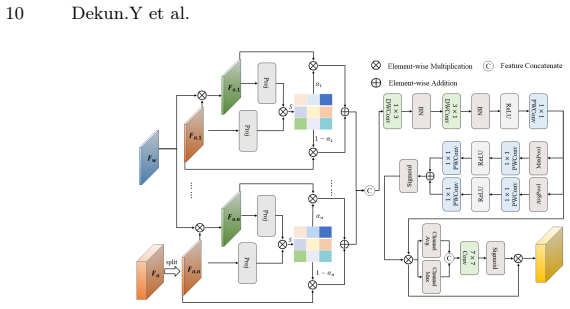
The load-bearing machinery is a set of three trainable modules around SAM's frozen image encoder: (1) ZM-ViT—two parameter-efficient adapters, a Shape Adapter using striped depthwise convolutions and an Intensity Adapter using a Conv–GELU–BN parallel branch, inserted into alternate ViT layers from layer 8 onward; (2) NFAM—a feature aggregation block that processes domain-specific, general, and concatenated features in parallel, splits them into n=4 parts, and passes each through multi-scale gated convolutions with receptive fields 3, 5, and 7; (3) WM2FE—a Haar-wavelet decomposition of aggregated features whose LL/LH/HL/HH subbands modulate n feature parts, with learnable fusion weights and c
What would settle it
Retrain ZMIS-SAM exactly as described but with a stricter duplicate-removal step (e.g., dropping any train/test pair with SSIM > 0.90) and with hyperparameters fixed before ever looking at test labels; if the mAP advantage over the second-best method falls from the reported 1.8 points to near zero, the claimed state-of-the-art margin was an artifact of leakage or test-set-driven selection rather than the modules.
Extended reading notes
Core claim
On the paper's own terms, the central discovery is that SAM's failure on zooplankton microscopy—misclassification of similar species, fragmented appendages, incomplete transparent boundaries—can be traced to three specific encoder-level deficiencies and that each has a targeted fix. ZM-ViT inserts a Shape Adapter and an Intensity Adapter into selected ViT blocks so the frozen SAM encoder learns zooplankton morphology and microscopy illumination patterns; NFAM fuses those domain-specific features with general frozen-layer features so slender appendages stay connected; WM2FE applies a Haar discrete wavelet decomposition to multi-scale features and dynamically recombines frequency bands, recove
Load-bearing premise
The reported 73.6 mAP is only trustworthy if the near-duplicate images kept in the test split (SSIM above 0.95) really are harmless illumination variants, and if choosing the Haar wavelet and the n=4 split using test-set metrics did not inflate the result.
Editorial extensions
If this is right
- - On ZMIS5K, ZMIS-SAM reaches 73.6 mAP, 94.6 AP50, and 80.7 AP75, surpassing every comparison model and the best SAM-based baseline by 1.8 mAP.
- - Each module earns its place: replacing the baseline encoder with ZM-ViT adds 1.3 mAP; adding NFAM adds another 1.3; adding WM2FE adds 1.0; removing any single module lowers performance.
- - The Haar wavelet outperforms rbio1.1 and bior1.1 for boundary recovery, and n=4 multi-scale blocks is the best split for NFAM.
- - Retrained on underwater and remote-sensing benchmarks, the model improves mAP over the underwater-adapted baseline (34.1 vs 16.1 on NWPU; 22.5 vs 22.0 on UIIS), supporting the claim of cross-domain generalization.
- - The new ZMIS5K dataset itself is a contribution: 5,358 pixel-level annotated images, 47 species, 10,228 instances, with category, mask, and box labels supporting detection, semantic, and instance segmentation; the framework stops at whole-instance masks and cannot separately segment heads and antennae.
Reading between the lines
- - If the modules are as transferable as the cross-domain tables suggest, the same recipe—adapter-based domain knowledge plus wavelet high-frequency recovery—offers a template for adapting SAM to other microscopy domains where transparency and fine protrusions matter.
- - The paper's own comparison shows WM2FE alone improves a prior underwater SAM baseline by 0.8 mAP; a natural editorial extension is that WM2FE could be extracted and reused as a standalone boundary-refinement component in other SAM-based segmenters, independent of the zooplankton dataset.
- - Because deployment is offline at 3.9 FPS, the immediate practical use is automated batch analysis in the lab; a faster backbone or distilled variant would be needed before this could run on an in-situ plankton imager.
- - The explicit limitation—no separation of head and antennae—suggests the next testable step: adding text or taxonomic labels to prompt the decoder for part-level masks, which the current single-class instance segmentation cannot express.
Editorial analysis
A structured set of objections, weighed in public.
Referee Report
Summary. The paper proposes ZMIS-SAM, a SAM-based instance segmentation model for zooplankton microscopy images, and introduces ZMIS5K, a new dataset of 5,358 images across 47 species with 10,228 instances. The method adds three components to SAM: ZM-ViT (Shape and Intensity Adapters for domain adaptation), NFAM (neighboring feature aggregation for slender appendages), and WM2FE (wavelet-based multi-scale/multi-directional enhancement for boundary details). Experiments report state-of-the-art performance on ZMIS5K (Table 1: mAP 73.6, AP50 94.6, AP75 80.7) and cross-domain results on UIIS and NWPU (Table 10). The paper also includes ablations in Tables 2, 3, 5, 6, and C.2.
Significance. If the reported results are sound, this is a useful contribution to domain adaptation of SAM and provides the first large-scale zooplankton microscopy instance segmentation dataset. The cross-domain evaluations on UIIS and NWPU are a strength, and the paper is generally clearly written. However, the validity of the central SOTA claim depends on the cleanliness of the test set and on the model-selection protocol, both of which are currently questionable. The paper does not include machine-checked proofs or released code/dataset links, but the empirical comparisons and ablations are extensive.
major comments (4)
- [Appendix A.2] The SSIM-based deduplication described in A.2 appears to identify near-duplicate train/test pairs but does not remove them. The sentence 'Samples with SSIM above 0.95 ... conform to practical real-world imaging conditions' suggests such pairs are retained. If near-duplicate images remain in both training and test sets, the 400-epoch trained model may memorize them, inflating the reported mAP. The SOTA claim (Table 1) requires a clean, unseen test set. Please re-split with strict removal of near-duplicates, report results on a cleaned subset, or quantitatively show that retaining these pairs does not affect mAP.
- [Tables 3 and C.2] The wavelet basis (Table 3) and the NFAM split count n (Table C.2) are selected using ZMIS5K test-set metrics. No validation split is described in Section 4.1. This makes the reported 73.6 mAP an optimistic, test-set-driven estimate. Model selection should be performed on a held-out validation split, with the test set used only once for final evaluation. Please also report test metrics for all hyperparameter choices so readers can see the selection bias.
- [Eq. (9), Section 3.3] The gating formula in Eq. (9) is x_gate_k = ψ_k * x + (1 - ψ_k) * x, which simplifies to x. Thus the gating mechanism described in MConvBlock is the identity operation and does not dynamically weight features across receptive fields. This undermines the architectural claim for NFAM and the ablation in Table 2. Please correct the equation to the intended gating operation, re-run the ablations, and state whether the corrected gating changes the results.
- [Tables 2, 5, 6] No error bars or multiple-seed runs are reported. The incremental improvements are small (e.g., +1.3, +1.0, +0.8 mAP in Tables 2, 5, 6), and the SOTA margin over RSPrompter is only 1.8 mAP in Table 1. Without variance estimates or significance tests, the claimed improvements and the SOTA margin may be within run-to-run noise. Please report at least three seeds with mean±std, or a paired significance test.
minor comments (4)
- [Abstract] The line 'Code: ZMIS-SAM' is not a usable URL. Please provide a public link to code and dataset, or state clearly how they will be released.
- [Eq. (1), Section 3.2] In Eq. (1), the output uses 'Fin' but the residual term is not defined; it should likely be 'x'. Please clarify. Also, Eq. (2) uses the notation 'sum_{max;avg}' which is unclear; define the operation explicitly.
- [Section C.4 / Table 8] The text says each SA/IA/NFAM has 1.65M/1.23M/4.65M parameters, while Table 8 reports 21.4M/32.0M/60.0M. These are consistent if the table gives totals across all inserted modules (13 SA, 26 IA, 13 NFAM), but the table should say so. Also, the text after Table 8 mentions 'AP70' which is likely a typo for AP75.
- [Appendix C.2] The statement that n=6 'falls within the range of normal variation' acknowledges run-to-run variability, but no variance is reported. This reinforces the need for multiple seeds (see Major Comment 4).
Circularity Check
No derivation-level circularity; reported SOTA is an empirical benchmark result, though test-set-driven module selection and SSIM-based near-duplicate handling are benchmark-hygiene concerns.
full rationale
The paper's central claim — that ZMIS-SAM achieves 73.6 mAP on ZMIS5K — is an evaluated model comparison, not a quantity derived from its own assumptions. The dataset split (4,262 training / 1,096 test images) is stated, the model is trained on the training split and evaluated on the held-out test split, and cross-domain experiments on UIIS and NWPU provide external empirical anchors. Ablations, feature visualizations, and comparisons against 14 baselines are all empirical rather than claimed as first-principles derivations. The only self-citation of note (PlanktonTNet, ref. [58]) is used contextually for intelligent identification approaches and is not load-bearing for the architecture or the SOTA claim. The two genuinely weak points are benchmark-hygiene issues, not circularity: Appendix A.2 reports that train/test near-duplicates with SSIM > 0.95 were treated as acceptable illumination/focal-plane variants without stating that they were removed, and Tables 3 and C.2 select the Haar wavelet and the NFAM split count n=4 using ZMIS5K test-set metrics, so the reported 73.6 mAP may be optimistically biased for unseen data. However, this is a soundness/leakage concern, not a reduction of the result to its inputs by construction. No fitted parameter is renamed as a prediction, no uniqueness theorem is imported from the authors' prior work, and no ansatz is smuggled in via self-citation. The derivation chain is therefore not circular; the empirical claim has independent content despite test-selection caveats.
Assumptions & free parameters
free parameters (4)
- Wavelet basis φ =
Haar
- NFAM split count n =
4
- Loss weights α, β1, β2, θ1, θ2, λ =
all 1.0
- ZM-ViT placement =
replace one frozen ViT layer every 2 layers starting at layer 8
assumptions (6)
- domain assumption ZMIS5K annotations are accurate enough to support claimed AP differences.
- domain assumption Near-duplicate images with SSIM>0.95 between train and test are acceptable and do not materially inflate performance.
- domain assumption Parameter-efficient fine-tuning of SAM's ViT-H with lightweight adapters closes the zooplankton domain gap.
- domain assumption Wavelet high-frequency subbands compensate for FPN upsampling loss and improve boundary segmentation.
- domain assumption Cross-domain results on UIIS and NWPU are meaningful evidence of generalization for zooplankton microscopy.
- domain assumption The ZMIS5K train/test split is i.i.d. except for the retained SSIM>0.95 pairs.
invented entities (1)
-
ZMIS5K dataset
Cite this review
Pith. "Pith review of ZMIS-SAM: Segment Anything Model Enhanced with Wavelet Transform for Zooplankton Microscopy Image Instance Segmentation." pith.science (2026). https://pith.science/paper/UI446OTB
@misc{pith2026260727585,
  author       = {Pith},
  title        = {Pith review of: ZMIS-SAM: Segment Anything Model Enhanced with Wavelet Transform for Zooplankton Microscopy Image Instance Segmentation},
  year         = {2026},
  howpublished = {\url{https://pith.science/paper/UI446OTB}},
  note         = {Machine review of arXiv:2607.27585}
}
read the original abstract
As primary consumers in the marine food chain, zooplankton play a crucial role in maintaining marine ecological balance. However, the Segment Anything Model (SAM) exhibits limited performance in microscopic image instance segmentation due to its lack of zooplankton-specific domain knowledge. To address these challenges, we propose a novel instance segmentation model based on SAM and wavelet transform (ZMIS-SAM), effectively tackling issues such as inaccurate classification, discontinuous segmentation of slender appendages, and incomplete boundary segmentation. Our framework incorporates three core innovations: ZM-ViT enhances SAM's capability to model zooplankton morphology and image intensity distributions through two lightweight adapters, the Neighboring Feature Aggregation Module (NFAM) improves continuous segmentation of semi-transparent slender appendages by integrating general-purpose and domain-specific features, and the Wavelet-based Multi-scale Multi-directional Feature Enhancement (WM2FE) module effectively recovers high-frequency details to refine boundary segmentation completeness. Extensive experiments demonstrate that ZMIS-SAM achieves state-of-the-art instance segmentation performance on the zooplankton dataset and exhibits strong generalization capability across multiple public cross-domain datasets.
Figures


Figures from the paper (13 more)


Reference graph
Works this paper leans on
-
[1]
arXiv (2016),http://arxiv.org/abs/1609.025834
Arnab, A., Torr, P.H.S.: Bottom-up instance segmentation using deep higher-order crfs. arXiv (2016),http://arxiv.org/abs/1609.025834
arXiv 2016
-
[2]
Balster, E., Zheng, Y., Ewing, R.: Combined spatial and temporal domain wavelet shrinkage algorithm for video denoising. IEEE Transactions on Circuits and Sys- tems for Video Technology16(2), 220–230 (2006).https://doi.org/10.1109/ TCSVT.2005.8578165
arXiv 2006
-
[3]
In: Global Oceans 2020: Singapore – U.S
Bergum,S.,Saad,A.,Stahl,A.:Automaticin-situinstanceandsemanticsegmenta- tion of planktonic organisms using mask r-cnn. In: Global Oceans 2020: Singapore – U.S. Gulf Coast. pp. 1–8 (2020).https://doi.org/10.1109/IEEECONF38699. 2020.938937722
arXiv 2020
-
[4]
In: Proceedings of the AAAI Conference on Artificial Intelligence
Bi, Q., You, S., Gevers, T.: Learning generalized segmentation for foggy-scenes by bi-directional wavelet guidance. In: Proceedings of the AAAI Conference on Artificial Intelligence. vol. 38, pp. 801–809 (2024).https://doi.org/10.1609/ aaai.v38i2.278385
2024
-
[5]
In: 2019 IEEE International Conference on Computer Vision (ICCV) (2019)
Bolya, D., Zhou, C., Xiao, F., Lee, Y.J.: Yolact: Real-time instance segmenta- tion. In: 2019 IEEE International Conference on Computer Vision (ICCV) (2019). https://doi.org/10.1109/ICCV.2019.009254
arXiv 2019
-
[6]
In: 2018 IEEE/CVF Conference on Computer Vision and Pattern Recognition
Cai, Z., Vasconcelos, N.: Cascade r-cnn: Delving into high quality object detection. In: 2018 IEEE/CVF Conference on Computer Vision and Pattern Recognition. pp. 6154–6162 (2018).https://doi.org/10.1109/CVPR.2018.0064412
arXiv 2018
-
[7]
In: 2020 IEEE/CVF Conference on Computer Vision and Pattern Recognition (CVPR)
Chen, H., Sun, K., Tian, Z., Shen, C., Huang, Y., Yan, Y.: BlendMask: Top-down meets bottom-up for instance segmentation. In: 2020 IEEE/CVF Conference on Computer Vision and Pattern Recognition (CVPR). pp. 8570–8578 (2020).https: //doi.org/10.1109/CVPR42600.2020.008604
arXiv 2020
-
[8]
Chen, K., Wang, J., Pang, J., Cao, Y., Xiong, Y., Li, X., Sun, S., Feng, W., Liu, Z., Xu, J., Zhang, Z., Cheng, D., Zhu, C., Cheng, T., Zhao, Q., Li, B., Lu, X., Zhu, R., Wu, Y., Dai, J., Wang, J., Shi, J., Ouyang, W., Loy, C.C., Lin, D.: MMDetection: Open mmlab detection toolbox and benchmark. arXiv (2019),https://arxiv. org/abs/1906.0715511
arXiv 2019
Show all 58 references
-
[9]
IEEE Transactions on Geoscience and Remote Sensing62, 1–17 (2024)
Chen, K., Liu, C., Chen, H., Zhang, H., Li, W., Zou, Z., Shi, Z.: Rsprompter: Learn- ing to prompt for remote sensing instance segmentation based on visual foundation model. IEEE Transactions on Geoscience and Remote Sensing62, 1–17 (2024). https://doi.org/10.1109/TGRS.2024.33...
2024
-
[10]
In: 2023 IEEE/CVF International Conference on Computer Vision Workshops (ICCVW)
Chen, T., Zhu, L., Ding, C., Cao, R., Wang, Y., Zhang, S., Li, Z., Sun, L., Zang, Y., Mao, P.: Sam-adapter: Adapting segment anything in underperformed scenes. In: 2023 IEEE/CVF International Conference on Computer Vision Workshops (ICCVW). pp. 3359–3367 (2023).https://doi.org...
2023
-
[11]
In: 2024 IEEE/CVF Conference on Computer Vision and Pattern Recognition (CVPR)
Chen, W., Vong, Y.J., Kuo, S.Y., Ma, S., Wang, J.: Robustsam: Segment anything robustly on degraded images. In: 2024 IEEE/CVF Conference on Computer Vision and Pattern Recognition (CVPR). pp. 4081–4091 (2024).https://doi.org/10. 1109/CVPR52733.2024.003912, 5
2024
-
[13]
In: Proceedings of the 35th International Conference on Neural Information Processing Systems (NeurIPS) (2021) 4
Cheng, B., Schwing, A.G., Kirillov, A.: Per-pixel classification is not all you need for semantic segmentation. In: Proceedings of the 35th International Conference on Neural Information Processing Systems (NeurIPS) (2021) 4
2021
-
[14]
IEEE Trans- actions on Geoscience and Remote Sensing54(12), 7405–7415 (2016).https: //doi.org/10.1109/TGRS.2016.260162222, 32
Cheng, G., Zhou, P., Han, J.: Learning rotation-invariant convolutional neural networks for object detection in vhr optical remote sensing images. IEEE Trans- actions on Geoscience and Remote Sensing54(12), 7405–7415 (2016).https: //doi.org/10.1109/TGRS.2016.260162222, 32
2016
-
[15]
Ding, S., Wang, Q., Guo, L., Li, X., Ding, L., Wu, X.: Wavelet and adaptive coor- dinate attention guided fine-grained residual network for image denoising. vol. 34, pp. 6156–6166 (2024).https://doi.org/10.1109/TCSVT.2023.33488045
2024
-
[16]
IEEE Transactions on Pattern Analysis and Machine Intelligence 38(2), 295–307 (2016).https://doi.org/10.1109/TPAMI.2015.24392813
Dong, C., Loy, C.C., He, K., Tang, X.: Image super-resolution using deep convolu- tional networks. IEEE Transactions on Pattern Analysis and Machine Intelligence 38(2), 295–307 (2016).https://doi.org/10.1109/TPAMI.2015.24392813
2016
-
[17]
In: 9th International Conference on Learning Representations (ICLR) (2021) 3, 23
Dosovitskiy, A., Beyer, L., Kolesnikov, A., Weissenborn, D., Zhai, X., Unterthiner, T., Dehghani, M., Minderer, M., Heigold, G., Gelly, S., Uszkoreit, J., Houlsby, N.: An image is worth 16 x 16 words: Transformers for image recognition at scale. In: 9th International Conferenc...
2021
-
[18]
IEEE Transactions on Circuits and Systems for Video Technology35(4), 2963–2974 (2025).https://doi.org/10.1109/TCSVT
Fang, H., Zhang, T., Zhou, X., Zhang, X.: Learning better video query with sam for video instance segmentation. IEEE Transactions on Circuits and Systems for Video Technology35(4), 2963–2974 (2025).https://doi.org/10.1109/TCSVT. 2024.33610765
2025
-
[19]
In: Computer Vision – ECCV 2024
Finder, S.E., Amoyal, R., Treister, E., Freifeld, O.: Wavelet convolutions for large receptive fields. In: Computer Vision – ECCV 2024. pp. 363–380. Springer Nature Switzerland, Cham (2025).https://doi.org/10.1007/978-3-031-72949-2_215
2024 doi
-
[20]
In: 2017 IEEE Inter- national Conference on Computer Vision (ICCV)
He, K., Gkioxari, G., Dollár, P., Girshick, R.: Mask r-cnn. In: 2017 IEEE Inter- national Conference on Computer Vision (ICCV). pp. 2980–2988 (2017).https: //doi.org/10.1109/ICCV.2017.3222, 4, 12
2017
-
[21]
IEEE Transactions on Image Processing33, 2895–2907 (2024)
Hu, J., Lu, Y., Zhang, S., Cao, L.: Istr: Mask-embedding-based instance segmenta- tion transformer. IEEE Transactions on Image Processing33, 2895–2907 (2024). https://doi.org/10.1109/TIP.2024.33859804
2024
-
[22]
In: 2019 IEEE/CVF Conference on Computer Vision and Pattern Recognition (CVPR)
Huang, Z., Huang, L., Gong, Y., Huang, C., Wang, X.: Mask scoring r-cnn. In: 2019 IEEE/CVF Conference on Computer Vision and Pattern Recognition (CVPR). pp. 6402–6411 (2019).https://doi.org/10.1109/CVPR.2019.0065712
2019
-
[23]
IEEE Trans- actions on Image Processing35, 4012–4026 (2026).https://doi.org/10.1109/ TIP.2026.368212612
Jia, Y., Lin, Q., Li, H., Li, Y., Kwong, S., Cong, R.: Vit-uwa: Vision transformer underwater-adapter for dense predictions beneath the water surface. IEEE Trans- actions on Image Processing35, 4012–4026 (2026).https://doi.org/10.1109/ TIP.2026.368212612
2026
-
[25]
In: 2020 IEEE/CVF Conference on Computer Vision and Pattern Recog- nition (CVPR)
Kirillov, A., Wu, Y., He, K., Girshick, R.: Pointrend: Image segmentation as ren- dering. In: 2020 IEEE/CVF Conference on Computer Vision and Pattern Recog- nition (CVPR). pp. 9796–9805 (2020).https://doi.org/10.1109/CVPR42600. 2020.009824
2020
-
[26]
IEEE Transactions on Multimedia27, 2795–2808 (2025)
Lan, X., Lyu, J., Jiang, H., Dong, K., Niu, Z., Zhang, Y., Xue, J.: Foodsam: Any food segmentation. IEEE Transactions on Multimedia27, 2795–2808 (2025). https://doi.org/10.1109/TMM.2023.33300472, 5
2025
-
[28]
ICES Journal of Marine Science77(4), 1427–1439 (09 2019)
Li, Q., Sun, X., Dong, J., Song, S., Zhang, T., Liu, D., Zhang, H., Han, S.: Develop- ing a microscopic image dataset in support of intelligent phytoplankton detection using deep learning. ICES Journal of Marine Science77(4), 1427–1439 (09 2019). https://doi.org/10.1093/icesjm...
2019 doi
-
[29]
In: Pattern Recognition and Computer Vision
Li, Q., Shen, L.: Wavesnet: Wavelet integrated deep networks for image segmenta- tion. In: Pattern Recognition and Computer Vision. pp. 325–337. Springer Nature Switzerland, Cham (2022).https://doi.org/10.1007/978-3-031-18916-6_275
2022 doi
-
[30]
In: 2023 IEEE/CVF International Conference on Computer Vision (ICCV)
Lian, S., Li, H., Cong, R., Li, S., Zhang, W., Kwong, S.: Watermask: Instance seg- mentation for underwater imagery. In: 2023 IEEE/CVF International Conference on Computer Vision (ICCV). pp. 1305–1315 (2023).https://doi.org/10.1109/ ICCV51070.2023.001264, 12, 32
2023
-
[31]
In: Proceedings of the 41st International Conference on Machine Learning (ICML)
Lian, S., Zhang, Z., Li, H., Li, W., Yang, L.T., Kwong, S., Cong, R.: Diving into underwater:Segmentanythingmodelguidedunderwatersalientinstancesegmenta- tion and a large-scale dataset. In: Proceedings of the 41st International Conference on Machine Learning (ICML). pp. 29545–...
2024
-
[32]
In: 2017 IEEE/CVF Conference on Computer Vision and Pattern Recognition (CVPR)
Lin, T.Y., Dollár, P., Girshick, R., He, K., Hariharan, B., Belongie, S.: Fea- ture pyramid networks for object detection. In: 2017 IEEE/CVF Conference on Computer Vision and Pattern Recognition (CVPR). pp. 936–944 (2017).https: //doi.org/10.1109/CVPR.2017.1063, 6
2017
-
[33]
arXiv (2023),https://arxiv.org/abs/2304.097285
Liu, S., Ye, J., Wang, X.: Any-to-any style transfer: Making picasso and da vinci collaborate. arXiv (2023),https://arxiv.org/abs/2304.097285
2023 arXiv
-
[34]
In: 2022 IEEE/CVF Conference on Computer Vision and Pattern Recog- nition (CVPR)
Liu, Z., Mao, H., Wu, C.Y., Feichtenhofer, C., Darrell, T., Xie, S.: A convnet for the 2020s. In: 2022 IEEE/CVF Conference on Computer Vision and Pattern Recog- nition (CVPR). pp. 11966–11976 (2022).https://doi.org/10.1109/CVPR52688. 2022.0116712
2022
-
[35]
In: 2022 IEEE/CVF Conference on Computer Vision and Pattern Recognition (CVPR)
Lu, Y., Liu, J., Zhang, Y., Liu, Y., Tian, X.: Prompt distribution learning. In: 2022 IEEE/CVF Conference on Computer Vision and Pattern Recognition (CVPR). pp. 5196–5205 (2022).https://doi.org/10.1109/CVPR52688.2022.005143
2022
-
[36]
IEEE Journal of Selected Topics in Applied Earth Obser- vations and Remote Sensing17, 17117–17133 (2024).https://doi.org/10.1109/ JSTARS.2024.34244981
Masoudi, M., Giering, S.L., Eftekhari, N., Massot-Campos, M., Irisson, J.O., Thornton, B.: Optimizing plankton image classification with metadata-enhanced representation learning. IEEE Journal of Selected Topics in Applied Earth Obser- vations and Remote Sensing17, 17117–17133...
2024
-
[37]
IEEE Transactions on Pattern Analysis and Machine Intelligence44(7), 3523–3542 (2022).https://doi.org/10
Minaee, S., Boykov, Y., Porikli, F., Plaza, A., Kehtarnavaz, N., Terzopoulos, D.: Image segmentation using deep learning: A survey. IEEE Transactions on Pattern Analysis and Machine Intelligence44(7), 3523–3542 (2022).https://doi.org/10. 1109/TPAMI.2021.30599682
2022
-
[38]
In: Proceedings of the IEEE/CVF International Conference on 18 Dekun.Y et al
Pu, Y., Feng, Z., Wang, Z., Yang, Z., Li, J.: Anomaly detection for in situ marine plankton images. In: Proceedings of the IEEE/CVF International Conference on 18 Dekun.Y et al. Computer Vision (ICCV) Workshops. pp. 3661–3671 (2021).https://doi.org/ 10.1109/ICCVW54120.2021.004091
2021
-
[39]
In: Proceedings of the 38th International Conference on Machine Learning (ICML)
Radford, A., Kim, J.W., Hallacy, C., Ramesh, A., Goh, G., Agarwal, S., Sastry, G., Askell, A., Mishkin, P., Clark, J., Krueger, G., Sutskever, I.: Learning transfer- able visual models from natural language supervision. In: Proceedings of the 38th International Conference on M...
2021
-
[40]
Nature Communications14(2023).https://doi.org/10
Ratnarajah, Lavenia, A.A., Rana, A., Angus, B., Sonia, B., Nicholas J, B., Kim S, C., Gabrielle, C., Astrid, E., Jason D, G., Maria, I., Nurul Huda Ahmad, J., David, L., Fabien, M., Erik, O., Clare, P., Sophie, R., Anthony J, S., Katrin, S., Lars, S., Kerrie M, Y., Guang, Y., ...
2023
-
[41]
arXiv (2024),https://arxiv.org/abs/2408.007142
Ravi, N., Gabeur, V., Hu, Y.T., Hu, R., Ryali, C., Ma, T., Khedr, H., Rädle, R., Rolland, C., Gustafson, L., Mintun, E., Pan, J., Alwala, K.V., Carion, N., Wu, C.Y., Girshick, R., Dollár, P., Feichtenhofer, C.: Sam 2: Segment anything in images and videos. arXiv (2024),https:/...
2024 arXiv
-
[42]
In: Computer Analysis of Images and Patterns (CAIP)
Rossi, L., Karimi, A., Prati, A.: Recursively refined r-cnn: Instance segmentation with self-roi rebalancing. In: Computer Analysis of Images and Patterns (CAIP). pp. 476–486 (2021).https://doi.org/10.1007/978-3-030-89128-2_464, 12
2021 doi
-
[43]
In: 2025 IEEE/CVF Conference on Computer Vision and Pattern Recognition (CVPR)
Shan, Z., Liu, Y., Zhou, L., Yan, C., Wang, H., Xie, X.: Ros-sam: High-quality interactive segmentation for remote sensing moving object. In: 2025 IEEE/CVF Conference on Computer Vision and Pattern Recognition (CVPR). pp. 3625–3635 (2025).https://doi.org/10.1109/CVPR52734.2025.003435
2025
-
[44]
In: Computer Vision – ECCV 2020
Tian, Z., Shen, C., Chen, H.: Conditional convolutions for instance segmentation. In: Computer Vision – ECCV 2020. pp. 282–298 (2020).https://doi.org/10. 1007/978-3-030-58452-8_1712
2020
-
[45]
IEEE Trans- actions on Image Processing35, 3283–3298 (2026).https://doi.org/10.1109/ TIP.2026.367550212
Wang, C., Li, H., Li, C., Liu, H., Tang, X., Kwong, S.: Expose camouflage in the water: Underwater camouflaged instance segmentation and dataset. IEEE Trans- actions on Image Processing35, 3283–3298 (2026).https://doi.org/10.1109/ TIP.2026.367550212
2026
-
[46]
Wang, D., Zhang, J., Du, B., Xu, M., Liu, L., Tao, D., Zhang, L.: Samrs: Scaling-up remotesensingsegmentationdatasetwithsegmentanythingmodel.In:Proceedings of the 37th International Conference on Neural Information Processing Systems (NeurIPS). vol. 36, pp. 8815–8827 (2023) 5
2023
-
[47]
arXiv (2024), https://arxiv.org/abs/2410.198787
Wang, L., Chen, S., Jiang, L., Pan, S., Cai, R., Yang, S., Yang, F.: Parameter- efficient fine-tuning in large models: A survey of methodologies. arXiv (2024), https://arxiv.org/abs/2410.198787
2024 arXiv
-
[48]
In: Computer Vision – ECCV 2020
Wang, X., Kong, T., Shen, C., Jiang, Y., Li, L.: SOLO: Segmenting objects by locations. In: Computer Vision – ECCV 2020. pp. 649–665 (2020).https://doi. org/10.1007/978-3-030-58523-5_384
2020 doi
-
[49]
IEEE Trans- actions on Intelligent Transportation Systems26(6), 8794–8809 (2025).https: //doi.org/10.1109/TITS.2025.35439255
Wang, Z., Liao, Z., Wang, P., Chen, P., Luo, W.: Wavecrnet: Wavelet transform- guided learning for semantic segmentation in adverse railway scenes. IEEE Trans- actions on Intelligent Transportation Systems26(6), 8794–8809 (2025).https: //doi.org/10.1109/TITS.2025.35439255
2025
-
[50]
In: Computer Vision – ECCV 2018
Woo, S., Park, J., Lee, J.Y., Kweon, I.S.: Cbam: Convolutional block attention module. In: Computer Vision – ECCV 2018. pp. 3–19. Springer International Pub- lishing, Cham (2018).https://doi.org/10.1007/978-3-030-01234-2_110
2018 doi
-
[51]
ZMIS-SAM 19 Pattern Recognition143, 109819 (2023).https://doi.org/10.1016/j.patcog
Xu, G., Liao, W., Zhang, X., Li, C., He, X., Wu, X.: Haar wavelet downsam- pling: A simple but effective downsampling module for semantic segmentation. ZMIS-SAM 19 Pattern Recognition143, 109819 (2023).https://doi.org/10.1016/j.patcog. 2023.1098195
2023
-
[52]
IEEE Transactions on Image Processing33, 6204–6215 (2024).https://doi.org/10
Xu, Y., Tang, J., Men, A., Chen, Q.: Eviprompt: A training-free evidential prompt generation method for adapting segment anything model in medical images. IEEE Transactions on Image Processing33, 6204–6215 (2024).https://doi.org/10. 1109/TIP.2024.34821755
2024
-
[53]
IEEE Transactions on Circuits and Systems for Video Technology33(4), 1899–1910 (2023).https: //doi.org/10.1109/TCSVT.2022.32187355
Yang, Y., Jiao, L., Liu, X., Liu, F., Yang, S., Li, L., Chen, P., Li, X., Huang, Z.: Dual wavelet attention networks for image classification. IEEE Transactions on Circuits and Systems for Video Technology33(4), 1899–1910 (2023).https: //doi.org/10.1109/TCSVT.2022.32187355
1910
-
[54]
IEEE Trans- actions on Pattern Analysis and Machine Intelligence47(3), 1431–1447 (2025)
Ye, M., Zhang, J., Liu, J., Liu, C., Yin, B., Liu, C., Du, B., Tao, D.: Hi-sam: Mar- rying segment anything model for hierarchical text segmentation. IEEE Trans- actions on Pattern Analysis and Machine Intelligence47(3), 1431–1447 (2025). https://doi.org/10.1109/TPAMI.2024.34958315
2025
-
[55]
Engineering Applications of Ar- tificial Intelligence163, 112719 (2026).https://doi.org/10.1016/j.engappai
Ye, X., Wang, H., Yao, J.: A lightweight deep learning network for the precise detection and classification of variable plankton. Engineering Applications of Ar- tificial Intelligence163, 112719 (2026).https://doi.org/10.1016/j.engappai. 2025.1127191
2026
-
[56]
arXiv (2023),https://arxiv.org/abs/ 2304.067902, 5
Yu, T., Feng, R., Feng, R., Liu, J., Jin, X., Zeng, W., Chen, Z.: Inpaint anything: Segment anything meets image inpainting. arXiv (2023),https://arxiv.org/abs/ 2304.067902, 5
2023 arXiv
-
[57]
IEEE Transactions on Circuits and Systems for Video Technology35(3), 2932–2944 (2025).https://doi.org/10.1109/TCSVT.2024.34983491
Yu, Y., Lv, Q., Li, Y., Wei, Z., Dong, J.: Phytracker: An online tracker for phyto- plankton. IEEE Transactions on Circuits and Systems for Video Technology35(3), 2932–2944 (2025).https://doi.org/10.1109/TCSVT.2024.34983491
2025
-
[58]
In: OCEANS 2025 Brest
Yuan,D.,Qi,Y.,Zhang,J.,Li,Z.:Planktontnet:Rethinkingplanktonclassification from a global view with swin-transformer. In: OCEANS 2025 Brest. pp. 1–5 (2025). https://doi.org/10.1109/OCEANS58557.2025.111047971
2025
-
[59]
arXiv (2023),https: //arxiv.org/abs/2305.081963
Zhang, C., Liu, L., Cui, Y., Huang, G., Lin, W., Yang, Y., Hu, Y.: A comprehensive survey on segment anything model for vision and beyond. arXiv (2023),https: //arxiv.org/abs/2305.081963
2023 arXiv
-
[60]
IEEE Trans- actions on Circuits and Systems for Video Technology34(4), 2469–2483 (2024)
Zhang, W., Zhou, L., Zhuang, P., Li, G., Pan, X., Zhao, W., Li, C.: Underwater image enhancement via weighted wavelet visual perception fusion. IEEE Trans- actions on Circuits and Systems for Video Technology34(4), 2469–2483 (2024). https://doi.org/10.1109/TCSVT.2023.32993145
2024
-
[61]
In: Proceedings of the 32nd ACM International Conference on Multimedia
Zou, W., Gao, H., Yang, W., Liu, T.: Wave-mamba: Wavelet state space model for ultra-high-definition low-light image enhancement. In: Proceedings of the 32nd ACM International Conference on Multimedia. p. 1534–1543 (2024).https://doi. org/10.1145/3664647.36815805 20 Dekun.Y et...
2024
Reviewed August 1, 2026 · model on record in the stance chip above.
Discussion (0). Sign in to comment.