REVIEW 1 major objections 4 minor 41 references
Generalised P and CP transformations in the 3-Higgs-doublet model
T0 review · 1 major / 4 minor · reviewed 2026-08-14 · deepseek-v4-flash
Pith's one-line read The paper proves that every generalized parity or CP transformation in the three-Higgs-doublet model that acts linearly on the bilinears and squares to the identity falls into exactly three equivalence classes: two parity classes and one…
desk verdict A clean, mostly hand-checkable classification of order-two generalized P and CP in the 3HDM, but the load-bearing proof of (5.6) rests on an unpublished computer check that a referee should ask to see. read the letter →
The pith
A machine-rendered reading of the paper's core claim, the machinery that carries it, and where it could break.
The reading
What carries the argument
The central object is the eight-component vector $K$ of bilinears, obtained by decomposing the hermitian matrix $K=\phi\phi^\dagger$ (with $\phi$ the $3\times 2$ matrix of doublet fields) in a basis of SU(3) generators. A generalized P or CP transformation is a real $8\times 8$ matrix $C$ acting linearly on $K$, preserving the length of $K$ and the allowed orbit space, and squaring to the identity; the constraints force $C$ to be symmetric and orthogonal and to satisfy the SU(3) $d$-symbol condition $d_{a'b'c'}C_{a'a}C_{b'b}C_{c'c}=d_{abc}$. Flavour transformations act by $C\to R(U)C\,R(U)^T$ with $R(U)\in\mathrm{SO}(8)$, and the proof uses these to bring $C$ to diagonal form, reducing the classification to an eigenvalue problem plus the $d$-symbol condition, whose solutions are the eight matrices of table I.
What would settle it
A direct computer search over real symmetric $8\times 8$ matrices $C$ with $C^2=1$ satisfying $d_{a'b'c'}C_{a'a}C_{b'b}C_{c'c}=d_{abc}$ would settle the completeness claim: any solution whose eigenvalue pattern is not one of the eight rows of table I, or any explicit transformation satisfying (4.11)–(4.14) that mixes $K_0$ with the $K_a$, would refute the claimed exhaustive classification.
Extended reading notes
Core claim
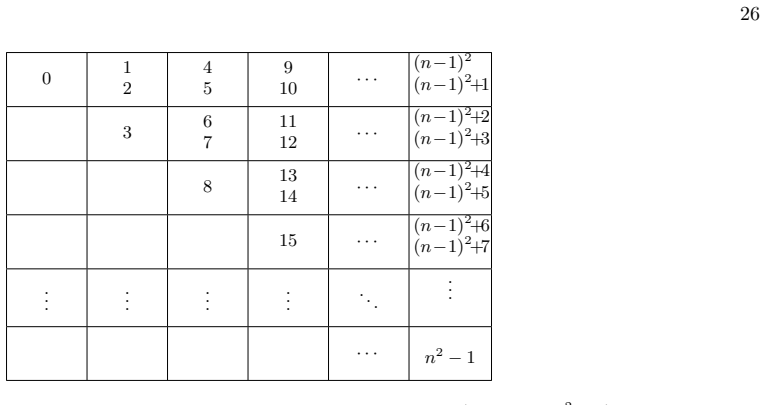
For the 3HDM with only Higgs and gauge fields, the complete set of generalized P and CP transformations satisfying the conditions (4.11)–(4.14) consists of the eight matrices (S1)–(S8). Under flavour transformations these form exactly two equivalence classes of parity transformations, represented by the identity and by $\mathrm{diag}(1,1,1,-1,-1,-1,-1,1)$, and one equivalence class of CP transformations, represented by $\mathrm{diag}(1,-1,1,1,-1,1,-1,1)$. A potential is invariant under such a transformation precisely when its bilinear parameters satisfy $\xi=C\xi$, $\eta=C\eta$, and $E=CE\,C^T$; the known criterion that a potential is CP-invariant exactly when a basis with all real parameters exists is recovered from these conditions. In the nHDM the standard CP transformation acts on the $n^2-1$ bilinears as the diagonal matrix (E26), whose $-1$ entries sit precisely on the $n(n-1)/2$ antisymmetric generalized SU($n$) generator directions; for $n=4$ this matrix has determinant $+1$, so the reflection picture familiar from the two- and three-doublet cases does not extend.
Load-bearing premise
The classification assumes the symmetry is a linear map on the eight Higgs-bilinear variables that keeps the overall scale direction fixed, preserves the allowed space, and returns to the identity when applied twice; any symmetry that mixes the scale direction in, or that needs four applications to close, would be missed.
Editorial extensions
If this is right
- Any 3HDM potential that is invariant under some generalized CP transformation is, in a suitable basis, invariant under the standard CP transformation, with the parameter restrictions $\xi_2=\xi_5=\xi_7=0$, $\eta_2=\eta_5=\eta_7=0$, and the corresponding zero pattern in $E$.
- There is a genuinely distinct generalized parity class: a potential invariant under it must satisfy $\xi_1=\xi_2=\xi_4=\xi_5=0$, $\eta_1=\eta_2=\eta_4=\eta_5=0$, and the matching $E$ conditions, in the basis of the representative (S8).
- The standard parity transformation is represented by the identity matrix on the bilinears, so every 3HDM potential built from Higgs and gauge fields is automatically invariant under standard parity.
- In the nHDM the standard CP transformation is always a diagonal $\pm 1$ matrix on the bilinears, with exactly $n(n-1)/2$ minus signs; consequently the determinant is $+1$ when $n(n-1)/2$ is even, so for $n=4$ and higher the standard CP action is no longer a reflection in bilinear space.
Reading between the lines
- The same flavour-equivalence strategy could be applied to transformations requiring four applications to close, such as the order-four CP of ref. [32]; extending the equations to $C^4=1$ would likely produce additional inequivalent classes and new potential constraints.
- The count of antisymmetric directions, $n(n-1)/2$, suggests that the geometric intuition “CP is a reflection” fails specifically when $n(n-1)/2$ is even; this may change how spontaneous CP violation is diagnosed in models with four or more doublets.
- One direct test of the classification is numerical: randomly generate symmetric orthogonal $8\times 8$ matrices with $\pm 1$ eigenvalues and check the $d$-symbol condition; any solution outside table I would signal an error in the proof, while agreement would lend confidence to the completeness claim.
Signed reviews
Editorial analysis
A structured set of objections, weighed in public.
Referee Report
Summary. The manuscript classifies, within the bilinear formalism, all generalized parity and generalized CP transformations of the 3HDM that are linear on the eight bilinears, leave K0 fixed, preserve the allowed bilinear domain, and square to the identity (conditions (4.11)-(4.14)). The authors derive that such transformations are described by symmetric orthogonal 8x8 matrices C satisfying the d-tensor preservation condition (5.6), reduce C to diagonal form using flavour transformations, obtain exactly eight solutions (S1)-(S8) listed in Table I, and show that these fall into two equivalence classes for generalized P (representatives S1 and S8) and one class for generalized CP (representative S3). They also derive the conditions for the potential to be invariant under these transformations (7.4)-(7.6), recover the known criterion that CP invariance is equivalent to the existence of a conventional basis with all parameters real, and generalize the standard CP transformation on bilinears to the nHDM with the explicit matrix (E26).
Significance. If correct, the classification is a useful and nontrivial result for multi-Higgs-doublet model building. It provides a complete set of candidate generalized discrete symmetries within the stated class, gives explicit invariance conditions for the potential, and settles the equivalence-class structure under flavour transformations. The derivation is algebraic and parameter-free, and it reproduces the known THDM/3HDM CP-real-basis theorem as a consistency check. The nHDM formula (E26) is an explicit, easily applicable result. The main caveat is the reproducibility of the computer-assisted proof of (5.6), which is load-bearing for the central classification. The scope restriction to order-two, K0-preserving, linear transformations is explicit in Section 4 and acknowledged in Section 8, so the completeness claim is well defined, but it should not be overinterpreted as covering order-four transformations such as those of ref. [32].
major comments (1)
- [Appendix A, Eqs. (A21)-(A26); used in Section 6] The proof of (5.6) is load-bearing for the classification, since it leads to (6.2) and then to condition (6.17), which selects the eight solutions in Table I. However, the verification that D_abc = d_abc for the special cases (a)-(h) is stated to be done "with the help of a computer program", and neither the program, its output, nor the explicit polynomial identities are provided in the manuscript. The same issue affects the assertion (A27)-(A28) used in Section 7 to derive the invariance conditions (7.4). As a result, the completeness of the eight-solution list and the necessity part of the potential-invariance conditions cannot be independently checked by the reader. Please supply the program as supplementary material, display the coefficient identities case by case, or give a hand proof of (5.6).
minor comments (4)
- [Section 4, text after Eq. (4.10)] The sentence referring to "appendix C" for the standard P and CP transformations in the nHDM is incorrect; the relevant material is presented in Appendix E.
- [Appendix A, after Eq. (A12)] The text says "We consider then six more special cases (b) ... (e)", but only four cases, (b), (c), (d), and (e), are listed; please correct the count.
- [Section 5.2, Eq. (5.22)] The notation c_8 c^(8) c^(8)T in Eq. (5.22) is confusing because the scalar eigenvalue c_8 and the eigenvector c^(8) are denoted too similarly; please use a distinct symbol for the eigenvalue.
- [Appendix E, Eq. (E24)] The set-builder notation for I_n^as is hard to parse for small k, since for k=2 the displayed sequence "k^2-2k+2, k^2-2k+4, ..., k^2-2" degenerates to a single term; rewriting the set as {k^2+2j-1 | k=1,...,n-1, j=1,...,k} would be unambiguous.
Circularity Check
No significant circularity: the central classification is a self-contained algebraic derivation, with only a reproducibility caveat in Appendix A that is not a circularity.
full rationale
The paper's central claim—that the generalized P and CP transformations satisfying (4.11)–(4.14) are exactly the eight solutions (S1)–(S8), forming two parity and one CP equivalence class—is derived from explicit algebraic conditions rather than assumed. Equations (5.2) and (5.6) are proved in Appendix A by reducing to THDM special cases and comparing polynomials; the classification then solves (6.1) and (6.2) with the case distinctions of Appendix C carried out by hand. The equivalence classes are established through explicit flavour rotations R(U), e.g. (6.23), (6.25), (6.29). The reproduction of the known CP-real-basis theorem in Appendix D is derived from the derived condition (7.5), not imported as an input. The paper does rely on the authors' prior work for the bilinear formalism, orbit-space constraints, and SU(3) d-constants, but these are mathematical tools used inside the derivation, not the target result; no fitted parameter is renamed as a prediction and no self-citation is load-bearing for the classification. One genuine caveat appears in Appendix A: the proof of (5.6) states that the polynomial comparison for special cases (f)–(h) is done 'with the help of a computer program' without providing code or explicit identities, so that step is not independently reproducible from the paper alone. That is a verification gap, however, not circularity: the claimed identity D_abc = d_abc is not equivalent to the desired classification by construction, and the surrounding hand-checked analysis would still be meaningful if the computer output were supplied. Overall, the central derivation is self-contained against the stated assumptions, and the circularity burden is not met.
Assumptions & free parameters
assumptions (5)
- domain assumption The space of bilinears of the 3HDM is exactly described by (2.12), including the rank two condition det K = 0.
- domain assumption Any hermitian 3x3 matrix K of rank at most two corresponds uniquely to a set of Higgs doublets up to gauge transformations.
- domain assumption The most general renormalisable gauge-invariant 3HDM potential has the form (2.13) with real parameters.
- standard math Polynomial identities on the bilinear cone (2.12) can be established by checking special THDM embeddings, as done in appendix A.
- standard math The SU(3) d-symbol constants and the trace identities (2.8) are correct as tabulated in appendix A.
Cite this review
Pith. "Pith review of Generalised P and CP transformations in the 3-Higgs-doublet model." pith.science (2026). https://pith.science/paper/UI75UIQZ
@misc{pith2026190804303,
  author       = {Pith},
  title        = {Pith review of: Generalised P and CP transformations in the 3-Higgs-doublet model},
  year         = {2026},
  howpublished = {\url{https://pith.science/paper/UI75UIQZ}},
  note         = {Machine review of arXiv:1908.04303}
}
abstract
We study generalised P and CP transformations in the three-Higgs-doublet model (3HDM) with Higgs and gauge fields only. We find that there are two equivalence classes, with respect to flavour transformations, of generalised P transformations and there is only one class of CP transformations. We discuss the conditions the potential has to satisfy in order to be invariant under these transformations. We apply the method of bilinears which we briefly review. We discuss the relation to the conventional basis, where the potential is written in terms of scalar products of the doublet fields. In particular we reproduce the known result that a potential is invariant under CP transformations if and only if there is a conventional basis where all parameters are real. Eventually we study standard P and CP transformations in the $n$-Higgs-doublet model (nHDM). We show that for the bilinears of the nHDM the standard CP transformation corresponds to a diagonal linear transformation with only $\pm 1$ as diagonal elements. We give this matrix explicitly for arbitrary $n$.
Figures
Reference graph
Works this paper leans on
-
[32]
Exploring the Quark Flavour Puzzle within the 3 Higgs Model
D. Emmanuel-Costa, J. I. Silva-Marcos and N. R. Agostinho, “Exploring the quark flavor puzzle within the three-Higgs doublet model,” Phys. Rev. D 96, no. 7, 073006 (2017) [arXiv:1705.09743 [hep-ph]]
work page Pith review arXiv 2017
-
[1]
Generalised P and CP transformations in the 3-Higgs-doublet model
INTRODUCTION One motivation, decades ago, to study models with an extension of the number of Higgs-boson doublets was to investigate possible sources of CP violation. In [1] it was shown that in a model with more than one Higgs field one can have spontaneous CP violation. In [2] not only the famous Cabibbo-Kobayashi-Maskawa (CKM) matrix was introduced, gov...
work page Pith review arXiv 1908
-
[2]
BILINEARS IN THE 3HDM We will consider models with three Higgs-boson doublets which all carry the same hypercharge y = +1/2 and denote the complex doublet fields by ϕi(x) = ( ϕ+ i (x) ϕ0 i (x) ) , i = 1, 2, 3. (2.1) We shall consider Yang-Mills-Higgs Lagrangians of the form L(x) =LYM(x) + 3∑ i=1 (Dµϕi(x))† (Dµϕi(x))−V (ϕi), (2.2) whereLYM(x) is the standar...
-
[3]
CHANGE OF BASIS Let us now study an arbitrary unitary mixing of the Higgs-boson doublets of the form (see section 3 of [14]) ϕi(x)→Uijϕj(x), i,j ∈{ 1, 2, 3}, (3.1) with U = (Uij) a unitary 3× 3 matrix, U∈U(3). This change of basis corresponds to the following transformations of the 3× 2 matrix φ(x) and of the 3× 3 matrix K(x) defined in (2.4) and (2.5), re...
-
[4]
(4.2) For the bilinears we find from (4.1) Kα(x) Ps −→K′ α(x) =Kα(x′)
GENERALISED P AND CP TRANSFORMATIONS IN THE 3HDM The standard parity transformation, P s, reads ϕi(x) Ps −→ϕi(x′), Wi λ(x) Ps −→Wiλ(x′) Bλ(x) Ps −→Bλ(x′), (4.1) where i∈{ 1, 2, 3} and x = ( t x ) , x ′ = ( t −x ) . (4.2) For the bilinears we find from (4.1) Kα(x) Ps −→K′ α(x) =Kα(x′). (4.3) The Lagrangian (2.2) is invariant under P s. Of course, once we in...
-
[5]
STANDARD FORMS OF GENERALISED P AND CP TRANSFORMATIONS The problem is now to find standard forms for the matrices ˆC which satisfy our conditions (1)-(3) to which general matrices ˆC can be brought using only the flavour transformations (4.17). 5.1. The equations for the matrix ˆC We start from (4.11), (4.12), and (4.13) which imply K′ a(x)K′ a(x) = ˆCabKb(...
-
[6]
The equations to be solved are the following: we have from (4.14) and (5.2) ˆC ˆC = ˆC T ˆC = 1 8
THE SOLUTIONS FOR ˆC In this section we give the solutions for the matrices ˆC (4.12). The equations to be solved are the following: we have from (4.14) and (5.2) ˆC ˆC = ˆC T ˆC = 1 8. (6.1) Using this we can write (5.6) in the form dabc ˆCbr ˆCcs = ˆCaa′da′rs. (6.2) With the help of the flavour transformations, as explained in section 5, we can, without ...
-
[7]
Note that all parameters (2.14) of the potential, written in this form, must be real
INVARIANT POTENTIALS We consider now the potential of the 3HDM in the form (2.13) respectively (2.15). Note that all parameters (2.14) of the potential, written in this form, must be real. We consider now a generalised parity (P g) or CP transformation (CPg) satisfying the conditions (1), (2), (3) of section 4; see (4.11)-(4.14). The potential V is invari...
Show all 41 references
-
[8]
We have investigated generalised P and CP transformations in this model
CONCLUSIONS In this paper we have considered the three-Higgs-doublet model (3HDM) with Higgs and gauge fields only. We have investigated generalised P and CP transformations in this model. We have shown that there are two equivalence classes 13 a 1 1 1 2 2 2 3 3 3 3 3 4 5 6 7 8...
-
[9]
(C23) Therefore, the r.h.s
(C22) 19 Furthermore we have, since ˆH is an orthogonal matrix (see (C14)), 0≤ ( ˆH11)2 + (2c2− 1)( ˆH31)2≤ ( ˆH11)2 + ( ˆH31)2≤ 1. (C23) Therefore, the r.h.s. of (C21) is greater than or equal to zero, the l.h.s. less than or equal to zero. Thus, both sides must be zero and w...
-
[10]
A Theory of Spontaneous T Violation,
T. D. Lee, “A Theory of Spontaneous T Violation,” Phys. Rev. D 8, 1226 (1973)
1973
-
[11]
CP Violation in the Renormalizable Theory of Weak Interaction,
M. Kobayashi and T. Maskawa, “CP Violation in the Renormalizable Theory of Weak Interaction,” Prog. Theor. Phys. 49, 652 (1973)
1973
-
[12]
Gauge Theory of CP Violation,
S. Weinberg, “Gauge Theory of CP Violation,” Phys. Rev. Lett. 37, 657 (1976)
1976
-
[13]
Conditions for CP-violation in the general two-Higgs-doublet model,
J. F. Gunion and H. E. Haber, “Conditions for CP-violation in the general two-Higgs-doublet model,” Phys. Rev. D 72, 095002 (2005) [hep-ph/0506227]
2005 arXiv
-
[14]
CP violation in the general two-Higgs-doublet model: a geometric view,
M. Maniatis, A. von Manteuffel and O. Nachtmann, “CP violation in the general two-Higgs-doublet model: a geometric view,” Eur. Phys. J. C 57, 719 (2008) [arXiv:0707.3344 [hep-ph]]
2008 arXiv
-
[15]
Generalized CP symmetries and special regions of parameter space in the two-Higgs-doublet model,
P. M. Ferreira, H. E. Haber and J. P. Silva, “Generalized CP symmetries and special regions of parameter space in the two-Higgs-doublet model,” Phys. Rev. D 79, 116004 (2009) [arXiv:0902.1537 [hep-ph]]
2009 arXiv
-
[16]
The geometric picture of generalized-CP and Higgs-family transformations in the two-Higgs-doublet model,
P. M. Ferreira, H. E. Haber, M. Maniatis, O. Nachtmann and J. P. Silva, “The geometric picture of generalized-CP and Higgs-family transformations in the two-Higgs-doublet model,” Int. J. Mod. Phys. A 26, 769 (2011) [arXiv:1010.0935 [hep-ph]]
2011 arXiv
-
[17]
New aspects of gauge-boson couplings and the Higgs sector,
F. Nagel, “New aspects of gauge-boson couplings and the Higgs sector,” PhD-thesis, Heidelberg University (2004), http://www.ub.uni-heidelberg.de/archiv/4803
2004
-
[18]
Stability and symmetry breaking in the general two-Higgs- doublet model,
M. Maniatis, A. von Manteuffel, O. Nachtmann and F. Nagel, “Stability and symmetry breaking in the general two-Higgs- doublet model,” Eur. Phys. J. C 48, 805 (2006) [hep-ph/0605184]
2006 arXiv
-
[19]
CP violation conditions in N-Higgs-doublet potentials,
C. C. Nishi, “CP violation conditions in N-Higgs-doublet potentials,” Phys. Rev. D 74, 036003 (2006) [Erratum-ibid. D 76, 119901 (2007)] [hep-ph/0605153]
2006 arXiv
-
[20]
The Structure of potentials with N Higgs doublets,
C. C. Nishi, “The Structure of potentials with N Higgs doublets,” Phys. Rev. D 76, 055013 (2007) [arXiv:0706.2685 [hep-ph]]
2007 arXiv
-
[21]
Properties of the general NHDM. I. The Orbit space,
I. P. Ivanov and C. C. Nishi, “Properties of the general NHDM. I. The Orbit space,” Phys. Rev. D 82, 015014 (2010) [arXiv:1004.1799 [hep-th]]
2010 arXiv
-
[22]
Theory and phenomenology of two- Higgs-doublet models,
G. C. Branco, P. M. Ferreira, L. Lavoura, M. N. Rebelo, M. Sher and J. P. Silva, “Theory and phenomenology of two- Higgs-doublet models,” Phys. Rept. 516, 1 (2012) [arXiv:1106.0034 [hep-ph]]
2012 arXiv
-
[23]
Stability and symmetry breaking in the general three-Higgs-doublet model,
M. Maniatis and O. Nachtmann, “Stability and symmetry breaking in the general three-Higgs-doublet model,” JHEP 1510, 149 (2015) [arXiv:1408.6833 [hep-ph]]
2015 arXiv
-
[24]
Stability and symmetry breaking in the general n-Higgs-doublet model,
M. Maniatis and O. Nachtmann, “Stability and symmetry breaking in the general n-Higgs-doublet model,” Phys. Rev. D 92, 075017 (2015) [arXiv:1504.01736 [hep-ph]]
2015 arXiv
-
[25]
A new type of CP symmetry, family replication and fermion mass hierarchies,
M. Maniatis, A. von Manteuffel and O. Nachtmann, “A new type of CP symmetry, family replication and fermion mass hierarchies,” Eur. Phys. J. C 57, 739 (2008) [arXiv:0711.3760 [hep-ph]]
2008 arXiv
-
[26]
On the phenomenology of a two-Higgs-doublet model with maximal CP symmetry at the LHC,
M. Maniatis and O. Nachtmann, “On the phenomenology of a two-Higgs-doublet model with maximal CP symmetry at the LHC,” JHEP 0905, 028 (2009) [arXiv:0901.4341 [hep-ph]]
2009 arXiv
-
[27]
On the phenomenology of a two-Higgs-doublet model with maximal CP symmetry at the LHC. Part II: radiative effects,
M. Maniatis and O. Nachtmann, “On the phenomenology of a two-Higgs-doublet model with maximal CP symmetry at the LHC. Part II: radiative effects,” JHEP 1004, 027 (2010) [arXiv:0912.2727 [hep-ph]]
2010 arXiv
-
[28]
On the phenomenology of a two-Higgs-doublet model with maximal CP symmetry at the LHC - synopsis and addendum,
M. Maniatis, O. Nachtmann and A. von Manteuffel, “On the phenomenology of a two-Higgs-doublet model with maximal CP symmetry at the LHC - synopsis and addendum,” in Proceedings of the Fifth Conference on Physics at the LHC (2010), DESY-PROC-2010-01, p. 403-405 [arXiv:1009.1869 ...
2010 arXiv
-
[29]
Flavor Physics constrains on a Z5-3HDM,
A. Aranda, J. E. Barradas-Guevara, A. Cordero-Cid, F. de Anda, A. Delgado, O. Felix-Beltran and J. Hernandez-Sanchez, “Flavor Physics constrains on a Z5-3HDM,” arXiv:1404.7829 [hep-ph]
-
[30]
High-scale validity of a model with Three-Higgs-doublets,
N. Chakrabarty, “High-scale validity of a model with Three-Higgs-doublets,” Phys. Rev. D 93, no. 7, 075025 (2016) [arXiv:1511.08137 [hep-ph]]
2016 arXiv
-
[31]
Spontaneous symmetry breaking in the S3-symmetric scalar sector,
D. Emmanuel-Costa, O. M. Ogreid, P. Osland and M. N. Rebelo, “Spontaneous symmetry breaking in the S3-symmetric scalar sector,” JHEP 1602, 154 (2016) Erratum: JHEP 1608, 169 (2016) [arXiv:1601.04654 [hep-ph]]
2016 arXiv
-
[33]
A Simple Method to detect spontaneous CP Violation in multi-Higgs models,
O. M. Ogreid, P. Osland and M. N. Rebelo, “A Simple Method to detect spontaneous CP Violation in multi-Higgs models,” JHEP 1708, 005 (2017) [arXiv:1701.04768 [hep-ph]]
2017 arXiv
-
[34]
CP violation in extended Higgs sectors,
O. M. Ogreid, P. Osland and M. N. Rebelo, “CP violation in extended Higgs sectors,” PoS CORFU 2017, 044 (2018) [arXiv:1804.02529 [hep-ph]]. 29
2018 arXiv
-
[35]
Three-Higgs-doublet model under A4 symmetry implies alignment,
S. Pramanick and A. Raychaudhuri, “Three-Higgs-doublet model under A4 symmetry implies alignment,” JHEP 1801, 011 (2018) [arXiv:1710.04433 [hep-ph]]
2018 arXiv
-
[36]
Dark Matter Signals at the LHC from a 3HDM,
A. Cordero, J. Hernandez-Sanchez, V. Keus, S. F. King, S. Moretti, D. Rojas and D. Sokolowska, “Dark Matter Signals at the LHC from a 3HDM,” JHEP 1805, 030 (2018) [arXiv:1712.09598 [hep-ph]]
2018 arXiv
-
[37]
Stability and symmetry breaking in a three Higgs-boson doublet model with lepton family symmetry O(2)xZ2,
M. Maniatis, D. Mehta and C. M. Reyes, “Stability and symmetry breaking in a three Higgs-boson doublet model with lepton family symmetry O(2)xZ2,” to be published in Phys. Rev. D [arXiv:1503.05948 [hep-ph]]
-
[38]
Classification of finite reparametrization symmetry groups in the three-Higgs-doublet model,
I. P. Ivanov and E. Vdovin, “Classification of finite reparametrization symmetry groups in the three-Higgs-doublet model,” Eur. Phys. J. C 73, no. 2, 2309 (2013) [arXiv:1210.6553 [hep-ph]]
2013 arXiv
-
[39]
Three-Higgs-doublet models: symmetries, potentials and Higgs boson masses,
V. Keus, S. F. King and S. Moretti, “Three-Higgs-doublet models: symmetries, potentials and Higgs boson masses,” JHEP 1401, 052 (2014) [arXiv:1310.8253 [hep-ph]]
2014 arXiv
-
[40]
Nachtmann, “Elementary Particle Physics, Concepts and Phenomena, Springer, Berlin, Heidelberg (1990)
O. Nachtmann, “Elementary Particle Physics, Concepts and Phenomena, Springer, Berlin, Heidelberg (1990)
1990
-
[41]
CP -conserving multi-Higgs model with irremovable complex coefficients,
I. P. Ivanov and J. P. Silva, “CP -conserving multi-Higgs model with irremovable complex coefficients,” Phys. Rev. D 93, no. 9, 095014 (2016) [arXiv:1512.09276 [hep-ph]]
2016 arXiv
Reviewed August 14, 2026 · model on record in the stance chip above.
Discussion (0). Continue with ORCID to comment.