REVIEW 3 major objections 7 minor 43 references
Joint Data Hiding and Partial Encryption of Compressive Sensed Streams
T0 review · 3 major / 7 minor · reviewed 2026-08-07 · deepseek-v4-flash
Pith's one-line read This paper claims that a stream of compressive sensing measurements can be partially encrypted and reversibly embed its encrypted parts into the remaining measurements, so that only key holders recover the exact stream and others see a…
desk verdict Genuinely new RDH-on-CS combination undermined by a false zero-mean claim and an unstated centering step in the real-data experiments; worth refereeing but needs major revision. read the letter →
The pith
A machine-rendered reading of the paper's core claim, the machinery that carries it, and where it could break.
The reading
What carries the argument
The load-bearing object is a modified prediction-error expansion, a reversible data-hiding rule generalized to insert multiple bits per measurement, applied to the CS measurement stream. Instead of predicting each value from correlated neighbors, the predictor is the mean of all measurements, which for scrambled Hadamard sensing is zero; hence \(d_i = y_i - \bar{y} = y_i\) and the insertion rule acts directly on the measurements. It expands in-range values by \(2^n\) and adds the encrypted chunk, and shifts out-of-range values to avoid overlap, making extraction lossless. The capacity identity \(C_r \approx \frac{P n}{1 + $P^{2}$ n/16}\) and the compression-rate consequence \(r \approx 2/(1+n/16)\) carry the quantitative argument: they say how many bits can be hidden per measurement and how much the transmitted volume grows, both controlled coarsely by \(n\) and finely by the threshold \(T\) through \(P\).
What would settle it
Take the real S-matrix measurements from Section 7 and compute their mean without any centering. If the mean is not zero, \(d_i = y_i - \bar{y} = y_i\) fails and the stated insertion rule is not the rule actually applied to the real data; a reader could then run the published extraction on those measurements and check whether it recovers the original values exactly, which would settle whether the scheme as written supports the reported capacity and distortion figures.
Extended reading notes
Core claim
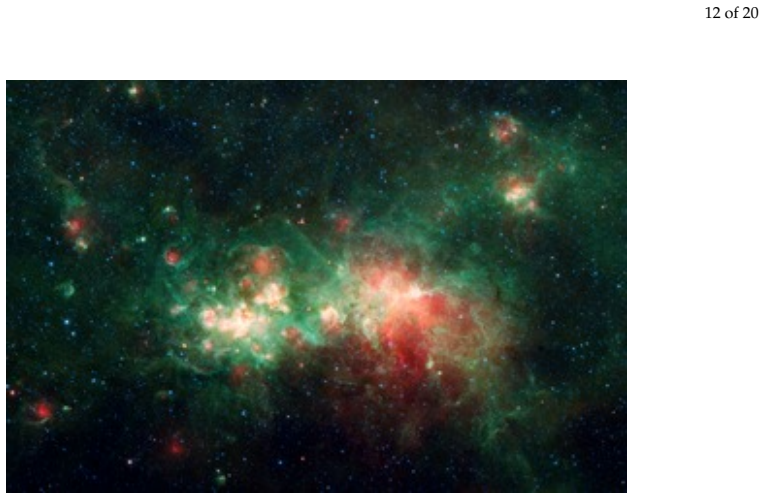
The central claim is that the statistics of CS measurements\(\textemdash\)zero-mean, Gaussian-like, statistically independent\(\textemdash\)make them ideal carriers for their own encrypted parts. The algorithm takes each measurement, represents it on 16 bits, XORs it with a CSPRNG key, splits the result into \(n\)-bit chunks, and inserts each chunk into later measurements using a prediction-error expansion rule. Because the predictor is the global mean and the mean is taken to be zero for a scrambled Hadamard matrix, the prediction error of a measurement is the measurement itself, so insertion happens directly on the values. The paper derives the relative capacity \(C_r \approx \frac{P n}{1 + $P^{2}$ n/16}\), where \(P\) is the Gaussian mass between the expansion thresholds, and shows that with loose thresholds this gives a volume-expansion factor \(r \approx 2/(1+n/16)\). With 10 insertion levels and 40% measurements, reconstruction quality drops to about 18 dB for simulated data, leaving content visible but degraded to an unauthorized user while an authorized user extracts the embedded chunks and recovers the exact measurements.
Load-bearing premise
The scheme assumes every stream of compressive sensing measurements has mean zero, so that a measurement can be used as its own prediction error; if that does not hold, the embedding and extraction formulas as written would need a centering step that the paper does not state.
Editorial extensions
If this is right
- An authorized receiver reconstructs the original image exactly, since the embedding is reversible; an unauthorized receiver gets a visibly distorted image rather than noise.
- Embedding on 10 levels at 40% sampling gives about 18 dB median distortion, strong enough to obscure content while keeping it discernible.
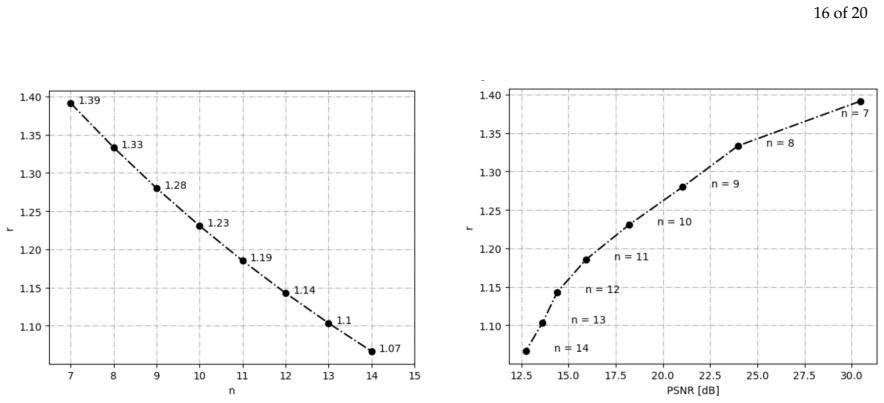
- The data volume grows by about 23% at 10 levels, so the encrypted stream costs more bandwidth but still compresses to about 98% of the original image size overall.
- Because insertion happens as measurements arrive, a single pixel camera can transmit securely without buffering measurements for a separate encryption stage.
- The number of insertion levels \(n\) acts as a coarse distortion and capacity knob, while the threshold \(T\) provides a finer control whose range is limited by the 32-bit representation constraint.
Reading between the lines
- We infer that the same embedding rule could be applied to any sensing matrix whose measurements are centered, not just scrambled Hadamard, by replacing the zero-mean assumption with an explicit centering step; the real S-matrix experiments would then be a direct application rather than a separate case.
- The paper's error-concealment results show an attacker can strip the encrypted chunks and improve PSNR by about 16 dB, so we infer the security goal is better described as controlled degradation plus exact recovery for key holders, not cryptographic confidentiality in the strongest sense.
- A testable extension is to use the capacity formula \(C_r(P,n)\) to choose \(n\) and \(T\) from a target PSNR, turning the reported rate-distortion curve into a design procedure for other CS acquisition rates and patch sizes.
Editorial analysis
A structured set of objections, weighed in public.
Referee Report
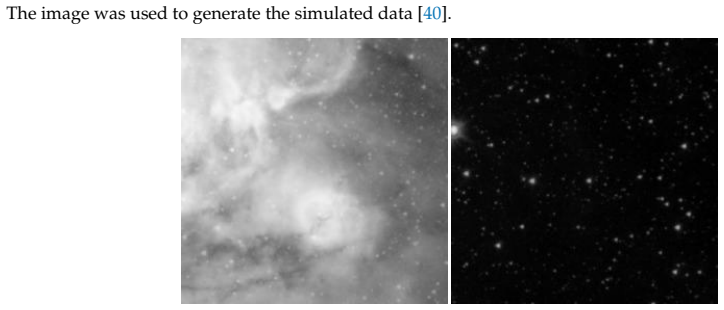
Summary. The paper proposes a reversible data-hiding scheme for compressive sensing (CS) streams: a subset of CS measurements is XOR-encrypted with a CSPRNG keystream and embedded, on-the-fly, into the remaining measurements via a modified prediction-error-expansion algorithm. An authorized receiver recovers the exact measurements and reconstructs the original image; an unauthorized receiver reconstructs only a visibly distorted image from the truncated, modified stream. The paper derives a closed-form capacity relation C_r ≈ P·n/(1+P²·n/16), analyzes the resulting volume expansion r ≈ 2/(1+n/16), and reports experiments on 359 patches of a sky image and on real single-pixel-camera measurements, with a median PSNR of 18.21 dB at 10 insertion levels for the simulated data.
Significance. If the construction is correct, the scheme offers a practical method for protecting CS streams without buffering, with tunable distortion and a compact analytical capacity estimate. The derivation of Eq. (14) from a stated Gaussian measurement model is a useful contribution, and the experimental rate-distortion curve together with the execution-time and memory table provide evidence of feasibility. However, the central embedding rule is built on an incorrect zero-mean claim in Eq. (3), and the real-data results depend on an undocumented centering or normalization step. Until these are corrected, the quantitative claims of the paper are not supported. The paper does not provide code or the real dataset, which would materially help reproducibility.
major comments (3)
- [§3.2, Eq. (3)] The premise that 'due to the construction of Hadamard matrix, the mean estimate is always zero' is false. For a Sylvester Hadamard matrix with the first row removed, the sample mean of the measurements is μ = (1/L)Σ_i y_i = (1/L)(Σ_i φ_i)·x, and Σ_i φ_i is not the zero vector. For example, the 4×4 Hadamard rows 2–4 sum elementwise to (3,−1,−1,−1), so for x = (1,0,0,0) the three measurements are all 1 and their mean is 1. Therefore d_i = y_i − μ differs from y_i, and Eqs. (4)–(6) are not the actual embedding rule for the simulated experiments. The real-data experiments are worse: the S-matrix has nonnegative entries, its rows have positive sums, and the measurements are nonnegative, so a zero mean is impossible; under the stated T=500 and Eq. (6), essentially no real measurement falls in [−T,T], yet the paper reports successful real-data insertion (PSNR 10.48 dB at n=10). This indicates an unstated centering or normalization step. This is load-bearing for the embedding rule, the capacity derivation, and all real-data results, and it must be fixed and explicitly stated.
- [§3.2, Eqs. (4) and (6)] Equations (4) and (6) are printed with missing operators in the shifted branches: 'd_i + bn_max T+bn_max' and 'd_i − bn_max T' are not well-formed arithmetic expressions. The standard prediction-error-expansion shift requires adding or subtracting (bmax + T) to or from d_i, but the printed forms are ambiguous and cannot be used to verify overlap-freeness or reversibility. The same typesetting problem appears in Eq. (16). The authors must print the correct piecewise definitions, including the exact handling of negative values in the expansion branch, before the method can be reproduced or verified.
- [§4, Eqs. (12)–(14), and §7, Fig. 10] The capacity formula Eq. (14) is not experimentally validated. The only capacity plot, Fig. 10, is computed directly from Eq. (15), not measured by running the insertion procedure and counting how many measurements actually carry data. Because Eq. (14) is a central claimed contribution, and because it relies on the approximation q ≈ P² derived only for the case of two carrying measurements per payload measurement (n between 8 and 16), the paper should provide a direct comparison of predicted and achieved capacity, especially for tight thresholds where the q approximation matters. Without such a comparison, the capacity claim, and the statement that T provides fine control of capacity and distortion, remain unverified.
minor comments (7)
- [§3.1] The extraction procedure is underspecified: after 'going through y_wm to extract embedded data,' the paper does not state how the location map is used, how carriers are identified, or how remainder bits across consecutive measurements are reassembled. The reference to [37] may cover this, but the paper should be self-contained enough for a reader to implement the method.
- [§4, Eq. (12)] The derivation of q contains the phrase 'where m is a the number of terms' and the error analysis for the geometric-series truncation is reported only for m=1. Please clarify how m is chosen and why the 1% and 5% error estimates extend to the actual streams used in the experiments.
- [§7, Fig. 11] The plots report only the median PSNR over 359 patches; adding interquartile ranges or box plots would show the spread across patches with different sparsity and would make the distortion-control claims more convincing.
- [§7, real-data experiments] For the real S-matrix data, the paper should state explicitly how the raw measurements were scaled, centered, or otherwise preprocessed before applying the embedding rule of Eq. (6). Without this, the reported real-data PSNRs cannot be reproduced.
- [Abstract and §7] The abstract says 'approximately 18 dB' while Section 7 reports a median PSNR of 18.21 dB; please align the wording and report the exact measure (median vs. mean) consistently.
- [References] References [28] and [32] are identical; one of them should be removed or replaced with the correct distinct source.
- [§8, Conclusion] The conclusion states the volume expansion is '40% to 6%' for n∈[7,14], whereas Section 7 and Eq. (22) give approximately 39% to 7%; please correct the inconsistency.
Circularity Check
No circularity: capacity is an analytic model and PSNR values are empirical; the only self-citations are minor and not load-bearing.
full rationale
The derivation chain is self-contained. The insertion-capacity formula in Eq. (14) follows from an explicitly stated Gaussian measurement model with a known standard deviation and a user-chosen threshold T; Eq. (10) is a conservation relation for the number of insertable measurements, and q is approximated, not fitted. The experimental PSNR values, including the 18 dB at 10 levels and 10.48 dB on real data, are measured outputs rather than predictions forced by the model, so there is no fitted-input-called-prediction pattern. The compression-rate formula in Eq. (22) is straightforward algebra from the capacity expression. The only self-references are the authors' prior RDH papers [36,37], which supply the reversible prediction-error-expansion building block; the underlying algorithm is independently attributed to [38], and the present paper specifies its modified predictor and thresholds. That self-citation is a foundation for the method but not a circular justification of the paper's central capacity or distortion claims. The zero-mean assumption in Eq. (3), d_i = y_i - mean(y) = y_i, is a substantive factual premise that may fail for the real-data S-matrix and would require an unstated centering step; however, this is a correctness risk about an unverified input, not a circularity, because the reported distortion results are empirical measurements rather than consequences derived from assuming Eq. (3). Overall: no circular derivation; one minor, non-load-bearing self-citation.
Assumptions & free parameters
free parameters (3)
- insertion levels n =
10 recommended; experiments run for n in [7,14]
- threshold T =
T=500 loose, T=50 tight, Tmax derived
- measurement standard deviation sigma
assumptions (4)
- standard math Excluding the first row, scrambled Hadamard rows have zero mean, so prediction error equals the measurement itself (Eq. 3).
- domain assumption CS measurements follow a zero-mean Gaussian distribution with standard deviation sigma.
- domain assumption The scene is sparse in some domain and the sensing columns are incoherent with the sparsity basis.
- domain assumption An unauthorized user can reconstruct a lower-quality image from the modified measurements and the truncated measurement matrix.
Cite this review
Pith. "Pith review of Joint Data Hiding and Partial Encryption of Compressive Sensed Streams." pith.science (2026). https://pith.science/paper/UMFEFISW
@misc{pith2026250523357,
  author       = {Pith},
  title        = {Pith review of: Joint Data Hiding and Partial Encryption of Compressive Sensed Streams},
  year         = {2026},
  howpublished = {\url{https://pith.science/paper/UMFEFISW}},
  note         = {Machine review of arXiv:2505.23357}
}
abstract
The paper proposes a method to secure the Compressive Sensing (CS) streams. It consists in protecting part of the measurements by a secret key and inserting the code into the rest. The secret key is generated via a cryptographically secure pseudo-random number generator (CSPRNG) and XORed with the measurements to be inserted. For insertion, we use a reversible data hiding (RDH) scheme, which is a prediction error expansion algorithm, modified to match the statistics of CS measurements. The reconstruction from the embedded stream conducts to visibly distorted images. The image distortion is controlled by the number of embedded levels. In our tests, the embedding on 10 levels results in $\approx 18 dB $ distortion for images of 256x256 pixels reconstructed with the Fast Iterative Shrinkage-Thresholding Algorithm (FISTA). A particularity of the presented method is on-the-fly insertion that makes it appropriate for the sequential acquisition of measurements by a Single Pixel Camera. On-the-fly insertion avoids the buffering of CS measurements for a subsequent standard encryption and generation of a thumbnail image.
Figures


Figures from the paper (11 more)





Reference graph
Works this paper leans on
-
[33]
Compressed Sensing Based Selective Encryption With Data Hiding Capability
Wang, Jia, Leo Yu Zhang, Junxin Chen, Guang Hua, Yushu Zhang, and Yong Xiang. “Compressed Sensing Based Selective Encryption With Data Hiding Capability.” IEEE Transactions on Industrial Informatics 15, no. 12 (2019): 6560–71. https://doi.org/10.1109/TII.2019.2924083
-
[1]
Single-Pixel Phase and Fluorescence Microscope
Liu, Yang, Jinli Suo, Yuanlong Zhang, and Qionghai Dai. “Single-Pixel Phase and Fluorescence Microscope.” Optics Express 26, no. 25 (December 10, 2018): 32451. https://doi.org/10.1364/OE.26.032451
-
[2]
Single-Pixel Infrared and Visible Microscope
Radwell, Neal, Kevin J. Mitchell, Graham M. Gibson, Matthew P . Edgar, Richard Bowman, and Miles J. Padgett. “Single-Pixel Infrared and Visible Microscope.” Optica 1, no. 5 (November 20, 2014): 285. https://doi.org/10.1364/OPTICA.1.000285
-
[3]
Real-Time Imaging of Methane Gas Leaks Using a Single-Pixel Camera
Gibson, Graham M., Baoqing Sun, Matthew P . Edgar, David B. Phillips, Nils Hempler, Gareth T. Maker, Graeme P . A. Malcolm, and Miles J. Padgett. “Real-Time Imaging of Methane Gas Leaks Using a Single-Pixel Camera.” Optics Express 25, no. 4 (February 20, 2017): 2998. https://doi.org/10.1364/OE.25.002998
-
[4]
Three-Dimensional Single-Pixel Imaging with Far Fewer Measurements than Effective Image Pixels
Zhang, Zibang, and Jingang Zhong. “Three-Dimensional Single-Pixel Imaging with Far Fewer Measurements than Effective Image Pixels.” Optics Letters 41, no. 11 (June 1, 2016): 2497. https://doi.org/10.1364/OL.41.002497
-
[5]
Almaraz Luengo, Elena, and Javier Román Villaizán. "Cryptographically Secured Pseudo-Random Number Generators: Analysis and Testing with NIST Statistical Test Suite." Mathematics 11, no. 23 (2023): 4812
work page 2023
-
[6]
Recommendation for Key Management: Part 1 - General
NIST Special Publication 800-57 Part 1 Revision 5 "Recommendation for Key Management: Part 1 - General" https://doi.org/10.6028/NIST.SP .800-57pt1r5
-
[7]
Data hiding and its applications: Digital watermarking and steganography
Megías, David, Wojciech Mazurczyk, and Minoru Kuribayashi. "Data hiding and its applications: Digital watermarking and steganography." Applied Sciences 11.22 (2021): 10928. 19 of 20
work page 2021
Show all 43 references
-
[8]
Stütz, T., Uhl, A. (2009). On JPEG2000 Error Concealment Attacks. In: Wada, T., Huang, F., Lin, S. (eds) Advances in Image and Video Technology. PSIVT 2009. Lecture Notes in Computer Science, vol 5414. Springer, Berlin, Heidelberg
2009
-
[9]
Optical Compressive Imaging Technologies for Space Big Data
Coluccia, Giulio, Cinzia Lastri, Donatella Guzzi, Enrico Magli, Vanni Nardino, Lorenzo Palombi, Ivan Pippi, et al. “Optical Compressive Imaging Technologies for Space Big Data.” IEEE Transactions on Big Data 6, no. 3 (September 1, 2020): 430–42. https://doi.org/10.1109/TBDATA....
2020
-
[10]
Im- age Compressive Sensing Cryptographic Analysis
Escamilla-Ambrosio, P . J., M. Salinas-Rosales, E. Aguirre-Anaya, and R. Acosta-Bermejo. “Im- age Compressive Sensing Cryptographic Analysis.” In 2016 International Conference on Elec- tronics, Communications and Computers (CONIELECOMP), 81–86. Cholula: IEEE, 2016. https://doi...
2016
-
[11]
Novel Image Compression–Encryption Hybrid Algorithm Based on Key-Controlled Measurement Matrix in Compressive Sensing
Zhou, Nanrun, Aidi Zhang, Fen Zheng, and Lihua Gong. “Novel Image Compression–Encryption Hybrid Algorithm Based on Key-Controlled Measurement Matrix in Compressive Sensing.” Optics & Laser Technology 62 (2014): 152–60. https://doi.org/10.1016/j.optlastec.2014.02.015
2014 doi
-
[12]
Cosine Number Transform Based Hybrid Image Compression- Encryption
Ponuma R, Aarthi V , and Amutha R. “Cosine Number Transform Based Hybrid Image Compression- Encryption.” In 2016 International Conference on Wireless Communications, Signal Processing and Networking (WiSPNET), 172–76. Chennai, India: IEEE, 2016. https://doi.org/10.1109/WiSPNET...
2016
-
[13]
Compressive Sensing With Chaotic Sequence
Lei Yu, Jean Pierre Barbot, Gang Zheng, and Hong Sun. “Compressive Sensing With Chaotic Sequence.” IEEE Signal Processing Letters 17, no. 8 (2010): 731–34. https://doi.org/10.1109/LSP .2010.2052243
2010
-
[14]
Sparse Recovery Using Sparse Matrices
Gilbert, Anna, and Piotr Indyk. “Sparse Recovery Using Sparse Matrices.” Proceedings of the IEEE 98, no. 6 (2010): 937–47. https://doi.org/10.1109/JPROC.2010.2045092
2010
-
[15]
Scrambling for Privacy Protection in Video Surveillance Sys- tems
Dufaux, F., and T. Ebrahimi. “Scrambling for Privacy Protection in Video Surveillance Sys- tems.” IEEE Transactions on Circuits and Systems for Video Technology 18, no. 8 (2008): 1168–74. https://doi.org/10.1109/TCSVT.2008.928225
2008
-
[16]
A fast MPEG video encryption algorithm
Shi, Changgui, and Bharat Bhargava. "A fast MPEG video encryption algorithm." Proceedings of the sixth ACM international conference on Multimedia. 1998
1998
-
[17]
Index-Based Selective Audio Encryption for Wireless Multimedia Sensor Networks
Honggang Wang, M. Hempel, Dongming Peng, Wei Wang, H. Sharif, and Hsiao-Hwa Chen. “Index-Based Selective Audio Encryption for Wireless Multimedia Sensor Networks.” IEEE Transactions on Multimedia 12, no. 3 (2010): 215–23. https://doi.org/10.1109/TMM.2010.2041102
2010
-
[18]
A Format-Compliant Configurable Encryption Framework for Access Control of Video
Jiangtao Wen, M. Severa, Wenjun Zeng, M.H. Luttrell, and Weiyin Jin. “A Format-Compliant Configurable Encryption Framework for Access Control of Video.” IEEE Transactions on Circuits and Systems for Video Technology 12, no. 6 (2002): 545–57. https://doi.org/10.1109/TCSVT.2002.800321
2002
-
[19]
An Algorithm for Encryption of Secret Images into Meaningful Images
Kanso, A., and M. Ghebleh. “An Algorithm for Encryption of Secret Images into Meaningful Images.” Optics and Lasers in Engineering 90 (2017): 196–208. https://doi.org/10.1016/j.optlaseng.2016.10.009
2017 doi
-
[20]
Visually Meaningful Multi- Image Encryption Scheme
Dolendro Singh, Laiphrakpam, and Khumanthem Manglem Singh. “Visually Meaningful Multi- Image Encryption Scheme.” Arabian Journal for Science and Engineering 43, no. 12 (2018): 7397–7407. https://doi.org/10.1007/s13369-018-3104-7
2018 doi
-
[21]
A Visually Secure Image Encryption Scheme Based on Compressive Sensing
Chai, Xiuli, Zhihua Gan, Yiran Chen, and Yushu Zhang. “A Visually Secure Image Encryption Scheme Based on Compressive Sensing.” Signal Processing 134 (2017): 35–51. https://doi.org/10.1016/j.sigpro.2016.11.016
2017 doi
-
[22]
A Visually Secure Image En- cryption Scheme Based on Parallel Compressive Sensing
Wang, Hui, Di Xiao, Min Li, Yanping Xiang, and Xinyan Li. “A Visually Secure Image En- cryption Scheme Based on Parallel Compressive Sensing.” Signal Processing 155 (2019): 218–32. https://doi.org/10.1016/j.sigpro.2018.10.001
2019 doi
-
[23]
A flexible and visually meaningful multi-image compression, encryption and hiding scheme based on 2D compressive sensing
Huo, Dongming, et al. "A flexible and visually meaningful multi-image compression, encryption and hiding scheme based on 2D compressive sensing." Heliyon 9.3 (2023)
2023
-
[24]
Meaningful image encryption algorithm based on compressive sensing and integer wavelet transform
Huang, Xiaoling, et al. "Meaningful image encryption algorithm based on compressive sensing and integer wavelet transform." Frontiers of Computer Science 17.3 (2023): 173804
2023
-
[25]
Reversible Data Hiding: Advances in the Past Two Decades
Shi, Yun-Qing, Xiaolong Li, Xinpeng Zhang, Hao-Tian Wu, and Bin Ma. “Reversible Data Hiding: Advances in the Past Two Decades.” IEEE Access 4 (2016): 3210–37. https://doi.org/10.1109/ACCESS.2016.2573308
2016
-
[26]
Data hiding with deep learning: A survey unifying digital watermarking and steganography
Wang, Zihan, Olivia Byrnes, Hu Wang, Ruoxi Sun, Congbo Ma, Huaming Chen, Qi Wu, and Minhui Xue. "Data hiding with deep learning: A survey unifying digital watermarking and steganography." IEEE Transactions on Computational Social Systems 10, no. 6 (2023): 2985-2999
2023
-
[27]
Deep learning for compressive sensing: a ubiquitous systems perspective
Machidon, Alina L., and Veljko Pejovi´ c. "Deep learning for compressive sensing: a ubiquitous systems perspective." Artificial Intelligence Review 56, no. 4 (2023): 3619-3658
2023
-
[29]
Partial encryption of images for real-time applications
Van Droogenbroeck, Marc. "Partial encryption of images for real-time applications." Fourth IEEE Signal Processing Symposium. 2004
2004
-
[30]
Measuring the strength of partial encryption schemes
Said, Amir. "Measuring the strength of partial encryption schemes." IEEE International Conference on Image Processing 2005. Vol. 2. IEEE, 2005
2005
-
[31]
CHAOS BASED PARTIAL ENCRYPTION OF SPIHT COMPRESSED IMAGES
Taneja, Nidhi, Balasubramanian Raman, and Indra Gupta. “CHAOS BASED PARTIAL ENCRYPTION OF SPIHT COMPRESSED IMAGES.” International Journal of Wavelets, Multiresolution and Information Processing 09, no. 02 (2011): 317–31. https://doi.org/10.1142/S0219691311004092
2011 doi
-
[32]
Partial Encryption of Compressed Images and Videos
Cheng, H., and Xiaobo Li. “Partial Encryption of Compressed Images and Videos.” IEEE Transactions on Signal Processing 48, no. 8 (August 2000): 2439–51. https://doi.org/10.1109/78.852023
-
[34]
A novel high-capacity data hiding in encrypted images based on compressive sensing progressive recovery
Xiao, Di, Fei Li, Mengdi Wang, and Hongying Zheng. "A novel high-capacity data hiding in encrypted images based on compressive sensing progressive recovery." IEEE Signal Processing Letters 27 (2020): 296-300
2020
-
[35]
A fast watermarking algorithm with enhanced security using compressive sensing and principle components and its performance analysis against a set of standard attacks
Thakkar, Falgun N., and Vinay Kumar Srivastava. "A fast watermarking algorithm with enhanced security using compressive sensing and principle components and its performance analysis against a set of standard attacks." Multimedia Tools and Applications 76 (2017): 15191-15219
2017
-
[36]
Compressive Sensing Based Watermarking as a Security Layer for Com- putational Imaging Applications
Popa, Cristina, and Daniela Coltuc. “Compressive Sensing Based Watermarking as a Security Layer for Com- putational Imaging Applications.” In 2020 International Symposium on Electronics and Telecommunications (ISETC), 1–4. Timisoara, Romania: IEEE, 2020. https://doi.org/10.110...
2020
-
[37]
Multi-Bit Watermark Insertion for Single Pixel Camera Measurements
Popa, Cristina, and Daniela Coltuc. “Multi-Bit Watermark Insertion for Single Pixel Camera Measurements.” In 2021 International Symposium on Signals, Circuits and Systems (ISSCS), 1–4. Iasi, Romania: IEEE, 2021. https://doi.org/10.1109/ISSCS52333.2021.9497437
2021
-
[38]
Reversible Watermarking Algorithm Using Sorting and Prediction
Sachnev, V ., Hyoung Joong Kim, Jeho Nam, S. Suresh, and Yun Qing Shi. “Reversible Watermarking Algorithm Using Sorting and Prediction.” IEEE Transactions on Circuits and Systems for Video Technology 19, no. 7 (2009): 989–99. https://doi.org/10.1109/TCSVT.2009.2020257
2009
-
[39]
Fast compressive imaging using scrambled block Hadamard ensemble
Gan, Lu et al. “Fast compressive imaging using scrambled block Hadamard ensemble.” 2008 16th European Signal Processing Conference (2008): 1-5
2008
-
[40]
https://www.spitzer.caltech.edu/image/ssc2020-14a-w51
-
[41]
A fast iterative shrinkage-thresholding algorithm for linear inverse problems
Beck, Amir, and Marc Teboulle. "A fast iterative shrinkage-thresholding algorithm for linear inverse problems." SIAM journal on imaging sciences 2.1 (2009): 183-202
2009
-
[42]
Single pixel camera with compressive sensing by non-uniform sampling
Petrovici, Mihai-Alexandru, et al. "Single pixel camera with compressive sensing by non-uniform sampling." 2016 International Conference on Communications (COMM). IEEE, 2016
2016
-
[43]
Multiplexing methods in spectroscopy
Sloane, Neil J. "Multiplexing methods in spectroscopy." Mathematics magazine 52.2 (1979): 71-80
1979
-
[44]
https://www.ti.com/dlp-chip/3d-scan-machine-vision/products.html
Reviewed August 7, 2026 · model on record in the stance chip above.
Discussion (0). Sign in to comment.