REVIEW 1 major objections 8 minor 25 references
Mathematical Reasoning for Unmanned Aerial Vehicles: A RAG-Based Approach for Complex Arithmetic Reasoning
T0 review · 1 major / 8 minor · reviewed 2026-08-07 · deepseek-v4-flash
Pith's one-line read Retrieval-augmented generation lifts exact-answer accuracy on UAV arithmetic to 75 percent.
desk verdict Useful small UAV math benchmark and a plausible RAG recipe, but the headline RAG gains come from comparing different models, not a controlled ablation. read the letter →
The pith
A machine-rendered reading of the paper's core claim, the machinery that carries it, and where it could break.
The reading
What carries the argument
The load-bearing mechanism is a retrieval-augmented prompt construction loop. A user query is embedded and matched against 162 page-level LaTeX chunks taken from five UAV modeling papers; the top retrieved segments are placed into a prompt that tells the model to use only those documents for formulation selection while allowing it to do its own arithmetic. The prompt template itself is the central object: it isolates the effect of retrieval on formula choice from the model's internal calculation engine, which is exactly what lets the authors claim the improvement comes from grounding rather than from better computation.
What would settle it
Run each evaluated model on UAV-Math-Bench both with and without retrieval; if a no-retrieval version already reaches roughly the same exact-answer accuracy, the reported gain is not caused by retrieval. A second check: keep the same prompt template but remove the retrieved documents, so correct formulas would indicate the prompt style, not the retrieval, is doing the work.
Extended reading notes
Core claim
The paper's central discovery is that retrieval, rather than larger models alone, is the lever that fixes the two failure modes that stop LLMs from doing UAV math: choosing the wrong physical formula and making numerical slips inside the right formula. On a 20-question benchmark, the retrieval-augmented o1 model answers 75 percent exactly and selects the correct formulation 95 percent of the time, while the non-augmented ChatGPT baseline gets 30 percent exact and 75 percent correct formulations. The paper attributes the gain to grounding: when the retrieved chunk supplies the blade-power or path-loss equation, the model stops declaring inputs insufficient and instead follows the formula through multi-step arithmetic, reducing miscalculation among correctly formulated answers and cutting MSE dramatically.
Load-bearing premise
The load-bearing premise is that the observed gains in accuracy and formulation selection come from retrieval itself, rather than from the fact that the retrieval-augmented models are larger or stronger than the single no-retrieval baseline.
Editorial extensions
If this is right
- RAG-augmented LLMs could serve as calculation co-pilots for UAV engineering tasks such as trajectory planning, power budgeting, and link-budget analysis, catching wrong formulas before they reach the autopilot.
- The same retrieval-plus-prompt recipe should transfer to other engineering domains whose math is formula-driven, since the benchmark's difficulty tiers show gains concentrate on multi-step nested problems.
- Because the framework keeps arithmetic inside the model, its accuracy is bounded by the model's numerical precision; pairing retrieval with an external calculator would directly address the residual miscalculation rate.
- The 20-question UAV-Math-Bench gives the community a small, public target for measuring whether future models or retrieval strategies improve UAV math before deployment.
Reading between the lines
- A natural next step is to run every evaluated model both with and without retrieval on the same benchmark, which would make the retrieval effect directly measurable across model families.
- Because the corpus is only five papers, the framework's ceiling depends on coverage; scaling the knowledge base to standards and experimental datasets is the direct route to broader engineering use.
- The difficulty tiers suggest an immediate stress test: add problems with more nested equations and variables, since the reported gains are strongest on exactly those multi-step cases.
Editorial analysis
A structured set of objections, weighed in public.
Referee Report
Summary. The paper proposes RAG-UAV, a retrieval-augmented generation framework that supplies retrieved passages from five UAV-related research papers to several LLMs (GPT o1, o1-preview, GPT-4 Turbo, Llama-3.2/3.3, Mistral, DeepSeek R1) to improve their performance on UAV-specific mathematical word problems. The authors introduce UAV-Math-Bench, a 20-question benchmark spanning four difficulty levels, and evaluate models on exact-answer accuracy, formulation-selection error, and MSE. The central claim is that RAG substantially improves exact accuracy, reduces incorrect formulation selection (from 25% without RAG to 5% with RAG), and lowers MSE by orders of magnitude, based chiefly on comparing non-RAG ChatGPT with RAG-augmented models. The paper also includes a within-model comparison of ChatGPT/GPT-4 Turbo with and without RAG, attention-pattern visualizations for DeepSeek R1, and a public code/data repository.
Significance. If the central claim were substantiated, the paper would provide a useful pilot demonstration that RAG can make LLMs more reliable for engineering calculations in a specialized domain, with a public benchmark and clearly described prompting pipeline. The release of the benchmark, the detailed prompt template, the attempt to use Mathpix to preserve equations, and the explicit discussion of limitations are all strengths. However, the headline result currently rests on a confounded comparison, and the benchmark's tight coupling to the retrieval corpus makes the evaluation closer to closed-book formula lookup than to open-ended engineering reasoning. The within-model Turbo comparison is genuine supporting evidence, but it is not the comparison advertised. With additional controlled experiments and statistical grounding, the contribution could be a solid pilot study; as it stands, the evidence is not yet sufficient for the strength of the claims made in the abstract and conclusion.
major comments (1)
- [§4.2, Table 3 and Figure 7] The statistical basis is thin for the strength of the claims. With only 20 questions (5 per difficulty level), each 20% cell in Table 3 corresponds to a single question, so level-by-level comparisons such as 'o1 achieves 80% accuracy on Expert' are not statistically meaningful. Similarly, the 'orders of magnitude' MSE claim needs the actual per-model MSE values and a paired, per-question comparison; reporting log10(MSE) for one model (214.74) without the other models' values does not establish the claimed reductions, especially given the confounded design.
minor comments (8)
- [§4.2, first paragraph] There is a typo: 'ol performed the best' should be 'o1 performed the best'.
- [§2.2, final sentence of second paragraph] The sentence 'may produce outputs that violate physical constraints or Our work aligns with this goal...' is an incomplete sentence and should be restructured.
- [§3.2] The text contains the orphan fragment 'where [6]' immediately after 'Chroma vector database.' It should be removed or completed.
- [§4.2, model naming] The notation is inconsistent: the table uses 'Chat' and 'Turbo' while the text uses 'ChatGPT Turbo' and 'ChatGPT-4-Turbo'. Clarify that Chat = ChatGPT Turbo and Turbo = GPT-4 Turbo, and that the within-model comparison uses the same model with and without RAG.
- [§4.4] The citation [12] is a RAG survey and does not support the attention-pattern analysis; please cite a primary source on attention mechanisms.
- [Figure 7] Figure 7 is referenced in §4.2 but appears after Figures 5 and 6; ensure the figure ordering and referencing are consistent.
- [§4.1, metrics definitions] Define 'Miscalc.' precisely: does it count miscalculations among all attempts or only among attempts with correct formulation? The table has both 'Miscalc.' and 'MisC†' with a footnote, but the text should define both in the metrics subsection.
- [Appendix A.1] The prompt template contains a formatting artifact: 'F ormulations' should be 'Formulations'.
Circularity Check
The RAG benefit is partly self-referential: the benchmark questions are drawn from the same five-paper corpus used as the retrieval database, and the prompt states that formulations for all questions are in the provided documents, so the formulation-selection gain is substantially a source-equation lookup guarantee.
-
self definitional
[Section 3.2 and Appendix A.1 (with benchmark in Section 3.4)]
"Our knowledge base was constructed from a corpus of five research papers relevant to UAV mathematical modeling [6, 11, 10, 9, 8]. ... To answer the questions, use only the documents provided. Formulations are provided for all the questions in the provided documents; however, to calculate the result, you may use your calculation skills."
The UAV-Math-Bench questions are authored from the same five papers that form the RAG vector database, and the RAG prompt explicitly tells the model that every question's formulation is present in the provided documents. Thus, whenever retrieval succeeds, the correct formula is in the model's context by construction, while the no-RAG baseline is denied that source text. The reported reduction in formulation-selection error (25% to 5%) therefore largely measures the reliability of retrieving the source equation from which each question was generated, rather than an emergent improvement in mathematical formulation selection.
full rationale
The paper's headline claim that RAG 'substantially increases exact answer accuracy' and 'reduces instances of incorrect formulation selection' is partially confounded by experimental design: ChatGPT without RAG is compared against o1 and other models with RAG, entangling model capability with the treatment. That is a validity concern but not circularity. The more substantive circularity is benchmark/corpus overlap: the 20 questions are constructed from the same five-paper corpus embedded in the vector database, and the RAG prompt states that formulations for all questions are in the provided documents. Consequently, the correct-formulation outcome is guaranteed to be available to the RAG condition if retrieval works, while the no-RAG baseline is denied the source. The abstract's '25% without RAG to 5% with RAG' formulation-error reduction is therefore substantially a closed-corpus formula-lookup result. The paper does include one genuine within-model pair (ChatGPT/GPT-4 Turbo without RAG vs Turbo with RAG), and ground truth is expert-provided with model-computed arithmetic and MSE, so the work is not wholly circular. Score 5 reflects partial reduction-by-construction in the central evaluation, not full equivalence of the derivation to its inputs. Self-citations in the references are not load-bearing beyond normal scholarly practice.
Assumptions & free parameters
assumptions (4)
- domain assumption The 20 benchmark questions are answerable using formulas from the five selected papers.
- domain assumption Human expert ground truth answers are correct.
- domain assumption Mathpix LaTeX conversion preserves mathematical expressions accurately.
- ad hoc to paper Differences in Table 2 can be attributed to RAG rather than model identity.
Cite this review
Pith. "Pith review of Mathematical Reasoning for Unmanned Aerial Vehicles: A RAG-Based Approach for Complex Arithmetic Reasoning." pith.science (2026). https://pith.science/paper/VLMXCHHW
@misc{pith2026250604998,
  author       = {Pith},
  title        = {Pith review of: Mathematical Reasoning for Unmanned Aerial Vehicles: A RAG-Based Approach for Complex Arithmetic Reasoning},
  year         = {2026},
  howpublished = {\url{https://pith.science/paper/VLMXCHHW}},
  note         = {Machine review of arXiv:2506.04998}
}
read the original abstract
Autonomous UAV operation necessitates reliable mathematical reasoning for tasks such as trajectory planning and power management. While traditional flight control relies on hardcoded equations, recent Large Language Models (LLMs) offer potential for more flexible problem-solving but struggle with reliably selecting and applying correct mathematical formulations and executing precise multi-step arithmetic. We propose RAG-UAV, a retrieval-augmented generation framework designed to improve the mathematical reasoning of several LLMs (including GPT o1/Turbo, Llama-3.2/3.3, Mistral, and DeepSeek R1) in UAV-specific contexts by providing access to relevant domain literature. To conduct an initial assessment, we introduce the UAV-Math-Bench, a 20-question problem set of UAV-centric mathematical problems across four difficulty levels. Our experiments demonstrate that incorporating retrieval substantially increases exact answer accuracy (achieving up to 75% with o1), reduces instances of incorrect formulation selection (from 25% without RAG to 5\% with RAG), and decreases numerical errors, reducing Mean Squared Error (MSE) by orders of magnitude for the best-performing models. This pilot study indicates that RAG can enable general-purpose LLMs to function as more reliable tools for engineering analysis, although direct real-time flight control requires further investigation and validation on a larger scale. All benchmark data, questions, and answers are publicly available.
Figures


Figures from the paper (4 more)



Reference graph
Works this paper leans on
-
[1]
Retrieval-augmented generation for knowledge-intensive nlp tasks
Patrick Lewis, Ethan Perez, Aleksandra Piktus, Fabio Petroni, Vladimir Karpukhin, Naman Goyal, Heinrich Küttler, Mike Lewis, Wen-tau Yih, Tim Rocktäschel, et al. Retrieval-augmented generation for knowledge-intensive nlp tasks. In Advances in Neural Information Processing Systems , volume 33, pages 9459–9474, 2020
work page 2020
-
[2]
GSCE: A Prompt Framework with Enhanced Reasoning for Reliable LLM-driven Drone Control
Wenhao Wang, Yanyan Li, Long Jiao, Jiawei Yuan. GSCE: A prompt framework with enhanced reasoning for reliable LLM-driven drone control. arXiv preprint arXiv:2502.12531, 2025
work page Pith review arXiv 2025
-
[3]
text-embedding-ada-002: AI Model for Text Embeddings
Zilliz. text-embedding-ada-002: AI Model for Text Embeddings. https://zilliz.com/ai-models/ text-embedding-ada-002 , 2024. Accessed: March 25, 2025
work page 2024
-
[4]
Ollama Open-Source Model Platform
Ollama. Ollama Open-Source Model Platform. https://ollama.com/, 2025. Accessed: March 10, 2025. License MIT
work page 2025
-
[5]
all-mpnet-base-v2: Pretrained Sentence Transformer Model
Hugging Face. all-mpnet-base-v2: Pretrained Sentence Transformer Model. https://huggingface.co/ sentence-transformers/all-mpnet-base-v2 , 2025. Accessed: March 25, 2025. Licence apache-2.0
work page 2025
-
[6]
Leiyu Wang, Haixia Zhang, Shuaishuai Guo, Dongfeng Yuan. Deployment and association of multiple UA Vs in UA V-assisted cellular networks with the knowledge of statistical user position.IEEE Transactions on Wireless Communications, 21(8):6553–6567, 2022
work page 2022
-
[7]
UA Vs Meet LLMs: Overviews and Perspectives Toward Agentic Low-Altitude Mobility
Yonglin Tian, Fei Lin, Yiduo Li, Tengchao Zhang, Qiyao Zhang, Xuan Fu, Jun Huang, Xingyuan Dai, Yutong Wang, Chunwei Tian,et al. UA Vs Meet LLMs: Overviews and Perspectives Toward Agentic Low-Altitude Mobility. arXiv preprint arXiv:2501.02341, 2025
arXiv 2025
-
[8]
Attai Ibrahim Abubakar, Michael S. Mollel, Oluwakayode Onireti, Metin Ozturk, Iftikhar Ahmad, Syed Muhammad Asad, Yusuf Sambo, Ahmed Zoha, Sajjad Hussain, Muhammad Ali Imran. Coverage and throughput analysis of an energy efficient UA V base station positioning scheme.Computer Networks, 232:109854, 2023. Elsevier
work page 2023
Show all 25 references
-
[9]
Backhaul-aware drone base station placement and resource management for FSO-based drone-assisted mobile networks
Liangkun Yu, Xiang Sun, Sihua Shao, Yougan Chen, Rana Albelaihi. Backhaul-aware drone base station placement and resource management for FSO-based drone-assisted mobile networks. IEEE Transactions on Network Science and Engineering, 10(3):1659–1668, 2023. IEEE. 11 RAG-UA V (Az...
2023
-
[10]
Energy-efficiency computation offloading strategy in UA V aided V2X network with integrated sensing and communication
Qian Liu, Hairong Liang, Rui Luo, Qilie Liu. Energy-efficiency computation offloading strategy in UA V aided V2X network with integrated sensing and communication. IEEE Open Journal of the Communications Society , 3:1337–1346, 2022. IEEE
2022
-
[11]
Energy efficient deployment of aerial base stations for mobile users in multi-hop UA V networks.Ad Hoc Networks, 157:103463, 2024
Kyungho Ryu, Wooseong Kim. Energy efficient deployment of aerial base stations for mobile users in multi-hop UA V networks.Ad Hoc Networks, 157:103463, 2024. Elsevier
2024
-
[12]
Retrieval-augmented generation for large language models: A survey
Yunfan Gao, Yun Xiong, Xinyu Gao, Kangxiang Jia, Jinliu Pan, Yuxi Bi, Yi Dai, Jiawei Sun, Haofen Wang. Retrieval-augmented generation for large language models: A survey. arXiv preprint arXiv:2312.10997, 2023
2023 arXiv
-
[13]
DeepSeek-R1: Incentivizing reasoning capability in LLMs via reinforcement learning
Daya Guo, Dejian Yang, Haowei Zhang, Junxiao Song, Ruoyu Zhang, Runxin Xu, Qihao Zhu,et al. DeepSeek-R1: Incentivizing reasoning capability in LLMs via reinforcement learning. arXiv preprint arXiv:2501.12948, 2025
2025 arXiv
-
[14]
Tewari, Jonathan P
Andrea Tagliabue, Kota Kondo, Tong Zhao, Mason Peterson, Claudius T. Tewari, Jonathan P. How. Real: Resilience and adaptation using large language models on autonomous aerial robots. In2024 IEEE 63rd Conference on Decision and Control (CDC) , pages 1539–1546. IEEE, 2024
2024
-
[15]
constant
Faezeh Pasandideh, Alireza Najafzadeh, João Paulo Javidi da Costa, Giovanni Almeida Santos, Daniel Valle de Lima, Edison Pignaton de Freitas. Providing an energy efficient UA V BS positioning mechanism to improve wireless connectivity. Ad Hoc Networks , 170:103767, 2025. https...
2025
-
[16]
lift-induced
In forward flight, total rotor power typically has at least two major components: • Induced (or “lift-induced”) power, often estimated from momentum theory. • Profile (or “parasite”) power due to drag on the spinning blades themselves, often estimated from blade-element theory
-
[17]
Both components depend on air density (ρ) and on how much thrust the rotor must generate (which in turn depends on the UA V’s weight and flight condition)
-
[18]
constants
Even if one assumes the thrust requirement is known, there are empirical or semi-empirical “constants” in the formulas (such as blade drag coefficients, tip-loss factors, etc.) that must be specified or lumped into a known expression before a numeric answer can come out. Typic...
1947
-
[19]
Ground user’s position: (47,23)m
-
[20]
Okay, so I need to figure out the elevation angle based on the given positions of the ground user and the UA V-BS
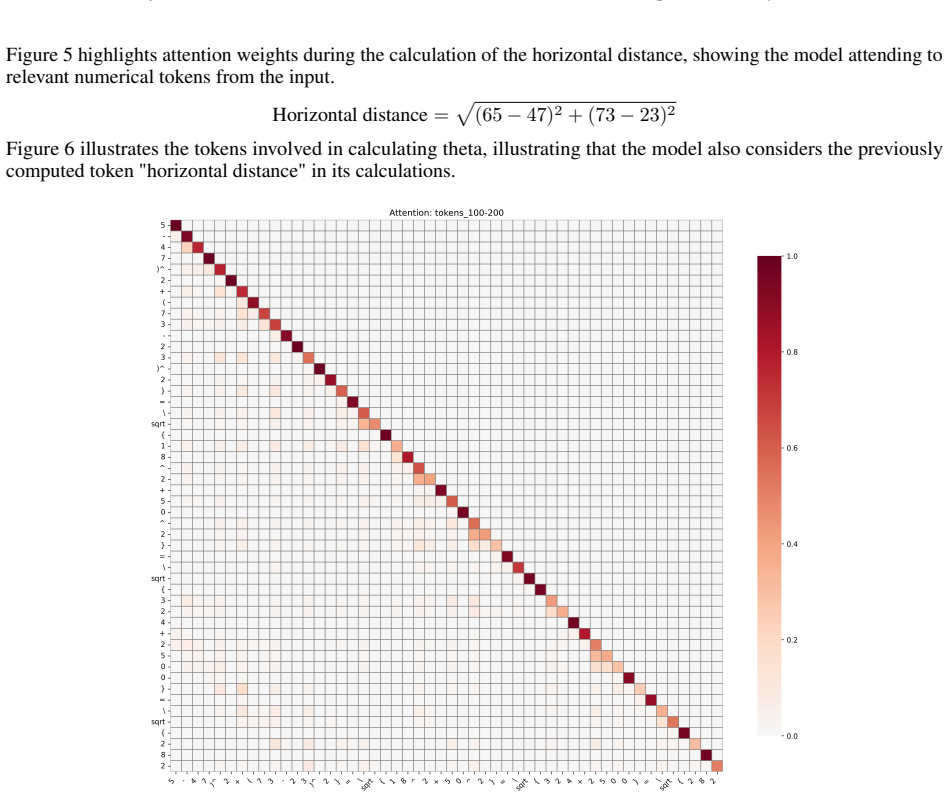
UA V-BS’s position: (65,73,15)m Based on this information, what speed is elevation angle? 14 RAG-UA V (Azarafza et al.) A PREPRINT DeepSeek R1 Response Okay, so I need to figure out the elevation angle based on the given positions of the ground user and the UA V-BS... Okay, so...
-
[22]
Horizontal Distance Calculation: • ∆x = 65 − 47 = 18m • ∆y = 73 − 23 = 50m • Horizontal distance = √ 182 + 502 ≈ 53.11m
-
[23]
Vertical Distance: • Vertical distance = 15m (z-coordinate of UA V-BS)
-
[24]
Elevation Angle Calculation using Tangent: tan(θ) = opposite adjacent = 15 53.11 ≈ 0.2823 (8) θ ≈ arctan(0.2823) ≈ 15.7◦ (9)
-
[25]
Verification using Sine: Hypotenuse = p 53.112 + 152 ≈ 55.22m (10) sin(θ) = 15 55.22 ≈ 0.2717 (11) θ ≈ arcsin(0.2717) ≈ 15.75◦ (12) 15
-
[2824]
Maybe approximately 53.11 meters
Let’s see: 532 is 2809, so √ 2824 is a bit more than 53. Maybe approximately 53.11 meters. Now, the vertical distance is given as 15 meters. So now I have a right triangle with opposite side (vertical) = 15m and adjacent side (horizontal) ≈ 53.11m. The elevation angle θ can be...
Reviewed August 7, 2026 · model on record in the stance chip above.
Discussion (0). Continue with ORCID to comment.