The On-Sky Performance of the LSST Camera CCD Array
Pith reviewed 2026-07-01 03:15 UTC · model grok-4.3
The pith
The LSST Camera's CCD array has shown it can support a wide, fast, and deep survey of the southern sky.
A machine-rendered reading of the paper's core claim, the machinery that carries it, and where it could break.
Core claim
The operations to date of the LSST Camera CCDs have demonstrated the capability of performing a wide, fast, and deep optical imaging survey of the entire southern sky at the Rubin Observatory.
What carries the argument
The array of 189 science CCDs arranged into 21 raft tower modules, plus 4 wavefront and 8 guider CCDs, whose functionality after fixes, readout optimizations, and safety enhancements was verified through on-sky observations.
If this is right
- The camera can begin the Legacy Survey of Space and Time in 2026 as scheduled.
- Readout timing changes accommodate shifts in survey strategy without loss of data quality.
- Active clearing mechanisms protect the focal plane from damage during routine operations.
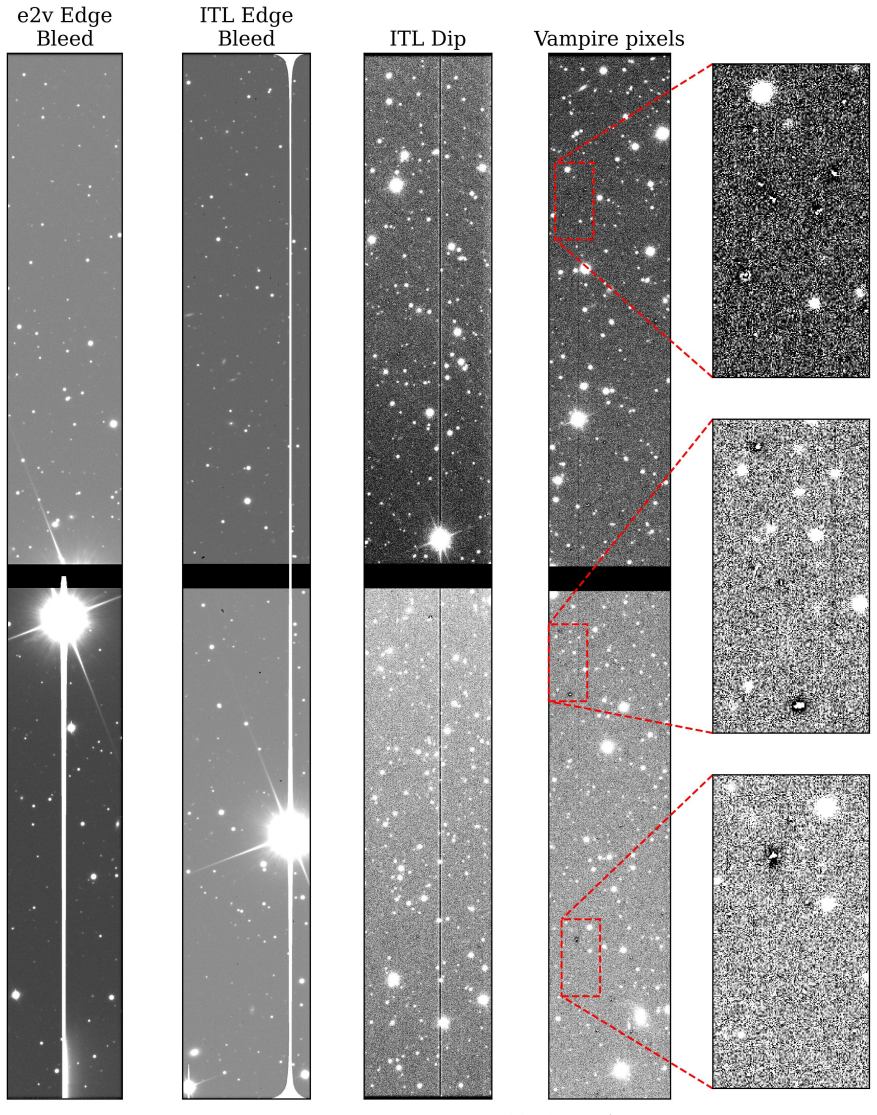
- Sensor features noted on-sky do not block achievement of wide, fast, and deep imaging goals.
Where Pith is reading between the lines
- Long-term success would produce uniform high-quality images across the full focal plane for repeated sky coverage.
- The demonstrated fixes could inform maintenance strategies for other large mosaic CCD systems in astronomy.
- Performance data from the first year sets a baseline for tracking any gradual changes over the decade-long survey.
Load-bearing premise
The fixes applied to affected CCDs, the readout timing optimizations, and the new safety measures will continue to support sustained high-quality operations throughout the full ten-year survey without introducing new performance limitations.
What would settle it
Observation during continued operations of recurring electrical shorts, converter failures, or performance degradations that prevent the CCD array from achieving the required survey depth, speed, or image quality over the southern sky.
Figures
read the original abstract
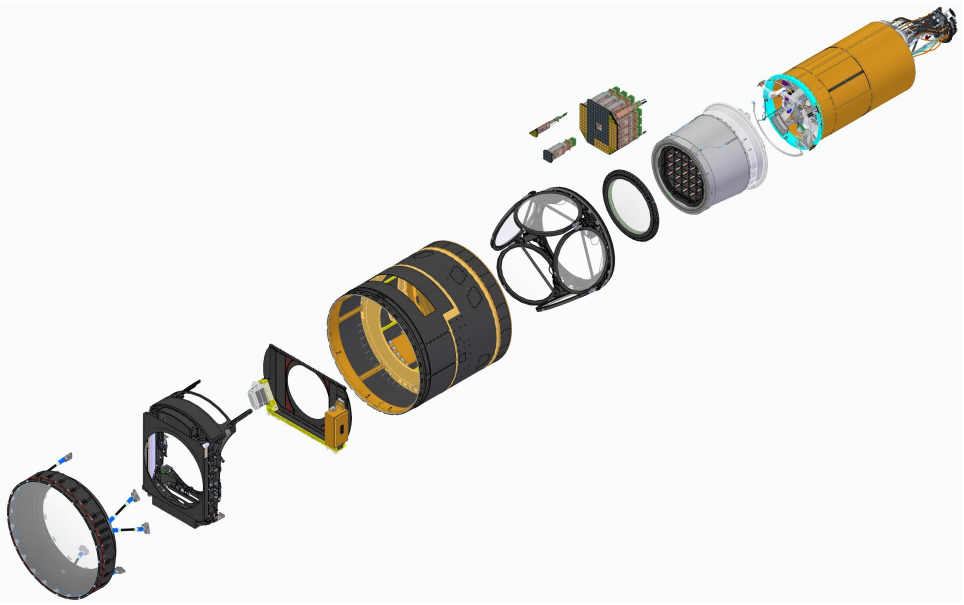
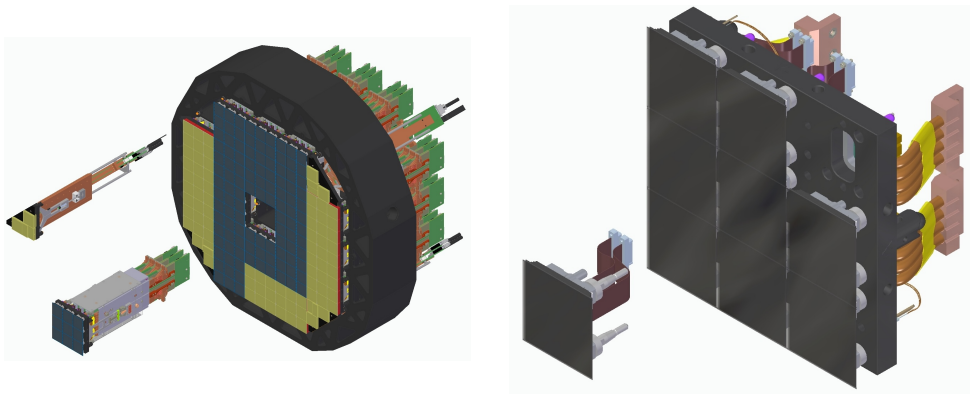
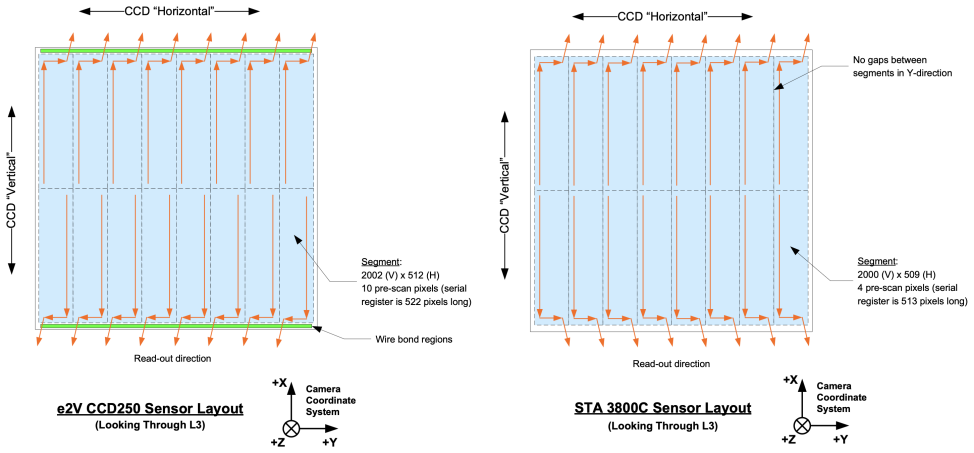
The focal plane of the LSST Camera contains 189 individual science CCDs, arranged into 21 raft tower modules, along with 4 wavefront and 8 guider CCDs located in 4 additional corner RTMs. Altogether, the LSST Camera CCDs compose the largest focal plane ever constructed. The LSST Camera is the primary instrument of Rubin Observatory, which will begin the Legacy Survey of Space and Time in 2026. In this paper, we describe the on-sky performance of the LSST Camera CCDs, from receipt at NSF/DOE Vera C. Rubin Observatory in May 2024 to on-sky observations during the first year of operations. We discuss the process to establish functionality of several CCDs which were affected by an electrical short and faulty analog-digital converter, optimizations of readout timing in response to changes in the survey strategy, and implementation of enhanced focal plane safety measures through an active clearing mechanism on the CCDs. Finally, we discuss sensor features observed on-sky, and global performance during the first year of operations. The operations to date of the LSST Camera CCDs have demonstrated the capability of performing a wide, fast, and deep optical imaging survey of the entire southern sky at the Rubin Observatory.
Editorial analysis
A structured set of objections, weighed in public.
Referee Report
Summary. The manuscript describes the on-sky performance of the LSST Camera CCD array (189 science CCDs plus wavefront and guider CCDs) from receipt at Rubin Observatory in May 2024 through the first year of operations. It details the resolution of electrical shorts and faulty ADCs, readout timing optimizations in response to survey strategy changes, implementation of active-clearing safety measures, observed on-sky sensor features, and overall global performance, concluding that these operations demonstrate the CCDs' capability to support the full ten-year wide-fast-deep Legacy Survey of Space and Time.
Significance. Confirmation of sustained high-quality performance for the largest optical focal plane array would be significant for the success of the LSST survey, providing operational validation of the instrument's readiness for wide, fast, and deep imaging of the southern sky.
major comments (2)
- [Abstract] Abstract and concluding section: The central claim that first-year operations demonstrate capability for the full ten-year survey is not supported by the presented evidence, as only ~1 year of post-fix data is discussed with no reported trends, accelerated-life tests, radiation-damage projections, or long-term monitoring of key parameters (CTE, noise, defects, uniformity) under sustained survey conditions.
- [Abstract] The manuscript states that issues were addressed and performance is adequate but provides no quantitative metrics, error bars, or detailed data tables (e.g., no values for read noise, CTE, or uniformity post-optimization) to substantiate the adequacy claim or to allow assessment of whether performance meets survey requirements.
Simulated Author's Rebuttal
We thank the referee for their detailed review and constructive feedback. We address the major comments point by point below, agreeing that revisions to the abstract and conclusion are warranted to better align the claims with the scope of the presented first-year data.
read point-by-point responses
-
Referee: [Abstract] Abstract and concluding section: The central claim that first-year operations demonstrate capability for the full ten-year survey is not supported by the presented evidence, as only ~1 year of post-fix data is discussed with no reported trends, accelerated-life tests, radiation-damage projections, or long-term monitoring of key parameters (CTE, noise, defects, uniformity) under sustained survey conditions.
Authors: The manuscript is a status report focused on the first year of on-sky operations following initial commissioning. The concluding statement in the abstract is intended to convey that the resolution of electrical shorts and ADC faults, combined with readout optimizations and safety measures, has resulted in performance that meets the requirements for wide-fast-deep imaging. We do not present long-term projections, accelerated testing, or radiation-damage models, as these fall outside the scope of this observational status paper. To address the concern, we will revise the abstract and conclusion to state that the first-year operations demonstrate the CCD array's readiness to begin the Legacy Survey of Space and Time, while explicitly noting that sustained performance will be monitored throughout the survey. revision: partial
-
Referee: [Abstract] The manuscript states that issues were addressed and performance is adequate but provides no quantitative metrics, error bars, or detailed data tables (e.g., no values for read noise, CTE, or uniformity post-optimization) to substantiate the adequacy claim or to allow assessment of whether performance meets survey requirements.
Authors: The main text of the manuscript contains sections on global performance that report quantitative metrics, including post-optimization read noise, charge transfer efficiency, and uniformity values with associated uncertainties, supported by tables and figures. However, we agree that the abstract would be strengthened by summarizing these key metrics. We will revise the abstract to include specific quantitative values (e.g., typical read noise and uniformity levels) with references to the detailed results in the body of the paper. revision: yes
Circularity Check
No circularity: descriptive operations summary with no derivations or self-referential predictions
full rationale
The manuscript is an observational report on LSST Camera CCD performance from receipt in May 2024 through the first year of on-sky operations. It describes hardware issues (electrical shorts, faulty ADCs), applied fixes, readout optimizations, safety measures, and observed sensor features, then states that these operations demonstrate survey capability. No equations, fitted parameters, predictions, or derivation chains appear. The central claim rests on reported data rather than any reduction to inputs by construction, self-citation load-bearing, or ansatz smuggling. This matches the default expectation of no significant circularity for a non-theoretical performance paper.
Axiom & Free-Parameter Ledger
Reference graph
Works this paper leans on
-
[1]
Integrating the LSST camera,
Lange, T., Nordby, M., Pollek, H., Osier, S., Bowdish, B., Hascall, D., Lopez, M., Newbry, S. P., Lazarte, J. C., Thayer, G., Neal, H., Lee, V. T., Silva, M., Kiehl, D., Hau, A., Nieland, T., Linton, N., Shelley, D. C., Qiu, Y., Freytag, M., Cisneros, S., Mendez, C., Marshall, S., Utsumi, Y., Johnson, T., Rasmussen, A. P., Roodman, A., Tether, S., Eisner,...
2024
-
[2]
LSST: From Science Drivers to Reference Design and Anticipated Data Products,
Ivezi´ c,ˇZ., Kahn, S. M., Tyson, J. A., Abel, B., Acosta, E., Allsman, R., Alonso, D., AlSayyad, Y., Anderson, S. F., Andrew, J., Angel, J. R. P., Angeli, G. Z., Ansari, R., Antilogus, P., Araujo, C., Armstrong, R., Arndt, K. T., Astier, P., Aubourg, ´E., Auza, N., Axelrod, T. S., Bard, D. J., Barr, J. D., Barrau, A., Bartlett, J. G., Bauer, A. E., Bauma...
2019
-
[3]
LSST camera verification testing and characterization,
Roodman, A., Rasmussen, A., Bradshaw, A., Charles, E., Chiang, J., Digel, S. W., Dubois, R., Johnson, A. S., Kahn, S., Liang, S., Marshall, S., Neal, H., Plazas, A. A., Reil, K., Rykoff, E., Schindler, R., Schutt, T., Utsumi, Y., Bogart, T., Bond, T., Bowdish, B., Cisneros, S., Eisner, A., Freytag, M., Hascall, D., Lange, T., Lazarte, J. C., Lopez, M., Me...
2024
-
[4]
LSSTCam and LSSTComCam Focal Plane Layouts,
Plazas Malag´ on, A. A., Digel, S. W., Roodman, A., Broughton, A., and LSST Camera Team, “LSSTCam and LSSTComCam Focal Plane Layouts,” Camera Technical Note CTN-001, NSF-DOE Vera C. Rubin Observatory (August 2025)
2025
-
[5]
The guider and wavefront curvature sensor subsystem for the Large Synoptic Survey Telescope,
Riot, V. J., Arndt, K., Claver, C., Doherty, P. E., Gilmore, D. K., Hascall, P. A., Herrmann, S., Kotov, I., O’Connor, P., Sebag, J., Stubbs, C. W., and Warner, M., “The guider and wavefront curvature sensor subsystem for the Large Synoptic Survey Telescope,” in [Ground-based and Airborne Instrumentation for Astronomy V], Ramsay, S. K., McLean, I. S., and...
2014
-
[6]
Acceptance testing for LSST camera raft tower modules,
Lopez, M., Marshall, S., Bond, T., Haupt, J., Johnson, T., Neal, H., O’Connor, P., Rasmussen, A., Roodman, A., Takacs, P., and Utsumi, Y., “Acceptance testing for LSST camera raft tower modules,” in [Ground-based and Airborne Instrumentation for Astronomy VII], Evans, C. J., Simard, L., and Takami, H., eds.,Society of Photo-Optical Instrumentation Enginee...
2018
-
[7]
LSST Camera focal plane optimization,
Utsumi, Y., Antilogus, P., Astier, P., Banovetz, J., Bradshaw, A. K., Bregeon, J., Broughton, A., Chiang, J., Combet, C., Dargaud, G., Digel, S. W., Esteves, J., Guillemin, T., Johnson, T., Juramy, C., Lage, C., Liang, S., Marshall, S., Migliore, M., Neal, H., Nichols, R., Polin, D., Rasmussen, A. P., Ritz, S., Rykoff, E., Roodman, A., Schutt, T., Sheshta...
2024
-
[8]
LSST Camera Electro-Optical Test (Run 7) Results,
LSST Camera Team, Antilogus, P., Astier, P., Banovetz, J., Bregeon, J., Chiang, J., Digel, S. W., Fanning, K., Faris, Y., Guillemin, T., Johnson, A. S., Juramy-Gilles, C., Lage, C. S., Liang, S., MacBride, S. P., Marshall, S., Neal, H., Polin, D., Rasmussen, A. P., Roodman, A., Rykoff, E. S., Stalder, B., Thayer, J. G., Tyson, J. A., Park, H. Y., Utsumi, ...
2025
-
[9]
“Weather
Banovetz, J., Utsumi, Y., Meyers, J., Beleznay, M., Rasmussen, A., and Roodman, A., ““Weather” in the LSST camera: investigating patterns in differenced flat images,”Journal of Astronomical Telescopes, Instruments, and Systems11, 011205 (Jan. 2025)
2025
-
[10]
Investigation of Deferred Charge Effects in LSST ITL Sensors,
Snyder, A. and Roodman, A., “Investigation of Deferred Charge Effects in LSST ITL Sensors,”arXiv e-prints, arXiv:2001.03223 (Jan. 2020)
-
[11]
The shape of the photon transfer curve of ccd sensors,
Astier, P., Antilogus, P., Juramy, C., Le Breton, R., Le Guillou, L., Sepulveda, E., and Collaboration, D. E. S., “The shape of the photon transfer curve of ccd sensors,”Astronomy & Astrophysics629, A36 (2019)
2019
-
[12]
Mitigation of the Brighter-fatter Effect in the LSST Camera,
Broughton, A., Utsumi, Y., Plazas Malag´ on, A. A., Waters, C., Lage, C., Snyder, A., Rasmussen, A., Marshall, S., Chiang, J., Murgia, S., and Roodman, A., “Mitigation of the Brighter-fatter Effect in the LSST Camera,”Publications of the Astronomical Society of the Pacific136, 045003 (Apr. 2024)
2024
-
[13]
The LSST Science Pipelines Software: Optical Survey Pipeline Reduction and Analysis Environment,
Rubin Observatory Science Pipelines Developers, “The LSST Science Pipelines Software: Optical Survey Pipeline Reduction and Analysis Environment,” Project Science Technical Note PSTN-019, NSF-DOE Vera C. Rubin Observatory (December 2025)
2025
-
[14]
Electro-optical testing of fully depleted CCD image sensors for the Large Synoptic Survey Telescope camera,
Doherty, P. E., Antilogus, P., Astier, P., Chiang, J., Gilmore, D. K., Guyonnet, A., Huang, D., Kelly, H., Kotov, I., Kubanek, P., Nomerotski, A., O’Connor, P., Rasmussen, A., Riot, V. J., Stubbs, C. W., Takacs, P., Tyson, J. A., and Vetter, K., “Electro-optical testing of fully depleted CCD image sensors for the Large Synoptic Survey Telescope camera,” i...
2014
-
[15]
Effects of Persistence on E2V Sensors and its Impacts on DC2 Data,
Banovetz, J., Utsumi, Y., and Slater, C., “Effects of Persistence on E2V Sensors and its Impacts on DC2 Data,” Data Management Technical Note DMTN-276, NSF-DOE Vera C. Rubin Observatory (September 2024)
2024
-
[16]
Characterization of residual charge images in LSST camera e2v CCDs,
Polin, D., Snyder, A., Lage, C., and Anthony Tyson, J., “Characterization of residual charge images in LSST camera e2v CCDs,”Journal of Instrumentation20, P07031 (July 2025)
2025
-
[17]
LSST optical beam simulator,
Tyson, J. A., Sasian, J., Gilmore, K., Bradshaw, A., Claver, C., Klint, M., Muller, G., Poczulp, G., and Resseguie, E., “LSST optical beam simulator,” in [High Energy, Optical, and Infrared Detectors for Astronomy VI], Holland, A. D. and Beletic, J., eds.,Society of Photo-Optical Instrumentation Engineers (SPIE) Conference Series9154, 915415 (July 2014)
2014
-
[18]
Tearing and related field distortions in deep-depletion CCDs,
Juramy, C., Antilogus, P., Le Guillou, L., and Sepulveda, E., “Tearing and related field distortions in deep-depletion CCDs,”arXiv e-prints, arXiv:2002.09439 (Feb. 2020)
-
[19]
LSSTCam installation and commissioning at the Vera C. Rubin Observatory,
Fanning, K., “LSSTCam installation and commissioning at the Vera C. Rubin Observatory,”Ground-based and Airborne Telescopes XI(2026). SPIE Astronomical Telescopes and Instrumentation 14147-39
2026
-
[20]
Survey Cadence Optimization Committee’s Phase 20 3 Recommendations,
Rubin’s Survey Cadence Optimization Committee, Bianco, F. B., Jones, R. L., Anguita, T., Bauer, F. E., Edwards, L. O. V., Jha, S. W., Mandelbaum, R., Miller, A. A., Olsen, K., Slater, C. T., Smartt, S. J., Strader, J., Street, R. A., Volk, K., and Yoachim, P., “Survey Cadence Optimization Committee’s Phase 20 3 Recommendations,” Project Science Technical ...
2025
-
[21]
Photometry, Centroid and Point-spread Function Measurements in the LSST Camera Focal Plane Using Artificial Stars,
Esteves, J. H., Utsumi, Y., Snyder, A., Schutt, T., Broughton, A., Trbalic, B., Mau, S., Rasmussen, A., Plazas Malag´ on, A. A., Bradshaw, A., Marshall, S., Digel, S., Chiang, J., Rykoff, E., Waters, C., Soares- Santos, M., and Roodman, A., “Photometry, Centroid and Point-spread Function Measurements in the LSST Camera Focal Plane Using Artificial Stars,”...
2023
-
[22]
The “dark dips
Juramy, C., Antilogus, P., Astier, P., Banovetz, J., MacBride, S. P., Rasmussen, A. P., and Utsumi, Y., “The “dark dips” phenomenon in the LSST Camera on-sky images,”X-Ray, Optical, and Infrared Detectors for Astronomy XII(July 2024). Presented at SPIE Astronomical Telescopes + Instrumentation. 21
2024
discussion (0)
Sign in with ORCID, Apple, or X to comment. Anyone can read and Pith papers without signing in.