The alignment time function
Pith reviewed 2026-06-26 15:47 UTC · model grok-4.3
The pith
A unique smooth time function minimizes misalignment with a given timelike vector field while avoiding null gradients.
A machine-rendered reading of the paper's core claim, the machinery that carries it, and where it could break.
Core claim
In a compact subset of a smooth stably causal spacetime, with a fixed past-directed timelike vector field, the functional measuring misalignment between the vector field and gradients of Sobolev functions, penalized by null gradients, admits a unique smooth temporal function as its minimizer under suitable conditions on the Sobolev index and penalization strength. This minimizer is the alignment time function.
What carries the argument
The alignment time function, defined as the unique minimizer of the misalignment functional with null gradient penalization.
If this is right
- There exists a canonical procedure to improve the steepness of the alignment time function.
- The alignment time function is stable under C^p convergence of the underlying metrics and vector fields.
- It inherits the symmetries shared by the metric and the given vector field.
Where Pith is reading between the lines
- If the alignment time function can be computed numerically, it might provide practical coordinates for numerical relativity simulations aligned with a preferred direction.
- The stability under metric convergence suggests robustness in approximating spacetimes.
- Extending this to non-compact spacetimes could link to global time functions in general relativity.
Load-bearing premise
The spacetime region must be compact in a smooth stably causal spacetime and the Sobolev index with penalization strength must meet the conditions for the existence-uniqueness result to hold.
What would settle it
A counterexample spacetime where, despite the assumptions, either no minimizer exists or multiple distinct smooth minimizers exist for the functional.
Figures
read the original abstract
Given a fixed past-directed timelike vector field, does there exist a time function whose gradient is optimally aligned with it? We address this question by introducing a functional that, on the one hand, captures the misalignment between the timelike vector field and the gradients of suitable Sobolev functions, and, on the other hand, penalizes null gradients. Our analysis focuses on compact subsets of smooth stably causal spacetimes. More precisely, we prove that, under suitable assumptions on the Sobolev index and the strength of the null gradient penalization, there exists a unique smooth temporal function which minimizes the considered functional. We refer to this minimizer as the \emph{alignment time function}. Furthermore, several useful properties of the alignment time function are established: there exists a canonical procedure to improve its steepness, it is stable under $C^{p}$ convergence of the underlying metrics and vector fields and it inherits the symmetries shared by the metric and the given vector field.
Editorial analysis
A structured set of objections, weighed in public.
Referee Report
Summary. The manuscript proves existence and uniqueness of a smooth temporal function (the alignment time function) minimizing a functional that combines a misalignment term between its gradient and a fixed past-directed timelike vector field with a penalization term for null gradients. The setting is compact subsets of smooth stably causal spacetimes; the result holds under suitable (explicitly hypothesized) conditions on the Sobolev index and penalization strength. The paper further establishes a canonical steepness-improvement procedure, stability of the minimizer under C^p convergence of the metric and vector field, and inheritance of symmetries.
Significance. If the variational existence-uniqueness argument and regularity bootstrap hold, the construction supplies a canonical, variationally characterized time function aligned with a prescribed vector field. The stability and symmetry properties are useful for applications in mathematical relativity. The direct-method approach in Sobolev spaces with explicit penalization to enforce the temporal condition is a clear technical contribution.
minor comments (3)
- The abstract states the result holds 'under suitable assumptions' on the Sobolev index and penalization strength; the introduction or statement of the main theorem should list the precise range (e.g., p > n/2 + 1 and λ > λ0) for immediate readability.
- [§2] Notation for the misalignment integrand and the penalization term should be introduced once in §2 and used consistently thereafter to avoid redefinition in later sections.
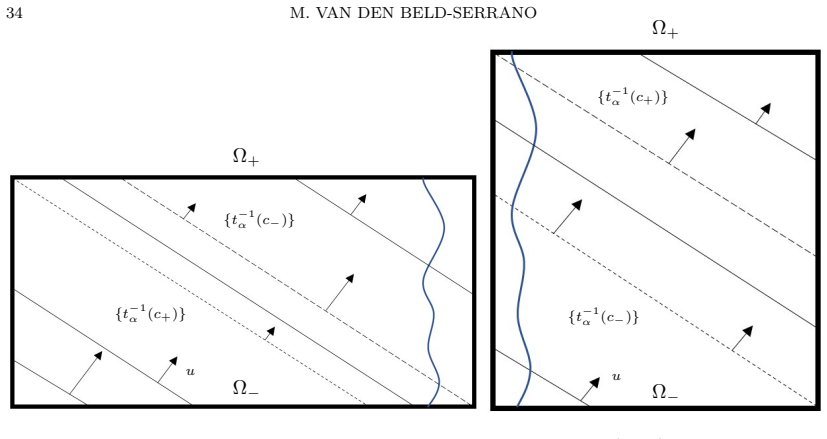
- Figure 1 (if present) illustrating the alignment on a simple Minkowski example would benefit from an explicit caption stating the vector field and the computed minimizer.
Simulated Author's Rebuttal
We thank the referee for the thorough reading of the manuscript and for the positive recommendation to accept. The report contains no major comments requiring response.
Circularity Check
No significant circularity in the existence theorem
full rationale
The paper establishes existence and uniqueness of a minimizer for an explicitly defined misalignment-plus-penalization functional via direct methods in Sobolev spaces, followed by regularity bootstrap. The alignment time function is simply the name assigned to this proven minimizer; the functional itself is constructed from the given vector field and metric without reference to the minimizer. No self-definitional loop, fitted-input prediction, or load-bearing self-citation appears in the derivation chain. The result is a standard variational theorem whose hypotheses are stated explicitly and whose proof does not reduce to its own inputs by construction.
Axiom & Free-Parameter Ledger
axioms (2)
- standard math Sobolev spaces on compact manifolds admit the required embedding and compactness properties for the functional to be well-defined and lower semicontinuous
- domain assumption The spacetime is stably causal, ensuring the existence of temporal functions
Reference graph
Works this paper leans on
-
[1]
B.,Riemannian counterparts to Lorentzian space forms, arXiv preprint arXiv:2007.00071 (2020)
Aazami, A. B.,Riemannian counterparts to Lorentzian space forms, arXiv preprint arXiv:2007.00071 (2020)
arXiv 2007
-
[2]
Aubin, T.,Some nonlinear problems in Riemannian geometry, Springer Science & Business Media (1998)
1998
-
[3]
Behzadan, A., Holst, M.,Multiplication in Sobolev spaces, revisitedArkiv för Matematik, 59(2), 275-306 (2021)
2021
-
[4]
P.,Causality and black holes in spacetimes with a preferred foliation, Classical and Quantum Gravity, 33(23), 235003 (2016)
Bhattacharyya, J., Colombo, M., and Sotiriou, T. P.,Causality and black holes in spacetimes with a preferred foliation, Classical and Quantum Gravity, 33(23), 235003 (2016)
2016
-
[5]
Beran, T., Braun, M., Calisti, M., Gigli, N., McCann, R. J., Ohanyan, A. and Sämann, C., A nonlinear d’Alembert comparison theorem and causal differential calculus on metric measure spacetimes, arXiv preprint arXiv:2408.15968 (2024)
arXiv 2024
-
[6]
N.,Totally convex functions for fixed points computation and infinite dimensional optimization, (Vol
Butnariu D., Iusem, A. N.,Totally convex functions for fixed points computation and infinite dimensional optimization, (Vol. 40) Springer Science Business Media (2000)
2000
-
[7]
Burgos, S., Flores, J. L., and Sánchez, M,Lorentzian Cheeger-Gromov convergence and temporal functions, arXiv preprint arXiv:2508.15441 (2025)
arXiv 2025
-
[8]
F.,A mechanism of baryogenesis for causal fermion systems, Classical and Quantum Gravity, 39(16), 165005 (2022)
Finster, F., Jokel, M., and Paganini, C. F.,A mechanism of baryogenesis for causal fermion systems, Classical and Quantum Gravity, 39(16), 165005 (2022)
2022
-
[9]
Finster, F., and van den Beld-Serrano, M.Baryogenesis in Minkowski spacetime, J. Geom. Phys., no. 16, 105346, 29, arXiv:2408.01189 (2025)
arXiv 2025
-
[10]
and van den Beld-Serrano, M.,Baryogenesis in Conformally Flat Spacetimes, arXiv:2504.17434 (2025)
Finster, F. and van den Beld-Serrano, M.,Baryogenesis in Conformally Flat Spacetimes, arXiv:2504.17434 (2025). THE ALIGNMENT TIME FUNCTION 37
arXiv 2025
-
[11]
Carballo-Rubio, R., Di Filippo, F., Liberati, S., and Visser, M.,Causal hierarchy in modified gravity, Journal of High Energy Physics, 2020(12), 55 (2020)
2020
-
[12]
B.,Introduction to Partial Differential Equations, 2nd ed., Princeton University Press (1995)
Folland, G. B.,Introduction to Partial Differential Equations, 2nd ed., Princeton University Press (1995)
1995
-
[13]
Hawking, S., and Ellis, G.,The large scale structure of space-time, Cambridge University Press (1973)
1973
-
[14]
1635, Springer Science & Business Media (1996)
Hebey, E.,Sobolev spaces on Riemannian manifolds, Vol. 1635, Springer Science & Business Media (1996)
1996
-
[15]
Physical Review D—Particles, Fields, Gravita- tion, and Cosmology, 79(8), 084008 (2009)
Hořava, P., Quantum gravity at a Lifshitz point. Physical Review D—Particles, Fields, Gravita- tion, and Cosmology, 79(8), 084008 (2009)
2009
-
[16]
Jacobson, T.,Einstein-aether gravity: A Status report, arXiv preprint arXiv:0801.1547 (2008)
Pith/arXiv arXiv 2008
-
[17]
92-99) (2008)
Jacobson, T.,Einstein-aether gravity: Theory and observational constraints, CPT and Lorentz Symmetry (pp. 92-99) (2008)
2008
-
[18]
A.,Gravity, Lorentz violation, and the standard model, Physical Review D, 69(10), 105009 (2004)
Kostelecký, V. A.,Gravity, Lorentz violation, and the standard model, Physical Review D, 69(10), 105009 (2004)
2004
-
[19]
A., and Russell, N.,Data tables for Lorentz and CPT violation, Reviews of Modern Physics, 83(1), 11-31 (2011)
Kostelecký, V. A., and Russell, N.,Data tables for Lorentz and CPT violation, Reviews of Modern Physics, 83(1), 11-31 (2011)
2011
-
[20]
L., and Magenes, E.,Non-homogeneous boundary value problems and applications, Vol
Lions, J. L., and Magenes, E.,Non-homogeneous boundary value problems and applications, Vol. 1 (Vol. 181), Springer Science Business Media (2012)
2012
-
[21]
J.,Displacement convexity of Boltzmann’s entropy characterizes the strong energy condition from general relativity, Cambridge Journal of Mathematics, 8(3), 609-681 (2020)
McCann, R. J.,Displacement convexity of Boltzmann’s entropy characterizes the strong energy condition from general relativity, Cambridge Journal of Mathematics, 8(3), 609-681 (2020)
2020
-
[22]
McCann, R.J., andOhanyan, A.,Positive resolution of Bartnik’s cosmological splitting conjecture, arXiv preprint arXiv:2606.03873 (2026)
Pith/arXiv arXiv 2026
-
[23]
Minguzzi, E.,Lorentzian causality theory, Living reviews in relativity, 22(1), 3 (2019)
2019
-
[24]
,The causal hierarchy of spacetimes, Recent developments in pseudo-Riemannian geometry (pp
Minguzzi, E., and Sánchez, M. ,The causal hierarchy of spacetimes, Recent developments in pseudo-Riemannian geometry (pp. 299-358), European Mathematical Society-EMS-Publishing House GmbH (2008)
2008
-
[25]
Mondino, A., and Suhr, S.,An optimal transport formulation of the Einstein equations of general relativity, Journal of the European Mathematical Society, 25(3), 933-994 (2022)
2022
-
[26]
Olea, B.,Canonical variation of a Lorentzian metric, Journal of Mathematical Analysis and Applications, 419(1), 156-171 (2014)
2014
-
[27]
[Harcourt Brace Jovanovich Publishers], New York (1983)
O’Neill, B.,Semi-Riemannian geometry, Pure and Applied Mathematics, vol.103, Academic Press Inc. [Harcourt Brace Jovanovich Publishers], New York (1983)
1983
-
[28]
Peypouquet, J.,Convex optimization in normed spaces: theory, methods and examples, Springer, 2015
2015
-
[29]
Petersen, P.,Riemannian geometry, New York, NY: Springer New York, 2006
2006
-
[30]
E.,Partial differential equations III, Third Edition, Springer (2023)
Taylor, M. E.,Partial differential equations III, Third Edition, Springer (2023)
2023
-
[31]
Sakovich, A., and Sormani, C.,The null distance encodes causality, Journal of Mathematical Physics 64.1 (2023)
2023
-
[32]
Sakovich A., and Sormani, C.,Introducing various notions of distances between space-times, arXiv preprint arXiv:2410.16800 (2024)
arXiv 2024
-
[33]
Sormani, C., Vega, C.,Null distance on a spacetime, Classical and Quantum Gravity, 33(8), 085001 (2016)
2016
-
[34]
V., Sharma, R., Sivaramakrishnan, S.,Lorentzian metric induced from a background Riemannian metric, International Journal of Pure and Applied Mathematics, 47(3), 343-351 (2008)
Reddy, V. V., Sharma, R., Sivaramakrishnan, S.,Lorentzian metric induced from a background Riemannian metric, International Journal of Pure and Applied Mathematics, 47(3), 343-351 (2008)
2008
-
[35]
S.,On restrictions and extensions of the Besov and Triebel–Lizorkin spaces with respect to Lipschitz domains, Journal of the London Mathematical Society, 60(1), 237-257 (1999)
Rychkov, V. S.,On restrictions and extensions of the Besov and Triebel–Lizorkin spaces with respect to Lipschitz domains, Journal of the London Mathematical Society, 60(1), 237-257 (1999)
1999
-
[36]
Vassallo, A.,General Relativity and background independence, arxiv preprint, arXiv:2606.15224 (2026)
arXiv 2026
-
[37]
Xu, R., Xu, D., Andersson, L., Seoane, P. A., and Shao, L,Bumblebee cosmology: The FLRW solution and the CMB temperature anisotropy, arXiv:2504.10297 (2025). F akultät für Mathematik, Universität Regensburg, D-93040 Regensburg, Germany Email address:marco.van-den-beld-serrano@ur.de
arXiv 2025
discussion (0)
Sign in with ORCID, Apple, or X to comment. Anyone can read and Pith papers without signing in.