REVIEW 4 major objections 5 minor 19 references
Edge AIBench: Towards Comprehensive End-to-end Edge Computing Benchmarking
T0 review · 4 major / 5 minor · reviewed 2026-08-14 · deepseek-v4-flash
Pith's one-line read A benchmark suite treats edge AI as a three-layer pipeline.
desk verdict A well-intentioned roadmap for an end-to-end edge AI benchmark, but the 'comprehensive' claim and the criticism of prior work outrun the actual artifacts — no measurements, no workload specs, no metrics. read the letter →
The pith
A machine-rendered reading of the paper's core claim, the machinery that carries it, and where it could break.
The reading
What carries the argument
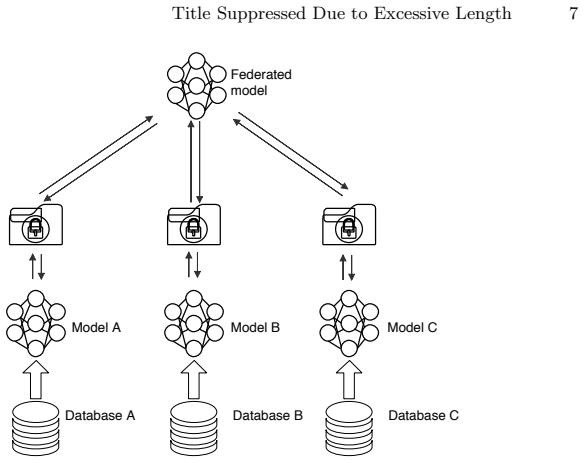
The central object is the three-layer end-to-end application framework: client-side devices generate data, the edge computing layer performs pre-processing and inference, and the cloud server trains or refines models. Edge AIBench's machinery is the mapping of each scenario's workload collaboration pattern onto that framework—including where data is compressed, where alarms or decisions are issued, and where training runs—plus a federated-learning testbed, that is, a scheme in which model parameters rather than raw data are shared for collaborative training while preserving privacy.
What would settle it
A survey or field study of deployed edge AI systems would settle the comprehensive claim: if a substantial class of systems (for example, augmented-reality glasses or industrial control loops) has a data-flow and training structure that does not fit any of the four scenarios' three-layer patterns, then the suite covers only part of edge AI. A smaller, direct check is to run a fifth scenario, chosen independently, through the Edge AIBench framework and see whether its data collection, edge inference, and cloud training steps are already expressible.
Extended reading notes
Core claim
On the paper's own terms, the central discovery is that previous edge AI benchmarking efforts miss the property that actually defines edge computing: the end-to-end pipeline across three layers. Edge AIBench operationalizes that view by modelling four typical scenarios and six component benchmarks—heart failure and endpoint prediction, person re-identification, speech and face recognition, and road-sign recognition—and by specifying which layer collects, compresses, infers, trains, and decompresses data in each scenario. The routine split follows a common pattern: high-latency or privacy-sensitive inference happens at the edge, full model training happens in the cloud, and raw data originates on client-side devices. The paper further claims that the four scenarios collectively represent the complexity of edge AI, and that the accompanying federated-learning testbed addresses the privacy and security concerns that otherwise prevent realistic shared benchmarks.
Load-bearing premise
The load-bearing premise is that the four chosen scenarios—ICU monitoring, surveillance, smart home, and autonomous driving—cover enough of the real edge AI design space that a suite built on them can honestly be called comprehensive; if a common scenario needs a different pattern of data distribution and workload collaboration, that label would not survive.
Editorial extensions
If this is right
- System builders can compare edge AI deployments on the full data path, not just on single-device inference speed.
- Latency, bandwidth, and privacy tradeoffs become explicit axes of evaluation, because the benchmark fixes where data is moved and processed.
- The four scenario definitions give a common vocabulary for describing where a new edge AI application places its work.
- The federated-learning testbed gives researchers a shared starting point for validating privacy-preserving training on realistic workloads.
Reading between the lines
- The paper leaves implicit that its three-layer design is also an architectural recommendation: moving inference to the edge and training to the cloud is presented as the natural collaboration pattern, but other valid splits are possible and would need separate benchmark scenarios.
- A natural extension is to test whether the four workload-collaboration patterns are closed under the scenarios that actually appear in production edge AI, such as augmented reality or industrial control.
- A quantitative extension would be to instrument each scenario with bandwidth and privacy cost metrics, so that the claimed tradeoffs between cloud and edge placement become measurable rather than descriptive.
Signed reviews
Editorial analysis
A structured set of objections, weighed in public.
Referee Report
Summary. The paper argues that edge-computing AI benchmarking must take an end-to-end view spanning client-side devices, the edge computing layer, and cloud servers, and introduces Edge AIBench, a BenchCouncil-coordinated open-source suite. The suite is said to model four application scenarios (ICU patient monitoring, surveillance camera, smart home, and autonomous vehicle) with six component benchmarks, and the paper also describes an edge-computing testbed with a federated learning framework. The manuscript is entirely descriptive: it names the datasets and models, assigns coarse roles to the three layers in Table 2, and points to public URLs, but it reports no workload specifications, metric definitions, experimental measurements, or validation results.
Significance. If the described suite were actually implemented and validated, the end-to-end perspective and the coordinated multi-layer benchmarking effort would be a useful contribution to the edge-AI benchmarking community. The paper's strengths are that it builds on established public datasets and models (MIMIC-III, LibriSpeech, LFW) and makes the suite available as part of the open-source AIBench project. However, as submitted, the manuscript is a proposal or roadmap rather than a completed benchmark study: the central claims of 'comprehensive' and 'end-to-end' are not supported by any operational definition, baseline, or experiment, so the significance currently rests on intention rather than demonstrated result.
major comments (4)
- [Section 3, Tables 1-2] The central claim that Edge AIBench realizes end-to-end data distribution and workload collaboration is not operationalized. Every component benchmark in Table 2 reduces to the same coarse tri-partition: the client generates data, the edge performs inference (optionally preceded or followed by compression in the surveillance scenario), and the cloud trains. No specification defines how data are distributed across layers, how workload collaboration is coordinated, what data rates, latencies, bandwidth constraints, or privacy mechanisms are exercised, or what metrics are collected. Without such specifications, a reader cannot determine whether the suite measures anything beyond a conventional cloud-training-plus-edge-inference pipeline, and the paper's stated focus on data distribution and workload collaboration remains unsubstantiated.
- [Section 4] The manuscript contains no experimental evidence that the suite runs, is reproducible, or produces useful measurements. For a benchmark paper, at minimum a description of the harness, a baseline configuration, and preliminary runs with reported metrics are needed; the conclusion merely restates the intended design. The claims that Edge AIBench 'models four typical application scenarios' and provides 'an end-to-end application benchmarking framework' cannot be confirmed from the manuscript alone.
- [Section 3.5] The federated learning testbed is described as separate from the four scenarios and as currently under implementation for the ICU scenario only ('At present, we are implementing the ICU scenario on the testbed'). Therefore the privacy and security contribution does not yet cover the other three scenarios, and the testbed does not currently substantiate the end-to-end collaboration claim for the suite as a whole.
- [Section 3, first paragraph] The sentence 'These four AI scenarios can present the complexity of edge computing AI scenarios from different perspectives' is asserted without selection criteria or a coverage argument. Since 'comprehensive' appears in the title and abstract, this is a load-bearing qualifier: the authors should either justify the scenario selection systematically or weaken the claim to 'four representative scenarios' rather than a comprehensive set.
minor comments (5)
- [Abstract] The word 'e ort' appears to be missing the letter 'f' in the abstract text; this is likely a LaTeX/encoding error and should be corrected.
- [Section 2] The statement 'Unfortunately, the previous work ignores this most important point' is an overgeneralization; the cited prior benchmarks focus on particular layers or platforms, which is a design choice rather than a wholesale ignorance of the end-to-end perspective.
- [Table 1] In the EEMBC ML-Mark row, 'Not Clear' is repeated four times and should either be explained in a footnote or replaced with a more informative characterization of what the benchmark actually covers.
- [Section 3.5] The testbed URL is given as http://www.benchcouncil.org/testbed.html in Section 3.5 but as http://www.benchcouncil.org/testbed/index.php in the introduction; the URLs should be reconciled.
- [Section 3.4] The phrase 'The uniqueness of the autonomous vehicle scenario is that the high demand for validity' is grammatically awkward and should be rewritten, e.g., 'what is distinctive about the autonomous vehicle scenario is its high demand for validity.'
Circularity Check
No circularity: the paper is a benchmark design proposal with no derivation chain, fitted parameters, or self-referential claims that reduce to their inputs.
full rationale
Edge AIBench is a position/design paper describing four edge-computing AI benchmark scenarios built on public datasets and existing models (MIMIC-III, DeepSpeech2, FaceNet, LFW, etc.). It contains no equations, no fitted parameters, and no quantitative predictions, so there is no derivation-level circularity to expose. The self-citations to the BenchCouncil AIBench family ([8], [9], [10]) are contextual related work, not load-bearing premises for the paper's claims. The statement that the four scenarios 'can present the complexity of edge computing AI scenarios from different perspectives' is an unvalidated assertion about representativeness, which is a soundness or evidence concern rather than a circularity concern. Likewise, the claim that previous benchmarks lack an end-to-end view is an external comparison, not a self-referential reduction. The paper honestly states that the federated learning testbed is still being implemented for the ICU scenario, so no result is being smuggled in as a prediction. Overall, the central claim may be unsupported or premature, but it is not circular.
Assumptions & free parameters
assumptions (3)
- domain assumption An end-to-end three-layer framework (client, edge, cloud) is the correct and necessary abstraction for edge computing benchmarking.
- ad hoc to paper The four selected application scenarios are representative of the complexity of edge AI scenarios.
- domain assumption Existing public datasets and models (MIMIC-III, LibriSpeech, LFW, DeepSpeech2, FaceNet, etc.) are sufficient to instantiate the component benchmarks.
Cite this review
Pith. "Pith review of Edge AIBench: Towards Comprehensive End-to-end Edge Computing Benchmarking." pith.science (2026). https://pith.science/paper/WQ5YOB4U
@misc{pith2026190801924,
  author       = {Pith},
  title        = {Pith review of: Edge AIBench: Towards Comprehensive End-to-end Edge Computing Benchmarking},
  year         = {2026},
  howpublished = {\url{https://pith.science/paper/WQ5YOB4U}},
  note         = {Machine review of arXiv:1908.01924}
}
read the original abstract
In edge computing scenarios, the distribution of data and collaboration of workloads on different layers are serious concerns for performance, privacy, and security issues. So for edge computing benchmarking, we must take an end-to-end view, considering all three layers: client-side devices, edge computing layer, and cloud servers. Unfortunately, the previous work ignores this most important point. This paper presents the BenchCouncil's coordinated e ort on edge AI benchmarks, named Edge AIBench. In total, Edge AIBench models four typical application scenarios: ICU Patient Monitor, Surveillance Camera, Smart Home, and Autonomous Vehicle with the focus on data distribution and workload collaboration on three layers. Edge AIBench is a part of the open-source AIBench project, publicly available from http://www.benchcouncil.org/AIBench/index.html. We also build an edge computing testbed with a federated learning framework to resolve performance, privacy, and security issues.
Figures

Reference graph
Works this paper leans on
-
[1]
Peter M, Timothy G.: ”The NIST definition of cloud computin g, recommendations of the National Institute of Standards and Technology[J],” In National Institute of Standards and Technology (NIST) Special Publication 800-1 45, Tech. Rep. (2011)
work page 2011
-
[2]
IoT Analytics, https://iot-analytics.com/state-of-the-iot-update-q 1-q 2-2018-number-of-iot-devices-now-7b/
work page 2018
-
[3]
Gartner Says the Internet of Things Will Transform the Dat a Cen- tre, https://prwire.com.au/pr/42679/gartner-says-the-internet-of-thing s-will-transform-the-data-centre
-
[4]
MLPerf, https://mlperf.org/
-
[5]
Vijay J R.: ”An ML Benchmark Suite for ML Software Framewor ks and ML Hard- ware Accelerators in ML Cloud and Edge Computing Platforms, ” Report in Bench- Council International Symposium on Benchmarking, Measuri ng and Optimizing, 2018
work page 2018
-
[6]
EEMBC, https://www.eembc.org/
-
[7]
In Proceedings of the European Conference on Computer Vision (ECCV) 2018 (p p
Ignatov A, Timofte R, Chou W, Wang K, Wu M, Hartley T, Van Goo l L.: Ai benchmark: Running deep neural networks on android smartph ones. In Proceedings of the European Conference on Computer Vision (ECCV) 2018 (p p. 0-0)
work page 2018
-
[8]
Gao W, Luo C, Wang L, Xiong X, Chen J, Hao T, Jiang Z, Fan F, Du M , Huang Y, Zhang F, Wen X, Zheng C, He X, Dai J, Ye H, Cao Z, Jia Z, Zhan K, Tan g H, Zheng 8 Tianshu H, et al. D, Xie B, Li W, Wang X, Zhan J.: DC AIBench: Towards Scalable an d Compre- hensive Datacenter AI Benchmarking. In BenchCouncil Inter national Symposium on Benchmarking, Measuring...
work page 2018
Show all 19 references
-
[9]
In BenchCouncil International Symposium on Bench marking, Measuring and Optimizing (Bench18), 2018
Jiang Z, Gao W, Wang L, Xiong X, Zhang Y, Wen X, Luo C, Ye H, Lu X , Xu W, Zhang Y, Feng S, Li K, Zhan J.: HPC AI500: A Benchmark Suite f or HPC AI Systems. In BenchCouncil International Symposium on Bench marking, Measuring and Optimizing (Bench18), 2018
2018
-
[10]
In BenchCouncil International Symposium on Bench marking, Measuring and Optimizing (Bench18), 2018
Luo C, Zhan J, Zhang F, Huang C, Xiong X, Chen J, Wang L, Gao W , Ye H.: AIoT Bench: Towards Comprehensive Benchmarking Mobile and Embe dded device Intel- ligence. In BenchCouncil International Symposium on Bench marking, Measuring and Optimizing (Bench18), 2018
2018
-
[11]
In 2018 IEEE/ACM International Conference on Utilit y and Cloud Comput- ing Companion (UCC Companion) 2018 Dec 17 (pp
Das A, Patterson S, Wittie M.: EdgeBench: Benchmarking E dge Computing Plat- forms. In 2018 IEEE/ACM International Conference on Utilit y and Cloud Comput- ing Companion (UCC Companion) 2018 Dec 17 (pp. 175-180). IEE E
2018
-
[12]
Scientific data 3 (2016): 160035
Johnson AEW, Pollard TJ, Shen L, Lehman L, Feng M, Ghassem i M, Moody B, Szolovits P, Celi LA, and Mark RG.: MIMIC-III, a freely acces sible critical care database. Scientific data 3 (2016): 160035
2016
-
[13]
In Advances in Neural Information Processing Systems 2016 (pp
Choi E, Bahadori MT, Sun J, Kulas J, Schuetz A, Stewart W.: Retain: An inter- pretable predictive model for healthcare using reverse tim e attention mechanism. In Advances in Neural Information Processing Systems 2016 (pp . 3504-3512)
2016
-
[14]
In Thirty-Second AAAI Conference on Artificial Intelligence 2018 Apr 25
Liu L, Shen J, Zhang M, Wang Z, Tang J.: Learning the joint r epresentation of heterogeneous temporal events for clinical endpoint predi ction. In Thirty-Second AAAI Conference on Artificial Intelligence 2018 Apr 25
2018
-
[15]
Deep speech 2: End-to- end speech recog- nition in english and mandarin
Amodei D, Ananthanarayanan S, Anubhai R, Bai J, Battenbe rg E, Case C, Casper J, Catanzaro B, Cheng Q, Chen G, Chen J. Deep speech 2: End-to- end speech recog- nition in english and mandarin. In International conferenc e on machine learning 2016 Jun 11 (pp. 173-182)
2016
-
[16]
Librispeech: a n ASR corpus based on public domain audio books
Panayotov V, Chen G, Povey D, Khudanpur S. Librispeech: a n ASR corpus based on public domain audio books. In 2015 IEEE International Con ference on Acoustics, Speech and Signal Processing (ICASSP) 2015 Apr 19 (pp. 5206- 5210). IEEE
2015
-
[17]
Facenet: A unified em bedding for face recog- nition and clustering
Schroff F, Kalenichenko D, Philbin J. Facenet: A unified em bedding for face recog- nition and clustering. In Proceedings of the IEEE conferenc e on computer vision and pattern recognition 2015 (pp. 815-823)
2015
-
[18]
Labeled fac es in the wild: A database forstudying face recognition in unconstrained en vironments
Huang GB, Mattar M, Berg T, Learned-Miller E. Labeled fac es in the wild: A database forstudying face recognition in unconstrained en vironments. In Workshop on faces in’Real-Life’Images: detection, alignment, and r ecognition 2008 Oct
2008
-
[19]
ACM Transactions on Intelligent Systems and Technology (TIST)
Yang Q, Liu Y, Chen T, Tong Y.: Federated Machine Learning : Concept and Applications. ACM Transactions on Intelligent Systems and Technology (TIST). 2019 Jan 28;10(2):12
2019
Reviewed August 14, 2026 · model on record in the stance chip above.
Discussion (0). Continue with ORCID to comment.