REVIEW 3 major objections 17 references
Fast Astronomical Transients in Archival Photographic Plates: Using optical aberrations as a tool for discerning real images, from plate artifacts
T0 review · 3 major / 0 minor · reviewed 2026-06-27 · grok-4.3
Pith's one-line read Transient images on archival photographic plates match the coma aberration expected from real off-axis sources through telescope optics.
desk verdict The paper suggests coma aberration morphology can rule out plate artifacts for Palomar transients, but supplies no measurements, images, or artifact comparisons to support the distinction. read the letter →
The pith
A machine-rendered reading of the paper's core claim, the machinery that carries it, and where it could break.
The reading
What carries the argument
The coma aberration pattern in the recorded images from off-axis point sources in the telescope optics.
What would settle it
Discovery of images showing the coma pattern that are independently confirmed as artifacts, or real transients lacking the expected pattern.
Extended reading notes
Core claim
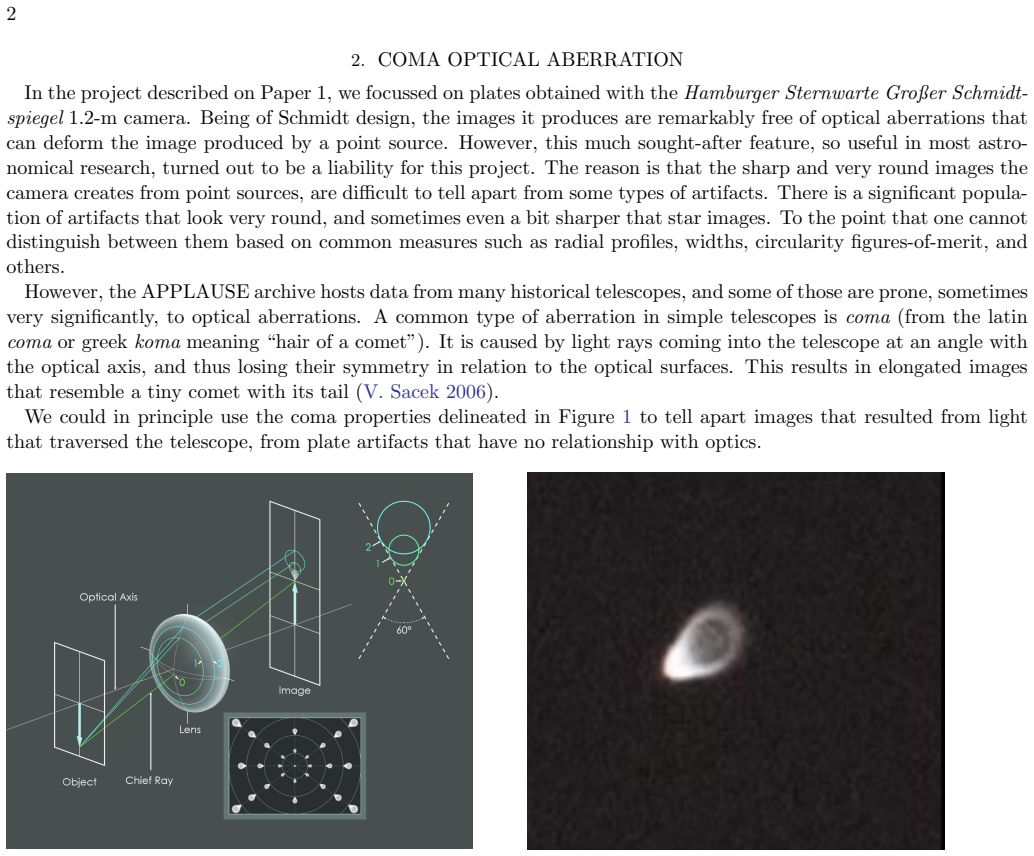
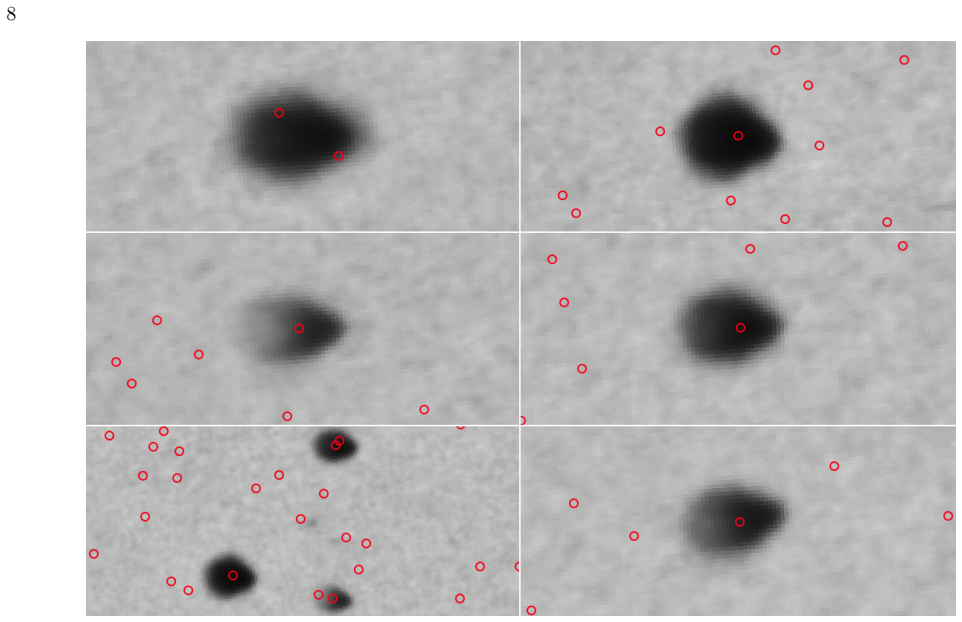
Transient images exhibit the coma aberration pattern expected from off-axis point sources recorded through the telescope optics, a signature that plate artifacts cannot naturally reproduce. Although the data does not establish the physical origin of the light, it lends support to hypotheses that do not rely on instrumental effects.
Load-bearing premise
The image shapes are produced by the telescope's optical aberrations on real point sources rather than by some other process that could mimic the coma pattern on the plate.
Editorial extensions
If this is right
- Detected transients can be validated as likely real by checking for the expected optical aberration signature.
- This approach reduces the likelihood that the transients are merely plate artifacts.
- The method provides additional evidence for the existence of fast astronomical transients in historical data.
- Similar aberration analysis could be applied to other archival photographic surveys.
Reading between the lines
- This could lead to re-examination of other controversial transient detections in old plates using the same optical signature test.
- If the pattern holds, it strengthens the case for using pre-digital data in modern transient astronomy studies.
- Future digital surveys might incorporate aberration modeling to flag potential artifacts automatically.
Signed reviews
Editorial analysis
A structured set of objections, weighed in public.
Referee Report
Summary. The manuscript claims that images of fast astronomical transients detected in 1950s Palomar sky survey photographic plates exhibit the coma aberration pattern expected from off-axis point sources recorded through the telescope optics. This morphological signature is presented as one that plate artifacts cannot naturally reproduce, thereby lending support to hypotheses of astronomical (rather than instrumental) origin for the transients without establishing the physical source of the light.
Significance. If the morphological distinction can be placed on a quantitative footing, the approach would supply a useful, optics-based validation criterion for vetting historical transient candidates in photographic-plate archives. Such a test could strengthen the evidentiary basis for rare fast-transient claims from mid-20th-century surveys and might be generalized to other wide-field plate collections.
major comments (3)
- [Abstract] Abstract: the central claim that transients exhibit the expected coma pattern and that artifacts cannot reproduce it is asserted without any quantitative measurement protocol, error analysis, measured shape parameters of the transients, or example images, so the strength of the supporting evidence cannot be assessed from the text.
- [Abstract] Abstract: no model of the telescope optics (ray-trace, Zernike decomposition, or predicted coma shape for the Palomar survey telescopes) is supplied against which the observed transient morphologies could be compared.
- [Abstract] Abstract: no simulation, catalog, or morphological statistics of plausible plate artifacts (scratches, dust, chemical spots, etc.) are presented to demonstrate non-overlap with the coma pattern, leaving the uniqueness assertion untested.
Simulated Author's Rebuttal
We thank the referee for the careful reading and constructive suggestions. The comments correctly note that the abstract is too terse to convey the supporting details already present in the main text. We will revise the abstract to summarize the quantitative aspects, optical comparisons, and reasoning on artifacts. Point-by-point responses follow.
read point-by-point responses
-
Referee: [Abstract] Abstract: the central claim that transients exhibit the expected coma pattern and that artifacts cannot reproduce it is asserted without any quantitative measurement protocol, error analysis, measured shape parameters of the transients, or example images, so the strength of the supporting evidence cannot be assessed from the text.
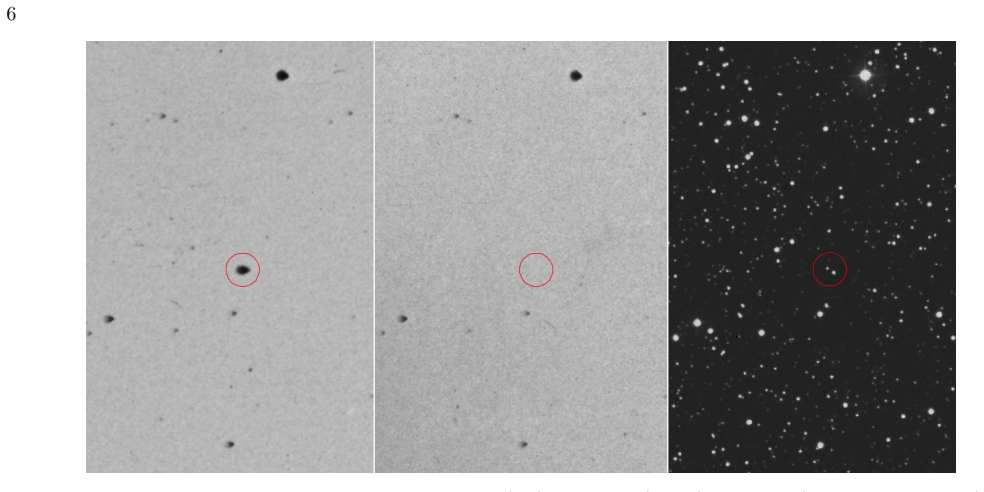
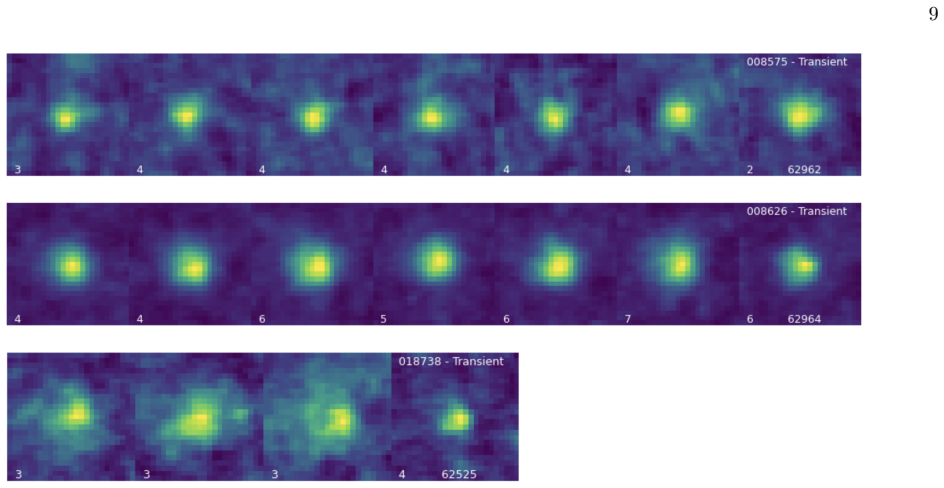
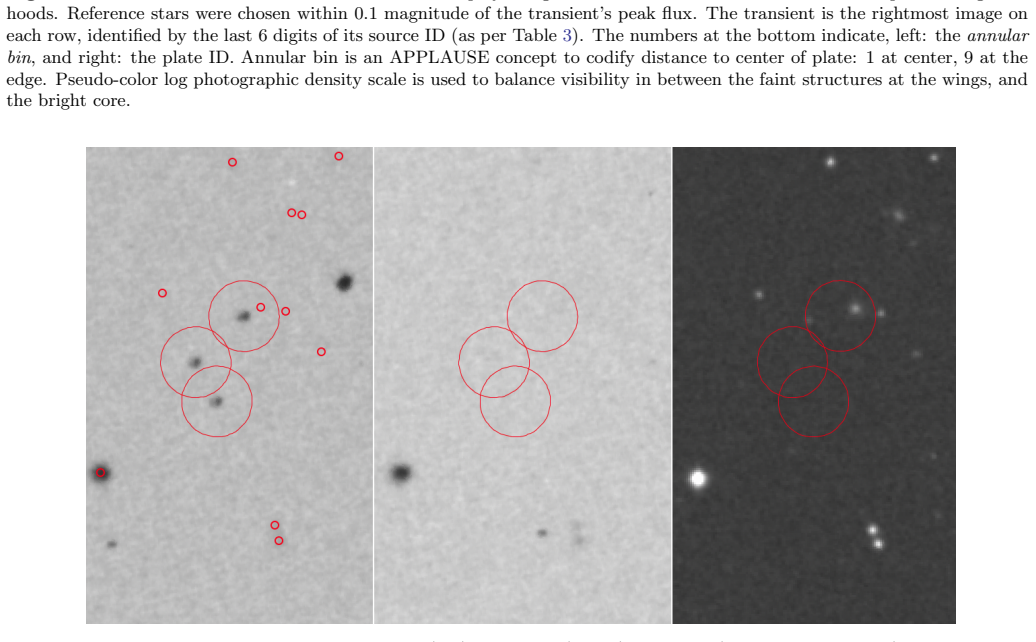
Authors: The manuscript body contains example images of transients displaying the characteristic coma tails, a measurement protocol based on the orientation and asymmetry of the aberration relative to field position, and shape-parameter comparisons. We will expand the abstract to reference these elements and the associated figures/sections so the evidentiary basis is evident from the abstract alone. revision: yes
-
Referee: [Abstract] Abstract: no model of the telescope optics (ray-trace, Zernike decomposition, or predicted coma shape for the Palomar survey telescopes) is supplied against which the observed transient morphologies could be compared.
Authors: The text compares observed transient morphologies to the known off-axis coma of the Palomar Schmidt telescope as described in its optical design documentation. We will add a concise clause to the abstract noting this comparison to the telescope's documented point-spread function for off-axis sources. revision: yes
-
Referee: [Abstract] Abstract: no simulation, catalog, or morphological statistics of plausible plate artifacts (scratches, dust, chemical spots, etc.) are presented to demonstrate non-overlap with the coma pattern, leaving the uniqueness assertion untested.
Authors: The manuscript explains that the directed, field-position-dependent coma pattern is produced by the telescope optics and is not a morphology that random chemical or mechanical defects naturally generate. While we do not supply a statistical catalog of artifacts, the optical specificity is the basis for the claim. We will revise the abstract to make this reasoning explicit. revision: partial
Circularity Check
No circularity; claim is direct morphological comparison without self-referential derivation
full rationale
The paper asserts that transient images exhibit the coma aberration pattern expected from off-axis point sources through the telescope optics, a signature plate artifacts cannot naturally reproduce. No equations, fitted parameters, self-citations, or derivations are present in the provided text that reduce this claim to its own inputs by construction. The distinction is framed as an observational fact rather than a quantity defined in terms of itself or obtained via self-referential fitting, rendering the analysis self-contained.
Assumptions & free parameters
Cite this review
Pith. "Pith review of Fast Astronomical Transients in Archival Photographic Plates: Using optical aberrations as a tool for discerning real images, from plate artifacts." pith.science (2026). https://pith.science/paper/XH5YDVER
@misc{pith2026260608319,
  author       = {Pith},
  title        = {Pith review of: Fast Astronomical Transients in Archival Photographic Plates: Using optical aberrations as a tool for discerning real images, from plate artifacts},
  year         = {2026},
  howpublished = {\url{https://pith.science/paper/XH5YDVER}},
  note         = {Machine review of arXiv:2606.08319}
}
read the original abstract
The detection of fast astronomical transients in photographic plates from the Palomar sky surveys conducted in the 1950s, was subject to the criticism that such transients could be just the effect of otherwise unaccounted for plate artifacts. In this paper, we show that transient images exhibit the coma aberration pattern expected from off-axis point sources recorded through the telescope optics, a signature that plate artifacts cannot naturally reproduce. Although the data does not by themselves establish the physical origin of the light that generated the images, they lend support to hypotheses that do not rely on instrumental effects to explain transients.
Figures


Figures from the paper (8 more)




Reference graph
Works this paper leans on
-
[1]
Bertin, E., & Arnouts, S. 1996, A&AS, 117, 393, doi: 10.1051/aas:1996164
-
[2]
Bruehl, S., Doherty, B., Streblyanska, A., & Villarroel, B. 2026, Machine Learning Supports Existence of Previously Unrecognized Transient Astronomical Phenomena in Historical Observatory Images, https://arxiv.org/abs/arXiv:2604.18799
work page Pith review arXiv 2026
-
[3]
2025, Scientific Reports, doi: 10.1038/s41598-025-21620-3
Bruehl, S., & Villarroel, B. 2025, Scientific Reports, doi: 10.1038/s41598-025-21620-3
-
[4]
Searching for Fast Astronomical Transients in Archival Photographic Plates
Busko, I. 2026a, arXiv e-prints. https://arxiv.org/abs/2603.20407
-
[5]
Djorgovski, S. G., Gal, R. R., Odewahn, S. C., et al. 2003, Bulletin of the American Astronomical Society, 35, 606 Gaia Collaboration, Vallenari, A., Brown, A. G. A., et al. 2023, A&A, 674, A1, doi: 10.1051/0004-6361/202243940
-
[6]
2024, arXiv e-prints, arXiv:2402.00497, doi: 10.48550/arXiv.2402.00497
Hambly, N., & Blair, A. 2024, arXiv e-prints, arXiv:2402.00497, doi: 10.48550/arXiv.2402.00497
-
[7]
Joye, W. A. 2006, in Astronomical Society of the Pacific Conference Series, Vol. 351, Astronomical Data Analysis Software and Systems XV, ed. C. Gabriel, C. Arviset, D. Ponz, & E. Solano, 574
2006
-
[8]
2026, Optical Aberrations, https://exclusivearchitecture.com/03-technical-articles- CLT-07-optical-aberrations.html
Kohlpaintner, M. 2026, Optical Aberrations, https://exclusivearchitecture.com/03-technical-articles- CLT-07-optical-aberrations.html
2026
Show all 17 references
-
[9]
G., Levine, S
Monet, D. G., Levine, S. E., Canzaras, B., & et al. 2003, AJ, 125, 984, doi: 10.1086/345888
2003 doi
-
[10]
2019, OSLO - Landscape Lens - Comatic Aberration tutorial, https://omlc.org/classroom/oslotut/ landscape/landscape2.html 12
Prahl, S. 2019, OSLO - Landscape Lens - Comatic Aberration tutorial, https://omlc.org/classroom/oslotut/ landscape/landscape2.html 12
2019
-
[11]
2006, Notes on Amateur Telescope Optics, 1.0 https://www.telescope-optics.net/coma.htm
Sacek, V. 2006, Notes on Amateur Telescope Optics, 1.0 https://www.telescope-optics.net/coma.htm
2006
-
[12]
2022, Monthly Notices of the Royal Astronomical Society, 515, 1380, doi: 10.1093/mnras/stac1552
Solano, E., Villarroel, B., & Rodrigo, C. 2022, Monthly Notices of the Royal Astronomical Society, 515, 1380, doi: 10.1093/mnras/stac1552
2022 doi
-
[13]
Tatarskii, V. I. 1971, The Effects of the Turbulent Atmosphere on Wave Propagation (Jerusalem /
1971
-
[14]
Villarroel, B., Solano, E., & Marcy, G. W. 2025a, arXiv e-prints. https://arxiv.org/abs/2507.15896
-
[15]
2020, AJ, 159, 8, doi: 10.3847/1538-3881/ab570f
Villarroel, B., Soodla, J., Comer´ on, S., et al. 2020, AJ, 159, 8, doi: 10.3847/1538-3881/ab570f
2020 doi
-
[16]
W., Geier, S., et al
Villarroel, B., Marcy, G. W., Geier, S., et al. 2021, Scientific Reports, 11, doi: 10.1038/s41598-021-92162-7
2021 doi
-
[17]
2025b, arXiv e-prints, doi: 10.13140/RG.2.2.17502.14402
Villarroel, B., Solano, E., Guergouri, H., et al. 2025b, arXiv e-prints, doi: 10.13140/RG.2.2.17502.14402
Reviewed June 27, 2026 · model on record in the stance chip above.
Discussion (0). Continue with ORCID to comment.