REVIEW 4 major objections 6 minor 7 cited by
CTLformer: A Hybrid Denoising Model Combining Convolutional Layers and Self-Attention for Enhanced CT Image Reconstruction
T0 review · 4 major / 6 minor · reviewed 2026-08-15 · deepseek-v4-flash
Pith's one-line read A hybrid CNN-transformer model claims sharper low-dose CT images at 1.85M parameters
desk verdict Single-patient metrics and an internally inconsistent efficiency claim sink an otherwise routine hybrid CNN-transformer LDCT denoising paper. read the letter →
The pith
A machine-rendered reading of the paper's core claim, the machinery that carries it, and where it could break.
The reading
What carries the argument
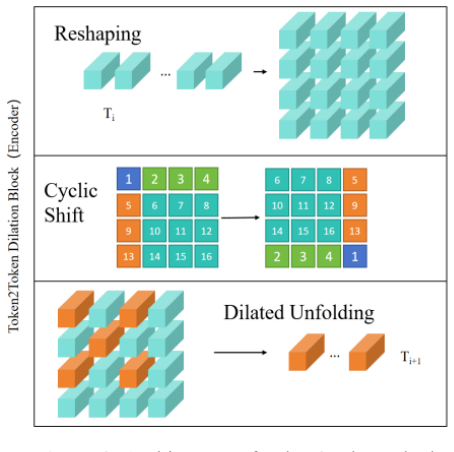
The argument is carried by two interlocking attention mechanisms inside a hybrid architecture. The multi-scale attention mechanism uses a Token2Token module to produce tokens at several resolutions and a self-attention interaction module that treats local and global attention ranges separately, alternately boosting one and then the other; this is what lets the network keep small textures and large structures in the same representation. The dynamic attention control mechanism is a lightweight fully connected layer that reads the input image's noise and texture pattern and produces per-region adjustment factors, which are used to reallocate attention toward high-noise regions while preserving detail in low-noise regions. Convolutional layers perform local feature extraction, and overlapping inference reduces boundary artifacts at inference time. Together these parts supply the mechanism by which CTLformer aims to beat both convolutional-only RED-CNN and transformer-only CTformer.
What would settle it
Run the same 9-patient/1-patient cross-validation for all ten patients in the 2016 low-dose CT challenge dataset and report SSIM, RMSE, and PSNR per patient; if CTLformer does not beat CTformer and RED-CNN on a clear majority of patients, the paper's central claim is falsified.
Extended reading notes
Core claim
The central discovery claimed by the paper is that a convolution-free Transformer for low-dose CT denoising, CTformer, can be improved by adding convolutional feature extraction and two attention-control mechanisms without growing the model. In the proposed CTLformer, multi-scale tokens are generated from the input through a Token2Token module, and a self-attention interaction unit alternately strengthens local and global attention so that edges and textures are not lost while whole-organ structure is preserved. A second module, the dynamic attention control, uses a lightweight fully connected layer to estimate per-region noise characteristics from the input and reallocates attention weights accordingly, concentrating suppression on high-noise areas. On the held-out test patient used in the paper, CTLformer reports SSIM 0.9141 versus 0.9120 for CTformer and RMSE 9.0133 versus 9.0223, with the same parameter count as RED-CNN at 1.85 million, and the authors interpret these numbers as demonstrating superiority over pure CNN and pure transformer baselines.
Load-bearing premise
The results are presented for one held-out patient and largely one representative slice; if other test patients show smaller or reversed differences, the claimed superiority would not hold.
Editorial extensions
If this is right
- Convolution and self-attention can be combined at 1.85 million parameters without sacrificing either local detail or global context, suggesting that smaller hybrid models are viable for LDCT denoising.
- A single model with dynamic attention control could in principle handle CT images with varying noise levels across patients, reducing the need for per-dose retraining.
- The reported improvement over CTformer implies that transformer-only denoisers lose texture detail to over-smoothing and that adding convolutional layers is a direct remedy.
- Overlapping inference as a post-processing strategy could be applied to other patch-based medical image restoration models to reduce stitching artifacts.
- If the mechanism transfers, hybrid local-global attention could improve other image restoration tasks where noise is spatially non-uniform, such as low-dose MRI or ultrasound.
Reading between the lines
- Editorial extension: the reported advantage on one test patient is too small to establish general superiority by itself; averaging across the ten cross-validation folds would show whether the architecture consistently wins or only on that anatomy.
- Extension: an ablation that switches off the dynamic attention control module would reveal how much of the gain comes from that mechanism rather than from the multi-scale tokens; the paper does not include one.
- Extension: because the paper reports only parameter count as an efficiency measure, a natural follow-up is to measure per-image runtime and memory on the same GPU to see whether the claimed efficiency holds in practice.
- Extension: the same dynamic attention idea could be tested on artificially noised full-dose CT images with known noise levels to see whether the model's attention maps actually shift toward high-noise regions as intended.
Signed reviews
Editorial analysis
A structured set of objections, weighed in public.
Referee Report
Summary. The paper proposes CTLformer, a hybrid convolutional-transformer model for low-dose CT denoising. Two novel components are claimed: a multi-scale attention mechanism based on Token2Token and self-attention interaction, and a dynamic attention control mechanism that adapts attention to noise characteristics. The model is evaluated on the 2016 AAPM Mayo Clinic LDCT Challenge dataset against RED-CNN, WGAN-VGG, and CTformer, reporting SSIM, RMSE, and parameter counts. The abstract and conclusion claim that CTLformer significantly outperforms existing methods in both denoising performance and model efficiency.
Significance. If the reported architecture were fully specified and the performance claims were supported by rigorous evaluation, the proposed hybrid design could be a useful contribution to LDCT denoising, particularly the idea of noise-adaptive attention. However, the manuscript as written does not provide the necessary evidence: the evaluation is limited to a single patient slice, no statistical significance is established, and the efficiency claim is contradicted by the paper's own parameter counts. The strengths of the work—the qualitative architectural ideas—are not yet backed by reproducible or convincing experimental support.
major comments (4)
- [§3.4, Table 1] The central claim of 'significantly outperforms existing methods' rests on metrics from a single slice of a single patient (L506, slice 057). Section 3.1 describes a 9-patient train / 1-patient test cross-validation, but no per-fold results, means, standard deviations, or paired significance tests are reported. The differences against the strongest baseline, CTformer, are SSIM +0.0021 and RMSE −0.0090, which are within the range expected from training noise and could reflect favorable patient selection. The paper must report results across all test patients (and ideally all slices), with variability estimates and a paired statistical test (e.g., Wilcoxon signed-rank), before any claim of significant superiority is made.
- [§3.4, Table 1, Abstract] The abstract and conclusion claim that CTLformer outperforms existing methods in 'model efficiency,' but Table 1 reports CTLformer with 1.85M parameters versus CTformer with 1.45M parameters. On the paper's own parameter-based efficiency measure, CTLformer is less efficient than the baseline it claims to surpass. No runtime, FLOPs, throughput, or memory measurements are provided. The efficiency claim is therefore internally inconsistent and unsupported; either the claim must be retracted or substantiated with appropriate efficiency metrics.
- [§2.1, §2.2] The two key contributions—the multi-scale attention mechanism and the dynamic attention control mechanism—are described only in qualitative prose. No equations, tensor shapes, layer configurations, or algorithmic details are given, making the architecture impossible to reproduce from the text. For example, it is unclear how the 'dynamic adjustment factors' are computed from noise patterns and how they reallocate attention weights. The paper should provide a precise mathematical specification of both modules, including the exact computation of the attention maps and the integration with the Token2Token representation.
- [§3.2, §3.4, Table 1] Section 3.2 states that RMSE, PSNR, and SSIM are adopted as evaluation metrics, but Table 1 reports only SSIM and RMSE. PSNR is missing from the results. Furthermore, no ablation study is provided to isolate the contributions of the multi-scale attention and dynamic attention control components; without such an ablation, the observed (marginal) improvements cannot be attributed to the proposed mechanisms. The authors should report all three metrics and include ablation experiments that remove each of the two proposed components.
minor comments (6)
- [Keywords] The keyword 'denoisng' is misspelled; it should be 'denoising.'
- [§3.4, Table 1] The first row of Table 1 is labeled 'LCDT,' which appears to be a typo for 'LDCT' (low-dose CT). This should be corrected.
- [§3.4, Reference [12]] In §3.4 the text states 'CTLformer[12]' but reference [12] is the CTformer paper (Wang et al., PMB 2023), not the proposed CTLformer. This is a mis-citation and needs to be fixed.
- [§3.3, Implementation Details] The implementation details mention only hardware and the initial learning rate; the number of training epochs, loss function, optimizer, patch size, and denoising-specific preprocessing are not stated. These are necessary for reproducibility.
- [§2.2] The dynamic attention control mechanism is described as using 'a lightweight network, a Fully connected layer' but in the introduction it is called 'MLP or convolution.' This inconsistency should be resolved, and the exact architecture of the module should be specified.
- [Figures 1 and 2] The figures are referenced as 'Architecture of our method' and 'Architecture of Token2Token Block,' but in the manuscript text the figures are not described in sufficient detail to align with the prose. The figures should be self-contained with clear labels for each module and tensor resolution.
Circularity Check
No circularity: empirical model comparison with no fitted-input-as-prediction or self-citation chain.
full rationale
The paper does not claim a first-principles derivation; its central claim is an empirical performance comparison. CTLformer is trained with supervision on low-dose/full-dose pairs from the AAPM Mayo dataset and evaluated on a held-out patient (L506), which is conventional fitting rather than a circular reduction. No equation in the paper defines the reported SSIM/RMSE in terms of the model's own fitted parameters in a way that makes the test metrics equal to training targets by construction. No parameter is fitted to the L506 test result and then renamed as a prediction. The cited CTformer baseline (ref. 12) and other baselines are external prior works, not self-citations of the present authors, and no uniqueness theorem or modeling ansatz is imported from the authors' own prior work. The paper's weaknesses—single-patient reporting, absence of variance/significance statistics, and the parameter count 1.85M versus CTformer 1.45M undercutting the efficiency phrasing—are evidentiary or consistency problems, not circularity. Accordingly no specific circular step can be quoted, and the score is 0.
Assumptions & free parameters
free parameters (3)
- Learned network weights =
1.85M parameters trained on 9 patients
- Initial learning rate =
0.0001
- Batch size =
4
assumptions (3)
- domain assumption Training on 9 patients and testing on 1 patient is sufficient to support claims of general improvement.
- domain assumption SSIM and RMSE are appropriate proxies for clinical image quality.
- ad hoc to paper The prose description of the architecture is sufficient to define an implementable model.
invented entities (2)
-
Dynamic attention control mechanism
-
Multi-scale attention interaction module
Cite this review
Pith. "Pith review of CTLformer: A Hybrid Denoising Model Combining Convolutional Layers and Self-Attention for Enhanced CT Image Reconstruction." pith.science (2026). https://pith.science/paper/HUJQCCHC
@misc{pith2026250512203,
  author       = {Pith},
  title        = {Pith review of: CTLformer: A Hybrid Denoising Model Combining Convolutional Layers and Self-Attention for Enhanced CT Image Reconstruction},
  year         = {2026},
  howpublished = {\url{https://pith.science/paper/HUJQCCHC}},
  note         = {Machine review of arXiv:2505.12203}
}
read the original abstract
Low-dose CT (LDCT) images are often accompanied by significant noise, which negatively impacts image quality and subsequent diagnostic accuracy. To address the challenges of multi-scale feature fusion and diverse noise distribution patterns in LDCT denoising, this paper introduces an innovative model, CTLformer, which combines convolutional structures with transformer architecture. Two key innovations are proposed: a multi-scale attention mechanism and a dynamic attention control mechanism. The multi-scale attention mechanism, implemented through the Token2Token mechanism and self-attention interaction modules, effectively captures both fine details and global structures at different scales, enhancing relevant features and suppressing noise. The dynamic attention control mechanism adapts the attention distribution based on the noise characteristics of the input image, focusing on high-noise regions while preserving details in low-noise areas, thereby enhancing robustness and improving denoising performance. Furthermore, CTLformer integrates convolutional layers for efficient feature extraction and uses overlapping inference to mitigate boundary artifacts, further strengthening its denoising capability. Experimental results on the 2016 National Institutes of Health AAPM Mayo Clinic LDCT Challenge dataset demonstrate that CTLformer significantly outperforms existing methods in both denoising performance and model efficiency, greatly improving the quality of LDCT images. The proposed CTLformer not only provides an efficient solution for LDCT denoising but also shows broad potential in medical image analysis, especially for clinical applications dealing with complex noise patterns.
Figures


Forward citations
Cited by 7 Pith papers
-
Meta-Learning for Cold-Start Personalization in Prompt-Tuned LLMs
A meta-learned prompt-tuning method for cold-start LLM recommendations reports better Hit@10 and nDCG@10 on MovieLens-1M, but with no code, no error bars, and no shown results for Amazon or Recbole.
-
Research on Low-Latency Inference and Training Efficiency Optimization for Graph Neural Network and Large Language Model-Based Recommendation Systems
A hybrid GNN-LLM recommender with FPGA, DeepSpeed, and LoRA reportedly reaches NDCG@10 of 0.75 at 40-60ms latency while cutting training time by 66%, but the supporting artifacts are absent.
-
LLM-Augmented Symptom Analysis for Cardiovascular Disease Risk Prediction: A Clinical NLP
A small synthetic study reports that Bio_ClinicalBERT embeddings with Random Forest classify CVD risk in about 20 hand-written symptom texts, but the claims of MIMIC-III and CARDIO-NLP evaluation are unsupported.
-
Research on Model Parallelism and Data Parallelism Optimization Methods in Large Language Model-Based Recommendation Systems
A hybrid model-plus-data parallel scheme is reported to boost training throughput and GPU utilization for LLM-based recommenders, but the supporting experiments are not reproducible from the paper.
-
Deep Learning Model Acceleration and Optimization Strategies for Real-Time Recommendation Systems
A standard combination of model compression and serving optimization gives 2.4x throughput on a GPU benchmark, but the headline claims of <30% latency and preserved accuracy are not supported by the paper's own data.
-
Research on Personalized Financial Product Recommendation by Integrating Large Language Models and Graph Neural Networks
A hybrid LLM-plus-GNN recommender is claimed to beat collaborative filtering, LLM-only, and GNN-only baselines on financial product ranking, with NDCG@10 of 0.372.
-
LLM-Driven E-Commerce Marketing Content Optimization: Balancing Creativity and Conversion
An LLM copywriting pipeline combining fine-tuning, vector search, and weighted reranking reportedly lifts CTR by 12.5% and CVR by 8.3%, but the evidence is unverifiable and internally inconsistent.
Reference graph
Works this paper leans on
-
[1]
Y . Yang, W. Fang, X. Huang et al., Static superconducting gantry-based proton CT combined with X-ray CT as prior image for FLASH proton therapy. Nucl. Sci. Tech. 34(1), 11 (2023). https://doi.org/10.1007/s41365-022-01163-2
-
[2]
D. Brenner, E. Hall, Computed tomography-an increasing source of radiation exposure. New Engl. J. Med. 357, 2277– 2284 (2007). https://doi.org/10.1056/NEJMra072149 Method SSIM RMSE params LCDT 0.8759 14.2416 - RED-CNN 0.9077 10.1044 1.85M WGAN-VGG 0.9008 11.6370 34.07M CTformer 0.9120 9.0223 1.45M CTLformer 0.9141 9.0133 1.85M
-
[3]
J. Jing, W. Xia, M. Hou et al., Training low dose CT denoising network without high quality reference data. Phy. Med. Bio. 67, 84002 (2022). https://doi.org/10.1088/1361-6560/ac5f70
-
[4]
K. He, X. Zhang, S. Ren et al., Deep residual learning for image recognition, in Proceedings of the IEEE Conference on Computer Vision and Pattern Recognition (2016), pp. 770–778. https://doi.org/10.1109/CVPR.2016.90
-
[5]
F. Fan, D. Wang, H. Guo et al., On a sparse shortcut topology of artifcial neural networks. IEEE Trans. Artif. Intell. 3, 595–608 (2021). https://doi.org/10.1109/TAI.2021.3128132
arXiv 2021
-
[6]
X. Wang, R. Girshick, A. Gupta et al., Non-local neural networks, in Proceedings of the IEEE Conference on Computer Vision and Pattern Recognition (2018), pp. 7794–7803
work page 2018
-
[7]
A. Vaswani, N. Shazeer, N. Parmar et al., Attention is all you need, in 31st Conference on Neural Information Processing Systems (NIPS 2017), Long Beach, CA, USA (2017). https:// doi.org/ 10.48550/arXiv.1706.03762
-
[8]
Z. Liu, Y . Lin, Y . Cao et al., Swin transformer: Hierarchical vision transformer using shifted windows, in Proceedings of the IEEE/CVF International Conference on Computer Vision (2021), pp. 10012–10022. https://doi.org/10.48550/arXiv.2103
Show all 9 references
-
[9]
T. Würf, F. Ghesu, V . Christlein et al., Deep learning computed tomography. in International conference on medical image computing and computer-assisted intervention, in Medical Image Computing and Computer-Assisted Intervention-MICCAI 2016. MICCAI 2016, ed by S. Ourselin, L....
2017
Reviewed August 15, 2026 · model on record in the stance chip above.
Discussion (0). Continue with ORCID to comment.