Recognition: unknown
Probing Active Galactic Nuclei and Measuring the Hubble constant with Extreme-Mass-Ratio Inspirals
Pith reviewed 2026-05-10 15:54 UTC · model grok-4.3
The pith
EMRI gravitational waveforms can detect surrounding accretion disks and improve Hubble constant precision by up to 20%.
A machine-rendered reading of the paper's core claim, the machinery that carries it, and where it could break.
Core claim
Under the α-disk model, modifications to the orbital evolution of the secondary object due to the accretion disk produce distinguishable changes in the emitted gravitational waveform. Bayesian inference on simulated EMRI signals shows that all injected events successfully identify the presence of the disk environment. After correctly identifying the environment and constraining the disk parameters, the precision of Hubble constant measurements using the dark siren method improves by up to 20% for a single event.
What carries the argument
Bayesian inference on waveform modifications from orbital changes induced by the α-disk model (standard thin accretion disk) in the EMRI secondary.
If this is right
- All simulated EMRI events can identify the presence of an accretion disk environment.
- Constraining disk parameters allows deeper insight into the physical properties and luminosity of the accretion disk.
- Hubble constant measurements via the dark siren method gain up to 20% better precision per event once the environment is accounted for.
- Future EMRI data analysis requires inclusion of environmental effects to prevent systematic biases.
- Reliable identification of the host environment supports better cosmological inferences overall.
Where Pith is reading between the lines
- If accretion disks are common around EMRIs, failing to model them could systematically bias population-level cosmological constraints from gravitational wave data.
- This identification technique could enable statistical studies of AGN disk properties across many detected EMRIs without needing electromagnetic counterparts.
- Tighter single-event Hubble measurements may combine with other gravitational wave standard sirens to reduce overall uncertainty on the expansion history.
Load-bearing premise
The alpha-disk model accurately captures the main interactions between the secondary object and the accretion disk, making the orbital and waveform changes distinguishable from noise and other effects.
What would settle it
In simulations that include realistic detector noise, a substantial fraction of events with disk effects fail to be distinguished from no-disk cases, or including disk parameters produces no improvement in Hubble constant precision.
Figures




read the original abstract
Extreme-mass-ratio inspirals (EMRIs) carry valuable information about their surrounding astrophysical environments. Over the course of their long-term evolution, interactions between the secondary object and the accretion disk can produce observable effects on both the orbital evolution and the emitted gravitational waveform. Based on the modifications to the companion's orbital evolution induced by the accretion disk environment, we investigate the feasibility of identifying the presence of accretion disk environmental effects in EMRI systems using gravitational wave signals. Within a Bayesian framework, we analyze the capability of EMRI systems with multiple parameter configurations to distinguish accretion disk environmental effects. Our results show that, under the $\alpha$-disk model, all injected events can successfully identify the environment in which the EMRIs reside. Furthermore, we examined the improvement in the precision of Hubble constant measurements using the dark siren method after correctly identifying the accretion disk environment and constraining the relevant disk parameters. Constraining these environmental parameters may further deepen our understanding of the host environment, thereby enabling a more reliable inference of the physical properties of the accretion disk and its associated luminosity and ultimately improving the measurement of cosmological parameters. We find that the measurement precision for a single event can improve by as much as $20\%$. This work highlights the necessity of incorporating environmental effects into future EMRI data analysis. Proper modeling of such effects not only helps identify EMRI systems embedded in accretion disk environments but also further improves the precision of gravitational wave cosmological parameter inference.
Editorial analysis
A structured set of objections, weighed in public.
Referee Report
Summary. The paper claims that, under the α-disk model, Bayesian recovery of simulated EMRI gravitational-wave signals allows all injected events to successfully identify the presence of an accretion disk environment, and that constraining the associated disk parameters improves the precision of Hubble constant measurements (via the dark siren method) by as much as 20%.
Significance. If robust, the result would be useful for LISA-era EMRI analyses by showing that environmental effects can be extracted from waveforms and can tighten cosmological inferences. The explicit quantification of the H0 precision gain is a concrete strength of the work.
major comments (2)
- [Abstract and §4] Abstract and §4 (Bayesian analysis framework): the claim that 'all injected events can successfully identify the environment' is demonstrated only via matched α-disk injection and recovery. No cross-model injections (e.g., β-disk or other prescriptions) or explicit marginalization over disk-model uncertainty are reported, so it remains untested whether the induced orbital decay and phase shifts are unique to the α-disk or could be mimicked by other physics or parameter degeneracies (spin, eccentricity, mass ratio).
- [Abstract and results on H0] Abstract and results on H0: the reported 'as much as 20%' improvement in Hubble constant precision is obtained after the disk parameters have been constrained under the same α-disk model used for injection. Without a model-mismatch study, it is unclear whether this gain survives when the true environment differs from the recovery model.
minor comments (1)
- Notation for disk parameters (e.g., α, surface density) should be defined explicitly at first use and kept consistent with standard references in the field.
Simulated Author's Rebuttal
We thank the referee for their careful reading and constructive comments on our manuscript. We address each major comment below, noting that all claims in the paper are explicitly qualified as applying under the α-disk model for both injection and recovery.
read point-by-point responses
-
Referee: [Abstract and §4] Abstract and §4 (Bayesian analysis framework): the claim that 'all injected events can successfully identify the environment' is demonstrated only via matched α-disk injection and recovery. No cross-model injections (e.g., β-disk or other prescriptions) or explicit marginalization over disk-model uncertainty are reported, so it remains untested whether the induced orbital decay and phase shifts are unique to the α-disk or could be mimicked by other physics or parameter degeneracies (spin, eccentricity, mass ratio).
Authors: The abstract and Section 4 explicitly state that results hold 'under the α-disk model.' Successful identification is shown when the recovery model matches the injected α-disk environment, distinguishing it from the vacuum case. Cross-model injections and marginalization over alternative disk prescriptions were not performed, as the work focuses on demonstrating feasibility for this standard model. Other parameters (spin, eccentricity, mass ratio) are included in the Bayesian analysis and marginalized over; the posteriors indicate the disk effects remain detectable. No revision is needed, as the claims accurately reflect the study's scope. revision: no
-
Referee: [Abstract and results on H0] Abstract and results on H0: the reported 'as much as 20%' improvement in Hubble constant precision is obtained after the disk parameters have been constrained under the same α-disk model used for injection. Without a model-mismatch study, it is unclear whether this gain survives when the true environment differs from the recovery model.
Authors: The 20% figure is reported specifically for the matched α-disk case, where disk parameters are constrained and the environment is correctly identified. The manuscript does not assert that this gain persists under model mismatch; it instead illustrates the potential improvement when environmental effects are properly modeled. The abstract and discussion already qualify the results in this way and stress the importance of accurate modeling. No revision is required. revision: no
Circularity Check
No significant circularity: standard injection-recovery simulation study
full rationale
The paper's derivation consists of modeling orbital modifications under the α-disk prescription, injecting simulated EMRI signals, and performing Bayesian recovery to quantify identification rates and H0 precision gains. These outcomes are computed outputs from the controlled simulations rather than any step that reduces by construction to fitted inputs, self-definitions, or load-bearing self-citations. No uniqueness theorems, ansatzes, or renamings of known results are invoked in a circular manner. The analysis is self-contained against its own simulated benchmarks, which is the expected and non-circular structure for method-validation papers in gravitational-wave astronomy.
Axiom & Free-Parameter Ledger
axioms (1)
- domain assumption The α-disk model accurately represents the dominant accretion-disk interactions that modify EMRI orbital evolution and waveforms.
Forward citations
Cited by 1 Pith paper
-
Gravitational waves of extreme-mass-ratio inspirals in a rotating black hole with Dehnen dark matter halo
EMRI waveforms in a rotating black hole with Dehnen DM halo show amplitude and phase shifts from Kerr, with mismatch rising as DM mass parameter and black hole spin increase.
Reference graph
Works this paper leans on
-
[1]
Log-uniform
Dark Sirens Statistical Framework The key to inferring cosmological parameters using the dark-siren method is to statistically associate the three-dimensional localization volume measured from GW events with galaxy catalogs obtained by electromagnetic surveys. In this work, we adopt the hierarchical Bayesian inference frameworks proposed by [37] and [38]....
2018
-
[2]
Laser Interferometer Space Antenna
P. Amaro-Seoane, H. Audley, S. Babak, J. Baker, E. Ba- rausse, P. Bender, E. Berti, P. Binetruy, M. Born, D. Bor- toluzzi, J. Camp, C. Caprini, V. Cardoso, M. Colpi, J. Conklin, N. Cornish, C. Cutler, K. Danzmann, R. Dolesi, L. Ferraioli, V. Ferroni, E. Fitzsimons, J. Gair, L. Gesa Bote, D. Giardini, F. Gibert, C. Grimani, H. Hal- loin, G. Heinzel, T. Her...
work page internal anchor Pith review Pith/arXiv arXiv 2017
-
[3]
Hu and Y.-L
W.-R. Hu and Y.-L. Wu, National Science Review4, 685 (2017)
2017
-
[4]
TianQin: a space-borne gravitational wave detector
J. Luo, L.-S. Chen, H.-Z. Duan, Y.-G. Gong, S. Hu, J. Ji, Q. Liu, J. Mei, V. Milyukov, M. Sazhin, C.-G. Shao, V. T. Toth, H.-B. Tu, Y. Wang, Y. Wang, H.-C. Yeh, M.-S. Zhan, Y. Zhang, V. Zharov, and Z.-B. Zhou, Classical and Quantum Gravity33, 035010 (2016), arXiv:1512.02076 [astro-ph.IM]
work page Pith review arXiv 2016
- [5]
-
[6]
Testing Gravity with Extreme-Mass-Ratio Inspirals,
A. Cárdenas-Avendaño and C. F. Sopuerta, arXiv e-prints , arXiv:2401.08085 (2024), arXiv:2401.08085 [gr-qc]
- [7]
- [8]
-
[9]
S. Sigurdsson and M. J. Rees, MNRAS284, 318 (1997), arXiv:astro-ph/9608093 [astro-ph]
-
[10]
D. Mancieri, L. Broggi, M. Bonetti, and A. Sesana, A&A 694, A272 (2025), arXiv:2409.09122 [astro-ph.HE]
- [11]
- [12]
- [13]
-
[14]
S. Kejriwal, V. Witzany, M. Zajaček, D. R. Pasham, and A. J. K. Chua, MNRAS532, 2143 (2024), arXiv:2404.00941 [astro-ph.HE]
- [15]
- [16]
-
[17]
Can environmental effects spoil precision gravitational-wave astrophysics?
E. Barausse, V. Cardoso, and P. Pani, Phys. Rev. D89, 104059 (2014), arXiv:1404.7149 [gr-qc]
work page Pith review arXiv 2014
-
[18]
A. Derdzinski, D. D’Orazio, P. Duffell, Z. Haiman, and A. MacFadyen, MNRAS501, 3540 (2021), arXiv:2005.11333 [astro-ph.HE]
-
[19]
S. Chatterjee, S. Mondal, and P. Basu, MNRAS526, 5612 (2023), arXiv:2307.12144 [astro-ph.HE]
- [20]
- [21]
-
[22]
D. Bronicki, A. Cárdenas-Avendaño, and L. C. Stein, Classical and Quantum Gravity40, 215015 (2023), arXiv:2203.08841 [gr-qc]
-
[23]
E. Barausse and L. Rezzolla, Phys. Rev. D77, 104027 (2008), arXiv:0711.4558 [gr-qc]
-
[24]
F. Hossein Nouri and A. Janiuk, A&A687, A184 (2024), arXiv:2309.06028 [astro-ph.HE]
- [25]
- [26]
-
[27]
J. Takátsy, L. Zwick, K. Hendriks, P. Saini, G. Fabj, and J. Samsing, Classical and Quantum Gravity42, 215006 (2025), arXiv:2505.09513 [astro-ph.HE]
- [28]
- [29]
-
[30]
Frank, A
J. Frank, A. King, and D. Raine,Accretion Power in Astrophysics, 3rd ed. (Cambridge University Press, 2002)
2002
-
[31]
Y.-F. Jiang, O. Blaes, J. M. Stone, and S. W. Davis, ApJ 885, 144 (2019), arXiv:1904.01674 [astro-ph.HE]
-
[32]
P. Basu, S. Chatterjee, and S. Mondal, MNRAS531, 1506 (2024)
2024
- [33]
- [34]
-
[35]
N. Karnesis, M. L. Katz, N. Korsakova, J. R. Gair, and N. Stergioulas, MNRAS526, 4814 (2023), arXiv:2303.02164 [astro-ph.IM]
-
[36]
J. A. Frieman, M. S. Turner, and D. Huterer, ARA&A 46, 385 (2008), arXiv:0803.0982 [astro-ph]
work page Pith review arXiv 2008
-
[37]
Planck 2018 results. VI. Cosmological parameters
Planck Collaboration, N. Aghanim, Y. Akrami, M. Ash- down, J. Aumont, C. Baccigalupi, M. Ballardini, A. J. Banday, R. B. Barreiro, N. Bartolo, S. Basak, R. Battye, K. Benabed, J.-P. Bernard, M. Bersanelli, P. Bielewicz, J. J. Bock, J. R. Bond, J. Borrill, F. R. Bouchet, F. Boulanger, M. Bucher, C. Burigana, R. C. Butler, E. Calabrese, J.-F. Cardoso, J. Ca...
work page internal anchor Pith review Pith/arXiv arXiv 2020
-
[38]
H.-Y. Chen, M. Fishbach, and D. E. Holz, Nature562, 545 (2018), arXiv:1712.06531 [astro-ph.CO]
work page Pith review arXiv 2018
- [39]
-
[40]
Y. Ueda, M. Akiyama, G. Hasinger, T. Miyaji, and M. G. Watson, ApJ786, 104 (2014), arXiv:1402.1836 [astro-ph.CO]
work page Pith review arXiv 2014
- [41]
-
[42]
B. F. Schutz, Nature323, 310 (1986)
1986
- [43]
-
[44]
Electromagnetic Flares from Compact-Object Mergers in AGN Disks: Signatures and Predictions
H. Tagawa, Z. Haiman, S. S. Kimura, H. M. Yesuf, and H. Guo, arXiv e-prints , arXiv:2604.05020 (2026), arXiv:2604.05020 [astro-ph.HE]
work page internal anchor Pith review Pith/arXiv arXiv 2026
-
[45]
O. Gilbert, J. J. Ruan, M. Eracleous, D. Haggard, and J. C. Runnoe, ApJ994, 209 (2025), arXiv:2409.10486 [astro-ph.HE]
-
[46]
G. Miniutti, R. D. Saxton, M. Giustini, K. D. Alexander, R. P. Fender, I. Heywood, I. Monageng, M. Coriat, A. K. Tzioumis, A. M. Read, C. Knigge, P. Gandhi, M. L. Pre- torius, and B. Agís-González, Nature573, 381 (2019), arXiv:1909.04693 [astro-ph.HE]
-
[47]
R. Arcodia, A. Merloni, K. Nandra, J. Buchner, M. Sal- vato, D. Pasham, R. Remillard, J. Comparat, G. Lamer, G. Ponti, A. Malyali, J. Wolf, Z. Arzoumanian, D. Bogens- berger, D. A. H. Buckley, K. Gendreau, M. Gromadzki, E. Kara, M. Krumpe, C. Markwardt, M. E. Ramos-Ceja, A. Rau, M. Schramm, and A. Schwope, Nature592, 704 (2021), arXiv:2104.13388 [astro-ph.HE]
-
[48]
R. Arcodia, Z. Liu, A. Merloni, A. Malyali, A. Rau, J. Chakraborty, A. Goodwin, D. Buckley, J. Brink, M. Gromadzki, Z. Arzoumanian, J. Buchner, E. Kara, K. Nandra, G. Ponti, M. Salvato, G. Anderson, P. Bal- dini, I. Grotova, M. Krumpe, C. Maitra, J. C. A. Miller- Jones, and M. E. Ramos-Ceja, A&A684, A64 (2024), arXiv:2401.17275 [astro-ph.HE]
-
[49]
J. Chakraborty, E. Kara, R. Arcodia, J. Buchner, M. Giustini, L. Hernández-García, I. Linial, M. Mas- terson, G. Miniutti, A. Mummery, C. Panagiotou, E. Quintin, and P. Sánchez-Sáez, ApJ983, L39 (2025), arXiv:2503.19013 [astro-ph.HE]
-
[50]
L. Hernández-García, J. Chakraborty, P. Sánchez-Sáez, C. Ricci, J. Cuadra, B. McKernan, K. E. S. Ford, P. Aré- valo, A. Rau, R. Arcodia, E. Kara, Z. Liu, A. Merloni, G. Bruni, A. Goodwin, Z. Arzoumanian, R. J. Assef, P. Baldini, A. Bayo, F. E. Bauer, S. Bernal, M. Bright- man, G. Calistro Rivera, K. Gendreau, D. Homan, M. Krumpe, P. Lira, M. L. Martínez-A...
-
[51]
M. Nicholl, T. Wevers, S. R. Oates, K. D. Alexan- der, G. Leloudas, F. Onori, A. Jerkstrand, S. Gomez, S. Campana, I. Arcavi, P. Charalampopoulos, M. Gro- madzki, N. Ihanec, P. G. Jonker, A. Lawrence, I. Mandel, S. Schulze, P. Short, J. Burke, C. McCully, D. Hiramatsu, D. A. Howell, C. Pellegrino, H. Abbot, J. P. Anderson, E. Berger, P. K. Blanchard, G. C...
-
[52]
M. Giustini, G. Miniutti, and R. D. Saxton, A&A636, L2 (2020), arXiv:2002.08967 [astro-ph.HE]
- [53]
-
[54]
Black holes in binary systems: Observational appearances,
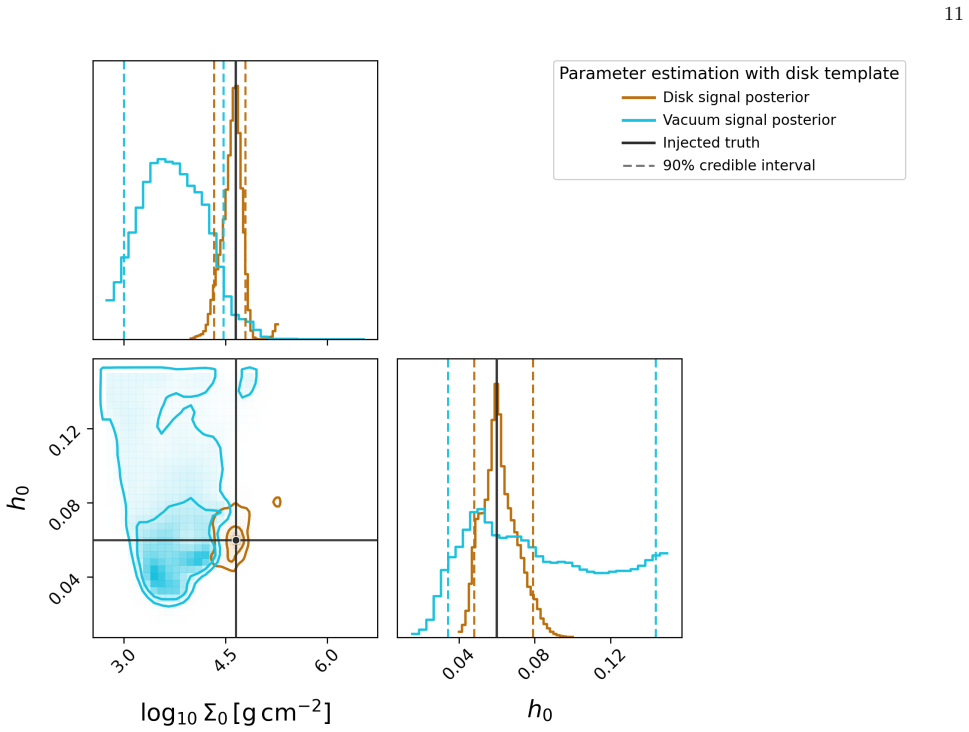
N. I. Shakura and R. A. Sunyaev, “Black holes in binary systems: Observational appearances,” inX- and Gamma- Ray Astronomy, edited by H. Bradt and R. Giacconi (Springer Netherlands, Dordrecht, 1973) pp. 155–164. 15 FIG. 6: Corner plots showing the posterior probability distributions of the recovered parameters obtained with the disk template for both the ...
1973
discussion (0)
Sign in with ORCID, Apple, or X to comment. Anyone can read and Pith papers without signing in.