Λ_btoΛ^((*))ν{barν} and bto s B decays
Pith reviewed 2026-05-18 12:02 UTC · model grok-4.3
The pith
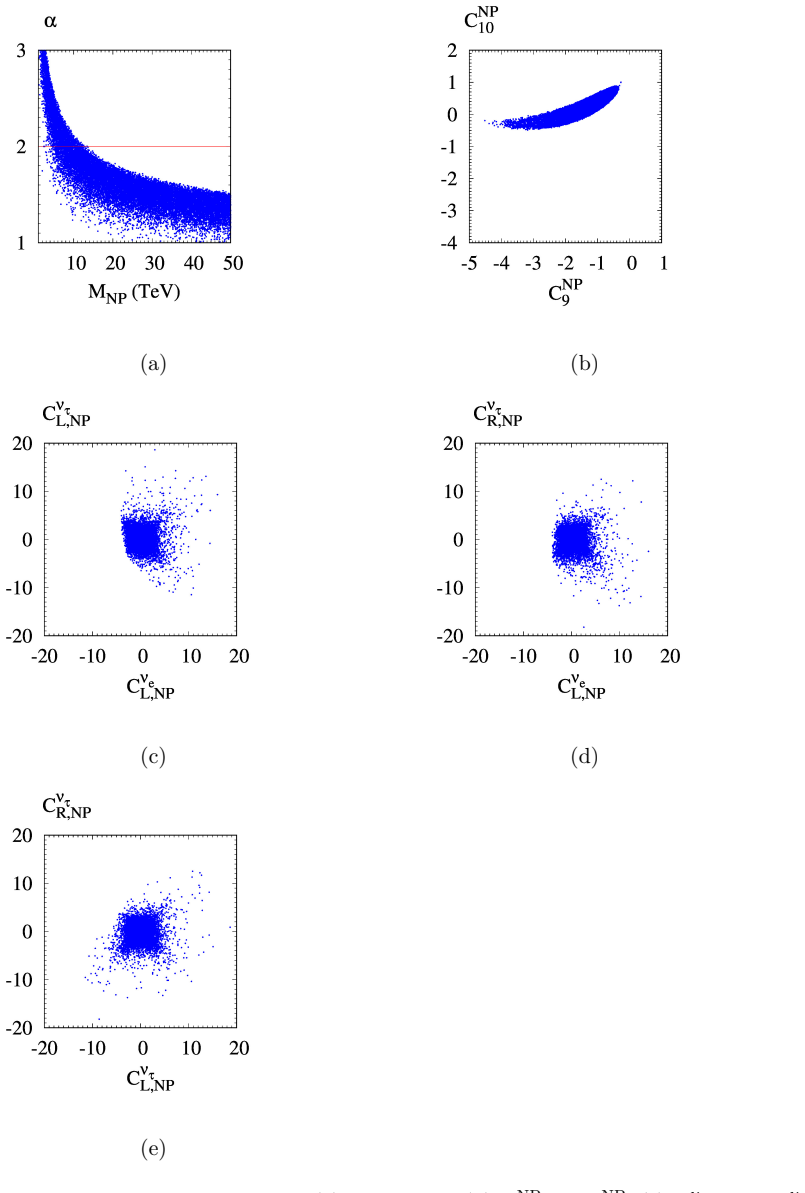
Constraints from mesonic b to s decays predict baryonic Lambda_b to Lambda nu nubar rates at about twice the standard model value.
A machine-rendered reading of the paper's core claim, the machinery that carries it, and where it could break.
Core claim
Fitting new physics contributions to mesonic b to s observables including B+ to K+ nu nubar, B0 to K*0 nu nubar, R(K*), Br(Bs to mu+ mu-), Br(B+ to K+ mu+ mu-), and P5' yields predictions that Br(Lambda_b to Lambda nu nubar) and Br(Lambda_b to Lambda* nu nubar) equal 2.07 and 1.07 times their standard model values, respectively, while bounding the new physics mediator scale to 2.04 TeV ≤ M_NP ≤ 11.76 TeV at 1 sigma, together with a sum rule connecting these rates to the mesonic counterparts.
What carries the argument
Effective operators for b to s nu nubar transitions whose coefficients are determined from mesonic data and then used with baryonic matrix elements to compute branching ratios and derive the sum rule.
Load-bearing premise
New physics effects extracted from mesonic decays can be applied to baryonic decays with no large extra uncertainties from baryon form factors or matrix elements.
What would settle it
A measured branching ratio for Lambda_b to Lambda nu nubar that is far from 2.07 times the standard model prediction would falsify the direct mapping from mesonic constraints.
Figures


read the original abstract
The baryonic $b\to s$ transition $\Lambda_b\to\Lambda^{(*)}\nu{\bar\nu}$ is analyzed. We combine the mesonic counterpart $B^+\to K^+\nu{\bar\nu}$ and $B^0\to K^{*0}\nu{\bar\nu}$ as well as other observables involving $B$ mesons like $R(K^{(*)})$, ${\rm Br}(B_s\to\mu^+\mu^-)$, ${\rm Br}(B^+\to K^+\mu^+\mu^-)$, and $P_5'(B^+\to K^{*+}\mu^+\mu^-)$. Using the constraints from mesonic sector, we present predictions for the currently unobserved baryonic decay modes, which is very complementary to mesonic modes for probing new physics. We find that the new physics scale $M_{\rm NP}$ to be $2.04~{\rm TeV}\le M_{\rm NP} \le 11.76~{\rm TeV}$ (at $1\sigma$) for ordinary heavy new mediators. Our predictions for the branching ratios ${\rm Br}(\Lambda_b\to\Lambda^{(*)}\nu{\bar\nu})$ are $2.07 (1.07)$ times the standard model estimations, which could be verified at future colliders. We also find a sum rule for ${\rm Br}(\Lambda_b\to\Lambda \nu{\bar\nu})$ and ${\rm Br}(B\to K^{(*)}\nu{\bar\nu})$ that is very similar to that for $b\to c$ semi-leptonic decays.
Editorial analysis
A structured set of objections, weighed in public.
Referee Report
Summary. The paper analyzes the baryonic b→s transition Λ_b→Λ^{(*)}νν̄. It combines constraints from mesonic decays B^+→K^+νν̄, B^0→K^{*0}νν̄, R(K^{(*)}), Br(B_s→μ^+μ^-), Br(B^+→K^+μ^+μ^-), and P_5'(B^+→K^{*+}μ^+μ^-). Using these, it predicts the branching ratios for the baryonic modes and finds the new physics scale M_NP in the range 2.04 TeV to 11.76 TeV at 1σ for heavy mediators. It also presents a sum rule for the branching ratios similar to b→c decays.
Significance. If the central results hold, this provides complementary information for probing new physics in b→s transitions through baryonic decays, which are currently unobserved but could be verified at future colliders. The sum rule relating baryonic and mesonic modes adds a useful theoretical tool. The use of mesonic constraints to inform baryonic predictions demonstrates a practical way to connect different hadronic sectors in new physics analyses.
major comments (2)
- The abstract states the numerical results for M_NP (2.04 TeV ≤ M_NP ≤ 11.76 TeV at 1σ) and the branching ratio multipliers 2.07 (1.07) but provides no details on the fitting procedure, error propagation, form-factor inputs, or data-selection criteria, so it is impossible to verify whether the central claims are supported by the underlying calculations.
- The baryonic branching-ratio predictions are obtained by fitting new-physics parameters to mesonic data. This construction requires that the ratio of baryonic to mesonic hadronic matrix elements is known to better precision than the claimed deviation from SM. Any mismatch in the treatment of form-factor uncertainties, SU(3) breaking, or higher-order corrections between the two sectors would propagate directly into the quoted branching-ratio multipliers and the derived M_NP interval.
minor comments (1)
- The phrasing '2.07 (1.07) times' in the abstract should explicitly state which factor applies to Br(Λ_b→Λ νν̄) and which to Br(Λ_b→Λ* νν̄).
Simulated Author's Rebuttal
We thank the referee for the careful reading of our manuscript and the constructive comments. We address each major comment below and have revised the manuscript to improve clarity on methodological aspects and uncertainty treatment.
read point-by-point responses
-
Referee: The abstract states the numerical results for M_NP (2.04 TeV ≤ M_NP ≤ 11.76 TeV at 1σ) and the branching ratio multipliers 2.07 (1.07) but provides no details on the fitting procedure, error propagation, form-factor inputs, or data-selection criteria, so it is impossible to verify whether the central claims are supported by the underlying calculations.
Authors: The abstract is intentionally concise to highlight the main results. The fitting procedure (global χ² minimization to mesonic observables), error propagation (via experimental and theoretical covariance matrices), form-factor inputs (lattice QCD and LCSR parametrizations), and data-selection criteria (latest PDG and LHCb averages) are fully detailed in Sections 3 and 4 of the manuscript. These sections allow direct verification of the quoted M_NP interval and branching-ratio multipliers. We have added a single sentence to the abstract referencing the global fit to mesonic data for improved readability. revision: yes
-
Referee: The baryonic branching-ratio predictions are obtained by fitting new-physics parameters to mesonic data. This construction requires that the ratio of baryonic to mesonic hadronic matrix elements is known to better precision than the claimed deviation from SM. Any mismatch in the treatment of form-factor uncertainties, SU(3) breaking, or higher-order corrections between the two sectors would propagate directly into the quoted branching-ratio multipliers and the derived M_NP interval.
Authors: We agree that consistent treatment of hadronic inputs is essential. Our analysis employs the same form-factor parametrizations and uncertainty ranges for overlapping kinematic regions, and the derived sum rule directly relates the baryonic and mesonic branching ratios, thereby canceling several common hadronic uncertainties. To address the referee's concern explicitly, we have added a new paragraph in Section 5 quantifying the residual impact of SU(3)-breaking effects and higher-order corrections on the 2.07 multiplier and the M_NP range; the central results remain stable within the quoted 1σ interval. revision: yes
Circularity Check
No significant circularity; predictions use independent mesonic constraints on shared operators
full rationale
The paper constrains new-physics Wilson coefficients or equivalent M_NP scale from mesonic b→s observables (B→Kνν̄, B→K*νν̄, R(K(*)), B_s→μμ, etc.) and then evaluates the same operators on Λ_b→Λ(*)νν̄ matrix elements to obtain branching-ratio multipliers (2.07 and 1.07). This is a standard phenomenological prediction for unobserved modes rather than a reduction by construction. No self-definitional loop, no fitted input renamed as prediction of the identical quantity, and no load-bearing self-citation chain is exhibited in the provided text. The sum rule relating baryonic and mesonic rates is presented as an additional relation analogous to b→c decays, not as a tautology. Form-factor uncertainties are acknowledged as an assumption but do not render the central claim equivalent to its inputs. The derivation remains self-contained against external benchmarks.
Axiom & Free-Parameter Ledger
free parameters (1)
- M_NP =
2.04–11.76 TeV
axioms (1)
- domain assumption New physics in b to s transitions can be parameterized by a single heavy-mediator scale M_NP
Forward citations
Cited by 3 Pith papers
-
Baryon-Meson Sum Rule for $b \to s \nu\bar\nu$
An exact sum rule connects branching fractions of Lambda_b -> Lambda nu nubar and B -> K(*) nu nubar decays with coefficients identical to those in the b->c tau semileptonic sum rule.
-
Semileptonic sum rules in heavy-to-light charm decays
A sum rule among LFU ratios R^{mu e} for c to d l nu decays holds within 1% under current NP bounds, yielding a prediction for the unmeasured R_n^{mu e} in Lambda_c to n l nu.
-
$B$ anomalies and the tauphilic leptoquark model
A tauphilic leptoquark model with S1 explaining R(D(*)), ~R2 fitting B to K nu nu via right-handed coefficients, and S3 satisfying Delta m_Bs via mixing predicts subdominant negative C_VL, dominant positive C_SL, C9^L...
Reference graph
Works this paper leans on
-
[1]
Test of lepton universality with $B^{0} \rightarrow K^{*0}\ell^{+}\ell^{-}$ decays
R. Aaijet al.[LHCb], JHEP08(2017), 055 [arXiv:1705.05802 [hep-ex]]
work page internal anchor Pith review Pith/arXiv arXiv 2017
-
[2]
R. Aaijet al.[LHCb], Nature Phys.18, no.3, 277-282 (2022) [arXiv:2103.11769 [hep-ex]]
- [3]
-
[4]
R. Aaijet al.[LHCb], Phys. Rev. Lett.131, no.5, 051803 (2023) [arXiv:2212.09152 [hep-ex]]
-
[5]
R. Aaijet al.[LHCb], Phys. Rev. D108, no.3, 032002 (2023) [arXiv:2212.09153 [hep-ex]]
-
[6]
More Model-Independent Analysis of b->s Processes
G. Hiller and F. Kruger, Phys. Rev. D69(2004), 074020 [arXiv:hep-ph/0310219 [hep-ph]]
work page internal anchor Pith review Pith/arXiv arXiv 2004
-
[7]
Angular Distributions of B -> K ll Decays
C. Bobeth, G. Hiller and G. Piranishvili, JHEP12(2007), 040 [arXiv:0709.4174 [hep-ph]]
work page internal anchor Pith review Pith/arXiv arXiv 2007
-
[9]
On the Standard Model predictions for $R_K$ and $R_{K^*}$
M. Bordone, G. Isidori and A. Pattori, Eur. Phys. J. C76, no.8, 440 (2016) [arXiv:1605.07633 [hep-ph]]
work page internal anchor Pith review Pith/arXiv arXiv 2016
-
[10]
CMS Collaboration, Test of lepton flavor universality inB + →K +ℓ+ℓ− decays, CMS- PAS=BPH-22-005 (2023)
work page 2023
-
[11]
Navaset al.[Particle Data Group], Phys
S. Navaset al.[Particle Data Group], Phys. Rev. D110, no.3, 030001 (2024)
work page 2024
-
[12]
M. Czaja and M. Misiak, Symmetry16, no.7, 917 (2024) [arXiv:2407.03810 [hep-ph]]
-
[13]
B. Capdevila, A. Crivellin and J. Matias, Eur. Phys. J. ST1, 20 (2023) [arXiv:2309.01311 [hep-ph]]
-
[14]
Differential branching fractions and isospin asymmetries of $B \to K^{(*)}\mu^{+}\mu^{-}$ decays
R. Aaijet al.[LHCb], JHEP06, 133 (2014) [arXiv:1403.8044 [hep-ex]]. 19
work page internal anchor Pith review Pith/arXiv arXiv 2014
-
[15]
M. Alguer´ o, A. Biswas, B. Capdevila, S. Descotes-Genon, J. Matias and M. Novoa-Brunet, Eur. Phys. J. C83, no.7, 648 (2023) [arXiv:2304.07330 [hep-ph]]
-
[16]
R. Aaijet al.[LHCb], Phys. Rev. Lett.126, no.16, 161802 (2021) [arXiv:2012.13241 [hep-ex]]
- [17]
-
[18]
Adachiet al., Evidence for B+ → K+ν¯ν decays, Phys
I. Adachiet al.[Belle-II], Phys. Rev. D109, no.11, 112006 (2024) [arXiv:2311.14647 [hep-ex]]
-
[19]
D. Beˇ cirevi´ c, G. Piazza and O. Sumensari, Eur. Phys. J. C83, no.3, 252 (2023) [arXiv:2301.06990 [hep-ph]]
-
[20]
Search for $\boldsymbol{B\to h\nu\bar{\nu}}$ decays with semileptonic tagging at Belle
J. Grygieret al.[Belle], Phys. Rev. D96, no.9, 091101 (2017) [arXiv:1702.03224 [hep-ex]]
work page internal anchor Pith review Pith/arXiv arXiv 2017
- [21]
-
[22]
L. Allwicher, D. Becirevic, G. Piazza, S. Rosauro-Alcaraz and O. Sumensari, Phys. Lett. B 848, 138411 (2024) [arXiv:2309.02246 [hep-ph]]
- [23]
-
[24]
R. Aaijet al.[LHCb], JHEP06, 115 (2015) [erratum: JHEP09, 145 (2018)] [arXiv:1503.07138 [hep-ex]]
work page internal anchor Pith review Pith/arXiv arXiv 2015
-
[25]
R. Aaijet al.[LHCb], JHEP09, 146 (2018) [arXiv:1808.00264 [hep-ex]]
work page internal anchor Pith review Pith/arXiv arXiv 2018
-
[26]
T. Gutsche, M. A. Ivanov, J. G. Korner, V. E. Lyubovitskij and P. Santorelli, Phys. Rev. D 87, 074031 (2013) [arXiv:1301.3737 [hep-ph]]
work page internal anchor Pith review Pith/arXiv arXiv 2013
-
[27]
Angular Analysis of the Decay $\Lambda_b \to \Lambda (\to N \pi) \ell^+\ell^-$
P. B¨ oer, T. Feldmann and D. van Dyk, JHEP01, 155 (2015) [arXiv:1410.2115 [hep-ph]]
work page internal anchor Pith review Pith/arXiv arXiv 2015
- [28]
- [29]
-
[30]
W. Altmannshofer, P. S. B. Dev, A. Soni and Y. Sui, Phys. Rev. D102(2020) no.1, 015031 [arXiv:2002.12910 [hep-ph]]
-
[31]
D. Bardhan, D. Ghosh and D. Sachdeva, Nucl. Phys. B986, 116059 (2023) [arXiv:2107.10163 [hep-ph]]
- [32]
-
[33]
$R_K$ and future $b \to s \ell \ell$ BSM opportunities
G. Hiller and M. Schmaltz, Phys. Rev. D90(2014), 054014 [arXiv:1408.1627 [hep-ph]]
work page internal anchor Pith review Pith/arXiv arXiv 2014
-
[34]
Physics of leptoquarks in precision experiments and at particle colliders
I. Dorˇ sner, S. Fajfer, A. Greljo, J. F. Kamenik and N. Koˇ snik, Phys. Rept.641(2016), 1-68 [arXiv:1603.04993 [hep-ph]]. 20
work page internal anchor Pith review Pith/arXiv arXiv 2016
-
[35]
One Leptoquark to Rule Them All: A Minimal Explanation for $R_{D^{(*)}}$, $R_K$ and $(g-2)_\mu$
M. Bauer and M. Neubert, Phys. Rev. Lett.116(2016) no.14, 141802 [arXiv:1511.01900 [hep-ph]]
work page internal anchor Pith review Pith/arXiv arXiv 2016
-
[36]
C. H. Chen, T. Nomura and H. Okada, Phys. Lett. B774(2017), 456-464 [arXiv:1703.03251 [hep-ph]]
work page internal anchor Pith review Pith/arXiv arXiv 2017
-
[37]
A. Crivellin, D. M¨ uller and T. Ota, JHEP09(2017), 040 [arXiv:1703.09226 [hep-ph]]
work page internal anchor Pith review Pith/arXiv arXiv 2017
-
[38]
A model of vector leptoquarks in view of the $B$-physics anomalies
L. Calibbi, A. Crivellin and T. Li, Phys. Rev. D98(2018) no.11, 115002 [arXiv:1709.00692 [hep-ph]]
work page internal anchor Pith review Pith/arXiv arXiv 2018
-
[39]
$B$ Meson Anomalies in a Pati-Salam Model within the Randall-Sundrum Background
M. Blanke and A. Crivellin, Phys. Rev. Lett.121(2018) no.1, 011801 [arXiv:1801.07256 [hep-ph]]
work page internal anchor Pith review Pith/arXiv arXiv 2018
-
[40]
T. Nomura and H. Okada, Phys. Rev. D104, no.3, 035042 (2021) [arXiv:2104.03248 [hep-ph]]
-
[41]
A. Angelescu, D. Beˇ cirevi´ c, D. A. Faroughy, F. Jaffredo and O. Sumensari, Phys. Rev. D104, no.5, 055017 (2021) [arXiv:2103.12504 [hep-ph]]
- [42]
- [43]
-
[44]
A. Crivellin, G. D’Ambrosio and J. Heeck, Phys. Rev. Lett.114(2015), 151801 [arXiv:1501.00993 [hep-ph]]
work page internal anchor Pith review Pith/arXiv arXiv 2015
-
[45]
Addressing the LHC flavour anomalies with horizontal gauge symmetries
A. Crivellin, G. D’Ambrosio and J. Heeck, Phys. Rev. D91(2015) no.7, 075006 [arXiv:1503.03477 [hep-ph]]
work page internal anchor Pith review Pith/arXiv arXiv 2015
-
[46]
C. W. Chiang, X. G. He, J. Tandean and X. B. Yuan, Phys. Rev. D96(2017) no.11, 115022 [arXiv:1706.02696 [hep-ph]]
work page internal anchor Pith review Pith/arXiv arXiv 2017
-
[47]
S. F. King, JHEP08(2017), 019 [arXiv:1706.06100 [hep-ph]]
work page internal anchor Pith review Pith/arXiv arXiv 2017
-
[48]
R. S. Chivukula, J. Isaacson, K. A. Mohan, D. Sengupta and E. H. Simmons, Phys. Rev. D 96(2017) no.7, 075012 [arXiv:1706.06575 [hep-ph]]
work page internal anchor Pith review Pith/arXiv arXiv 2017
- [49]
-
[50]
Davighi, JHEP08, 101 (2021) [arXiv:2105.06918 [hep-ph]]
J. Davighi, JHEP08, 101 (2021) [arXiv:2105.06918 [hep-ph]]
-
[51]
Q. Y. Hu, X. Q. Li and Y. D. Yang, Eur. Phys. J. C77(2017) no.3, 190 [arXiv:1612.08867 [hep-ph]]
work page internal anchor Pith review Pith/arXiv arXiv 2017
-
[52]
A. Crivellin, D. M¨ uller and C. Wiegand, JHEP06(2019), 119 [arXiv:1903.10440 [hep-ph]]. 21
-
[53]
L. Delle Rose, S. Khalil, S. J. D. King and S. Moretti, Phys. Rev. D101(2020) no.11, 115009 [arXiv:1903.11146 [hep-ph]]
- [54]
- [55]
-
[56]
J. P. Lee, J. Korean Phys. Soc.80, no.1, 13-19 (2022)
work page 2022
-
[57]
J. P. Lee, Mod. Phys. Lett. A38, no.16n17, 2350080 (2023)
work page 2023
- [58]
- [59]
-
[60]
$SU(2)\times U(1)$ gauge invariance and the shape of new physics in rare $B$ decays
R. Alonso, B. Grinstein and J. Martin Camalich, Phys. Rev. Lett.113(2014), 241802 [arXiv:1407.7044 [hep-ph]]
work page internal anchor Pith review Pith/arXiv arXiv 2014
- [61]
- [62]
-
[63]
A. J. Buras, J. Girrbach-Noe, C. Niehoff and D. M. Straub, JHEP02, 184 (2015) [arXiv:1409.4557 [hep-ph]]
work page internal anchor Pith review Pith/arXiv arXiv 2015
-
[64]
Aoki et al.,FLAG Review 2021, Eur
Y. Aokiet al.[Flavour Lattice Averaging Group (FLAG)], Eur. Phys. J. C82, no.10, 869 (2022) [arXiv:2111.09849 [hep-lat]]
-
[65]
$B\to V\ell^+\ell^-$ in the Standard Model from Light-Cone Sum Rules
A. Bharucha, D. M. Straub and R. Zwicky, JHEP08, 098 (2016) [arXiv:1503.05534 [hep-ph]]
work page internal anchor Pith review Pith/arXiv arXiv 2016
-
[66]
$B \to K^{\ast} l^+ l^-$, $K l^+ l^-$ decays in a family non-universal $Z^{\prime}$ model
Q. Chang, X. Q. Li and Y. D. Yang, JHEP04, 052 (2010) [arXiv:1002.2758 [hep-ph]]
work page internal anchor Pith review Pith/arXiv arXiv 2010
-
[67]
F. Mahmoudi and Y. Monceaux, Symmetry16, no.8, 1006 (2024) [arXiv:2408.03235 [hep-ph]]
-
[68]
Complementarity of the constraints on New Physics from B_s -> mu+ mu- and from B -> K l+l- decays
D. Becirevic, N. Kosnik, F. Mescia and E. Schneider, Phys. Rev. D86, 034034 (2012) [arXiv:1205.5811 [hep-ph]]
work page internal anchor Pith review Pith/arXiv arXiv 2012
-
[69]
A. D’Alise, G. Fabiano, D. Frattulillo, D. Iacobacci, F. Sannino, P. Santorelli and N. Vignaroli, Nucl. Phys. B1006, 116631 (2024) [arXiv:2403.17614 [hep-ph]]
- [70]
- [71]
-
[72]
W. Altmannshofer, S. A. Gadam and K. Toner, Phys. Rev. D111, no.7, 075005 (2025) [arXiv:2501.10652 [hep-ph]]
-
[73]
S. Meinel and G. Rendon, Phys. Rev. D103, no.7, 074505 (2021) [arXiv:2009.09313 [hep-lat]]. 22
- [74]
-
[75]
[ATLAS Collaboration], Snowmass White Paper Contribution: Physics with the Phase-2 AT- LAS and CMS Detectors,’ ATL-PHYS-PUB-2022-018
work page 2022
-
[76]
[CMS Collaboration], Snowmass White Paper Contribution: Physics with the Phase-2 ATLAS and CMS Detectors,’ CMS-PAS-FTR-22-001
-
[77]
Bernardi et al.,The Future Circular Collider: a Summary for the US 2021 Snowmass Process,2203.06520
G. Bernardi, E. Brost, D. Denisov, G. Landsberg, M. Aleksa, D. d’Enterria, P. Janot, M. L. Mangano, M. Selvaggi and F. Zimmermann,et al.[arXiv:2203.06520 [hep-ex]]
- [78]
discussion (0)
Sign in with ORCID, Apple, or X to comment. Anyone can read and Pith papers without signing in.