Recognition: 2 theorem links
· Lean TheoremStatic plane symmetric solutions in f(Q) gravity
Pith reviewed 2026-05-16 20:48 UTC · model grok-4.3
The pith
In f(Q) gravity vacuum plane-symmetric spacetimes have constant nonmetricity scalar and match Taub-(anti)de Sitter geometries.
A machine-rendered reading of the paper's core claim, the machinery that carries it, and where it could break.
Core claim
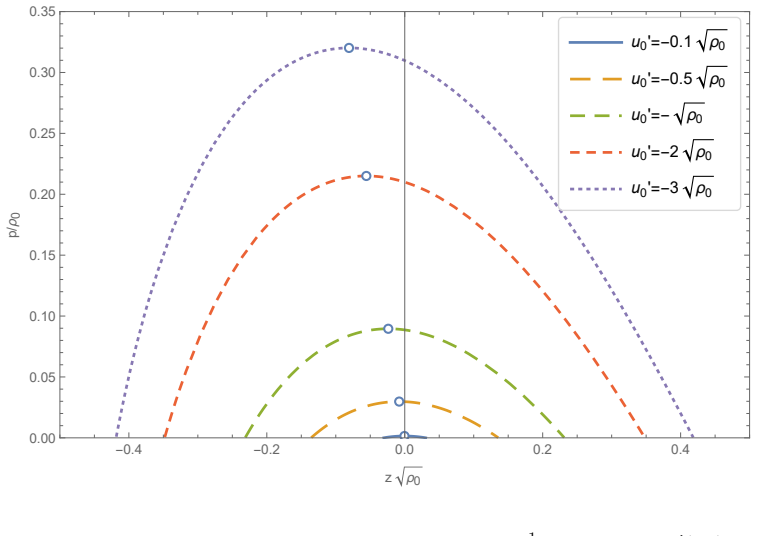
For static plane symmetry in f(Q) gravity the vacuum solutions require constant nonmetricity scalar Q and therefore coincide with Taub-(anti)de Sitter geometries whose cosmological constant is set by the specific f(Q) model. Thin-shell sources can be matched to these exteriors, relating shell energy density and pressure to the integration constants. For a finite-thickness slab with isotropic matter in the quadratic model f(Q) = Q + alpha Q squared, the pressure maximum lies off-center, negative alpha increases both internal pressure and slab thickness, and positive alpha admits no self-gravitating positive-pressure solutions.
What carries the argument
the nonmetricity scalar Q, whose constancy in vacuum fixes the exterior geometry to Taub-(anti)de Sitter and whose quadratic dependence in the interior model controls the pressure distribution inside the slab
If this is right
- Vacuum regions carry an effective cosmological constant fixed solely by the chosen f(Q) function.
- Thin-shell energy density and pressure are directly determined by the exterior integration constants.
- Negative alpha in the quadratic model produces thicker slabs with higher internal pressure.
- Positive alpha in the quadratic model yields no self-gravitating positive-pressure slabs.
- The location of maximum pressure inside the slab shifts away from the geometric center.
Where Pith is reading between the lines
- These plane-symmetric slabs could serve as toy models for domain walls or branes in modified gravity.
- The off-center pressure peak may alter stability thresholds relative to general-relativity slabs of the same thickness.
- The same numerical matching procedure could be repeated for other f(Q) forms to map the range of allowed plane-symmetric matter sources.
- The constancy of Q in vacuum may constrain possible asymptotic behaviors in cosmological models that approach plane symmetry at large distances.
Load-bearing premise
That the nonmetricity scalar Q must stay constant throughout any vacuum region under static plane symmetry, together with the assumption of isotropic matter and the specific quadratic form of f(Q).
What would settle it
A static plane-symmetric vacuum solution in which the nonmetricity scalar Q varies, or a positive-pressure slab solution for positive alpha in the quadratic model.
Figures

read the original abstract
We systematically investigate static plane symmetric configurations in $f(Q)$ gravity. For vacuum regions, we discuss the constancy of the nonmetricity scalar $Q$ and derive general vacuum solutions, which correspond effectively to Taub-(anti) de Sitter spacetimes with a cosmological constant determined by the specific $f(Q)$ model. By matching a singular thin shell source to the vacuum solutions, we relate the shell's energy density and pressure to the integration constants of the exterior geometry. We also examine a finite-thickness slab as another matter source supporting the vacuum solution. Through numerical analysis of a quadratic model $f(Q)=Q+\alpha Q^2$ with isotropic matter, we show that the maximum pressure inside the slab generally does not coincide with the geometric center. Moreover, a negative $\alpha$ with larger magnitude leads to higher internal pressure and a thicker slab, while models with positive $\alpha$ are incompatible with a self-gravitating slab of positive pressure.
Editorial analysis
A structured set of objections, weighed in public.
Referee Report
Summary. The paper systematically investigates static plane symmetric configurations in f(Q) gravity. For vacuum regions, it discusses the constancy of the nonmetricity scalar Q and derives general vacuum solutions corresponding to Taub-(anti)de Sitter spacetimes with an effective cosmological constant set by the f(Q) model. It matches these to a singular thin shell source and examines finite-thickness slabs with the quadratic model f(Q)=Q+αQ² and isotropic matter, showing numerically that the maximum pressure inside the slab generally does not coincide with the geometric center, that negative α with larger magnitude leads to higher internal pressure and thicker slabs, and that positive α is incompatible with self-gravitating slabs of positive pressure.
Significance. If the vacuum solutions and numerical results hold, the work provides concrete examples of matter-supported configurations in f(Q) gravity that deviate from general relativity, particularly the offset pressure maximum and the α-dependent thickness/pressure trends. These could serve as templates for testing symmetric teleparallel modifications in slab-like or domain-wall settings, though the restriction to the quadratic model and isotropy limits immediate generality. The explicit matching relations and parameter study add to the catalog of exact solutions in modified gravity.
major comments (3)
- [Vacuum solutions section] Vacuum solutions section: The claim that Q remains constant (allowing reduction to Taub-(A)dS) must be shown to follow directly from the contracted f(Q) field equations under the plane-symmetric ansatz alone. If additional conditions on the symmetric teleparallel connection are required, this should be stated explicitly, as it is load-bearing for all subsequent thin-shell and slab matching.
- [Numerical analysis of the slab] Numerical slab analysis: The result that the pressure maximum is offset from the geometric center for isotropic matter relies on model-specific choices; the manuscript should provide the explicit differential equations solved, boundary conditions, integration method, and any error estimates or convergence checks to support the offset claim and the α-dependence.
- [Model compatibility discussion] Model compatibility for positive α: The incompatibility with positive-pressure self-gravitating slabs should be demonstrated by explicit sign analysis of the pressure profile or energy conditions (e.g., in a dedicated subsection or appendix) rather than stated as a numerical outcome, to clarify whether it is generic or tied to the chosen parameter range.
minor comments (1)
- [Abstract] Abstract: The phrase 'discuss the constancy' could be replaced by a brief statement of the outcome (e.g., 'we show that Q is constant...') to improve immediate clarity.
Simulated Author's Rebuttal
We thank the referee for the careful reading and constructive comments on our manuscript. We address each major point below and have revised the manuscript to incorporate the requested clarifications, derivations, and analytical support.
read point-by-point responses
-
Referee: [Vacuum solutions section] The claim that Q remains constant (allowing reduction to Taub-(A)dS) must be shown to follow directly from the contracted f(Q) field equations under the plane-symmetric ansatz alone. If additional conditions on the symmetric teleparallel connection are required, this should be stated explicitly, as it is load-bearing for all subsequent thin-shell and slab matching.
Authors: We agree that an explicit derivation is needed. In the revised manuscript we have added a step-by-step derivation in Section II showing that, under the static plane-symmetric metric ansatz together with the standard symmetric teleparallel connection (vanishing curvature and torsion), the contracted f(Q) field equations directly imply that Q is constant throughout the vacuum regions. No extra conditions on the connection beyond the usual symmetric teleparallel setup are imposed; this is now stated explicitly at the beginning of the vacuum analysis. revision: yes
-
Referee: [Numerical analysis of the slab] The result that the pressure maximum is offset from the geometric center for isotropic matter relies on model-specific choices; the manuscript should provide the explicit differential equations solved, boundary conditions, integration method, and any error estimates or convergence checks to support the offset claim and the α-dependence.
Authors: We have expanded the numerical section to include the complete set of ordinary differential equations obtained from the f(Q) field equations for the isotropic slab, the boundary conditions (regularity at the slab center and matching to the exterior vacuum solution at the edges), the integration scheme (fourth-order Runge-Kutta with adaptive step size), and convergence tests performed by halving the step size and verifying that the location of the pressure maximum and the α-dependent trends remain stable within 0.1 percent. These additions are now presented in a new subsection. revision: yes
-
Referee: [Model compatibility discussion] The incompatibility with positive-pressure self-gravitating slabs should be demonstrated by explicit sign analysis of the pressure profile or energy conditions (e.g., in a dedicated subsection or appendix) rather than stated as a numerical outcome, to clarify whether it is generic or tied to the chosen parameter range.
Authors: We accept this suggestion and have added an analytical subsection (now Section IV.C) that performs a sign analysis of the relevant field-equation component for the pressure. For α > 0 the resulting algebraic relation forces the pressure to change sign inside the slab or to violate the weak energy condition, independent of the specific numerical values chosen for the integration constants. This demonstrates that the incompatibility is structural for the quadratic model rather than an artifact of the parameter range explored numerically. revision: yes
Circularity Check
Derivation self-contained from field equations with explicit parameters
full rationale
The vacuum solutions follow from direct application of the f(Q) field equations under the static plane-symmetric ansatz, with constancy of Q discussed as part of the derivation rather than presupposed. The quadratic model introduces α explicitly as a free parameter, and slab properties are obtained by numerical integration of the resulting differential equations for isotropic matter. No load-bearing step reduces by construction to a fitted input, self-citation chain, or ansatz smuggled from prior work. The analysis is self-contained against the modified field equations.
Axiom & Free-Parameter Ledger
free parameters (1)
- α
axioms (1)
- domain assumption The nonmetricity scalar Q is constant in vacuum for static plane symmetric configurations.
Lean theorems connected to this paper
-
IndisputableMonolith/Foundation/RealityFromDistinction.leanreality_from_one_distinction unclear?
unclearRelation between the paper passage and the cited Recognition theorem.
For vacuum regions, we discuss the constancy of the nonmetricity scalar Q and derive general vacuum solutions, which correspond effectively to Taub-(anti) de Sitter spacetimes
-
IndisputableMonolith/Foundation/AlphaCoordinateFixation.leanJ_uniquely_calibrated_via_higher_derivative unclear?
unclearRelation between the paper passage and the cited Recognition theorem.
f(Q)=Q+αQ² with isotropic matter... maximum pressure inside the slab generally does not coincide with the geometric center
What do these tags mean?
- matches
- The paper's claim is directly supported by a theorem in the formal canon.
- supports
- The theorem supports part of the paper's argument, but the paper may add assumptions or extra steps.
- extends
- The paper goes beyond the formal theorem; the theorem is a base layer rather than the whole result.
- uses
- The paper appears to rely on the theorem as machinery.
- contradicts
- The paper's claim conflicts with a theorem or certificate in the canon.
- unclear
- Pith found a possible connection, but the passage is too broad, indirect, or ambiguous to say the theorem truly supports the claim.
Reference graph
Works this paper leans on
-
[1]
The Geometrical Trinity of Gravity
J. Beltrán Jiménez, L. Heisenberg, and T. S. Koivisto, The Geometrical Trinity of Gravity, Universe 5, 173 (2019) , arXiv:1903.06830 [hep-th]
work page internal anchor Pith review Pith/arXiv arXiv 2019
-
[2]
Harada, Connection independent formulation of general relativity, Phys
J. Harada, Connection independent formulation of general relativity, Phys. Rev. D 101, 024053 (2020). 15
work page 2020
-
[3]
J. W. Maluf, The teleparallel equivalent of general relativity, Annalen der Physik 525, 339 (2013), https://onlinelibrary.wiley.com/doi/pdf/10.1002/andp.201200272
-
[4]
R. Aldrovandi and J. G. Pereira, Teleparallel Gravity: An Introduction , Vol. 173 (Springer, 2013)
work page 2013
-
[5]
J. M. Nester and H.-J. Yo, Symmetric teleparallel general relativity, Chin. J. Phys. 37, 113 (1999), arXiv:gr-qc/9809049
work page internal anchor Pith review Pith/arXiv arXiv 1999
-
[6]
M. Adak, M. Kalay, and O. Sert, Lagrange formulation of the symmetric teleparallel gravity, Int. J. Mod. Phys. D 15, 619 (2006) , arXiv:gr-qc/0505025
work page internal anchor Pith review Pith/arXiv arXiv 2006
-
[7]
M. Adak, O. Sert, M. Kalay, and M. Sari, Symmetric Teleparallel Gravity: Some exact solu- tions and spinor couplings, Int. J. Mod. Phys. A 28, 1350167 (2013) , arXiv:0810.2388 [gr-qc]
work page internal anchor Pith review Pith/arXiv arXiv 2013
-
[8]
Mol, The Non-Metricity Formulation of General Relativity, Adv
I. Mol, The Non-Metricity Formulation of General Relativity, Adv. Appl. Clifford Algebras 27, 2607 (2017) , arXiv:1406.0737 [gr-qc]
-
[9]
J. B. Jiménez, L. Heisenberg, and T. Koivisto, Coincident general relativity, Phys. Rev. D 98, 044048 (2018)
work page 2018
-
[10]
T. P. Sotiriou and V. Faraoni, f(R) Theories Of Gravity, Rev. Mod. Phys. 82, 451 (2010) , arXiv:0805.1726 [gr-qc]
work page internal anchor Pith review Pith/arXiv arXiv 2010
-
[11]
A. De Felice and S. Tsujikawa, f(R) theories, Living Rev. Rel. 13, 3 (2010) , arXiv:1002.4928 [gr-qc]
work page internal anchor Pith review Pith/arXiv arXiv 2010
-
[12]
Unified cosmic history in modified gravity: from F(R) theory to Lorentz non-invariant models
S. Nojiri and S. D. Odintsov, Unified cosmic history in modified gravity: from F(R) theory to Lorentz non-invariant models, Phys. Rept. 505, 59 (2011) , arXiv:1011.0544 [gr-qc]
work page internal anchor Pith review Pith/arXiv arXiv 2011
-
[13]
S. Capozziello and M. De Laurentis, Extended Theories of Gravity, Phys. Rept. 509, 167 (2011), arXiv:1108.6266 [gr-qc]
work page internal anchor Pith review Pith/arXiv arXiv 2011
-
[14]
Y.-F. Cai, S. Capozziello, M. De Laurentis, and E. N. Saridakis, f(T) teleparallel gravity and cosmology, Rept. Prog. Phys. 79, 106901 (2016) , arXiv:1511.07586 [gr-qc]
work page internal anchor Pith review Pith/arXiv arXiv 2016
-
[15]
Modified Gravity Theories on a Nutshell: Inflation, Bounce and Late-time Evolution
S. Nojiri, S. D. Odintsov, and V. K. Oikonomou, Modified Gravity Theories on a Nutshell: Inflation, Bounce and Late-time Evolution, Phys. Rept. 692, 1 (2017) , arXiv:1705.11098 [gr- qc]
work page internal anchor Pith review Pith/arXiv arXiv 2017
- [16]
-
[17]
J. Yang, R.-H. Lin, and X.-H. Zhai, Viscous cosmology in f(T) gravity, Eur. Phys. J. C 82, 1039 (2022) , arXiv:2208.09991 [gr-qc] . 16
-
[18]
J. Beltrán Jiménez, L. Heisenberg, T. S. Koivisto, and S. Pekar, Cosmology in f (Q) geometry, Phys. Rev. D 101, 103507 (2020) , arXiv:1906.10027 [gr-qc]
- [19]
-
[20]
J. Lu, X. Zhao, and G. Chee, Cosmology in symmetric teleparallel gravity and its dynamical system, Eur. Phys. J. C 79, 530 (2019) , arXiv:1906.08920 [gr-qc]
work page internal anchor Pith review Pith/arXiv arXiv 2019
- [21]
-
[22]
W. Khyllep, J. Dutta, E. N. Saridakis, and K. Yesmakhanova, Cosmology in f(Q) gravity: A unified dynamical systems analysis of the background and perturbations, Phys. Rev. D 107, 044022 (2023) , arXiv:2207.02610 [gr-qc]
-
[23]
Heisenberg, Review on f(Q) gravity, Phys
L. Heisenberg, Review on f(Q) gravity, Phys. Rept. 1066, 1 (2024) , arXiv:2309.15958 [gr-qc]
-
[24]
F. Bajardi and S. Capozziello, Minisuperspace quantum cosmology in f(Q) gravity, Eur. Phys. J. C 83, 531 (2023) , arXiv:2305.00318 [gr-qc]
- [25]
-
[26]
F. D’Ambrosio, S. D. B. Fell, L. Heisenberg, and S. Kuhn, Black holes in f(Q) gravity, Phys. Rev. D 105, 024042 (2022) , arXiv:2109.03174 [gr-qc]
-
[27]
R.-H. Lin and X.-H. Zhai, Spherically symmetric configuration in f (Q) gravity, Phys. Rev. D 103, 124001 (2021) , [Erratum: Phys.Rev.D 106, 069902 (2022)], arXiv:2105.01484 [gr-qc]
- [28]
-
[29]
M. Calzá and L. Sebastiani, A class of static spherically symmetric solutions in f(Q)-gravity, Eur. Phys. J. C 83, 247 (2023) , arXiv:2208.13033 [gr-qc]
-
[30]
J. Ipser and P. Sikivie, The Gravitationally Repulsive Domain Wall, Phys. Rev. D 30, 712 (1984)
work page 1984
-
[31]
N. Boulanger, P. Spindel, and F. Buisseret, Bound states of dirac particles in gravitational fields, Phys. Rev. D 74, 125014 (2006)
work page 2006
-
[32]
L. Lanosa and O. P. Santillón, Peculiarities for domain walls in Taub coordinates, Eur. Phys. J. C 84, 33 (2024) , arXiv:2310.10968 [gr-qc] . 17
-
[33]
A. H. Taub, Empty space-times admitting a three parameter group of motions, Annals Math. 53, 472 (1951)
work page 1951
-
[34]
P. C. Aichelburg, High symmetry fields and the homogeneous field in general relativity, Journal of Mathematical Physics 11, 1330 (1970)
work page 1970
-
[35]
M. L. Bedran, M. O. Calvao, I. D. Soares, and F. M. Paiva, Taub’s plane symmetric vacuum space-time revisited, Phys. Rev. D 55, 3431 (1997) , arXiv:gr-qc/9608058
work page internal anchor Pith review Pith/arXiv arXiv 1997
-
[36]
A. Dolgov and I. Khriplovich, Does a static solution exist for a gravitating planar wall?, General Relativity and Gravitation 21, 13 – 16 (1989)
work page 1989
-
[37]
Bonnor, Physical interpretation of vacuum solutions of einstein’s equations
W. Bonnor, Physical interpretation of vacuum solutions of einstein’s equations. part i. time- independent solutions, General Relativity and Gravitation 24, 551 – 574 (1992)
work page 1992
-
[38]
O. Groen and H. H. Soleng, Static plane symmetric space-time with a conformally coupled massless scalar field, Phys. Lett. A 165, 191 (1992)
work page 1992
-
[39]
A reinterpretation of the Taub singularity
B. Jensen and J. Kucera, A Reinterpretation of the Taub singularity, Phys. Lett. A 195, 111 (1994), arXiv:gr-qc/9406035
work page internal anchor Pith review Pith/arXiv arXiv 1994
-
[40]
R. E. Gamboa Saravi, Static plane symmetric relativistic fluids and empty repelling singular boundaries, Class. Quant. Grav. 25, 045005 (2008) , arXiv:0712.2831 [gr-qc]
work page internal anchor Pith review Pith/arXiv arXiv 2008
-
[41]
M. F. A. da Silva, A. Wang, and N. O. Santos, On the sources of static plane symmetric vacuum space-times, Phys. Lett. A 244, 462 (1998) , arXiv:gr-qc/9706071
work page internal anchor Pith review Pith/arXiv arXiv 1998
-
[42]
R. E. Gamboa Saravi, The Gravitational Field of a Plane Slab, Int. J. Mod. Phys. A 24, 5381 (2009), arXiv:0905.0896 [gr-qc]
work page internal anchor Pith review Pith/arXiv arXiv 2009
-
[43]
S. A. Fulling, J. D. Bouas, and H. B. Carter, The gravitational field of an infinite flat slab, Phys. Scripta 90, 088006 (2015)
work page 2015
-
[44]
J. T. Acuña and J. Perico Esguerra, Dynamics of a planar thin shell at a Taub–FR W junction, Int. J. Mod. Phys. D 25, 1650001 (2015) , arXiv:1509.07965 [gr-qc]
work page internal anchor Pith review Pith/arXiv arXiv 2015
-
[45]
A. Y. Kamenshchik and T. Vardanyan, Exact solutions of the Einstein equations for an infinite slab with a constant energy density, Phys. Lett. B 792, 430 (2019) , arXiv:1811.09493 [gr-qc]
work page internal anchor Pith review Pith/arXiv arXiv 2019
- [46]
- [47]
-
[48]
A new class of plane symmetric solution
H.-s. Zhang, H. Noh, and Z.-H. Zhu, A New class of plane symmetric solution, Phys. Lett. B 663, 291 (2008) , arXiv:0804.2931 [gr-qc]
work page internal anchor Pith review Pith/arXiv arXiv 2008
-
[49]
Some properties of a new class of plane symmetric solution
H. Zhang and H. Noh, Some properties of a new class of plane symmetric solution, Phys. Lett. B 670, 271 (2009) , arXiv:0904.0063 [gr-qc]
work page internal anchor Pith review Pith/arXiv arXiv 2009
-
[50]
N-dimensional plane symmetric solution with perfect fluid source
H. Zhang and H. Noh, N-dimensional plane symmetric solution with perfect fluid source, Phys. Lett. B 671, 428 (2009) , arXiv:0904.0065 [gr-qc]
work page internal anchor Pith review Pith/arXiv arXiv 2009
-
[51]
H. Zhang and X.-Z. Li, Some properties of the n-dimensional plane symmetric solution, Phys. Lett. B 700, 97 (2011)
work page 2011
-
[52]
Plane Symmetric Solutions in f(R) Gravity
M. Sharif and M. F. Shamir, Plane Symmetric Solutions in f(R) Gravity, Mod. Phys. Lett. A 25, 1281 (2010) , arXiv:0912.1393 [gr-qc]
work page internal anchor Pith review Pith/arXiv arXiv 2010
-
[53]
M. Yavari, The plane symmetric vacuum solutions of modified field equations in metric f (R) gravity, Astrophys. Space Sci. 348, 293 (2013)
work page 2013
- [54]
-
[55]
P. K. Agrawal and D. D. Pawar, Plane Symmetric Cosmological Model with Quark and Strange Quark Matter in f(R,T) Theory of Gravity, J. Astrophys. Astron. 38, 2 (2017) , arXiv:1702.02349 [gr-qc]
work page internal anchor Pith review Pith/arXiv arXiv 2017
-
[56]
A. B. Mehmood, F. Hussain, A. H. Bokhari, M. Ramzan, M. Faryad, and T. Hussain, On some non-static plane symmetric perfect fluid solutions in f(R,T) gravity, Results Phys. 39, 105676 (2022)
work page 2022
- [57]
- [58]
-
[59]
Cosmological Evolution for Dark Energy Models in f(T) Gravity
M. Sharif and S. Azeem, Cosmological Evolution for Dark Energy Models in f(T) Gravity, Astrophys. Space Sci. 342, 521 (2012) , arXiv:1305.0739 [gr-qc]
work page internal anchor Pith review Pith/arXiv arXiv 2012
-
[60]
M. E. RODRIGUES, M. J. S. HOUNDJO, D. MOMENI, and R. MYRZAKULOV, Planar symmetry in f(t) gravity, International Journal of Modern Physics D 22, 1350043 (2013)
work page 2013
-
[61]
H. Stephani, D. Kramer, M. A. H. MacCallum, C. Hoenselaers, and E. Herlt, Exact solutions of Einstein ’s field equations , Cambridge Monographs on Mathematical Physics (Cambridge Univ. Press, Cambridge, 2003). 19
work page 2003
discussion (0)
Sign in with ORCID, Apple, or X to comment. Anyone can read and Pith papers without signing in.