Topological markers for a one-dimensional fermionic chain coupled to a single-mode cavity
Pith reviewed 2026-05-10 12:21 UTC · model grok-4.3
The pith
Cavity-mediated interactions in an SSH chain produce consistent topological phases detected by winding number, polarization, and edge correlations.
A machine-rendered reading of the paper's core claim, the machinery that carries it, and where it could break.
Core claim
For a finite-size Su-Schrieffer-Heeger chain coupled to a cavity, the effective fermionic Hamiltonian obtained from high-frequency expansion in the off-resonant regime exhibits topological phases whose boundaries are located consistently by the Green's-function winding number and by Resta polarization; the associated edge states are independently verified by the decay behavior of the two-point correlation function between opposite ends of an open chain.
What carries the argument
Three adapted topological markers—edge two-point correlations, Green's-function winding number, and Resta many-body polarization—applied to the cavity-derived effective interacting Hamiltonian.
If this is right
- Cavity effects on topology can be studied entirely within an interacting fermionic model rather than the complete light-matter system.
- The three markers remain reliable even after cavity-induced interactions are included.
- Edge-state signatures survive in the effective description and can be checked via open-boundary correlations.
- The method supplies an independent check on phase diagrams previously obtained by direct light-matter treatments.
Where Pith is reading between the lines
- The same marker set could be tested on other one-dimensional chains or on two-dimensional lattices coupled to cavities.
- Finite-size scaling of the correlation length or polarization could reveal how cavity strength influences the robustness of the topological phase.
- Experimental platforms such as circuit QED or trapped-ion chains might realize the predicted effective interactions and allow direct measurement of the markers.
Load-bearing premise
The high-frequency expansion remains accurate enough in the off-resonant regime to capture all cavity-mediated interactions that affect the topological markers in the finite-size chain.
What would settle it
A numerical diagonalization of the full light-matter Hamiltonian or an experiment that finds the phase boundaries predicted by the effective model to disagree with those obtained from the winding number or polarization calculations.
Figures


read the original abstract
We study a Su-Schrieffer-Heeger chain coupled to a single mode photonic cavity. Considering an off-resonant regime we use the high-frequency expansion in order to obtain an effective fermionic Hamiltonian with cavity-mediated interactions. We characterize the effects of the cavity on topology in a finite size chain by studying three different markers adapted for interacting systems: correlation functions between edges in a chain with open boundary conditions, and a winding number based on the single-particle Green's function and bulk electric polarization via the many-body formula by Resta for a chain with periodic boundary conditions. There is excellent agreement between the winding number and polarization approaches to compute the phase diagram, with the presence of the edge states being confirmed through the calculations of the two-point correlation function. Our approach provides an alternative perspective on cavity-modified topological phases through a study of an effective interacting electronic Hamiltonian and complements methods that treat the full light-matter Hamiltonian directly.
Editorial analysis
A structured set of objections, weighed in public.
Referee Report
Summary. The manuscript studies an SSH fermionic chain coupled to a single-mode cavity in the off-resonant regime. A high-frequency expansion is applied to derive an effective interacting fermionic Hamiltonian with cavity-mediated terms. Topology in finite chains is characterized via three markers: edge two-point correlation functions (open boundaries), winding number from the single-particle Green's function, and Resta polarization (periodic boundaries). Excellent agreement is reported between the winding number and polarization for the phase diagram, with edge states confirmed by the correlations. The work positions this effective-model approach as complementary to direct light-matter treatments.
Significance. If the high-frequency expansion is shown to be faithful, the paper supplies a practical route to cavity-modified topology via an effective electronic Hamiltonian, avoiding full photon-space diagonalization. The use of multiple adapted markers (Green's function winding, Resta polarization, and edge correlations) for interacting systems is a constructive contribution and could aid future studies of light-matter topological phases.
major comments (2)
- [Section on model and effective Hamiltonian] The derivation of the effective Hamiltonian via high-frequency expansion (Section on model and effective Hamiltonian) is central to all subsequent claims, yet the manuscript provides no benchmark against the full light-matter Hamiltonian with photon truncation. Direct comparison of phase boundaries or correlation functions, even for small N and truncated photon number, is required to confirm that the reported topology reflects the actual cavity-coupled system rather than an internal property of the approximated model.
- [Results section and phase-diagram figures] The claim of 'excellent agreement' between winding number and Resta polarization (results section and phase-diagram figures) is load-bearing for the central conclusion but lacks quantitative support such as tabulated critical-point deviations, overlap integrals of phase regions, or error estimates across parameter scans.
minor comments (2)
- [Effective Hamiltonian derivation] Notation for the cavity-mediated interaction terms in the effective Hamiltonian should be cross-referenced explicitly to the original light-matter coupling to aid reproducibility.
- [Figure captions] Figure captions for the phase diagrams would benefit from explicit statements of the system size N, photon truncation, and the frequency ratio used in the expansion.
Simulated Author's Rebuttal
We thank the referee for the constructive review and the positive assessment of the significance of our work. We address each major comment below and will revise the manuscript to incorporate the suggested improvements.
read point-by-point responses
-
Referee: The derivation of the effective Hamiltonian via high-frequency expansion (Section on model and effective Hamiltonian) is central to all subsequent claims, yet the manuscript provides no benchmark against the full light-matter Hamiltonian with photon truncation. Direct comparison of phase boundaries or correlation functions, even for small N and truncated photon number, is required to confirm that the reported topology reflects the actual cavity-coupled system rather than an internal property of the approximated model.
Authors: We agree that a direct benchmark would strengthen the validation of the high-frequency expansion. While the off-resonant regime and the expansion are standard, we will add a new appendix in the revised manuscript comparing the effective model to the full light-matter Hamiltonian for small system sizes (N=4 and N=6) with photon truncation up to 3 photons. This will include comparisons of ground-state energies, edge correlation functions, and the location of phase boundaries to confirm that the topology in the effective model faithfully represents the cavity-coupled system. revision: yes
-
Referee: The claim of 'excellent agreement' between winding number and Resta polarization (results section and phase-diagram figures) is load-bearing for the central conclusion but lacks quantitative support such as tabulated critical-point deviations, overlap integrals of phase regions, or error estimates across parameter scans.
Authors: We acknowledge that quantitative metrics would make the agreement more rigorous. In the revised manuscript, we will add a table in the results section (or supplementary material) reporting the deviations in critical points (e.g., the cavity coupling strength g at which the topological transition occurs) between the two markers, along with the overlap fraction of the identified topological regions across the scanned parameter space. This will provide explicit error estimates supporting the visual agreement in the phase diagrams. revision: yes
Circularity Check
No significant circularity; standard approximation and independent markers
full rationale
The derivation applies the high-frequency expansion (a standard external technique) to obtain an effective fermionic Hamiltonian, then evaluates it with three established topological markers (winding number from single-particle Green's function, Resta polarization, and edge correlation functions). These markers are applied independently to the same effective model; their agreement is a cross-check, not a definitional reduction. No self-citations, fitted parameters renamed as predictions, or ansatz smuggling appear in the load-bearing steps. The chain is self-contained against external benchmarks.
Axiom & Free-Parameter Ledger
axioms (2)
- domain assumption High-frequency expansion accurately yields an effective fermionic Hamiltonian with cavity-mediated interactions
- domain assumption The three markers (edge correlations, Green's function winding number, Resta polarization) are valid for interacting systems
Forward citations
Cited by 1 Pith paper
-
Poor man's Majorana bound states in quantum dot based Kitaev chain coupled to a photonic cavity
Cavity photons screen attractive or repulsive interactions in a quantum-dot Kitaev chain, allowing the system to reach the sweet spot for poor man's Majorana bound states.
Reference graph
Works this paper leans on
-
[1]
F. Schlawin, D. M. Kennes, and M. A. Sentef, Cavity quantum materials, Applied Physics Reviews9(2022)
work page 2022
-
[2]
F. J. Garcia-Vidal, C. Ciuti, and T. W. Ebbesen, Ma- nipulating matter by strong coupling to vacuum fields, Science373, eabd0336 (2021)
work page 2021
-
[3]
F. Appugliese, J. Enkner, G. L. Paravicini-Bagliani, M. Beck, C. Reichl, W. Wegscheider, G. Scalari, C. Ciuti, and J. Faist, Breakdown of topological protection by cav- ity vacuum fields in the integer quantum Hall effect, Sci- ence375, 1030 (2022)
work page 2022
- [4]
-
[5]
G. Jarc, S. Y. Mathengattil, A. Montanaro, F. Giusti, E. M. Rigoni, R. Sergo, F. Fassioli, S. Winnerl, S. Dal Zilio, D. Mihailovic, P. Prelovˇ sek, M. Eckstein, and D. Fausti, Cavity-mediated thermal control of metal-to- insulator transition in 1T-TaS2, Nature622, 487 (2023)
work page 2023
-
[6]
I. Keren, T. A. Webb, S. Zhang, J. Xu, D. Sun, B. S. Y. Kim, D. Shin, S. S. Zhang, J. Zhang, G. Pereira, J. Yao, T. Okugawa, M. H. Michael, E. Vi˜ nas Bostr¨ om, J. H. Edgar, S. Wolf, M. Julian, R. P. Prasankumar, K. Miya- gawa, K. Kanoda, G. Gu, M. Cothrine, D. Mandrus, M. Buzzi, A. Cavalleri, C. R. Dean, D. M. Kennes, A. J. Millis, Q. Li, M. A. Sentef, ...
work page 2026
-
[7]
Ciuti, Cavity-mediated electron hopping in disordered quantum Hall systems, Phys
C. Ciuti, Cavity-mediated electron hopping in disordered quantum Hall systems, Phys. Rev. B104, 155307 (2021)
work page 2021
-
[8]
L. Winter and O. Zilberberg, Fractional quantum Hall edge polaritons, Phys. Rev. B112, L241105 (2025)
work page 2025
-
[9]
D. Bori¸ ci, G. Arwas, and C. Ciuti, Cavity-modified quan- tum electron transport in multiterminal devices and in- terferometers, Phys. Rev. B112, 045301 (2025)
work page 2025
-
[10]
M. A. Sentef, M. Ruggenthaler, and A. Rubio, Cav- ity quantum-electrodynamical polaritonically enhanced electron-phonon coupling and its influence on supercon- ductivity, Science Advances4, eaau6969
-
[11]
F. Schlawin, A. Cavalleri, and D. Jaksch, Cavity- mediated electron-photon superconductivity, Phys. Rev. Lett.122, 133602 (2019)
work page 2019
-
[12]
J. B. Curtis, Z. M. Raines, A. A. Allocca, M. Hafezi, and V. M. Galitski, Cavity quantum Eliashberg enhance- ment of superconductivity, Phys. Rev. Lett.122, 167002 (2019)
work page 2019
-
[13]
A. A. Allocca, Z. M. Raines, J. B. Curtis, and V. M. Galitski, Cavity superconductor-polaritons, Phys. Rev. B99, 020504 (2019)
work page 2019
-
[14]
V. K. Kozin, E. Thingstad, D. Loss, and J. Klinovaja, Cavity-enhanced superconductivity via band engineer- ing, Phys. Rev. B111, 035410 (2025)
work page 2025
-
[15]
G. Mazza and A. Georges, Superradiant quantum mate- rials, Phys. Rev. Lett.122, 017401 (2019)
work page 2019
-
[16]
G. Passetti, C. J. Eckhardt, M. A. Sentef, and D. M. Kennes, Cavity light-matter entanglement through quan- tum fluctuations, Phys. Rev. Lett.131, 023601 (2023)
work page 2023
- [17]
- [18]
-
[19]
M. Trif and Y. Tserkovnyak, Resonantly tunable Majo- rana polariton in a microwave cavity, Phys. Rev. Lett. 9 109, 257002 (2012)
work page 2012
- [20]
-
[21]
F. P. M. M´ endez-C´ ordoba, J. J. Mendoza-Arenas, F. J. G´ omez-Ruiz, F. J. Rodr´ ıguez, C. Tejedor, and L. Quiroga, R´ enyi entropy singularities as signatures of topological criticality in coupled photon-fermion systems, Phys. Rev. Res.2, 043264 (2020)
work page 2020
-
[22]
L. C. Contamin, M. R. Delbecq, B. Dou¸ cot, A. Cot- tet, and T. Kontos, Hybrid light-matter networks of Ma- jorana zero modes, npj Quantum Information7, 171 (2021)
work page 2021
-
[23]
Z. Bacciconi, G. M. Andolina, and C. Mora, Topological protection of Majorana polaritons in a cavity, Phys. Rev. B109, 165434 (2024)
work page 2024
-
[24]
O. Dmytruk and M. Schir` o, Hybrid light-matter states in topological superconductors coupled to cavity photons, Phys. Rev. B110, 075416 (2024)
work page 2024
-
[25]
V. Fernandez Becerra and O. Dmytruk, Fermion parity switching in a short Kitaev chain coupled to a photonic cavity, Phys. Rev. B113, 165410 (2026)
work page 2026
-
[26]
A. Kobia lka, A. K. Ghosh, R. Arouca, and A. M. Black-Schaffer, Topology and energy dependence of Majorana bound states in a photonic cavity (2026), arXiv:2602.03553 [cond-mat.mes-hall]
-
[27]
O. Dmytruk and M. Schir` o, Controlling topological phases of matter with quantum light, Communications Physics5, 271 (2022)
work page 2022
-
[28]
B. P´ erez-Gonz´ alez, G. Platero, and A. Gomez-Le´ on, Light-matter correlations in quantum Floquet engineer- ing of cavity quantum materials, Quantum9, 1633 (2025)
work page 2025
-
[29]
E. Vlasiuk, V. K. Kozin, J. Klinovaja, D. Loss, I. V. Iorsh, and I. V. Tokatly, Cavity-induced charge transfer in periodic systems: Length-gauge formalism, Phys. Rev. B108, 085410 (2023)
work page 2023
- [30]
-
[31]
D. Shaffer, M. Claassen, A. Srivastava, and L. H. Santos, Entanglement and topology in Su-Schrieffer-Heeger cav- ity quantum electrodynamics, Phys. Rev. B109, 155160 (2024)
work page 2024
- [32]
-
[33]
X.-L. Qi and S.-C. Zhang, Topological insulators and superconductors, Reviews of Modern Physics83, 1057–1110 (2011)
work page 2011
-
[34]
M. Z. Hasan and C. L. Kane, Colloquium: Topologi- cal insulators, Reviews of Modern Physics82, 3045–3067 (2010)
work page 2010
-
[35]
C.-K. Chiu, J. C. Y. Teo, A. P. Schnyder, and S. Ryu, Classification of topological quantum matter with sym- metries, Rev. Mod. Phys.88, 035005 (2016)
work page 2016
-
[36]
A. P. Schnyder, S. Ryu, A. Furusaki, and A. W. W. Lud- wig, Classification of topological insulators and super- conductors in three spatial dimensions, Phys. Rev. B78, 195125 (2008)
work page 2008
- [37]
-
[38]
T. L. Hughes, E. Prodan, and B. A. Bernevig, Inversion- symmetric topological insulators, Phys. Rev. B83, 245132 (2011)
work page 2011
-
[39]
H. Song, S.-J. Huang, L. Fu, and M. Hermele, Topological phases protected by point group symmetry, Phys. Rev. X7, 011020 (2017)
work page 2017
-
[40]
L. Fidkowski and A. Kitaev, Effects of interactions on the topological classification of free fermion systems, Phys. Rev. B81, 134509 (2010)
work page 2010
-
[41]
Gurarie, Single-particle Green’s functions and inter- acting topological insulators, Phys
V. Gurarie, Single-particle Green’s functions and inter- acting topological insulators, Phys. Rev. B83, 085426 (2011)
work page 2011
-
[42]
A. M. Essin and V. Gurarie, Bulk-boundary correspon- dence of topological insulators from their respective Green’s functions, Phys. Rev. B84, 125132 (2011)
work page 2011
-
[43]
S. R. Manmana, A. M. Essin, R. M. Noack, and V. Gurarie, Topological invariants and interacting one- dimensional fermionic systems, Phys. Rev. B86, 205119 (2012)
work page 2012
-
[44]
Z. Wang and S.-C. Zhang, Simplified topological invari- ants for interacting insulators, Phys. Rev. X2, 031008 (2012)
work page 2012
-
[45]
Tada, Quantized polarization in a generalized Rice- Mele model at arbitrary filling, Phys
Y. Tada, Quantized polarization in a generalized Rice- Mele model at arbitrary filling, Phys. Rev. B110, 045113 (2024)
work page 2024
-
[46]
F. del Pozo, L. Herviou, and K. Le Hur, Fractional topology in interacting one-dimensional superconductors, Phys. Rev. B107, 155134 (2023)
work page 2023
-
[47]
K. Le Hur, Interacting topological quantum aspects with light and geometrical functions, Physics Reports1104, 1 (2025)
work page 2025
-
[48]
W. P. Su, J. R. Schrieffer, and A. J. Heeger, Solitons in polyacetylene, Phys. Rev. Lett.42, 1698 (1979)
work page 1979
-
[49]
J. K. Asb´ oth, L. Oroszl´ any, and A. P´ alyi,A short course on topological insulators, Vol. 919 (Springer, 2016)
work page 2016
-
[50]
K. Franke and F. Oppen, Topological states engineered in narrow strips of graphene, Nature560, 175 (2018)
work page 2018
-
[51]
D. J. Rizzo, G. Veber, T. Cao, C. Bronner, T. Chen, F. Zhao, H. Rodriguez, S. G. Louie, M. F. Crommie, and F. R. Fischer, Topological band engineering of graphene nanoribbons, Nature560, 204–208 (2018)
work page 2018
- [52]
-
[53]
E. J. Meier, F. A. An, and B. Gadway, Observation of the topological soliton state in the Su–Schrieffer–Heeger model, Nature Communications7, 13986 (2016)
work page 2016
-
[54]
C. H. Lee, S. Imhof, C. Berger, F. Bayer, J. Brehm, L. W. Molenkamp, T. Kiessling, and R. Thomale, Topolectrical circuits, Communications Physics1, 39 (2018)
work page 2018
- [55]
-
[56]
M. A. Sentef, J. Li, F. K¨ unzel, and M. Eckstein, Quantum to classical crossover of Floquet engineering in correlated quantum systems, Phys. Rev. Res.2, 033033 (2020)
work page 2020
- [57]
-
[58]
J. Li, L. Schamriß, and M. Eckstein, Effective theory of lattice electrons strongly coupled to quantum electromag- 10 netic fields, Phys. Rev. B105, 165121 (2022)
work page 2022
-
[59]
Resta, Quantum-mechanical position operator in ex- tended systems, Phys
R. Resta, Quantum-mechanical position operator in ex- tended systems, Phys. Rev. Lett.80, 1800 (1998)
work page 1998
-
[60]
A. G´ omez-Le´ on and G. Platero, Floquet-Bloch theory and topology in periodically driven lattices, Phys. Rev. Lett.110, 200403 (2013)
work page 2013
-
[61]
J.-N. Fuchs and F. Pi´ echon, Orbital embedding and topology of one-dimensional two-band insulators, Phys. Rev. B104, 235428 (2021)
work page 2021
-
[62]
J. Cayssol and J. N. Fuchs, Topological and geometrical aspects of band theory, Journal of Physics: Materials4, 034007 (2021)
work page 2021
-
[63]
Zak, Berry’s phase for energy bands in solids, Phys
J. Zak, Berry’s phase for energy bands in solids, Phys. Rev. Lett.62, 2747 (1989)
work page 1989
-
[64]
J.-N. Fuchs and F. Pi´ echon, Does the SSH model describe a topological insulator?, arXiv:2106.03595v1 (2021)
-
[65]
R. D. King-Smith and D. Vanderbilt, Theory of polariza- tion of crystalline solids, Phys. Rev. B47, 1651 (1993)
work page 1993
-
[66]
In this case,Pcan change by 1/2 if one shifts the lattice by half a unit cell [61, 64]
Typically, the ionic background can be chosen as having a +1/2 charged ion located at each lattice site [61, 64]. In this case,Pcan change by 1/2 if one shifts the lattice by half a unit cell [61, 64]. Here, we consider that our unit cell choice is fixed by the open boundary conditions and half-unit-cell translations are not allowed. ()
-
[67]
O. Dmytruk and M. Schir´ o, Gauge fixing for strongly correlated electrons coupled to quantum light, Phys. Rev. B103, 075131 (2021)
work page 2021
- [68]
-
[69]
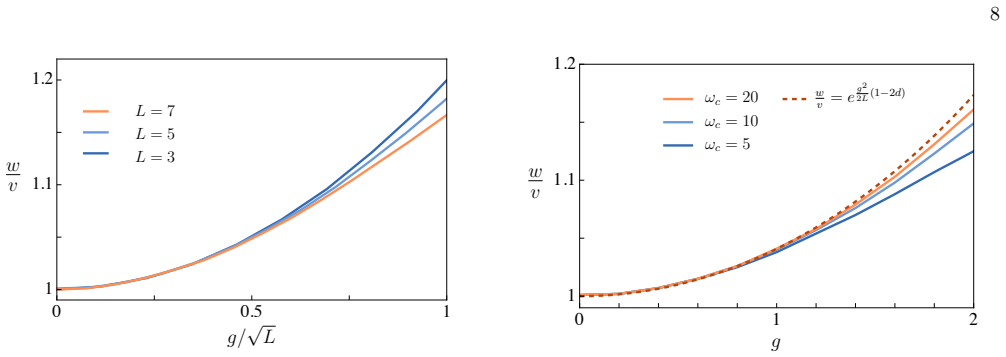
The full light-matter Hilbert space grows as 22L×(Nc+1) where the first factor acocunts for the electronic Fock space dimension (by fixing the electron occupation to half filling, it reduces to 2L L ) and the second factor to the photonic Fock space dimension. ForL= 3,4,5, we verified that the difference in the electron-electron correlations computed with...
-
[70]
A. Defossez, L. Vanderstraeten, L. Peralta Gavensky, and N. Goldman, Dynamic realization of Majorana zero modes in a particle-conserving ladder, Phys. Rev. Res.7, 023183 (2025)
work page 2025
-
[71]
Volovik,The Universe in a Helium Droplet, Vol
G. Volovik,The Universe in a Helium Droplet, Vol. 117 (2003)
work page 2003
-
[72]
M. R. Zirnbauer, Particle–hole symmetries in condensed matter, Journal of Mathematical Physics62(2021)
work page 2021
-
[73]
S. S. Pershoguba and V. M. Yakovenko, Shockley model description of surface states in topological insulators, Phys. Rev. B86, 075304 (2012)
work page 2012
- [74]
-
[75]
P. Molignini and N. R. Cooper, Topological phase tran- sitions at finite temperature, Phys. Rev. Res.5, 023004 (2023)
work page 2023
-
[76]
Z.-M. Huang and S. Diehl, Interaction-induced topolog- ical phase transition at finite temperature, Phys. Rev. Lett.134, 053002 (2025)
work page 2025
-
[77]
J. D. Hannukainen and N. R. Cooper, Charac- terizing topology at nonzero temperature (2025), arXiv:2512.00464 [cond-mat.mes-hall]
work page internal anchor Pith review Pith/arXiv arXiv 2025
-
[78]
I. Gilardoni, F. Becca, A. Marrazzo, and A. Parola, Real- space many-body marker for correlated𭟋 2 topological insulators, Phys. Rev. B106, L161106 (2022)
work page 2022
-
[79]
Resta, Geometry and topology in many-body physics (2020), arXiv:2006.15567 [cond-mat.str-el]
R. Resta, Geometry and topology in many-body physics (2020), arXiv:2006.15567 [cond-mat.str-el]
-
[80]
H. Watanabe and M. Oshikawa, Inequivalent berry phases for the bulk polarization, Physical Review X8, 10.1103/physrevx.8.021065 (2018)
discussion (0)
Sign in with ORCID, Apple, or X to comment. Anyone can read and Pith papers without signing in.