Recognition: unknown
Point Cloud Registration for Fusion between SPECT MPI and CTA Images
Pith reviewed 2026-05-08 04:19 UTC · model grok-4.3
The pith
Automatic landmarks and point cloud registration fuse SPECT MPI perfusion with CTA anatomy to 1.7 mm accuracy.
A machine-rendered reading of the paper's core claim, the machinery that carries it, and where it could break.
Core claim
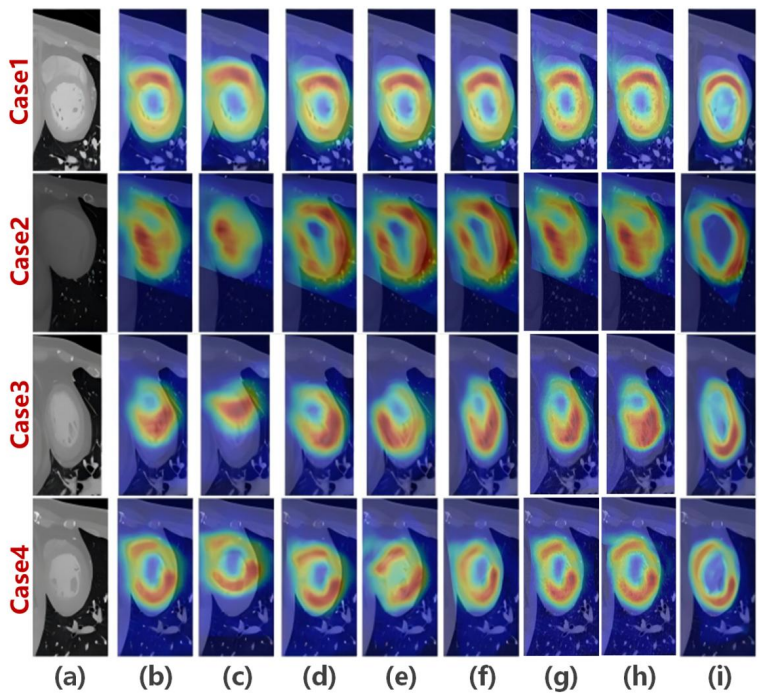
The registration framework first derives automatic landmarks from characteristic LV structures on SPECT and from the spatial relationship of the ventricles on CTA, applies landmark-driven coarse registration with scale-space preprocessing, and then evaluates multiple fine registration methods on LV epicardial point clouds. The transformations are propagated to voxel-level resampling, producing fused images in which quantitative SPECT perfusion overlays CTA coronary detail. In the 60-patient cohort BCPD-plus-plus achieved the lowest mean point-cloud distance of 1.7 mm.
What carries the argument
Landmark-driven coarse registration followed by fine point-cloud registration on the LV epicardial surface, with the resulting transform used for voxel resampling.
If this is right
- Quantitative SPECT perfusion maps can be directly overlaid on sub-millimeter CTA coronary anatomy without manual landmarks.
- Ischemia localization and lesion-level functional assessment become feasible in routine clinical fusion.
- The pipeline works with multiple fine-registration algorithms and is therefore not tied to one specific method.
- Voxel-level resampling after surface registration preserves both functional and structural detail.
Where Pith is reading between the lines
- The same automatic-landmark strategy could be tested on other cross-modality cardiac pairs such as PET-CT or MRI-CT.
- If the 1.7 mm accuracy holds on prospective data it would reduce the need for physician time spent on manual registration.
- Error maps from the point-cloud distances could be propagated to flag regions of uncertain fusion for clinical review.
- The approach might be extended to include motion correction by registering multiple SPECT gates to the same CTA surface.
Load-bearing premise
Automatic landmarks derived from LV structures on SPECT and septal junctions on CTA give a sufficiently accurate and generalizable coarse initialization for the full range of patient anatomies and acquisition settings in the cohort.
What would settle it
A new 60-patient test set in which the automatic landmarks produce initial misalignments that leave any of the fine-registration methods with mean point-cloud distance greater than 4 mm.
Figures




read the original abstract
Clinical fusion of Single Photon Emission Computed Tomography Myocardial Perfusion Imaging (SPECT MPI) and Computed Tomography Angiography (CTA) remains limited by cross-modality misregistration and reliance on manual landmarks, which can hinder accurate ischemia localization and lesion-level functional assessment. To address this issue, we propose a registration and fusion framework for SPECT MPI and CTA that integrates functional and structural information for comprehensive cardiac evaluation. The proposed pipeline performs U-Net-based segmentation on both modalities. On SPECT MPI, only the left ventricle (LV) is extracted, and anatomical landmarks are automatically derived from characteristic LV structures. On CTA, both ventricles are segmented, and their spatial relationship is used to automatically define landmarks at the interventricular septal junction. Scale-space consistency preprocessing and landmark-driven coarse registration are applied to mitigate initial misalignment. Based on this initialization, multiple fine registration methods are evaluated on LV epicardial surface point clouds, including ICP, SICP, CPD, CluReg, FFD, and BCPD-plus-plus. The resulting transformations are then propagated to voxel-level resampling for high-precision SPECT-CTA fusion. In a retrospective cohort of 60 patients, the proposed framework preserved sub-millimeter coronary detail from CTA while accurately overlaying quantitative SPECT perfusion. Among the evaluated methods, BCPD-plus-plus achieved the highest accuracy with a mean point cloud distance of 1.7 mm. By combining robust initialization, comparative fine registration, and voxel-level fusion, the proposed approach provides a practical solution for myocardial ischemia localization and functional evaluation of coronary lesions, while remaining independent of any specific fine registration algorithm.
Editorial analysis
A structured set of objections, weighed in public.
Referee Report
Summary. The manuscript proposes a registration and fusion framework for SPECT MPI and CTA images. It employs U-Net segmentation to extract the LV from SPECT and both ventricles from CTA, derives automatic landmarks from LV structures and interventricular septal junctions, applies scale-space preprocessing and landmark-driven coarse registration, then compares fine registration algorithms (ICP, SICP, CPD, CluReg, FFD, BCPD-plus-plus) on LV epicardial point clouds. In a retrospective 60-patient cohort, BCPD-plus-plus yields the lowest mean point-cloud distance of 1.7 mm, enabling voxel-level fusion that overlays SPECT perfusion onto CTA coronary anatomy.
Significance. If the quantitative claims hold under fuller validation, the work offers a practical, largely automated pipeline for cross-modality cardiac fusion that could reduce manual landmark dependence and improve ischemia localization and lesion-level assessment. The explicit comparison of multiple point-cloud methods on real patient data is a constructive contribution to the empirical literature on multimodal registration.
major comments (3)
- [Abstract and Results] Abstract and Results (60-patient evaluation): the headline claim that BCPD-plus-plus achieves the highest accuracy with a mean point cloud distance of 1.7 mm is reported without standard deviation, range, error bars, statistical comparisons to the other five methods, or any breakdown by case difficulty or outliers. This metric is load-bearing for the central claim of practical utility and superiority.
- [Methods] Methods (U-Net segmentation and landmark derivation): automatic landmarks are extracted from LV structures on SPECT and septal junctions on CTA to drive coarse registration, yet no landmark localization error, coarse target registration error (TRE), or per-patient success rate is supplied. Without these quantities the subsequent fine-registration comparison cannot be interpreted, because local methods (ICP, SICP) are known to be sensitive to initialization while global methods (BCPD) are more robust.
- [Results and Discussion] Results and Discussion: the assertion that the framework 'preserved sub-millimeter coronary detail' and 'accurately overlaying quantitative SPECT perfusion' rests solely on the 1.7 mm surface distance; no additional quantitative fusion metrics (e.g., Dice overlap on segmented structures after resampling, landmark TRE on independent test points, or reader study) are provided to corroborate clinical utility.
minor comments (2)
- [Abstract and Methods] The acronym 'BCPD-plus-plus' is introduced without definition or citation on first use in the abstract and Methods; a brief parenthetical reference to the underlying algorithm would improve clarity.
- [Methods] The U-Net architecture, training data, and hyper-parameters for the segmentation step are not detailed; adding these would allow reproducibility of the landmark extraction stage.
Simulated Author's Rebuttal
We thank the referee for the constructive and detailed feedback on our manuscript. We address each major comment point by point below, indicating where revisions have been made to strengthen the presentation and interpretation of our results.
read point-by-point responses
-
Referee: [Abstract and Results] Abstract and Results (60-patient evaluation): the headline claim that BCPD-plus-plus achieves the highest accuracy with a mean point cloud distance of 1.7 mm is reported without standard deviation, range, error bars, statistical comparisons to the other five methods, or any breakdown by case difficulty or outliers. This metric is load-bearing for the central claim of practical utility and superiority.
Authors: We agree that additional statistical details and variability measures would provide a more robust presentation of the results. In the revised manuscript, we have added the standard deviation and range to the reported mean distance, included error bars in the comparative results figure, performed statistical comparisons (e.g., Wilcoxon signed-rank tests) between BCPD++ and the other methods, and incorporated a breakdown by case difficulty and outlier analysis in the Results section. These updates are also reflected in the Abstract. revision: yes
-
Referee: [Methods] Methods (U-Net segmentation and landmark derivation): automatic landmarks are extracted from LV structures on SPECT and septal junctions on CTA to drive coarse registration, yet no landmark localization error, coarse target registration error (TRE), or per-patient success rate is supplied. Without these quantities the subsequent fine-registration comparison cannot be interpreted, because local methods (ICP, SICP) are known to be sensitive to initialization while global methods (BCPD) are more robust.
Authors: We acknowledge that quantifying the performance of the automatic landmark derivation and coarse registration is necessary to properly contextualize the fine registration comparisons, given the known sensitivity of certain algorithms to initialization. We have revised the Methods section to describe the landmark extraction process in greater detail and added quantitative evaluations of landmark localization error, coarse TRE, and per-patient success rates (defined as successful coarse alignment within a specified threshold) to the Results section. These additions enable better interpretation of why global methods like BCPD++ may outperform local ones in this cohort. revision: yes
-
Referee: [Results and Discussion] Results and Discussion: the assertion that the framework 'preserved sub-millimeter coronary detail' and 'accurately overlaying quantitative SPECT perfusion' rests solely on the 1.7 mm surface distance; no additional quantitative fusion metrics (e.g., Dice overlap on segmented structures after resampling, landmark TRE on independent test points, or reader study) are provided to corroborate clinical utility.
Authors: We agree that the claims regarding preservation of coronary detail and accurate perfusion overlay would be strengthened by additional quantitative fusion metrics. The 1.7 mm mean surface distance on the LV epicardium directly supports alignment of structures to which the coronary arteries are attached, thereby preserving sub-millimeter CTA detail in the fused images. In the revision, we have added Dice overlap metrics on the resampled LV structures and independent landmark TRE on held-out test points to the Results. We have also expanded the Discussion to explicitly link the surface distance metric to clinical utility while acknowledging that a formal reader study was outside the scope of this technical paper and is noted as a limitation for future work. revision: partial
Circularity Check
No circularity in empirical registration pipeline
full rationale
The paper describes an applied empirical pipeline for SPECT-CTA fusion: U-Net segmentation, automatic landmark extraction from LV structures and septal junctions, scale-space preprocessing, coarse landmark-driven alignment, followed by comparative evaluation of fine registration algorithms (ICP, SICP, CPD, CluReg, FFD, BCPD-plus-plus) on LV epicardial point clouds from a 60-patient cohort. The headline accuracy figure (1.7 mm mean point-cloud distance) is a direct measurement of surface discrepancy after registration, computed against the input data itself rather than derived from any fitted parameter or self-referential equation. No mathematical derivation chain, uniqueness theorem, or first-principles prediction is presented that reduces to the method's own inputs by construction. Automatic landmark generation is a procedural step whose output is assessed via the final metric; it is not 'predicted' from itself. No self-citation load-bearing claims or ansatz smuggling appear in the abstract or described workflow. The study is a standard method-comparison experiment whose validity rests on external data evaluation, not internal definitional closure.
Axiom & Free-Parameter Ledger
axioms (2)
- domain assumption U-Net produces sufficiently accurate LV and ventricular segmentations on both modalities to support landmark extraction
- domain assumption Point-cloud surface distance after registration correlates with clinical utility of the fused images
Reference graph
Works this paper leans on
-
[1]
Global burden of cardiovascular diseases: projections from 2025 to 2050
Chong B, Jayabaskaran J, Jauhari SM, Chan SP, Goh R, Kueh MTW, et al. Global burden of cardiovascular diseases: projections from 2025 to 2050. European Journal of Preventive Cardiology 2024 doi: 10.1093/eurjpc/zwae281
-
[2]
Conrad N, Molenberghs G, Verbeke G, Zaccardi F, Lawson C, Friday JM, et al. Trends in cardiovascular disease incidence among 22 million people in the UK over 20 years: population based study. 2024;385:e078523 doi: 10.1136/bmj-2023-078523 %J BMJ
-
[3]
Gheorghe A, Griffiths U, Murphy A, Legido -Quigley H, Lamptey P, Perel P. The economic burden of cardiovascular disease and hypertension in low - and middle-income countries: a systematic review. BMC Public Health 2018;18(1):975 doi: 10.1186/s12889-018-5806-x
-
[4]
Changes in Fitness and Fatness on the Development of Cardiovascular Disease Risk Factors
Lee D-c, Sui X, Church Timothy S, Lavie Carl J, Jackson Andrew S, Blair Steven N. Changes in Fitness and Fatness on the Development of Cardiovascular Disease Risk Factors. JACC 2012;59(7):665-72 doi: 10.1016/j.jacc.2011.11.013
-
[5]
Salvador C, Gullón P, Franco M, Vicedo -Cabrera AM. Heat -related first cardiovascular event incidence in the city of Madrid (Spain): Vulnerability assessment by demographic, socioeconomic, and health indicators. Environmental Research 2023;226:115698 doi: https://doi.org/10.1016/j.envres.2023.115698
-
[6]
Recent trend in medical imaging modalities and their applications in disease diagnosis: a review
Abhisheka B, Biswas SK, Purkayastha B, Das D, Escargueil A. Recent trend in medical imaging modalities and their applications in disease diagnosis: a review. Multimedia Tools and Applications 2024;83(14):43035 -70 doi: 10.1007/s11042-023-17326-1
-
[7]
Arbab -Zadeh A, Carli MFD, Cerci R, George RT, Chen MY , Dewey M, et al. Accuracy of Computed Tomographic Angiography and Single -Photon Emission Computed Tomography-Acquired Myocardial Perfusion Imaging for the Diagnosis of Coronary Artery Disease. Circulation: Cardiovascular Imaging 2015;8(10):e003533 doi: 10.1161/CIRCIMAGING.115.003533
-
[8]
Dvorak RA, Brown RKJ, Corbett JR. Interpretation of SPECT/CT Myocardial Perfusion Images: Common Artifacts and Quality Control Techniques. RadioGraphics 2011;31(7):2041-57 doi: 10.1148/rg.317115090
-
[9]
CCTA in the diagnosis of coronary artery disease
Marano R, Rovere G, Savino G, Flammia FC, Carafa MRP, Steri L, et al. CCTA in the diagnosis of coronary artery disease. La radiologia medica 2020;125(11):1102 -13 doi: 10.1007/s11547-020-01283-y
-
[10]
Pontone G, Bertella E, Mushtaq S, Loguercio M, Cortinovis S, Baggiano A, et al. Coronary Artery Disease: Diagnostic Accuracy of CT Coronary Angiography —A Comparison of High and Standard Spatial Resolution Scanning. Radiology 2014;271(3):688-94 doi: 10.1148/radiol.13130909
-
[11]
An Overview on Image Registration Techniques for Cardiac Diagnosis and Treatment
Khalil A, Ng S -C, Liew YM, Lai KW. An Overview on Image Registration Techniques for Cardiac Diagnosis and Treatment. Cardiology Research and Practice 2018;2018(1):1437125 doi: https://doi.org/10.1155/2018/1437125
-
[12]
Technical Pitfalls and Limitations of SPECT/CT
Livieratos L. Technical Pitfalls and Limitations of SPECT/CT. Seminars in Nuclear Medicine 2015;45(6):530 -40 doi: https://doi.org/10.1053/j.semnuclmed.2015.06.002
-
[13]
Method for registration of 3-D shapes: SPIE, 1992
Besl P, McKay N. Method for registration of 3-D shapes: SPIE, 1992
1992
-
[14]
A Scale Stretch Method Based on ICP for 3D Data Registration
Ying S, Peng J, Du S, Qiao H. A Scale Stretch Method Based on ICP for 3D Data Registration. IEEE Transactions on Automation Science and Engineering 2009;6(3):559-65 doi: 10.1109/TASE.2009.2021337
-
[15]
Point Set Registration: Coherent Point Drift
Myronenko A, Song X. Point Set Registration: Coherent Point Drift. IEEE Transactions on Pattern Analysis and Machine Intelligence 2010;32(12):2262 -75 doi: 10.1109/TPAMI.2010.46
-
[16]
Proceedings of the IEEE/CVF Conference on Computer Vision and Pattern Recognition; 2024
Correspondence -free non -rigid point set registration using unsupervised clustering analysis. Proceedings of the IEEE/CVF Conference on Computer Vision and Pattern Recognition; 2024
2024
-
[17]
Nonrigid point cloud registration using piecewise tricubic polynomials as transformation model
Glira P, Weidinger C, Otepka -Schremmer J, Ressl C, Pfeifer N, Haberler -Weber MJRS. Nonrigid point cloud registration using piecewise tricubic polynomials as transformation model. 2023;15(22):5348
2023
-
[18]
A Bayesian Formulation of Coherent Point Drift
Hirose O. A Bayesian Formulation of Coherent Point Drift. IEEE Transactions on Pattern Analysis and Machine Intelligence 2021;43(7):2269 -86 doi: 10.1109/TPAMI.2020.2971687
-
[19]
U -Net: Convolutional Networks for Biomedical Image Segmentation
Navab N, Hornegger J, Wells WM, Frangi AF, eds. U -Net: Convolutional Networks for Biomedical Image Segmentation. Medical Image Computing and Computer-Assisted Intervention - MICCAI 2015; 2015 2015//; Cham. Springer International Publishing
2015
-
[20]
Wen H, Wei Q, Huang J -L, Tsai S-C, Wang C-Y , Chiang K-F, et al. Analysis on SPECT myocardial perfusion imaging with a tool derived from dynamic programming to deep learning. Optik 2021;240:166842 doi: https://doi.org/10.1016/j.ijleo.2021.166842
-
[21]
Multidimensional binary search trees used for associative searching
Bentley JL. Multidimensional binary search trees used for associative searching. 1975;18(9 %J Commun. ACM):509-17 doi: 10.1145/361002.361007
-
[22]
IEEE Transactions on Pattern Analysis and Machine Intelligence , author =
Umeyama S. Least-squares estimation of transformation parameters between two point patterns. IEEE Transactions on Pattern Analysis and Machine Intelligence 1991;13(4):376-80 doi: 10.1109/34.88573
discussion (0)
Sign in with ORCID, Apple, or X to comment. Anyone can read and Pith papers without signing in.