pith. sign in

arxiv: 2604.26428 · v1 · submitted 2026-04-29 · ❄️ cond-mat.mtrl-sci · physics.chem-ph

A Theoretical Investigation of the Thermal and Photochemical Mechanisms of Ethylbenzene Dehydrogenation on Rutile TiO₂(110)

Pith reviewed 2026-05-07 11:47 UTC · model grok-4.3

classification ❄️ cond-mat.mtrl-sci physics.chem-ph
keywords ethylbenzene dehydrogenationTiO2(110)photocatalysisproton-coupled electron transferhydrogen atom transferexcited statesstyrene
0
0 comments X

The pith

Ethylbenzene converts to styrene on TiO2 via proton-coupled electron transfer on clean surfaces but switches to direct hydrogen transfer on oxidized ones, with 257 nm light bypassing high ground-state barriers.

A machine-rendered reading of the paper's core claim, the machinery that carries it, and where it could break.

The paper examines the thermal and light-driven ways ethylbenzene loses hydrogen to form styrene on a rutile titanium dioxide surface. It concludes that clean surfaces rely on a coupled proton and electron movement, but pre-adsorbed oxygen shifts the process to a direct hydrogen move that works better. Shorter wavelength light at 257 nm keeps the system in excited states that avoid the main energy hurdle, unlike longer wavelengths that relax quickly to the ground state. This matters because current industrial styrene production requires high heat, and these findings point to milder photocatalytic routes by tuning light and surface conditions.

Core claim

On the stoichiometric surface both thermal and photochemical pathways are dominated by proton-coupled electron transfer. 343 nm irradiation leads to rapid relaxation into the ground state where high kinetic barriers persist, whereas 257 nm excitation enables the system to persist in higher excited states allowing the reaction to bypass the rate-determining ground-state barrier. On oxidized surfaces pre-adsorbed oxygen radicals enable direct hydrogen atom transfer which is more efficient than proton-coupled electron transfer on reduced surfaces.

What carries the argument

Proton-coupled electron transfer on stoichiometric surfaces versus direct hydrogen atom transfer enabled by pre-adsorbed oxygen radicals on oxidized surfaces, with persistence in higher excited electronic states (S1/T2) under 257 nm light determining whether the ground-state barrier can be avoided.

If this is right

  • 257 nm light improves efficiency by allowing the reaction to avoid the ground-state rate-determining step through excited-state persistence.
  • Oxidized surfaces increase styrene yield through the more efficient direct hydrogen atom transfer pathway.
  • Multi-reference quantum methods are required to properly describe the radical intermediates and excited states in these surface reactions.
  • Photocatalysis on TiO2 offers a route to styrene production under milder conditions than high-temperature industrial processes.

Where Pith is reading between the lines

These are editorial extensions of the paper, not claims the author makes directly.

  • Similar shifts from coupled proton-electron to direct hydrogen transfer with surface oxidation could appear in other dehydrogenation reactions on metal oxides.
  • Tuning light wavelength to match specific excited states might control yields or selectivity in related photocatalytic conversions on oxide surfaces.
  • Testing the mechanisms on other crystal faces or with substituted reactants would reveal how general the oxygen scavenger effect is.

Load-bearing premise

The DFT-PBE-D3 and SA-CASSCF calculations with the chosen surface models accurately capture the actual energy barriers, electronic states, and radical intermediates without major errors from the approximations or incomplete active spaces.

What would settle it

Experimental measurements showing no increase in styrene yield under 257 nm light compared to 343 nm or no yield improvement when oxygen is pre-adsorbed on the surface would contradict the assigned mechanisms and excited-state role.

Figures

Figures reproduced from arXiv: 2604.26428 by Nico Yannik Merkt.

Figure 1
Figure 1. Figure 1: The chemical equation of the industrial synthesis of styrene from ethylbenzene. C(sp3 )-H bonds of the ethyl group. The industry relies on the thermal reaction with complex catalysts, but research focuses on well-defined models, such as the rutile (110) surface, to understand elementary reaction steps.4,15 A particularly promising alternative to the thermal approach is photocatalysis. It offers the potenti… view at source ↗
Figure 2
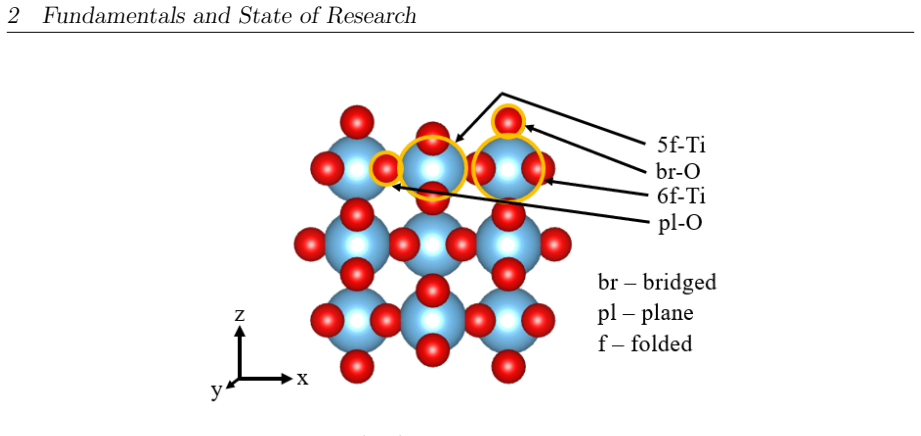
Figure 2. Figure 2: Representation of rutile(110) bulk. The blue atoms represent titanium, and the red atoms symbolize oxygen. The orange-circled atoms are the relevant oxygen and titanium species.16,19 the model system for this work. This choice is justified and supported by the following fundamental facts. Rutile is the thermodynamically most stable polymorph of titanium dioxide and its (110) orientation is one of its most … view at source ↗
Figure 3
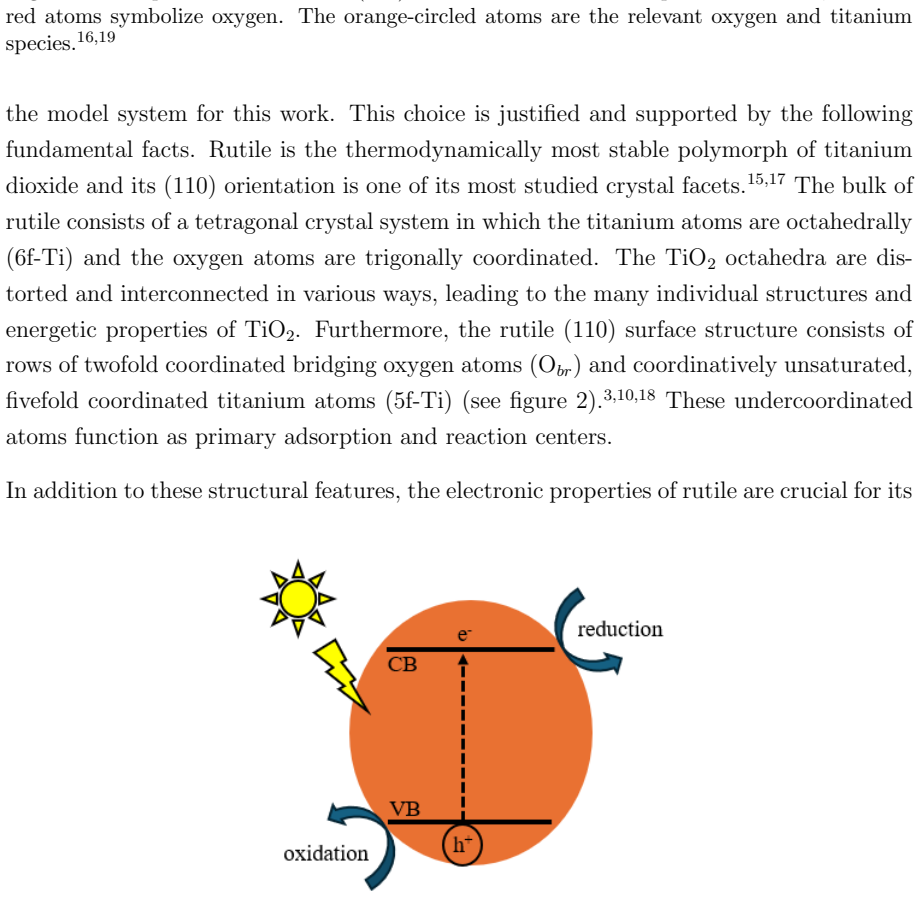
Figure 3. Figure 3: Schematic representation of the underlying step of a photochemical reaction. In this step, a photon (h · ν) excites the semiconductor material, transferring an electron (e−) to the conduction band (CB) and leaving a hole (h+) in the valence band (VB).16,19 12 view at source ↗
Figure 4
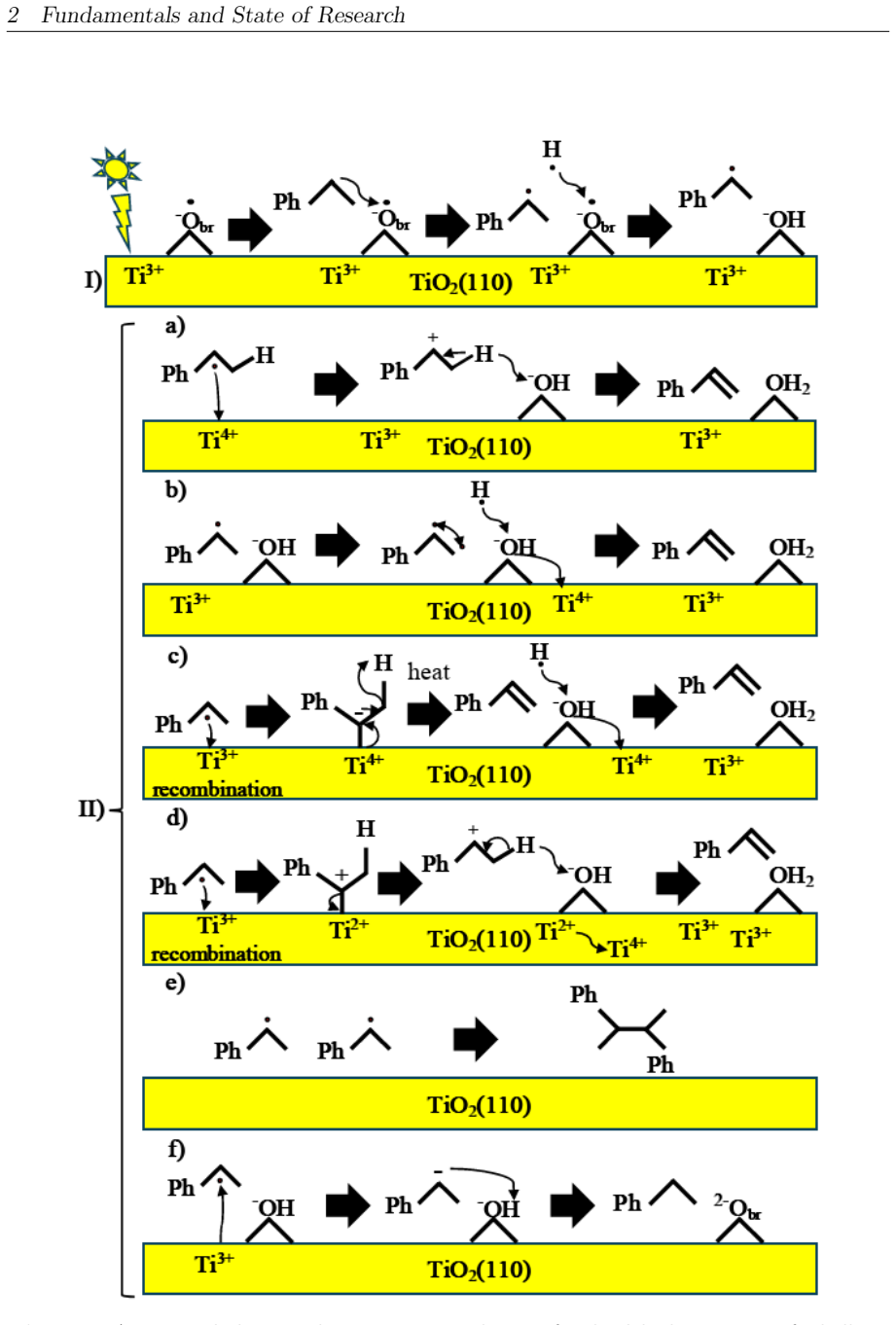
Figure 4. Figure 4: A proposed photocatalytic reaction mechanism for the dehydrogenation of ethylben￾zene to styrene. This mechanism was created using information from source4,6,7,9,18 . 16 view at source ↗
Figure 5
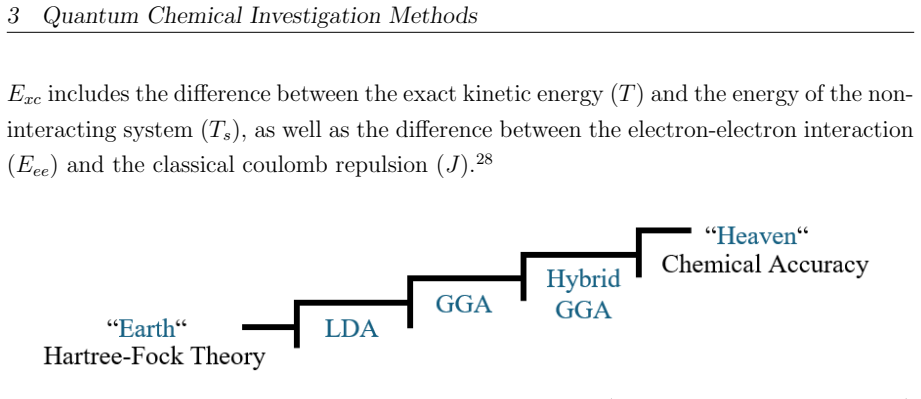
Figure 5. Figure 5: Jacob’s ladder illustrates the various functionals (LDA, GGA and Hybrid GGA) that leading to enhanced accuracy in calculations. The image is adapted from34,35 . Modern Exc functionals are often classified hierarchically on the so-called ”Jacob’s lad￾der”.34,35 In this work, the PBE (Perdew-Burke-Ernzerhof) functional, which belongs to the family of the generalized gradient approximation (GGA), is used as a… view at source ↗
Figure 6
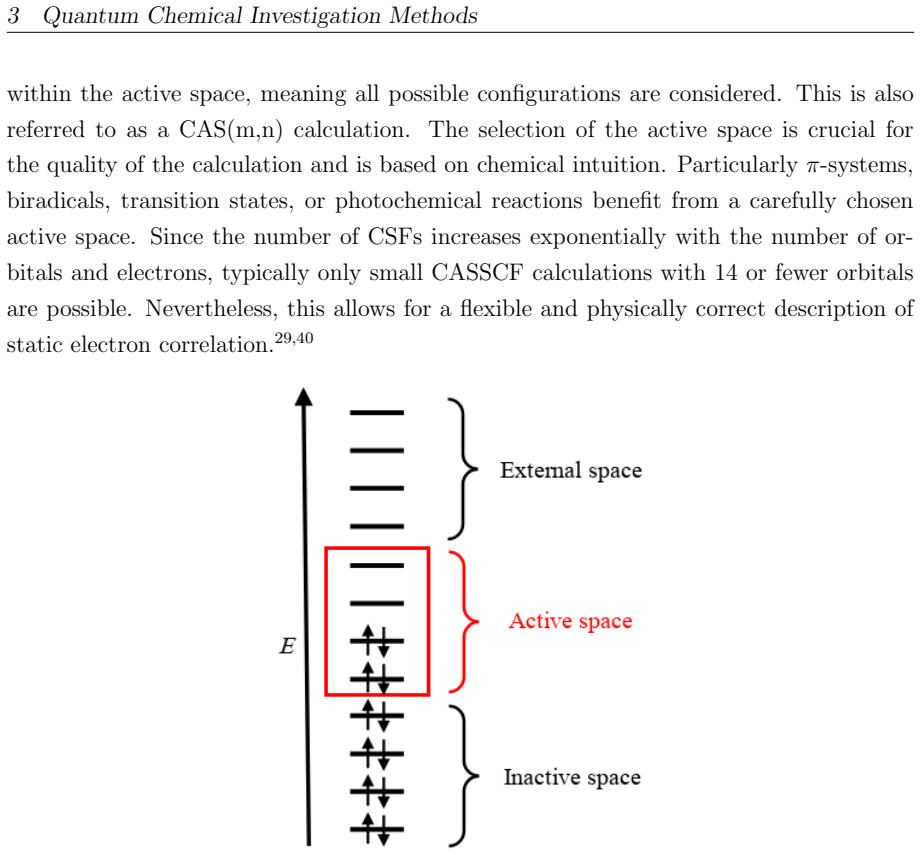
Figure 6. Figure 6: Visualization of the inactive, external and active orbital spaces in a CASSCF calcu￾lation.29 However, the CASSCF method neglects dynamic correlation, which describes the short range repulsion effects between electrons. To account for this and in order to obtain quantitatively accurate energies, a second-order perturbation theory, by means of the N￾electron valence state perturbation theory (NEVPT2)41–43, … view at source ↗
Figure 7
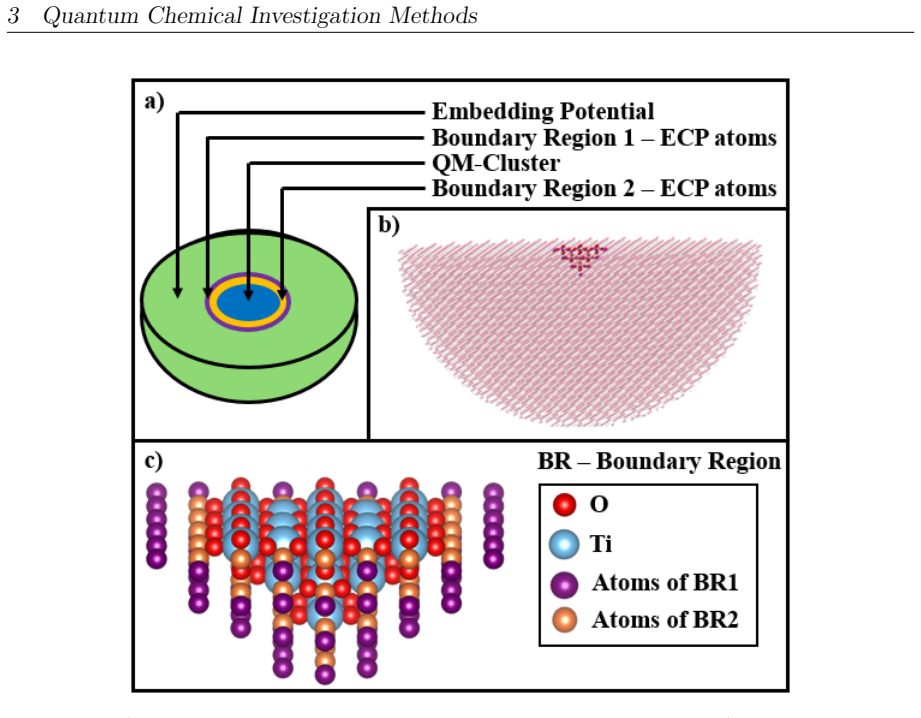
Figure 7. Figure 7: a) All four Regions of the Embedded cluster model are shown. b) Cluster embedded in a half-spherical field of point charges.10 c) All atoms with and without charge that are treated in all calculations. (Color scheme: red – oxygen, blue – titanium, orange – effective core potential (boundary region 2), violet - effective core potential (boundary region 1), green/see-through - point charge field)10–12 repres… view at source ↗
Figure 8
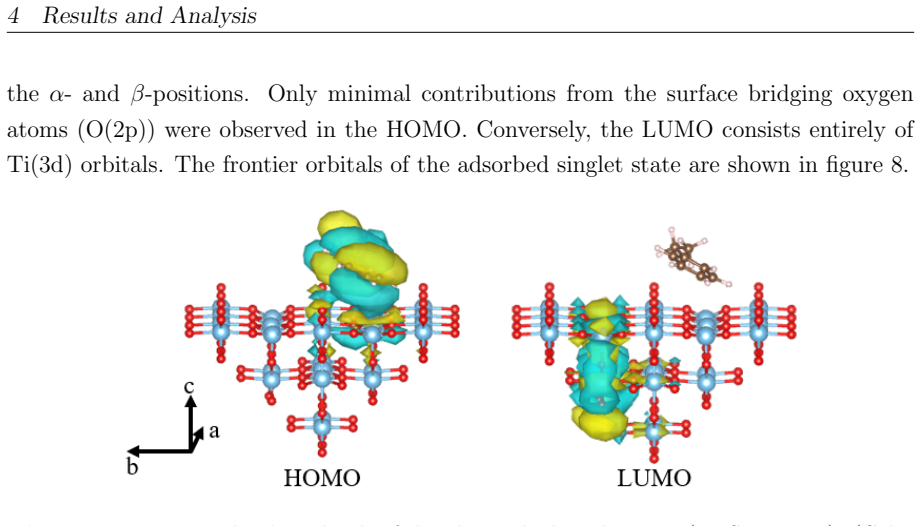
Figure 8. Figure 8: Frontier molecular orbitals of the physisorbed singlet state (RKS-PBE-D3). (Color scheme: red – oxygen, blue – titanium, brown – carbon, white – hydrogen) The total electron density shows a delocalization across the entire surface, reflecting the polarization of the lattice. However, an increase in local density at one of the carbon atoms of the phenyl ring indicates the molecules specific orientation. Thi… view at source ↗
Figure 9
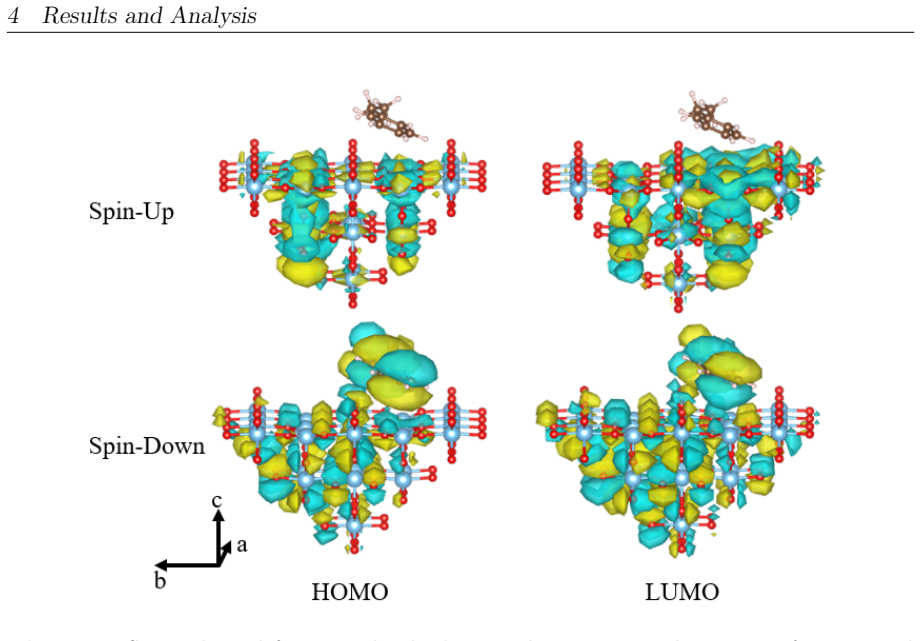
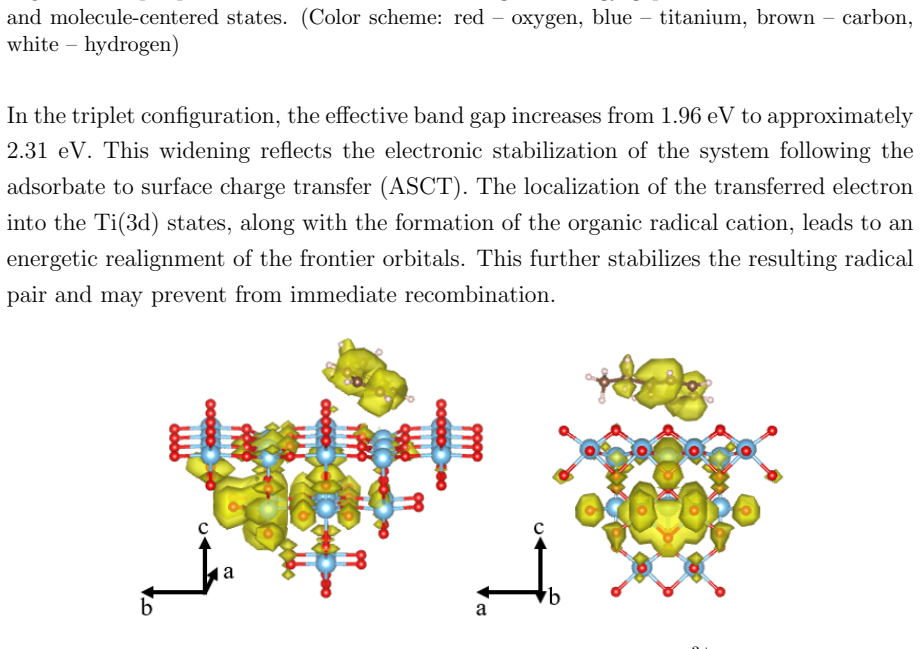
Figure 9. Figure 9: Spin-polarized frontier orbitals showing the energy gap between surface-centered and molecule-centered states. (Color scheme: red – oxygen, blue – titanium, brown – carbon, white – hydrogen) In the triplet configuration, the effective band gap increases from 1.96 eV to approximately 2.31 eV. This widening reflects the electronic stabilization of the system following the adsorbate to surface charge transfer… view at source ↗
Figure 10
Figure 10. Figure 10: DFT spin density visualization of the formation of the Ti3+ site and the organic α-radical from two different perspectives. (Color scheme: red – oxygen, blue – titanium, brown – carbon, white – hydrogen) The resulting spin density (see figure 10) provides the first mechanistic proof of α-CH 39 view at source ↗
Figure 11
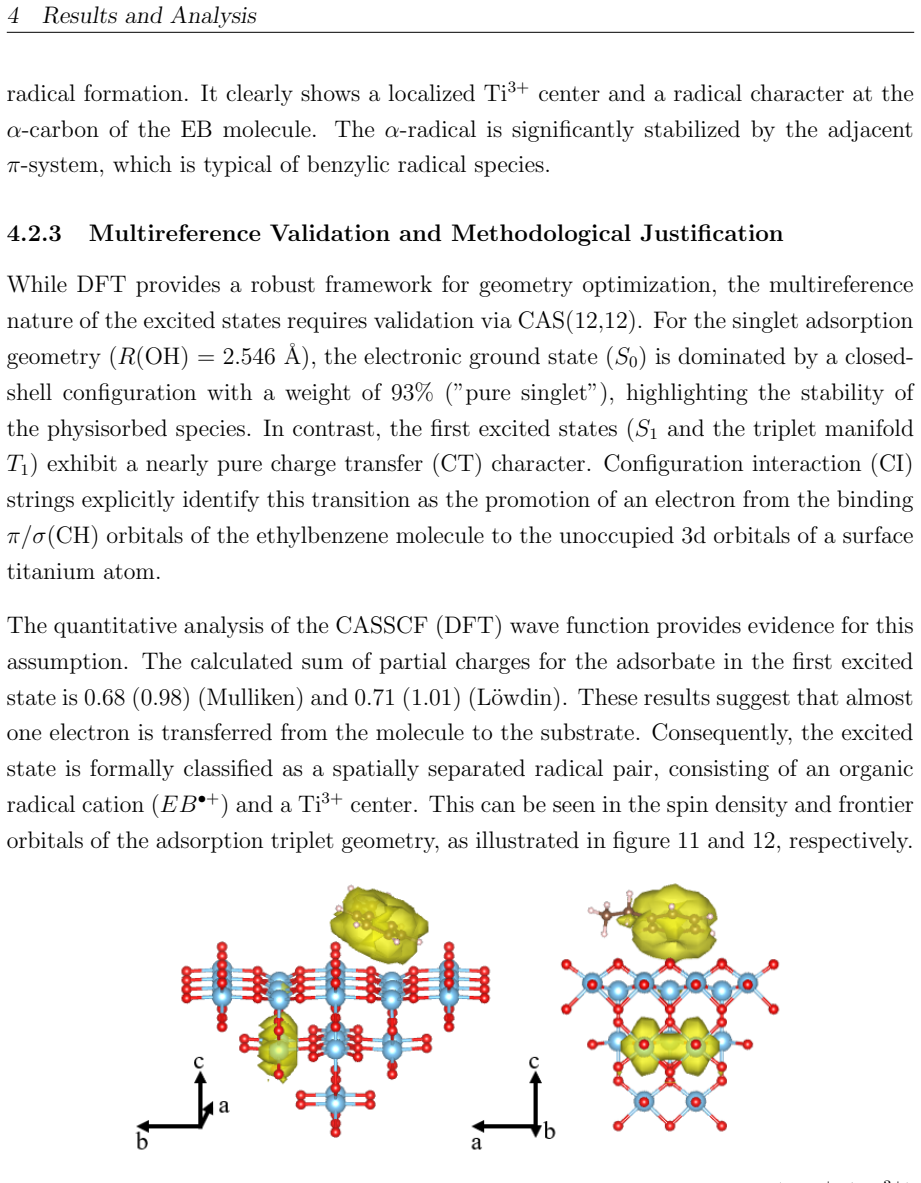
Figure 11. Figure 11: The multireference spin density confirms the radical pair character (EB•+ / Ti3+) identified by the partial charge analysis. (Color scheme: red – oxygen, blue – titanium, brown – carbon, white – hydrogen) Moreover, the energy splitting between the singlet CT state (S1) and the triplet CT state (T1) is found to be extremely small. This quasi-degeneracy can be explained as a direct physical consequence of t… view at source ↗
Figure 12
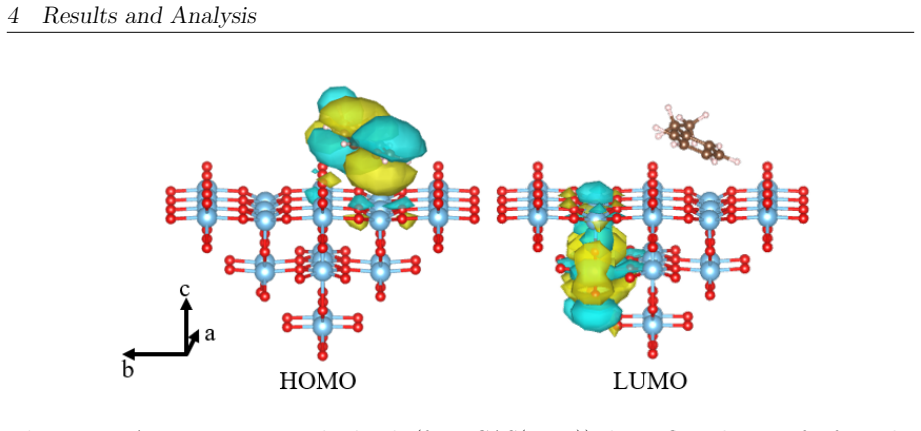
Figure 12. Figure 12: Active space natural orbitals (from CAS(12,12)) that reflect the transfer from the organic π/σ(CH) system to the Ti(3d) conduction band. (Color scheme: red – oxygen, blue – titanium, brown – carbon, white – hydrogen) splitting (2K), becomes minimal when the unpaired electrons occupy spatially separated orbitals and reside on different atomic centers. In the present system, the hole is localized within the… view at source ↗
Figure 13
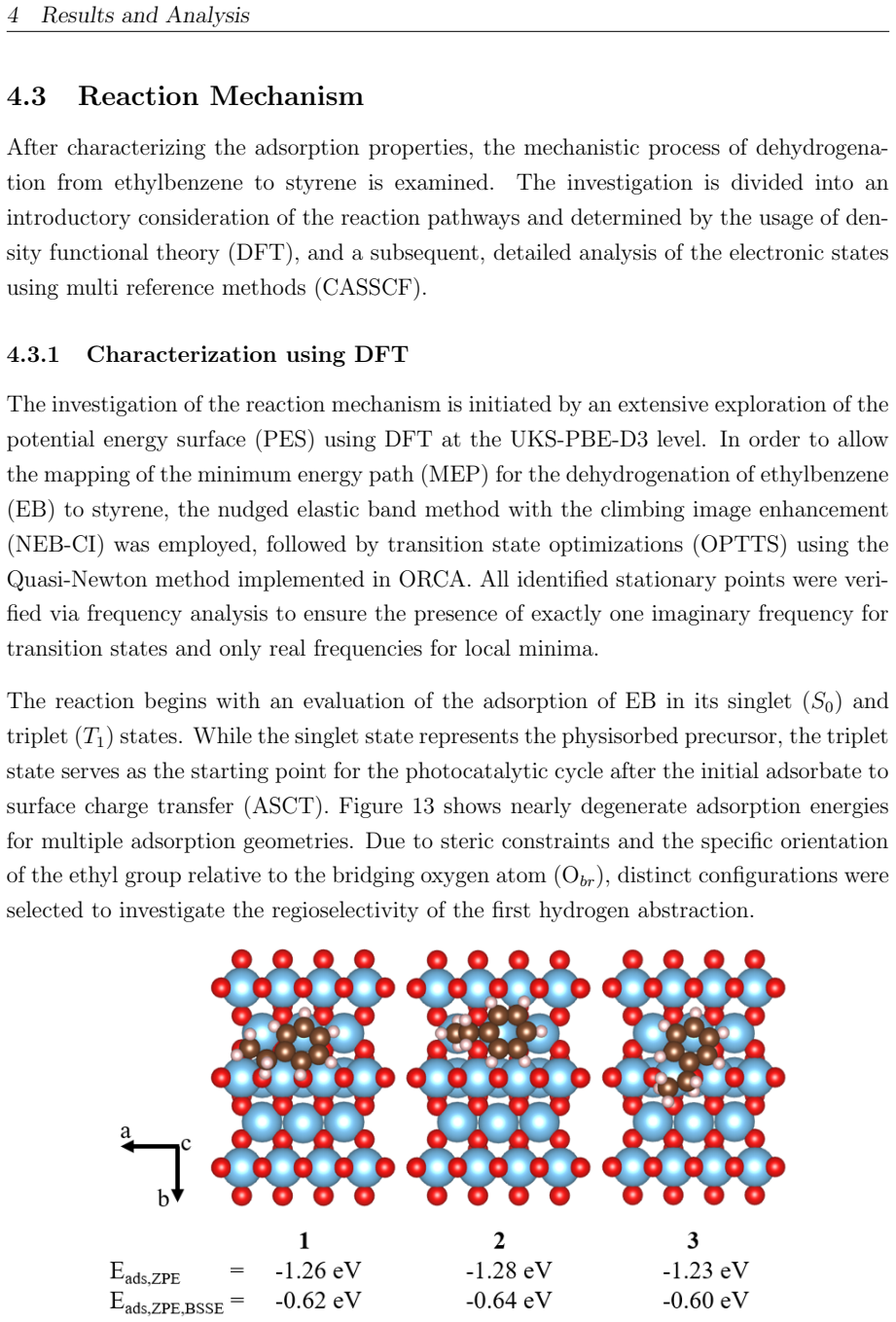
Figure 13. Figure 13: The adsorption geometries and their adsorption energies that were found are presented. (Color scheme: red – oxygen, blue – titanium, brown – carbon, white – hydrogen) 42 view at source ↗
Figure 14
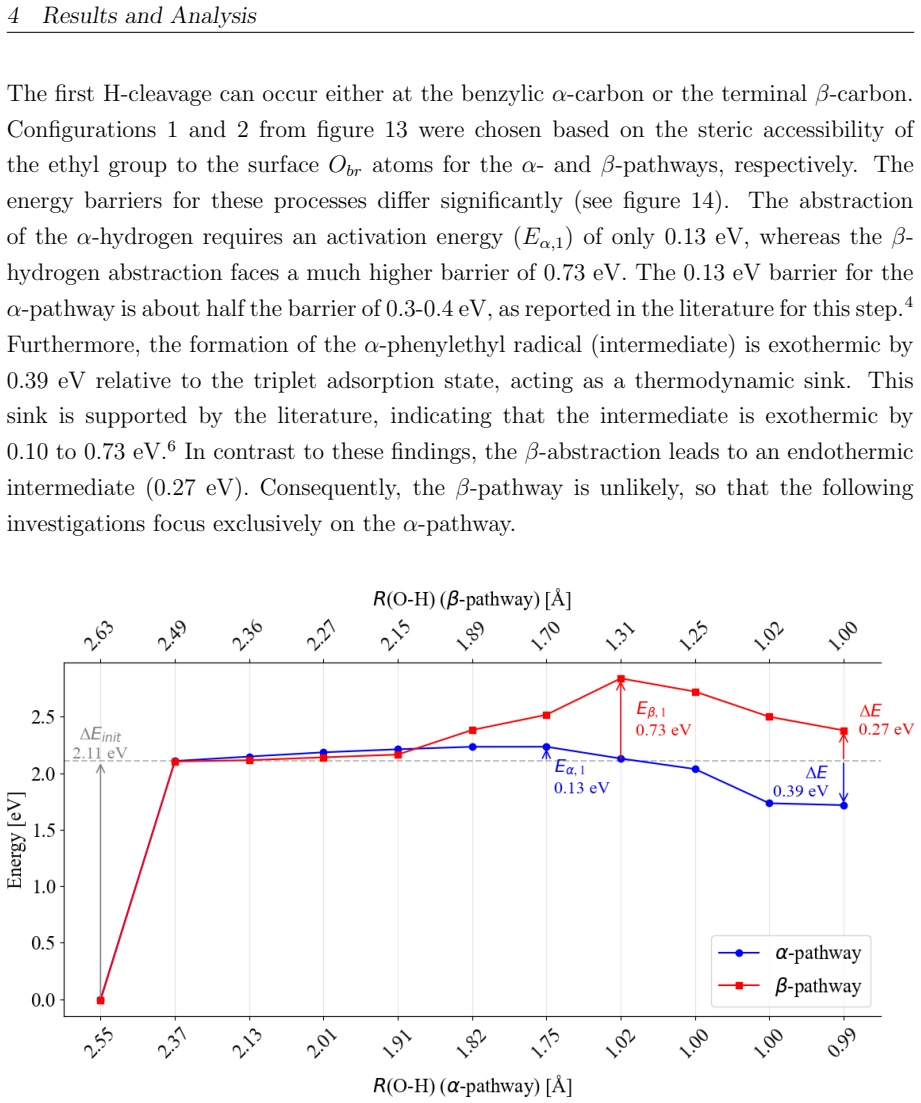
Figure 14. Figure 14: Energy profiles for the first H-abstraction. A comparison of the favored α￾abstraction and the unfavorable β-abstraction. The x-axis shows the O-H bond length as a structural reaction progress indicator. The first transition state (TS1) of the α-pathway is characterized by an ”early” geometric configuration. As found after an extra OPTTS calculation, not shown in figure 14. The α - C - H bond length remai… view at source ↗
Figure 15
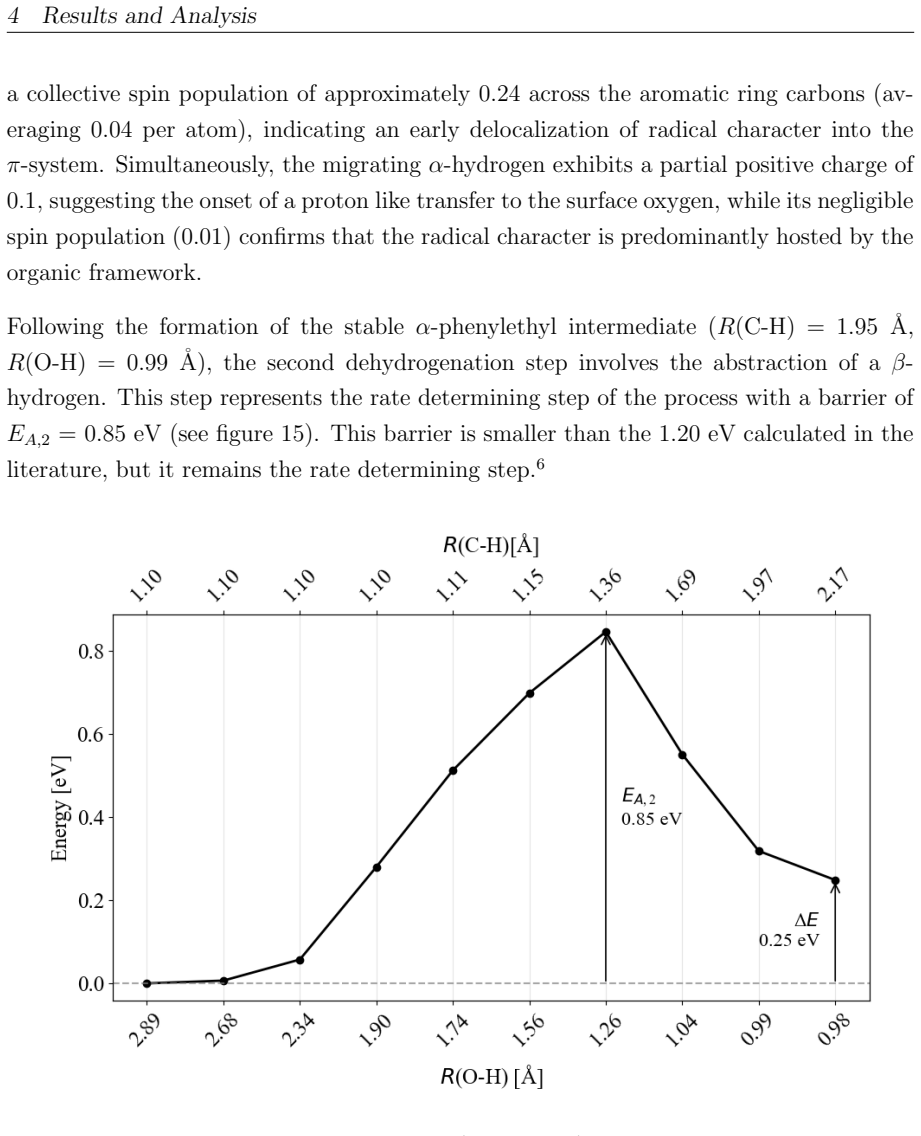
Figure 15. Figure 15: The reaction profile for Step II (see figure 4), showing the transition from the α-phenylethyl intermediate to the final styrene product, with an activation barrier of 0.85 eV. In contrast to TS1, the second transition state (TS2) exhibits a much more ”late” geom￾etry. The β-C-H bond stretches from 1.10 ˚A to 1.36 ˚A and the O-H distance decreases from 2.89 ˚A to 1.26 ˚A. This increased geometric deformat… view at source ↗
Figure 16
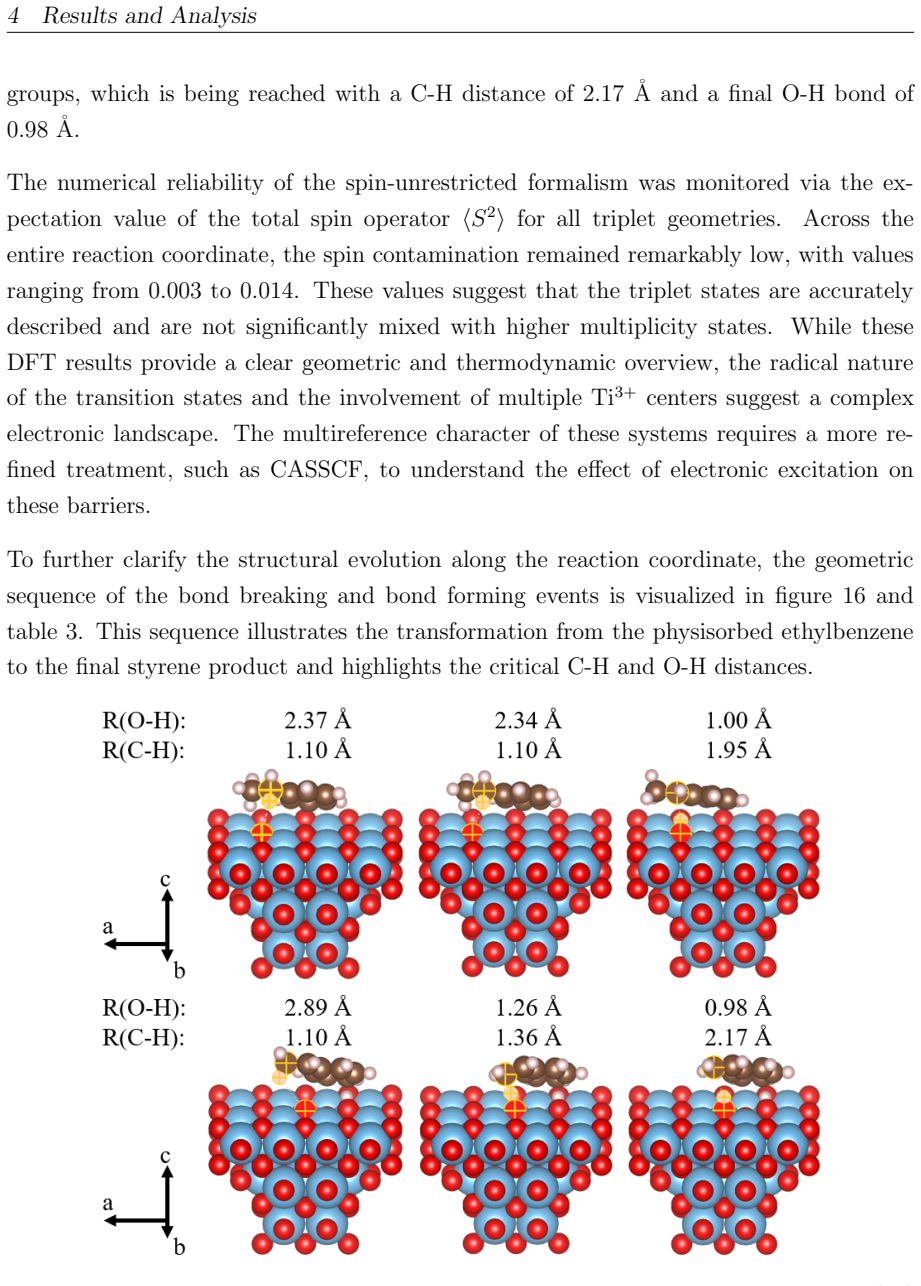
Figure 16. Figure 16: Geometric evolution of the dehydrogenation mechanism. Top: Adsorption (S0) → TS1 → Intermediate. Bottom: Relocated Intermediate → TS2 → Product. Distances are given in ˚A. The increase in R(C-H) at the intermediate stage is due to the relocation of the first abstracted hydrogen to an adjacent Obr site. This vacates the reactive center for the second step. 45 view at source ↗
Figure 17
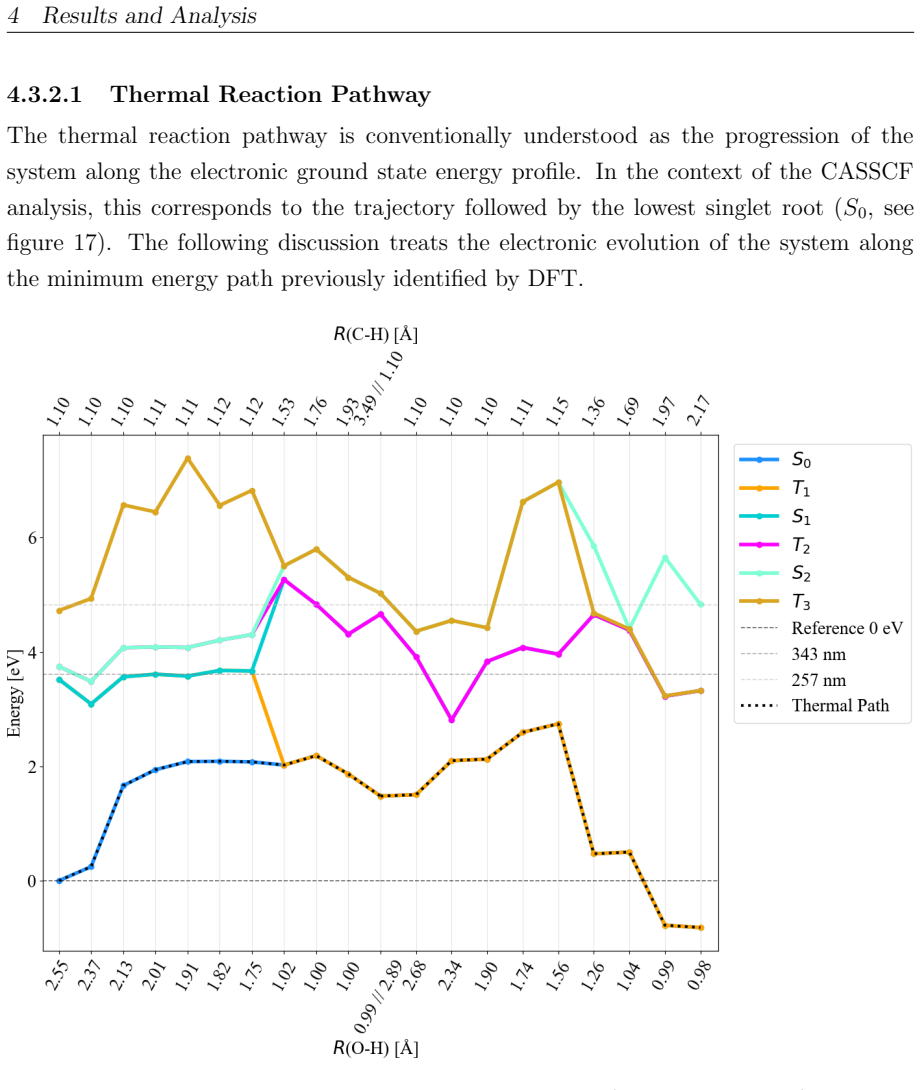
Figure 17. Figure 17: Energy profile of the six lowest electronic roots (S0, S1, S2, T1, T2, T3) calculated at the SA-CASSCF(12,12) level. The dotted line indicates the thermal reaction path, starting from the adsorption state. At the initial adsorption geometry (R(O-H) = 2.55 ˚A), the S0 state is characterized by a predominantly closed-shell configuration. The analysis of the configuration interaction (CI) coefficients reveal… view at source ↗
Figure 18
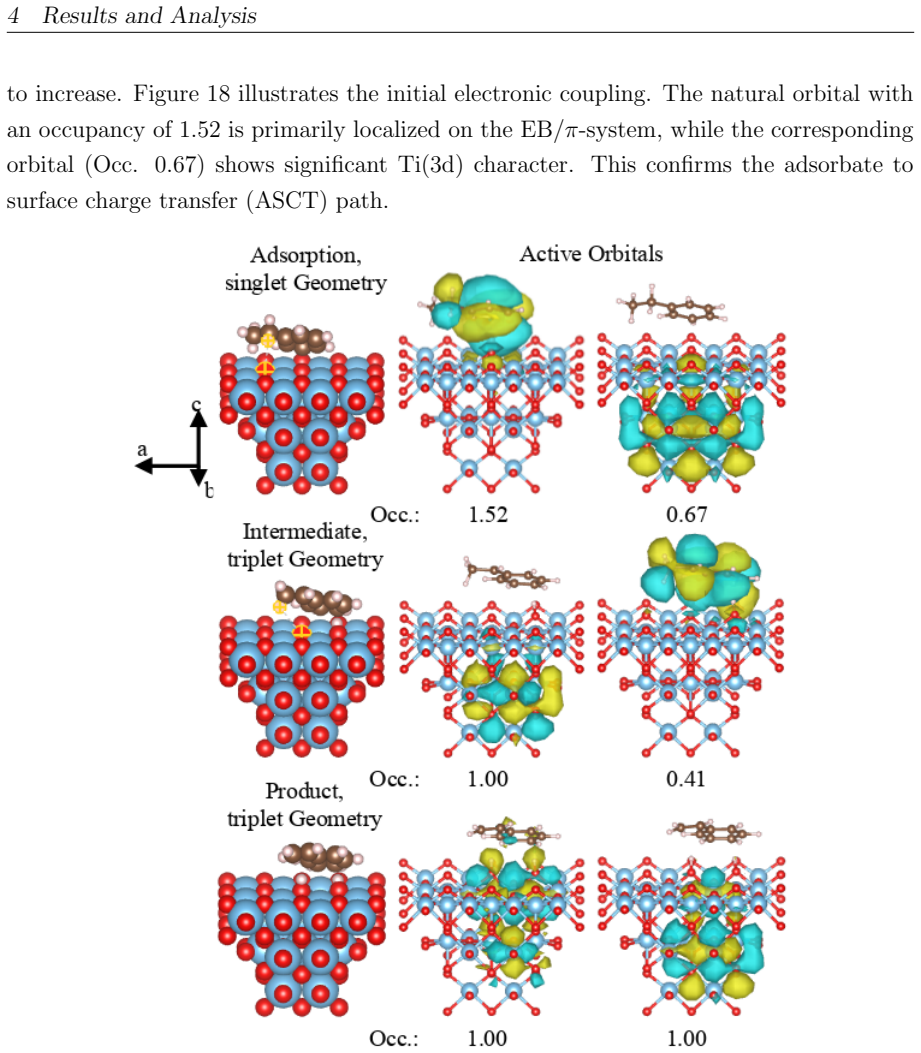
Figure 18. Figure 18: Visualization of the electronic reorganization that occurs during the dehydrogena￾tion of ethylbenzene on TiO2 (110) via SA-CASSCF(12,12). The marked atoms and dotted lines in the geometries (left) indicate the hydrogen transfer steps. The center and right columns show the two most active orbitals and their respective state-averaged natural orbital occupancy values (Occ.), which are farthest from 0.00 and… view at source ↗
Figure 19
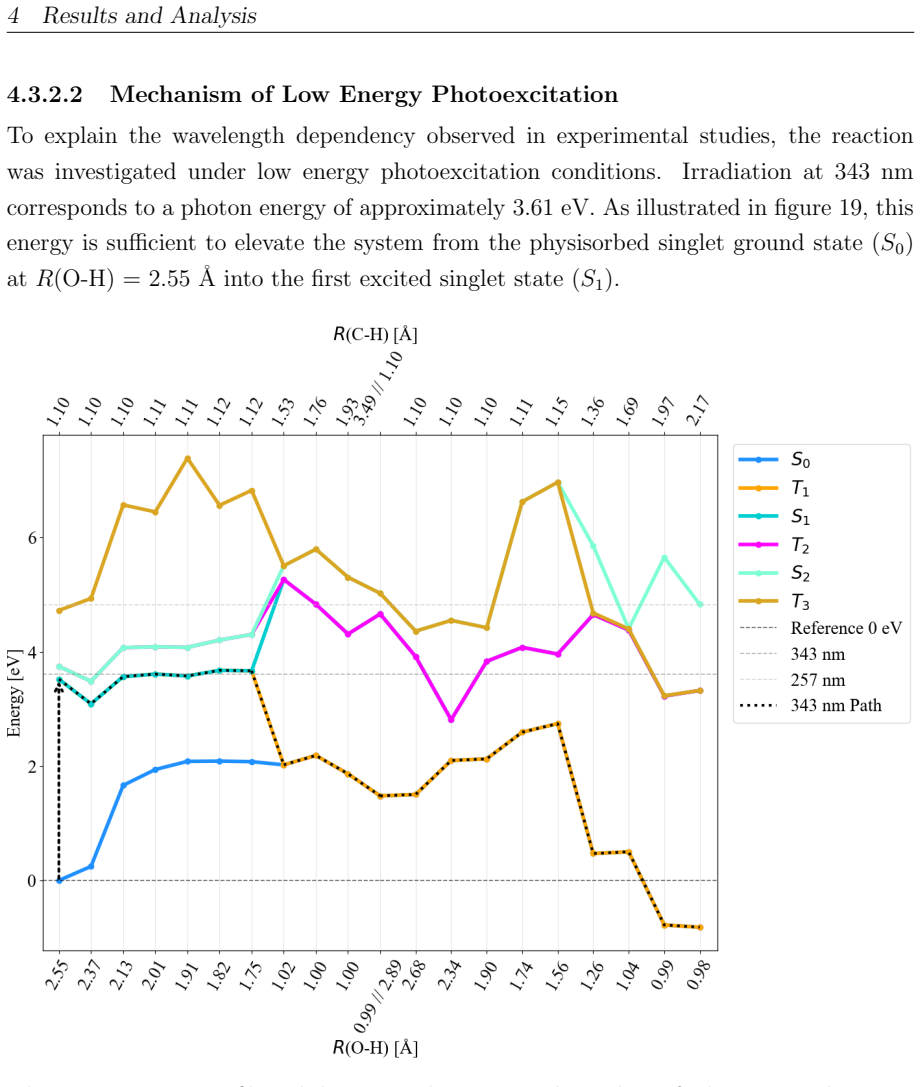
Figure 19. Figure 19: Energy profile and the proposed reaction path are shown for low energy photoexci￾tation (343 nm). The dotted line indicates the systems progression, indicating the initial jump to S1 and the subsequent relaxation into the biradical manifold (S0/T1) near the intermediate stage. A critical feature of the initial electronic structure at R(O-H) = 2.55 ˚A is the energetic quasi-degeneracy of the S1 and T1 root… view at source ↗
Figure 20
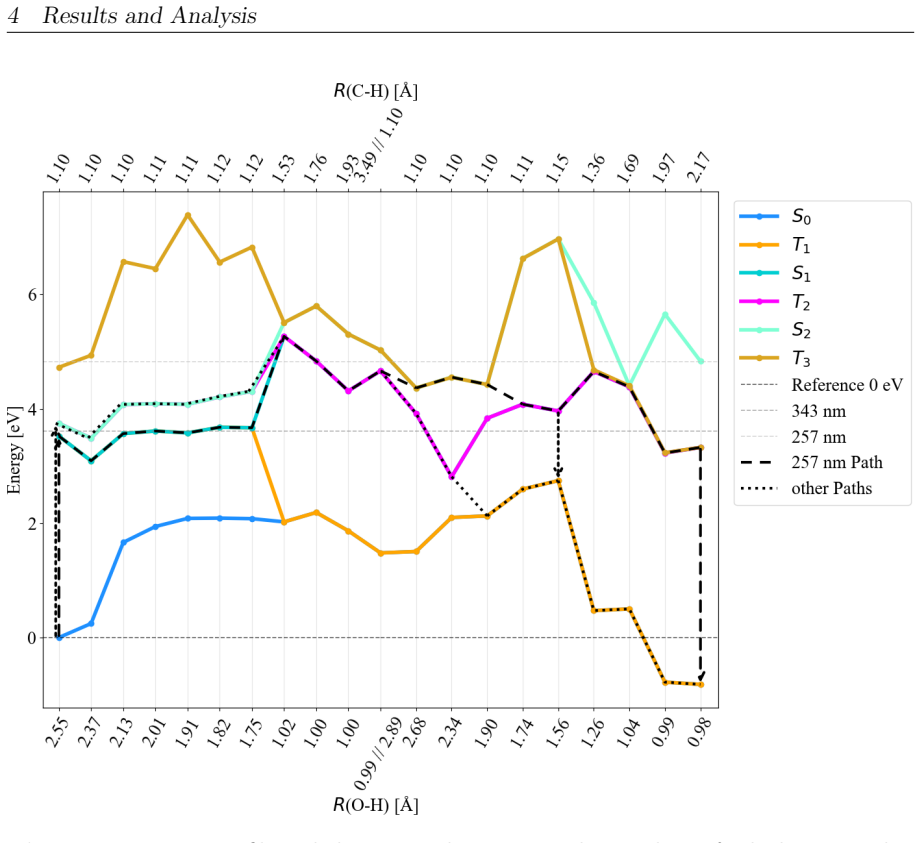
Figure 20. Figure 20: Energy profile and the proposed reaction paths are shown for high energy pho￾toexcitation (257 nm). The dashed black line represents the primary reaction channel, while dotted lines indicate alternative pathways. The higher energy input allows the system to remain on excited potential energy surfaces (S1, S2, T2, T3), effectively bypassing the rate determining barrier of the ground state. radical cation a… view at source ↗
Figure 21
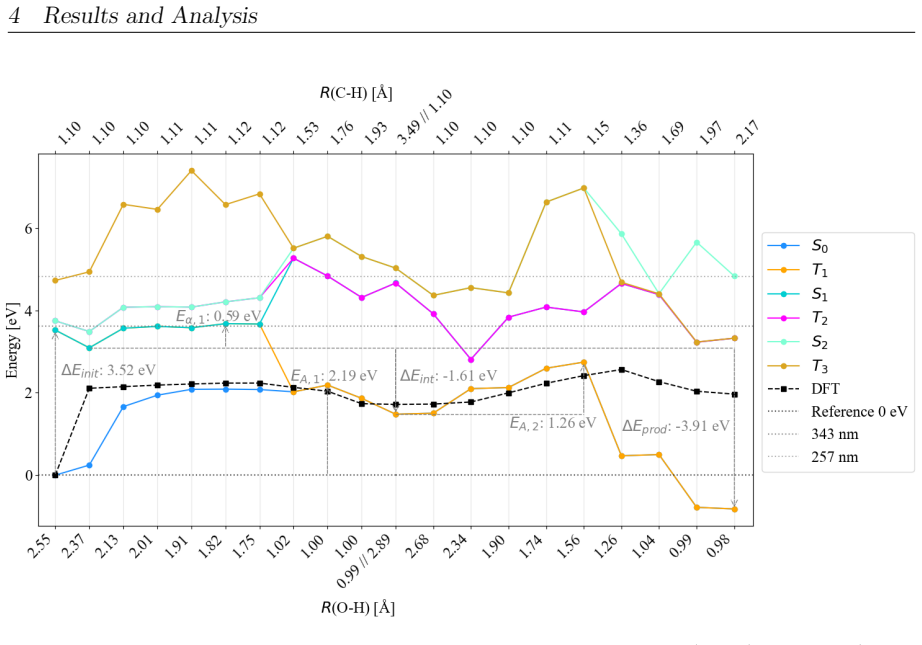
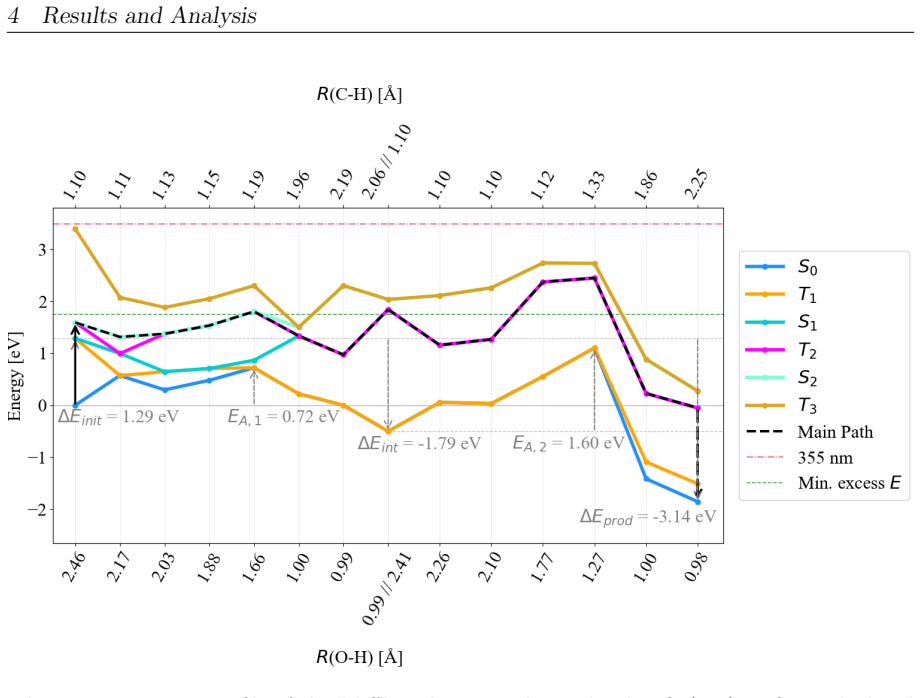
Figure 21. Figure 21: Comparison of energy profiles calculated using SA-CASSCF(12,12) and DFT (PBE￾D3) is shown. All energies are relative to the singlet physisorbed state (S0) at 2.55 ˚A. The plot shows the six lowest electronic roots, the DFT profile (black dashed), and the laser excitation levels (343 nm and 257 nm - complete horizontal dashed lines). Annotated arrows indicate activation barriers (EA) and relative stabiliza… view at source ↗
Figure 22
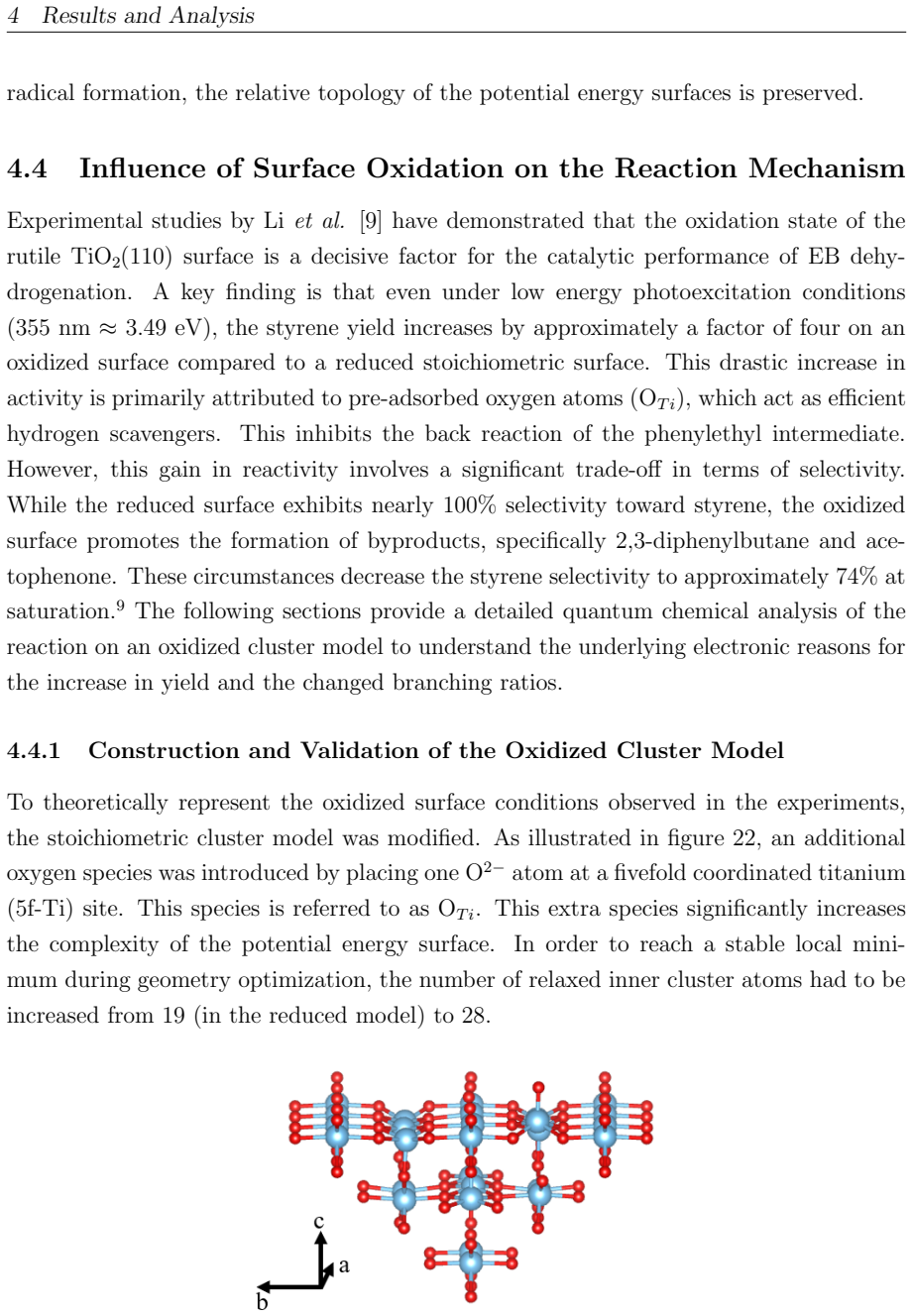
Figure 22. Figure 22: The oxidized surface model, which uses the reduced surface and introduces one O2− atom. (Color scheme: red – oxygen, blue – titanium) 57 view at source ↗
Figure 23
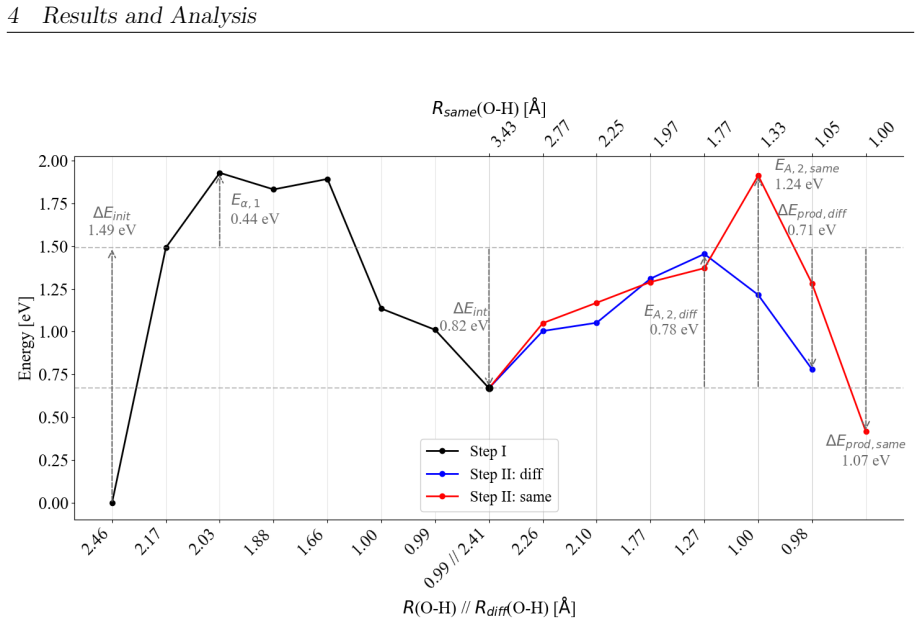
Figure 23. Figure 23: DFT calculated energy profile for the dehydrogenation of EB on the oxidized TiO2 (110) surface. After the intermediate stage, the path branches into a ”diff” pathway, (second H transfer to Obr, leading to two OH groups) and a ”same” pathway (second H transfer, leading to water formation at OT i). zero spin. When transitioning to the T1 state, a significant portion of the spin density (0.21) localizes on t… view at source ↗
Figure 24
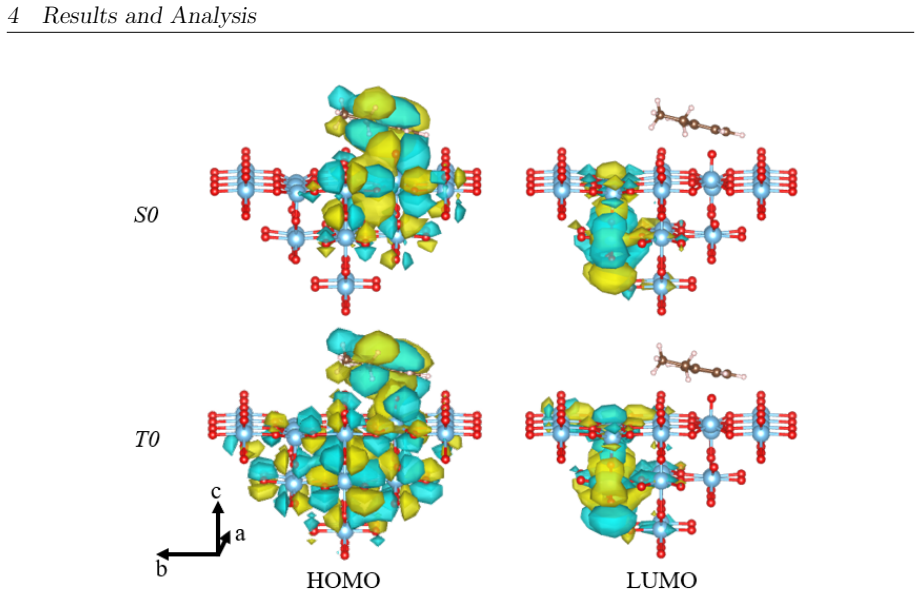
Figure 24. Figure 24: Electronic structure analysis of the adsorbed state on the oxidized surface. Left: HOMO and LUMO for S0 and T1, showing the involvement of EB and OT i in the occupied states. Right: DFT spin density visualization for T1, highlighting the distribution of radical character across the α-carbon, the π-system, OT i, and the reduced Ti(3d) centers. of 1.50 eV (TS2same). Despite this kinetic hurdle, the ”same” p… view at source ↗
Figure 25
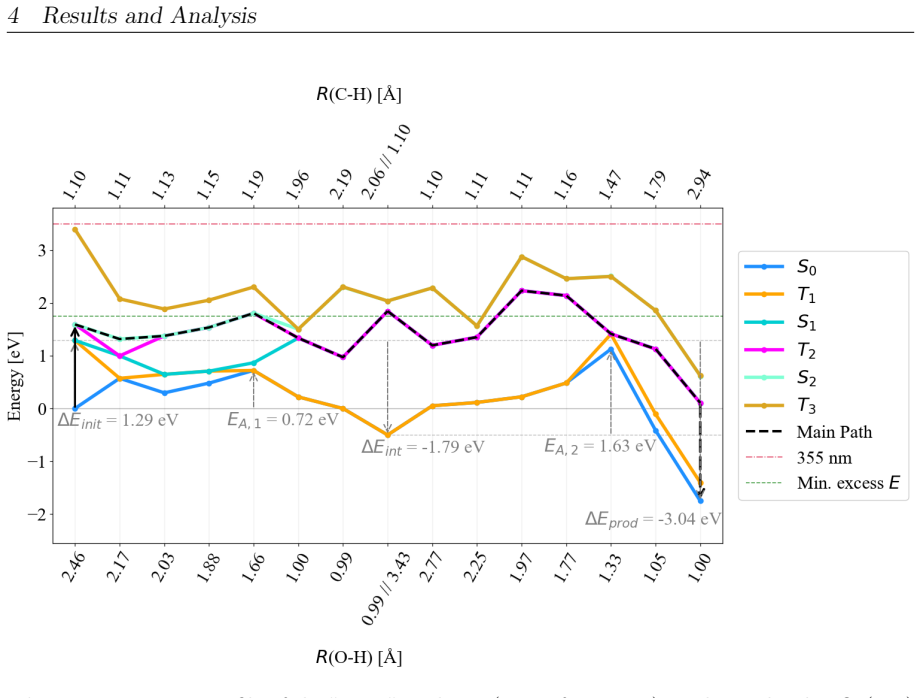
Figure 25. Figure 25: Energy profile of the ”diff” pathway on the oxidized TiO2 (110) surface calculated at the SA-CASSCF(14,14) level. All energies are normalized to the S0 state at R(OH) = 2.46 ˚A. The black dashed line indicates the proposed ”high-road” trajectory. possibility of persistence on the excited manifold is more probable. By remaining on the S1/T2 surface until the styrene-surface complex is fully formed, the sys… view at source ↗
Figure 26
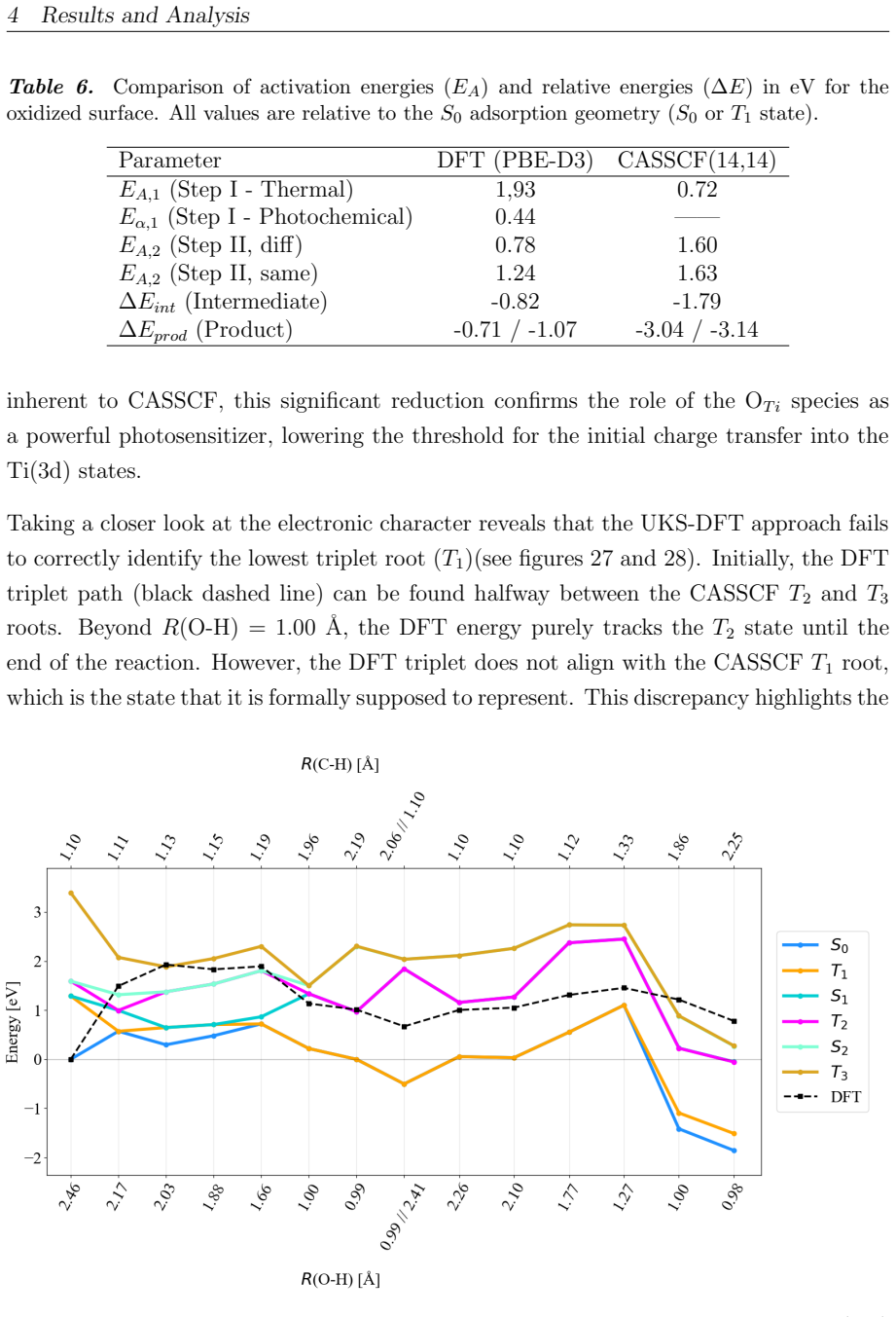
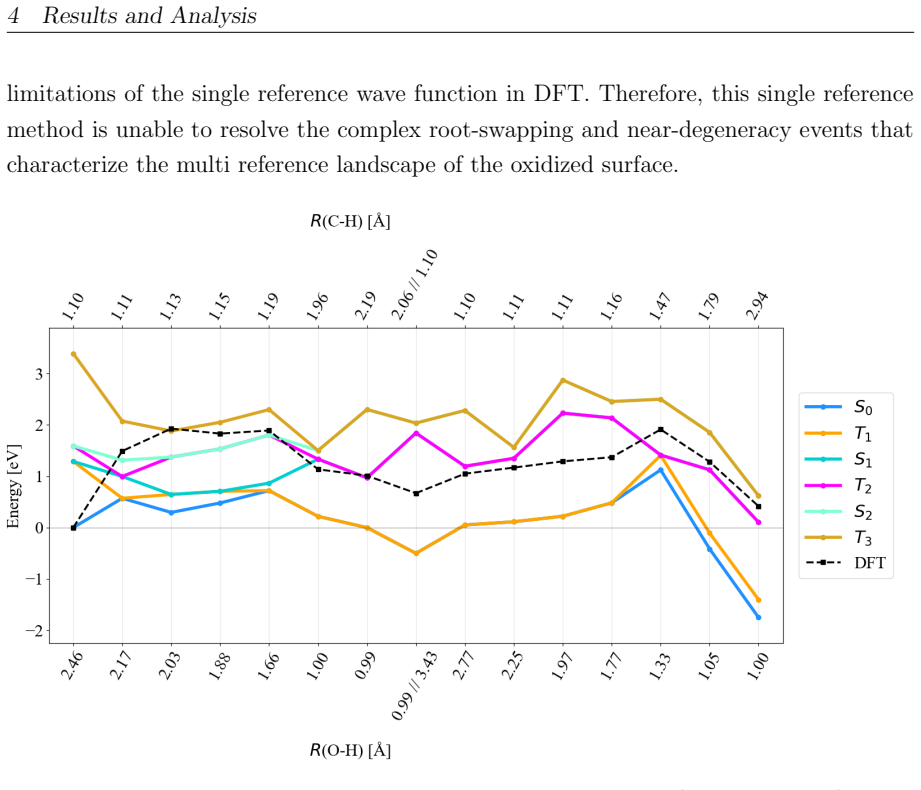
Figure 26. Figure 26: Energy profile of the ”same” pathway (water formation) on the oxidized TiO2 (110) surface calculated at the SA-CASSCF(14,14) level. All energies are normalized to the S0 state at R(OH) = 2.46 ˚A. The black dashed line indicates the proposed ”high-road” trajectory. 4.4.4 Comparison between CASSCF and DFT Results The direct comparison of the energy profiles calculated using spin-unrestricted DFT (UKS-PBE-D3… view at source ↗
Figure 27
Figure 27. Figure 27: Comparison of energy profiles for the ”diff” pathway on the oxidized TiO2 (110) surface, calculated via SA-CASSCF(14,14) and UKS-DFT (PBE-D3). All energies are relative to the physisorbed S0 state at 2.46 ˚A. The plot shows the six lowest electronic roots and the DFT profile (black dashed). 64 view at source ↗
Figure 28
Figure 28. Figure 28: A comparison of energy profiles for the ”same” pathway (water formation) on the oxidized surface, calculated via SA-CASSCF(14,14) and UKS-DFT (PBE-D3).All energies are relative to the physisorbed S0 state at 2.46 ˚A. The plot shows the six lowest electronic roots and the DFT profile (black dashed). Further differences are observed in the second dehydrogenation step. In the CASSCF de￾scription, the barrier… view at source ↗
read the original abstract

This master's thesis investigates the thermal and photochemical dehydrogenation of ethylbenzene (EB) to styrene on the rutile TiO$_{2}$(110) surface. A dual-methodological quantum chemical approach is used for this investigation. While industrial styrene production is energy-intensive, photocatalysis on semiconductor materials offers a promising alternative under significantly milder conditions. To elucidate the underlying mechanisms, this study employs density functional theory (DFT-PBE-D3) for geometry optimization and high-level multi-reference methods (SA-CASSCF) to accurately describe the electronic complexity of excited states and radical intermediates. The investigation reveals that, on the stoichiometric surface, both thermal and photochemical pathways are dominated by proton-coupled electron transfer (PCET). The wavelength dependence observed in the literature is explained by how the system navigates electronic manifolds. 343 nm irradiation leads to rapid relaxation into the ground state, where high kinetic barriers persist. In contrast, 257 nm excitation enables the system to persist in higher excited states (S1/T2). This allows the reaction to bypass the rate-determining ground-state barrier. Furthermore, the study demonstrates that surface oxidation causes a fundamental mechanistic shift. On oxidized surfaces, pre-adsorbed oxygen radicals (O$_{Ti}$) enable direct hydrogen atom transfer (HAT), which is more efficient than PCET on reduced surfaces. This "hydrogen scavenger" effect explains the significant increase in styrene yield. This work underscores the necessity of multi-reference treatments for complex surface reactions and provides a fundamental understanding of how surface stoichiometry and photon energy govern photocatalytic efficiency.

Editorial analysis

A structured set of objections, weighed in public.

Desk editor's note, referee report, simulated authors' rebuttal, and a circularity audit. Tearing a paper down is the easy half of reading it; the pith above is the substance, this is the friction.

Referee Report

3 major / 3 minor

Summary. The manuscript is a theoretical study of ethylbenzene dehydrogenation to styrene on rutile TiO2(110). Using DFT-PBE-D3 for ground-state structures and SA-CASSCF for excited states and radicals, it concludes that proton-coupled electron transfer (PCET) dominates both thermal and photochemical pathways on the stoichiometric surface. Wavelength dependence is attributed to persistence in S1/T2 states at 257 nm (bypassing the ground-state barrier) versus rapid relaxation at 343 nm. On oxidized surfaces, pre-adsorbed O_Ti radicals enable direct hydrogen atom transfer (HAT), which is more efficient than PCET and accounts for higher experimental yields.

Significance. If validated, the work supplies a mechanistic rationale for observed wavelength and surface-oxidation effects in TiO2 photocatalysis, highlighting the necessity of multi-reference methods for radical intermediates and excited-state manifolds. This could guide optimization of milder photocatalytic routes to styrene. The dual-method approach is a positive step toward treating electronic complexity on oxide surfaces, though its impact is limited by the absence of parameter reporting and direct experimental benchmarking.

major comments (3)
  1. [Computational Methods] Computational Methods (or equivalent section): The SA-CASSCF calculations are described without specifying the active-space size, orbital selection (e.g., inclusion of Ti 3d, O 2p, or adsorbate orbitals), or state-averaging details. This directly affects the claimed ordering and persistence of S1/T2 states that underpin the 257 nm vs 343 nm photochemical distinction in the abstract.
  2. [Results and Discussion] Results/Discussion (barrier comparisons): No convergence criteria, basis-set details, slab thickness, or k-point sampling are reported for the PBE-D3 optimizations. Because PBE is known to delocalize electrons on reduced TiO2 and underestimate gaps, even modest shifts in PCET vs HAT barriers could reverse the claimed dominance on stoichiometric versus oxidized surfaces.
  3. [Abstract / Photochemical Pathways] Abstract and photochemical section: The assertion that 257 nm excitation allows the system to 'persist in higher excited states (S1/T2)' and bypass the ground-state barrier lacks supporting non-adiabatic dynamics, state lifetimes, or oscillator-strength data. Without these, the wavelength-dependent mechanism remains an interpretation rather than a demonstrated outcome.
minor comments (3)
  1. [Abstract] The abstract states that oxidation causes a 'significant increase in styrene yield' but supplies neither the numerical factor nor a direct citation to the experimental data being interpreted.
  2. [Figures] Energy diagrams and potential-energy surfaces should explicitly label the level of theory (PBE-D3 or SA-CASSCF) and indicate whether zero-point corrections or dispersion are included.
  3. [Discussion] A short table comparing computed barriers to any available experimental activation energies or prior DFT studies on similar TiO2 systems would strengthen the mechanistic claims.

Simulated Author's Rebuttal

3 responses · 1 unresolved

We are grateful to the referee for the detailed and insightful comments, which have helped us identify areas for improvement in clarity and completeness. Below, we provide point-by-point responses to the major comments and outline the revisions we intend to implement.

read point-by-point responses
  1. Referee: [Computational Methods] Computational Methods (or equivalent section): The SA-CASSCF calculations are described without specifying the active-space size, orbital selection (e.g., inclusion of Ti 3d, O 2p, or adsorbate orbitals), or state-averaging details. This directly affects the claimed ordering and persistence of S1/T2 states that underpin the 257 nm vs 343 nm photochemical distinction in the abstract.

    Authors: We appreciate the referee's observation. The details of the SA-CASSCF setup were omitted in the submitted manuscript. In the revised version, we will add a comprehensive description of the active space (including the number of electrons and orbitals, with selection based on Ti 3d, O 2p, and adsorbate contributions), orbital selection procedure, and state-averaging details to ensure reproducibility and to support the excited-state analysis. revision: yes

  2. Referee: [Results and Discussion] Results/Discussion (barrier comparisons): No convergence criteria, basis-set details, slab thickness, or k-point sampling are reported for the PBE-D3 optimizations. Because PBE is known to delocalize electrons on reduced TiO2 and underestimate gaps, even modest shifts in PCET vs HAT barriers could reverse the claimed dominance on stoichiometric versus oxidized surfaces.

    Authors: We agree that these parameters are crucial for assessing the reliability of the calculations. We will include all missing technical details in the Computational Methods section of the revised manuscript, including convergence thresholds, basis sets, slab model specifications, and k-point grids. Additionally, we will add a brief discussion addressing the known limitations of PBE for TiO2 systems and argue why the relative barrier comparisons remain valid for distinguishing PCET and HAT mechanisms. revision: yes

  3. Referee: [Abstract / Photochemical Pathways] Abstract and photochemical section: The assertion that 257 nm excitation allows the system to 'persist in higher excited states (S1/T2)' and bypass the ground-state barrier lacks supporting non-adiabatic dynamics, state lifetimes, or oscillator-strength data. Without these, the wavelength-dependent mechanism remains an interpretation rather than a demonstrated outcome.

    Authors: We concur that the photochemical pathway description relies on an interpretation of the static electronic structure calculations rather than dynamical evidence. The manuscript does not include non-adiabatic molecular dynamics, lifetime estimates, or oscillator strengths. In the revision, we will rephrase the abstract and the photochemical pathways discussion to clearly indicate that the proposed persistence in S1/T2 states at 257 nm (versus relaxation at 343 nm) is deduced from the computed state energies, characters, and comparison to ground-state barriers. This will temper the claim appropriately while retaining the mechanistic insight. revision: yes

standing simulated objections not resolved
  • Providing explicit non-adiabatic dynamics simulations, state lifetimes, or oscillator strength data to directly validate the wavelength-dependent excited-state persistence, as these were not part of the performed calculations.

Circularity Check

0 steps flagged

No circularity: standard quantum-chemistry results on defined models

full rationale

The paper reports DFT-PBE-D3 geometry optimizations and SA-CASSCF excited-state calculations for ethylbenzene dehydrogenation pathways on stoichiometric and oxidized TiO2(110) models. All mechanistic claims (PCET dominance, wavelength-dependent barrier bypass, HAT on oxidized surfaces) are direct outputs of these electronic-structure computations rather than derivations, fitted parameters renamed as predictions, or self-citation chains. No equations reduce to their inputs by construction, no uniqueness theorems are imported from prior author work, and no ansatz is smuggled via citation. The work is self-contained against external benchmarks (computed barriers, state characters) and contains no load-bearing self-referential steps.

Axiom & Free-Parameter Ledger

2 free parameters · 2 axioms · 0 invented entities

The claims rest on standard quantum chemistry approximations and surface models whose accuracy is assumed rather than independently verified in the provided abstract.

free parameters (2)
  • PBE-D3 dispersion parameters
    Chosen for geometry optimization; parameters taken from prior literature but not re-derived here.
  • SA-CASSCF active space
    Selected to describe excited states and radicals; specific orbitals and electrons not stated in abstract.
axioms (2)
  • standard math Born-Oppenheimer approximation is valid for separating nuclear and electronic motion in the surface reaction.
    Implicit in all DFT and CASSCF calculations described.
  • domain assumption The periodic slab model of rutile TiO2(110) sufficiently represents experimental surface conditions.
    Standard assumption in surface science computations but subject to finite-size and defect effects.

pith-pipeline@v0.9.0 · 5591 in / 1447 out tokens · 65756 ms · 2026-05-07T11:47:24.695187+00:00 · methodology

discussion (0)

Sign in with ORCID, Apple, or X to comment. Anyone can read and Pith papers without signing in.

Reference graph

Works this paper leans on

4 extracted references · 4 canonical work pages

  1. [1]

    Bernardi, M

    F. Bernardi, M. Olivucci, M. A. Robb:Chem. Soc. Rev.(1996),25, 321–328

  2. [2]

    I. G. Ryabinkin, L. Joubert-Doriol, A. F. Izmaylov:Acc. Chem. Res.(2017),50, 1785–1793

  3. [3]

    J. P. Malhado, M. J. Bearpark, J. T. Hynes:Front. Chem.(2014),2, 1–21

  4. [4]

    Y. Chen, D. Dang, B. Yan, Y. Cheng:Catalysts(2022),12, 71. 74 List of Abbreviations 5f-Ti - Five-fold coordinated Titanium 6f-Ti - Six-fold coordinated Titanium ABS - Acrylonitrile Butadiene Styrene AO - Atomic Orbitals ASCT - Adsorbate-to-Surface Charge Transfer BR - Boundary Region BSIE - Basis Set Incompleteness Error BSSE - Basis Set Superposition Err...