Accreting stellar-mass black holes
Pith reviewed 2026-06-26 16:26 UTC · model grok-4.3
The pith
Polarization data point to a corona extended perpendicular to the jet axis around stellar-mass black holes in the hard state.
A machine-rendered reading of the paper's core claim, the machinery that carries it, and where it could break.
Core claim
A complex interplay between the accretion disk, the corona, and the jet produces the observed spectral states, timing variability, and multi-wavelength emission; X-ray polarization measurements indicate that the corona is extended perpendicular to the jet axis in the hard state, while the soft state remains poorly understood because current observations do not match simple theoretical expectations.
What carries the argument
The corona, whose geometry is constrained by X-ray polarization, mediates the interplay among disk, jet, and observed variability.
If this is right
- Quasi-periodic oscillations and broadband noise serve as direct probes of the dynamics in the innermost accretion flow.
- Iron K emission lines constrain the inner-disk radius and spin through relativistic reflection modeling.
- State transitions, magnetic-field roles in outflows, and disk-jet connections remain unresolved and require coordinated multi-wavelength campaigns.
Where Pith is reading between the lines
- Improved soft-state polarization data could distinguish between competing corona geometries that current models cannot yet separate.
- If magnetic fields dominate the geometry, similar polarization signatures should appear in other accreting compact objects.
- Linking the observed corona orientation to jet power may require simultaneous radio and X-ray polarimetry during state transitions.
Load-bearing premise
The reviewed observational and theoretical papers give a representative picture of the field without major systematic gaps in coverage of state transitions or corona geometry.
What would settle it
A set of soft-state polarization measurements that match simple corona models would falsify the claim that the soft state remains poorly understood.
Figures
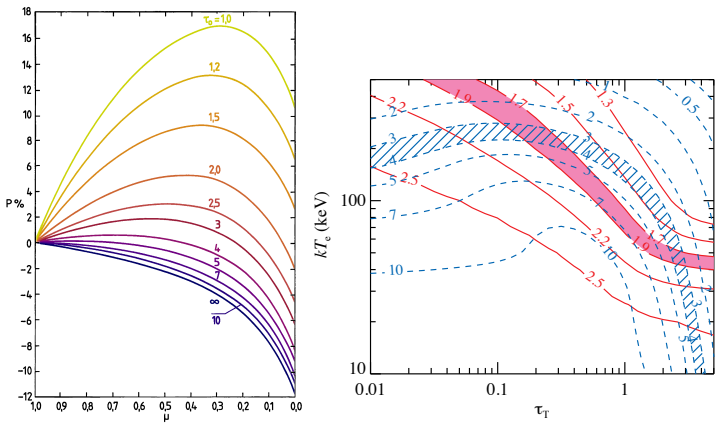
read the original abstract
Accreting stellar-mass black holes exhibit dramatic variability across the electromagnetic spectrum, including spectral state transitions, outbursts, and jet production, making them unique laboratories for understanding accretion processes in strong gravitational fields. This review synthesizes recent progress in understanding these systems, focusing on their continuum emission, timing properties, emission lines, and X-ray polarization. A complex interplay between the accretion disk, the so-called corona, and jet underlies the observed spectral and timing behavior, with quasi-periodic oscillations and broadband noise providing windows into the dynamics of the innermost accretion flow. Emission lines across all wavelengths serve as critical diagnostics of disk structure, outflows, and reprocessing, while iron K lines in the X-ray band probe the properties of the inner disk through relativistic reflection. Polarization studies suggest that the corona is likely extended perpendicular to the jet axis in the hard state, while the soft state remains poorly understood, with observations that do not yet conform to simple theoretical expectations; a puzzle that continues to challenge our interpretation of accretion geometry. Despite significant advances, fundamental questions remain about the physical origins of state transitions, the role of magnetic fields in driving outflows and shaping the accretion flow, and the connection between disk instabilities and jet launching. This review underscores the need for future multi-wavelength, timing, and polarimetric studies to deepen our understanding of accretion physics in strong-gravity environments.
Editorial analysis
A structured set of objections, weighed in public.
Referee Report
Summary. The manuscript is a review article synthesizing recent progress on accreting stellar-mass black holes. It covers continuum emission, timing properties (including QPOs and broadband noise), emission lines (with emphasis on relativistic iron K lines), and X-ray polarization. The central narrative describes the interplay among the accretion disk, corona, and jet during spectral state transitions and outbursts, while noting that polarization data favor an extended corona perpendicular to the jet axis in the hard state but that soft-state observations remain inconsistent with simple models. The review closes by listing open questions on the physical drivers of state transitions, the role of magnetic fields, and jet launching, and calls for future multi-wavelength and polarimetric observations.
Significance. If the synthesis accurately captures the cited literature, the review would provide a useful consolidated reference for the field. It gives explicit credit to polarization constraints on corona geometry as a recent advance and clearly flags the soft-state geometry puzzle as an area where observations do not yet match simple expectations. Such a balanced overview can help orient new researchers and prioritize observing programs with facilities such as IXPE or future X-ray polarimeters.
minor comments (2)
- [Abstract] Abstract: the phrase 'recent progress' is used without a timeframe or pointer to key references; adding one or two representative citations would help readers assess the scope of the synthesis.
- [Abstract] Abstract, final paragraph: the statement that soft-state observations 'do not yet conform to simple theoretical expectations' would benefit from a brief parenthetical example of the specific tension (e.g., a particular polarization measurement or spectral feature) to make the puzzle concrete for non-specialist readers.
Simulated Author's Rebuttal
We thank the referee for their positive and accurate summary of the manuscript, as well as for the recommendation of minor revision. The assessment correctly identifies the central narrative on the interplay between disk, corona, and jet, and appropriately highlights both the polarization constraints and the remaining soft-state geometry puzzle. No major comments were provided in the report.
Circularity Check
Review article with no derivation chain or internal predictions
full rationale
This is a review paper synthesizing existing literature on accreting stellar-mass black holes, corona geometry, state transitions, timing properties, and polarization. The abstract and description present summaries of cited observational and theoretical results rather than any new derivations, equations, parameter fits, or predictions. No load-bearing steps reduce to self-defined inputs or self-citations by construction, as there is no derivation chain present.
Axiom & Free-Parameter Ledger
Reference graph
Works this paper leans on
-
[1]
https://doi.org/10.1093/mnras/stz2784, arXiv:1910.01687 [astro-ph.HE] 57 Atri P, Miller-Jones JCA, Bahramian A, et al (2020) A radio parallax to the black hole X-ray binary MAXI J1820+070. MNRAS493(1):L81–L86. https://doi.org/10. 1093/mnrasl/slaa010, arXiv:1912.04525 [astro-ph.HE] Avakyan A, Neumann M, Zainab A, et al (2023) XRBcats: Galactic low-mass X-r...
-
[2]
Fluctuations and symmetry in the speed and direction of the jets of SS433 on different timescales
https://doi.org/10.1086/157262 Blandford RD, Payne DG (1982) Hydromagnetic flows from accretion disks and the production of radio jets. MNRAS199:883–903. https://doi.org/10.1093/mnras/199. 4.883 Blandford RD, Znajek RL (1977) Electromagnetic extraction of energy from Kerr black holes. MNRAS179:433–456. https://doi.org/10.1093/mnras/179.3.433 59 Blundell K...
work page internal anchor Pith review Pith/arXiv arXiv doi:10.1086/157262 1982
-
[3]
Bowen Fluorescence from the Companion Star in X1822-371
https://doi.org/10.1093/mnras/274.2.565 Casares J, Steeghs D, Hynes RI, et al (2003) Bowen Fluorescence from the Com- panion Star in X1822-371. ApJ590(2):1041–1048. https://doi.org/10.1086/375055, arXiv:astro-ph/0303263 [astro-ph] Casares J, Steeghs D, Hynes RI, et al (2004) Bowen Fluorescence from Compan- ion Stars in X-ray Binaries. In: Tovmassian G, Si...
work page internal anchor Pith review Pith/arXiv arXiv doi:10.1093/mnras/274.2.565 2003
-
[4]
Effects of interactions on star formation in the field
https://doi.org/10.1111/j.1365-2966.2003.07115.x, arXiv:astro-ph/0309047 [astro-ph] Chauvin M, Florén HG, Friis M, et al (2018) Accretion geometry of the black-hole binary Cygnus X-1 from X-ray polarimetry. Nature Astronomy 2:652–655. https: //doi.org/10.1038/s41550-018-0489-x, arXiv:1812.09907 [astro-ph.HE] Chodil G, Mark H, Rodrigues R, et al (1968) Nov...
-
[5]
https://doi.org/10.1086/425650, arXiv:astro-ph/0409154 [astro-ph] Corbel S, Tomsick JA, Kaaret P (2006) On the Origin of Black Hole X-Ray Emission in Quiescence: Chandra Observations of XTE J1550-564 and H1743-
work page internal anchor Pith review Pith/arXiv arXiv doi:10.1086/425650 2006
-
[6]
ApJ636(2):971–978. https://doi.org/10.1086/498230, arXiv:astro-ph/0509870 [astro-ph] Corbel S, Koerding E, Kaaret P (2008) Revisiting the radio/X-ray flux correlation in the black hole V404 Cyg: from outburst to quiescence. MNRAS389(4):1697–1702. https://doi.org/10.1111/j.1365-2966.2008.13542.x, arXiv:0806.3079 [astro-ph] Corbel S, Coriat M, Brocksopp C, ...
work page internal anchor Pith review Pith/arXiv arXiv doi:10.1086/498230 2008
-
[7]
https://doi.org/10.1111/j.1365-2966.2008.14044.x, arXiv:0810.1141 [astro-ph] Durant M, Shahbaz T, Gandhi P, et al (2011) High time resolution optical/X- ray cross-correlations for X-ray binaries: anticorrelations and rapid variabil- ity. MNRAS410(4):2329–2338. https://doi.org/10.1111/j.1365-2966.2010.17604.x, arXiv:1008.4522 [astro-ph.HE] Dziełak MA, De M...
-
[8]
ApJ489(2):865–889. https://doi.org/10.1086/304829, arXiv:astro-ph/9705237 [astro-ph] 66 Ewing M, Parra M, Mastroserio G, et al (2025) The very high X-ray polarisation of accreting black hole IGR J17091-3624 in the hard state. MNRAShttps://doi.org/ 10.1093/mnras/staf859, arXiv:2503.22665 [astro-ph.HE] Fabian AC, Rees MJ, Stella L, et al (1989) X-ray fluore...
work page internal anchor Pith review Pith/arXiv arXiv doi:10.1086/304829 2025
-
[9]
Multiwavelength Observations of A0620-00 in Quiescence
https://doi.org/10.1038/216773a0 Frank J, King A, Raine DJ (2002) Accretion Power in Astrophysics: Third Edition Froning CS, Cantrell AG, Maccarone TJ, et al (2011) Multiwavelength Observations of A0620-00 in Quiescence. ApJ743(1):26. https://doi.org/10.1088/0004-637X/743/ 1/26, arXiv:1109.1813 [astro-ph.SR] Froning CS, Maccarone TJ, France K, et al (2014...
work page internal anchor Pith review Pith/arXiv arXiv doi:10.1038/216773a0 2002
-
[10]
Orbital dynamics of Cygnus X-3
ApJ541(1):308–318. https://doi.org/10.1086/309419, arXiv:astro-ph/0005032 [astro-ph] Harries JR, McCracken KG, Francey RJ, et al (1967) A Strong X-ray Source in the Vicinity of the Constellation Crux. Nature215(5096):38–40. https://doi.org/10. 1038/215038b0 Harrison FA, Craig WW, Christensen FE, et al (2013) The Nuclear Spectroscopic Telescope Array (NuST...
work page internal anchor Pith review Pith/arXiv arXiv doi:10.1086/309419 1967
-
[11]
MNRAS399(1):281–286. https://doi.org/10.1111/j.1365-2966.2009.15260.x, arXiv:0906.2773 [astro-ph.HE] Ibragimov A, Zdziarski AA, Poutanen J (2007) Superorbital variability of X- ray and radio emission of Cyg X-1 - I. Emission anisotropy of precessing sources. MNRAS381(2):723–731. https://doi.org/10.1111/j.1365-2966.2007.12222. x, arXiv:0707.1880 [astro-ph]...
-
[12]
https://doi.org/10.1093/mnras/stz1720, arXiv:1906.08310 [astro-ph.HE] Ingram A, Bollemeijer N, Veledina A, et al (2024) Tracking the X-Ray Polariza- tion of the Black Hole Transient Swift J1727.8–1613 during a State Transition. 72 ApJ968(2):76. https://doi.org/10.3847/1538-4357/ad3faf, arXiv:2311.05497 [astro- ph.HE] Ingram AR, Motta SE (2019) A review of...
work page internal anchor Pith review Pith/arXiv arXiv doi:10.1093/mnras/stz1720 1906
-
[13]
https://doi.org/10.1093/mnras/stab1231, arXiv:2104.13005 [astro-ph.HE] Jana A, Chatterjee A, Chang HK, et al (2023) Coronal properties of low-accreting AGNs using Swift, XMM-Newton, and NuSTAR observations. MNRAS524(3):4670–
-
[14]
https://doi.org/10.1093/mnras/stad2140, arXiv:2307.07966 [astro-ph.HE] Jansen F, Lumb D, Altieri B, et al (2001) XMM-Newton observatory. I. The spacecraft and operations. A&A365:L1–L6. https://doi.org/10.1051/0004-6361:20000036 Jiménez-Ibarra F, Muñoz-Darias T, Wang L, et al (2018) Bowen emission from Aquila X-1: evidence for multiple components and const...
-
[15]
ApJ531(2):963–970. https://doi.org/10.1086/308524, arXiv:astro-ph/9910393 [astro-ph] Ling JC, Wheaton WA, Wallyn P, et al (1997) Gamma-Ray Spectra and Variability of Cygnus X-1 Observed by BATSE. ApJ484(1):375–382. https://doi.org/10.1086/ 304323 Ling YS, Xie F, Ge MY, et al (2024) Polarization Study of Swift J151857.0–572147 with IXPE Observation. Resear...
work page internal anchor Pith review Pith/arXiv arXiv doi:10.1086/308524 1997
-
[16]
A&A626:A115. https://doi.org/10.1051/0004-6361/201935060, arXiv:1905.05057 [astro-ph.HE] Marcel G, Cangemi F, Rodriguez J, et al (2020) A unified accretion- ejection paradigm for black hole X-ray binaries. V. Low-frequency quasi- periodic oscillations. A&A640:A18. https://doi.org/10.1051/0004-6361/202037539, arXiv:2005.10359 [astro-ph.HE] Marcel G, Ferrei...
work page internal anchor Pith review Pith/arXiv arXiv doi:10.1051/0004-6361/201935060 1905
-
[17]
The 1989 and 2015 outbursts of V404 Cygni: a global study of wind-related optical features
https://doi.org/10.1093/mnras/sty2402, arXiv:1809.00675 [astro-ph.HE] Mata Sánchez D, Rau A, Álvarez Hernández A, et al (2021) Dynamical confirmation of a stellar mass black hole in the transient X-ray dipping binary MAXI J1305-704. MNRAS506(1):581–594. https://doi.org/10.1093/mnras/ stab1714, arXiv:2104.07042 [astro-ph.HE] Mata Sánchez D, Muñoz-Darias T,...
work page internal anchor Pith review Pith/arXiv arXiv doi:10.1093/mnras/sty2402 2021
-
[18]
ApJ926(2):L10. https://doi.org/10.3847/2041-8213/ac502f, arXiv:2201.09896 [astro-ph.HE] Mata Sánchez D, Muñoz-Darias T, Casares J, et al (2023) Ask the machine: systematic detection of wind-type outflows in low-mass X-ray binaries. MNRAS524(1):338–350. https://doi.org/10.1093/mnras/stad1895, arXiv:2306.12475 [astro-ph.HE] Mata Sánchez D, Muñoz-Darias T, A...
-
[19]
https://doi.org/10.1038/s41550-022-01617-y, arXiv:2203.02963 [astro-ph.HE] Meyer F, Liu BF, Meyer-Hofmeister E (2000) Evaporation: The change from accretion via a thin disk to a coronal flow. A&A361:175–188. https://doi.org/10.48550/arXiv. astro-ph/0007091, arXiv:astro-ph/0007091 [astro-ph] Meyer-Hofmeister E, Liu BF, Meyer F (2005) Hysteresis in spectral...
-
[20]
On the different flavours of Lense-Thirring precession around accreting stellar mass black holes
https://doi.org/10.1093/mnras/stx2358, arXiv:1709.02608 [astro-ph.HE] Motta SE, Rodriguez J, Jourdain E, et al (2021) The INTEGRAL view on black hole X-ray binaries. New A Rev.93:101618. https://doi.org/10.1016/j.newar.2021. 101618, arXiv:2105.05547 [astro-ph.HE] Muñoz-Darias T, Ponti G (2022) Simultaneous X-ray and optical spectroscopy of V404 Cygni supp...
work page internal anchor Pith review Pith/arXiv arXiv doi:10.1093/mnras/stx2358 2021
-
[21]
https://doi.org/10.1093/mnras/stab1531, arXiv:2105.11769 [astro-ph.HE] Panizo-Espinar G, Muñoz-Darias T, Armas Padilla M, et al (2021) Optical nebular emission following the most luminous outburst of Aquila X-1. A&A650:A135. https: //doi.org/10.1051/0004-6361/202140323, arXiv:2104.05725 [astro-ph.HE] Panizo-Espinar G, Armas Padilla M, Muñoz-Darias T, et a...
-
[22]
Revealing accretion onto black holes: X-ray reflection throughout three outbursts of GX 339-4
Numerical Results. ApJ213:548–557. https://doi.org/10.1086/155186 Pineault S, Roeder RC (1977b) Applications of Geometrical Optics to the Kerr Metric. Analytical Results. ApJ212:541–549. https://doi.org/10.1086/155073 Plant DS, Fender RP, Ponti G, et al (2014) Revealing accretion on to black holes: X- ray reflection throughout three outbursts of GX 339-4....
work page internal anchor Pith review Pith/arXiv arXiv doi:10.1086/155186 2014
-
[23]
Frequency resolved spectroscopy of Cyg X-1: fast variability of the Fe K_alpha line
https://doi.org/10.1086/307606 Revnivtsev M, Gilfanov M, Churazov E (1999) The frequency resolved spectroscopy of CYG X-1: fast variability of the Fe K_αline. A&A347:L23–L26. https://doi.org/ 10.48550/arXiv.astro-ph/9906198, arXiv:astro-ph/9906198 [astro-ph] Revnivtsev M, Gilfanov M, Churazov E (2001) Reflection and noise in the low spectral state of GX 3...
work page internal anchor Pith review Pith/arXiv arXiv doi:10.1086/307606 1999
-
[24]
Observational Constraints on Black Hole Spin[J/OL]
https://doi.org/10.1146/annurev-astro-112420-035022, arXiv:2011.08948 [astro-ph.HE] Reynolds MT, Reis RC, Miller JM, et al (2014) The quiescent X-ray spectrum of accreting black holes. MNRAS441(4):3656–3665. https://doi.org/10.1093/mnras/ stu832, arXiv:1405.0474 [astro-ph.HE] Riquelme MA, Quataert E, Sharma P, et al (2012) Local Two-dimensional Particle- ...
-
[25]
title The host galaxies and classification of active galactic nuclei
https://doi.org/10.1111/j.1365-2966.2006.10756.x, arXiv:astro-ph/0606721 [astro-ph] Russell DM, Miller-Jones JCA, Maccarone TJ, et al (2011) Testing the Jet Quench- ing Paradigm with an Ultradeep Observation of a Steadily Soft State Black Hole. ApJ739(1):L19. https://doi.org/10.1088/2041-8205/739/1/L19, arXiv:1106.0723 [astro-ph.HE] Russell TD, Soria R, M...
-
[26]
https://doi.org/10.1093/mnras/staa2650, arXiv:2008.11216 [astro-ph.HE] Russell TD, Del Santo M, Marino A, et al (2022) Investigating the nature and prop- erties of MAXI J1810-222 with radio and X-ray observations. MNRAS513(4):6196–
-
[27]
https://doi.org/10.1093/mnras/stac1332, arXiv:2205.05721 [astro-ph.HE] Russell TD, Degenaar N, van den Eijnden J, et al (2024) Thermonuclear explosions on neutron stars reveal the speed of their jets. Nature627(8005):763–766. https: //doi.org/10.1038/s41586-024-07133-5, arXiv:2403.18135 [astro-ph.HE] Saha D, Mandal M, Pal S (2023) Swift J1728.9-3613 is a ...
-
[28]
ApJ927(2):151. https://doi.org/10.3847/1538-4357/ac517b, arXiv:2202.01401 [astro-ph.HE] Shimura T, Takahara F (1995) On the Spectral Hardening Factor of the X-Ray Emis- sion from Accretion Disks in Black Hole Candidates. ApJ445:780. https://doi.org/ 10.1086/175740 Shklovskii IS (1968) The Nature of the X-Ray Source Sco X-1. Soviet Ast.11:749 Shklovsky IS ...
-
[29]
Magnetic flux stabilizing thin accretion disks
https://doi.org/10.1093/mnras/stw1852, arXiv:1606.09566 [astro-ph.HE] Sądowski A (2016b) Thin accretion discs are stabilized by a strong mag- netic field. MNRAS459(4):4397–4407. https://doi.org/10.1093/mnras/stw913, arXiv:1601.06785 [astro-ph.HE] Smak J (1971a) Eruptive Binaries. II. U Geminorum. Acta Astron.21:15 Smak J (1971b) Eruptive Binaries. IV. On ...
work page internal anchor Pith review Pith/arXiv arXiv doi:10.1093/mnras/stw1852 1963
-
[30]
The mass of the black hole in 1A 0620-00, revisiting the ellipsoidal light curve modeling
https://doi.org/10.1093/mnras/stx2071, arXiv:1708.08209 [astro-ph.HE] van Paradijs J (1996) On the Accretion Instability in Soft X-Ray Transients. ApJl 464:L139. https://doi.org/10.1086/310100 van Paradijs J, McClintock JE (1994) Absolute visual magnitudes of low-mass X-ray binaries. A&A290:133–136 97 van Straaten S, van der Klis M, di Salvo T, et al (200...
work page internal anchor Pith review Pith/arXiv arXiv doi:10.1093/mnras/stx2071 1996
-
[31]
System mass constraints for the accreting millisecond pulsar XTE J1814-338 using Bowen fluorescence
https://doi.org/10.1093/mnras/stw3312, arXiv:1612.06430 [astro-ph.HE] Wang L, Steeghs D, Galloway DK, et al (2018) Precision Ephemerides for Gravitational-wave Searches - III. Revised system parameters of Sco X-1. MNRAS478(4):5174–5183. https://doi.org/10.1093/mnras/sty1441, arXiv:1806.01418 [astro-ph.HE] Wang S, Kawai N, Shidatsu M, et al (2022b) Multi-w...
work page internal anchor Pith review Pith/arXiv arXiv doi:10.1093/mnras/stw3312 2018
-
[32]
Chandra X-Ray Observatory (CXO):Overview
https://doi.org/10.1093/mnras/stac1503 Weisskopf MC, Silver EH, Kestenbaum HL, et al (1977) Search for X-ray polarization in Cygnus X-1. ApJ215:L65–L68. https://doi.org/10.1086/182479 Weisskopf MC, Tananbaum HD, Van Speybroeck LP, et al (2000) Chandra X- ray Observatory (CXO): overview. In: Truemper JE, Aschenbach B (eds) X-Ray Optics, Instruments, and Mi...
work page internal anchor Pith review Pith/arXiv arXiv doi:10.1093/mnras/stac1503 1977
-
[33]
2014, ARA&A, 52, 529, doi: 10.1146/annurev-astro-082812-141003
https://doi.org/10.1146/annurev-astro-082812-141003, arXiv:1401.0586 [astro- ph.HE] Yuan F, Zdziarski AA (2004) Luminous hot accretion flows: the origin of X-ray emis- sion from Seyfert galaxies and black hole binaries. MNRAS354(3):953–960. https: //doi.org/10.1111/j.1365-2966.2004.08262.x, arXiv:astro-ph/0401058 [astro-ph] Yungelson LR, Lasota JP, Nelema...
work page internal anchor Pith review Pith/arXiv arXiv doi:10.1146/annurev-astro-082812-141003 2004
-
[34]
https://doi.org/10.1093/mnras/staa159, arXiv:1910.04535 [astro-ph.HE] Zdziarski AA, Jourdain E, Lubiński P, et al (2021) Hybrid Comptoniza- tion and Electron-Positron Pair Production in the Black-hole X-Ray Binary MAXI J1820+070. ApJ914(1):L5. https://doi.org/10.3847/2041-8213/ac0147, arXiv:2104.04316 [astro-ph.HE] 101 Zdziarski AA, Phuravhathu DG, Sikora...
discussion (0)
Sign in with ORCID, Apple, or X to comment. Anyone can read and Pith papers without signing in.