Digital Humanism and Evolutionary Design
Pith reviewed 2026-06-26 08:12 UTC · model grok-4.3
The pith
Digital humanism and evolutionary design share structures that enable mutual synergies in human-centered technology despite differences in autonomy and subjectivity.
A machine-rendered reading of the paper's core claim, the machinery that carries it, and where it could break.
Core claim
Both digital humanism and evolutionary design share similar structures. In joint cooperation, they can lead to positive effects and mutual synergies. Significant differences lie in the areas of autonomy and determination in decision-making, as well as in genuine and simulated subjectivity. Open technology development is currently suffering from the functional specialization of software and AI applications due to a purely market- and consumer-oriented approach, which also has a detrimental effect on quality-oriented development.
What carries the argument
The shared structures between digital humanism and evolutionary design, contrasted against differences in autonomy, decision-making, and subjectivity, analyzed through interdependencies with functional specialization and the open machine concept.
Load-bearing premise
That a purely market- and consumer-oriented approach to software and AI causes functional specialization which detrimentally affects open and quality-oriented technology development.
What would settle it
An empirical case where market-driven AI development increases openness and quality without rising specialization, or where digital humanism and evolutionary design exhibit no shared structures or synergies.
Figures
read the original abstract
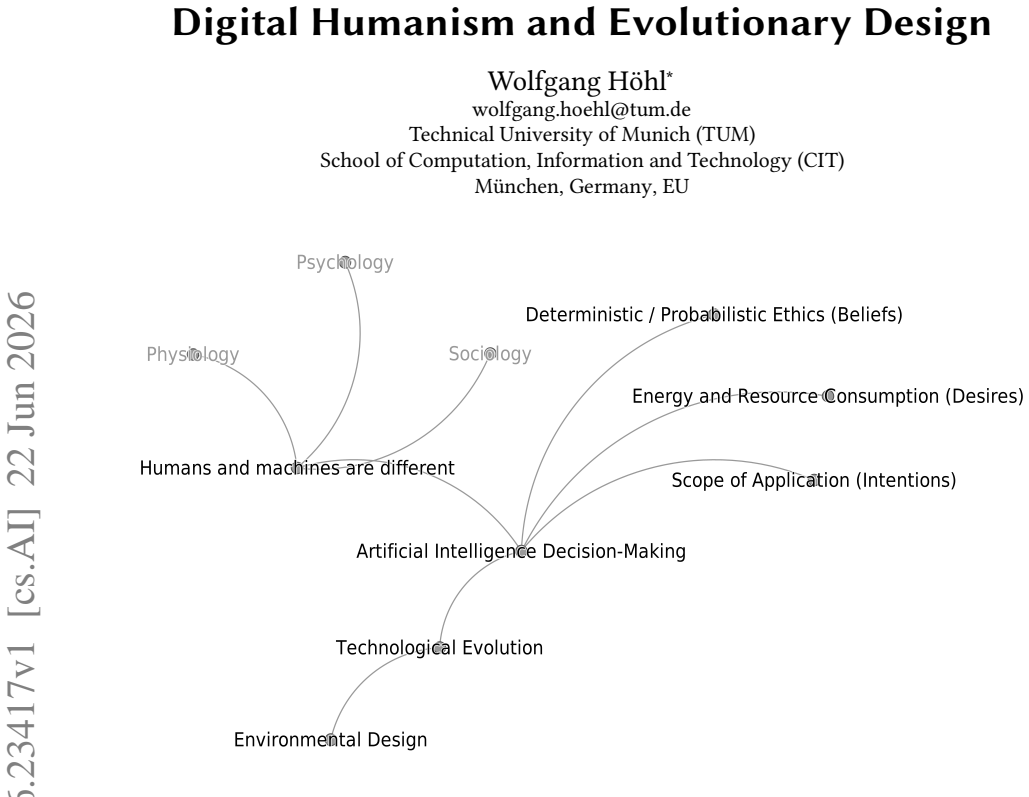
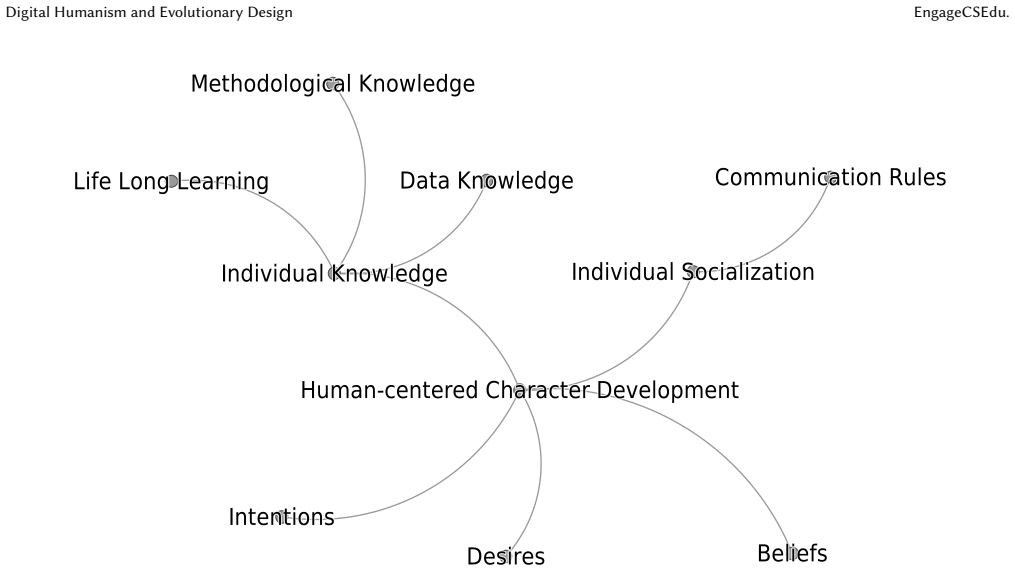
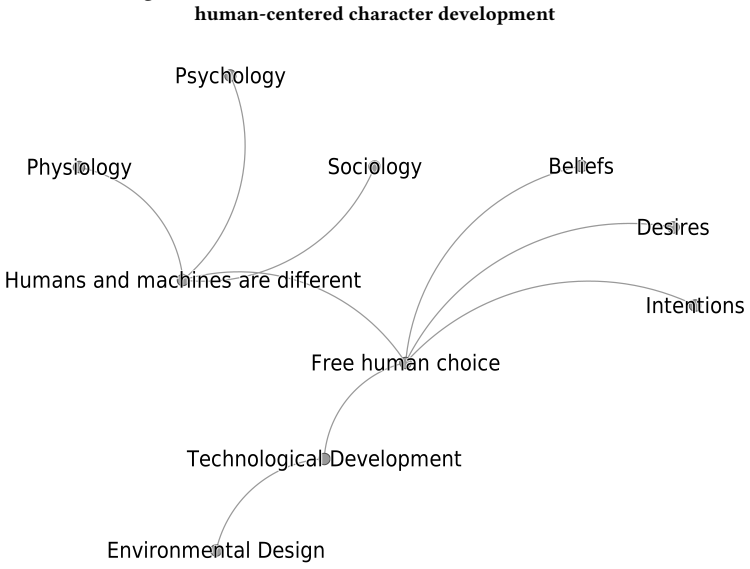
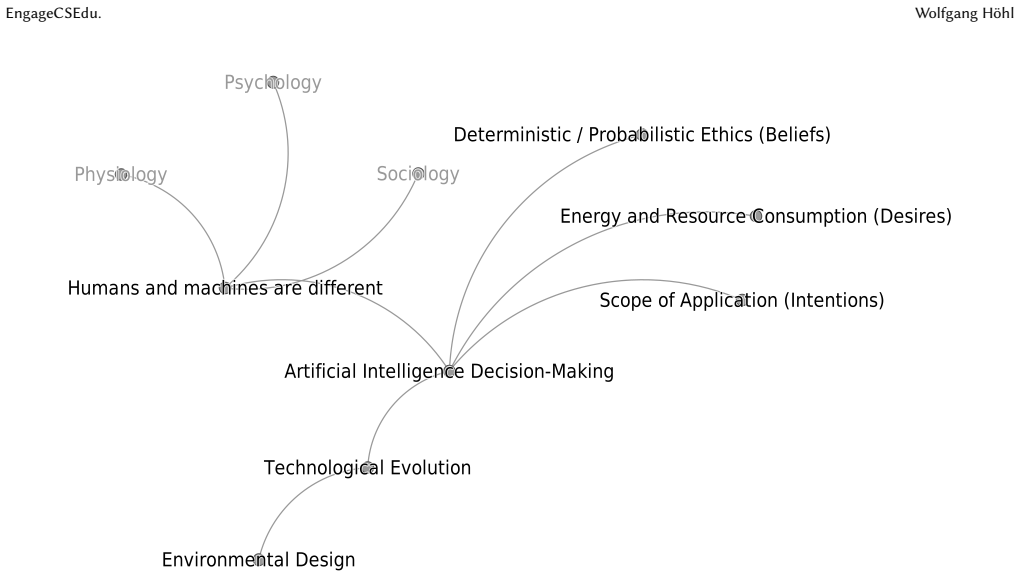
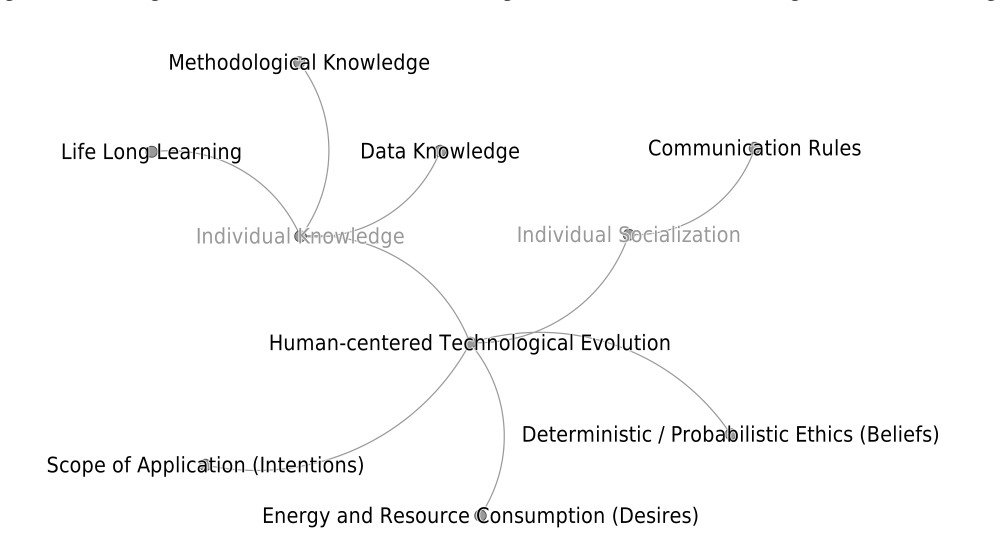
This paper examines the two concepts of digital humanism and evolutionary design. The aim is to identify and highlight potential common structures, synergies, and challenges. How should and can technical systems be designed, and what implications does this have for the design of our environment? In light of the current debate surrounding artificial intelligence, this paper aims to serve as a preliminary study to help better understand the two concepts of digital humanism and evolutionary design within the context of human-centered technological development. Following a brief introduction, the two concepts of Digital Humanism and Evolutionary Design are presented and graphically visualized. The terms of freedom and responsibility in human decision-making, conviviality, and subjectivity are discussed, along with examples illustrating the distinction between human and artificial intelligence (Turing Test and Chinese Room). The various concepts of evolutionary design (e.g., co-evolutionary or sustainable software development, clean code, or green IT) and Gilbert Simondon's concept of the "open machine" are introduced. The interdependencies between functional specialization and open technology development are highlighted. Both concepts share similar structures. In joint cooperation, they can lead to positive effects and mutual synergies. Significant differences lie in the areas of autonomy and determination in decision-making, as well as in genuine and simulated subjectivity. Open technology development is also currently suffering from the functional specialization of software and AI applications due to a purely market- and consumer-oriented approach. Even optimizations for energy efficiency in sustainable software development lead to greater specialization and thus also have a detrimental effect on open and quality-oriented technology development.
Editorial analysis
A structured set of objections, weighed in public.
Referee Report
Summary. The manuscript is a conceptual preliminary study comparing digital humanism and evolutionary design in the context of human-centered AI and technological development. It presents both concepts, discusses freedom/responsibility, conviviality, and subjectivity (with Turing Test and Chinese Room examples), introduces evolutionary design variants (co-evolutionary/sustainable software development, clean code, green IT) and Simondon's open machine, and highlights interdependencies with functional specialization. The central claims are that the two concepts share similar structures enabling mutual synergies, differ in autonomy/determination and genuine vs. simulated subjectivity, and that open technology development currently suffers from detrimental functional specialization in software/AI due to market/consumer-oriented approaches—even energy-efficiency optimizations in sustainable development exacerbate this.
Significance. If the asserted synergies and interdependencies hold, the work could stimulate interdisciplinary dialogue between philosophical humanism and practical software design practices. Its value would lie in framing how concepts like subjectivity and conviviality might guide less specialized, more open technological systems. As presented, however, the contribution remains exploratory and literature-based without new empirical tests, formal models, or case analyses, limiting its immediate impact on cs.AI research or design methodologies.
major comments (1)
- [interdependencies between functional specialization and open technology development] The interdependencies section (and concluding paragraph): the claim that 'open technology development is also currently suffering from the functional specialization of software and AI applications due to a purely market- and consumer-oriented approach' and that 'even optimizations for energy efficiency in sustainable software development lead to greater specialization and thus also have a detrimental effect on open and quality-oriented technology development' is asserted as background without mechanism, examples, references, or derivation. This premise is load-bearing for the argument that specialization creates challenges to the claimed synergies.
minor comments (2)
- The manuscript would benefit from explicit definitions or citations for key terms (e.g., 'conviviality', 'genuine subjectivity') at first introduction to aid readers unfamiliar with the referenced philosophical traditions.
- Figure captions or the graphical visualizations of the two concepts should include legends or annotations clarifying how the diagrams encode the discussed differences in autonomy and subjectivity.
Simulated Author's Rebuttal
We thank the referee for the constructive review of our conceptual paper. We address the single major comment below and indicate where revisions will be made to strengthen the argument.
read point-by-point responses
-
Referee: The interdependencies section (and concluding paragraph): the claim that 'open technology development is also currently suffering from the functional specialization of software and AI applications due to a purely market- and consumer-oriented approach' and that 'even optimizations for energy efficiency in sustainable software development lead to greater specialization and thus also have a detrimental effect on open and quality-oriented technology development' is asserted as background without mechanism, examples, references, or derivation. This premise is load-bearing for the argument that specialization creates challenges to the claimed synergies.
Authors: We agree that the interdependencies are stated without explicit mechanisms, examples, or citations, making the premise insufficiently supported for a load-bearing role in the argument. Although the manuscript is positioned as a preliminary conceptual study drawing on the prior sections on market-driven approaches and Simondon's open machine, this does not substitute for a clearer derivation. In revision we will expand the interdependencies section to include: (1) a step-by-step reasoning linking consumer-oriented incentives to reduced openness (e.g., proprietary APIs and data silos), (2) concrete examples such as the specialization induced by energy-optimized but closed-source AI training pipelines, and (3) supporting references from software engineering and STS literature on functional specialization. These additions will directly address how the claimed synergies are challenged. revision: yes
Circularity Check
No circularity; conceptual discussion with no derivations or self-referential reductions
full rationale
The paper is a philosophical comparison of digital humanism and evolutionary design. It contains no equations, fitted parameters, derivations, or mathematical claims. The highlighted interdependencies and assertions about market-driven specialization are presented as background premises rather than derived results. No self-citations, ansatzes, or uniqueness theorems are invoked in a load-bearing way that reduces the central claims to the paper's own inputs by construction. The structure is self-contained as a discussion of established concepts.
Axiom & Free-Parameter Ledger
axioms (2)
- domain assumption Technical systems design should incorporate human freedom, responsibility, and conviviality.
- ad hoc to paper Market- and consumer-oriented approaches cause detrimental functional specialization in software and AI.
Reference graph
Works this paper leans on
-
[1]
Thomas Fuchs. 2024. Understanding Sophia? On human interaction with artificial agents.Phenom Cogn Sci 2323 (2024), 21–42. doi:10. 1007/s11097-022-09848-0
2024
-
[2]
Ralf T. Kreutzer. 2023. Künstliche Intelligenz verstehen: Grundlagen - Use-Cases - unternehmenseigene KI-Journey.Springer Fachmedien2. Auflage (2023). doi:10.1007/978-3-658-42598-2
-
[3]
Blake Lemoine. 2022. Is LaMDA Sentient? - an Interview.in: Medium, June 11th(2022). https://cajundiscordian.medium.com/is-lamda- sentient-an-interview-ea64d916d917
2022
-
[4]
Yelle Lieder. 2024. Green Coding – Guidelines für die Entwicklung nachhaltiger Software.adesso Blog vom
2024
-
[5]
https://www.adesso.ch/de_ch/news/blog/green-coding-guidelines- fuer-die-entwicklung-nachhaltiger-software.jsp
Februar 2024 , Zürich (accessed 14 April 2026)(2024). https://www.adesso.ch/de_ch/news/blog/green-coding-guidelines- fuer-die-entwicklung-nachhaltiger-software.jsp
2024
-
[6]
Martin et al
R.C. Martin et al. 2026. Clean code: A handbook of agile software craftsmanship.Addison-Wesley ProfessionalSecond Edition (2026)
2026
-
[7]
Julian Nida-Rümelin. 2019. Digitaler Humanismus.Zur Sache - Com- puterethik, MaxPlanckResearch02 (2019), 10–15
2019
-
[8]
Karl R. Popper. 1989. Logik der Forschung.Mohr, Tübingen9., verb. Aufl. (1989)
1989
-
[9]
Ingo Rechenberg. 1994. Evolutionsstrategie ´94.Frommann-Holzboog, Stuttgart(1994)
1994
-
[10]
J. R. Searle. 1980. Minds, brains, and programs.Behavioral and Brain Sciences3(3) (1980), 417–424. doi:10.1017/S0140525X00005756
-
[11]
Gilbert Simondon. 1980. On the mode of Existence of Technological Objects.University of Western Ontario, Canada(1980)
1980
-
[12]
Smith and H
B. Smith and H. Shum. 2018. The Future Computed: Artificial intelli- gence and its role in society.Microsoft Corporation, Redmond(2018)
2018
-
[13]
Smith et al
B. Smith et al. 2020. Tools and Weapons - Digitalisierung am Schei- deweg: Versprechen, Gefahren und neue Verantwortung im digitalen Zeitalter.Redline Verlag1. Auflage (2020)
2020
-
[14]
D. Sonnet et al. 2025. Nachhaltige Künstliche Intelligenz: Eine Zukun- ftsvision und ihre Hintergründe.Springer Fachmedien Wiesbaden1st ed. (2025). doi:10.1007/978-3-658-46050-1
-
[15]
Heinrich Spoerl. 1933. Die Feuerzangenbowle.Droste Verlag(1933)
1933
-
[16]
A. M. Turing. 1950. Computing Machinery and Intelligence.Mind. Band LIX236 (1950), 433–460. doi:10.1093/mind/LIX.236.433
-
[17]
Frei Otto und Bodo Rasch. 2006. Gestalt finden – Auf dem Weg zu einer Baukunst des Minimalen.Edition Axel Menges, Deutscher Werkbund Bayern, München5. Auflage (2006)
2006
-
[18]
Nida-Rümelin und N
J. Nida-Rümelin und N. Weidenfeld. 2018. Digitaler Humanismus: Eine Ethik für das Zeitalter der Künstlichen Intelligenz.Piper Verlag, München(2018)
2018
-
[19]
X. Yao und S.Y. Chong. 2025. Evolutionary Computation: An Overview. Coevolutionary Computation and Its Applications. Natural Computing Series, Springer, Singapore3(3) (2025), 417–424. doi:10.1007/978-981- 96-2841-4_1
-
[20]
European Union. 2024. Artificial Intelligence Act.Official Journal version of 13 June 2024(2024). https://artificialintelligenceact.eu/
2024
-
[21]
Makoto Sei Watanabe. 2002. Induction Design: A Method for Evolu- tionary Design.Birkhäuser, Basel(2002)
2002
discussion (0)
Sign in with ORCID, Apple, or X to comment. Anyone can read and Pith papers without signing in.