REVIEW 2 major objections 1 minor 54 references
Higher-order Fisher information yields a generalized uncertainty relation extending the Cramér-Rao bound
Reviewed by Pith at T0; open to challenge. T0 means a machine referee read the full paper against a public rubric. the ladder, T0–T4 →
T0 review · grok-4.3
2026-06-29 00:39 UTC pith:OKL3TXML
load-bearing objection The paper defines a higher-order Fisher information measure that yields a generalized bound extending the Cramér-Rao relation, then tests it on single-qubit phase estimation with a photonic experiment. the 2 major comments →
Enhancing Quantum Metrology with High-order Fisher Information and Experiments
The pith
A machine-rendered reading of the paper's core claim, the machinery that carries it, and where it could break.
Core claim
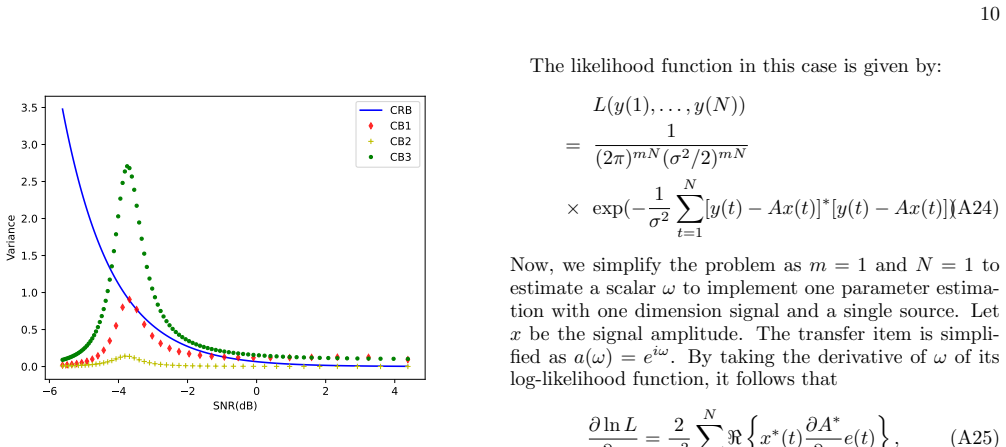
We introduce a new information measure based on higher-order Fisher information and show that it naturally leads to a generalized uncertainty relation for parameter estimation, which can be regarded as an extension of the Cramér-Rao bound. As an application, we analyze the case of quantum phase estimation with a single qubit and compare our theoretical bounds with the well-known established hierarchical bounds. Finally, we experimentally validate the proposed framework using a photonic platform.
What carries the argument
Higher-order Fisher information that produces a generalized uncertainty relation as an extension of the Cramér-Rao bound
Load-bearing premise
The higher-order Fisher information is mathematically well-defined for the quantum states considered and the derivation of the generalized bound follows without hidden assumptions on the measurement or the parameter range.
What would settle it
Demonstrating a violation of the generalized uncertainty relation in a quantum phase estimation experiment with a single qubit would falsify the central claim.
Editorial analysis
A structured set of objections, weighed in public.
Referee Report
Summary. The paper introduces a new information measure based on higher-order Fisher information and derives from it a generalized uncertainty relation for parameter estimation that extends the Cramér-Rao bound. It applies the framework to single-qubit phase estimation, compares the resulting bounds against established hierarchical bounds, and reports experimental validation on a photonic platform.
Significance. If the higher-order measure is rigorously defined and the bound derivation is free of hidden assumptions, the work could supply a new analytic tool for quantum metrology that goes beyond the standard Cramér-Rao limit, with direct relevance to precision sensing. The inclusion of an experimental photonic demonstration would strengthen the practical utility of the result.
major comments (2)
- [Section introducing the new information measure (likely §2 or §3)] The definition and positivity (or other required properties) of the higher-order Fisher information for the single-qubit states used in the phase-estimation example must be stated explicitly; without this, it is impossible to confirm that the generalized bound is mathematically well-defined and not restricted to perturbative or local regimes.
- [Derivation of the generalized bound (likely §3)] The derivation of the generalized uncertainty relation must specify the regularity conditions (state differentiability, parameter range, unbiasedness to all orders) under which the bound holds; the abstract claim that it is a direct extension of the Cramér-Rao bound cannot be assessed until these conditions are shown to be non-restrictive.
minor comments (1)
- [Abstract] The abstract refers to 'hierarchical bounds' without a citation or brief definition; adding one would improve readability for readers unfamiliar with the comparison.
Simulated Author's Rebuttal
We thank the referee for their careful reading and constructive comments, which help clarify the presentation of our results. We respond to each major comment below.
read point-by-point responses
-
Referee: [Section introducing the new information measure (likely §2 or §3)] The definition and positivity (or other required properties) of the higher-order Fisher information for the single-qubit states used in the phase-estimation example must be stated explicitly; without this, it is impossible to confirm that the generalized bound is mathematically well-defined and not restricted to perturbative or local regimes.
Authors: We agree that an explicit statement strengthens the manuscript. In the revised version we will add, in the section introducing the higher-order Fisher information, the precise definition applied to the single-qubit states of the phase-estimation example together with a direct verification of positivity. This addition will confirm that the generalized bound is well-defined for the full parameter range without perturbative restrictions. revision: yes
-
Referee: [Derivation of the generalized bound (likely §3)] The derivation of the generalized uncertainty relation must specify the regularity conditions (state differentiability, parameter range, unbiasedness to all orders) under which the bound holds; the abstract claim that it is a direct extension of the Cramér-Rao bound cannot be assessed until these conditions are shown to be non-restrictive.
Authors: We accept the need for explicit regularity conditions. The revised Section 3 will list the assumptions used in the derivation—twice differentiability of the state with respect to the parameter, the interval [0, 2π), and unbiasedness to the relevant order—and will verify that these hold for the single-qubit phase estimation without confining the result to local or perturbative regimes. This will support the claim that the relation extends the Cramér-Rao bound under standard, non-restrictive conditions. revision: yes
Circularity Check
No circularity: new higher-order measure defined independently and bound derived from it
full rationale
The paper introduces higher-order Fisher information as a new measure and derives the generalized uncertainty relation directly from its properties, without the bound presupposed in the definition or any load-bearing self-citation. The single-qubit phase estimation and photonic experiment serve as external checks. No equations reduce the claimed extension of the Cramér-Rao bound to a renaming or fit of the input measure itself.
Axiom & Free-Parameter Ledger
read the original abstract
Fisher information plays a central role in statistics and quantum metrology, providing the basis for the celebrated Cram\'{e}r-Rao bound. In this work, we introduce a new information measure based on higher-order Fisher information and show that it naturally leads to a generalized uncertainty relation for parameter estimation, which can be regarded as an extension of the Cram\'er-Rao bound. As an application, we analyze the case of quantum phase estimation with a single qubit and compare our theoretical bounds with the well-known established hierarchical bounds. Finally, we experimentally validate the proposed framework using a photonic platform.
Figures


Reference graph
Works this paper leans on
-
[1]
Tr ˆM ∂θ √ρθ 2 ≥0, where ˆM=M−θ
-
[2]
There exists a positive real constantλ >0 such that √ρθ ˆM= ˆM √ρθ =λ∂ 2 θ √ρθ
-
[3]
The first-order derivative operator is of rank one, i.e.,∂ θ √ρθ =|ψ⟩⟨ψ|for some pure state|ψ⟩
-
[4]
For bound shown in Eq.(19), the matrix equality condition TrA2 2 = TrA4 holds forA=∂ θ √ρθ. These conditions describe a class of estimation problems where the optimal estimator exploits the higher-order structure of the parametric family, leading to a non-Gaussian distribution of the estimates. Compared with the QCRB for characterizing an unbi- ased estim...
-
[5]
The experimental setup consists of three primary components: (1) photon source, (2) white-noise insertion and phase-shift control, and (3) quantum tomography
Experimental setup The experiment was conducted using the photonic platform shown in Figure 5. The experimental setup consists of three primary components: (1) photon source, (2) white-noise insertion and phase-shift control, and (3) quantum tomography. First, the state-preparation mod- ule generates an initial pure state|Φ⟩. In the white-noise module (da...
-
[6]
The ratio of these two components is controlled by two attenuators (ATTs) at the output port of the second BS. After the insertion of white noise, a controllable phase shiftθis introduced us- ing a full-wave liquid crystal variable wave plate (VWP), which results in the final stateρ(p, θ) =U(θ)ρ(p)U †(θ), where the rotation is parameterized with a unitary...
-
[7]
Experiment results We first constructed a set of mixed statesρ(p) by set- ting different mixture probabilities{p,1−p}for pho- 7 FIG. 6. The tomographic results for all the experimental photon states. TABLE I. Fidelity of experimental single qubit states. r0 0.7500 0.8000 0.8500 Fidelity 0.9953±0.0024 0.9956±0.0038 0.9954±0.0030 r0 0.9000 0.9500 1.0000 Fid...
-
[8]
Define ˆθas an unbiased estimator ofθ, satisfyingE X[ˆθ(X)] =θfor θ∈Ω
New bound of classical metrology with high order information Consider a parametric model{p θ(x) :θ∈Ω}, whereθ is a single parameter and Ω is a subset ofR. Define ˆθas an unbiased estimator ofθ, satisfyingE X[ˆθ(X)] =θfor θ∈Ω. Define the second-order information depending on the second derivative of the root score function as I2 = 4 Z ∂2 θ p pθ(x) 2 dx,(A1...
-
[9]
Specifically, the saturable condition of the in- equality (A11) is: ∂2 θ p pθ(x) = 1 C (θ− ˆθ(x)) p pθ(x),(A18) whereCis a constant
The attainability conditions In this subsection, we show the conditions of attain- ability. Specifically, the saturable condition of the in- equality (A11) is: ∂2 θ p pθ(x) = 1 C (θ− ˆθ(x)) p pθ(x),(A18) whereCis a constant. Let p pθ(x) =q θ(x). It follows that ∂2 θ qθ(x)− (θ− ˆθ(x)) C qθ(x) = 0.(A19) Assume a solution is given byq θ(x) =e rθ. Substitutin...
-
[10]
To show explicitly the distance between the propose classical bound and CRB, we give an example of esti- mating the arrival direction of signal in radar systems
Application: Direction-of-arrival parameter estimation. To show explicitly the distance between the propose classical bound and CRB, we give an example of esti- mating the arrival direction of signal in radar systems. Angle of arrival estimation in modern radar systems relies on antenna arrays for spatial data capture and beamforming implementation. The a...
-
[11]
Cram´ er,Mathematical methods of statistics, Vol
H. Cram´ er,Mathematical methods of statistics, Vol. 26 (Princeton university press, 1999)
1999
-
[12]
C. R. Rao, inBreakthroughs in Statistics: Foundations and basic theory(Springer, 1992) pp. 235–247
1992
-
[13]
Helstrom, J
C. Helstrom, J. Stat. Phys.1, 231 (1969)
1969
-
[15]
Liu, Y.-Z
L.-Z. Liu, Y.-Z. Zhang, Z.-D. Li, R. Zhang, X.-F. Yin, Y.-Y. Fei, L. Li, N.-L. Liu, F. Xu, Y.-A. Chen,et al., Nature photonics15, 137 (2021)
2021
-
[16]
Valeri, E
M. Valeri, E. Polino, D. Poderini, I. Gianani, G. Corrielli, A. Crespi, R. Osellame, N. Spagnolo, and F. Sciarrino, npj Quantum Information6, 92 (2020)
2020
-
[17]
P. Yin, X. Zhao, Y. Yang, Y. Guo, W.-H. Zhang, G.-C. Li, Y.-J. Han, B.-H. Liu, J.-S. Xu, G. Chiribella,et al., Nat. Phys.19, 1122 (2023)
2023
-
[18]
Giovannetti, S
V. Giovannetti, S. Lloyd, and L. Maccone, Phys. Rev. Lett.96, 010401 (2006)
2006
-
[19]
L. A. Correa, M. Mehboudi, G. Adesso, and A. Sanpera, Phys. Rev. Lett.114, 220405 (2015)
2015
-
[20]
A. D. Pasquale, D. Rossini, R. Fazio, and V. Giovannetti, Nat. Commun.7, 12782 (2016)
2016
-
[21]
Lovchinsky, A
I. Lovchinsky, A. O. Sushkov, E. Urbach, N. P. de Leon, S. Choi, K. D. Greve, R. Evans, R. Gertner, E. Bersin, C. M¨ uller, L. McGuinness, F. Jelezko, R. L. Walsworth, H. Park, and M. D. Lukin, Science351, 836 (2016)
2016
-
[22]
Abbottet al., Phys
B. Abbottet al., Phys. Rev. Lett.116, 061102 (2016)
2016
-
[23]
C. L. Degen, F. Reinhard, and P. Cappellaro, Rev. Mod. Phys.89, 035002 (2017)
2017
-
[24]
Abbas, D
A. Abbas, D. Sutter, C. Zoufal, A. Lucchi, A. Figalli, and S. Woerner, Nature Computational Science1, 403 (2021)
2021
-
[25]
T. J. Proctor, P. A. Knott, and J. A. Dunningham, Phys. Rev. Lett.120, 080501 (2018)
2018
-
[26]
Pezz` e, A
L. Pezz` e, A. Smerzi, M. K. Oberthaler, R. Schmied, and P. Treutlein, Rev. Mod. Phys.90, 035005 (2018)
2018
-
[27]
Casola, T
F. Casola, T. van der Sar, and A. Yacoby, Nat. Rev. Mater.3, 17088 (2018)
2018
-
[28]
Couteau, S
C. Couteau, S. Barz, T. Durt, T. Gerrits, J. Huwer, R. Prevedel, J. Rarity, A. Shields, and G. Weihs, Nat. Rev. Phys.5, 354 (2023)
2023
-
[29]
McCuller, C
L. McCuller, C. Whittle, D. Ganapathy, K. Komori, M. Tse, A. Fernandez-Galiana, L. Barsotti, P. Fritschel, M. MacInnis, F. Matichard, K. Mason, N. Mavalvala, R. Mittleman, H. Yu, M. Zucker, and M. Evans, Phys. Rev. Lett.124, 171102 (2020)
2020
-
[30]
Polino, M
E. Polino, M. Valeri, N. Spagnolo, and F. Sciarrino, AVS Quantum Science2, 024703 (2020)
2020
-
[31]
Marvian, Phys
I. Marvian, Phys. Rev. Lett.129, 190502 (2022)
2022
-
[32]
Gessner and A
M. Gessner and A. Smerzi, Phys. Rev. Lett.130, 260801 (2023)
2023
-
[33]
J. M. Hammersley, J. Roy. Statist. Soc. Ser. B12, 192 (1950)
1950
-
[34]
D. G. Chapman and H. Robbins, Ann. Math. Statist.22, 581 (1951)
1951
-
[35]
J. S. Abel, IEEE Trans. Inf. Theory39, 1675 (1993)
1993
-
[36]
Bhattacharyya, Sankhy¯ a8, 1 (1946)
A. Bhattacharyya, Sankhy¯ a8, 1 (1946)
1946
-
[37]
E. W. Barankin, Ann. Math. Stat.20, 477 (1949)
1949
-
[38]
Stoica and B
P. Stoica and B. C. Ng, IEEE Signal Proc. Lett.5, 177 (1998)
1998
-
[39]
Ben-Haim and Y
Z. Ben-Haim and Y. C. Eldar, IEEE Trans. Signal Proc. 58, 3384 (2010)
2010
-
[40]
Cianchi, E
A. Cianchi, E. Lutwak, D. Yang, and G. Zhang, IEEE Trans. Inf. Theory60, 643 (2013)
2013
-
[41]
R. A. Fisher, Mathematical Proceedings of the Cam- bridge Philosophical Society22, 700 (1925)
1925
-
[42]
A. S. Holevo,Probabilistic and statistical aspects of quan- tum theory, Vol. 1 (Springer Science & Business Media, 2011)
2011
-
[43]
Giovannetti, S
V. Giovannetti, S. Lloyd, and L. Maccone, Phys. Rev. Lett.108, 260405 (2012)
2012
-
[44]
Chu and J
Y. Chu and J. Cai, Phys. Rev. Lett.128, 200501 (2022)
2022
-
[45]
H. J. Miller and J. Anders, Nat. Commun.9, 2203 (2018)
2018
-
[46]
Masanes and J
L. Masanes and J. Oppenheim, Nat. Commun.8, 1 (2017)
2017
-
[47]
J. Liu, H. Yuan, X.-M. Lu, and X. Wang, J. Phys. A: Math. Theore.53, 023001 (2020)
2020
-
[48]
Braun, G
D. Braun, G. Adesso, F. Benatti, R. Floreanini, U. Mar- zolino, M. W. Mitchell, and S. Pirandola, Rev. Mod. Phys.90, 035006 (2018)
2018
-
[49]
C. M. Helstrom,Quantum Detection and Estimation Theory(Academic Press, 1976)
1976
-
[50]
S. L. Braunstein and C. M. Caves, Phys. Rev. Lett.72, 3439 (1994)
1994
-
[51]
J. B. Altepeter, E. R. Jeffrey, and P. G. Kwiat, Ad- vances in Atomic, Molecular, and Optical Physics52, 105 (2005)
2005
-
[52]
Horodecki, P
R. Horodecki, P. Horodecki, M. Horodecki, and K. Horodecki, Rev. Mod. Phys.81, 865 (2009)
2009
-
[53]
Helstrom and R
C. Helstrom and R. Kennedy, IEEE Trans. Inf. Theory 20, 16 (1974)
1974
-
[54]
Marzolino and T
U. Marzolino and T. Prosen, Phys. Rev. A90, 062130 (2014)
2014
-
[55]
J. Liu, J. Chen, X.-X. Jing, and X. Wang, J. Phys. A: Math. Theor.49, 275302 (2016)
2016
discussion (0)
Sign in with ORCID, Apple, or X to comment. Anyone can read and Pith papers without signing in.