REVIEW 3 major objections 5 minor 31 references
Solar Open 2 shows that a 250B-parameter hybrid-attention MoE can match a 1.6T frontier model on Korean officework by combining selective weight transfer, high-value data curation, and multi-teacher distillation.
Reviewed by Pith at T0; open to challenge. T0 means a machine referee read the full paper against a public rubric. the ladder, T0–T4 →
T0 review · deepseek-v4-flash
2026-08-01 10:54 UTC pith:AIXD4JOS
load-bearing objection Solid engineering report with a credible English eval, but the flagpole Ko-GDPval parity claim rests on an in-house benchmark that looks worryingly close to the training pipeline — worth refereeing, but the headline needs external validation. the 3 major comments →
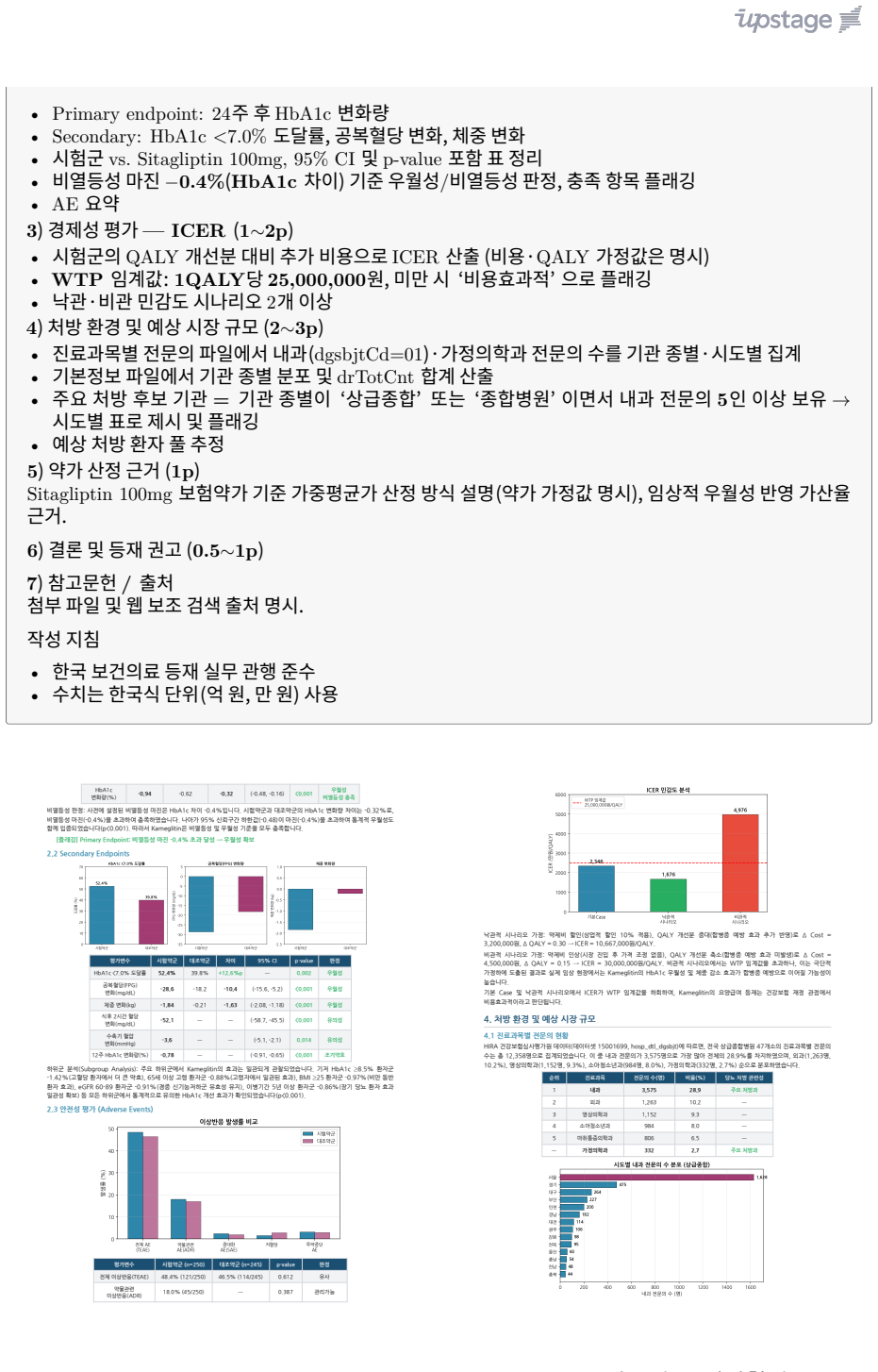
Solar Open 2 Technical Report
The pith
A machine-rendered reading of the paper's core claim, the machinery that carries it, and where it could break.
Core claim
On its own terms, the paper establishes that a 250B-A15B MoE with a hybrid attention stack reaches a 1M-token context at about a quarter of the memory and computation of an all-softmax stack, and that after selective weight transfer from Solar Open 1, a 10T-token pre-training curriculum, and consolidation of twelve domain specialists via multi-teacher on-policy distillation, the model scores 86.8 on the in-house Ko-GDPval Korean officework benchmark, essentially tied with a 1.6T frontier model and ahead of all other measured models. The same model leads comparably sized open-weight models on MMLU-Pro, LiveCodeBench, and the APEX-Agents agentic suite, and records the highest average across th
What carries the argument
The central mechanism is the hybrid attention stack: three linear-attention layers (KDA with a gated delta rule extended to negative eigenvalues) carry token order and long-range information in a fixed-size recurrent state, keeping the KV cache constant and computation linear, while the interleaved softmax layer provides exact global recall. With no positional encoding, the linear state is the sole carrier of position. Supporting mechanisms are selective weight transfer, which reuses the 5.69B-parameter shared skeleton (embeddings, softmax projections, and the shared expert) across the architectural change to save roughly 1.7x training tokens; the OfficeVerse pipeline, which synthesizes grou
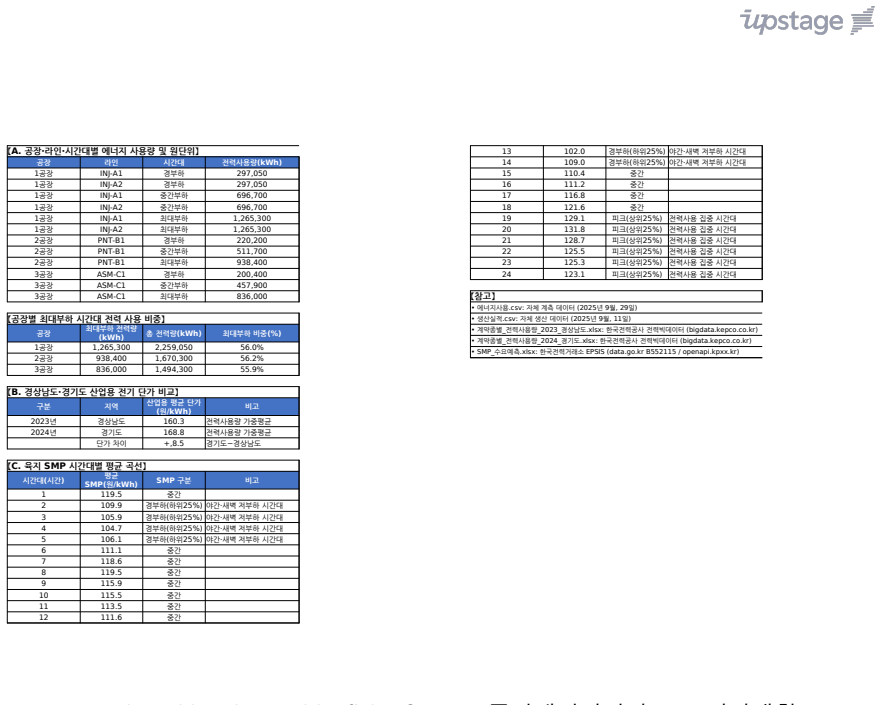
Load-bearing premise
The load-bearing premise is that Ko-GDPval is a fair external measure of Korean officework-agent ability: the report states (Section 4.1) that every pipeline is decontaminated against the Section 5 benchmarks and that Ko-GDPval is in-house (Section 5.4), but it does not document the procedure or show overlap analysis, so if the 170 tasks sit on the OfficeVerse training distribution, the parity claim measures training coverage rather than general officework ability.
What would settle it
Release Ko-GDPval or an independently constructed held-out set of Korean officework tasks built without the OfficeVerse pipeline, and compare Solar Open 2's score: a large drop from 86.8, or clear n-gram and embedding overlap between Ko-GDPval tasks and OfficeVerse training tasks, would demonstrate that the apparent parity with a 1.6T model comes from training-distribution coverage rather than transferred officework competence.
If this is right
- A 1M-token context at about a quarter of the cost of an all-softmax stack makes whole agent trajectories fit in a single window, and the no-positional-encoding design removes the RoPE length-extrapolation limit.
- Selective weight transfer turns an architectural upgrade between generations into a compute saving, so a model family can evolve without re-training from scratch.
- The equal-budget data-recipe ablation implies that value-per-token curation is a scalable lever: the same compute buys more capability when the mixture is optimized.
- MOPD lets capability cultivation be parallelized across domains, so a dozen experts can be trained independently and consolidated without a verifiable-reward term on top of the KL objective.
- In the sovereign scenario, a language-specialized 250B model can match the 1.6T frontier on deliverable-producing officework, suggesting that domain- and language-specialized models can substitute for much larger general models.
Where Pith is reading between the lines
- Editorial inference: the headline parity claim rests on Ko-GDPval, an in-house benchmark whose construction mirrors the OfficeVerse training pipeline; until the stated decontamination is documented or the benchmark is released, the 86.8-vs-86.9 result is best read as a coverage claim rather than proof of general officework ability.
- Editorial inference: the quarter-cost claim is architectural, reflecting the 1:3 softmax-to-linear layer mix; actual wall-clock savings depend on serving implementation, batch shapes, and hardware.
- Editorial inference: MOPD's KL-only objective deliberately trades away the chance to beat the teachers; a natural test is whether adding a small verifiable-reward term on top would improve the consolidated model beyond all twelve specialists.
- Editorial inference: the transfer step depends on the vocabulary being identical across generations; for languages starting with a new tokenizer, the savings from selective weight transfer would shrink considerably.
Editorial analysis
A structured set of objections, weighed in public.
Referee Report
Summary. Solar Open 2 is a 250B-A15B Mixture-of-Experts language model presented as a Korean sovereign AI for long-horizon agentic tasks. The technical report describes a hybrid attention stack (one softmax layer per three linear-attention layers, NoPE, sigmoid gating, negative eigenvalues) targeting a 1M-token context; a selective weight transfer from Solar Open 1 (2.3% of parameters); a curated 10T-token pre-training mixture; a three-stage curriculum with checkpoint merging; and a post-training pipeline with fully asynchronous RL plus Multi-teacher On-Policy Distillation (MOPD). Evaluation on public English benchmarks shows large generational gains (e.g., SWE-Bench Verified 15.4→70.4, GPQA-Diamond 66.2→86.3) and competitiveness with larger open models. On the in-house Ko-GDPval Korean officework benchmark, Solar Open 2 scores 86.8 versus 86.9 for DeepSeek-V4-Pro (1.6T), which the abstract and conclusion interpret as matching a frontier-scale model at less than a sixth of its size. The central engineering claims are supported by controlled proxy ablations and detailed infrastructure descriptions, but the flagpole Ko-GDPval claim depends on the unverified independence of an in-house benchmark from the in-house training pipeline.
Significance. If the reported results hold, the paper demonstrates a practical recipe for building a competitive long-context agentic model at moderate active scale: hybrid attention, selective cross-generation transfer, value-per-token data curation, and scenario-driven post-training with specialist distillation. The strengths are substantial: the architecture ablations (Figure 4, Section 3.1) are controlled and quantified; the English public-benchmark improvements are large and independently checkable in principle; and the MOPD and asynchronous-RL descriptions contain concrete, falsifiable design choices (e.g., full-vocabulary KL, fresh-token-fraction gateway, length-binned sampling). The main unresolved risk is external validity of Ko-GDPval: it is an in-house, 170-task benchmark built by the same team and with the same 11-domain, occupation-based, rubric-plus-judge structure as the OfficeVerse training pipeline (§4.1.3, §5.4). The 0.1-point gap with DeepSeek-V4-Pro is within sampling noise, and the paper provides no overlap analysis or released artifacts to rule out training-distribution overlap. Thus the headline 'matches 1.6T' is credible only if the benchmark is shown to be independent.
major comments (3)
- [§5.4, §4.1, §4.1.3] Ko-GDPval is the sole basis for the abstract's headline claim that Solar Open 2 'essentially matches DeepSeek-V4-Pro (1.6T) at less than a sixth of its size.' This benchmark is in-house, consists of only 170 tasks, and shares its structural skeleton with the OfficeVerse training pipeline: both use 11 industry domains, real-public-data grounding, occupation-based task synthesis, and rubric-plus-LLM-judge grading. The only decontamination statement in the paper is one sentence in §4.1 ('Every pipeline is additionally decontaminated against the benchmarks used in Section 5'), with no procedure, no overlap analysis, and no released task list. The 86.8-vs-86.9 gap is also smaller than the sampling noise expected for 170 tasks. Please provide a concrete overlap analysis between OfficeVerse training data and Ko-GDPval, release the benchmark or a representative subset, and report per-task varian
- [§2.2, §5.1, Table 3] The paper's architecture section motivates a 1M-token context window, and Length Expansion (§3.3) is described as extending context to 1M, but no evaluation in Section 5 demonstrates performance at or near 1M tokens. Table 3 lists 'IF / Long' benchmarks (Multi-Challenge, IFBench, AA-LCR), yet no context length or long-context result is reported; the 1M-token claim is supported only by architectural reasoning and the training-stage description. Please add a direct long-context evaluation (e.g., a needle-in-a-haystack test, long-document QA, or passkey at 1M) and report effective context length for the released model. This is load-bearing because the architecture is explicitly designed for this capability.
- [§5.2, Table 3] Several English 'leads' are based on very small margins measured with an internal harness: MMLU-Pro 86.2 versus 85.9 for DeepSeek-V4-Flash, LiveCodeBench v6 92.4 versus 92.3, and IFBench 80.0 versus 80.3. The protocol says settings are identical but gives no decoding parameters, number of runs, or run-to-run variance. For a technical report claiming frontier competitiveness, single-run point estimates are not enough when margins are <0.5 points. Please state measurement uncertainty or show that the differences are reproducible across multiple runs; otherwise, the appropriate claim is 'statistically tied,' not 'leads.' This does not affect the large generational jumps (e.g., SWE-Bench 15.4→70.4) but does affect the precise wording of the comparison.
minor comments (5)
- [§3.2] The mixture-ratio choices (real:synthetic 4:6, math/code ≥15% each, English ≥80%) are said to be 'optimized through ablation studies,' but no ablation table or budget is shown for these specific ratios. Please cite the supporting experiment or mark the values as chosen by held-out evaluation.
- [§4.2.2] MOPD is a central contribution, but there is no ablation isolating its effect from the Specialist stage (e.g., SFT-on-teacher-traces versus MOPD, or MOPD with and without the KL-only objective). A small-scale or proxy ablation would make the claim more convincing.
- [Table 4] The table header says 'A vg.' and the caption says 'Avg. is the mean'; please unify the notation. Also, the dagger marker for in-house benchmarks is explained in the table but not in the main text at first mention.
- [§2.1, Figure 2] Tokenizer efficiency is measured on Ko-GDPval task prompts, which are an in-house benchmark; this is appropriate as a tokenizer-efficiency sample, but the text should note that the comparison set and prompt source are internal and not yet publicly released.
- [§5.4, Table 5] The table reports scores to one decimal place for 170 tasks. Please clarify whether these are averages over multiple runs or single-run scores, and add a column with standard errors if available.
Circularity Check
Ko-GDPval, the paper's flagship benchmark, is an in-house benchmark whose construction mirrors the OfficeVerse training pipeline; its independence is only asserted, not demonstrated.
specific steps
-
other
[§4.1 / §4.1.3 / §5.4 / Abstract]
"Every pipeline is additionally decontaminated against the benchmarks used in Section 5. ... OfficeVerse organizes office work as a matrix of 11 industry domains × 12 task types ... Ko-GDPval is an in-house Korean officework agentic benchmark ... spanning 11 industry domains ... Solar Open 2 stands just behind the strongest model compared, DeepSeek-V4-Pro (86.9)—a 1.6T-parameter model more than six times its size."
The headline 'essentially matches DeepSeek-V4-Pro (1.6T)' is measured on Ko-GDPval, an in-house benchmark built by the same team that built OfficeVerse, the training pipeline that supplies Solar Open 2's officework skills. The two share the same structural skeleton: both are organized around 11 industry domains, real public data, deliverable-producing Korean officework, and rubric-plus-judge grading. The only stated safeguard is the single unsupported sentence 'Every pipeline is additionally decontaminated against the benchmarks used in Section 5,' with no protocol, overlap analysis, or released artifacts. As presented, the 86.8-versus-86.9 result is not an independent test of general officework ability; it re-scores the model on a task distribution the report has not shown to be outside i
full rationale
The architecture, selective weight transfer, and data-curation claims are largely self-contained: the report gives controlled proxy ablations (10B-A1B architecture runs, a 200B-A15B initialization comparison, and a 300B data-recipe ablation) whose outcomes are not assumed as inputs. The English benchmarks and most Korean public benchmarks (KMMLU-Pro, CLIcK, HAE-RAE, HRM8K, KBL, KorMedMCQA) are externally checkable, and the cited prior work, including the authors' own Solar Open 1 report, is descriptive rather than a load-bearing uniqueness argument. The circularity risk concentrates in the flagship Ko-GDPval comparison: Ko-GDPval is an in-house benchmark, and its construction mirrors the OfficeVerse training pipeline in domain matrix, data grounding, deliverable formats, and grading scheme. Decontamination is asserted in one line in §4.1 but no procedure, contamination measurement, or benchmark artifacts are provided. The abstract and §5.4 then present the 86.8-vs-86.9 score as evidence of frontier-scale Korean officework capability at less than one-sixth the size. That specific claim is therefore partially self-referential, while the remainder of the paper stands on independent empirical content. Score 4.0 reflects one significant self-constructed-evaluation risk without making the entire derivation circular.
Axiom & Free-Parameter Ledger
free parameters (6)
- Data mixture ratios (real:synthetic 4:6, math/code ≥15% each, English ≥80%) =
4:6; ≥15%; ≥80%
- Softmax:linear attention interleaving ratio (1:3, S-L-L-L) =
1 softmax : 3 linear
- Staleness hyperparameters smax and fresh-token threshold ρ =
not stated
- Negative-eigenvalue widening β = 2σ(·) =
β ∈ (0,2)
- Checkpoint merge count and weights (4 checkpoints) =
4 checkpoints, merging scheme unspecified
- Stage 3/4 quality thresholds and 12-specialist routing =
not stated
axioms (5)
- domain assumption Proxy-scale ablations (10B-A1B) transfer quantitatively to the 250B model
- domain assumption Negative eigenvalues provably restore state-tracking (Grazzi et al. 2025) and this suffices to carry position in a NoPE design
- domain assumption Decontamination of all training pipelines against all Section 5 benchmarks, including in-house ones, was complete and effective
- domain assumption LLM-judge and rule-based rubrics over synthesized OfficeVerse tasks yield reward/eval signals aligned with real officework quality
- domain assumption NoPE attention without position signal does not degrade softmax-layer recall at 1M length
invented entities (2)
-
Ko-GDPval
no independent evidence
-
OfficeVerse
no independent evidence
read the original abstract
We present Solar Open 2, a 250B-A15B Mixture-of-Experts language model built for long-horizon agentic tasks, scaled up from Solar Open 1 (Solar Open 100B). To hold entire agent trajectories in a single context, Solar Open 2 reaches a 1M-token window through a hybrid attention stack that interleaves one softmax layer among every three linear-attention layers, using no positional encoding and a gated delta rule extended to negative eigenvalues. To train at this scale under a fixed compute budget, we make training efficient in two ways: a stronger starting point, and higher-value data. For the starting point, we initialize Solar Open 2 from Solar Open 1, transferring the 5.69B-parameter shared skeleton that survives the architectural change and learning everything else through full pre-training. For the data, we curate for value per token: quality- and rarity-aware data curation and mixture-ratio optimization refine a 20T pool into a 10T mixture that, at equal token budget, outperforms the Solar Open 1 recipe. To build its agent skills, we train twelve domain specialists across purpose-built scenarios, then consolidate them into a single model by Multi-teacher On-Policy Distillation (MOPD). Against comparably sized open-weight models on English benchmarks, Solar Open 2 leads on MMLU-Pro, LiveCodeBench, and the APEX-Agents agentic suite, and stays competitive with the strongest (DeepSeek-V4-Flash and MiMo-V2.5) elsewhere. On Korean benchmarks, Solar Open 2 records the highest average of any model compared, including fast-tier closed APIs, and on Ko-GDPval, an in-house Korean officework-agent benchmark, it is competitive with DeepSeek-V4-Pro (1.6T) at less than a sixth of its size.
Figures




Reference graph
Works this paper leans on
-
[1]
사회복지_관련_법령_법령.docx — 환자 접근권 보장 근거 인용용 (특히 사회복지사업법 제 5조의2 등)
-
[2]
내과( dgsbjtCd=01)·가정의 학과 중심 분석
의료기관_진료과목별_전문의.xlsx — 진료과별 전문의 수 ( 1,300건). 내과( dgsbjtCd=01)·가정의 학과 중심 분석
-
[3]
기관 종별 분포 및 drTotCnt 활용
의료기관_의료기관_기본정보_인력.xlsx — 요양기관 기본정보 및 의료인력 (10,000건). 기관 종별 분포 및 drTotCnt 활용
-
[4]
임상시험_결과_데이터.csv — KMD-217 임상 2상 결과 (Primary/Secondary endpoint, AE 등) 산출물 파일명: KMD217_요양급여_등재신청서.pdf / 8 ∼12페이지 / 표·차트 포함 가능 구성 섹션
-
[5]
법적 근거로 국민건강보험법 및 관련 법령 인용, 첨부 법령 문서의 사회복지사업법 제 5조의2(사회복지서비스 제공의 원칙) 및 인권존중 관련 조항을 환자 접근권 보장 근거로 병기
신청 개요 (1p) 신청 의약품 정보, 신청 구분(신약), 기준일. 법적 근거로 국민건강보험법 및 관련 법령 인용, 첨부 법령 문서의 사회복지사업법 제 5조의2(사회복지서비스 제공의 원칙) 및 인권존중 관련 조항을 환자 접근권 보장 근거로 병기
-
[6]
Sitagliptin 100mg, 95% CI 및 p-value 포함 표 정리 • 비열등성 마진 −0.4%(HbA1c 차이) 기준 우월성/비열등성 판정, 충족 항목 플래깅 • AE 요약
임상적 유용성 평가 (2∼3p) 26 • Primary endpoint: 24 주 후 HbA1c 변화량 • Secondary: HbA1c <7.0% 도달률, 공복혈당 변화, 체중 변화 • 시험군 vs. Sitagliptin 100mg, 95% CI 및 p-value 포함 표 정리 • 비열등성 마진 −0.4%(HbA1c 차이) 기준 우월성/비열등성 판정, 충족 항목 플래깅 • AE 요약
-
[7]
경제성 평가 — ICER (1∼2p) • 시험군의 QALY 개선분 대비 추가 비용으로 ICER 산출 (비용·QALY 가정값은 명시) • WTP 임계값: 1QAL Y당 25,000,000원, 미만 시 ‘비용효과적’ 으로 플래깅 • 낙관·비관 민감도 시나리오 2개 이상
-
[8]
처방 환경 및 예상 시장 규모 ( 2∼3p) • 진료과목별 전문의 파일에서 내과( dgsbjtCd=01)·가정의학과 전문의 수를 기관 종별·시도별 집계 • 기본정보 파일에서 기관 종별 분포 및 drTotCnt 합계 산출 • 주요 처방 후보 기관 = 기관 종별이 ‘상급종합’ 또는 ‘종합병원’ 이면서 내과 전문의 5인 이상 보유 → 시도별 표로 제시 및 플래깅 • 예상 처방 환자 풀 추정
-
[9]
약가 산정 근거 (1p) Sitagliptin 100mg 보험약가 기준 가중평균가 산정 방식 설명(약가 가정값 명시), 임상적 우월성 반영 가산율 근거
-
[10]
결론 및 등재 권고 ( 0.5∼1p)
-
[11]
작성 지침 • 한국 보건의료 등재 실무 관행 준수 • 수치는 한국식 단위(억 원, 만 원) 사용 HbA1c 변화량(%) -0.94 -0.62 -0.32 (-0.48, -0.16) <0.001 우월성 비열등성 충족 비열등성 판정: 사전에 설정된 비열등성 마진은 HbA1c 차이 -0.4%입니다
참고문헌 / 출처 첨부 파일 및 웹 보조 검색 출처 명시. 작성 지침 • 한국 보건의료 등재 실무 관행 준수 • 수치는 한국식 단위(억 원, 만 원) 사용 HbA1c 변화량(%) -0.94 -0.62 -0.32 (-0.48, -0.16) <0.001 우월성 비열등성 충족 비열등성 판정: 사전에 설정된 비열등성 마진은 HbA1c 차이 -0.4%입니다. 시험약군과 대조약군의 HbA1c 변화량 차이는 -0.32%로, 비열등성 마진(-0.4%)을 초과하여 충족하였습니다. 나아가 95% 신뢰구간 하한값(-0.48)이 마진(-0.4%)을 초과하여 통계적 우월성도 함께 입증되었습니다(p<0.001). 따라서 Kameglitin은 비열등성 및 우...
-
[12]
이 중 내과 전문의가 3,575명으로 가장 많아 전체의 28.9%를 차지하였으며, 외과(1,263명, 10.2%), 영상의학과(1,152명, 9.3%), 소아청소년과(984명, 8.0%), 가정의학과(332명, 2.7%) 순으로 분포하였습니다
처방 환경 및 예상 시장 규모 4.1 진료과목별 전문의 현황 HIRA 건강보험심사평가원 데이터(데이터셋 15001699, hosp_dtl_dgsbjt)에 따르면, 전국 상급종합병원 47개소의 진료과목별 전문의 수는 총 12,358명으로 집계되었습니다. 이 중 내과 전문의가 3,575명으로 가장 많아 전체의 28.9%를 차지하였으며, 외과(1,263명, 10.2%), 영상의학과(1,152명, 9.3%), 소아청소년과(984명, 8.0%), 가정의학과(332명, 2.7%) 순으로 분포하였습니다. 순위 진료과목 전문의 수(명) 비율(%) 당뇨 처방 관련성 1 내과 3,575 28.9 주요 처방과 2 외과 1,263 10.2 — 3 영상의...
-
[13]
현황 진단 (에너지사용.csv + 생산실적.csv) • 공장별(1공장 INJ-A1/INJ-A2, 2 공장 PNT-B1, 3 공장 ASM-C1)·시간대별 (경부하/중간부하/최대 부하) 전력·LNG·스팀 사용량 합계 및 평균 원단위( kWh당) 산출 • 라인별 전력원단위(kWh/개) 및 가동률(가동시간/(가동시간+정지시간)) 계산 • 공장별 최대부하 시간대 전력 사용 비중
-
[14]
외부 단가·시장 참조 • 계 약 종 별_ 전 력 사 용 량_2023_ 경 상 남 도.xlsx 에 서 cntr= ‘산 업 용’ 데 이 터 의 unitCost 를 powerUsage 가중평균하여 경상남도 산업용 평균 단가 산출, 계약종별_전력사용량 _2024_경기 도.xlsx 의 산업용 평균 단가와 비교 • SMP_수요예측.xlsx 에서 areaName= ‘육지’ 데이터의 hour별 평균 SMP 곡선을 만들고, 상위 25% 를 피크, 하위 25%를 경부하로 정의
-
[15]
2026년 절감 계획 • 라인별(INJ-A1, INJ-A2, PNT-B1, ASM-C1 ) 절감목표( %), 핵심 투자항목, 예상 투자비, 연간 절감 금액, 단순회수기간(투자비÷ 연간절감액), KPI(전력원단위 kWh/개, 피크부하 비중 %) • 전사 합산 절감률 7% 이상 충족 산출물 공장에너지절감_2026연간계획.xlsx (총 2시트, 헤더 고정) • 시트1 현황진단: 공장·라인·시간대별 사용량 /원단위/가동률 + 경상남도·경기도 산업용 단가 비교 + 육지 SMP 시간대별 평균 • 시트2 2026절감계획 : 라인별 절감목표·투자항목·투자비·연간절감액·회수기간· KPI (상단에 전사 합산 요약 행) • 단순회수기간 3년 이하 셀 ...
2025
-
[16]
재정수입구조본예산총수입기준.xlsx — 2015 ∼2024년 회계연도별 본예산 총수입 구조(기금 /예산, 일반회계/특별회계/기금, 사회보험성기금·국세수입·세외수입·융자금회수·기금기타 등 세목별 금액, 단위: 조 원)
2015
-
[17]
재정지출추이총계기준 .xlsx — 2015 ∼2024년 결산 기준 총계 재정지출(일반회계·특별회계·기금 구분, 단위: 조 원)
2015
-
[18]
조세부담률및국민부담률추이.xlsx — 2015 ∼2024년 결산 기준 국세·지방세·사회보장기여금(사회 보장기여금/공무원연금기여금/군인연금기여금/건강보험재정기여금) 추이 및 국민부담률( %) 작성할 산출물 파일명: 국가재정흐름_주민설명_브리핑_2025.docx (한 개 문서, 분량 14∼20쪽) 문서 구성 요구사항 다음 6개 장(章)을 모두 포함하되, 각 장에는 평이한 서술 narrative + 표 또는 차트(이미지 또는 워드 표) + ‘주민 한마디로 정리’ 박스( 2∼3문장)를 함께 배치하십시오. 제1장. 인사말과 브리핑의 목적 ( 1쪽) • 재정설명회의 취지, 본 문서가 다루는 기간( 2015∼2024년)과 데이터 출처(열린재정 ...
2015
-
[19]
결산 기준 국가 총지출은 2015 년 902.6 조 원에서 2024 년 1,537.9조 원으로 10 년간 635.3 조 원 증가 (증감률 70.4%)하였습니다
10 년간 재정지출 추이 국가 재정지출은 정부가 국민으로부터 조달한 재원을 어떤 방식으로 사용하는지를 보여줍니다. 결산 기준 국가 총지출은 2015 년 902.6 조 원에서 2024 년 1,537.9조 원으로 10 년간 635.3 조 원 증가 (증감률 70.4%)하였습니다. 이는 같은 기간 총수입 증가율(59.1%)을 크게 상회하는 수치로, 국가 재정이 '적자' 방향으로 기울어 왔음을 시사합니다. 구체적으로 일반회계 지출은 257.9 조 원에서 435.4 조 원으로 68.8% 증가했고, 특별회계는 61.5 조 원에서 94.0 조 원으로 52.8%, 기금은 583.2 조 원에서 1,008.5조 원으로 72.9% 증가했습니다. 연도 일...
2015
-
[20]
표지 — 한솔시 기획예산담당관실, 2024 회계연도 예결특위 답변자료, 발표일자( 2025년 6월 17일 기준)
2024
-
[21]
재정 지출추이본예산총지출기준.xlsx 기반
거시 재정 배경 (1) — 국가 재정지출 추이 (2015∼2024, 일반회계·특별회계·기금 별 추이 그래프). 재정 지출추이본예산총지출기준.xlsx 기반. 31
2015
-
[22]
국세수입추이.xlsx 기반
거시 재정 배경 ( 2) — 국세수입 추이 및 주요 세목 비중 변화 ( 2020∼2024 집중). 국세수입추이.xlsx 기반. 지방교부세 재원인 내국세 흐름을 강조
2020
-
[23]
재 정수입구조본예산총수입기준.xlsx 기반
거시 재정 배경 (3) — 국가 재정수입 구조 변화의 시사점 (사회보험성기금·세외수입·국세수입 추이). 재 정수입구조본예산총수입기준.xlsx 기반
-
[24]
budget_line_items.xlsx 요약 시트 기반
한 솔 시 2024 예 산 총 괄 — 분 야 별 예 산 액·집 행 액·집 행 률 ( 10 개 분 야 막 대 그 래 프). budget_line_items.xlsx 요약 시트 기반. 시 전체 평균 집행률과 함께 표기
2024
-
[25]
집행률 우수 분야 / 부진 분야 — 집행률 75% 이상 분야와 65% 미만 분야를 색상 구분(우수: 녹색, 부진: 적색)하여 비교
-
[26]
세목 명세 시트 기반
사회복지비 세부 분석 — SOC-2024-001 산하 세목별 집행 현황. 세목 명세 시트 기반
2024
-
[27]
지역경제·일자리 분야 심층 분석 — ECN-2024-001, ECN-2024-002 세목별 부진 사유 분석
2024
-
[28]
SOC인프라(도로·교통, 상하수도) 미집행 사유 — INF-2024-001, INF-2024-002 분석
2024
-
[29]
거시 재정과 지방 집행 연계 진단 — 국세수입 둔화 → 지방교부세 교부 지연 → 시 사업 집행 부진의 연결 논리를 1장으로 정리
-
[30]
향후 집행 계획 및 이월 최소화 대책 — 분야별 4분기 집행 가속화 방안
-
[31]
분석 요건 • 집행률은 집행액 / 예산액으로 계산하되, 원본 시트의 집행률 열과 교차검증하십시오
예상 질의응답(Q&A) — 의원 예상 질의 5개와 답변 요지. 분석 요건 • 집행률은 집행액 / 예산액으로 계산하되, 원본 시트의 집행률 열과 교차검증하십시오. 소수점 첫째 자리(%)까지 표시. • 분야별 잔액(미집행액)을 억 원 단위로 환산하여 표기 (예: 6,555,000,000원 → 65.55억 원). • 거시 재정 추이 그래프는 2015∼2024 전체 10개년을 표시하되, 시사점 도출은 최근 5개년(2020∼2024)에 집중. • 국세수입 분석 시 ‘내국세’ 관련 세목(소득세·법인세·부가가치세 등)을 우선 강조 (지방교부세 재원이기 때문). 제약 조건 • 집행률 70% 미만인 분야는 별도 표시(적색)하고, 미집행 사유를 본문...
2015
discussion (0)
Sign in with ORCID, Apple, or X to comment. Anyone can read and Pith papers without signing in.