pith. sign in

arxiv: 1906.09200 · v1 · pith:IF455KBMnew · submitted 2019-06-21 · ❄️ cond-mat.stat-mech · math-ph· math.MP

PhD thesis "Extreme value statistics of strongly correlated systems: fermions, random matrices and random walks"

Pith reviewed 2026-05-25 18:31 UTC · model grok-4.3

classification ❄️ cond-mat.stat-mech math-phmath.MP
keywords trapped fermionsrandom matrix theoryextreme value statisticsedge statisticsGinibre ensemblerandom walksgap statisticsfull counting statistics
0
0 comments X

The pith

Exact mappings connect the ground state of a trapped Fermi gas to random matrix ensembles, describing edge fluctuations precisely.

A machine-rendered reading of the paper's core claim, the machinery that carries it, and where it could break.

This thesis establishes exact mappings between the ground state of a trapped Fermi gas and random matrix theory ensembles. These mappings permit a precise description of spatial statistics near the edge where fermion density vanishes, beyond standard semi-classical methods. The results cover a broad class of hard edge potentials and yield statistics for the outermost fermion position, full counting statistics, and bipartite entanglement entropy. They also resolve the fluctuations of the largest eigenvalue in the complex Ginibre ensemble. A second part derives explicit gap statistics for discrete random walks with Laplace jump distributions and supplies numerical evidence for universality.

Core claim

We show several exact mappings between the ground state of a trapped Fermi gas and ensembles of random matrix theory. The Fermi gas is inhomogeneous in the trapping potential and in particular there is a finite edge beyond which its density vanishes. Going beyond standard semi-classical techniques, we develop a precise description of the spatial statistics close to the edge. This description holds for a large universality class of hard edge potentials. We apply these results to compute the statistics of the position of the fermion the farthest away from the centre of the trap, the number of fermions in a given domain and the related bipartite entanglement entropy. Our analysis also provides,

What carries the argument

Exact mappings between the ground state of a trapped Fermi gas and random matrix theory ensembles for hard edge potentials

If this is right

  • The position of the farthest fermion from the trap center follows exact extreme value statistics.
  • Full counting statistics and bipartite entanglement entropy are obtainable from the same mappings.
  • The fluctuations of the largest eigenvalue in the complex Ginibre ensemble receive a complete analytical description.
  • Gap statistics for random walks with Laplace-distributed jumps admit explicit analytical expressions that account for discreteness.

Where Pith is reading between the lines

These are editorial extensions of the paper, not claims the author makes directly.

  • The same mappings could be tested in ultracold-atom experiments by measuring outermost particle positions under varying trap shapes.
  • Numerical evidence for universality in random-walk gap statistics suggests the need for proofs covering other jump distributions.
  • Discreteness effects highlighted in the walk analysis may appear in other discrete extreme-value problems where continuous limits are commonly assumed.
  • The edge universality class might connect to analogous hard-edge behaviors in other many-body systems with vanishing density.

Load-bearing premise

The description of spatial statistics close to the edge holds for a large universality class of hard edge potentials.

What would settle it

A direct numerical or experimental determination of the largest eigenvalue fluctuation distribution in the complex Ginibre ensemble that deviates from the mapping-derived form would disprove the central claim.

Figures

Figures reproduced from arXiv: 1906.09200 by Bertrand Lacroix-A-Chez-Toine.

Figure 0.1
Figure 0.1. Figure 0.1: Fluorescence image of 6Li atoms in a single layer of a cubic lattice, figure from Parsons et al. [113]. Non-interacting fermions We first discuss some physical properties of trapped gas of spin-less (or spin-polarised) non-interacting fermions. Even in the absence of interaction, the Pauli exclusion princi￾ple introduces strong quantum correlations in the system as two fermions cannot occupy the same qua… view at source ↗
Figure 1.1
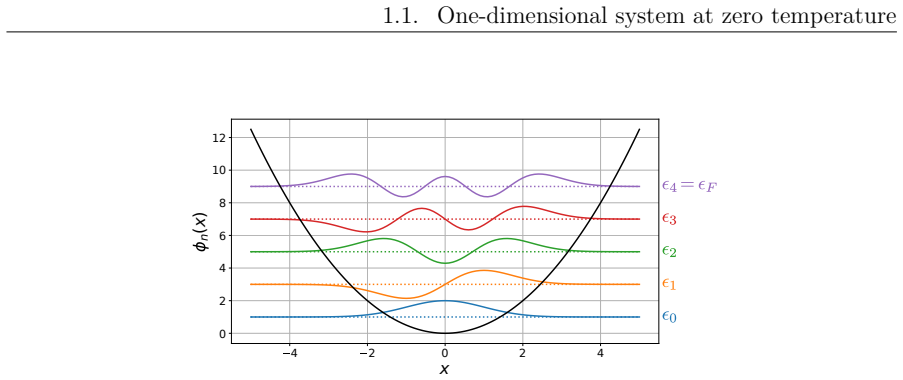
Figure 1.1. Figure 1.1: Single-particle energies and wave-functions associated to a system of [PITH_FULL_IMAGE:figures/full_fig_p027_1_1.png] view at source ↗
Figure 1.2
Figure 1.2. Figure 1.2: Comparison between the bulk density obtained from LDA (orange) and the [PITH_FULL_IMAGE:figures/full_fig_p031_1_2.png] view at source ↗
Figure 1.3
Figure 1.3. Figure 1.3: Typical repartition of fermions in a trapping potential [PITH_FULL_IMAGE:figures/full_fig_p033_1_3.png] view at source ↗
Figure 1.4
Figure 1.4. Figure 1.4: Plot of the density profile F s 1 (z) close to the soft edge given in Eq. (1.45) (in orange) and comparison with the prediction from local density approximation (in dashed blue). Note that the behaviour for z → −∞ matches smoothly with the square-root behaviour of the density obtained from LDA in Eq. (1.23). This density profile is plotted in [PITH_FULL_IMAGE:figures/full_fig_p035_1_4.png] view at source ↗
Figure 1.5
Figure 1.5. Figure 1.5: Plot of the Tracy-Widom distribution F 0 β (s) for β = 1, 2, 4 respectively in blue, orange and green. fold way (see [42] and Appendix B for precisions on Dyson’s classification). Note however that an expression has recently been obtained for β = 6 [112]. We emphasise that it is one of the rare occurrence where the distribution of the maximum of strongly correlated random variables can be obtained explic… view at source ↗
Figure 1.6
Figure 1.6. Figure 1.6: Scheme of the equilibrium repartition of eigenvalues for the pulled (left) or [PITH_FULL_IMAGE:figures/full_fig_p039_1_6.png] view at source ↗
Figure 1.7
Figure 1.7. Figure 1.7: Comparison between the bulk density obtained from LDA (blue) and the [PITH_FULL_IMAGE:figures/full_fig_p045_1_7.png] view at source ↗
Figure 1.8
Figure 1.8. Figure 1.8: Schemes of the typical temperature and corresponding length scales in the [PITH_FULL_IMAGE:figures/full_fig_p048_1_8.png] view at source ↗
Figure 2.1
Figure 2.1. Figure 2.1: Single-particle energies and wave-functions associated to a system of [PITH_FULL_IMAGE:figures/full_fig_p054_2_1.png] view at source ↗
Figure 2.2
Figure 2.2. Figure 2.2: Exact rescaled average density √ N α ρN  √αr N  for N = 100 fermions in the potential v(r) given in Eq. (2.3) as a function of the rescaled position s = √αr N for a = 2 (in blue) and χ = a/N = 1 (in orange). These density are compared with the large N bulk density given for a = 2 in Eq. (2.11) (plotted in dashed red) and for χ = 1 in Eq. (2.10) (plotted in dashed green), showing a good agreement. Furth… view at source ↗
Figure 2.3
Figure 2.3. Figure 2.3: Plot of the scaling function F a (z) in Eq. (2.15) representing the density profile close to the hard edge for a = 1, 3, 5, 7 respectively in blue, orange, green and red. As a increases, a “pseudo-gap” opens between the edge of the density and the origin. where the scaling function Kν Be (u, v) is called the Bessel kernel and reads Kν Be(u, v) = 1 2 Z 1 0 k Jν(k √ x) Jν(k √ y) = √ v Jν( √ u) Jν−1( √ v) −… view at source ↗
Figure 2.4
Figure 2.4. Figure 2.4: Plot of the PDF −∂sQν min(s) in Eq. (2.18) for ν = 0, 1, 2 respectively in blue, orange and green. function Φ LβE − (λ, ν) was computed in Ref. [9] while the right large deviation function Φ LβE + (λ, ν) was obtained in Ref. [198]. Considering now the case of rmin, we will again use the exact mapping λmin = Nα2 r 2 min. In the LUE, the symmetry between λmin and λmax is broken. There exists in the literat… view at source ↗
Figure 2.5
Figure 2.5. Figure 2.5: Single-particle energies and wave-functions associated to a system of [PITH_FULL_IMAGE:figures/full_fig_p059_2_5.png] view at source ↗
Figure 2.6
Figure 2.6. Figure 2.6: Comparison between the exact rescaled density [PITH_FULL_IMAGE:figures/full_fig_p061_2_6.png] view at source ↗
Figure 2.7
Figure 2.7. Figure 2.7: Plot of the PDF −∂sq1(s) in Eq. (2.37) representing the typical fluctuations of xmax (or xmin) in a hard box potential at T = 0. The Tracy-Widom distribution −∂sF2(−s) is plotted (in dashed orange) for comparison. The function −∂sq1(s) was plotted using the algorithm developed in Ref. [12]. In this case the function σ(x) is the solution of a Painlevé VI equation [144, 172, 213] (xσ00) 2 + 4(xσ0 − σ)(xσ0 … view at source ↗
Figure 2.8
Figure 2.8. Figure 2.8: Plot of the large deviation function ϕ1(x) in Eq. (2.44) as a function of x. The atypical fluctuations can also be obtained exactly using the mapping with the Jacobi Unitary Ensemble. In this ensemble and for a ∼ b = O(1), the atypical fluctua￾tions of the largest eigenvalue λmax are characterised by the simple large deviation rate function Prob [λmax 6 λ] ≈ e −N2ΦJUE(λ) , where ΦJUE(λ) = − ln λ , λ = O(… view at source ↗
Figure 2.9
Figure 2.9. Figure 2.9: Sketch of the typical (blue) and large (red) fluctuation regimes of the proba [PITH_FULL_IMAGE:figures/full_fig_p065_2_9.png] view at source ↗
Figure 2.10
Figure 2.10. Figure 2.10: Plot of the scaling function F1,b(z) given in Eq. (2.52) describing the average density close to the hard edge for T/TF = 0.1, 1, 10 respectively in green, orange and blue. The oscillations that are of quantum origin are smoothened at finite temperature. Statistics of the rightmost fermion xmax at finite temperature T The CDF of the position of the rightmost fermion xmax takes at finite temperature the … view at source ↗
Figure 2.11
Figure 2.11. Figure 2.11: Sketch of the typical (blue) and large (red) fluctuation regimes of the [PITH_FULL_IMAGE:figures/full_fig_p070_2_11.png] view at source ↗
Figure 2.12
Figure 2.12. Figure 2.12: Scheme of the length scales of the problem. In the regime [PITH_FULL_IMAGE:figures/full_fig_p071_2_12.png] view at source ↗
Figure 2.13
Figure 2.13. Figure 2.13: Sketch of two extreme situations for a linear potential of increasing slope [PITH_FULL_IMAGE:figures/full_fig_p072_2_13.png] view at source ↗
Figure 2.14
Figure 2.14. Figure 2.14: Plot of the scaling function F ` 1 (z) given in Eq. (2.91) for ` = −5, 0, 5 respectively in blue, orange and green. This function vanishes quadratically close to the wall, as in the case of the hard box F ` 1 (z) = α(`)z 2 , z → 0 , (2.92) where the coefficient α(`) depends smoothly on ` and has an exact expression [173] α(`) = 1 π 2 Z ∞ ` ds Ai2 (s) + Bi2 (s) = 1 π arctan Ai(`) Bi(`) ! + X∞ k=1 Θ(ak − … view at source ↗
Figure 2.15
Figure 2.15. Figure 2.15: Plot of the PDF −∂sQ`(s) (in blue) where Q`(s) is given in Eq. (2.96) repre￾senting the typical fluctuations of xmax (or xmin) in a truncated linear potential at T = 0. We have reproduced here the hard box scaling function −∂sq1(s) (in dashed orange) obtained from Eq. (2.37) and the Tracy-Widom distribution −∂sF2(−s) (in dashed green) for the sake of comparison between these distributions. The PDFs −∂sQ… view at source ↗
Figure 2.16
Figure 2.16. Figure 2.16: Sketch of a configuration of positions for fermions inside a two-dimensional [PITH_FULL_IMAGE:figures/full_fig_p078_2_16.png] view at source ↗
Figure 2.17
Figure 2.17. Figure 2.17: Sketch of the construction of the image v T of v that is orthogonal to xw. and with Dirichlet boundary conditions for  xw + 1 kF v 2 = 1 + 2 kF xw · v + v 2 k 2 F = 1 , i.e. xw · v = − v 2 2kF . (2.115) In the limit kF → ∞, this boundary condition only applies to the hyperplane orthogonal to the vector xw, i.e xw · v = 0 (c.f [PITH_FULL_IMAGE:figures/full_fig_p079_2_17.png] view at source ↗
Figure 2.18
Figure 2.18. Figure 2.18: For any smoothly varying boundary domain, the fluctuations on a small [PITH_FULL_IMAGE:figures/full_fig_p080_2_18.png] view at source ↗
Figure 2.19
Figure 2.19. Figure 2.19: Plot of the scaling function Fd(z) given in Eq. (2.119) for d = 1, 2, 3 respectively in blue, orange and green. The oscillations that are of quantum origin are smaller in higher dimension, where the effects of the Pauli principle are weaker. where we used that Kb d (0) = Ωd/(2π) d = N/(Ωdk d F ). This average density vanishes quadratically close to the wall in all dimensions d, Fd(z) ≈ 2z 2 d + 2 , z → … view at source ↗
Figure 2.20
Figure 2.20. Figure 2.20: Sketch of the typical (blue), intermediate (red) and large (green) fluctuation [PITH_FULL_IMAGE:figures/full_fig_p082_2_20.png] view at source ↗
Figure 2.21
Figure 2.21. Figure 2.21: Plot of the scaling function F2,b(z) given in Eq. (2.52) describing the average density close to the hard edge for T/TF = 0.1, 1, 10 in dimension d = 2 respectively in green, orange and blue. The oscillations that are of quantum origin are smoothened at finite temperature. Statistics of rmax at finite temperature At finite temperature, and in the regime b = βF = O(1) one still expects to observe three … view at source ↗
Figure 2.22
Figure 2.22. Figure 2.22: Sketch of the typical (blue), intermediate (red) and large (green) fluctuation [PITH_FULL_IMAGE:figures/full_fig_p087_2_22.png] view at source ↗
Figure 3.1
Figure 3.1. Figure 3.1: Sketch of the two-dimensional rotating harmonic potential. [PITH_FULL_IMAGE:figures/full_fig_p096_3_1.png] view at source ↗
Figure 3.2
Figure 3.2. Figure 3.2: Scheme of the single particle energy levels [PITH_FULL_IMAGE:figures/full_fig_p097_3_2.png] view at source ↗
Figure 3.3
Figure 3.3. Figure 3.3: Scheme of the single particle energy levels [PITH_FULL_IMAGE:figures/full_fig_p097_3_3.png] view at source ↗
Figure 3.4
Figure 3.4. Figure 3.4: Scheme of the single particle energy levels [PITH_FULL_IMAGE:figures/full_fig_p098_3_4.png] view at source ↗
Figure 3.5
Figure 3.5. Figure 3.5: Snapshot of the repartition of charges in the ground state. In the large [PITH_FULL_IMAGE:figures/full_fig_p100_3_5.png] view at source ↗
Figure 3.6
Figure 3.6. Figure 3.6: Comparison between the exact rescaled density [PITH_FULL_IMAGE:figures/full_fig_p100_3_6.png] view at source ↗
Figure 3.7
Figure 3.7. Figure 3.7: Plot of the rescaled density N ρN (z) as a function of the rescaled variable ζ = |z| √ N . One can identify three spatial regimes in this figure, (i) the deep bulk for |z| = O(1) (shaded in blue), (ii) the extended bulk for ζ = |z| √ N = O(1) and (iii) the edge regime for s = √ 2(|z| − √ N) = O(1) (which corresponds to the regime |ζ − 1| ∼ N −1/2 shaded in orange), where the density drops to zero. FCS ha… view at source ↗
Figure 3.8
Figure 3.8. Figure 3.8: Plot of the rescaled entanglement entropy [PITH_FULL_IMAGE:figures/full_fig_p104_3_8.png] view at source ↗
Figure 3.9
Figure 3.9. Figure 3.9: Comparison between the rescaled variance [PITH_FULL_IMAGE:figures/full_fig_p105_3_9.png] view at source ↗
Figure 3.10
Figure 3.10. Figure 3.10: Intermediate deviation function ϕ(x) as a function of x. This function is quadratic for small values of x and cubic for large x as seen in Eq. (3.55), allowing respectively a smooth matching with the central Gaussian regime and the small a cubic behaviour of the large deviation function Φb(a) in Eq. (3.48). where C is the Bromwich contour. Evaluating the integral by a saddle-point approxi￾mation, one ob… view at source ↗
Figure 3.11
Figure 3.11. Figure 3.11: Sketch of the regimes of typical (blue), intermediate (red) and large fluc [PITH_FULL_IMAGE:figures/full_fig_p109_3_11.png] view at source ↗
Figure 3.12
Figure 3.12. Figure 3.12: Sketch of the regimes of typical (blue), intermediate (red) and large fluctu [PITH_FULL_IMAGE:figures/full_fig_p111_3_12.png] view at source ↗
Figure 3.13
Figure 3.13. Figure 3.13: Plot of the scaling function S e q (s) given in Eq. (3.74) as a function of s for q = 2, 4 respectively in blue and orange. q = 2 and q = 4. As expected, the entanglement entropy vanishes abruptly at the edge of the density. Note that close to the edge the scaling function for the cumulants in Eq. (3.67) (and in particular the variance) is not proportional to the scaling function for the entanglement en… view at source ↗
Figure 3.14
Figure 3.14. Figure 3.14: Sketch of the typical Gumbel regime (blue), large deviation regime to the [PITH_FULL_IMAGE:figures/full_fig_p122_3_14.png] view at source ↗
Figure 4.1
Figure 4.1. Figure 4.1: Plot of the three universal PDF G0 a (z) of the maximum corresponding to the Gumbel a = I (blue), Fréchet a = II (orange) and Weibull a = III (green) universality classes. one can define “blocks” of order O(ζ) random variables and for these block variables, the problem reduces to statistics of O(N/ζ) i.i.d. random variables [123]. If the random variables are independent but not identically distributed, t… view at source ↗
Figure 4.2
Figure 4.2. Figure 4.2: Plot of the universal PDF G0 I,k(z) of the k th maximum corresponding to the Gumbel class for k = 1, 2, 3 respectively in blue, orange and green. The mean value of ni(x) is simply hni(x)i = ¯q(x) = R ∞ x p(x 0 )dx0 and its variance is Var (ni) = hn 2 i (x)i − hni(x)i 2 = hni(x)i(1 − hni(x)i) = ¯q(x)q(x) , (4.21) where we used that ni(x) 2 = ni(x) and q(x) = 1 − q¯(x). This variance is finite as the varia… view at source ↗
Figure 5.1
Figure 5.1. Figure 5.1: In the Brownian trajectory x(τ ) on the left panel, the trajectory starts from position x(0) = x0 (indicated in dashed orange) and survives up to time t = 1 (with x = 0 indicated in dashed black). On the right panel, the Brownian trajectory built as z(τ ) = x0 − x(τ ) starts from z(0) = 0 and is less than its maximum zmax = x0. 5.1.2 Survival probability and maximum of the Brownian motion Let us first co… view at source ↗
Figure 5.2
Figure 5.2. Figure 5.2: In the Brownian trajectory x(τ ) on the left panel, the trajectory starts from position x(0) = 0 and reach its maximum xmax at time tmax. On the right panel, the trajectory is decomposed into a blue path starting from y(0) = x(0)−xmax and reaching its maximum ymax = 0 at its endpoint at time tmax and an independent orange path (using the Markovian property of Brownian motion), starting from z(0) = x(1) −… view at source ↗
Figure 5.3
Figure 5.3. Figure 5.3: For a given trajectory, definition of the time [PITH_FULL_IMAGE:figures/full_fig_p145_5_3.png] view at source ↗
Figure 5.4
Figure 5.4. Figure 5.4: Discrete random walk of n = 100 steps. There are exactly 20 positions of the walk above M20,100. In the large n limit, this walk becomes a continuous path with a fraction α = 0.2 of the trajectory (in orange) lying above q(0.2). Note that it is also conveniently defined by considering first a discrete version xi of this process with n steps and ordering its positions as M1,n 6 M2,n 6 · · · 6 Mn+1,n. Ther… view at source ↗
Figure 5.5
Figure 5.5. Figure 5.5: Example of a random walk starting at a position [PITH_FULL_IMAGE:figures/full_fig_p149_5_5.png] view at source ↗
Figure 6.1
Figure 6.1. Figure 6.1: The 6 points of the random walk xi (in orange) lying above the level x = M6,n defined as its 6 th maximum (represented by the dashed black line) on the left panel lie below the level x = 0 (represented by the dashed green line) after the path transformation yi = M6,n − xi on the right panel. 0.0 0.2 0.4 0.6 0.8 1.0 i 0.0 0.2 0.4 0.6 0.8 1.0 1.2 xi 0.0 0.2 0.4 0.6 0.8 1.0 i 0.0 0.2 0.4 0.6 0.8 1.0 1.2 xi … view at source ↗
Figure 6.2
Figure 6.2. Figure 6.2: On the left panel, the walk has an initial first step (in green) above level [PITH_FULL_IMAGE:figures/full_fig_p154_6_2.png] view at source ↗
Figure 6.3
Figure 6.3. Figure 6.3: Comparison between the rescaled PDF √ nσFk,n( √ nσz) of the maximum Mk,n for k = 102 and n = 103 as a function of z obtained from the simulation of 106 random walks with Gaussian jump PDF and the scaling function Pα(z) in Eq. (6.14). The numerical data shows a very good agreement with the analytical results. To the best of our knowledge, this formula appears neither in the physics literature nor in the f… view at source ↗
Figure 6.4
Figure 6.4. Figure 6.4: Trajectory of a Brownian motion decomposed in two parts. In the first part [PITH_FULL_IMAGE:figures/full_fig_p158_6_4.png] view at source ↗
Figure 6.5
Figure 6.5. Figure 6.5: Comparison between the analytical expression in Eq. ( [PITH_FULL_IMAGE:figures/full_fig_p158_6_5.png] view at source ↗
Figure 6.6
Figure 6.6. Figure 6.6: Scheme of the repartition of maxima of the random walk for [PITH_FULL_IMAGE:figures/full_fig_p158_6_6.png] view at source ↗
Figure 6.7
Figure 6.7. Figure 6.7: Comparison between the rescaled annealed (orange) and quenched (blue) [PITH_FULL_IMAGE:figures/full_fig_p161_6_7.png] view at source ↗
Figure 6.8
Figure 6.8. Figure 6.8: Comparison between the rescaled annealed density [PITH_FULL_IMAGE:figures/full_fig_p162_6_8.png] view at source ↗
Figure 6.9
Figure 6.9. Figure 6.9: Comparison between the rescaled annealed (orange) and quenched (blue) [PITH_FULL_IMAGE:figures/full_fig_p163_6_9.png] view at source ↗
Figure 7.1
Figure 7.1. Figure 7.1: Scheme of the maxima Mk,n and gaps dk,n for a random walk. – 149 – [PITH_FULL_IMAGE:figures/full_fig_p165_7_1.png] view at source ↗
Figure 7.2
Figure 7.2. Figure 7.2: Comparison between the probability Πk,n obtained by simulation of 106 discrete random walks of n = 20 steps (in black) and the exact analytical formula obtained by inserting Eq. (7.6) in Eq. (7.4) (in orange), showing an excellent agreement. the walk only makes jump of length 1, we must therefore have either dk,n = 0 or dk,n = 1. To characterise fully the statistics of dk,n, we only need to compute the p… view at source ↗
Figure 7.3
Figure 7.3. Figure 7.3: On the left panel, the walk has an initial first step (in green) above level [PITH_FULL_IMAGE:figures/full_fig_p168_7_3.png] view at source ↗
Figure 7.4
Figure 7.4. Figure 7.4: Sketch of the point process constituted by the [PITH_FULL_IMAGE:figures/full_fig_p170_7_4.png] view at source ↗
Figure 7.5
Figure 7.5. Figure 7.5: Comparison between the rescaled PDF √σ n pk=αn,n(∆) of the gap dk,n obtained numerically for 106 random walks of n = 103 steps and k = 500, hence α = k/n = 1/2 with Gaussian (in blue), uniform (in orange) and exponential (in green) PDF of jumps f(η) and the scaling function Pα=1/2(δ = √ n∆/σ) (dashed line) given in Eq. (7.36). The curves for different jumps PDF all collapse on the same master curve descr… view at source ↗
read the original abstract

In this thesis, we study three physically relevant models of strongly correlated random variables: trapped fermions, random matrices and random walks. In the first part, we show several exact mappings between the ground state of a trapped Fermi gas and ensembles of random matrix theory. The Fermi gas is inhomogeneous in the trapping potential and in particular there is a finite edge beyond which its density vanishes. Going beyond standard semi-classical techniques (such as local density approximation), we develop a precise description of the spatial statistics close to the edge. This description holds for a large universality class of hard edge potentials. We apply these results to compute the statistics of the position of the fermion the farthest away from the centre of the trap, the number of fermions in a given domain (full counting statistics) and the related bipartite entanglement entropy. Our analysis also provides solutions to open problems of extreme value statistics in random matrix theory. We obtain for instance a complete description of the fluctuations of the largest eigenvalue in the complex Ginibre ensemble. In the second part of the thesis, we study extreme value questions for random walks. We consider the gap statistics, which requires to take explicitly into account the discreteness of the process. This question cannot be solved using the convergence of the process to its continuous counterpart, the Brownian motion. We obtain explicit analytical results for the gap statistics of the walk with a Laplace distribution of jumps and provide numerical evidence suggesting the universality of these results.

Editorial analysis

A structured set of objections, weighed in public.

Desk editor's note, referee report, simulated authors' rebuttal, and a circularity audit. Tearing a paper down is the easy half of reading it; the pith above is the substance, this is the friction.

Referee Report

0 major / 1 minor

Summary. The thesis establishes exact mappings between the ground state of a trapped Fermi gas and random matrix theory ensembles, yielding a precise description of spatial statistics near the edge that holds for a large universality class of hard-edge potentials. These mappings are used to compute the position statistics of the farthest fermion, full counting statistics, and bipartite entanglement entropy, while also resolving open problems in extreme value statistics for random matrices, including a complete description of largest-eigenvalue fluctuations in the complex Ginibre ensemble. The second part derives explicit analytical results for gap statistics of random walks with Laplace-distributed jumps (accounting for discreteness) and supplies numerical evidence suggesting universality of these results.

Significance. If the mappings and derivations are exact as claimed, the work would be significant for providing non-semiclassical, exact results on edge statistics in inhomogeneous fermionic systems and for linking them directly to RMT ensembles. The resolution of specific open RMT problems and the explicit treatment of discrete random-walk gap statistics (without relying on Brownian-motion limits) represent concrete advances in extreme-value statistics.

minor comments (1)
  1. The abstract is dense with multiple distinct results; clearer separation of the Fermi-gas/RMT mappings from the random-walk results would improve readability.

Simulated Author's Rebuttal

0 responses · 0 unresolved

We thank the referee for their careful reading, positive summary, and recommendation to accept.

Circularity Check

0 steps flagged

No significant circularity identified

full rationale

The thesis presents exact mappings between the ground state of a trapped Fermi gas and established random matrix ensembles (including the complex Ginibre ensemble), along with explicit analytical results for gap statistics of random walks with Laplace jumps. These are described as exact mappings and solutions to open problems that hold for a universality class of hard-edge potentials, without any quoted steps that reduce by construction to fitted parameters, self-definitions, or load-bearing self-citations. The derivations are grounded in independent physical models and RMT results, rendering the central claims self-contained.

Axiom & Free-Parameter Ledger

0 free parameters · 0 axioms · 0 invented entities

Abstract provides no explicit free parameters, axioms or invented entities; all such elements remain unidentified.

pith-pipeline@v0.9.0 · 5795 in / 972 out tokens · 24977 ms · 2026-05-25T18:31:44.721051+00:00 · methodology

discussion (0)

Sign in with ORCID, Apple, or X to comment. Anyone can read and Pith papers without signing in.

Reference graph

Works this paper leans on

234 extracted references · 234 canonical work pages · 10 internal anchors

  1. [1]

    Sparre Andersen

    E. Sparre Andersen. On the fluctuations of sums of random variables ii. Mathematica Scandinavica , pages 195--223, 1955

  2. [2]

    Andr \'e ief

    C. Andr \'e ief. Note sur une relation les int \'e grales d \'e finies des produits des fonctions. M \'e m. de la Soc. Sci. Bordeaux , 2(1):1--14, 1883

  3. [3]

    M. Andrews. Singular potentials in one dimension. American Journal of Physics , 44(11):1064--1066, 1976

  4. [4]

    Bachelier

    L. Bachelier. Th \'e orie de la sp \'e culation. In Annales scientifiques de l' \'E cole normale sup \'e rieure , volume 17, pages 21--86, 1900

  5. [5]

    R. K. Pathria; P. D. Beale. Statistical Mechanics (Third Edition) . Academic Press, 2011

  6. [6]

    C. W. J. Beenakker. Random-matrix theory of quantum transport. Reviews of modern physics , 69(3):731, 1997

  7. [7]

    P. W. Brouwer; K. M. Frahm; C. W. J. Beenakker. Quantum mechanical time-delay matrix in chaotic scattering. Phys. Rev. Lett. , 78:4737--4740, Jun 1997

  8. [8]

    Edery; A

    Y. Edery; A. B. Kostinski; S. N. Majumdar; B. Berkowitz. Record-breaking statistics for random walks in the presence of measurement error and noise. Phys. Rev. Lett. , 110:180602, May 2013

  9. [9]

    P. Vivo; S. N. Majumdar; O. Bohigas. Large deviations of the maximum eigenvalue in wishart random matrices. Journal of Physics A: Mathematical and Theoretical , 40(16):4317, 2007

  10. [10]

    P. Vivo; S. N. Majumdar; O. Bohigas. Distributions of conductance and shot noise and associated phase transitions. Phys. Rev. Lett. , 101:216809, Nov 2008

  11. [11]

    P. Vivo; S. N. Majumdar; O. Bohigas. Probability distributions of linear statistics in chaotic cavities and associated phase transitions. Phys. Rev. B , 81:104202, Mar 2010

  12. [12]

    Bornemann

    F. Bornemann. On the numerical evaluation of fredholm determinants. Mathematics of Computation , 79(270):871--915, 2010

  13. [13]

    On the Scaling Limits of Determinantal Point Processes with Kernels Induced by Sturm-Liouville Operators

    F. Bornemann. On the scaling limits of determinantal point processes with kernels induced by sturm-liouville operators. arXiv preprint arXiv:1104.0153 , 2011

  14. [14]

    Dubail; J

    J. Dubail; J. M. St \'e phan; J. Viti; P. Calabrese. Conformal field theory for inhomogeneous one-dimensional quantum systems: the example of non-interacting fermi gases. SciPost Physics , 2(1):002, 2017

  15. [15]

    Calabrese; J

    P. Calabrese; J. Cardy. Entanglement entropy and quantum field theory. Journal of Statistical Mechanics: Theory and Experiment , 2004(06):P06002, 2004

  16. [16]

    Calabrese; J

    P. Calabrese; J. Cardy. Time dependence of correlation functions following a quantum quench. Physical review letters , 96(13):136801, 2006

  17. [17]

    Calabrese; J

    P. Calabrese; J. Cardy. Quantum quenches in extended systems. Journal of Statistical Mechanics: Theory and Experiment , 2007(06):P06008, 2007

  18. [18]

    W. B. Case. Wigner functions and weyl transforms for pedestrians. American Journal of Physics , 76(10):937--946, 2008

  19. [19]

    Y. Castin. Basic theory tools for degenerate fermi gases. arXiv preprint cond-mat/0612613 , 2006

  20. [20]

    Chandrasekhar

    S. Chandrasekhar. Stochastic problems in physics and astronomy. Rev. Mod. Phys. , 15:1--89, Jan 1943

  21. [21]

    Chaumont

    L. Chaumont. A path transformation and its applications to fluctuation theory. Journal of the London Mathematical Society , 59(2):729--741, 1999

  22. [22]

    T. L. Ho; C. V. Ciobanu. Rapidly rotating fermi gases. Physical review letters , 85(22):4648, 2000

  23. [23]

    Bertin; M

    E. Bertin; M. Clusel. Generalized extreme value statistics and sum of correlated variables. Journal of Physics A: Mathematical and General , 39(24):7607, 2006

  24. [24]

    Texier; A

    C. Texier; A. Comtet. Universality of the wigner time delay distribution for one-dimensional random potentials. Phys. Rev. Lett. , 82:4220--4223, May 1999

  25. [25]

    S. N. Majumdar; A. Comtet. Airy distribution function: from the area under a brownian excursion to the maximal height of fluctuating interfaces. Journal of Statistical Physics , 119(3-4):777--826, 2005

  26. [26]

    N. R. Cooper. Rapidly rotating atomic gases. Advances in Physics , 57(6):539--616, 2008

  27. [27]

    Aftalion; X

    A. Aftalion; X. Blanc; J. Dalibard. Vortex patterns in a fast rotating bose-einstein condensate. Physical Review A , 71(2):023611, 2005

  28. [28]

    A.. Dassios. The distribution of the quantile of a brownian motion with drift and the pricing of related path-dependent options. The Annals of Applied Probability , pages 389--398, 1995

  29. [29]

    A. Dassios. Sample quantiles of stochastic processes with stationary and independent increments. The Annals of Applied Probability , pages 1041--1043, 1996

  30. [30]

    Fridman; R

    M. Fridman; R. Pugatch; M. Nixon; A. Friesem; N. Davidson. Measuring maximal eigenvalue distribution of wishart random matrices with coupled lasers. Physical Review E , 85(2):020101, 2012

  31. [31]

    B. Derrida. Random-energy model: An exactly solvable model of disordered systems. Physical Review B , 24(5):2613, 1981

  32. [32]

    Brunet; B

    E. Brunet; B. Derrida. Statistics at the tip of a branching random walk and the delay of traveling waves. EPL (Europhysics Letters) , 87(6):60010, sep 2009

  33. [33]

    Brunet; B

    E. Brunet; B. Derrida. A branching random walk seen from the tip. Journal of Statistical Physics , 143(3):420, Apr 2011

  34. [34]

    Sadhu; B

    T. Sadhu; B. Derrida. Large deviation function of a tracer position in single file diffusion. Journal of Statistical Mechanics: Theory and Experiment , 2015(9):P09008, 2015

  35. [35]

    Carpentier; P

    D. Carpentier; P. Le Doussal. Glass transition of a particle in a random potential, front selection in nonlinear renormalization group, and entropic phenomena in liouville and sinh-gordon models. Physical review E , 63(2):026110, 2001

  36. [36]

    G. Dubach. Powers of ginibre eigenvalues. arXiv preprint arXiv:1711.03151v2 , 2017

  37. [37]

    Dumitriu

    I. Dumitriu. Eigenvalue statistics for beta-ensembles . PhD thesis, Massachusetts Institute of Technology, 2003

  38. [38]

    Brack; M

    J Bartel; M. Brack; M. Durand. Extended thomas-fermi theory at finite temperature. Nuclear Physics A , 445(2):263--303, 1985

  39. [39]

    F. J. Dyson. Statistical theory of the energy levels of complex systems. i. Journal of Mathematical Physics , 3(1):140--156, 1962

  40. [40]

    F. J. Dyson. Statistical theory of the energy levels of complex systems. ii. Journal of Mathematical Physics , 3(1):157--165, 1962

  41. [41]

    F. J. Dyson. Statistical theory of the energy levels of complex systems. iii. Journal of Mathematical Physics , 3(1):166--175, 1962

  42. [42]

    F. J. Dyson. The threefold way. algebraic structure of symmetry groups and ensembles in quantum mechanics. Journal of Mathematical Physics , 3(6):1199--1215, 1962

  43. [43]

    F. J. Dyson. Fredholm determinants and inverse scattering problems. Communications in Mathematical Physics , 47(2):171--183, 1976

  44. [44]

    A. Edelman. Eigenvalues and condition numbers of random matrices. phd thesis. Department of Mathematics, Massachusetts Institute of Technology, Cambridge, MA , 1989

  45. [45]

    V. Eisler. Universality in the full counting statistics of trapped fermions. Physical review letters , 111(8):080402, 2013

  46. [46]

    Charles; B

    L. Charles; B. Estienne. Entanglement entropy and berezin-toeplitz operators. arXiv preprint arXiv:1803.03149 , 2018

  47. [47]

    Z. F. Ezawa. Quantum Hall Effects: Field Theoretical Approach and Related Topics . World Scientific, 2008

  48. [48]

    W. Feller. An introduction to probability theory and its applications , volume 1. Wiley New York, 1968

  49. [49]

    Chafa \" ; G

    D. Chafa \" ; G. Ferr \'e . Simulating coulomb and log-gases with hybrid monte carlo algorithms. Journal of Statistical Physics , 174(3):692--714, 2019

  50. [50]

    P. J. Forrester. Vicious random walkers in the limit of a large number of walkers. Journal of Statistical Physics , 56(5):767--782, Sep 1989

  51. [51]

    P. J. Forrester. Exact results for two-dimensional coulomb systems. Physics reports , 301(1-3):235--270, 1998

  52. [52]

    P. J. Forrester. Log-gases and random matrices (LMS-34) . Princeton University Press, 2010

  53. [53]

    Forrester

    P.J. Forrester. The spectrum edge of random matrix ensembles. Nuclear Physics B , 402(3):709--728, 1993

  54. [54]

    Akemann; J

    G. Akemann; J. Baik; P. Di Francesco. The Oxford handbook of random matrix theory . Oxford University Press, 2011

  55. [55]

    Ferrari; R

    P. Ferrari; R. Frings. On the spatial persistence for airy processes. Journal of Statistical Mechanics: Theory and Experiment , 2013(02):P02001, 2013

  56. [56]

    Perfetto; A

    G. Perfetto; A. Gambassi. Ballistic front dynamics after joining two semi-infinite quantum ising chains. Physical Review E , 96(1):012138, 2017

  57. [57]

    Derrida; A

    B. Derrida; A. Gerschenfeld. Current fluctuations in one dimensional diffusive systems with a step initial density profile. Journal of Statistical Physics , 137(5-6):978, 2009

  58. [58]

    J. Ginibre. Statistical ensembles of complex, quaternion, and real matrices. Journal of Mathematical Physics , 6(3):440--449, 1965

  59. [59]

    Girardeau

    M. Girardeau. Relationship between systems of impenetrable bosons and fermions in one dimension. Journal of Mathematical Physics , 1(6):516--523, 1960

  60. [60]

    M. D. Girardeau. Permutation symmetry of many-particle wave functions. Physical Review , 139(2B):B500, 1965

  61. [61]

    V. L. Girko. Circular law. Theory of Probability & Its Applications , 29(4):694--706, 1985

  62. [62]

    Islam; R

    R. Islam; R. Ma; P. R. Preiss; M. E. Tai; A. Lukin; M. Rispoli; M. Greiner. Measuring entanglement entropy in a quantum many-body system. Nature , 528(7580):77, 2015

  63. [63]

    Ben Arous; A

    G. Ben Arous; A. Dembo; A. Guionnet. Aging of spherical spin glasses. Probability theory and related fields , 120(1):1--67, 2001

  64. [64]

    E. J. Gumbel. Statistics of extremes . Courier Corporation, 2012

  65. [65]

    Nagao; M

    T. Nagao; M. Katori; T. Hideki. Dynamical correlations among vicious random walkers. Physics Letters A , 307(1):29 -- 35, 2003

  66. [66]

    P. J. Forrester; G. Honner. Exact statistical properties of the zeros of complex random polynomials. Journal of Physics A: Mathematical and General , 32(16):2961, 1999

  67. [67]

    P. J. Forrester; T. D. Hughes. Complex wishart matrices and conductance in mesoscopic systems: exact results. Journal of Mathematical Physics , 35(12):6736--6747, 1994

  68. [68]

    H. F. Song; C. Flindt; S. Rachel; I. Klich; K. Le Hur. Entanglement entropy from charge statistics: Exact relations for noninteracting many-body systems. Physical Review B , 83(16):161408, 2011

  69. [69]

    H. F. Song; S. Rachel; C. Flindt; I. Klich; N. Laflorencie; K. Le Hur. Bipartite fluctuations as a probe of many-body entanglement. Physical Review B , 85(3):035409, 2012

  70. [70]

    C. A. Regal; C. Ticknor; J. L. Bohn; D. S. Jin. Tuning p-wave interactions in an ultracold fermi gas of atoms. Physical review letters , 90(5):053201, 2003

  71. [71]

    J. Baik; P. Deift; K. Johansson. On the distribution of the length of the longest increasing subsequence of random permutations. Journal of the American Mathematical Society , 12(4):1119--1178, 1999

  72. [72]

    Johansson

    K. Johansson. Shape fluctuations and random matrices. Communications in mathematical physics , 209(2):437--476, 2000

  73. [73]

    Random matrices and determinantal processes

    K. Johansson. Random matrices and determinantal processes. arXiv preprint math-ph/0510038 , 2005

  74. [74]

    Johansson

    K. Johansson. From gumbel to tracy-widom. Probability theory and related fields , 138(1-2):75--112, 2007

  75. [75]

    I. Klich. Lower entropy bounds and particle number fluctuations in a fermi sea. Journal of Physics A: Mathematical and General , 39(4):L85, 2006

  76. [76]

    Dumitriu; P

    I. Dumitriu; P. Koev. Distributions of the extreme eigenvaluesof beta--jacobi random matrices. SIAM Journal on Matrix Analysis and Applications , 30(1):1--6, 2008

  77. [77]

    E. Kostlan. On the spectra of gaussian matrices. Linear algebra and its applications , 162:385--388, 1992

  78. [78]

    Wergen; M

    G. Wergen; M. Bogner; J. Krug. Record statistics for biased random walks, with an application to financial data. Phys. Rev. E , 83:051109, May 2011

  79. [79]

    Gohberg; S

    I. Gohberg; S. Goldberg; N. Krupnik. Traces and determinants of linear operators , volume 116. Birkh \"a user, 2012

  80. [80]

    Haller; J

    E. Haller; J. Hudson; A. Kelly; D. A. Cotta; B. Peaudecerf; G. D. Bruce; S. Kuhr. Single-atom imaging of fermions in a quantum-gas microscope. Nature Physics , 11(9):738, 2015

Showing first 80 references.