REVIEW 47 references
Tree-Transformer: A Transformer-Based Method for Correction of Tree-Structured Data
T0 review · reviewed 2026-08-14 · deepseek-v4-flash
Pith's one-line read A Transformer variant with parent-sibling tree convolution improves code and grammar correction over sequence baselines and achieves the best reported F0.5 on the AESW benchmark.
desk verdict A genuinely novel tree-to-tree Transformer architecture with a striking code-correction result, but the GEC numbers are unverifiable until the authors specify the tree-to-text step. read the letter →
The pith
A machine-rendered reading of the paper's core claim, the machinery that carries it, and where it could break.
The reading
The method was tested in two domains. On the SATE IV dataset of vulnerable C and C++ functions, the Tree-Transformer scored an F0.5 of 84.7, well above the 63.5 scored by a sequence-based Transformer. On the CoNLL 2014 grammar correction test, it achieved a higher recall than prior systems (43.2 versus 38.9) but a lower F0.5 than the strongest previous system (55.09 versus 56.1). On the AESW scientific-writing benchmark, it reports the highest F0.5 so far, 50.43.
The paper does not release code or data, and one abstract number does not match the reported table. The core idea, making Transformers tree-aware, is plausible and could generalize to other tree-to-tree tasks.
Extended reading notes
Core claim
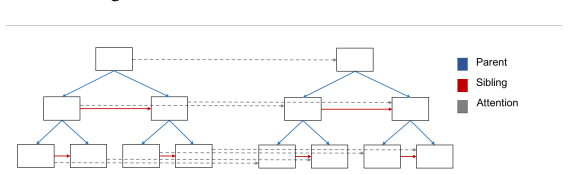
The paper's central claim is that replacing the feed-forward sublayers of a Transformer with a parent-sibling Tree Convolution Block (TCB), combined with depth-first node ordering and masked self-attention, yields a network that 'translate[s] between arbitrary input and output trees' and outperforms sequence-based models on correction tasks. Concretely, the authors claim a 25% F0.5 improvement over the best sequential method on SATE IV, comparable results on CoNLL 2014 with a 10% recall gain, and 'the highest to date F0.5 score on the AESW benchmark of 50.43' (Abstract; Tables 1, 2, 4). If correct, tree structure is a reliable inductive bias for code and grammar correction.
Load-bearing premise
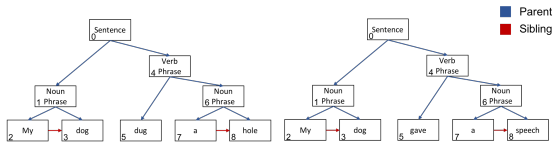
The most fragile premise is representational: every GEC input is a constituency parse produced by the Stanford shift-reduce parser, and every output tree must be converted back to a surface sentence for scoring, but the paper never specifies the tree-to-text reconstruction or checks its quality (Sections 6.2, 3.3). If parser errors corrupt input trees, or if the linearization of generated trees is lossy or ambiguous, the reported F0.5 and recall numbers would not measure actual correction quality. This assumption is distinct from the architecture claim and is load-bearing for all natural-language results.
Signed reviews
Editorial analysis
A structured set of objections, weighed in public.
Assumptions & free parameters
free parameters (4)
- alpha (monolingual ensemble weight) =
0.15
- beam width =
6
- edit-weight lambda =
3 for edited tokens, 1 otherwise
- core model hyperparameters (N=6, d_model=512, d_ff=2048, heads=8, dropout=0.3, attention dropout=0.1, label… =
see Appendix A, Tables 5 and 6
assumptions (4)
- domain assumption Constituency parse trees for incorrect sentences produced by the Stanford shift-reduce parser faithfully represent the syntactic structure available for correction.
- domain assumption The depth-first ordering with masked self-attention makes p(y|x)=prod_t p(y_t|y_<t,x) an adequate factorization for tree generation.
- ad hoc to paper SATE IV preprocessing, including dead-code removal and deduplication of identical bad functions, preserves the difficulty of the code repair task.
- domain assumption Clang ASTs and Clang source reconstruction provide an adequately invertible representation of code edits.
Cite this review
Pith. "Pith review of Tree-Transformer: A Transformer-Based Method for Correction of Tree-Structured Data." pith.science (2026). https://pith.science/paper/QKYZBZ7J
@misc{pith2026190800449,
  author       = {Pith},
  title        = {Pith review of: Tree-Transformer: A Transformer-Based Method for Correction of Tree-Structured Data},
  year         = {2026},
  howpublished = {\url{https://pith.science/paper/QKYZBZ7J}},
  note         = {Machine review of arXiv:1908.00449}
}
abstract
Many common sequential data sources, such as source code and natural language, have a natural tree-structured representation. These trees can be generated by fitting a sequence to a grammar, yielding a hierarchical ordering of the tokens in the sequence. This structure encodes a high degree of syntactic information, making it ideal for problems such as grammar correction. However, little work has been done to develop neural networks that can operate on and exploit tree-structured data. In this paper we present the Tree-Transformer \textemdash{} a novel neural network architecture designed to translate between arbitrary input and output trees. We applied this architecture to correction tasks in both the source code and natural language domains. On source code, our model achieved an improvement of $25\%$ $\text{F}0.5$ over the best sequential method. On natural language, we achieved comparable results to the most complex state of the art systems, obtaining a $10\%$ improvement in recall on the CoNLL 2014 benchmark and the highest to date $\text{F}0.5$ score on the AESW benchmark of $50.43$.
Figures

Reference graph
Works this paper leans on
-
[1]
D. Bahdanau, K. Cho, and Y . Bengio. Neural Machine Translation by Jointly Learning to Align and Translate. International Conference on Learning Representations (ICLR), 2015
work page 2015
-
[2]
A. Vaswani, N. Shazeer, N. Parmar, J. Uszkoreit, L. Jones, A. N. Gomez, L. Kaiser, and I. Polosukhin. Attention Is All You Need. Neural Information Processing Systems (NIPS) , 2017
work page 2017
-
[3]
Z. Xie, A. Avati, N. Arivazhagan, D. Jurafsky, and A. Y . Ng. Neural Language Correction with Character-Based Attention. arXiv.org, 2016
work page 2016
-
[4]
Z. Yuan and T. Briscoe. Grammatical error correction using neural machine translation. North American Chapter of the Association of Computational Linguistics (NAACL), 2016
work page 2016
-
[5]
J. Ji, Q. Wang, K. Toutanova, Y . Gong, S. Truong, and J. Gao. A Nested Attention Neural Hybrid Model for Grammatical Error Correction. Association of Computational Linguistics (ACL), 2017
work page 2017
-
[6]
A. Schmaltz, Y . Kim, A. M. Rush, and S. M. Shieber. Adapting Sequence Models for Sentence Correction. Empirical Methods in Natural Language (EMNLP), 2017
work page 2017
-
[7]
S. Chollampatt and H. T. Ng. A Multilayer Convolutional Encoder-Decoder Neural Network for Grammatical Error Correction. Association for the Advancement of Artificial Intelligence (AAAI), 2018
work page 2018
-
[8]
M. Junczys-Dowmunt, R. Grundkiewicz, S. Guha, and K. Heafield. Approach neural grammati- cal error correction as a low-resource machine translation task. North American Chapter of the Association of Computational Linguistics (NAACL-HLT), 2018
work page 2018
Show all 47 references
-
[9]
K. S. Tai, R. Socher, and C. D. Manning. Improved Semantic Representations From Tree- Structured Long Short-Term Memory Networks. Association of Computational Linguistics (ACL), 2015
2015
-
[10]
X. Zhu, P. Sobhani, and H. Guo. Long Short-Term Memory Over Tree Structures. International Conference on Machine Learning (ICML), 2015
2015
-
[11]
Socher, C
R. Socher, C. C.-Y . Lin, A. Y . Ng, and C. D. Manning. Parsing Natural Scenes and Natural Language with Recursive Neural Networks. International Conference on Machine Learning (ICML), 2011
2011
-
[12]
Eriguchi, K
A. Eriguchi, K. Hashimoto, and Y . Tsuruoka. Tree-to-Sequence Attentional Neural Machine Translation. Association of Computational Linguistics (ACL), 2016
2016
-
[13]
Dong and M
L. Dong and M. Lapata. Language to Logical Form with Neural Attention. Association of Computational Linguistics (ACL), 2016
2016
-
[14]
D. A.-M. . T. S. Jaakkola. Tree-structured decoding with doubly-recurrent neural networks. International Conference on Learning Representations (ICLR), 2017
2017
-
[15]
Vinyals, L
O. Vinyals, L. Kaiser, T. Koo, S. Petrov, I. Sutskever, and G. Hinton. Grammar as a Foreign Language. Neural Information Processing Systems (NIPS), 2015
2015
-
[16]
Aharoni and Y
R. Aharoni and Y . Goldberg. Towards String-to-Tree Neural Machine Translation.Association of Computational Linguistics (ACL), 2017
2017
-
[17]
Rabinovich, M
M. Rabinovich, M. Stern, and D. Klein. Abstract Syntax Networks for Code Generation and Semantic Parsing. Association of Computational Linguistics (ACL), 2017
2017
-
[18]
Parisotto, A.-r
E. Parisotto, A.-r. Mohamed, R. Singh, L. Li, D. Zhou, and P. Kohli. Neuro-Symbolic Program Synthesis. International Conference on Learning Representations (ICLR), 2017
2017
-
[19]
Yin and G
P. Yin and G. Neubig. A Syntactic Neural Model for General-Purpose Code Generation. Association of Computational Linguistics (ACL), 2017
2017
-
[20]
Zhang, L
X. Zhang, L. Lu, and M. Lapata. Top-down Tree Long Short-Term Memory Networks. North American Chapter of the Association of Computational Linguistics (NAACL), 2016
2016
-
[21]
X. Chen, C. Liu, and D. Song. Tree-to-tree Neural Networks for Program Translation. Neural Information Processing Systems (NeurIPS), 2018
2018
-
[22]
Chakraborty, M
S. Chakraborty, M. Allamanis, and B. Ray. Tree2tree neural translation model for learning source code changes. arXiv pre-print, 2018. 9
2018
-
[23]
Monperrus
M. Monperrus. Automatic software repair: A bibliography. ACM Computing Surveys (CSUR), 2018
2018
-
[24]
X. B. D. Le, D. Lo, and C. Le Goues. History driven program repair. Software Analysis, Evolution, and Reengineering (SANER), 2016
2016
-
[25]
Long and M
F. Long and M. Rinard. Automatic patch generation by learning correct code. Principles of Programming Languages (POPL), 2016
2016
-
[26]
Semantic Code Repair using Neuro-Symbolic Transformation Networks
Devlin, Jacob, Uesato, Jonathan, Singh, Rishabh, and Kohli, Pushmeet. Semantic Code Repair using Neuro-Symbolic Transformation Networks. arXiv:1710.11054, 2017
2017 arXiv
-
[27]
Gupta, S
R. Gupta, S. Pal, A. Kanade, and S. Shevade. Deepfix: Fixing common c language errors by deep learning. Association for the Advancement of Artifical Intelligence (AAAI) , pages 1345–1351, 2017
2017
-
[28]
Harer, O
J. Harer, O. Ozdemir, T. Lazovich, C. P. Reale, R. L. Russell, L. Y . Kim, and P. Chin. Learning to Repair Software Vulnerabilities with Generative Adversarial Networks. Neural Information Processing Systems (NeuroIPS), 2018
2018
-
[29]
Junczys-Dowmunt and R
M. Junczys-Dowmunt and R. Grundkiewicz. Phrase-based Machine Translation is State-of-the- Art for Automatic Grammatical Error Correction. Empirical Methods in Natural Language (EMNLP), 2016
2016
-
[30]
Chollampatt and H
S. Chollampatt and H. T. Ng. Connecting the Dots: Towards Human-Level Grammatical Error Correction. The 12th Workshop on Innovative Use of NLP for Building Educational Applications. Association for Computational Linguistics (ACL), 2017
2017
-
[31]
Dahlmeier, H
D. Dahlmeier, H. T. Ng, and S. M. Wu. Building a Large Annotated Corpus of Learner English - The NUS Corpus of Learner English. North American Chapter of the Association of Computational Linguistics (NAACL), 2013
2013
-
[32]
V . Okun, A. Delaitre, and P. Black. Report on the static analysis tool exposition (sate) iv. Technical Report, 2013
2013
-
[33]
Lattner and V
C. Lattner and V . S. Adve. LLVM - A Compilation Framework for Lifelong Program Analysis & Transformation. CGO, 2004
2004
-
[34]
clang.llvm.org, 2011
Clang library. clang.llvm.org, 2011
2011
-
[35]
https://github.com/nusnlp/m2scorer/ releases, 2014
Offical scorer for conll 2014 shared task. https://github.com/nusnlp/m2scorer/ releases, 2014
2014
-
[36]
Goller and A
C. Goller and A. Kuchler. Learning task-dependent distributed representations by backpropaga- tion through structure. International Conference on Neural Networks (ICNN’96), 1996
1996
-
[37]
Chen and C
D. Chen and C. D. Manning. A fast and accurate dependency parser using neural networks. Emperical Methods in Natural Language Processing (EMNLP), 2014
2014
-
[38]
Socher, J
R. Socher, J. Bauer, and A. Y . Manning, Christopher D.and Ng. Parsing with compositional vector grammars. Association for Computational Linguistics (ACL), 2013
2013
-
[39]
Klein and C
D. Klein and C. Manning. Accurate unlexicalized parsing. Association for Computational Linguistics (ACL), 2003
2003
-
[40]
https://nlp.stanford.edu/software/srparser
Shift-reduce constituency parser. https://nlp.stanford.edu/software/srparser. html, 2014
2014
-
[41]
https://web.archive.org/web/20130517134339/http://bulba
Penn treebank ii tags. https://web.archive.org/web/20130517134339/http://bulba. sdsu.edu/jeanette/thesis/PennTags.html, 2016
2016
-
[42]
Heinzerling and M
B. Heinzerling and M. Strube. BPEmb: Tokenization-free Pre-trained Subword Embeddings in 275 Languages. In Proceedings of the Eleventh International Conference on Language Resources and Evaluation (LREC 2018), 2018
2018
-
[43]
H. Ng, S. Wu, T. Briscoe, C. Hadiwinoto, R. Susanto, and C. Bryant. The conll-2014 shared task on grammatical error correction. Conference on Computational Natural Language Learning, Association for Computational Linguistics (ACL), 2014
2014
-
[44]
Daudaravicius, R
V . Daudaravicius, R. Banchs, E. V olodine, and C. Napoles. A report on the automatic evaluation of scientific writing shared task. 11th Workshop on Innovative Use of NLP for Building Educational Applications, Association for Computational Linguistics (ACL), 2016. 10
2016
-
[45]
https://pypi.org/project/apted/, 2015
Apted python library. https://pypi.org/project/apted/, 2015
2015
-
[46]
Pawlik and N
M. Pawlik and N. Augsten. Tree edit distance: Robust and memory-efficient. Information Systems 56, 2016
2016
-
[47]
Pawlik and N
M. Pawlik and N. Augsten. Efficient computation of the tree edit distance. ACM Transactions on Database Systems, 2015. 11 Appendix A hyperparameters Hyperparameters utilized are listed in tables 5 and 6. Default hyperparameters are listed at the top of each table. A blank means...
2015
Reviewed August 14, 2026 · model on record in the stance chip above.
Discussion (0). Continue with ORCID to comment.