REVIEW 3 major objections 5 minor 25 references
A framework for anomaly detection using language modeling, and its applications to finance
T0 review · 3 major / 5 minor · reviewed 2026-08-14 · deepseek-v4-flash
Pith's one-line read Deviations in language-model components reveal financial-text anomalies, the paper argues.
desk verdict A clear, honest taxonomy of textual anomalies mapped to language-model components, but the core thesis is asserted rather than validated—useful as a roadmap, not as a result. read the letter →
The pith
A machine-rendered reading of the paper's core claim, the machinery that carries it, and where it could break.
The reading
What carries the argument
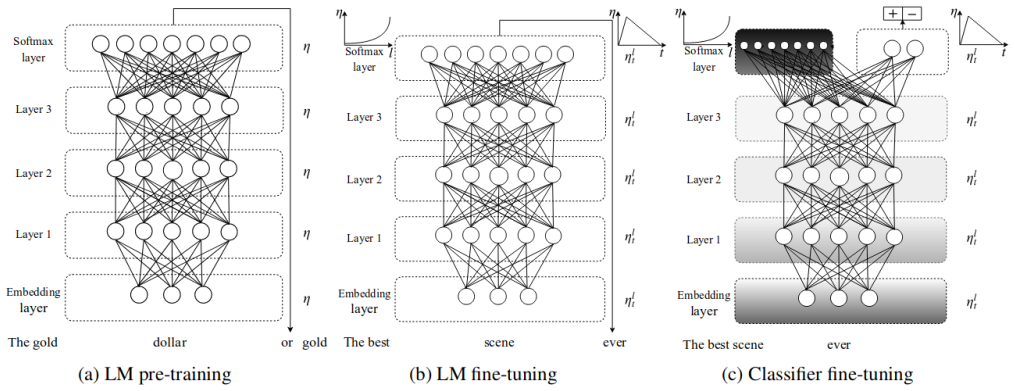
The central object is the recurrent neural language model, decomposed into four components: input vectors, output vectors, hidden vectors, and network weights or attention parameters. The framework treats each component's distribution as a signal source, so the mechanism is distributional deviation: compare a vector or probability against a learned norm, and interpret the deviation according to one of the five anomaly types. Fine-tuning is the auxiliary mechanism that makes hidden vectors especially useful, since retraining a pre-trained model on recent documents concentrates domain shifts into the top layers.
What would settle it
Train an LSTM language model on a fixed corpus of earnings-call transcripts, fine-tune it separately on transcripts of firms that later experienced a credit-rating downgrade and on matched firms that did not, and compare the distributions of the top-layer hidden vectors; if the two distributions are statistically indistinguishable, the framework's central mapping fails.
Extended reading notes
Core claim
The central claim is that each component of a neural language model can be read as a separate sensor for text anomalies. Input vectors can reveal novelty when retrained embeddings drift; output probability distributions can flag transcription or OCR errors; hidden representations can mark boilerplate or semantic richness; and learned attention weights can expose irregular patterns such as clickbait or propaganda. The paper groups these under five views, anomaly as error, irregularity, novelty, semantic richness, and contextual relevance, and ties each view to concrete financial use cases, from correcting earnings-call transcripts to detecting emerging industry sectors. The discovery, on the paper's own terms, is the existence of this systematic mapping, not a measured result.
Load-bearing premise
The framework assumes that deviations in a language model's components correspond to financially meaningful anomalies rather than to noise, speaker style, or ordinary domain drift, and this assumption is never tested against data in the paper.
Editorial extensions
If this is right
- Output probabilities from a language model trained on financial text can catch transcription and OCR errors that would change a company's stated position, such as a shift from 'Now investments' to 'No investments.'
- Retraining on year-over-year filings and watching which word vectors move could flag emerging topics and changing perspectives on issues like ESG factors.
- Hidden-vector divergence can separate boilerplate from atypical clauses in regulatory filings and credit agreements, focusing analysts on the language that stands out.
- Attention weights in models trained on social-media engagement can distinguish information-rich content from clickbait, bot-generated, or propagandistic content.
- A shift in hidden representations when a model is fine-tuned on recent sector documents can signal an evolving trend before it appears in structured data.
Reading between the lines
- Not tested in the paper: the framework implies a concrete validation recipe, namely training on a sector's historical corpus, fine-tuning on recent texts, and checking whether hidden-vector shift correlates with independently known credit events.
- Because the five anomaly types interact, the same machinery could be combined into a single multi-signal anomaly score, which might expose coordinated sector-wide shifts that single-vector detectors miss.
- The approach is not finance-specific: the same component-to-anomaly mapping should transfer to legal contracts, regulatory submissions, and medical records, where boilerplate and unusual clauses carry similar risk signals.
Signed reviews
Editorial analysis
A structured set of objections, weighed in public.
Referee Report
Summary. The paper is a position/framework paper that argues for applying distributional-semantics language models to anomaly detection in financial text. It organizes the space into five "views" of anomaly: error, irregularity, novelty, semantic richness, and contextual relevance. It then identifies four components of a recurrent language model (input vectors, output vectors, hidden vectors, and weights/parameters) whose distributions, the paper claims, can be studied to detect these anomalies. A table maps each component to an anomaly type and an illustrative application (e.g., detecting errors in earnings-call transcripts, novelty in ESG reporting, non-boilerplate language in filings, and clickbait via attention). The paper closes by acknowledging several challenges: unseen input being mistaken for anomaly, malicious anomalies deliberately made to look normal, high noise in executive language, collective rather than individual novelty, and interactions among anomaly types. No experiments or quantitative analyses are reported.
Significance. If the central claim were established, the paper would provide a useful organizing vocabulary for connecting NLP research on language-model internals with financial text analytics, and it supplies concrete application scenarios for risk identification, predictive modeling, and trend analysis. The paper's explicit acknowledgment of limitations and its honest treatment of the difficulty of the problem are strengths, as is the concrete anchoring of each anomaly type in a financial use case. However, the significance is conditional: the proposed framework is currently a collection of plausible examples and citations rather than a validated methodology. The paper makes no parameter-free derivations, machine-checked proofs, or falsifiable predictions; its value rests entirely on whether the asserted mappings between language-model components and anomaly types can be operationalized and shown to work.
major comments (3)
- [Section 3] The central premise, stated as "The distributions of any of the above-mentioned components can be studied to mine signals for anomalous behavior," is asserted rather than established. For the framework to be usable, the paper must define what the "normal" distribution is for each component (e.g., a corpus baseline, a temporal window, or a sector peer group), what deviation metric is applied, and what magnitude or pattern of deviation is diagnostic of each of the five anomaly types. Without these operational definitions, the framework is not falsifiable: any observed deviation could be post hoc assigned to one of the five categories, and Table 1's examples remain merely illustrative.
- [Section 4] The challenges identified in Section 4 directly undercut the Section 3 mapping. Unseen input can be mistaken for anomaly, malicious anomalies are adapted to appear normal, and executive speech contains noise variability similar to actual anomalies. These are not peripheral engineering issues; they put in question whether deviations in language-model components carry financially relevant signal at all. I therefore ask for at least one end-to-end demonstration, even on a synthetic or small labeled dataset, that tests a specific component-to-anomaly mapping against a baseline and reports precision/recall or a comparable measure. Alternatively, the authors should state a precise, refutable hypothesis for one of the Table 1 scenarios.
- [Table 1] Each row of Table 1 pairs a language-model component with an anomaly type and an illustrative analysis, but the relationship between the named component and the claimed anomaly type is not specified. For example, the "Input Novelty" row proposes retraining the network on year-over-year data and observing unstable word vectors, yet the cited literature on word-vector instability [22] documents instability as a general phenomenon; the paper does not say how unstable vectors would be distinguished from novelty rather than noise or domain shift. The same level of specificity is needed for the hidden-vector, output, and attention-based examples before the framework can support the claimed applications.
minor comments (5)
- [Section 3 (text near Figure 1)] There is a typo: "The are four main components to the network" should read "There are four main components to the network."
- [References] Reference [12] begins with a stray quotation mark: "'apping the echo-chamber" should be "Mapping the echo-chamber."
- [References] Reference [17] is listed without a full citation or identifier; if it is a patent or patent application, the number and date should be provided.
- [Footnote 1] The footnote uses a shortened URL without a description; a canonical citation or a full URL would be more appropriate for archival readability.
- [Section 2.1] The CEO audio-transcription example is effective, but the sentence "it is highly unlikely that the CEO would make such a strong and negative statement in a public setting" is presented as supporting evidence without data; it should be framed as a heuristic assumption.
Circularity Check
No circularity: the paper is a conceptual taxonomy with no derivation chain, fitted parameters, or prediction-from-fit step to reduce.
full rationale
This paper is a position/framework article. It does not claim to derive a result from first principles, does not fit any parameter to data, and does not present any empirical prediction that could be equivalent to an input by construction. The central statement in Section 3 that 'the distributions of any of the above-mentioned components can be studied to mine signals for anomalous behavior' is an assertion of research opportunity, not a derived theorem; it is not obtained from any equation in the paper, nor does it rename a fitted quantity. The cited prior work by the authors (references [9], [10], [12], [13]) is used only as illustrative examples of anomaly detection methods, not as load-bearing evidence that forbids alternatives or as an imported uniqueness theorem. No self-definitional, fitted-input-as-prediction, self-citation-chain, or ansatz-smuggling pattern is present. The paper even acknowledges in Section 4 that unseen input, noise variability in executive language, maliciously normal-looking anomalies, and interacting anomaly types make the mapping from component deviations to anomalies difficult and unvalidated; these caveats are honesty about empirical risk, not circularity. The framework is under-specified and unfalsifiable as stated, but that is a correctness/rigor concern, not a circularity concern. Therefore the appropriate finding is no significant circularity, score 0.
Assumptions & free parameters
assumptions (3)
- domain assumption Language model hidden representations carry semantic information relevant to anomaly detection.
- standard math Unsupervised language modeling provides useful features without labeled data.
- ad hoc to paper The five anomaly views (error, irregularity, novelty, semantic richness, contextual relevance) cover the important types of textual anomaly in finance.
Cite this review
Pith. "Pith review of A framework for anomaly detection using language modeling, and its applications to finance." pith.science (2026). https://pith.science/paper/QMQIGJHE
@misc{pith2026190809156,
  author       = {Pith},
  title        = {Pith review of: A framework for anomaly detection using language modeling, and its applications to finance},
  year         = {2026},
  howpublished = {\url{https://pith.science/paper/QMQIGJHE}},
  note         = {Machine review of arXiv:1908.09156}
}
read the original abstract
In the finance sector, studies focused on anomaly detection are often associated with time-series and transactional data analytics. In this paper, we lay out the opportunities for applying anomaly and deviation detection methods to text corpora and challenges associated with them. We argue that language models that use distributional semantics can play a significant role in advancing these studies in novel directions, with new applications in risk identification, predictive modeling, and trend analysis.
Figures

Reference graph
Works this paper leans on
-
[22]
Laura Wendlandt, Jonathan K Kummerfeld, and Rada Mihalcea. 2018. Fac- tors influencing the surprising instability of word embeddings. arXiv preprint arXiv:1804.09692 (2018)
arXiv 2018
-
[1]
Peter Addo, Dominique Guegan, and Bertrand Hassani. 2018. Credit risk analysis using machine and deep learning models. Risks 6, 2 (2018), 38
work page 2018
-
[2]
Leon Cheng. 2013. Unsupervised Topic Discovery by Anomaly Detection
work page 2013
-
[3]
Jacob Devlin, Ming-Wei Chang, Kenton Lee, and Kristina Toutanova. 2018. Bert: Pre-training of deep bidirectional transformers for language understanding.arXiv preprint arXiv:1810.04805 (2018)
arXiv 2018
-
[4]
Eleazar Eskin. 2000. Detecting Errors within a Corpus using Anomaly Detection. In 1st Meeting of the North American Chapter of the Association for Computational Linguistics. https://www.aclweb.org/anthology/A00-2020
work page 2000
-
[5]
Sepp Hochreiter and JÃijrgen Schmidhuber. 1997. Long Short-Term Memory. Neural Computation 9, 8 (1997), 1735–1780
work page 1997
-
[6]
Jeremy Howard and Sebastian Ruder. 2018. Fine-tuned Language Models for Text Classification. CoRR abs/1801.06146 (2018)
arXiv 2018
-
[7]
Cheng F Lee and Oliver M Rui. 2000. Does trading volume contain informa- tion to predict stock returns? Evidence from China’s stock markets. Review of Quantitative Finance and Accounting 14, 4 (2000), 341–360
work page 2000
Show all 25 references
-
[8]
Nicholas Leonard. 2016. Language modeling a billion words. http://torch.ch/ blog/2016/07/25/nce.html
2016
-
[9]
Quanzhi Li, Armineh Nourbakhsh, Sameena Shah, and Xiaomo Liu. 2017. Real- Time Novel Event Detection from Social Media. In 33rd IEEE International Con- ference on Data Engineering, ICDE 2017, San Diego, CA, USA, April 19-22, 2017 . 1129–1139
2017
-
[10]
Xiaomo Liu, Armineh Nourbakhsh, Quanzhi Li, Rui Fang, and Sameena Shah
-
[11]
Tomas Mikolov, Ilya Sutskever, Kai Chen, Greg S Corrado, and Jeff Dean. 2013. Distributed representations of words and phrases and their compositionality. In Advances in neural information processing systems . 3111–3119
2013
-
[12]
Armineh Nourbakhsh, Xiaomo Liu, Quanzhi Li, and Sameena Shah. 2017. "apping the echo-chamber: detecting and characterizing partisan networks on Twitter. In Proceedings of the 2017 International Conference on Social Computing, Behavioral- Cultural Modeling, & Prediction and Beh...
2017
-
[13]
Armineh Nourbakhsh, Xiaomo Liu, Sameena Shah, Rui Fang, Mohammad Mahdi Ghassemi, and Quanzhi Li. 2015. Newsworthy Rumor Events: A Case Study of Twitter. In IEEE International Conference on Data Mining Workshop, ICDMW 2015, Atlantic City, NJ, USA, November 14-17, 2015 . 27–32
2015
-
[14]
Matthew E Peters, Mark Neumann, Mohit Iyyer, Matt Gardner, Christopher Clark, Kenton Lee, and Luke Zettlemoyer. 2018. Deep contextualized word representations. arXiv preprint arXiv:1802.05365 (2018)
2018 arXiv
-
[15]
Sebastian Ruder and Barbara Plank. 2017. Learning to select data for transfer learn- ing with Bayesian Optimization. InProceedings of the 2017 Conference on Empirical Methods in Natural Language Processing . Association for Computational Linguis- tics, Copenhagen, Denmark, 372...
2017 doi
-
[16]
Chaudhuri
Pratip Samanta and Bidyut B. Chaudhuri. 2013. A simple real-word error detection and correction using local word bigram and trigram. In Proceedings of the 25th Conference on Computational Linguistics and Speech Processing (ROCLING 2013) . The Association for Computational Ling...
2013
-
[17]
Sameena Shah, Dietmar Dorr, Khalid Al-Kofahi, and Jacob Sisk. [n. d.]. Systems and methods for determining atypical language
-
[18]
Turney and Patrick Pantel
Peter D. Turney and Patrick Pantel. 2010. From Frequency to Meaning: Vector Space Models of Semantics. CoRR abs/1003.1141 (2010)
2010 arXiv
-
[19]
Ashish Vaswani, Noam Shazeer, Niki Parmar, Jakob Uszkoreit, Llion Jones, Aidan N Gomez, Ł ukasz Kaiser, and Illia Polosukhin. 2017. Attention is All you Need. In Advances in Neural Information Processing Systems 30 , I. Guyon, U. V. Luxburg, S. Bengio, H. Wallach, R. Fergus, S...
2017
-
[20]
Eva Maria Vecchi, Marco Baroni, and Roberto Zamparelli. 2011. (Linear) maps of the impossible: capturing semantic anomalies in distributional space. In Proceed- ings of the Workshop on Distributional Semantics and Compositionality. Association for Computational Linguistics, 1–9
2011
-
[21]
Tsung Hsien Wen, Milica Gasic, Dongho Kim, Nikola Mrksic, Pei-Hao Su, David Vandyke, and Steve Young. 2015. Stochastic Language Generation in Dialogue using Recurrent Neural Networks with Convolutional Sentence Reranking. (08 2015)
2015
-
[23]
Jarrod West and Maumita Bhattacharya. 2016. Intelligent financial fraud detection: A comprehensive review. Computers & Security 57 (2016), 47 – 66. https: //doi.org/10.1016/j.cose.2015.09.005
2016 doi
-
[24]
Frank Zhao. 2017. Hanging on Every Word: Natural Language Processing Unlocks New Frontier in Corporate Earnings Sentiment Analysis. https://www.valuewalk. com/2017/09/natural-language-processing-corporate-earnings-sentiment/. 5
2017
-
[2015]
In Proceedings of the 24th ACM International Conference on Information and Knowledge Management, CIKM 2015, Melbourne, VIC, Australia, October 19 - 23, 2015
Real-time Rumor Debunking on Twitter. In Proceedings of the 24th ACM International Conference on Information and Knowledge Management, CIKM 2015, Melbourne, VIC, Australia, October 19 - 23, 2015 . 1867–1870
2015
Reviewed August 14, 2026 · model on record in the stance chip above.
Discussion (0). Continue with ORCID to comment.