Incentivizing Information Acquisition
Pith reviewed 2026-05-23 19:07 UTC · model grok-4.3
The pith
A mild condition on signal distributions makes simple cutoff payments optimal for incentivizing precise information acquisition.
A machine-rendered reading of the paper's core claim, the machinery that carries it, and where it could break.
Core claim
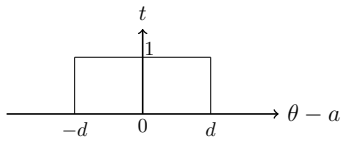
The central claim is that there exists a sufficient and necessary condition on the agent's information structure such that an optimal transfer exists with a simple cutoff structure: the agent receives a fixed prize when the prediction is close enough to the state and nothing otherwise. The condition ensures that state-dependent transfers can simultaneously elicit high precision and truthful reporting without the principal observing the agent's actions or reports directly.
What carries the argument
The cutoff transfer rule that pays a fixed prize conditional on the prediction being sufficiently close to the realized state.
If this is right
- For every commonly used signal distribution the optimal contract reduces to this cutoff form.
- The principal achieves first-best information acquisition using only verifiable state outcomes.
- Agents select both the desired precision level and report their signals truthfully under the identified condition.
- Contract design simplifies because complex state-contingent schedules are never required when the condition holds.
Where Pith is reading between the lines
- The same cutoff logic may apply in settings with partially verifiable states if a suitable proxy for closeness can be defined.
- Experimental tests could check whether human agents respond to cutoff bonuses in the predicted way when signal precision is costly.
- The result points toward using threshold-based accuracy bonuses in crowdsourced forecasting platforms where full effort monitoring is impossible.
Load-bearing premise
The agent's signal distribution is centered around the true state and the principal can commit to transfers depending on the realized state value.
What would settle it
A signal distribution centered around the state for which every optimal transfer requires a non-cutoff payment schedule that varies smoothly with prediction error.
Figures


read the original abstract
I study a principal-agent model in which a principal hires an agent to collect information about an unknown continuous state. The agent acquires a signal whose distribution is centered around the state, controlling the signal's precision at a cost. The principal observes neither the precision nor the signal, but rather, using transfers that can depend on the state, incentivizes the agent to choose high precision and report the signal truthfully. I identify a sufficient and necessary condition on the agent's information structure which ensures that there exists an optimal transfer with a simple cutoff structure: the agent receives a fixed prize when his prediction is close enough to the state and receives nothing otherwise. This condition is mild and applies to all signal distributions commonly used in the literature.
Editorial analysis
A structured set of objections, weighed in public.
Referee Report
Summary. The paper analyzes a principal-agent model of information acquisition about a continuous state. The agent chooses the precision of a centered signal at a cost and reports it; the principal observes only the realized state and designs transfers to induce high precision and truthful reporting. The central result identifies a necessary and sufficient condition on the agent's information structure such that an optimal transfer takes a simple cutoff form (fixed prize if the report is sufficiently close to the state, zero otherwise). The condition is described as mild and satisfied by standard signal distributions in the literature.
Significance. If the characterization is correct, the result is a useful contribution to mechanism design for costly information acquisition. It supplies an exact necessary-and-sufficient condition rather than only sufficient conditions, and it applies directly to common distributions without additional parameters. This could simplify the analysis of optimal contracts in forecasting, experimentation, or delegation settings with continuous states.
minor comments (2)
- [Abstract / Introduction] The abstract states that the condition is 'necessary and sufficient' but does not display the precise mathematical statement; including the exact form (e.g., a property of the density or likelihood ratio) in the introduction would improve accessibility.
- [Model section] The model assumes the principal can commit to transfers that depend on the realized state value; a brief discussion of robustness to noisy state observation would clarify the scope.
Simulated Author's Rebuttal
We thank the referee for their positive summary, significance assessment, and recommendation of minor revision. No specific major comments were provided in the report.
Circularity Check
No significant circularity identified
full rationale
The paper states a necessary-and-sufficient condition on the agent's centered signal distribution such that an optimal state-dependent transfer takes cutoff form. This is presented as a direct characterization derived from the model primitives (precision choice at cost, truthful reporting, ex-post state observation for transfers). No equations or claims reduce by construction to fitted inputs, self-definitions, or self-citation chains; the condition is scoped to standard distributions without renaming empirical patterns or importing uniqueness via prior author work. The derivation chain is self-contained.
Axiom & Free-Parameter Ledger
axioms (1)
- domain assumption Signal distribution is centered around the unknown continuous state
Lean theorems connected to this paper
-
IndisputableMonolith/Cost/FunctionalEquation.leanwashburn_uniqueness_aczel unclear?
unclearRelation between the paper passage and the cited Recognition theorem.
Theorem 1: ... Signal density function φ satisfies increasing elasticity above 1.
-
IndisputableMonolith/Foundation/RealityFromDistinction.leanreality_from_one_distinction unclear?
unclearRelation between the paper passage and the cited Recognition theorem.
Lemma 2 (Complements or Substitutes): ∂²E(λ;d)/∂λ∂d ≥ 0 ⇔ η(λd) ≤ 1.
What do these tags mean?
- matches
- The paper's claim is directly supported by a theorem in the formal canon.
- supports
- The theorem supports part of the paper's argument, but the paper may add assumptions or extra steps.
- extends
- The paper goes beyond the formal theorem; the theorem is a base layer rather than the whole result.
- uses
- The paper appears to rely on the theorem as machinery.
- contradicts
- The paper's claim conflicts with a theorem or certificate in the canon.
- unclear
- Pith found a possible connection, but the passage is too broad, indirect, or ambiguous to say the theorem truly supports the claim.
Reference graph
Works this paper leans on
-
[1]
N., Govindarajan, V., Hartmann, F
Anthony, R. N., Govindarajan, V., Hartmann, F. G., Kraus, K., and Nilsson, G. (2007). Management control systems , volume 12. McGraw-Hill Boston
work page 2007
-
[2]
Argenziano, R., Severinov, S., and Squintani, F. (2016). Strategic information acquisition and transmission. American Economic Journal: Microeconomics , 8(3):119--155
work page 2016
-
[3]
Banks, J. S. and Sundaram, R. K. (1998). Optimal retention in agency problems. Journal of Economic Theory , 82(2):293--323
work page 1998
-
[4]
Bolton, P. and Dewatripont, M. (2004). Contract theory . MIT press
work page 2004
-
[5]
Carroll, G. (2015). Robustness and linear contracts. American Economic Review , 105(2):536--563
work page 2015
-
[6]
Carroll, G. (2019). Robust incentives for information acquisition. Journal of Economic Theory , 181:382--420
work page 2019
-
[7]
Chade, H. and Kovrijnykh, N. (2016). Delegated information acquisition with moral hazard. Journal of Economic Theory , 162:55--92
work page 2016
- [8]
-
[9]
Clark, A. and Reggiani, G. (2021). Contracts for acquiring information. arXiv preprint arXiv:2103.03911
-
[10]
Cuccia, A. (2023). DC left millions unspent from federal grants to end homelessness . https://thedcline.org/2023/06/08/dc-left-millions-unspent-from-federal-grants-to-end-homelessness/
work page 2023
-
[11]
Dasgupta, S. (2023). Optimal test design for knowledge-based screening. Available at SSRN 4403119
work page 2023
-
[12]
Deb, R., Pai, M. M., and Said, M. (2018). Evaluating strategic forecasters. American Economic Review , 108(10):3057--3103
work page 2018
-
[13]
Deb, R., Pai, M. M., and Said, M. (2023). Indirect Persuasion . Centre for Economic Policy Research
work page 2023
-
[14]
Edlin, A. S. and Shannon, C. (1998). Strict monotonicity in comparative statics. Journal of Economic Theory , 81(1):201--219
work page 1998
-
[15]
Goel, P. K. and DeGroot, M. H. (1979). Comparison of experiments and information measures. The Annals of Statistics , 7(5):1066--1077
work page 1979
-
[16]
Gottlieb, D. and Moreira, H. (2022). Simple contracts with adverse selection and moral hazard. Theoretical Economics , 17(3):1357--1401
work page 2022
-
[17]
Grossman, S. J. and Hart, O. D. (1983). An analysis of the principal-agent problem. Econometrica , 51(1):7--45
work page 1983
-
[18]
H \'e bert, B. and Zhong, W. (2022). Engagement maximization. arXiv preprint arXiv:2207.00685
-
[19]
Herweg, F., Müller, D., and Weinschenk, P. (2010). Binary payment schemes: Moral hazard and loss aversion. American Economic Review , 100(5):2451–77
work page 2010
-
[20]
Horngren, C. T. (2009). Cost accounting: a managerial emphasis . Pearson Education India
work page 2009
-
[21]
Jensen, M. C. and Meckling, W. H. (1976). Theory of the firm: Managerial behavior, agency costs and ownership structure. Journal of Financial Economics , 3(4):305--360
work page 1976
-
[22]
Jewitt, I. (1988). Justifying the first-order approach to principal-agent problems. Econometrica: Journal of the Econometric Society , pages 1177--1190
work page 1988
-
[23]
Karlin, S. and Rubin, H. (1956). The theory of decision procedures for distributions with monotone likelihood ratio. The Annals of Mathematical Statistics , pages 272--299
work page 1956
-
[24]
Kreutzkamp, S. (2023). Endogenous information acquisition in cheap-talk games. Technical report, Working paper
work page 2023
-
[25]
Laffont, J.-J. and Martimort, D. (2009). The theory of incentives: the principal-agent model. In The theory of incentives . Princeton university press
work page 2009
-
[26]
Lehmann, E. L. (2011). Comparing location experiments. In Selected Works of EL Lehmann , pages 779--791. Springer
work page 2011
-
[27]
Li, Y., Hartline, J. D., Shan, L., and Wu, Y. (2022). Optimization of scoring rules. In Proceedings of the 23rd ACM Conference on Economics and Computation , pages 988--989
work page 2022
-
[28]
Li, Y. and Libgober, J. (2023). Optimalscoringfordynamicinformation acquisition. Working Paper
work page 2023
-
[29]
Mansouri, K. (2024). Millions remain unspent in federal funds for homeless students — and time is running out . https://www.lpm.org/news/2024-07-16/millions-remain-unspent-in-federal-funds-for-homeless-students-and-time-is-running-out
work page 2024
-
[30]
Milgrom, P. R. (1981). Good news and bad news: Representation theorems and applications. The Bell Journal of Economics , pages 380--391
work page 1981
-
[31]
National Archives (2024). Code of Federal Regulations: 886.20 What happens to unused funds from my grant? https://www.ecfr.gov/current/title-30/chapter-VII/subchapter-R/part-886/section-886.20
work page 2024
-
[32]
Neyman, E., Noarov, G., and Weinberg, S. M. (2021). Binary scoring rules that incentivize precision. In Proceedings of the 22nd ACM Conference on Economics and Computation , pages 718--733
work page 2021
-
[33]
Osband, K. (1989). Optimal forecasting incentives. Journal of Political Economy , 97(5):1091--1112
work page 1989
-
[34]
Oyer, P. (2000). A theory of sales quotas with limited liability and rent sharing. Journal of labor Economics , 18(3):405--426
work page 2000
-
[35]
Papireddygari, M. and Waggoner, B. (2022). Contracts with information acquisition, via scoring rules. In Proceedings of the 23rd ACM Conference on Economics and Computation , pages 703--704
work page 2022
-
[36]
Rappoport, D. and Somma, V. (2017). Incentivizing information design. Available at SSRN 3001416
work page 2017
-
[37]
Rogerson, W. P. (1985). The first-order approach to principal-agent problems. Econometrica: Journal of the Econometric Society , pages 1357--1367
work page 1985
-
[38]
Schick, A. (2008). The federal budget: Politics, policy, process . Brookings Institution Press
work page 2008
-
[39]
Sharma, S., Tsakas, E., and Voorneveld, M. (2023). Procuring unverifiable information. Technical report, Mimeo
work page 2023
-
[40]
Vandeput, N. (2021). Data science for supply chain forecasting . de Gruyter
work page 2021
-
[41]
Whitmeyer, M. and Zhang, K. (2023). Buying opinions. arXiv preprint arXiv:2202.05249
-
[42]
Wong, Y. F. (2023). Dynamic monitoring design. Available at SSRN 4466562
work page 2023
-
[43]
Zermeno, L. (2011). A principal-expert model and the value of menus. Working Paper
work page 2011
discussion (0)
Sign in with ORCID, Apple, or X to comment. Anyone can read and Pith papers without signing in.