REVIEW 4 major objections 5 minor 37 references
Mechanisms of Generative Image-to-Image Translation Networks
T0 review · 4 major / 5 minor · reviewed 2026-08-12 · deepseek-v4-flash
Pith's one-line read The paper claims that a GAN trained only with an adversarial loss can perform image-to-image translation because, when the discriminator is powerful enough, adversarial training becomes equivalent to autoencoder reconstruction.
desk verdict The proof that a GAN-only loss reconstructs inputs fails at Eq. 6, and the experiments are qualitative, so the central claim is unsupported despite an honest writeup. read the letter →
The pith
A machine-rendered reading of the paper's core claim, the machinery that carries it, and where it could break.
The reading
What carries the argument
The load-bearing object is the min-max objective $\min_G \max_D \frac{1}{m}\sum_{x\in I}\|D(x)-D(G(x))\|$, where $D$ maps images to a real-valued feature vector rather than to a binary label. Under the assumption that $D$ can perfectly distinguish $x$ and $G(x)$ on every feature, the loss separates into a sum over per-feature differences and then into a difference of expectations, $\mathbb{E}_{x\sim p_{\text{data}}}[\hat D(x)] - \mathbb{E}_{x\sim p_g}[\hat D(G(x))]$ with $\hat D(x)=\sum_i D_i(x)$, a WGAN-like form. Minimizing this expectation pushes $G(x)$ toward $x$ without paired data, which is the mechanism that makes a pure GAN behave like an autoencoder.
What would settle it
Train the same pure-GAN model on a dataset whose images have two separable feature groups, one where the discriminator is deliberately weakened, for instance features carried only in high-frequency detail. If reconstruction error on the weak-feature group stays high while the easy group converges, the per-feature perfect-discrimination assumption is false and the claimed autoencoder equivalence fails.
Extended reading notes
Core claim
With a discriminator that can perfectly separate real from generated images feature by feature, adversarial training minimizes the same kind of difference as an autoencoder's reconstruction loss. Consequently, a GAN trained only with the adversarial loss makes G(x) approach x when the source and target datasets are the same; when the datasets differ, it preserves features common to both datasets and replaces features found only in the target dataset. The paper identifies the common features as 'content' and the target-only features as 'style', giving an operational, dataset-relative definition of this distinction.
Load-bearing premise
The entire argument rests on the discriminator being able to perfectly tell a generated image from a real one on every individual feature whenever the two differ at all.
Editorial extensions
If this is right
- When the source and target datasets coincide, a GAN trained with only the adversarial loss should reconstruct its input, matching autoencoder behavior without any explicit reconstruction term.
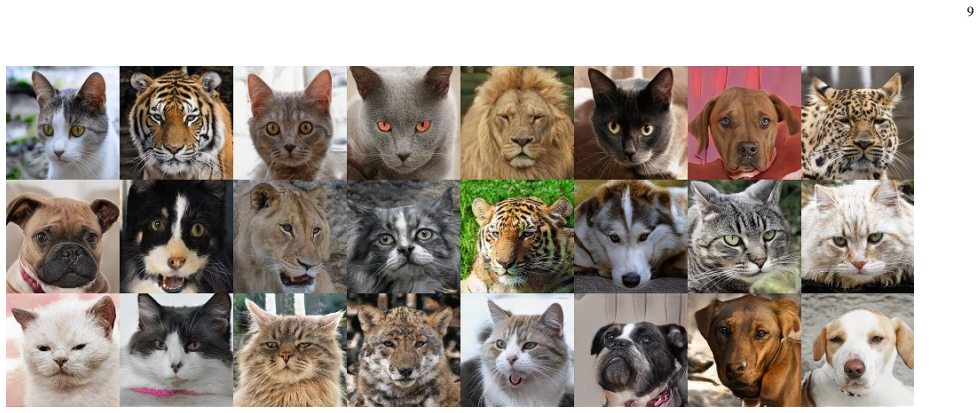
- For different source and target datasets, the same single-loss GAN should preserve features common to both datasets and replace features present only in the target dataset.
- Smaller datasets make the discriminator's perfect-distinction condition easier to satisfy, so pure-GAN translation should converge closer to a one-to-one mapping on small datasets.
- Insufficient encoder capacity breaks the reconstruction condition, and the network then keeps only coarse pose and angle while losing fine identity details.
- The content/style split in style transfer can be identified with common versus dataset-specific features rather than with semantic categories.
Reading between the lines
- A direct testable consequence the paper does not run: if you reduce the discriminator's sensitivity to one feature group, for example by blurring high frequencies in its input, reconstruction of that group should degrade while other groups stay intact.
- The same reasoning suggests why auxiliary losses such as cycle consistency help in practice: they compensate for imperfect discriminators, and when perfect per-feature separation fails, extra reconstruction-style constraints fill the gap.
- The framework yields an operational definition of style and content measurable from data alone, so style losses could in principle be derived from dataset statistics rather than chosen by hand.
Signed reviews
Editorial analysis
A structured set of objections, weighed in public.
Referee Report
Summary. The paper argues that an image-to-image translation network using only an adversarial loss can behave like an autoencoder under two conditions: the generator can reconstruct the input, and the discriminator can perfectly distinguish real from generated images on every feature. The authors derive an algebraic equivalence between adversarial training and autoencoder reconstruction in Section III.A.1, give a geometric interpretation, and present qualitative experiments on face, animal, and art datasets. The central claim is that adversarial training alone implicitly enforces autoencoder-like per-sample reconstruction, and that the discriminator's role in translation is to preserve features common to both source and target datasets while replacing features unique to the source.
Significance. If the central claim were correct, the paper would offer a useful simplification of image-to-image translation: a bare GAN loss that preserves identity features without reconstruction or cycle losses, together with an explanation of what content and style mean in a dataset-driven sense. The paper does have some strengths: it clearly identifies the conditions it believes are sufficient, it is explicit about its constraints in Section IV.C, and it acknowledges in Section IV.A that the GAN cannot make images identical to the input without an explicit reconstruction loss. However, the theoretical derivation contains a load-bearing logical gap, the final loss in Eq. (6) is a distribution-matching objective rather than a per-sample reconstruction objective, and the experimental evaluation is qualitative only. As a result, the claimed equivalence between adversarial training and autoencoders is not established, and the contribution is substantially weakened. The paper does not ship machine-checked proofs, reproducible code, or quantitative comparisons; its value currently rests on a plausible but unproven intuition.
major comments (4)
- [Section III.A.1, Eqs. (2)-(3)] The transition from Eq. (2) to Eq. (3) is not valid without an additional, unstated assumption. Eq. (2) is a sum of L1 norms, so it equals sum_i |D_i(x) - D_i(G(x))|. To rewrite it as sum_i [D_i(x) - D_i(G(x))], one must assume D_i(x) > D_i(G(x)) for every i and every x. The paper asserts that perfect discrimination implies this ordering, but perfect discrimination only implies that the two values differ, not which is larger. A discriminator can perfectly separate the sets while having D_i(x) < D_i(G(x)) for some components, or while the sign varies across the sample. Without the sign condition, the derivation collapses, and the conclusion that minimizing the loss pushes G(x) toward x does not follow.
- [Section III.A.1, Eqs. (4)-(6) and the statement after Eq. (6)] Even granting the sign assumption, the final loss in Eq. (6) is a distribution-matching objective over the marginals pdata and pg, not a per-sample comparison of G(x) with its own input x. The statement "From (2), we know that G(x) will be pushed to x when minimizing the loss function" is therefore unsupported. A generator that computes the identity mapping and a generator that permutes the dataset (e.g., G(A)=B and G(B)=A on a two-image uniform dataset) produce exactly the same value of the expectation in Eq. (6), since pg = pdata in both cases, yet the reconstruction error ||x - G(x)|| differs dramatically. Thus Eq. (6) cannot imply per-sample reconstruction, and the paper's central claim that adversarial training yields autoencoder-like results is not established by the derivation.
- [Section IV.A and Fig. 6] The experimental section does not substantiate the central claim. The paper reports only qualitative samples and a single reconstruction-loss curve; there is no quantitative comparison with an autoencoder on held-out data, no measure of perceptual similarity, and no statistical test. Moreover, the text accompanying Fig. 6 concedes that "the GAN is capable of bringing G(x) close to x, but it cannot make them identical without incorporating a reconstruction loss." This admission is consistent with the theoretical gap: the marginal distribution-matching loss does not force identity. The reader is asked to accept similarity from a few favorable examples, which is insufficient evidence for the strong equivalence claim.
- [Section IV.C and Section III.A.2] The key condition stated in Section IV.C—that the discriminator must be able to perfectly distinguish real from fake images whenever there is a discrepancy—is effectively the conclusion of the theorem, not a supporting assumption. If a discriminator can detect any discrepancy between G(x) and x, then the only way for G to fool it is to reproduce x exactly; this is a restatement of the desired result rather than a proof of it. The geometric interpretation in Section III.A.2 similarly assumes that alternating training brings each paired G(x) toward its own x, but the red arrows show G(x)'s moving toward the boundary in feature space, which does not imply each G(x) moves toward its own paired x rather than toward some other real point. The argument is therefore circular in a way that a referee cannot overlook.
minor comments (5)
- [Abstract and Section I] The abstract and introduction contain grammatical issues that obscure the meaning, e.g., "We show that adversarial for GAN models yields results comparable to those of existing methods" and "We investigate the relationship between GANs and autoencoders and provide an explanation for the efficacy of employing only the GAN component." These sentences should be rewritten for clarity.
- [Section III.A.1, Eq. (3)] The notation in Eq. (3) is ambiguous: it writes a double sum but the outer sum is over a set I while the inner sum uses index i, and the paper alternates between using i as a sample index and as a feature index. Please define indices explicitly.
- [Section IV.C.2] The phrase "if the capacity of the network is not insufficient" should read "if the capacity of the network is insufficient." Also, "make the information more campact" is a typo for "compact."
- [Section IV] The paper claims "we used the mean square error between original image and generated image to evaluate the performance," but Figure 4's caption and the text describe reconstruction loss curves without reporting the actual values or a comparison table. Please provide numerical results and standard deviations.
- [References] The related work section would benefit from a discussion of conditional GANs for image-to-image translation (e.g., Isola et al. [15] is listed but not discussed in the body), and from explicit statements about how the proposed method differs from a standard unpaired translation approach such as CycleGAN.
Circularity Check
The autoencoder-equivalence theorem is built into the paper's own definition of adversarial training (Eq. 2); the unpaired WGAN-style reformulation (Eq. 6) does not imply per-sample reconstruction.
-
self definitional
[Section III.A.1 (Algebraic Explanation), Eqs. (2)-(6)]
"Adversarial training, in this paper, is defined by the introduction of a mapping function D which apparent the differences between authentic images x and reconstructed images G(x). ... The optimization problem of adversarial training is defined as follows: min_G max_D L = 1/m sum_{x in I} ||D(x) - D(G(x))|| (2) ... Both algorithms aim to make G(x) close to x ... From (2), we know that G(x) will be push to x when minimizing the loss function. Therefore, adversarial training should produce results similar to autoencoder models."
Equation (2) is already a paired, per-sample reconstruction loss in the feature space of D: for each input x, it penalizes the distance between D(G(x)) and D(x). Under the paper's 'perfectly distinguish' condition, D is injective, so the only minimizer is G(x)=x, which is exactly the autoencoder objective (Eq. 1) composed with D. Thus the claimed equivalence is built into the paper's own definition of adversarial training, not discovered. The derivation then replaces Eq. (2) with Eq. (6), a WGAN-style expectation over the marginals pdata and pg that no longer pairs each G(x) with its own x; any dataset-permuting generator with pg=pdata attains zero loss in Eq. (6).
full rationale
The paper's central theoretical move is in Section III.A.1. It defines 'adversarial training' via Eq. (2), a paired per-sample loss ||D(x)-D(G(x))||. With the assumed perfect discriminator, minimizing Eq. (2) forces D(G(x))=D(x) for each x, and injectivity of D gives G(x)=x. That is precisely the autoencoder objective (Eq. 1), so the claimed 'similarity' is true by construction for this definition. The subsequent conversion to Eq. (6), a WGAN-style marginal distribution-matching loss, discards the pairing: the objective compares the distribution of all generated images to the distribution of all real images, not each G(x) to its own input. A permutation of the dataset (e.g., swapping two images) achieves zero loss in Eq. (6) while having maximal per-sample reconstruction error, so Eq. (6) cannot imply autoencoder behavior. The paper nevertheless concludes 'From (2), we know that G(x) will be push to x,' re-importing the paired conclusion into the unpaired setting. Thus the central explanation reduces to its own definition. The experiments (e.g., Figs. 4-6) provide empirical correlation, but the paper itself concedes that the GAN 'cannot make them identical without incorporating a reconstruction loss' (Section IV.A), which undercuts the theoretical claim. No load-bearing self-citation was found: reference [4] is the authors' prior GAN-based food image model, but the current derivation and experiments do not depend on it. The remaining issues are mathematical validity rather than circularity, and the score reflects only the self-definitional core.
Assumptions & free parameters
assumptions (5)
- domain assumption The generator has sufficient capacity to completely reconstruct the input image.
- domain assumption The discriminator can perfectly distinguish G(x) from x whenever they differ.
- ad hoc to paper The mapping D projects x and G(x) into a space where they are linearly separable.
- ad hoc to paper For each component i, D_i(x) > D_i(G(x)) holds for all x.
- ad hoc to paper The distribution-matching loss in Eq 6 pushes G(x) pointwise toward x.
Cite this review
Pith. "Pith review of Mechanisms of Generative Image-to-Image Translation Networks." pith.science (2026). https://pith.science/paper/LS2OQ4US
@misc{pith2026241110368,
  author       = {Pith},
  title        = {Pith review of: Mechanisms of Generative Image-to-Image Translation Networks},
  year         = {2026},
  howpublished = {\url{https://pith.science/paper/LS2OQ4US}},
  note         = {Machine review of arXiv:2411.10368}
}
read the original abstract
Generative Adversarial Networks (GANs) are a class of neural networks that have been widely used in the field of image-to-image translation. In this paper, we propose a streamlined image-to-image translation network with a simpler architecture compared to existing models. We investigate the relationship between GANs and autoencoders and provide an explanation for the efficacy of employing only the GAN component for tasks involving image translation. We show that adversarial for GAN models yields results comparable to those of existing methods without additional complex loss penalties. Subsequently, we elucidate the rationale behind this phenomenon. We also incorporate experimental results to demonstrate the validity of our findings.
Figures


Figures from the paper (9 more)


Reference graph
Works this paper leans on
-
[4]
Shape-preserving generation of food images for automatic dietary assessment,
G. Chen, Z.-H. Mao, M. Sun, K. Liu, and W. Jia, “Shape-preserving generation of food images for automatic dietary assessment,” in Pro- ceedings of the 2024 IEEE/CVF CVPRW , Seattle, W A, USA, June 2024, pp. 3721–3731
work page 2024
-
[1]
U-Net: Convolutional net- works for biomedical image segmentation,
O. Ronneberger, P. Fischer, and T. Brox, “U-Net: Convolutional net- works for biomedical image segmentation,” in Proceedings of 2015 MICCAI, Cham, Bavaria, Germany, Nov. 2015, pp. 234–241. 8 Fig. 9. Face-to-face translation results with 16 × 16 × 128 intermediate features. First column is the input images, and rest are generated images. Fig. 10. Animal-to...
work page 2015
-
[2]
Image-to-image translation: methods and applications,
Y . Pang, J. Lin, T. Qin, and Z. Chen, “Image-to-image translation: methods and applications,” IEEE Transactions on Multimedia , vol. 24, pp. 3859–3881, Sep. 2022
work page 2022
-
[3]
High- resolution image synthesis with latent diffusion models,
R. Rombach, A. Blattmann, D. Lorenz, P. Esser, and B. Ommer, “High- resolution image synthesis with latent diffusion models,” in Proceedings of the 2022 IEEE/CVF CVPR , New Orleans, LA, USA, June 2022, pp. 10 684–10 695
work page 2022
-
[5]
Palette: Image-to-image diffusion models,
C. Saharia, W. Chan, H. Chang, C. Lee, J. Ho, T. Salimans, D. Fleet, and M. Norouzi, “Palette: Image-to-image diffusion models,” in Proceedings of the 2022 ACM SIGGRAPH , New York, NY , USA, July 2022, pp. 1– 10
work page 2022
-
[6]
Unpaired image-to-image translation using cycle-consistent adversarial networks,
J.-Y . Zhu, T. Park, P. Isola, and A. A. Efros, “Unpaired image-to-image translation using cycle-consistent adversarial networks,” in Proceedings of the 2017 IEEE/CVF ICCV , Venice, Italy, Oct. 2017, pp. 2223–2232
work page 2017
-
[7]
DualGAN: Unsupervised dual learning for image-to-image translation,
Z. Yi, H. Zhang, P. Tan, and M. Gong, “DualGAN: Unsupervised dual learning for image-to-image translation,” in Proceedings of the 2017 IEEE/CVF CVPR , Honolulu, HI, USA, July 2017, pp. 2849–2857
work page 2017
-
[8]
Multimodal unsuper- vised image-to-image translation,
X. Huang, M.-Y . Liu, S. Belongie, and J. Kautz, “Multimodal unsuper- vised image-to-image translation,” in Proceedings of the 2018 ECCV , Munich, Germany, Aug. 2018, pp. 179–196
work page 2018
Show all 37 references
-
[9]
TransferI2I: Transfer learning for image to image translation from small datasets,
Y . Wang, H. Laria, J. van de Weijer, L. Lopez-Fuentes, and B. Raducanu, “TransferI2I: Transfer learning for image to image translation from small datasets,” in Proceedings of the 2021 IEEE/CVF ICCV , Montreal, QC, Canada, Oct. 2021, pp. 13 990–13 999
2021
-
[10]
TransGaGa: Geometry- aware unsupervised image to image translation,
W. Wu, K. Cao, C. Li, C. Qian, and C. C. Loy, “TransGaGa: Geometry- aware unsupervised image to image translation,” in Proceedings of the 2019 IEEE/CVF CVPR , Long Beach, CA, USA, June 2019, pp. 8004– 8013
2019
-
[11]
Generative adversarial nets,
I. Goodfellow, J. Pouget-Abadie, M. Mirza, B. Xu, D. Warde-Farley, S. Ozair, A. Courville, and Y . Bengio, “Generative adversarial nets,” in Proceedings of the 27th NIPS , Montreal, QC, Canada, Dec. 2014, pp. 2672–2680
2014
-
[12]
Auto-encoding variational bayes,
D. P. Kingma and M. Welling, “Auto-encoding variational bayes,” in Proceedings of the 2nd ICLR , Banff, AB, Canada, Apr. 2014, pp. 1–14
2014
-
[13]
Conditional image synthesis with auxiliary classifier GANs,
A. Odena, C. Olah, and J. Shlens, “Conditional image synthesis with auxiliary classifier GANs,” in Proceedings of the 34th ICML , Sydney, Australia, Aug. 2017, pp. 2642–2651
2017
-
[14]
Conditional generative adversarial nets,
M. Mirza and S. Osindero, “Conditional generative adversarial nets,” arXiv preprint arXiv:1411.1784 , Nov. 2014
2014 arXiv
-
[15]
Image-to-image translation with conditional adversarial networks,
P. Isola, J.-Y . Zhu, T. Zhou, and A. A. Efros, “Image-to-image translation with conditional adversarial networks,” in Proceedings of the 2017 IEEE/CVF CVPR , Honolulu, HI, USA, July 2017, pp. 1125–1134
2017
-
[16]
CV AE-GAN: Fine-grained image generation through asymmetric training,
J. Bao, D. Chen, F. Wen, H. Li, and G. Hua, “CV AE-GAN: Fine-grained image generation through asymmetric training,” in Proceedings of the 2017 IEEE/CVF ICCV , Venice, Italy, Oct. 2017, pp. 2764–2773
2017
-
[17]
Taming transformers for high- resolution image synthesis,
P. Esser, R. Rombach, and B. Ommer, “Taming transformers for high- resolution image synthesis,” in Proceedings of the 2021 IEEE/CVF CVPR, Nashville, TN, USA, June 2021, pp. 12 873–12 883
2021
-
[18]
A style-based generator architecture for generative adversarial networks,
T. Karras, S. Laine, and T. Aila, “A style-based generator architecture for generative adversarial networks,” in Proceedings of the 2019 IEEE/CVF CVPR, Long Beach, CA, USA, June 2019, pp. 4401–4410
2019
-
[19]
Scaling up GANs for text-to-image synthesis,
M. Kang, J.-Y . Zhu, R. Zhang, J. Park, E. Shechtman, S. Paris, and T. Park, “Scaling up GANs for text-to-image synthesis,” in Proceedings of the 2023 IEEE/CVF CVPR , Vancouver, BC, Canada, June 2023, pp. 10 124–10 134
2023
-
[20]
GAN review: models and medical image fusion applications,
T. Zhou, Q. Li, H. Lu, Q. Cheng, and X. Zhang, “GAN review: models and medical image fusion applications,” Information Fusion , vol. 91, no. 1, pp. 134–148, Mar. 2023
2023
-
[21]
A neural algorithm of artistic style,
L. A. Gatys, A. S. Ecker, and M. Bethge, “A neural algorithm of artistic style,” arXiv preprint arXiv:1508.06576 , Aug. 2015
2015 arXiv
-
[22]
DRIT++: Diverse image-to-image translation via disentangled representations,
H.-Y . Lee, H.-Y . Tseng, Q. Mao, J.-B. Huang, Y .-D. Lu, M. Singh, and M.-H. Yang, “DRIT++: Diverse image-to-image translation via disentangled representations,” International Journal of Computer Vision , vol. 128, no. 10-11, pp. 2402–2417, Feb. 2020
2020
-
[23]
Asynchronous generative adversarial network for asymmetric unpaired image-to-image translation,
Z. Zheng, Y . Bin, X. Lv, Y . Wu, Y . Yang, and H. T. Shen, “Asynchronous generative adversarial network for asymmetric unpaired image-to-image translation,” IEEE Transactions on Multimedia , vol. 26, pp. 2474–2487, Feb. 2023
2023
-
[24]
SCSP: An unsupervised image-to-image translation network based on semantic cooperative shape perception,
X. Yang, Z. Wang, Z. Wei, and D. Yang, “SCSP: An unsupervised image-to-image translation network based on semantic cooperative shape perception,” IEEE Transactions on Multimedia , vol. 26, pp. 4950–4960, Oct. 2024
2024
-
[25]
Multi-constraint adversarial networks for unsupervised image-to-image translation,
D. Saxena, T. Kulshrestha, J. Cao, and S.-C. Cheung, “Multi-constraint adversarial networks for unsupervised image-to-image translation,”IEEE Transactions on Image Processing , vol. 31, pp. 1601–1612, Jan. 2022
2022
-
[26]
SPN2D-GAN: Semantic prior based night-to-day image-to-image translation,
X. Li and X. Guo, “SPN2D-GAN: Semantic prior based night-to-day image-to-image translation,” IEEE Transactions on Multimedia , vol. 25, pp. 7621–7634, Nov. 2023
2023
-
[27]
Unsupervised image-to-image translation via pre-trained StyleGAN2 network,
J. Huang, J. Liao, and S. Kwong, “Unsupervised image-to-image translation via pre-trained StyleGAN2 network,” IEEE Transactions on Multimedia, vol. 24, pp. 1435–1448, Mar. 2022
2022
-
[28]
Perceptual adversarial networks for image-to-image transformation,
C. Wang, C. Xu, C. Wang, and D. Tao, “Perceptual adversarial networks for image-to-image transformation,” IEEE Transactions on Image Pro- cessing, vol. 27, no. 8, pp. 4066–4079, May 2018
2018
-
[29]
Multi-domain image-to- image translation via a unified circular framework,
Y . Wang, Z. Zhang, W. Hao, and C. Song, “Multi-domain image-to- image translation via a unified circular framework,” IEEE Transactions on Image Processing , vol. 30, pp. 670–684, Nov. 2021
2021
-
[30]
Asymmetric gan for unpaired image-to-image translation,
Y . Li, S. Tang, R. Zhang, Y . Zhang, J. Li, and S. Yan, “Asymmetric gan for unpaired image-to-image translation,” IEEE Transactions on Image Processing, vol. 28, no. 12, pp. 5881–5896, June 2019
2019
-
[31]
Error bounds for approximations with deep ReLU net- works,
D. Yarotsky, “Error bounds for approximations with deep ReLU net- works,” Neural Networks , vol. 94, no. 1, pp. 103–114, Oct. 2017
2017
-
[32]
Generalization error bounds for deep neural networks trained by SGD,
M. Wang and C. Ma, “Generalization error bounds for deep neural networks trained by SGD,” arXiv preprint arXiv:2206.03299, May 2023
2023 arXiv
-
[33]
Deep convolutional framelets: a general deep learning framework for inverse problems,
J. C. Ye, Y . Han, and E. Cha, “Deep convolutional framelets: a general deep learning framework for inverse problems,” SIAM Journal on Imaging Sciences , vol. 11, no. 2, pp. 991–1048, Jan. 2018
2018
-
[34]
Denoising diffusion probabilistic models,
J. Ho, A. Jain, and P. Abbeel, “Denoising diffusion probabilistic models,” in Proceedings of 2020 NeurIPS , Virtual, Dec. 2020, pp. 6840–6851
2020
-
[35]
Improved denoising diffusion proba- 10 bilistic models,
A. Q. Nichol and P. Dhariwal, “Improved denoising diffusion proba- 10 bilistic models,” in Proceedings of the 38th ICML , Virtual, July 2021, pp. 8162–8171
2021
-
[36]
Wasserstein generative adver- sarial networks,
M. Arjovsky, S. Chintala, and L. Bottou, “Wasserstein generative adver- sarial networks,” in Proceedings of the 34th ICML , Sydney, Australia, Aug 2017, pp. 214–223
2017
-
[37]
StarGAN: Unified generative adversarial networks for multi-domain image-to- image translation,
Y . Choi, M. Choi, M. Kim, J.-W. Ha, S. Kim, and J. Choo, “StarGAN: Unified generative adversarial networks for multi-domain image-to- image translation,” in Proceedings of the 2018 IEEE/CVF CVPR , Salt Lake City, UT, USA, June 2018, pp. 8789–8797
2018
Reviewed August 12, 2026 · model on record in the stance chip above.
Discussion (0). Continue with ORCID to comment.