REVIEW 5 major objections 6 minor 42 references
Scaling Deep Learning Research with Kubernetes on the NRP Nautilus HyperCluster
T0 review · 5 major / 6 minor · reviewed 2026-08-12 · deepseek-v4-flash
Pith's one-line read This paper claims that the NRP Nautilus HyperCluster, a Kubernetes-managed pool of over 1,300 NVIDIA GPUs, can automate and scale deep learning research in remote sensing, demonstrated by training 234 models for a total of 4,040 hours…
desk verdict A useful infrastructure/application report whose deforestation '>10% improvement' claim is not controlled enough to trust; the transformer sweep and burned-area workflow are the real substance. read the letter →
The pith
A machine-rendered reading of the paper's core claim, the machinery that carries it, and where it could break.
The reading
What carries the argument
The load-bearing mechanism is a Kubernetes job pipeline: containerized training runs are defined by auto-generated YAML files and launched by bash scripts onto the Nautilus cluster, which pools over 1,300 NVIDIA GPUs and 19,000 CPU cores. Data is staged on persistent volumes, models are pushed to S3 after training, and jobs run across heterogeneous GPUs with batch sizes set by available memory. This parallelism turns what would be months of sequential training into wall-clock durations of hundreds of hours, and it is what makes the paper's 234-model sweep and the 4,040 cumulative hours tractable.
What would settle it
Run the deforestation ChangeFormer model and the FC-DenseNet baseline from [42] on the same conservation units, observation dates, and band combinations, with the same test split; if the F1 gap falls below 10 percentage points, the claimed superiority is an evaluation artifact.
Extended reading notes
Core claim
On the paper's own terms, the central discovery is that the Nautilus HyperCluster robustly automates and scales deep learning for high-resolution remote sensing research. Concretely, the authors report 234 deep neural models trained in parallel for a total of 4,040 hours: 30 detection models across ten architectures and three datasets, 144 burned-area segmentation models in a hyperparameter sweep, and over 60 deforestation-detection configurations. The strongest reported result is that the deforestation model, a ChangeFormer trained on Sentinel-2 imagery, achieved an F1 score above 81% for the change class, exceeding the 70.7% F1 of the best fully convolutional approach in the comparison study by more than 10%.
Load-bearing premise
The load-bearing premise is that the evaluation setup is fair and comparable to the earlier deforestation study, even though the conservation units, observation dates, and spectral bands do not match; if those differences inflate the reported metrics, the paper's performance conclusions, including the >10% improvement, do not follow.
Editorial extensions
If this is right
- Researchers can treat hyperparameter exploration as a routine, parallel step rather than a bottleneck, since hundreds of independent training runs can be scheduled automatically.
- The 30 trained transformer weights on remote-sensing datasets become reusable transfer-learning starting points for other overhead-imagery problems.
- The burned-area segmentation workflow demonstrates a scalable template for building and cleaning satellite-image training sets from raster archives.
- The deforestation result suggests transformer-based change detection can outperform fully convolutional baselines on Sentinel-2 data, if evaluation is aligned.
Reading between the lines
- The automation recipe (auto-generated YAML, bash-launched jobs, persistent volumes, S3 output) is cluster-agnostic; the same approach should transfer to any Kubernetes GPU pool, so the scaling claim is not tied to Nautilus specifically.
- The deforestation comparison to Torres et al. is the paper's headline performance result, but it relies on different conservation units, observation dates, and spectral bands; a matched-protocol head-to-head would be needed to attribute the >10% gain to the ChangeFormer architecture rather than to evaluation choices.
- The deliberate choice to put few-chip rasters in the burned-area test set means the reported F1 and IoU numbers reflect performance on rare, hard-to-segment fires; a random raster split might show different absolute numbers.
Signed reviews
Editorial analysis
A structured set of objections, weighed in public.
Referee Report
Summary. The paper reports on using the NRP Nautilus Kubernetes cluster to scale deep learning training for three remote sensing tasks: object detection with transformer and convolutional detectors, burned area segmentation with U-Net variants, and deforestation detection with ChangeFormer. The authors report training 234 models for a total of 4,040 GPU-hours, and describe Kubernetes-based job automation for data staging, training, and evaluation. For burned area segmentation they performed a hyperparameter search over 144 models and report best results in Table IV; for deforestation they claim a >10% F1 improvement over prior work [42]. The paper contains no code or data release and no theoretical derivations; its claims are empirical measurements from the authors' own training runs.
Significance. If the infrastructure claim is substantiated, the paper could serve as a practical demonstration of Kubernetes-based research automation for small-to-medium labs. The dataset preparation details for burned area (Table I) are useful. However, the scientific conclusions are currently compromised by an uncontrolled comparison to prior work (Section III-C), a non-random test split (Section II-B3), and internal inconsistencies in the compute accounting (Section III-A versus Table V). The paper provides no machine-checked proofs or reproducibility artifacts; its value rests entirely on the accuracy and interpretability of the reported empirical results.
major comments (5)
- [III-C] The deforestation comparison to Torres et al. [42] is uncontrolled. Section III-C reports that ChangeFormer 'obtained at least 81% F1-score' against a 70.7% F1-score for FC-DenseNet in [42], and the conclusion repeats the claim that the models 'outperform previously published competing methods by more than 10%.' However, the present evaluation uses different conservation units, a different time period (2020-2021), Sentinel-2 only, a specific chip/split protocol, and different class definitions than [42], which used both Sentinel-2 and Landsat-8 over different areas and dates. Without aligning study area, observation dates, sensors, band combinations, and exact metric computation, the observed F1 gap could be due to dataset difficulty or evaluation protocol rather than model superiority. The claim should be either re-evaluated on a matched protocol or explicitly weakened to an indicative comparison.
- [II-B3] The burned area test set is constructed in a deliberately non-random way. Section II-B3 states that rasters generating many chips were placed in training and validation, while rasters with few chips were placed in the test set, so that the test set would be 'more diverse.' This creates a distribution shift between training and test: the test rasters have only 714 chips across 40 rasters (about 18 chips per raster), which is a high-variance, low-sample test set. The reported F1/IoU values in Table IV therefore may not reflect performance on the target distribution. Please provide an additional evaluation on a random raster split or per-raster error bars to show the sensitivity of the conclusions to this split choice.
- [III-A / Table V] The reported imagery volumes are internally inconsistent. Section III-A states 'More than 137 TB of imagery are processed' for the object detection study, while Table V lists 1370 GB (1.37 TB) for the same application. Since the paper's central quantitative contribution is the aggregate accounting of 234 models, 37 TB of imagery, and 4,040 hours, this factor-of-100 discrepancy must be resolved. Additionally, the Introduction states 'over 3,000 GPU hours' and 'nearly 250 trained deep neural models,' which differ from the Table V totals of 4,040 hours and 234 models; the paper should use one consistent set of numbers.
- [III-A] The object detection results are not actually presented. Section III-A concludes that 'SWIN and YOLOX were the best-performing networks, with AP50 scores exceeding 70% on RarePlanes and 60% on DOTA,' but no table or figure reports the per-model detection metrics for the ten architectures across the three datasets. Without these metrics, the detection comparison cannot be verified, and the claim is not auditable. Please include the full results, such as a table of AP/AP50 per model and dataset.
- [III-D] The central scaling claim is not quantified against any baseline. Section III-D states that 'over 4000 hours of compute are performed in parallel on Nautilus, the equivalent of over five and a half months if this compute were to be performed on a single server,' but this equivalence is trivial arithmetic. There is no measurement of training throughput, scheduling overhead, queueing delays, or a comparison to a single-node server or an alternative orchestration system. Without such a baseline, the paper does not substantiate the causal claim implied by the title that Kubernetes on Nautilus specifically enables scaling beyond what any other cluster would provide.
minor comments (6)
- [II-A1] Section II-A1: 'most course learned feature map' appears to be a typo for 'coarse.'
- [II-A3] Section II-A3: 'utilizng' should be 'utilizing.'
- [III-B] Section III-B: 'autogenerat' should be 'autogenerate.'
- [III-A] Section III-A: 'FOCS' is a typo for 'FCOS.'
- [References] Reference [4] lists 'TBD' as page numbers; the citation is incomplete.
- [Table IV / III-C] Table IV and Section III-C report F1 scores without specifying whether these are macro-averaged, class-specific, or thresholded at a particular probability; please define the metric explicitly.
Circularity Check
No circularity: the paper's headline numbers are direct measurements from trained models; the main risk is an uncontrolled external comparison, which is a validity issue, not a derivation loop.
full rationale
This paper reports infrastructure-scale deep learning experiments rather than a derived predictive result. The 234 models, 4,040 GPU-hours, per-model AP50 scores, burned-area F1/IoU values, and deforestation F1/IoU metrics are all measured outputs of trained networks on held-out test chips, not quantities inferred from fitted parameters. The burned-area hyperparameter search (144 models) followed by evaluation of four architectures with the selected settings is standard model selection and is not a fitted-input-called-prediction loop: Table IV reports test-set measurements, not a re-statement of the validation objective. The deforestation comparison to Torres et al. [42] is the only load-bearing quantitative contrast, but it does not reduce to the paper's own inputs; it is an external benchmark comparison whose uncontrolled differences in study area, dates, sensors, and metric definitions are a comparability/validity limitation, not circularity. The paper's self-citations (e.g., [1]–[11]) appear as related-work context and as support for the general benefit of transfer learning; none is invoked as a uniqueness theorem or as an unverified premise that forces the paper's conclusions. No equation in the paper defines any claimed output in terms of the claimed input. Consequently, there is no circular step to exhibit.
Assumptions & free parameters
free parameters (9)
- burned area learning rate =
1e-5
- burned area batch size =
32
- burned area optimizer =
LAMB
- chip selection threshold =
10% burned and unburned
- normalization percentiles =
1st and 99th
- deforestation learning rate =
0.0001
- deforestation loss =
CE loss
- deforestation optimizer =
AdamW
- deforestation band combination =
NIR-R-G
assumptions (4)
- domain assumption The ground truth labels in RarePlanes, DOTA, XView, CWFIS, and PRODES are accurate and consistent
- domain assumption MMDetection's default hyperparameters and pretrained weights provide a valid transfer learning baseline
- domain assumption Running jobs on a shared Kubernetes cluster does not introduce resource contention that affects training outcomes across models
- ad hoc to paper The comparison with Torres et al. [42] is valid despite different conservation units, dates, and band inputs
Cite this review
Pith. "Pith review of Scaling Deep Learning Research with Kubernetes on the NRP Nautilus HyperCluster." pith.science (2026). https://pith.science/paper/YD7ZRC7Q
@misc{pith2026241112038,
  author       = {Pith},
  title        = {Pith review of: Scaling Deep Learning Research with Kubernetes on the NRP Nautilus HyperCluster},
  year         = {2026},
  howpublished = {\url{https://pith.science/paper/YD7ZRC7Q}},
  note         = {Machine review of arXiv:2411.12038}
}
read the original abstract
Throughout the scientific computing space, deep learning algorithms have shown excellent performance in a wide range of applications. As these deep neural networks (DNNs) continue to mature, the necessary compute required to train them has continued to grow. Today, modern DNNs require millions of FLOPs and days to weeks of training to generate a well-trained model. The training times required for DNNs are oftentimes a bottleneck in DNN research for a variety of deep learning applications, and as such, accelerating and scaling DNN training enables more robust and accelerated research. To that end, in this work, we explore utilizing the NRP Nautilus HyperCluster to automate and scale deep learning model training for three separate applications of DNNs, including overhead object detection, burned area segmentation, and deforestation detection. In total, 234 deep neural models are trained on Nautilus, for a total time of 4,040 hours
Figures


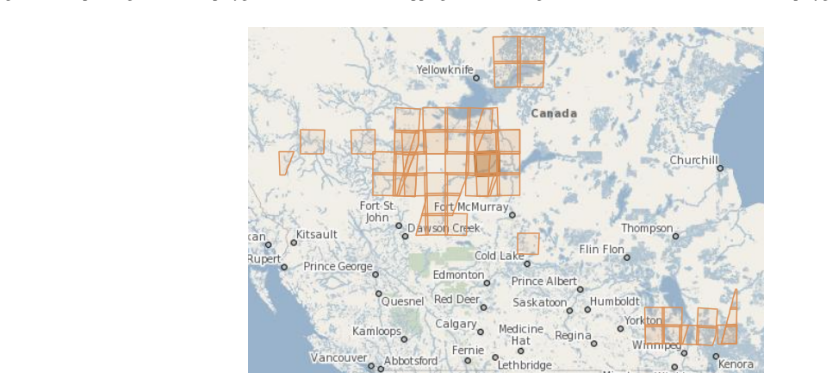
Figures from the paper (5 more)


Reference graph
Works this paper leans on
-
[42]
Daliana Lobo Torres, Javier Noa Turnes, Pedro Juan Soto Vega, Raul Queiroz Feitosa, Daniel E. Silva, Jose Marcato Junior, and Claudio Almeida, “Deforestation Detection with Fully Convolutional Networks in the Amazon Forest from Landsat-8 and Sentinel-2 Images,” Remote Sensing , vol. 13, no. 24, pp. 5084, Jan. 2021
work page 2021
-
[1]
G. J. Scott, M. R. England, W. A. Starms, R. A. Marcum, and C. H. Davis, “Training deep convolutional neural networks for land-cover classification of high-resolution imagery,” IEEE GRSL, vol. 14, no. 4, pp. 549–553, 2017
work page 2017
-
[2]
G. J. Scott, R. A. Marcum, C. H. Davis, and T. W. Nivin, “Fusion of deep convolutional neural networks for land cover classification of high-resolution imagery,” IEEE GRSL, vol. 14, no. 9, 2017
work page 2017
-
[3]
Grant J Scott, Kyle C Hagan, Richard A Marcum, James Alex Hurt, Derek T Anderson, and Curt H Davis, “Enhanced fusion of deep neural networks for classification of benchmark high-resolution image data sets,” IEEE GRSL, vol. 15, no. 9, pp. 1451–1455, 2018
work page 2018
-
[4]
Fuzzy choquet integration of deep convolutional neural networks for remote sensing,
D.T. Anderson, G.J Scott, M. Islam, B. Murray, and R. Marcum, “Fuzzy choquet integration of deep convolutional neural networks for remote sensing,” in Computational Intelligence for Pattern Recognition , Witold and Shyi-Ming, Eds., p. TBD. Springer Berlin Heidelberg, 2018
work page 2018
-
[5]
Richard A Marcum, Curt H Davis, Grant J Scott, and Tyler W Nivin, “Rapid broad area search and detection of chinese surface-to-air missile sites using deep convolutional neural networks,” Journal of Applied Remote Sensing , vol. 11, no. 4, pp. 11–31, 2017
work page 2017
-
[6]
Alan B Cannaday, Curt H Davis, and Grant J Scott, “Improved search and detection of surface-to-air missile sites using spatial fusion of component object detections from deep neural networks,” in IGARSS 2019-2019 IEEE International Geoscience and Remote Sensing Symposium . IEEE, 2019, pp. 9811–9814
work page 2019
-
[7]
Grant J Scott, J Alex Hurt, Richard A Marcum, Derek T Anderson, and Curt H Davis, “Aggregating deep convolutional neural network scans of broad-area high-resolution remote sensing imagery,” in IGARSS 2018-2018 IEEE International Geoscience and Remote Sensing Symposium . IEEE, 2018, pp. 665–668
work page 2018
Show all 42 references
-
[8]
A comparison of deep learning vehicle group detection in satellite imagery,
J Alex Hurt, David Huangal, Curt H Davis, and Grant J Scott, “A comparison of deep learning vehicle group detection in satellite imagery,” in 2019 IEEE International Conference on Big Data (Big Data) . IEEE, 2019, pp. 5419–5427
2019
-
[9]
Maneuverability hazard detection and localization in low-altitude uas imagery,
J Alex Hurt, David Huangal, Jeffrey Dale, Trevor M Bajkowski, James M Keller, Grant J Scott, and Stanton R Price, “Maneuverability hazard detection and localization in low-altitude uas imagery,” in Artificial Intelligence and Machine Learning for Multi-Domain Operations Applic...
2020
-
[10]
Differential morphological profile neural network for object detection in overhead imagery,
G. J. Scott et al., “Differential morphological profile neural network for object detection in overhead imagery,” in IJCNN, 2020, pp. 1–7
2020
-
[11]
Improved classification of high resolution remote sensing imagery with differential morphological profile neural network,
J. Alex Hurt, Trevor Bajkowski, and Grant J. Scott, “Improved classification of high resolution remote sensing imagery with differential morphological profile neural network,” in IGARSS, 2021, pp. 2823–2826
2021
-
[12]
Imagenet classification with deep convolutional neural networks,
Alex Krizhevsky, Ilya Sutskever, and Geoffrey E Hinton, “Imagenet classification with deep convolutional neural networks,” Communications of the ACM, vol. 60, no. 6, pp. 84–90, 2017
2017
-
[13]
Microsoft coco: Common objects in context,
Tsung-Yi Lin et al., “Microsoft coco: Common objects in context,” in European conference on computer vision . Springer, 2014, pp. 740–755
2014
-
[14]
Faster R-CNN: Towards real-time object detection with region proposal networks,
S. Ren et al., “Faster R-CNN: Towards real-time object detection with region proposal networks,” IEEE Transactions on Pattern Analysis and Machine Intelligence, vol. 39, no. 6, pp. 1137–1149, 2017
2017
-
[15]
A convnet for the 2020s,
Zhuang Liu, Hanzi Mao, Chao-Yuan Wu, Christoph Feichtenhofer, Trevor Darrell, and Saining Xie, “A convnet for the 2020s,” in Proceedings of the IEEE/CVF Conference on Computer Vision and Pattern Recognition , 2022, pp. 11976–11986
2022
-
[16]
SSD: Single shot multibox detector,
Wei Liu et al., “SSD: Single shot multibox detector,” in Computer Vision – ECCV 2016 , Cham, 2016, pp. 21–37, Springer International Publishing
2016
-
[17]
Focal loss for dense object detection,
Tsung-Yi Lin, Priya Goyal, Ross Girshick, Kaiming He, and Piotr Doll ´ar, “Focal loss for dense object detection,” in Proceedings of the IEEE international conference on computer vision , 2017, pp. 2980–2988
2017
-
[18]
Fcos: Fully convolutional one-stage object detection,
Zhi Tian, Chunhua Shen, Hao Chen, and Tong He, “Fcos: Fully convolutional one-stage object detection,” in Proceedings of the IEEE/CVF international conference on computer vision , 2019, pp. 9627–9636
2019
-
[19]
Yolox: Exceeding yolo series in 2021,
Zheng Ge, Songtao Liu, Feng Wang, Zeming Li, and Jian Sun, “Yolox: Exceeding yolo series in 2021,” arXiv preprint arXiv:2107.08430 , 2021
2021 arXiv
-
[20]
Very deep convolutional networks for large-scale image recognition,
Karen Simonyan and Andrew Zisserman, “Very deep convolutional networks for large-scale image recognition,” arXiv preprint arXiv:1409.1556, 2014
2014 arXiv
-
[21]
Aggregated residual transformations for deep neural networks,
Saining Xie, Ross Girshick, Piotr Doll ´ar, Zhuowen Tu, and Kaiming He, “Aggregated residual transformations for deep neural networks,” in Proceedings of the IEEE conference on computer vision and pattern recognition , 2017, pp. 1492–1500
2017
-
[22]
Deep residual learning for image recognition,
Kaiming He, Xiangyu Zhang, Shaoqing Ren, and Jian Sun, “Deep residual learning for image recognition,” arXiv preprint arXiv:1512.03385 , 2015
2015 arXiv
-
[23]
An image is worth 16x16 words: Transformers for image recognition at scale,
Alexey Dosovitskiy, Lucas Beyer, Alexander Kolesnikov, Dirk Weissenborn, Xiaohua Zhai, Thomas Unterthiner, Mostafa Dehghani, Matthias Minderer, Georg Heigold, Sylvain Gelly, et al., “An image is worth 16x16 words: Transformers for image recognition at scale,” arXiv preprint ar...
2010 arXiv
-
[24]
End-to-end object detection with transformers,
Nicolas Carion, Francisco Massa, Gabriel Synnaeve, Nicolas Usunier, Alexander Kirillov, and Sergey Zagoruyko, “End-to-end object detection with transformers,” in Computer Vision–ECCV 2020: 16th European Conference, Glasgow, UK, August 23–28, 2020, Proceedings, Part I 16 . Spri...
2020
-
[25]
Deformable detr: Deformable transformers for end-to-end object detection,
Xizhou Zhu, Weijie Su, Lewei Lu, Bin Li, Xiaogang Wang, and Jifeng Dai, “Deformable detr: Deformable transformers for end-to-end object detection,” arXiv preprint arXiv:2010.04159 , 2020
2010 arXiv
-
[26]
Swin transformer: Hierarchical vision transformer using shifted windows,
Ze Liu, Yutong Lin, Yue Cao, Han Hu, Yixuan Wei, Zheng Zhang, Stephen Lin, and Baining Guo, “Swin transformer: Hierarchical vision transformer using shifted windows,” in Proceedings of the IEEE/CVF international conference on computer vision , 2021, pp. 10012–10022
2021
-
[27]
Rareplanes: Synthetic data takes flight,
Jacob Shermeyer et. al, “Rareplanes: Synthetic data takes flight,” in Proceedings of the IEEE/CVF Winter Conference on Applications of Computer Vision, 2021, pp. 207–217
2021
-
[28]
Dota: A large-scale dataset for object detection in aerial images,
Gui-Song Xia et. al, “Dota: A large-scale dataset for object detection in aerial images,” in CVPR, 2018, pp. 3974–3983
2018
-
[29]
Forest burned area detection using a novel spectral index based on multi-objective optimization,
Bo Wu, He Zheng, Zelong Xu, Zhiwei Wu, and Yindi Zhao, “Forest burned area detection using a novel spectral index based on multi-objective optimization,” Forests, vol. 13, no. 11, pp. 1787, 2022
2022
-
[30]
Landsat-8 and sentinel-2 burned area mapping-a combined sensor multi-temporal change detection approach,
David P Roy, Haiyan Huang, Luigi Boschetti, Louis Giglio, Lin Yan, Hankui H Zhang, and Zhongbin Li, “Landsat-8 and sentinel-2 burned area mapping-a combined sensor multi-temporal change detection approach,” Remote Sensing of Environment , vol. 231, pp. 111254, 2019
2019
-
[31]
Deep-learning-based burned area mapping using the synergy of sentinel-1&2 data,
Qi Zhang, Linlin Ge, Ruiheng Zhang, Graciela Isabel Metternicht, Zheyuan Du, Jianming Kuang, and Min Xu, “Deep-learning-based burned area mapping using the synergy of sentinel-1&2 data,” Remote Sensing of Environment , vol. 264, pp. 112575, 2021
2021
-
[32]
A deep learning approach for burned area segmentation with sentinel-2 data,
Lisa Knopp, Marc Wieland, Michaela R ¨attich, and Sandro Martinis, “A deep learning approach for burned area segmentation with sentinel-2 data,” Remote Sensing, vol. 12, no. 15, pp. 2422, 2020
2020
-
[33]
Fully convolutional networks for semantic segmentation,
Jonathan Long, Evan Shelhamer, and Trevor Darrell, “Fully convolutional networks for semantic segmentation,” pp. 3431–3440, 2015
2015
-
[34]
U-net: Convolutional networks for biomedical image segmentation,
Olaf Ronneberger, Philipp Fischer, and Thomas Brox, “U-net: Convolutional networks for biomedical image segmentation,” in Medical Image Computing and Computer-Assisted Intervention – MICCAI 2015 , Nassir Navab, Joachim Hornegger, William M. Wells, and Alejandro F. Frangi, Eds....
2015
-
[35]
Unet++: A nested u-net architecture for medical image segmentation,
Zongwei Zhou, Md Mahfuzur Rahman Siddiquee, Nima Tajbakhsh, and Jianming Liang, “Unet++: A nested u-net architecture for medical image segmentation,” in Deep learning in medical image analysis and multimodal learning for clinical decision support , pp. 3–11. Springer, 2018. 13
2018
-
[36]
Rethinking atrous convolution for semantic image segmentation,
Liang-Chieh Chen, George Papandreou, Florian Schroff, and Hartwig Adam, “Rethinking atrous convolution for semantic image segmentation,” arXiv preprint arXiv:1706.05587, 2017
2017 arXiv
-
[37]
Encoder-decoder with atrous separable convolution for semantic image segmentation,
Liang-Chieh Chen, Yukun Zhu, George Papandreou, Florian Schroff, and Hartwig Adam, “Encoder-decoder with atrous separable convolution for semantic image segmentation,” in Proceedings of the European conference on computer vision (ECCV) , 2018, pp. 801–818
2018
-
[38]
Change Detection of Deforestation in the Brazilian Amazon Using Landsat Data and Convolutional Neural Networks,
Pablo Pozzobon de Bem, Osmar Ab ´ılio de Carvalho Junior, Renato Fontes Guimar ˜aes, and Roberto Arnaldo Trancoso Gomes, “Change Detection of Deforestation in the Brazilian Amazon Using Landsat Data and Convolutional Neural Networks,” Remote Sensing, vol. 12, no. 6, pp. 901, Jan. 2020
2020
-
[39]
Decoupled weight decay regularization,
Ilya Loshchilov and Frank Hutter, “Decoupled weight decay regularization,” arXiv preprint arXiv:1711.05101 , 2017
2017 arXiv
-
[40]
MMDetection: Open mmlab detection toolbox and benchmark,
Kai Chen, Jiaqi Wang, Jiangmiao Pang, Yuhang Cao, Yu Xiong, Xiaoxiao Li, Shuyang Sun, Wansen Feng, Ziwei Liu, Jiarui Xu, Zheng Zhang, Dazhi Cheng, Chenchen Zhu, Tianheng Cheng, Qijie Zhao, Buyu Li, Xin Lu, Rui Zhu, Yue Wu, Jifeng Dai, Jingdong Wang, Jianping Shi, Wanli Ouyang,...
1906 arXiv
-
[41]
A Transformer-Based Siamese Network for Change Detection,
Wele Gedara Chaminda Bandara and Vishal M. Patel, “A Transformer-Based Siamese Network for Change Detection,” in IGARSS 2022 - 2022 IEEE International Geoscience and Remote Sensing Symposium , July 2022, pp. 207–210
2022
Reviewed August 12, 2026 · model on record in the stance chip above.
Discussion (0). Continue with ORCID to comment.