REVIEW 4 major objections 6 minor 27 references
Human-Calibrated Automated Testing and Validation of Generative Language Models
T0 review · 4 major / 6 minor · reviewed 2026-08-12 · deepseek-v4-flash
Pith's one-line read The HCAT framework aligns automated evaluations of RAG-based language models with human judgment through stratified test generation, embedding-based metrics, and two-stage calibration.
desk verdict A coherent framework overview for RAG evaluation in banking, but it overclaims 'reliable' without empirical support and has a load-bearing exchangeability gap in its conformal step. read the letter →
The pith
A machine-rendered reading of the paper's core claim, the machinery that carries it, and where it could break.
The reading
What carries the argument
The load-bearing mechanism is the double-calibration of embedding-derived scores against human labels. In Stage 1, probability calibration (logistic, isotonic, or ordinal regression) converts raw machine scores such as cosine similarity or entailment logits into probabilities that match observed human judgments. In Stage 2, split conformal prediction uses a separate hold-out set to compute a calibrated quantile of non-conformity scores, yielding prediction sets (single class, both classes, or empty) at a user-specified confidence level. This two-stage process is what transforms abstract similarity numbers into decision-ready evaluations with quantified uncertainty.
What would settle it
A concrete test would be to calibrate HCAT on one document collection and apply it to a different collection sharing overlapping topics; if the calibrated thresholds yield systematically misaligned human agreement rates—for instance, high machine groundedness scores on answers that humans judge as hallucinated—the generalization claim would be falsified. An adversarial benchmark that separates semantic similarity from factual support, such as paraphrased false statements that are semantically close to the context, would similarly show whether groundedness tracks truth rather than lexical proximity.
Extended reading notes
Core claim
The central claim is that the open-ended, subjective nature of generative outputs can be tamed by exploiting the bounded structure of RAG systems, where responses are grounded in a known document collection. HCAT builds an automated test suite by embedding documents, clustering them into topic strata, and sampling queries within each stratum so that all knowledge areas are covered. Evaluation uses sentence-level cosine similarity between embeddings—from contrastively trained models and NLI models—to compute context relevancy, groundedness, completeness, and answer relevancy, with NLI entailment distance and Wasserstein distance as supplementary checks. A two-stage calibration pipeline then maps these machine scores to human-judgment probabilities and attaches confidence-aware prediction sets. The paper argues that this layered design delivers explainability, regulatory acceptance, and targeted weakness identification at scale.
Load-bearing premise
The framework assumes that embedding-based similarity scores and NLI entailment probabilities, after calibration against human labels, reliably measure quality dimensions such as relevance, groundedness, and completeness in a way that generalizes across topics and query types.
Editorial extensions
If this is right
- RAG systems can be tested comprehensively across all topics in their document collection without hand-crafting test queries.
- Banks and other regulated users can set evaluation thresholds that demonstrably track human judgments, supporting regulatory acceptance.
- Conformal prediction sets flag outputs that need human review, enabling a human-in-the-loop monitoring process.
- Marginal and bivariate weakness analysis identifies specific topics or query types that underperform, guiding targeted model improvement.
Reading between the lines
- The paper assumes that one calibration function learned on a given topic mix transfers to new topics; an empirical study of cross-topic calibration transfer would be a natural next step, since the paper provides no such evidence.
- Because the metrics inherit the properties of the underlying embedding and NLI models, a skeptical reader should probe whether calibrated scores stay aligned for demographic subgroups or adversarial paraphrases.
- The Wasserstein completeness approximation, computed as an averaged pairwise distance, is a simplification of true optimal transport; exact solvers could change completeness rankings on long, multi-topic documents.
- The framework's logic could extend to non-RAG generative models by treating any retrieved or provided context as a grounding reference, though the paper does not explore this generalization.
Editorial analysis
A structured set of objections, weighed in public.
Referee Report
Summary. The paper proposes Human-Calibrated Automated Testing (HCAT), a framework for evaluating and validating retrieval-augmented generation (RAG) systems in high-stakes domains such as banking. The framework has five main components: automatic test generation through topic modeling and stratified sampling; embedding- and NLI-based functionality metrics (context relevancy, groundedness, completeness, answer relevancy); risk and safety metrics (toxicity, bias, privacy); a two-stage human calibration procedure combining probability calibration with split conformal prediction; and robustness testing with marginal and bivariate weakness analysis. The manuscript is explicitly an overview: it describes the components at a conceptual and formulaic level but reports no implementation, no dataset, no human annotation study, and no experimental evaluation.
Significance. The paper addresses a genuine and timely need: transparent, scalable evaluation of RAG systems in regulated industries. Its high-level architecture is sensible, and the emphasis on explainable metrics, human calibration, and uncertainty quantification is well placed. If the framework were implemented and validated, it could be a useful practical contribution. However, as submitted, the contribution is a proposal. The central claims of the abstract and conclusion, that HCAT provides a 'practical and reliable solution' whose evaluations 'align with human judgments,' are not demonstrated anywhere in the manuscript. The paper contains no machine-checked proofs, no reproducible code or data, and no falsifiable experimental results.
major comments (4)
- [Abstract, Sections 5 and 7] The paper's central claim is that HCAT produces evaluations that are aligned with human judgments and suitable for deployment decisions, but no empirical evidence is provided. Section 5 describes probability calibration and conformal prediction, yet there is no dataset, no human labels, no fitted calibration model, no comparison of machine scores with human judgments, and no evaluation of conformal coverage. The limitations listed in Section 7 do not include the absence of validation. For a framework paper to support the stated reliability claims, it needs at least one concrete case study on a RAG system with human-annotated outputs, calibration results, and an assessment of whether the calibrated metrics and prediction sets behave as claimed.
- [Section 5.2 with Section 2] The conformal prediction guarantee is stated under an exchangeability assumption, but the calibration and test data in HCAT are generated by stratified sampling of the document collection (Section 2), not sampled from the deployment query distribution. If production queries differ in topic, phrasing, or difficulty, the non-conformity score quantile computed on the synthetic calibration set does not in general bound the non-conformity scores on production queries, so the advertised 1-alpha coverage is not guaranteed. The paper acknowledges the exchangeability assumption but does not state this limitation or propose a distribution-shift-robust alternative (e.g., weighted conformal prediction). Since the deployment claim is the basis for the paper's relevance, this gap is load-bearing.
- [Section 3.3.2, Eq. for W(C,A)] The quantity defined after the optimal transport formula as the average of all pairwise distances, W(C,A) = (1/(nk)) sum d(ci,aj), is not the Wasserstein distance in general. It is the expected pairwise distance between two uniform empirical distributions, which coincides with the Wasserstein distance only under very restrictive conditions. Calling this an 'approximation' of the Wasserstein distance is misleading and may lead to incorrect completeness conclusions. The section should either use a proper optimal transport solver or relabel the metric as an average pairwise distance and state what it does and does not measure.
- [Section 3.2.2] The mapping from decision-boundary distance to a probability score is not correct as written. For a linear classifier with logit z = w^T x + b, the logistic probability is sigma(z), whereas the manuscript defines D = z / ||w|| and then applies sigma(D). Unless ||w|| = 1, sigma(D) is not the model's probability and cannot be interpreted as an entailment probability. This matters because the calibrated human-judgment mapping in Section 5 is applied to machine scores; using a wrongly scaled score changes the calibration curve and the resulting thresholds. The formula should be corrected to use sigma(z), or the distance should be defined and calibrated explicitly as a separate score.
minor comments (6)
- [Section 3.3.2] In the formula for the average pairwise distance, the argument d(ci, sj) should be d(ci, aj); as printed, it refers to an undefined variable sj.
- [Section 5.2] The quantile notation 'Quantile(...; ceil((n+1)(1-alpha))/(n+1))' is ambiguous; the manuscript should specify the empirical quantile level, e.g., the level is ceil((n+1)(1-alpha))/(n+1) and the quantile is taken over the calibration non-conformity scores.
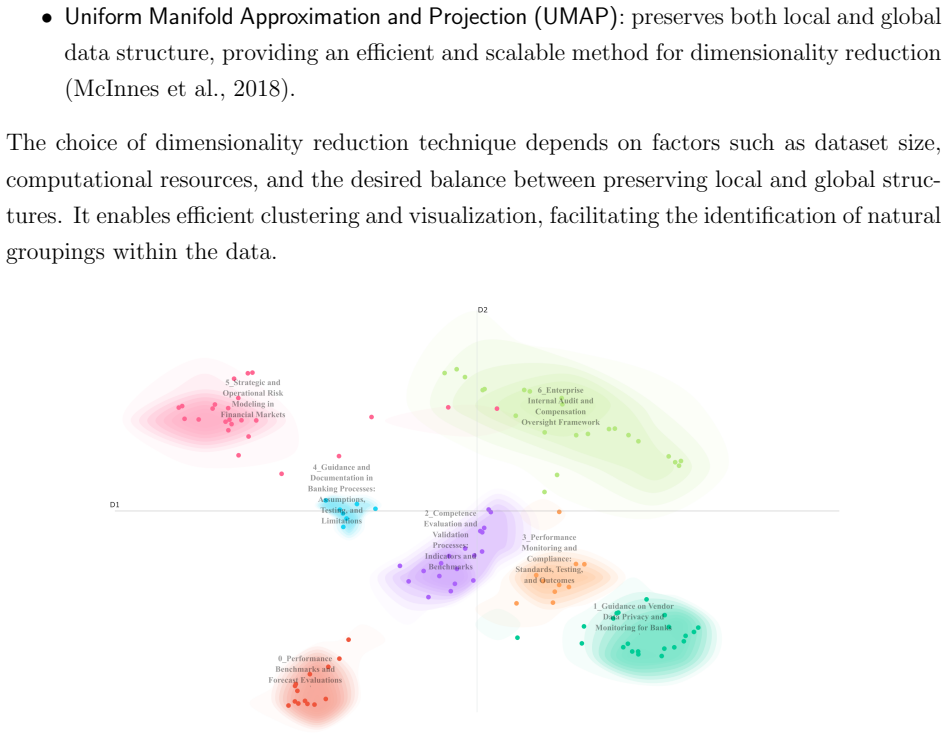
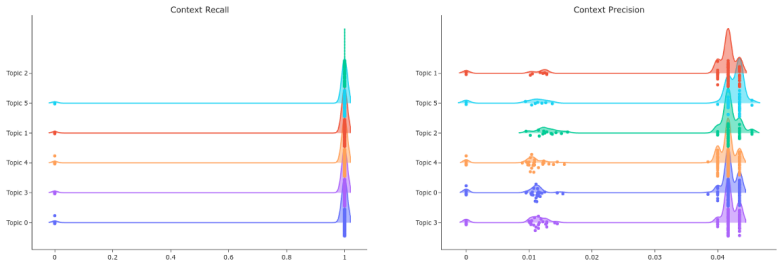
- [Figures 1, 4-7] Several figures are referenced but their content is not described in enough detail. Figure 1 has no axis labels, and Figures 4-7 have minimal or no captions describing the data source, the evaluation metric, or the plotted quantity. If these are illustrative examples, that should be stated explicitly.
- [References] The reference list includes entries that are not cited in the text (e.g., Khashabi et al. 2021, Zhao et al. 2023), and at least one in-text citation style issue appears in the reference for Yang et al. (2018), where 'Yang, Z. Qi, P.' should be 'Yang, Z., Qi, P., ...'.
- [Section 5.1] The term 'Monotonic XGBoost' is used without explanation; the authors should clarify what monotonic constraints are being imposed and provide a citation or definition.
- [Section 2] The test-generation step uses an LLM to create queries, but the manuscript does not discuss how the choice of this LLM, its prompt, or its potential biases affect the coverage and representativeness of the generated test set.
Circularity Check
No load-bearing circularity found; minor self-citations do not force any conclusion.
full rationale
This paper is a methodological overview rather than a derivation of novel empirical results, so there is no prediction chain that reduces to its inputs. The framework's components are defined as constructions: stratified query generation, embedding-based similarity and NLI metrics, probability calibration, and split conformal prediction. The calibration pipeline is explicitly supervised: Stage 1 fits a mapping from machine scores to human labels on a holdout set, and Stage 2 computes conformal prediction sets from an independent calibration sample, with the exchangeability assumption stated. The coverage statement is therefore a standard conformal guarantee on the calibration distribution, not a self-fulfilling prediction. The only self-citations, Sudjianto and Zhang (2024) for banking validation practice and Li et al. (2024) for query-type diversity, are contextual or supporting; removing them leaves the framework intact and they are not used to exclude alternatives or to justify the core mapping. Mathematical imprecision exists, such as calling an average pairwise embedding distance the Wasserstein distance and mapping decision-boundary distance D through sigma(D) rather than sigma(z), and the reliability claims are not empirically demonstrated against external benchmarks, but these are correctness and validation concerns rather than circularity. The paper also openly lists limitations (topic modeling quality, human calibration sample size, evolving models), which further indicates that its conclusions are not presented as forced by the inputs. Therefore no load-bearing circular step is present.
Assumptions & free parameters
assumptions (4)
- domain assumption Embedding-based similarity scores correlate with human judgments of semantic quality.
- domain assumption NLI models correctly determine entailment, contradiction, and neutrality for groundedness assessment.
- domain assumption Topic modeling (e.g., BERTopic) produces meaningful and representative strata for sampling.
- domain assumption Human labels are a reliable ground truth for calibration.
Cite this review
Pith. "Pith review of Human-Calibrated Automated Testing and Validation of Generative Language Models." pith.science (2026). https://pith.science/paper/RV7Z5VPT
@misc{pith2026241116391,
  author       = {Pith},
  title        = {Pith review of: Human-Calibrated Automated Testing and Validation of Generative Language Models},
  year         = {2026},
  howpublished = {\url{https://pith.science/paper/RV7Z5VPT}},
  note         = {Machine review of arXiv:2411.16391}
}
read the original abstract
This paper introduces a comprehensive framework for the evaluation and validation of generative language models (GLMs), with a focus on Retrieval-Augmented Generation (RAG) systems deployed in high-stakes domains such as banking. GLM evaluation is challenging due to open-ended outputs and subjective quality assessments. Leveraging the structured nature of RAG systems, where generated responses are grounded in a predefined document collection, we propose the Human-Calibrated Automated Testing (HCAT) framework. HCAT integrates a) automated test generation using stratified sampling, b) embedding-based metrics for explainable assessment of functionality, risk and safety attributes, and c) a two-stage calibration approach that aligns machine-generated evaluations with human judgments through probability calibration and conformal prediction. In addition, the framework includes robustness testing to evaluate model performance against adversarial, out-of-distribution, and varied input conditions, as well as targeted weakness identification using marginal and bivariate analysis to pinpoint specific areas for improvement. This human-calibrated, multi-layered evaluation framework offers a scalable, transparent, and interpretable approach to GLM assessment, providing a practical and reliable solution for deploying GLMs in applications where accuracy, transparency, and regulatory compliance are paramount.
Figures


Figures from the paper (4 more)



Reference graph
Works this paper leans on
-
[1]
Angelopoulos, A. N. and Bates, S. (2023). Conformal prediction: A gentle introduction. Foundations and Trends in Machine Learning, 16(4), pp. 494–591
work page 2023
-
[2]
Brown, T., Mann, B., Ryder, N., Subbiah, M., Kaplan, J. D., Dhariwal, P., . . . , and Amodei, D. (2020). Language models are few-shot learners. Advances in Neural Information Pro- cessing Systems, 33, pp. 1877–1901
work page 2020
-
[3]
Chewi, S., Niles-Weed, J. and Rigollet, P. (2024). Statistical optimal transport. arXiv preprint: 2407.18163
arXiv 2024
-
[4]
Devlin, J., Chang, M. W., Lee, K. and Toutanova, K. (2019). BERT: Pre-training of deep bidirectional transformers for language understanding. Proceedings of the 2019 Conference of the North American Chapter of the Association for Computational Linguistics: Human Language Technologies, Volume 1 (Long and Short Papers), pp. 4171–4186
work page 2019
-
[5]
Gao, T., Yao, X. and Chen, D. (2021), SimCSE: Simple contrastive learning of sentence em- beddings. Proceedings of the 2021 Conference on Empirical Methods in Natural Language Processing, pp. 6894–6910
work page 2021
-
[6]
Grootendorst, M. (2022). BERTopic: Neural topic modeling with a class-based TF-IDF procedure. arXiv preprint: 2203.05794
arXiv 2022
-
[7]
Hanu, L. and Unitary team. (2020). Detoxify. https://github.com/unitaryai/detoxify Jigsaw and Google. (2017). Perspective API. https://www.perspectiveapi.com/ 27
work page 2020
-
[8]
Khashabi, D., Stanovsky, G., Bragg, J., Lourie, N., Kasai, J., Choi, Y.,. . . , and Weld, D. (2021). QAFactEval: Improved QA-based factual consistency evaluation. arXiv preprint: 2112.08542
arXiv 2021
Show all 27 references
-
[9]
and Socher, R
Kryscinski, W., McCann, B., Xiong, C. and Socher, R. (2020). Evaluating the factual con- sistency of abstractive text summarization. arXiv preprint: 2004.04228
2020 arXiv
-
[10]
and Zhang, C
Krishna, K., Khattab, G., Moschella, R., Zhao, P. and Zhang, C. (2023). RAG: A compre- hensive survey of retrieval-augmented text generation. arXiv preprint: 2312.10997
2023 arXiv
-
[11]
and Bansal, M
Laban, P., Hirst, L., Cummings, J. and Bansal, M. (2022). SummaC: Re-visiting NLI-based models for inconsistency detection in summarization. Transactions of the Association for Computational Linguistics, 10, pp. 163–177
2022
-
[12]
, and Kiela, D
Lewis, P., Perez, E., Piktus, A., Petroni, F., Karpukhin, V., Goyal, N., . . . , and Kiela, D. (2020). Retrieval-augmented generation for knowledge-intensive nlp tasks. Advances in Neural Information Processing Systems, 33, pp. 9459–9474
2020
-
[13]
, and Koreeda, Y
Liang, P., Bommasani, R., Lee, T., Tsipras, D., Soylu, D., Yasunaga, M., . . . , and Koreeda, Y. (2023). Holistic evaluation of language models. Transactions on Machine Learning Research
2023
-
[14]
and Evans, O
Lin, S., Hilton, J. and Evans, O. (2022). TruthfulQA: Measuring how models mimic human falsehoods. Proceedings of the 60th Annual Meeting of the Association for Computational
2022
-
[15]
and Sudjianto,A
Li, Y., Singh, R., Joshi, T. and Sudjianto,A. (2024). Automatic generation of behavioral test cases for natural language processing using clustering and prompting. arXiv preprint: 2408.00161
2024 arXiv
-
[16]
MacCartney, B. (2009). Natural Language Inference. Doctoral Dissertation, Stanford Uni- versity
2009
-
[17]
and Melville, J
McInnes, L., Healy, J. and Melville, J. (2018). UMAP: Uniform manifold approximation and projection for dimension reduction. arXiv preprint: 1802.03426
2018 arXiv
-
[18]
and Gurevych, I
Reimers, N. and Gurevych, I. (2019). Sentence-BERT: Sentence embeddings using Siamese BERT-networks. Proceedings of the 2019 Conference on Empirical Methods in Natural Language Processing and the 9th International Joint Conference on Natural Language Processing (EMNLP-IJCNLP),...
2019
-
[19]
T., Wu, T., Guestrin, C
Ribeiro, M. T., Wu, T., Guestrin, C. and Singh, S. (2020). Beyond accuracy: behavioral Testing of NLP models with checkList. Proceedings of the 58th Annual Meeting of the Association for Computational Linguistics, pp. 4902–4912
2020
-
[20]
P., and Xu, X
Schubert, E., Sander, J., Ester, M., Kriegel, H. P., and Xu, X. (2017). DBSCAN revisited, revisited: Why and how you should (still) use DBSCAN. ACM Transactions on Database Systems, 42(3), pp. 1–21
2017
-
[21]
and Zhang, A
Sudjianto, A. and Zhang, A. (2024). Model validation practice in banking: A structured approach for predictive models. Available at SSRN: https://ssrn.com/abstract=4977043
2024
-
[22]
A., Abid, A., Fisch, A.,
Srivastava, A., Rastogi, A., Rao, A., Shoeb, A. A., Abid, A., Fisch, A., . . . , and Mehta, H. (2023). Beyond the imitation game: Quantifying and extrapolating the capabilities of language models. Transactions on Machine Learning Research
2023
-
[23]
and Wang, Z
Tang, P., Hu, K., Yan, R., Zhang, L., Gao, J. and Wang, Z. (2022). OTExtSum: Extractive text summarisation with optimal transport. Findings of the Association for Computational Linguistics: NAACL 2022, pp. 1128–1141
2022
-
[24]
and Shafer, G
Vovk, V., Gammerman, A. and Shafer, G. (2005). Algorithmic learning in a random world. Springer Science & Business Media
2005
-
[25]
Qi, P., Zhang, S., Bengio, Y., Cohen, W.W., Salakhutdinov, R
Yang, Z. Qi, P., Zhang, S., Bengio, Y., Cohen, W.W., Salakhutdinov, R. and Manning, C.D. (2018). HotpotQA: A dataset for diverse, explainable multi-hop question answering. arXiv Preprint: 1809.09600
2018 arXiv
-
[26]
Zhang, T., Kishore, V., Wu, F., Weinberger, K. Q. and Artzi, Y. (2020). BERTScore: Evalu- ating text generation with BERT. International Conference on Learning Representations
2020
-
[27]
X., Zhou, K., Li, J., Tang, T., Wang, X., Hou, Y.,
Zhao, W. X., Zhou, K., Li, J., Tang, T., Wang, X., Hou, Y., . . . , and Wen, J. R. (2023). A survey of large language models. arXiv preprint: 2303.18223. 29
2023 arXiv
Reviewed August 12, 2026 · model on record in the stance chip above.
Discussion (0). Continue with ORCID to comment.