REVIEW 3 major objections 4 minor 54 references
Yukawa-Lorentz Symmetry of Tilted Non-Hermitian Dirac Semimetals at Quantum Criticality
T0 review · 3 major / 4 minor · reviewed 2026-08-12 · deepseek-v4-flash
Pith's one-line read A tilt term, the minimal Lorentz-breaking perturbation of a Dirac Hamiltonian, is irrelevant at the quantum critical point of non-Hermitian Dirac semimetals, so an emergent Yukawa-Lorentz symmetry survives.
desk verdict A solid one-loop RG result showing tilt and velocity anisotropy are irrelevant at NH Dirac QCPs, but the QCP itself is assumed rather than derived. read the letter →
The pith
A machine-rendered reading of the paper's core claim, the machinery that carries it, and where it could break.
The reading
What carries the argument
The machinery is the one-loop renormalization group for the Gross-Neveu-Yukawa theory of non-Hermitian Dirac fermions coupled to bosonic order-parameter fluctuations, treated in the $\epsilon = 3-d$ expansion. The central objects are the matrix $M$ encoding non-Hermiticity, the tilt matrix $T$ with $[T,\Gamma_i]=[T,M]=0$, and the Yukawa coupling $g$ between fermions and the bosonic order parameter. From the fermionic and bosonic self-energy diagrams, the paper derives $\beta$ functions for the Hermitian velocity $v_H$, the non-Hermitian velocity $v_{NH}$, the tilt $\alpha$, and the bosonic velocity $v_B$ in Eqs. (34)-(37). The tilt $\beta$ function is $\beta_\alpha = -\alpha n g^2 [J-I]/2$ with $I$ and $J$ positive functions, so $\alpha$ is driven to zero, and an analogous $\beta$ function drives the velocity anisotropy to zero. The class of the order parameter, commuting (CCM) or anticommuting (ACM) with $M$, controls the sign in the $v_{NH}$ $\beta$ function and therefore determines whether non-Hermiticity survives or Hermiticity is restored.
What would settle it
A quantum Monte Carlo simulation of the tilted non-Hermitian Hubbard model on a honeycomb lattice could measure the renormalized tilt in the single-particle dispersion at the semimetal-insulator transition; if the tilt flows to a nonzero fixed point or the fermionic and bosonic velocities fail to converge to a common value, the claim of tilt irrelevance at the quantum critical point would be refuted.
Extended reading notes
Core claim
The paper's central claim is that the Yukawa-Lorentz symmetry previously found at the quantum critical point of non-Hmitian Dirac fermions survives the addition of a tilt term to the lattice Hamiltonian. The tilt, a term $\alpha v_H T k_x$ linear in one momentum component and commuting with the Dirac operator, has a $\beta$ function $\beta_\alpha = -\alpha n g^2 [J-I]/2$ and therefore flows to zero under the renormalization group; the same happens for a velocity-anisotropy term that neither commutes nor anticommutes with the Hamiltonian. On the critical plane $m_B=0$, the fermionic velocity and the bosonic velocity flow to a common terminal value for the commuting-class mass order parameter, giving an emergent non-Hermitian Yukawa-Lorentz symmetry, while for the anticommuting-class order parameter the non-Hermitian velocity itself vanishes, restoring Hermiticity and conventional Lorentz symmetry. Thus the paper asserts that these minimal Lorentz-breaking perturbations are irrelevant at the strongly coupled quantum critical point, making the emergent symmetry universal across them.
Load-bearing premise
The calculation assumes that a strongly coupled quantum critical point actually exists in this system, analyzes the flows on that critical surface at a fixed Yukawa coupling, and does not derive the fixed point itself from the equations.
Editorial extensions
If this is right
- A tilt term in the bare Hamiltonian does not spoil the emergent Yukawa-Lorentz symmetry: its beta function is negative along the flow, so $\alpha$ is driven to zero at the critical point.
- A linear-in-momentum velocity-anisotropy term is likewise irrelevant, so neither tilt nor anisotropy prevents the fermionic and bosonic velocities from converging to one terminal value.
- For a commuting-class order parameter, the non-Hermitian velocity reaches a finite terminal value while fermion and boson velocities coincide, so the system keeps its coupling to the environment and exhibits a non-Hermitian Yukawa-Lorentz symmetry.
- For an anticommuting-class order parameter, the non-Hermitian velocity flows to zero, so Hermiticity and ordinary Lorentz symmetry are restored as emergent properties.
- Because the density of states still vanishes linearly with energy in all three perturbed models, weak short-range interactions remain irrelevant and the tilted non-Hermitian Dirac semimetal is stable; the predicted flows can be tested in quantum Monte Carlo simulations of non-Hermitian Hubbard-like lattice models.
Reading between the lines
- A natural next step, not taken in the paper, is to compute the tilt beta function at two loops; if the one-loop result survives, the irrelevance of tilt becomes a fixed-point property rather than an artifact of the leading-order expansion.
- The same epsilon-expansion machinery could be applied to over-tilted (type-II) non-Hermitian Dirac cones, where the Fermi surface is no longer pointlike and the density of states no longer vanishes linearly; the fate of the tilt there is not settled by this paper.
- A lattice implementation could extract the renormalized tilt directly from the single-particle dispersion in quantum Monte Carlo data, giving a clean numerical test of the predicted flow.
Editorial analysis
A structured set of objections, weighed in public.
Referee Report
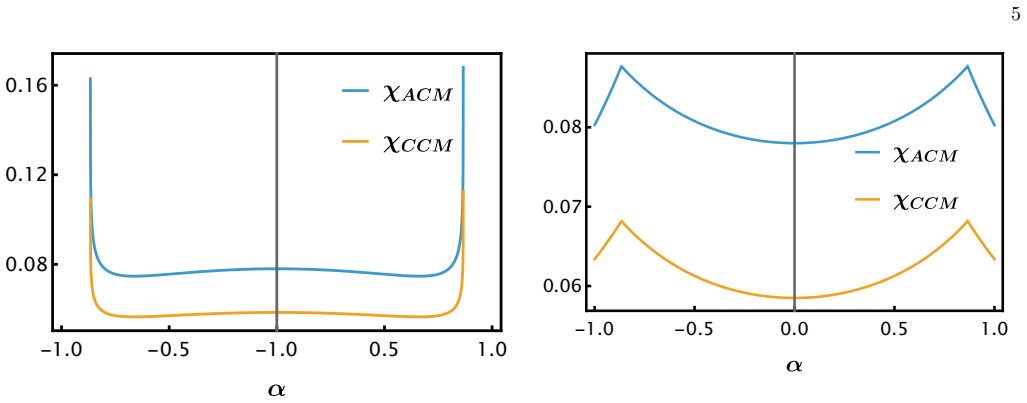
Summary. The manuscript studies a Gross-Neveu-Yukawa field theory for tilted non-Hermitian Dirac fermions in d spatial dimensions near the upper critical dimension d=3. It computes the noninteracting density of states, mean-field susceptibilities for commuting-class-mass (CCM) and anticommuting-class-mass (ACM) orders, and one-loop renormalization-group beta functions for the fermionic velocities, the bosonic velocity, the tilt parameter, and a bosonic velocity anisotropy. The central claim is that both the tilt and the velocity anisotropy become irrelevant near the strongly coupled quantum critical point, so that the fermionic and bosonic velocities flow to a common terminal value and an emergent Yukawa-Lorentz symmetry appears. For CCM order the non-Hermitian velocity remains finite, while for ACM order it flows to zero, restoring Hermiticity.
Significance. If established, the result would extend the known universality of emergent Lorentz symmetry in Hermitian Dirac systems to tilted non-Hermitian Dirac systems, with a concrete and falsifiable prediction for quantum Monte Carlo simulations of non-Hermitian Hubbard-like lattice models. The paper contains a substantive one-loop calculation in Appendix C, with explicit fermionic and bosonic self-energies and renormalization constants obtained from the action rather than fitted to data. The authors also explicitly identify mean-field and RG regimes and give quantitative predictions for the irrelevance of tilt and velocity anisotropy. The main weakness is that the existence and location of the quantum critical point are assumed rather than derived within the manuscript's own equations.
major comments (3)
- [Sec. IV, Eqs. (34)-(37)] The beta functions are computed for a fixed value of the Yukawa coupling g, but the existence of the QCP is not established within the manuscript. The tilt beta function in Eq. (36) is proportional to g^2, so if g flows to zero, the tilt becomes exactly marginal rather than irrelevant and no Yukawa-Lorentz fixed point is reached. The statement after Eq. (37) that the flows of g and lambda are decoupled at leading order and therefore need not be analyzed addresses only the structure of the velocity beta functions, not the fixed-point condition. To make the central claim about behavior at a QCP, the authors need to compute the one-loop beta functions for g and lambda, including vertex renormalization with the non-Hermitian Yukawa vertices, and show that an infrared-attractive fixed point with g* > 0 exists, or explicitly import and adapt the corresponding result from Ref. [11].
- [Appendix C and Figs. 5-6] The velocity-anisotropy case is part of the central claim in the abstract and Sec. IV, but no beta functions are displayed for it. The appendix explicitly derives only the antisymmetric-tilt case; the text states that the velocity-anisotropic results are obtained by the same procedure, and the only additional equation provided is the ACM bosonic-anisotropy beta function in Eq. (C41). Figures 6 and 9 therefore cannot be checked or reproduced without recomputing the self-energies. Please provide the explicit analog of Eqs. (34)-(37) for T = TV_A, or at least the corresponding Z-factors.
- [Eq. (36) and Fig. 5] The claim that the tilt becomes irrelevant hinges on the sign of J(alpha, v_H, v_NH, v_B) - I(alpha, v_H, v_NH, v_B), but the paper does not establish this sign analytically. Figure 5 shows only a single representative trajectory, and the functions in Eqs. (C12) and (C21) contain inverse hyperbolic functions with nontrivial argument structure, so it is not evident from the displayed formulas that beta_alpha/alpha < 0 throughout the allowed subcritical region |alpha|^2 + |beta|^2 < 1 for all velocity parameters. Please provide a sign analysis or a systematic parameter scan to support the claimed universal irrelevance.
minor comments (4)
- [Sec. II, after Eq. (4)] There is a typo in 'respectivrly' in the sentence describing the sublattice exchange symmetry.
- [Eq. (7)] The spectrum for the velocity-anisotropy case uses nested plus-minus signs of different origins; a brief explanation of which sign corresponds to the NH band and which to the anisotropy would improve readability.
- [Appendix C, after Eq. (C8)] The replacement Z dq/q -> 1/epsilon is stated without explanation; a sentence connecting the hard-cutoff divergence to dimensional regularization in the minimal-subtraction scheme would be helpful.
- [Sec. II A] The terms 'type-1' and 'type-2' are used without definition; consider adding a pointer to the tilted Weyl/Dirac literature where these terms are introduced.
Circularity Check
No circular reduction: tilt irrelevance is a computed one-loop beta function, conditional on an assumed but not derived QCP.
full rationale
The paper's central claim is obtained from a self-contained one-loop RG calculation: the beta functions in Eqs. (34)-(37) are computed from the fermion and boson self-energies in Appendix C with no fitted parameters and no data-derived inputs. The tilt beta function, beta_alpha = -alpha n g^2/2 [J - I], follows from the explicitly derived renormalization factor Z_alpha = 1 + (g^2 n/(4 pi)^2 epsilon)(J - I), and the sign is evaluated from the computed integrals and plotted in Figs. 5 and 6; the irrelevance of alpha is therefore a derived result rather than an input. The paper does not compute the flows of the Yukawa and quartic couplings, stating in Sec. IV after Eq. (37) that these flows are decoupled at leading order and that the precise value of g is unimportant for the velocity and tilt equations. This is a genuine limitation: the existence and location of a finite-coupling quantum critical point is assumed rather than demonstrated, so the physical prediction is conditional on that critical point. That is a completeness or correctness caveat, not a circular reduction: no fitted parameter is renamed a prediction, and no conclusion is inserted into the calculation by construction. Citations to the authors' prior work, especially [11] and [15], supply the non-Hermitian model convention and the untilted Yukawa-Lorentz result, but the tilt calculation in the present paper is performed in this paper's own appendices and does not rely on those citations for the beta functions. The assumed-QCP caveat motivates the low score rather than a circularity finding.
Assumptions & free parameters
assumptions (4)
- domain assumption The low-energy physics is described by a Gross-Neveu-Yukawa field theory with Yukawa and Phi^4 couplings marginal at d=3.
- domain assumption The one-loop RG in the epsilon=3-d expansion is reliable at d=2 (epsilon=1).
- domain assumption The non-Hermitian Dirac operator is defined via a mass matrix M that anticommutes with the Hermitian Dirac Hamiltonian, yielding an anti-Hermitian part linear in momentum.
- domain assumption The quantum critical point separating the semimetal and the gapped phase exists, and the analysis is performed on the critical plane mB=0.
Cite this review
Pith. "Pith review of Yukawa-Lorentz Symmetry of Tilted Non-Hermitian Dirac Semimetals at Quantum Criticality." pith.science (2026). https://pith.science/paper/GCN3TTVA
@misc{pith2026241118621,
  author       = {Pith},
  title        = {Pith review of: Yukawa-Lorentz Symmetry of Tilted Non-Hermitian Dirac Semimetals at Quantum Criticality},
  year         = {2026},
  howpublished = {\url{https://pith.science/paper/GCN3TTVA}},
  note         = {Machine review of arXiv:2411.18621}
}
abstract
Dirac materials, hosting linearly dispersing quasiparticles at low energies, exhibit an emergent Lorentz symmetry close to a quantum critical point (QCP) separating semimetallic state from a strongly-coupled gapped insulator or superconductor. This feature appears to be quite robust even in the open Dirac systems coupled to an environment, featuring non-Hermitian (NH) Dirac fermions: close to a strongly coupled QCP, a Yukawa-Lorentz symmetry emerges in terms of a unique terminal velocity for both the fermion and the bosonic order parameter fluctuations, while the system can either retain non-Hermiticity or completely decouple from the environment thus recovering Hermiticity as an emergent phenomenon. We here show that such a Yukawa-Lorentz symmetry can emerge at the quantum criticality even when the NH Dirac Hamiltonian includes a tilt term at the lattice scale. As we demonstrate by performing a leading order $\epsilon=3-d$ expansion close to $d=3$ upper critical dimension of the theory, a tilt term becomes irrelevant close to the QCP separating the NH Dirac semimetal and a gapped (insulating or superconducting) phase. Such a behavior also extends to the case of the linear-in-momentum non-tilt perturbation, introducing the velocity anisotropy for the Dirac quasiparticles, which also becomes irrelevant at the QCP. These predictions can be numerically tested in quantum Monte Carlo lattice simulations of the NH Hubbard-like models hosting low-energy NH tilted Dirac fermions.
Figures


Figures from the paper (6 more)


Reference graph
Works this paper leans on
-
[11]
I. F. Herbut, V. Juriˇ ci´ c, and O. Vafek, Relativistic mott criticality in graphene, Phys. Rev. B 80, 075432 (2009)
work page 2009
-
[15]
V. Juriˇ ci´ c and B. Roy, Yukawa-lorentz symmetry in non- hermitian dirac materials, Communications Physics 7, 169 (2024)
work page 2024
-
[1]
F ermionic propagator We can obtain our fermion propagator noting that the inverse of the propagator is G−1 F (iω, k) = iω − [(vH + vNHM )(Γxkx + Γyky) + αvFT kx]. (A1) In the case of antisymmetric tilt, we obtain (GAS F (iω, k))−1(iω + [(vH + vNHM )(Γ · k) + αvHTASkx]) = −ω2 − v2 Fk2 − α2v2 Hk2 x − 2αvH(vH + vNHM )(Γ · k)TASkx. Again, we carry out a mult...
-
[2]
(A7) After taking the trace of the Green’s function, we use its partial fraction decomposition
Calculation of the density of states To calculate the DOS in terms of the Green’s function, we use ρ(E) = − 1 π lim η→0+ Im {TrGF (iω → E + iη, k)}. (A7) After taking the trace of the Green’s function, we use its partial fraction decomposition. We then apply the analytical continuation, iω → ω + iη, and finally use the Sokhotski-Plemelj theorem for the re...
-
[3]
F ermionic self-energy We first calculate the fermion self-energy, with the corresponding diagram shown in Fig. 4(a), Σ(iν, k) = g2 Z [dω] Z [ddq] [NiGF (iω, q)NiGB(iν − iω, k − q)], (C1) 13 -1.0 -0.5 0.0 0.5 1.0 0.5 1.0 1.5 2.0 FIG. 8. Mean field susceptibilities of the noninteracting NH Dirac Hamiltonian in d = 2 with the velocity-anisotropy term. The s...
-
[4]
Bosonic self-energy We here calculate the bosonic self-energy, with the Feynman diagram shown in Fig. 4(b). To facilitate the calcula- tion, we furthermore take k = kxˆ ex, so that the self-energy reads Π(iν, k) = − g2 2 Z [dω] Z [ddq] Tr [NiGF (iω, q)NiGF (iν + iω, k + q)]. (C25) Using this expression for the bosonic self-energy, we subsequently calculat...
-
[5]
A. H. Castro Neto, F. Guinea, N. M. R. Peres, K. S. Novoselov, and A. K. Geim, The electronic properties of graphene, Rev. Mod. Phys. 81, 109 (2009). 19 0.0 0.5 1.0 0.0 0.5 1.0 FIG. 9. Renormalization-group (RG) flow of the velocity anisotropy ( δvB ), given by Eq. (C41) in the critical plane ( mB = 0) of the Gross-Neveu-Yukawa theory for the quantum-crit...
work page 2009
-
[6]
T. O. Wehling, A. M. Black-Schaffer, and A. V. Balatsky, Dirac materials, Adv. Phys. 63, 1 (2014)
work page 2014
Show all 54 references
-
[7]
N. P. Armitage, E. J. Mele, and A. Vishwanath, Weyl and dirac semimetals in three-dimensional solids, Rev. Mod. Phys. 90, 015001 (2018)
2018
-
[8]
Gonz´ alez, F
J. Gonz´ alez, F. Guinea, and M. A. H. Vozmediano, Non- fermi liquid behavior of electrons in the half-filled honey- comb lattice (a renormalization group approach), Nucl. Phys. B 424, 595 (1994)
1994
-
[9]
Isobe and N
H. Isobe and N. Nagaosa, Theory of a quantum crit- ical phenomenon in a topological insulator: (3+1)- dimensional quantum electrodynamics in solids, Phys. Rev. B 86, 165127 (2012)
2012
-
[10]
Lee, Emergence of supersymmetry at a critical point of a lattice model, Phys
S.-S. Lee, Emergence of supersymmetry at a critical point of a lattice model, Phys. Rev. B 76, 075103 (2007)
2007
-
[12]
B. Roy, V. Juriˇ ci´ c, and I. F. Herbut, Emergent lorentz symmetry near fermionic quantum critical points in two and three dimensions, Journal of High Energy Physics 2016, 18 (2016)
2016
-
[13]
B. Roy, M. P. Kennett, K. Yang, and V. Juriˇ ci´ c, From birefringent electrons to a marginal or non-fermi liquid of relativistic spin-1 /2 fermions: An emergent superuni- versality, Phys. Rev. Lett. 121, 157602 (2018)
2018
-
[14]
Roy and V
B. Roy and V. Juriˇ ci´ c, Relativistic non-fermi liquid from interacting birefringent fermions: A robust superuniver- sality, Phys. Rev. Res. 2, 012047 (2020)
2020
-
[16]
S. A. Murshed and B. Roy, Quantum electrodynamics of non-hermitian dirac fermions, Journal of High Energy Physics 2024, 143 (2024)
2024
-
[17]
S. A. Murshed and B. Roy, Yukawa-lorentz symmetry of interacting non-hermitian birefringent dirac fermions, arXiv preprint arXiv:2407.18250 (2024)
2024 arXiv
-
[18]
A. A. Soluyanov, D. Gresch, Z. Wang, Q. Wu, M. Troyer, X. Dai, and B. A. Bernevig, Type-ii weyl semimetals, Nature 527, 495 (2015)
2015
-
[19]
Reiser and V
P. Reiser and V. Juriˇ ci´ c, Tilted dirac superconductor at quantum criticality: restoration of lorentz symmetry, Journal of High Energy Physics 2024, 181 (2024)
2024
-
[20]
G. E. Volovik, Black hole and hawking radiation by type- ii weyl fermions, JETP Letters 104, 645 (2016)
2016
-
[21]
Nissinen and G
J. Nissinen and G. E. Volovik, Type-iii and iv interacting weyl points, JETP Letters 105, 447 (2017)
2017
-
[22]
S. A. Jafari, Electric field assisted amplification of mag- netic fields in tilted dirac cone systems, Phys. Rev. B 100, 045144 (2019)
2019
-
[23]
Liang and T
L. Liang and T. Ojanen, Curved spacetime theory of in- homogeneous weyl materials, Phys. Rev. Res. 1, 032006 (2019)
2019
-
[24]
Farajollahpour and S
T. Farajollahpour and S. A. Jafari, Synthetic non-abelian gauge fields and gravitomagnetic effects in tilted dirac cone systems, Phys. Rev. Res. 2, 023410 (2020)
2020
-
[25]
De Beule, S
C. De Beule, S. Groenendijk, T. Meng, and T. L. Schmidt, Artificial event horizons in weyl semimetal het- erostructures and their non-equilibrium signatures, Sci- Post Phys. 11, 095 (2021)
2021
-
[26]
G. E. Volovik, Type-ii weyl semimetal versus gravastar, JETP Letters 114, 236 (2021)
2021
-
[27]
Sabsovich, P
D. Sabsovich, P. Wunderlich, V. Fleurov, D. I. Pikulin, R. Ilan, and T. Meng, Hawking fragmentation and hawk- ing attenuation in weyl semimetals, Phys. Rev. Res. 4, 013055 (2022)
2022
-
[28]
K¨ onye, C
V. K¨ onye, C. Morice, D. Chernyavsky, A. G. Moghad- dam, J. van den Brink, and J. van Wezel, Horizon physics of quasi-one-dimensional tilted weyl cones on a lattice, Phys. Rev. Res. 4, 033237 (2022)
2022
-
[29]
K¨ onye, L
V. K¨ onye, L. Mertens, C. Morice, D. Chernyavsky, A. G. Moghaddam, J. van Wezel, and J. van den Brink, Anisotropic optics and gravitational lensing of tilted weyl fermions, Phys. Rev. B 107, L201406 (2023)
2023
-
[30]
Trescher, B
M. Trescher, B. Sbierski, P. W. Brouwer, and E. J. Bergholtz, Quantum transport in dirac materials: Sig- natures of tilted and anisotropic dirac and weyl cones, Phys. Rev. B 91, 115135 (2015). 20
2015
-
[31]
J. P. Carbotte, Dirac cone tilt on interband optical back- ground of type-i and type-ii weyl semimetals, Phys. Rev. B 94, 165111 (2016)
2016
-
[32]
E. C. I. van der Wurff and H. T. C. Stoof, Anisotropic chiral magnetic effect from tilted weyl cones, Phys. Rev. B 96, 121116 (2017)
2017
-
[33]
Rostamzadeh, I
S. Rostamzadeh, I. Adagideli, and M. O. Goerbig, Large enhancement of conductivity in weyl semimetals with tilted cones: Pseudorelativity and linear response, Phys. Rev. B 100, 075438 (2019)
2019
-
[34]
Rodriguez-Lopez, A
P. Rodriguez-Lopez, A. Popescu, I. Fialkovsky, N. Khus- nutdinov, and L. M. Woods, Signatures of complex opti- cal response in casimir interactions of type i and ii weyl semimetals, Communications Materials 1, 14 (2020)
2020
-
[35]
M. A. Mojarro, R. Carrillo-Bastos, and J. A. Maytorena, Optical properties of massive anisotropic tilted dirac sys- tems, Phys. Rev. B 103, 165415 (2021)
2021
-
[36]
Tan, J.-T
C.-Y. Tan, J.-T. Hou, C.-X. Yan, H. Guo, and H.-R. Chang, Signatures of lifshitz transition in the optical con- ductivity of two-dimensional tilted dirac materials, Phys. Rev. B 106, 165404 (2022)
2022
-
[37]
A. Wild, E. Mariani, and M. E. Portnoi, Optical absorp- tion in two-dimensional materials with tilted dirac cones, Phys. Rev. B 105, 205306 (2022)
2022
-
[38]
Rostamzadeh, S
S. Rostamzadeh, S. Tasdemir, M. Sarisaman, S. A. Ja- fari, and M.-O. Goerbig, Tilt-induced vortical response and mixed anomaly in inhomogeneous weyl matter, Phys. Rev. B 107, 075155 (2023)
2023
-
[39]
T. S. Sikkenk and L. Fritz, Interplay of disorder and inter- actions in a system of subcritically tilted and anisotropic three-dimensional weyl fermions, Phys. Rev. B 100, 085121 (2019)
2019
-
[40]
Rostami and V
H. Rostami and V. Juriˇ ci´ c, Probing quantum critical- ity using nonlinear hall effect in a metallic dirac system, Phys. Rev. Res. 2, 013069 (2020)
2020
-
[41]
Y. M. P. Gomes and R. O. Ramos, Tilted dirac cone effects and chiral symmetry breaking in a planar four- fermion model, Phys. Rev. B 104, 245111 (2021)
2021
-
[42]
Y. M. P. Gomes and R. O. Ramos, Superconducting phase transition in planar fermionic models with dirac cone tilting, Phys. Rev. B 107, 125120 (2023)
2023
-
[43]
Liu, W.-H
W. Liu, W.-H. Bian, X.-Z. Chu, and J. Wang, Low- energy critical behavior in two-dimensional tilted semi- dirac semimetals driven by fermion-fermion interactions, arXiv preprint arXiv:2409.07126 (2024)
2024 arXiv
-
[44]
Trescher, B
M. Trescher, B. Sbierski, P. W. Brouwer, and E. J. Bergholtz, Tilted disordered weyl semimetals, Phys. Rev. B 95, 045139 (2017)
2017
-
[45]
T. S. Sikkenk and L. Fritz, Disorder in tilted weyl semimetals from a renormalization group perspective, Phys. Rev. B 96, 155121 (2017)
2017
-
[46]
Yang, J.-R
Z.-K. Yang, J.-R. Wang, and G.-Z. Liu, Effects of dirac cone tilt in a two-dimensional dirac semimetal, Phys. Rev. B 98, 195123 (2018)
2018
-
[47]
Lee and Y.-W
Y.-L. Lee and Y.-W. Lee, Phase diagram of a two- dimensional dirty tilted dirac semimetal, Phys. Rev. B 100, 075156 (2019)
2019
-
[48]
M. O. Goerbig, J.-N. Fuchs, G. Montambaux, and F. Pi´ echon, Tilted anisotropic dirac cones in quinoid- type graphene and α−(BEDT-TTF)2i3, Phys. Rev. B78, 045415 (2008)
2008
-
[49]
S. P. Mukherjee and J. P. Carbotte, Imaginary part of hall conductivity in a tilted doped weyl semimetal with both broken time-reversal and inversion symmetry, Phys. Rev. B 97, 035144 (2018)
2018
-
[50]
Nag and S
T. Nag and S. Nandy, Magneto-transport phenomena of type-i multi-weyl semimetals in co-planar setups, Journal of Physics: Condensed Matter 33, 075504 (2020)
2020
-
[51]
F. Qin, R. Shen, and C. H. Lee, Nonlinear hall effects with an exceptional ring, arXiv preprint arXiv:2411.06509 (2024)
2024 arXiv
-
[52]
X.-J. Yu, Z. Pan, L. Xu, and Z.-X. Li, Non-hermitian strongly interacting dirac fermions, Phys. Rev. Lett.132, 116503 (2024)
2024
-
[53]
Zinn-Justin, Quantum Field Theory and Critical Phe- nomena (Oxford University Press, 2002)
J. Zinn-Justin, Quantum Field Theory and Critical Phe- nomena (Oxford University Press, 2002)
2002
-
[54]
M. E. Peskin and D. V. Schroeder, An introduction to quantum field theory (CRC Press, 2019)
2019
Reviewed August 12, 2026 · model on record in the stance chip above.
Discussion (0). Continue with ORCID to comment.