REVIEW 4 major objections 5 minor 62 references
Improving the Reproducibility of Deep Learning Software: An Initial Investigation through a Case Study Analysis
T0 review · 4 major / 5 minor · reviewed 2026-08-15 · deepseek-v4-flash
Pith's one-line read A case study shows that three extra practices make deep learning models reproducible in practice.
desk verdict A genuine case-study contribution with honest disclosure, but the headline accuracy gains are built on single runs and post-hoc recipe selection, so the causal claim needs more support. read the letter →
The pith
A machine-rendered reading of the paper's core claim, the machinery that carries it, and where it could break.
The reading
What carries the argument
The central object is TRUNK, the Tree-Based Unidirectional Neural Network, a hierarchical computer-vision model structured as a tree of small networks whose exact tree structure is built from the data using a 'grouping volatility' threshold. The key mechanism is the sensitivity analysis over this grouping-volatility hyperparameter: it reveals that small changes in the threshold drastically change both the tree geometry and the final accuracy, so an investigator can adjust for non-determinism and recover the published structure and performance. The manifest listing only primary GPU-compatible dependencies and the PyYAML configuration files disclosing the exact training and data-processing pipeline are the other two load-bearing mechanisms; together they turn an un-reproducible repository into one whose environment, pipeline, and hyperparameter choices are inspectable and adjustable.
What would settle it
Run the same three-step procedure on a diverse set of published deep learning repositories — for example, a transformer, a GAN, and a medical-imaging model — and measure how often the extended guidelines raise the reproduced accuracy closer to the published values relative to the original guidelines; if the gains are small or inconsistent outside hierarchical computer-vision models, the claimed general effectiveness of the extensions is falsified.
Extended reading notes
Core claim
The central claim is that the current reproducibility guidelines for deep learning software, extended with (1) a manifest listing only primary GPU-compatible dependencies, (2) full disclosure of the data-processing and training pipeline, and (3) sensitivity analysis of hyperparameters, improve the reproducibility of deep learning software. The paper demonstrates this by taking the Tree-Based Unidirectional Neural Network (TRUNK), a hierarchical classifier whose structure adapts to the dataset, and attempting to reproduce its published results from source code alone. It found that simply following the provided scripts and official manifests failed: the EMNIST accuracy reproduced at 63.62% versus the published 85.77%, and CIFAR-10 could not be trained at all because hyperparameters and pipeline details were missing. The authors then re-implemented the tree-building component, fixed the manifest, documented the pipeline in configuration files, and conducted a sensitivity analysis over the grouping-volatility hyperparameter. With these changes, EMNIST accuracy rose to 84.30% and CIFAR-10 accuracy rose from 67.61% to 81.53% across a series of revised training recipes, coming much closer to the original 85.77% and 91.99% respectively. The paper interprets these numbers as evidence that the extended guidelines diagnose and mitigate the specific reproducibility failures exposed by this case study.
Load-bearing premise
The central assumption is that TRUNK is a representative deep learning system, so lessons from reproducing it transfer to other models, pipelines, and domains; the paper itself notes this external threat, and the ground truth for "reproduced" is the original authors' own reported numbers and weights.
Editorial extensions
If this is right
- If these extended guidelines are adopted, published deep learning repositories would carry a minimal GPU-compatible manifest, a configuration-file description of the training and data-processing pipeline, and a sensitivity analysis for sensitive hyperparameters, making re-training a deterministic expectation rather than a research project.
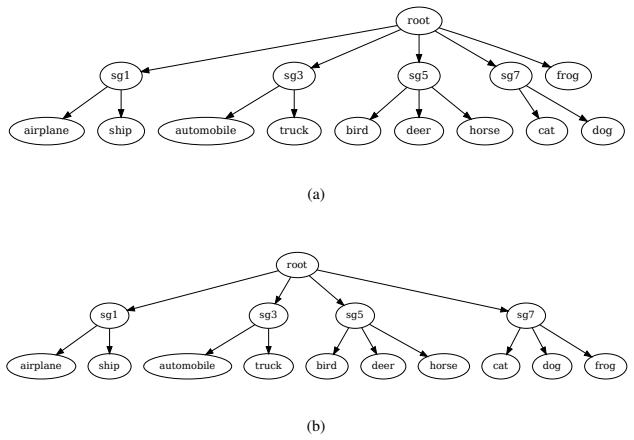
- For hierarchical or adaptive neural networks like TRUNK, reproducibility requires disclosing not just the trained weights and training scripts but the structure-building algorithm itself, since the tree geometry is part of the model's behavior.
- The roughly 14% accuracy gain from revising the CIFAR-10 training recipe shows that undisclosed pipeline choices cause errors of the same magnitude as algorithmic novelty, so documenting them is as important as sharing source code.
- Sensitivity analysis of a single sensitive hyperparameter can serve as a practical substitute for full determinism: it shows which parameter to nudge when hardware- or software-induced randomness changes the result.
- The paper's checklist, combining existing best practices with the three extensions, is concrete enough to be used as a template for other deep learning reproducibility studies.
Reading between the lines
- The same methodology could be tested prospectively on a randomly chosen set of published deep learning models to see whether the three extensions reliably predict which repositories reproduce; the paper only demonstrates them retrospectively on one model chosen for its complexity.
- Because the sensitivity analysis targeted a single hyperparameter, grouping volatility, one might infer that other adaptive architectures harbor similar high-leverage parameters; identifying such parameters could be systematized into a reproducibility audit routine.
- The finding that a 0.03 change in grouping volatility swings accuracy by up to 7% suggests that published accuracy claims for such models should be accompanied by a confidence interval over the sensitive parameter, not just a single number.
- The co-authorship of a TRUNK author means the investigation had privileged access to the intended pipeline; a non-affiliated team attempting the same reproduction would test whether the documented recipe is sufficient on its own, which is the stronger version of the reproducibility claim.
Signed reviews
Editorial analysis
A structured set of objections, weighed in public.
Referee Report
Summary. The paper reports a case-study investigation of reproducibility practices for deep learning software, using the Tree-Based Unidirectional Neural Network (TRUNK) as the target system. The authors replicate the original environment, verify pre-trained weights, attempt to retrain TRUNK on EMNIST, CIFAR-10, and SVHN, and then introduce modifications: a minimal GPU-compatible dependency manifest, an end-to-end training implementation, a sensitivity analysis of the grouping-volatility hyperparameter, and explicit configuration files for the data-processing and training pipelines. They report accuracy improvements on EMNIST (63.62% to 84.30%) and CIFAR-10 (67.61% under TR1 to 81.53% under TR6) and conclude that the current reproducibility guidelines, extended with their three additions, improve the reproducibility of deep learning software. The paper also discloses that one co-author is a principal author of TRUNK and that the authors collaborated with that author during the investigation.
Significance. If the empirical claims were robust, the paper would be a useful contribution to the software-engineering reproducibility literature: it ships source code and configuration files, documents environment-setup failures and fixes, provides a sensitivity analysis for a non-standard hierarchical architecture, and explicitly discloses positionality. The suggested extensions—minimal GPU-compatible manifests, sensitivity analysis, and transparent training/data-processing pipelines—are reasonable and actionable. However, the quantitative evidence for the central claim is currently fragile because all reported accuracy numbers come from single runs without variance estimates, the CIFAR-10 improvement is based on post hoc selection among several recipes, and the SVHN results show an unexplained accuracy drop after the proposed changes. The significance of the paper therefore depends on whether the authors can provide multi-seed evidence and reconcile the inconsistent SVHN numbers.
major comments (4)
- [§4.5, Figure 8, Table 7] The claim that the proposed pipeline changes improve accuracy is not supported by the reported measurements, because every accuracy number in Table 7 is a single run and the recipes were selected after observing results. Section 4.5 and Figure 8 show that two runs with the same seed, code, and pipeline on different A100 GPUs differed by 1.81 percentage points (81.53% versus 79.72%), which is the same order as several adjacent differences in Table 7. Without multiple seeds, confidence intervals, or a pre-registered recipe-selection rule, the 13.92-point TR1-to-TR6 improvement cannot be attributed to the guideline changes rather than to random variation and best-of-many selection. The authors should report per-recipe variance across seeds and either pre-specify the recipe search or frame the comparison as exploratory.
- [Table 6, §4.4, SVHN results] The SVHN results contradict the paper's narrative. Table 5 reports 98.22% accuracy after training with the original scripts, while Table 6 reports 90.24% after the supposedly improved end-to-end pipeline, and the original pre-trained weights give 96.75%. This is an unexplained 8-point drop relative to the original scripts and a 6.5-point drop relative to the pre-trained weights, yet Section 4.4 discusses only EMNIST and CIFAR-10 and never addresses SVHN. The authors need to explain why the enhanced, more transparent pipeline performs worse on SVHN, or the conclusion that these practices improve reproducibility is directly undermined.
- [§4.3, §4.4, Table 6] The EMNIST comparison is not an apples-to-apples test of the proposed guidelines. Section 4.3 reports 63.62% using the original scripts with a pre-defined tree, while Section 4.4 reports 84.30% after integrating the tree-building code; however, Section 4.4 also states that the reproduced tree structure still differs from the original (Figure 5). Because the paper itself acknowledges that structural reproducibility was not achieved, reporting only the accuracy gain overstates what the end-to-end implementation contributes to reproducibility. The authors should report structural agreement explicitly and separate the effects of the new implementation from the effects of the guideline extensions.
- [§3.6, §4.2] The ground truth used to judge reproducibility—the pre-trained weights and reported accuracies from TRUNK [15,16]—was produced by the same research group that includes a co-author of this paper, and Section 3.6 discloses active collaboration with the TRUNK principal author during the study. This is an independence risk for the verification claims in Section 4.2, because the 'original results' being reproduced are not independent of the investigating team. The authors should either obtain an independent external replication of the pre-trained-weight verification or explicitly bound the conclusions as a self-study, noting that the case-study findings may reflect insider knowledge rather than the sufficiency of the published guidelines.
minor comments (5)
- [Listing 3, Listing 4] The YAML listings appear corrupted in the manuscript text (for example, 'tr an sf or m' and 'o pt im ize r'), which makes the configuration examples difficult to read; please ensure the final PDF renders them with proper spacing and indentation.
- [Table 5] The entry '–.–' for CIFAR-10 in Table 5 should be explicitly explained in the caption, indicating that training was not completed because hyperparameters were missing, rather than leaving the notation undeclared.
- [§4.5] The sentence 'the same seed, training regime, and data processing pipeline were used from for Training Regime 6' contains a typo ('from for') and should be corrected to 'used for Training Regime 6'.
- [§4.6.2] The text refers to 'PyY AML' configuration files; this appears to be a typo for 'PyYAML', which should be fixed throughout the section.
- [Table 7] The 'RA.' abbreviation for Random Augmentation appears with an inconsistent period, and the column ordering in the table makes it hard to map the checkmarks to the abbreviation list; please reformat the header and legend for clarity.
Circularity Check
No significant circularity: the paper's quantitative results are empirical measurements from running the case study, not consequences of its guideline definitions or self-citations.
full rationale
The paper makes no first-principles derivation of its results. Its central claim is that certain reproducibility practices (primary GPU-compatible dependency manifest, disclosed data-processing/training pipeline, sensitivity analysis) help diagnose and improve reproducibility, and this claim is supported by executed experiments (Tables 4–7, Figures 6–11). These accuracies are measurements produced by training and evaluating the TRUNK network, not quantities forced by the definitions of the guidelines. The self-referential relationship is explicitly disclosed in Section 3.6: 'One of the contributors to this paper also served as the principal author of the Tree-Based Unidirectional Neural Network (TRUNK)', and the authors state they 'collaborated with this author to gain insights and validate findings'. This is a real independence concern, but it is not circularity because the ground-truth comparison is made by running the provided pre-trained weights (Section 4.2: 'We found that the pre-trained weights correspond to the results reported in the paper'), which is an independently executable artifact rather than a fitted value of this paper. Likewise, the paper's own disclosures undermine any reading that the results are true by construction: Section 4.3 admits 'we were unable to achieve end-to-end reproduction of the training of the TRUNK network', Table 6 shows SVHN accuracy dropping from 98.22% to 90.24% after the 'improved' pipeline, and Section 6 notes 'the selected case study, TRUNK, may not represent all DL algorithms'. These are validity and generalizability limitations, not evidence that any prediction reduces to its input. The main weaknesses—single-run measurements, post-hoc selection of training recipe TR6, and the non-independent provenance of the case study and its reported baseline—are correctness and independence risks, which fall outside the circularity criteria defined for this analysis. No circular step can be exhibited via the paper's own equations or definitions; therefore the appropriate finding is no significant circularity.
Assumptions & free parameters
free parameters (2)
- CIFAR-10 training recipe TR6 (from Table 7) =
LR 2.36e-4, BS 500, GV 0.88, CutOut + RandomAug, acc 81.53%
- Optimal grouping volatility for CIFAR-10 =
1.02 within sweep 0.60 to 1.20 in steps of 0.03
assumptions (4)
- domain assumption Accuracy on a held-out test set is a valid measure of successful reproduction of a deep learning model.
- domain assumption The pre-trained weights and reported accuracies from the original TRUNK papers [15,16] are correct and constitute the benchmark for a successful reproduction.
- domain assumption TRUNK is representative of deep learning software, so conclusions from this single case study generalize to other DL models.
- domain assumption Grouping volatility is the dominant hyperparameter controlling TRUNK's tree structure; other hyperparameters are held constant during the sensitivity analysis.
Cite this review
Pith. "Pith review of Improving the Reproducibility of Deep Learning Software: An Initial Investigation through a Case Study Analysis." pith.science (2026). https://pith.science/paper/RBPC44SM
@misc{pith2026250503165,
  author       = {Pith},
  title        = {Pith review of: Improving the Reproducibility of Deep Learning Software: An Initial Investigation through a Case Study Analysis},
  year         = {2026},
  howpublished = {\url{https://pith.science/paper/RBPC44SM}},
  note         = {Machine review of arXiv:2505.03165}
}
read the original abstract
The field of deep learning has witnessed significant breakthroughs, spanning various applications, and fundamentally transforming current software capabilities. However, alongside these advancements, there have been increasing concerns about reproducing the results of these deep learning methods. This is significant because reproducibility is the foundation of reliability and validity in software development, particularly in the rapidly evolving domain of deep learning. The difficulty of reproducibility may arise due to several reasons, including having differences from the original execution environment, incompatible software libraries, proprietary data and source code, lack of transparency, and the stochastic nature in some software. A study conducted by the Nature journal reveals that more than 70% of researchers failed to reproduce other researchers experiments and over 50% failed to reproduce their own experiments. Irreproducibility of deep learning poses significant challenges for researchers and practitioners. To address these concerns, this paper presents a systematic approach at analyzing and improving the reproducibility of deep learning models by demonstrating these guidelines using a case study. We illustrate the patterns and anti-patterns involved with these guidelines for improving the reproducibility of deep learning models. These guidelines encompass establishing a methodology to replicate the original software environment, implementing end-to-end training and testing algorithms, disclosing architectural designs, and enhancing transparency in data processing and training pipelines. We also conduct a sensitivity analysis to understand the model performance across diverse conditions. By implementing these strategies, we aim to bridge the gap between research and practice, so that innovations in deep learning can be effectively reproduced and deployed within software.
Figures


Figures from the paper (10 more)




Reference graph
Works this paper leans on
-
[1]
Challenges and practices of deep learning model reengi- neering: A case study on computer vision,
W. Jiang, V . Banna, N. Vivek, A. Goel, N. Synovic, G. K. Thiruvathukal, and J. C. Davis, “Challenges and practices of deep learning model reengi- neering: A case study on computer vision,”Empirical Software Engineer- ing, vol. 29, no. 6, pp. 142, 2024. Springer
work page 2024
-
[2]
A Partial Replication of MaskFormer in TensorFlow on TPUs for the TensorFlow Model Garden
V . Purohit, W. Jiang, A. R. Ravikiran, J. C. Davis, A partial replication of maskformer in tensorflow on tpus for the tensorflow model garden (2024). arXiv:2404.18801
work page Pith review arXiv 2024
-
[3]
Hutson, Missing data hinder replication of artificial intelligence studies
M. Hutson, Missing data hinder replication of artificial intelligence studies. URL https : / / www.science.org / content / article / missing - data - hinder - replication - artificial - intelligence - studies
- [4]
-
[5]
N. Artrith, K. T. Butler, F.-X. Coudert, S. Han, O. Isayev, A. Jain, A. Walsh, Best practices in machine learning for chemistry (2021). URL https://www .nature.com/articles/s41557- 021- 00716- z#citeas
work page 2021
-
[6]
B. Chen, M. Wen, Y . Shi, D. Lin, G. K. Rajbahadur, Z. M. Jiang, To- wards training reproducible deep learning models, CoRR abs/2202.02326 (2022). arXiv:2202.02326. URL https://arxiv.org/abs/2202.02326
work page Pith review arXiv 2022
-
[7]
Haibe-Kains, G
B. Haibe-Kains, G. A. Adam, A. Hosny, F. Khodakarami, T. Shrad- dha, R. Kusko, S.-A. Sansone, W. Tong, R. D. Wolfinger, C. E. Mason, W. Jones, J. Dopazo, C. Furlanello, L. Waldron, B. Wang, C. McIn- tosh, A. Goldenberg, A. Kundaje, C. S. Greene, T. Broderick, M. M. Hoffman, J. T. Leek, K. Korthauer, W. Huber, A. Brazma, J. Pineau, R. Tibshirani, T. Hastie...
2020
- [8]
Show all 62 references
-
[9]
Pineau, P
J. Pineau, P. Vincent-Lamarre, K. Sinha, V . Larivi `ere, A. Beygelzimer, F. d’Alch´e-Buc, E. B. Fox, H. Larochelle, Improving reproducibility in machine learning research (A report from the neurips 2019 reproducibility program), CoRR abs/2003.12206 (2020). arXiv:2003.12206. U...
2020 arXiv
-
[10]
Semmelrock, S
H. Semmelrock, S. Kopeinik, D. Theiler, T. Ross-Hellauer, D. Kowald, Reproducibility in machine learning-driven research (2023). arXiv: 2307.10320
2023 arXiv
-
[11]
Baker, 1,500 scientists lift the lid on reproducibility (2016)
M. Baker, 1,500 scientists lift the lid on reproducibility (2016). URL https://www.nature.com/articles/533452a
2016
-
[12]
Gibney, Could machine learning fuel a reproducibility crisis in sci- ence? (2022)
E. Gibney, Could machine learning fuel a reproducibility crisis in sci- ence? (2022). URL https://www.nature.com/articles/d41586-022-02035-w
2022
-
[13]
O. E. Gundersen, S. Kjensmo, State of the art: Reproducibility in artifi- cial intelligence, Proceedings of the AAAI Conference on Artificial Intel- ligence 32 (1) (Apr. 2018). doi:10.1609/aaai.v32i1.11503. URL https : / / ojs.aaai.org / index.php / AAAI / article / view / 11503
2018 doi
-
[14]
Bouthillier, C
X. Bouthillier, C. Laurent, P. Vincent, Unreproducible research is reproducible, in: K. Chaudhuri, R. Salakhutdinov (Eds.), Proceedings of the 36th International Conference on Machine Learning, V ol. 97 of Proceedings of Machine Learning Research, PMLR, 2019, pp. 725–734. URL ...
2019
-
[15]
A. Goel, S. Aghajanzadeh, C. Tung, S.-H. Chen, G. K. Thiruvathukal, Y .- H. Lu, Modular Neural Networks for Low-Power Image Classification on Embedded Devices, ACM Transactions on Design Automation of Elec- tronic Systems 26 (1) (2020) 1:1–1:35. doi:10.1145/3408062. URL https:...
2020 doi
-
[16]
A. Goel, C. Tung, N. Eliopoulos, G. K. Thiruvathukal, A. Wang, Y .- H. Lu, J. C. Davis, Tree-based unidirectional neural networks for low- power computer vision, IEEE Design & Test 40 (3) (2023) 53–61. doi: 10.1109/MDAT.2022.3217016
2023
-
[17]
Reusing deep learning models: Challenges and di- rections in software engineering,
J. C. Davis, P. Jajal, W. Jiang, T. R. Schorlemmer, N. Synovic, and G. K. Thiruvathukal, “Reusing deep learning models: Challenges and di- rections in software engineering,” in Proceedings of the 2023 IEEE John Vincent Atanasoff International Symposium on Modern Computing (JVA...
2023
-
[18]
Frakes, K
W. Frakes, K. Kang, Software reuse research: status and future, IEEE Transactions on Software Engineering 31 (7) (2005) 529–536. doi: 10.1109/TSE.2005.85
2005 doi
-
[19]
C. W. Krueger, Software reuse, ACM Comput. Surv. 24 (2) (1992) 131–183. doi:10.1145/130844.130856. URL https://doi.org/10.1145/130844.130856
1992
-
[20]
Amershi, A
S. Amershi, A. Begel, C. Bird, R. DeLine, H. Gall, E. Kamar, N. Nagap- pan, B. Nushi, T. Zimmermann, Software engineering for machine learn- ing: a case study, in: Proceedings of the 41st International Conference on Software Engineering: Software Engineering in Practice, ICSE-...
2019
-
[21]
S. S. Alahmari, D. B. Goldgof, P. R. Mouton, L. O. Hall, Challenges for the repeatability of deep learning models, IEEE Access 8 (2020) 211860– 211868. doi:10.1109/ACCESS.2020.3039833
2020
-
[22]
Karpathy, Software 2.0 (2017)
A. Karpathy, Software 2.0 (2017). URL https : / / karpathy .medium.com / software - 2 - 0 - a64152b37c35
2017
-
[23]
Pouchard, Y
L. Pouchard, Y . Lin, H. Van Dam, Replicating machine learning experi- ments in materials science (2020). arXiv:10.3233/APC200105
2020 doi
-
[24]
Ahmed, J
H. Ahmed, J. Lofstead, Managing randomness to enable reproducible machine learning, in: Proceedings of the 5th International Workshop on Practical Reproducible Evaluation of Computer Systems, P-RECS ’22, Association for Computing Machinery, New York, NY , USA, 2022, p. 15–20. ...
2022
-
[25]
Antunes, D
B. Antunes, D. R. C. Hill, Reproducibility, energy e fficiency and per- formance of pseudorandom number generators in machine learning: a comparative study of python, numpy, tensorflow, and pytorch implemen- tations (2024). arXiv:2401.17345
2024 arXiv
-
[26]
URL https : / / docs.conda.io / projects / conda / en / latest / user-guide/getting-started .html
Anaconda, Getting started with conda. URL https : / / docs.conda.io / projects / conda / en / latest / user-guide/getting-started .html
-
[27]
URL https://www.docker.com/
Docker, Docker (2013). URL https://www.docker.com/
2013
-
[28]
Boettiger, An introduction to docker for reproducible research, SIGOPS Oper
C. Boettiger, An introduction to docker for reproducible research, SIGOPS Oper. Syst. Rev. 49 (1) (2015) 71–79. doi : 10.1145 / 2723872.2723882. URL https://doi.org/10.1145/2723872.2723882
2015
-
[29]
Ocean, Code ocean
C. Ocean, Code ocean. URL https://codeocean.com/
-
[30]
URL https://elifesciences .org/labs/bdbeac92/gigantum- a- simple- way- to- create- and- share- reproducible- data- science-and-research
Gigantum, Gigantum – a simple way to create and share reproducible data science and research (2018). URL https://elifesciences .org/labs/bdbeac92/gigantum- a- simple- way- to- create- and- share- reproducible- data- science-and-research
2018
-
[31]
URL https://colab.research.google.com/
Google, Colab research. URL https://colab.research.google.com/
-
[32]
H. V . Pham, S. Quan, J. Wang, T. Lutellier, J. Rosenthal, L. Tan, Y . Yu, N. Nagappan, Problems and opportunities in training deep learning soft- ware systems: An analysis of variance (2020)
2020
-
[33]
URL https : / / docs.nvidia.com / deeplearning / performance / dl-performance-matrix-multiplication/index .html
NVIDIA, Matrix multiplication background user’s guide (2023). URL https : / / docs.nvidia.com / deeplearning / performance / dl-performance-matrix-multiplication/index .html
2023
-
[34]
URL https : / / pytorch .org / docs / stable / notes / randomness.html
PyTorch, Reproducibility. URL https : / / pytorch .org / docs / stable / notes / randomness.html
-
[35]
Goldberg, What every computer scientist should know about floating- point arithmetic, ACM Comput
D. Goldberg, What every computer scientist should know about floating- point arithmetic, ACM Comput. Surv. 23 (1) (1991) 5–48.doi:10.1145/ 103162.103163. URL https://doi.org/10.1145/103162.103163
1991
-
[36]
Stojnic, Ml code completeness checklist (2020)
R. Stojnic, Ml code completeness checklist (2020). URL https : / / medium .com / paperswithcode / ml - code - completeness-checklist-e9127b168501 15
2020
-
[37]
Matsubara, torchdistill: A modular, configuration-driven framework for knowledge distillation, CoRR abs /2011.12913 (2020)
Y . Matsubara, torchdistill: A modular, configuration-driven framework for knowledge distillation, CoRR abs /2011.12913 (2020). arXiv : 2011.12913. URL https://arxiv.org/abs/2011.12913
2020 arXiv
-
[38]
Krizhevsky, I
A. Krizhevsky, I. Sutskever, G. E. Hinton, Imagenet classification with deep convolutional neural networks, Commun. ACM 60 (6) (2017) 84–90. doi:10.1145/3065386. URL https://doi.org/10.1145/3065386
2017 doi
-
[39]
OpenAI, A. Josh, A. Steven, Gpt-4 technical report (2024). arXiv: 2303.08774
2024 arXiv
-
[40]
Hamblen, Update: Chatgpt runs 10k nvidia training gpus with poten- tial for thousands more (2023)
M. Hamblen, Update: Chatgpt runs 10k nvidia training gpus with poten- tial for thousands more (2023). URL https://www .fierceelectronics.com/sensors/chatgpt- runs-10k-nvidia-training-gpus-potential-thousands-more
2023
-
[41]
Singh, U
S. Singh, U. Ahuja, M. Kumar, K. Kumar, M. Sachdeva, Face mask detec- tion using YOLOv3 and faster R-CNN models: COVID-19 environment, Multimedia Tools and Applications 80 (13) (2021) 19753–19768
2021
-
[42]
D. Maji, S. Nagori, M. Mathew, D. Poddar, Yolo-pose: Enhancing yolo for multi person pose estimation using object keypoint similarity loss (2022). arXiv:2204.06806
2022 arXiv
-
[43]
Cordts, M
M. Cordts, M. Omran, S. Ramos, T. Rehfeld, M. Enzweiler, R. Benen- son, U. Franke, S. Roth, B. Schiele, The cityscapes dataset for seman- tic urban scene understanding, CoRR abs /1604.01685 (2016). arXiv: 1604.01685. URL http://arxiv.org/abs/1604.01685
2016 arXiv
-
[44]
X. Zhu, M. Bain, B-cnn: branch convolutional neural network for hierar- chical classification, arXiv preprint arXiv:1709.09890 (2017)
2017 arXiv
-
[45]
Z. Yan, H. Zhang, R. Piramuthu, V . Jagadeesh, D. DeCoste, W. Di, Y . Yu, Hd-cnn: Hierarchical deep convolutional neural networks for large scale visual recognition, in: Proceedings of the IEEE International Conference on Computer Vision (ICCV), 2015
2015
-
[46]
D. Roy, P. Panda, K. Roy, Tree-CNN: A Hierarchical Deep Convolutional Neural Network for Incremental Learning, arXiv:1802.05800 [cs, eess, stat]ArXiv: 1802.05800 (Feb. 2018). URL http://arxiv.org/abs/1802.05800
2018 arXiv
-
[47]
Simonyan, A
K. Simonyan, A. Zisserman, Very Deep Convolutional Networks for Large-Scale Image Recognition, arXiv:1409.1556 [cs]ArXiv: 1409.1556 (Sep. 2014). URL http://arxiv.org/abs/1409.1556
2014 arXiv
-
[48]
Cohen, S
G. Cohen, S. Afshar, J. Tapson, A. van Schaik, EMNIST: an extension of MNIST to handwritten letters (Feb. 2017). URL https://arxiv.org/abs/1702.05373v2
2017 arXiv
-
[49]
Krizhevsky, Learning multiple layers of features from tiny images, Tech
A. Krizhevsky, Learning multiple layers of features from tiny images, Tech. rep., University of Toronto (2009). URL https://www .cs.toronto.edu/~kriz/learning- features- 2009-TR.pdf
2009
-
[50]
Netzer, T
Y . Netzer, T. Wang, A. Coates, A. Bissacco, B. Wu, A. Y . Ng, Reading digits in natural images with unsupervised feature learning (2011)
2011
-
[51]
K. He, X. Zhang, S. Ren, J. Sun, Deep Residual Learning for Image Recognition, arXiv:1512.03385 [cs]ArXiv: 1512.03385 (Dec. 2015). URL http://arxiv.org/abs/1512.03385
2015 arXiv
-
[52]
Krizhevsky, I
A. Krizhevsky, I. Sutskever, G. E. Hinton, ImageNet Classification with Deep Convolutional Neural Networks, Advances in Neural Information Processing Systems 25 (2012) 1097–1105. URL https : / / proceedings.neurips.cc / paper / 2012 / hash / c399862d3b9d6b76c8436e924a68c45b-Ab...
2012
-
[53]
J. L. Ba, J. R. Kiros, G. E. Hinton, Layer normalization (2016). arXiv: 1607.06450
2016 arXiv
-
[54]
Touvron, M
H. Touvron, M. Cord, H. J ´egou, Deit iii: Revenge of the vit (2022). arXiv:2204.07118
2022 arXiv
-
[55]
Steiner, A
A. Steiner, A. Kolesnikov, X. Zhai, R. Wightman, J. Uszkoreit, L. Beyer, How to train your vit? data, augmentation, and regularization in vision transformers (2022). arXiv:2106.10270
2022 arXiv
-
[56]
URL https://github.com/kuangliu/pytorch-cifar
kuangliu, Train cifar10 with pytorch (2020). URL https://github.com/kuangliu/pytorch-cifar
2020
-
[57]
Io ffe, C
S. Io ffe, C. Szegedy, Batch normalization: Accelerating deep network training by reducing internal covariate shift, CoRR abs /1502.03167 (2015). arXiv:1502.03167. URL http://arxiv.org/abs/1502.03167
2015 arXiv
-
[58]
E. D. Cubuk, B. Zoph, J. Shlens, Q. V . Le, Randaugment: Practi- cal automated data augmentation with a reduced search space (2019). arXiv:1909.13719
2019 arXiv
-
[59]
DeVries, G
T. DeVries, G. W. Taylor, Improved regularization of convolutional neural networks with cutout, arXiv preprint arXiv:1708.04552 (2017)
2017 arXiv
-
[60]
URL https://pip.pypa.io/en/stable/getting-started/
PyPI, pip documentation. URL https://pip.pypa.io/en/stable/getting-started/
-
[61]
A. G. Howard, M. Zhu, B. Chen, D. Kalenichenko, W. Wang, T. Weyand, M. Andreetto, H. Adam, MobileNets: E fficient Convolutional Neural Networks for Mobile Vision Applications, arXiv:1704.04861 [cs]ArXiv: 1704.04861 (Apr. 2017). URL http://arxiv.org/abs/1704.04861
2017 arXiv
-
[62]
Oquab, T
M. Oquab, T. Darcet, T. Moutakanni, H. V o, M. Szafraniec, V . Khali- dov, P. Fernandez, D. Haziza, F. Massa, A. El-Nouby, M. Assran, N. Bal- las, W. Galuba, R. Howes, P.-Y . Huang, S.-W. Li, I. Misra, M. Rabbat, V . Sharma, G. Synnaeve, H. Xu, H. Jegou, J. Mairal, P. Labatut,...
2023 arXiv
Reviewed August 15, 2026 · model on record in the stance chip above.
Discussion (0). Continue with ORCID to comment.