REVIEW 4 major objections 4 minor 81 references
Controlling the morphologies and dynamics in three-dimensional tissues
T0 review · 4 major / 4 minor · reviewed 2026-08-15 · deepseek-v4-flash
Pith's one-line read In a minimal three-dimensional active tissue model, cell elasticity and size polydispersity select among liquid, viscosity-saturation, glass, and crystal phases, with the viscosity-saturation phase requiring active self-propulsion that…
desk verdict Solid 3D phase-diagram simulation study with a real overclaim about FDT that needs fixing before acceptance. read the letter →
The pith
A machine-rendered reading of the paper's core claim, the machinery that carries it, and where it could break.
The reading
What carries the argument
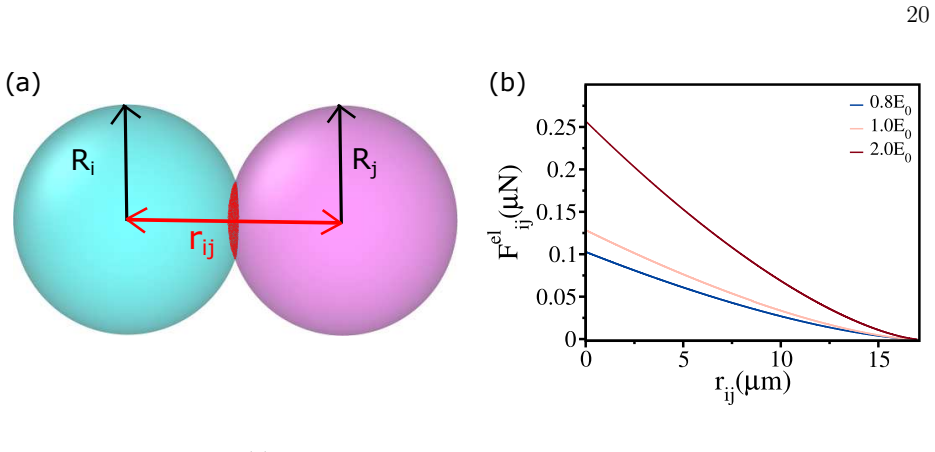
The machinery is a minimal particle model: each cell is a soft deformable sphere interacting through a short-range Hertz repulsion $F_{ij}^{\rm el} \propto h_{ij}^{3/2}$, where $h_{ij}$ is the overlap of two radii; motion follows the overdamped equation $\dot{\mathbf r}_i = \mathbf F_i/\mu_i + \mu \mathbf W_i(t)$, with $\mu_i$ a size-dependent friction and $\mu$ the strength of active uncorrelated white noise. Because $\mu$ and $\mu_i$ are not linked by any fluctuation-dissipation relation, the system is genuinely out of equilibrium. The observable that defines the VS regime is an effective viscosity $\eta_{\rm eff}$ computed from a Green-Kubo-like integral of the stress autocorrelation (Eq. 4), and relaxation times from the self-intermediate scattering function; VFT fits identify $\phi_S$, and a Voronoi-based free-volume calculation in the SI shows that $\phi_{\rm free}$ saturates beyond $\phi_S$, which is the mechanism offered for viscosity saturation.
What would settle it
Simulate the same model under a steady shear flow at $E=E_0$, $\Sigma=8.5\%$, and $\phi>\phi_S$ and measure the shear stress divided by strain rate; if the true shear viscosity keeps rising past $\phi_S$ while Eq. (4) plateaus, the VS phase is an artifact of the proxy.
Extended reading notes
Core claim
The central discovery, stated on the paper's own terms, is that a purely athermal active model with Hertz repulsion and white-noise self-propulsion generates a phase diagram in the $(E,\Sigma)$ plane with four regimes: fluid, viscosity-saturation, glass, and crystal. The viscosity-saturation regime is the novel piece: for intermediate cell elasticity ($E$ around $E_0 = 10^{-3}$ MPa) and modest polydispersity, the effective viscosity $\eta_{\rm eff}$ and relaxation time $\tau_\alpha$ follow the VFT relation up to a saturation packing fraction $\phi_S$, then stop growing as cells are compressed further; $\phi_S$ decreases with increasing $E$, and data collapse when plotted against $\phi/\phi_S$. The phase requires active self-propulsion: in simulations whose equations of motion obey the fluctuation-dissipation theorem, the saturation does not appear, and aging appears only at the stiffest cells. The paper also reports that aging is absent in the VS and moderately stiff glass regimes, and that at high $E$ both active and thermal systems age.
Load-bearing premise
The central claim rests on treating the Green-Kubo-like stress autocorrelation, without the kinetic term and the $V/k_B T$ factor, as the effective shear viscosity; if that proxy fails to track a true imposed-shear viscosity, the viscosity-saturation phase may be an artifact of the observable rather than a real material property.
Editorial extensions
If this is right
- Soft cells ($E \lesssim 0.2E_0$) remain fluid at all simulated polydispersities, even at packing fractions above the hard-sphere jamming point.
- At intermediate elasticity and $\Sigma \gtrsim 8.5\%$, viscosity and relaxation time follow VFT up to $\phi_S$ and then saturate; $\phi_S$ shifts with $E$, and the data collapse onto one curve when scaled by $\phi/\phi_S$.
- At high elasticity and sufficient polydispersity, the tissue is a fragile glass, and at sufficiently high $E$ it ages, with relaxation times depending on the waiting time.
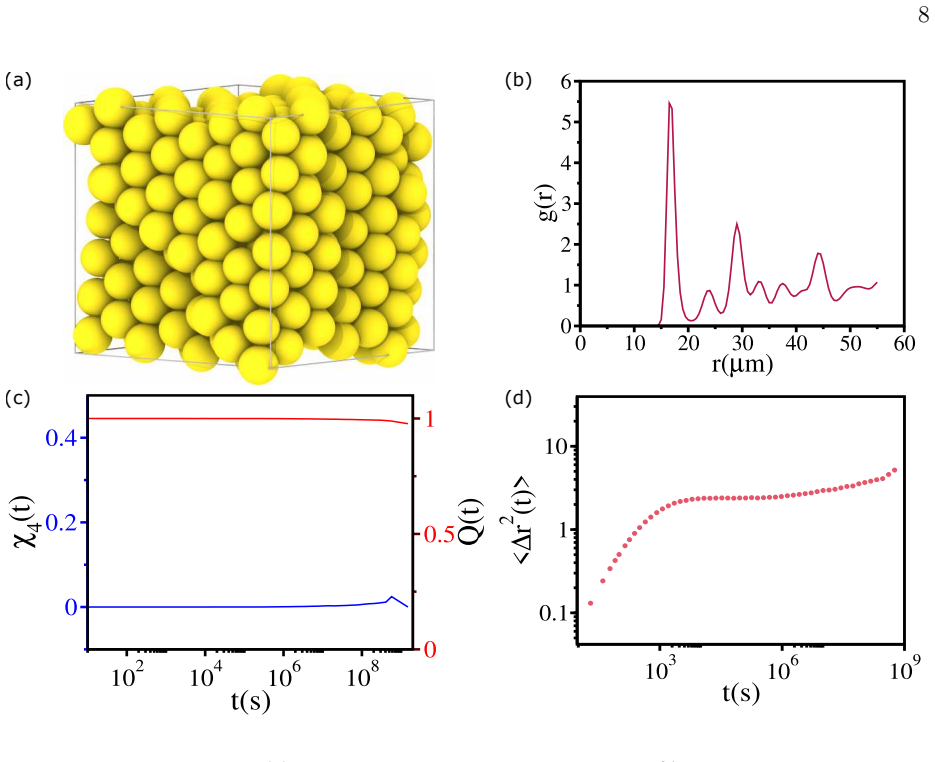
- At low polydispersity and $E \gtrsim 0.3E_0$, the tissue crystallizes, with the crystal type (FCC, BCC, HCP mixes at softer $E$; near-perfect FCC at larger $E$) depending on cell rigidity.
- None of these phases form without active self-propulsion; a thermal drive obeying the fluctuation-dissipation theorem produces glassy dynamics and no viscosity-saturation phase.
Reading between the lines
- Beyond the paper: if free-volume saturation is the mechanism, then tuning polydispersity or cell softness should move $\phi_S$ in a predictable way; measuring $\phi_S$ under controlled cell-size spread would directly test that mechanism.
- Beyond the paper: the phase diagram implies that metastatic cells, which are typically softer, should sit in the liquid regime; a testable corollary is that more heterogeneous tumor cell populations should show fluidization rather than jamming.
- Beyond the paper: because the viscosity plateau appears only with non-FDT driving, observing such a plateau in a tissue rheology experiment could serve as a marker for active, out-of-equilibrium cell motility rather than passive viscoelasticity.
Signed reviews
Editorial analysis
A structured set of objections, weighed in public.
Referee Report
Summary. The paper reports simulations of a minimal particle-based model of a non-confluent 3D tissue in which cells interact through short-range Hertz repulsion and are driven by white-noise active self-propulsion. By varying cell elasticity E and size polydispersity Sigma, the authors identify four dynamical regimes—liquid, viscosity saturation (VS), glass, and crystal—and construct a (Sigma, E) phase diagram. The VS phase is characterized by Vogel-Fulcher-Tammann growth of an effective viscosity up to a saturation packing fraction phi_S and saturation beyond it. The paper also reports absence of aging in the VS regime, emergence of aging at high E, and argues that the VS phase requires non-FDT active self-propulsion rather than thermal noise. The SI extends the analysis to 2D and provides free-volume and connectivity-based interpretations of the viscosity behavior.
Significance. If the central claims hold, the paper offers a useful framework for relating single-cell mechanical properties to tissue-scale morphologies and dynamics, with potential relevance to cancer cell softness and metastasis. The explicit phase diagram, the demonstration that polydispersity suppresses crystallization, the consistency between 2D and 3D results, and the free-volume/connectivity analyses are valuable strengths. The simulation protocols are described in sufficient detail to reproduce the qualitative results. However, the two most load-bearing claims—that the VS behavior is a genuine viscosity phenomenon and that it cannot occur under FDT dynamics—rest on an unvalidated stress-autocorrelation proxy and on a limited negative search in parameter space, respectively; both need to be substantiated before the results can be accepted at face value.
major comments (4)
- [Materials and Methods, Eq. (10)] Equation (10) appears to have the elastic modulus ratio inverted. The printed expression, F_ij^el = h^{3/2} (3/2) ((1-nu^2)/E) sqrt(1/R_i + 1/R_j), predicts that the contact force decreases as E increases, whereas the standard Hertz contact law scales as E/(1-nu^2) and the text and Fig. 10(b) state that larger E produces larger forces. Since all phase assignments depend on E through this force law, please correct the equation and confirm that the simulations used the corrected form.
- [Viscosity Saturation regime, Eq. (4) and Fig. 2] The effective viscosity eta_eff defined in Eq. (4) is a zero-frequency integral of the stress autocorrelation with no V/k_BT prefactor and no kinetic term; in this athermal active system there is no FDT guarantee that this integral equals, or is even proportional to, the mechanical shear viscosity. The paper calls eta_eff a 'proxy' but never validates it against an imposed-shear measurement, and the proportionality eta_eff proportional to tau_alpha reported in SI Section II is not independent because tau_alpha is another observable used in the same phase classification. If the proxy saturates while the true shear viscosity continues to grow, the viscosity-saturation phase is an artifact of the observable; please validate against a direct shear protocol (e.g., Lees-Edwards or SLLOD) or, at minimum, restrict the phase label to 'relaxation-time saturation'.
- [Abstract; SI Section VII] The categorical claim that 'The VS phase does not form in systems at finite temperature in which the dynamics satisfies the Fluctuation Dissipation Theorem' is stronger than the evidence. The SI explicitly states that the absence of saturation under FDT dynamics 'does not prove that saturation of tau_alpha cannot arise using Eqn. (4) if a broader range of cell softness and Sigma are explored,' and the main text reports only two E values and one Sigma value for the thermal simulations. Please soften the claim to 'was not observed in the parameter range tested' or perform a systematic search over E and Sigma before making a universal statement.
- [Fig. 9(g); SI Section III] The phase diagram in Fig. 9(g) is the central summary of the paper, but the phase assignments and boundaries are presented with no statistical uncertainty: the VFT fits for eta_eff and tau_alpha, the extracted phi_S values in Figs. 2(c) and 2(f), and the boundary locations (e.g., the liquid-to-crystal transition 'near E ~ 0.3E0') are all reported without error bars or sensitivity analysis. In addition, SI Section III cautions that finite-size independence cannot be established from the narrow range N = 250-800; this caveat should be stated in the main text and ideally addressed with at least one larger system at a phase boundary.
minor comments (4)
- [Eq. (12)] The same symbol mu is used for the friction coefficient mu_i and for the active-noise strength mu in Eq. (12); these are independent parameters and should have distinct notation.
- [Aging in 3D tissues, around Eq. (9)] The sentence reporting the aging exponent is incomplete: 'The value of x is for data in Fig. 8 (a), (Fig. 8 (b)), (Fig. 8 (c)) and (Fig. 8 (d) ~ 0.9 (~ 1)' does not state which exponent corresponds to which panel; please rewrite.
- [Discussion, 'On the importance of cell propulsion'] The sentence 'In the absences of mu, the cell system is frozen at all times because the value of mu is so large that thermal motion is suppressed' is internally contradictory; presumably the model has zero temperature, so no thermal motion exists even with mu present.
- [Throughout] There are numerous encoding artifacts in the rendered text (e.g., 'Äalpha', 'Ã', 'Ïð', 'omega t') that obscure the equations and figure captions; these should be fixed in the final version.
Circularity Check
No significant circularity: the phase diagram is an empirical simulation result, VFT fits are descriptive, and tau_alpha is used as a validated proxy, not as a circular input.
full rationale
This is a simulation study, not a derivation, so the circularity burden is low. The phase classification is based on explicitly defined observables — Fs(q,t) (Eq. 1), g(r) (Eq. 2), tau_alpha (Eq. 3), and eta_eff (Eq. 4) — computed from the same nonequilibrium dynamics described by Eq. 12. The VFT and Arrhenius fits are descriptive fits to simulated data, not first-principles predictions, and the paper does not claim otherwise. The substitution of tau_alpha for eta_eff is justified by an explicit empirical proportionality check in SI Section II, and phi_S from tau_alpha is compared with phi_S from eta_eff (Fig. 2f), so this is a surrogate validation rather than a circular definition. The claim that the VS phase does not occur under FDT-satisfying dynamics is tested directly in SI Section VII with a separate Brownian-dynamics equation of motion; the authors also state the limitation that the absence of VS in those simulations does not prove it cannot occur for untested parameters. Self-citations (e.g., refs. 19, 33, 61) supply the prior particle model, parameter choices, and free-volume interpretation, but the 3D free-volume calculation and phase boundaries are performed here rather than imported. The only substantive concern — that Eq. 4 is called 'a proxy for shear viscosity' and is not validated against imposed shear — is a measurement-validity caveat, not circularity, because the paper does not derive the phase behavior from a claimed equality between the proxy and the true shear viscosity.
Assumptions & free parameters
free parameters (6)
- Active noise strength mu =
0.045 um/sqrt(s)
- Friction coefficient gamma_0 =
0.1 kg/(um s)
- VFT fragility parameter D =
e.g., D approximately 0.78 for E = 5E0, Sigma = 8.5%
- VFT divergence packing fraction phi_0 =
e.g., approximately 0.70 for E = 5E0, Sigma = 8.5%; approximately 0.69 and 0.68 for Sigma = 8.5% and 24.8%
- Saturation packing fraction phi_S =
varies with E, around 0.74 to 0.76 in the VS regime
- Poisson ratio nu =
0.5
assumptions (6)
- domain assumption Hertz contact force models cell-cell interactions (Eq. 10).
- domain assumption Cell motility arises solely from active white noise with zero correlation time and no FDT (Eq. 12).
- domain assumption Stokes friction law mu_i = 6 pi eta R_i describes drag on each cell.
- domain assumption Green-Kubo-like stress autocorrelation (Eq. 4) gives a meaningful effective viscosity in an athermal active system.
- domain assumption Steady state is reached and Fs(q,t) relaxation time is a proxy for viscosity.
- domain assumption N = 500 periodic box represents bulk tissue.
Cite this review
Pith. "Pith review of Controlling the morphologies and dynamics in three-dimensional tissues." pith.science (2026). https://pith.science/paper/Z5KBQEBT
@misc{pith2026250506168,
  author       = {Pith},
  title        = {Pith review of: Controlling the morphologies and dynamics in three-dimensional tissues},
  year         = {2026},
  howpublished = {\url{https://pith.science/paper/Z5KBQEBT}},
  note         = {Machine review of arXiv:2505.06168}
}
abstract
A number of factors, such as, cell-cell interactions and self-propulsion of cells driven by cytoskeletal forces determine tissue morphologies and dynamics. To explore the interplay between these factors in controlling the dynamics at the tissue scale, we created a minimal three dimensional model in which short-range repulsive elastic forces account for cell-cell interactions. Self-propulsion is modeled as active uncorrelated random stochastic forces, with strength $\mu$, that act on individual cells and is the only source of cell motility. Strikingly, variations in polydispersity in cell sizes ($\Sigma$) and cell elasticity ($E$), results in the formation of a variety of distinct ``phases", driven entirely by $\mu$. At low $E$, the tissue behaves like a liquid, at all values of $\Sigma$, whereas at high $E$ and $\Sigma$, it has the characteristics of a glass. The tissue crystallizes at low $\Sigma$ provided $E$ exceeds a critical value. Over a narrow range of $E$ and $\Sigma$, that lies between the boundaries of the liquid and glass phase, the effective viscosity increases like in a glass as the cell density increases and saturates as the cells are compressed beyond a certain value, creating the viscosity saturation (VS) phase. The VS phase does not form in systems at finite temperature in which the dynamics satisfies the Fluctuation Dissipation Theorem. In the glass phase, the tissue exhibits aging (relaxation times depend on the waiting time) behavior at high $E$ values. Our findings provide a framework for designing tissues with tunable material properties by controlling the physical characteristics of cells.
Figures


Figures from the paper (7 more)


Reference graph
Works this paper leans on
-
[1]
The solid lines are the fits to the VFT equation (Eqn
8E0. The solid lines are the fits to the VFT equation (Eqn. (6)). (c) Saturat ion packing fraction φ S as a function of E. (d) The logarithm of effective viscosity ηeff as a function of φ scaled by φ S. (e) Relaxation time τα , calculated using Eqn. (3), as a function of φ for Ei = 2 . 0E0, 1. 0E0 and
-
[2]
VFT fits are given by the solid line (Eqn
8E0. VFT fits are given by the solid line (Eqn. (6) for τα ). (f) φ S calculated using τα and ηeff are linearly related. 7 the factor V kBT is not included in Eqn. (4) because temperature is not a relev ant variable in the highly over-damped model considered here. The effective v iscosity of the 3D tissue as a function of ϕ (see Fig. 2 (b)) has the same tren...
-
[3]
72 for E = 5 E0 (E0 ≡ 10−3MPa)
63 f φ f 0. 72 for E = 5 E0 (E0 ≡ 10−3MPa). The solid lines in color at short times are exponential fits Fs(q, t ) = τ0 exp[−t/τ s]. The black solid lines are stretched exponential fit to Fs(q, t ) = τ0 exp[−(x/τ l)β ]. The values of the stretching exponent, β values are 0.34, 0.45, 0.67, 0.50, and 0.44 for φ values of 0.63, 0.65, 0.67, 0.69, and 0.72, resp...
-
[4]
5E0 f Ei f 2. 0E0 with Σ = 0 . 0. There is no long-range order. However, we anticipate that at a fixed E, polydispersity could change the structure of the tissue. In order to investigate t he effect of Σ on the tissue architecture, we calculated g(r) at ϕ = 0 .70 for 6 .6 f Σ f 24.8 with a fixed E = E0 (VS regime) (Fig. 6 (a)). Interestingly, we find that eve...
-
[5]
Mechanobiology and diseases of mechanotransduction
Donald Ingber. Mechanobiology and diseases of mechanotransduction. Annals of Medicine , 35(8):564–577, 2003. PMID: 14708967
work page 2003
-
[6]
Farshid Guilak, Daniel M. Cohen, Bradley T. Estes, Jeffrey M. Gimble, Wolfgang Liedtke, and Christopher S. Chen. Control of stem cell fate by physical interacti ons with the extracellular matrix. Cell Stem Cell , 5(1):17–26, 2009
work page 2009
-
[7]
Dhananjay T. Tambe, C. Corey Hardin, Thomas E. Angelini, Kavitha Rajendran, Chan Young Park, Xavier Serra-Picamal, Enhua H. Zhou, Muhammad H. Zaman, James P. Butl er, David A. Weitz, Jeffrey J. Fredberg, and Xavier Trepat. Collective c ell guidance by co- operative intercellular forces. Nature Materials, 10(6):469–475, 2011
work page 2011
-
[8]
Sanjay Kumar and Valerie M. Weaver. Mechanics, malignancy, and metas tasis: The force journey of a tumor cell. Cancer and Metastasis Reviews , 28(1):113–127, 2009
work page 2009
Show all 81 references
-
[9]
Tissue rheology i n embryonic organization
Nicoletta I Petridou and Carl-Philipp Heisenberg. Tissue rheology i n embryonic organization. The EMBO journal , 38(20):e102497, 2019
2019
-
[10]
Petridou, Bernat Corominas-Murtra, Carl-Philipp Heis enberg, and Edouard Han- nezo
Nicoletta I. Petridou, Bernat Corominas-Murtra, Carl-Philipp Heis enberg, and Edouard Han- nezo. Rigidity percolation uncovers a structural basis for embryonic tissue phase transitions. Cell, 184(7):1914–1928.e19, 2021
1914
-
[11]
Huebner and John B
Robert J. Huebner and John B. Wallingford. Coming to consensus: A uni fying model emerges for convergent extension. Developmental Cell , 46(4):389–396, Aug 2018
2018
-
[12]
Gabriel Krens, G uillaume Salbreux, and Carl-Philipp Heisenberg
Hitoshi Morita, Silvia Grigolon, Martin Bock, S.F. Gabriel Krens, G uillaume Salbreux, and Carl-Philipp Heisenberg. The physical basis of coordinated tissue s preading in zebrafish gas- trulation. Developmental Cell , 40(4):354–366.e4, 2017
2017
-
[13]
Gustafson, Elijah Shelton , David A
Alessandro Mongera, Payam Rowghanian, Hannah J. Gustafson, Elijah Shelton , David A. Kealhofer, Emmet K. Carn, Friedhelm Serwane, Adam A. Lucio, James Giammon a, and Otger Camp` as. A fluid-to-solid jamming transition underlies vertebrate body axis elongation. Nature, 561(7723)...
2018
-
[14]
Barriga, Kristian Franze, Guillaume Charras, and Roberto Mayor
Elias H. Barriga, Kristian Franze, Guillaume Charras, and Roberto Mayor . Tissue stiff- ening coordinates morphogenesis by triggering collective cell migrat ion in vivo. Nature, 554(7693):523–527, 2018
2018
-
[15]
Petridou, Silvia Grigolon, Guillaume Salbreux, Edouar d Hannezo, and Carl- Philipp Heisenberg
Nicoletta I. Petridou, Silvia Grigolon, Guillaume Salbreux, Edouar d Hannezo, and Carl- Philipp Heisenberg. Fluidization-mediated tissue spreading by m itotic cell rounding and non- canonical wnt signalling. Nature Cell Biology , 21(2):169–178, 2019
2019
-
[16]
Huebner, Margot L.K
Xin Li, Robert J. Huebner, Margot L.K. Williams, Jessica Sawyer, Mar k Peifer, John B. Wallingford, and D. Thirumalai. Emergence of cellular nematic order is a conserved feature of gastrulation in animal embryos. bioRxiv, 2024
2024
-
[17]
M. F. Thorpe. Continuous deformations in random networks. Journal of Non-Crystalline Solids, 57(3):355–370, 1983
1983
-
[18]
D. J. Jacobs and M. F. Thorpe. Generic rigidity percolation: The peb ble game. Phys. Rev. Lett., 75:4051–4054, 1995
1995
-
[19]
D. J. Jacobs and M. F. Thorpe. Generic rigidity percolation in two di mensions. Phys. Rev. E, 53:3682–3693, 1996
1996
-
[20]
Talbot, and M
Eva-Maria Sch¨ otz, Marcos Lanio, Jared A. Talbot, and M. Lisa Manning. Glassydynamics in three-dimensional embryonic tissues. Journal of The Royal Society Interface , 10(89):20130726, 2013
2013
-
[22]
The impact of jamming on boundaries of collectively moving weak-interacting cells
Kenechukwu David Nnetu, Melanie Knorr, Josef K¨ as, and Mareike Zi nk. The impact of jamming on boundaries of collectively moving weak-interacting cells. New Journal of Physics , 14(11):115012, 2012
2012
-
[23]
Thiru malai
Abdul N Malmi-Kakkada, Xin Li, Himadri S Samanta, Sumit Sinha, and D. Thiru malai. Cell growth rate dictates the onset of glass to fluidlike transition and long ti me superdiffusion in an evolving cell colony. Physical Review X , 8(2):021025, 2018
2018
-
[24]
Y.C. Fung. Biomechanics: Mechanical Properties of Living Tissues . Biomechanics. Springer New York, 1993
1993
-
[25]
Morpho-elastodynamics: the lon g-time dynamics of elastic growth
Rebecca Vandiver and Alain Goriely. Morpho-elastodynamics: the lon g-time dynamics of elastic growth. Journal of Biological Dynamics , 3(2-3):180–195, 2009. 24
2009
-
[26]
Foty, Gabor Forgacs, Cathie M
Ramsey A. Foty, Gabor Forgacs, Cathie M. Pfleger, and Malcolm S. Steinberg. Liquid proper- ties of embryonic tissues: Measurement of interfacial tensions. Phys. Rev. Lett., 72:2298–2301, 1994
1994
-
[27]
D. A. Beysens, G. Forgacs, and J. A. Glazier. Cell sorting is analogous to p hase ordering in fluids. Proceedings of the National Academy of Sciences , 97(17):9467–9471, 2000
2000
-
[28]
Fluidization of tissues by cell division and apoptosis
Jonas Ranft, Markus Basan, Jens Elgeti, Jean-Fran¸ cois Joanny, Jacques Prost, and Frank J¨ ulicher. Fluidization of tissues by cell division and apoptosis. Proceedings of the National Academy of Sciences , 107(49):20863–20868, 2010
2010
-
[29]
Cell division and death inhibit glassy behaviour of confluent tissues.Soft Matter, 13(17):3205–3212, 2017
DA Matoz-Fernandez, Kirsten Martens, Rastko Sknepnek, JL Barrat , and Silke Henkes. Cell division and death inhibit glassy behaviour of confluent tissues.Soft Matter, 13(17):3205–3212, 2017
2017
-
[30]
Thirumalai, Raymond D
D. Thirumalai, Raymond D. Mountain, and T. R. Kirkpatrick. Ergodic behavior in super- cooled liquids and in glasses. Physical Review A , 39:3563–3574, 1989
1989
-
[31]
Garrahan
Giulio Biroli and Juan P. Garrahan. Perspective: The glass transiti on. The Journal of Chemical Physics, 138(12):12A301, 2013
2013
-
[32]
Colloquium: Random first order tran sition theory concepts in biology and physics
TR Kirkpatrick and D Thirumalai. Colloquium: Random first order tran sition theory concepts in biology and physics. Reviews of Modern Physics , 87(1):183, 2015
2015
-
[33]
Motil ity-driven glass and jamming transitions in biological tissues
Dapeng Bi, Xingbo Yang, M Cristina Marchetti, and M Lisa Manning. Motil ity-driven glass and jamming transitions in biological tissues. Physical Review X , 6(2):021011, 2016
2016
-
[34]
Malmi-Kakkada, and D
Sumit Sinha, Xin Li, Abdul N. Malmi-Kakkada, and D. Thirumalai. Mechanic al feedback links cell division and dynamics in growing cell collectives. Soft Matter , 21:1170–1179, 2025
2025
-
[35]
Relaxation in liquids, polymers and plastic crystals — s trong/fragile patterns and problems
C.A Angell. Relaxation in liquids, polymers and plastic crystals — s trong/fragile patterns and problems. Journal of Non-Crystalline Solids , 131-133:13–31, 1991. Proceedings of the International Discussion Meeting on Relaxations in Complex Systems
1991
-
[36]
Thirumalai
Sumit Sinha and D. Thirumalai. Rigidity percolation in embryo morphogenesis: Physics meets biology (again). Journal Club for Condensed Matter Physics , June 2021
2021
-
[37]
Rajsekhar Das, Sumit Sinha, Xin Li, T. R. Kirkpatrick, and D. Thirumalai. Free volume theory explains the unusual behavior of viscosity in a non-confluent tissue during morphogenesis. eLife, 12:RP87966, 2024
2024
-
[38]
Cell stiffness de termined by atomic force microscopy and its correlation with cell motility
Qing Luo, Dongdong Kuang, Bingyu Zhang, and Guanbin Song. Cell stiffness de termined by atomic force microscopy and its correlation with cell motility. Biochimica et Biophysica Acta 25 (BBA) - General Subjects , 1860(9):1953–1960, 2016
1953
-
[39]
Cross, Yu-Sheng Jin, Jianyu Rao, and James K
Sarah E. Cross, Yu-Sheng Jin, Jianyu Rao, and James K. Gimzewski. Nanomechanical analysis of cells from cancer patients. Nature Nanotechnology, 2(12):780–783, 2007
2007
-
[40]
Are c ancer cells really softer than normal cells? Biology of the Cell , 109(5):167–189, 2017
Charlotte Alibert, Bruno Goud, and Jean-Baptiste Manneville. Are c ancer cells really softer than normal cells? Biology of the Cell , 109(5):167–189, 2017
2017
-
[41]
Cancer cells display increased migration an d deformability in pace with metastatic progression
Zhenhui Liu, Se Jong Lee, Seungman Park, Konstantinos Konstantopoulos, K ristine Glunde, Yun Chen, and Ishan Barman. Cancer cells display increased migration an d deformability in pace with metastatic progression. The F ASEB Journal, 34(7):9307–9315, 2020
2020
-
[42]
Epithelial–mesenchymal transition i n human gastric cancer cell lines induced by tnf-α -inducing protein of helicobacter pylori
Tatsuro Watanabe, Atsushi Takahashi, Kaori Suzuki, Miki Kurusu-Kanno, Kensei Yamaguchi, Hirota Fujiki, and Masami Suganuma. Epithelial–mesenchymal transition i n human gastric cancer cell lines induced by tnf-α -inducing protein of helicobacter pylori. International Journal of...
2014
-
[43]
Valentin Gensbittel, Martin Kr¨ ater, S´ ebastien Harlepp, Ignacio Busnelli, Jochen Guck, and Jacky G. Goetz. Mechanical adaptability of tumor cells in metastasis. Developmental Cell , 56(2):164–179, 2021
2021
-
[44]
A synthetic mechano-growth factor e peptide promotes rat tenocyte migr ation by lessening cell stiffness and increasing f-actin formation via the fak-erk1/2 signaling pathway
Bingyu Zhang, Qing Luo, Xinjian Mao, Baiyao Xu, Li Yang, Yang Ju, and Guanbin Song. A synthetic mechano-growth factor e peptide promotes rat tenocyte migr ation by lessening cell stiffness and increasing f-actin formation via the fak-erk1/2 signaling pathway. Experimental Cell ...
2014
-
[45]
Mechanical coupling of cytoskeletal elasticity and force generation is crucial for understanding the migrat ing nature of keloid fibroblasts
Hans I-Chen Harn, Yang-Kao Wang, Chao-Kai Hsu, Yen-Ting Ho, Yi-Wei Huang, Wen-T ai Chiu, Hsi-Hui Lin, Chao-Min Cheng, and Ming-Jer Tang. Mechanical coupling of cytoskeletal elasticity and force generation is crucial for understanding the migrat ing nature of keloid fibroblasts....
2015
-
[46]
Direct eviden ce that tumor cells soften when navigating confined spaces
Carmela Rianna, Manfred Radmacher, and Sanjay Kumar. Direct eviden ce that tumor cells soften when navigating confined spaces. Molecular biology of the cell , 31(16):1726–1734, 2020
2020
-
[47]
Hendriks-Balk, Rita Smajda, Donata Rimoldi, Martha Liley, Harry Heinzelmann, Andr´ e Meister, and Agnese Mariotti
Gilles Weder, Mari¨ elle C. Hendriks-Balk, Rita Smajda, Donata Rimoldi, Martha Liley, Harry Heinzelmann, Andr´ e Meister, and Agnese Mariotti. Increased plastici ty of the stiffness of melanoma cells correlates with their acquisition of metastatic properties. Nanomedicine: Nan-...
2014
-
[48]
Ramos, Joanna Pabijan, Ricardo Garcia, and Malgorzata Lekka
Jorge R. Ramos, Joanna Pabijan, Ricardo Garcia, and Malgorzata Lekka. The softe ning of human bladder cancer cells happens at an early stage of the malignancy proce ss. Beilstein 26 Journal of Nanotechnology , 5:447–457, 2014
2014
-
[49]
Discriminating bladder cancer cells through rheological mechanomarker s at cell and spheroid levels
Kajangi Gnanachandran, Sylwia Kedracka-Krok, Joanna Pabijan, and Ma/suppress lgorzata Lekka. Discriminating bladder cancer cells through rheological mechanomarker s at cell and spheroid levels. Journal of Biomechanics , 144:111346, 2022
2022
-
[50]
Gordon S. Fulcher. Analysis of recent measurements of the viscosit y of glasses. Journal of the American Ceramic Society , 8(6):339–355, 1925
1925
-
[51]
Tammann and W
G. Tammann and W. Hesse. Die abh¨ angigkeit der viscosit¨ at von der temp eratur bie un- terk¨ uhlten fl¨ ussigkeiten.Zeitschrift f¨ ur anorganische und allgemeine Chemie, 156(1):245–257, 1926
1926
-
[52]
Berryman
James G. Berryman. Random close packing of hard spheres and disks. Phys. Rev. A , 27:1053– 1061, Feb 1983
1983
-
[53]
Theory of Simple Liquids: With Applications to Soft Matter
Jean-Pierre Hansen and Ian Ranald McDonald. Theory of Simple Liquids: With Applications to Soft Matter . Academic press, 2013
2013
-
[54]
J. Dana. Honeycutt and Hans C. Andersen. Molecular dynamics study of mel ting and freezing of small lennard-jones clusters. The Journal of Physical Chemistry , 91(19):4950–4963, 1987
1987
-
[56]
Visualization and analysis of atomistic simulati on data with OVITO- the Open Visualization Tool
Alexander Stukowski. Visualization and analysis of atomistic simulati on data with OVITO- the Open Visualization Tool. Modelling and Simulation in Materials Science and Engineering , 18(1), 2010
2010
-
[57]
Aging effects in a lennard-jones glass
Walter Kob and Jean-Louis Barrat. Aging effects in a lennard-jones glass. Phys. Rev. Lett. , 78:4581–4584, Jun 1997
1997
-
[58]
On relaxations and aging of various glasses
Ariel Amir, Yuval Oreg, and Yoseph Imry. On relaxations and aging of various glasses. Proceedings of the National Academy of Sciences , 109(6):1850–1855, 2012
2012
-
[59]
Weak ergodicity breaking and aging in disor dered systems
Jean-Philippe Bouchaud. Weak ergodicity breaking and aging in disor dered systems. Journal de Physique I , 2(9):1705–1713, 1992
1992
-
[60]
Physical aging in plastics and oth er glassy materials
Leendert Cornelis Elisa Struik. Physical aging in plastics and oth er glassy materials. Polym. Engg. and Science , 17:165–173, 1977
1977
-
[61]
The microscopic role of deformation in the dynamics of soft colloids
Nicoletta Gnan and Emanuela Zaccarelli. The microscopic role of deformation in the dynamics of soft colloids. Nature Physics, 15(7):683–688, Jul 2019. 27
2019
-
[62]
The physics of the colloidal glass trans ition
Gary L Hunter and Eric R Weeks. The physics of the colloidal glass trans ition. Reports on progress in physics , 75(6):066501, 2012
2012
-
[63]
Rigid tumours contain soft cancer cells
Thomas Fuhs, Franziska Wetzel, Anatol W Fritsch, Xinzhi Li, Roland Stange, Steve Pawlizak, Tobias R Kießling, Erik Morawetz, Steffen Grosser, Frank Sauer, et al. Rigid tumours contain soft cancer cells. Nature Physics, 18(12):1510–1519, 2022
2022
-
[64]
Cell swelling, soften ing and invasion in a three-dimensional breast cancer model
Yu Long Han, Adrian F Pegoraro, Hui Li, Kaifu Li, Yuan Yuan, Guoqiang Xu, Zichen G u, Jiawei Sun, Yukun Hao, Satish Kumar Gupta, et al. Cell swelling, soften ing and invasion in a three-dimensional breast cancer model. Nature physics, 16(1):101–108, 2020
2020
-
[65]
Spatially heterogeneous dynamics of cells in a growing tumor spheroid: Comparison between theory and experiments
Sumit Sinha, Abdul N Malmi-Kakkada, Xin Li, Himadri S Samanta, and D Thirum alai. Spatially heterogeneous dynamics of cells in a growing tumor spheroid: Comparison between theory and experiments. Soft Matter , 16(22):5294–5304, 2020
2020
-
[66]
Thirumalai
Sumit Sinha, Xin Li, Rajsekhar Das, and D. Thirumalai. Mechanical fee dback controls the emergence of dynamical memory in growing tissue monolayers. The Journal of Chemical Physics, 156(24):245101, 2022
2022
-
[67]
J. A. Drocco, M. B. Hastings, C. J. Olson Reichhardt, and C. Reichhard t. Multiscaling at point j: Jamming is a critical phenomenon. Physical review Letters , 95:088001, 2005. Supplementary Information – Controlling the morphologies and dynamics in three-dimensional tissues Ra...
2005
-
[68]
0E0 [13, 14] Mean Cell Poisson Ra- tio ( νi) 0.5 [14, 15]
-
[69]
Debenedetti, and Frank H
Zane Shi, Pablo G. Debenedetti, and Frank H. Stillinger. Relaxation processes in liquids: Vari- ations on a theme by Stokes and Einstein. The Journal of Chemical Physics , 138(12):12A526, 01 2013
2013
-
[70]
Rajsekhar Das, Sumit Sinha, Xin Li, T. R. Kirkpatrick, and D. Thiru malai. Free volume theory explains the unusual behavior of viscosity in a non-confluent tissue during morphogenesis. eLife, 12:RP87966, 2024
2024
-
[71]
Cohen and David Turnbull
Morrel H. Cohen and David Turnbull. Molecular transport in liquids and glasses. The Journal of Chemical Physics , 31(5):1164–1169, 1959
1959
-
[72]
David Turnbull and Morrel H. Cohen. Free-volume model of the amorph ous phase: Glass transition. The Journal of Chemical Physics , 34(1):120–125, 1961
1961
-
[73]
David Turnbull and Morrel H. Cohen. On the free-volume model of th e liquid-glass transition. The Journal of Chemical Physics , 52(6):3038–3041, 1970
1970
-
[74]
Nonempirical fre e volume viscosity model for alkane lubricants under severe pressures
Kerstin Falk, Daniele Savio, and Michael Moseler. Nonempirical fre e volume viscosity model for alkane lubricants under severe pressures. Physical Review Letters , 124:105501, 2020
2020
-
[75]
Petridou, Bernat Corominas-Murtra, Carl-Philipp Heis enberg, and Edouard Han- nezo
Nicoletta I. Petridou, Bernat Corominas-Murtra, Carl-Philipp Heis enberg, and Edouard Han- nezo. Rigidity percolation uncovers a structural basis for embryonic tissue phase transitions. 18 Cell, 184(7):1914–1928.e19, 2021
1914
-
[76]
Systematic analysis of local atomic str ucture combined with 3d computer graphics
Daniel Faken and Hannes J´ onsson. Systematic analysis of local atomic str ucture combined with 3d computer graphics. Computational Materials Science , 2(2):279–286, Mar 1994
1994
-
[77]
Structure identification methods for atomi stic simulations of crystalline materials
Alexander Stukowski. Structure identification methods for atomi stic simulations of crystalline materials. Modelling and Simulation in Materials Science and Engineering , 20(4):045021, May 2012
2012
-
[78]
van Megen and S
W. van Megen and S. M. Underwood. Glass transition in colloidal hard sph eres: Measurement and mode-coupling-theory analysis of the coherent intermediate scatt ering function. Phys. Rev. E , 49:4206–4220, 1994
1994
-
[79]
Angelini, Edouard Hannezo, Xavier Trepat, Manuel Marquez, Jeff rey J
Thomas E. Angelini, Edouard Hannezo, Xavier Trepat, Manuel Marquez, Jeff rey J. Fredberg, and David A. Weitz. Glass-like dynamics of collective cell migration. Proceedings of the National Academy of Sciences , 108(12):4714–4719, 2011
2011
-
[80]
Dapeng Bi, J. H. Lopez, J. M. Schwarz, and M. Lisa Manning. A density-i ndependent rigidity transition in biological tissues. Nature Physics , 11(12):1074–1079, 2015
2015
-
[81]
Modeling the effect of d eregulated proliferation and apoptosis on the growth dynamics of epithelial cell populations in vit ro
J¨ org Galle, Markus Loeffler, and Dirk Drasdo. Modeling the effect of d eregulated proliferation and apoptosis on the growth dynamics of epithelial cell populations in vit ro. Biophysical Journal, 88(1):62–75, 2005
2005
-
[82]
Cell growth rate dictates the onset of glass to fluidlike transition and l ong time superdiffusion in an evolving cell colony
Abdul N Malmi-Kakkada, Xin Li, Himadri S Samanta, Sumit Sinha, and Dave Thi rumalai. Cell growth rate dictates the onset of glass to fluidlike transition and l ong time superdiffusion in an evolving cell colony. Physical Review X , 8(2):021025, 2018
2018
-
[83]
Multicellular tumor s pheroid in an off-lattice voronoi-delaunay cell model
Gernot Schaller and Michael Meyer-Hermann. Multicellular tumor s pheroid in an off-lattice voronoi-delaunay cell model. Physical Review E , 71(5):051910, 2005
2005
Reviewed August 15, 2026 · model on record in the stance chip above.
Discussion (0). Continue with ORCID to comment.