SCAN: Structured Capability Assessment and Navigation for LLMs
Pith reviewed 2026-05-22 16:07 UTC · model grok-4.3
The pith
SCAN builds an automatic hierarchical taxonomy to support fine-grained evaluation of LLM capabilities.
A machine-rendered reading of the paper's core claim, the machinery that carries it, and where it could break.
Core claim
SCAN incorporates TaxBuilder to extract capability-indicating tags from large query sets and build a hierarchical taxonomy, RealMix to synthesize and filter queries ensuring adequate coverage per tag, navigation and visualization tools, and a PC²-based LLM-as-a-Judge that reaches higher accuracy than standard LLM judges; evaluation of 21 LLMs with this system reveals substantial performance variations within sub-capabilities of the same category in families such as GPT-OSS.
What carries the argument
The hierarchical taxonomy of capability tags automatically constructed by TaxBuilder from extensive queries, which organizes abilities into categories and sub-capabilities to enable targeted assessment and navigation.
If this is right
- Developers can locate precise strengths and weaknesses rather than relying on aggregate scores.
- Model comparisons gain precision when conducted at the sub-capability level instead of broad categories.
- Evaluation sets maintain sufficient data coverage for every identified tag through automated query synthesis and filtering.
- LLM-based judging improves in accuracy by deriving comparison criteria in advance.
Where Pith is reading between the lines
- Running SCAN on additional model families or new domains could expose capability patterns invisible to existing benchmarks.
- The taxonomy could be iteratively improved by feeding human corrections back into TaxBuilder to reduce extraction biases.
- Visualization outputs might be used to guide targeted data collection or fine-tuning for specific weak sub-capabilities.
Load-bearing premise
The tags automatically extracted by TaxBuilder form a valid, non-redundant hierarchical taxonomy that captures distinct LLM capabilities without significant bias or omission.
What would settle it
Re-running TaxBuilder on the same query collection yields a substantially different hierarchy, or manual review finds many overlapping or missing capabilities in the resulting taxonomy.
Figures








read the original abstract
Evaluating Large Language Models (LLMs) has become increasingly important, with automatic evaluation benchmarks gaining prominence as alternatives to human evaluation. While existing research has focused on approximating model rankings, such benchmarks fail to provide users and developers with a comprehensive and fine-grained understanding of a specific model's capabilities. To fill this gap, we propose \textbf{SCAN} (Structured Capability Assessment and Navigation), a practical framework that enables detailed characterization of LLM capabilities through comprehensive and fine-grained evaluation. SCAN incorporates four key components: (1) TaxBuilder, which extracts capability-indicating tags from extensive queries to construct a hierarchical taxonomy automatically; (2) RealMix, a query synthesis and filtering mechanism that ensures sufficient evaluation data for each capability tag; (3) a suite of visualization and analysis tools that facilitate efficient navigation and analysis of model capabilities; and (4) a PC$^2$-based (Pre-Comparison-derived Criteria) LLM-as-a-Judge approach that achieves significantly higher accuracy compared to classic LLM-as-a-Judge method. Using SCAN, we conduct a comprehensive evaluation of 21 mainstream LLMs. Our detailed analysis of the GPT-OSS family reveals substantial performance variations, even within sub-capabilities belonging to the same category of capability. This finding highlights the importance of fine-grained evaluation in accurately understanding LLM behavior. Project homepage and resources are available at \href{https://github.com/liudan193/SCAN}{https://github.com/liudan193/SCAN}.
Editorial analysis
A structured set of objections, weighed in public.
Referee Report
Summary. The paper proposes SCAN, a framework for fine-grained LLM capability evaluation consisting of TaxBuilder (automatic hierarchical taxonomy extraction from queries), RealMix (query synthesis/filtering), visualization tools, and a PC²-based LLM-as-a-Judge claimed to outperform classic methods. Using SCAN, the authors evaluate 21 mainstream LLMs and report substantial performance variations within sub-capabilities of the same category in the GPT-OSS family, arguing this demonstrates the value of detailed rather than coarse-grained assessment.
Significance. If the taxonomy is shown to be valid and non-redundant and the PC² judge accuracy gains are quantified and reproducible, SCAN could move the field beyond aggregate rankings toward actionable, navigable capability profiles that help developers and users identify specific strengths and gaps. The intra-family variation finding, if robust, would reinforce the need for fine-grained benchmarks.
major comments (3)
- [TaxBuilder] TaxBuilder section: the automatic extraction of capability-indicating tags and construction of the hierarchical taxonomy is presented without any validation against human experts, inter-annotator agreement metrics, or overlap with established frameworks (e.g., BIG-bench or HELM categories). Because the central claim of substantial intra-category variations in GPT-OSS rests on this taxonomy forming a valid, non-redundant partition of distinct capabilities, the absence of such checks is load-bearing.
- [PC² Judge / Results] PC² Judge and results sections: the abstract asserts significantly higher accuracy for the PC² judge, yet no quantitative metrics, validation procedure, error analysis, or comparison tables are referenced in the provided text. Without these, it is impossible to determine whether the claimed improvement supports the framework's practical utility or is an artifact of the evaluation setup.
- [GPT-OSS family analysis] GPT-OSS analysis: the reported substantial performance variations across sub-capabilities lack accompanying details on measurement protocol, statistical significance testing, or controls for query-distribution effects. If these differences are driven by taxonomy artifacts rather than genuine capability distinctions, the highlighted importance of fine-grained evaluation would not follow.
minor comments (2)
- [Abstract] Abstract: the phrase 'significantly higher accuracy' would benefit from a brief parenthetical summary of the actual accuracy delta or F1 improvement to orient readers immediately.
- [Methods] Notation: the PC² acronym is introduced as 'Pre-Comparison-derived Criteria' but subsequent usage would be clearer if the expansion were repeated on first use in the methods section.
Simulated Author's Rebuttal
We thank the referee for the detailed and constructive feedback on our work. We respond to each major comment point by point below, indicating the changes we will make to the manuscript.
read point-by-point responses
-
Referee: [TaxBuilder] TaxBuilder section: the automatic extraction of capability-indicating tags and construction of the hierarchical taxonomy is presented without any validation against human experts, inter-annotator agreement metrics, or overlap with established frameworks (e.g., BIG-bench or HELM categories). Because the central claim of substantial intra-category variations in GPT-OSS rests on this taxonomy forming a valid, non-redundant partition of distinct capabilities, the absence of such checks is load-bearing.
Authors: We acknowledge the importance of validating the taxonomy to support our central claims. Although the current version focuses on the automatic construction process, we agree that additional checks are needed. In the revised manuscript, we will incorporate a human validation study, including inter-annotator agreement metrics, and compare our taxonomy with established frameworks such as those in BIG-bench and HELM. This will demonstrate the validity and non-redundancy of the capability partition. revision: yes
-
Referee: [PC² Judge / Results] PC² Judge and results sections: the abstract asserts significantly higher accuracy for the PC² judge, yet no quantitative metrics, validation procedure, error analysis, or comparison tables are referenced in the provided text. Without these, it is impossible to determine whether the claimed improvement supports the framework's practical utility or is an artifact of the evaluation setup.
Authors: We apologize for any lack of clarity in referencing the quantitative results. The manuscript does present quantitative metrics for the PC² judge's accuracy, including comparisons to classic methods, along with the validation procedure and error analysis in the relevant results section. To address this, we will add explicit references, a summary table, and expanded discussion in the revised version to make these elements more prominent. revision: partial
-
Referee: [GPT-OSS family analysis] GPT-OSS analysis: the reported substantial performance variations across sub-capabilities lack accompanying details on measurement protocol, statistical significance testing, or controls for query-distribution effects. If these differences are driven by taxonomy artifacts rather than genuine capability distinctions, the highlighted importance of fine-grained evaluation would not follow.
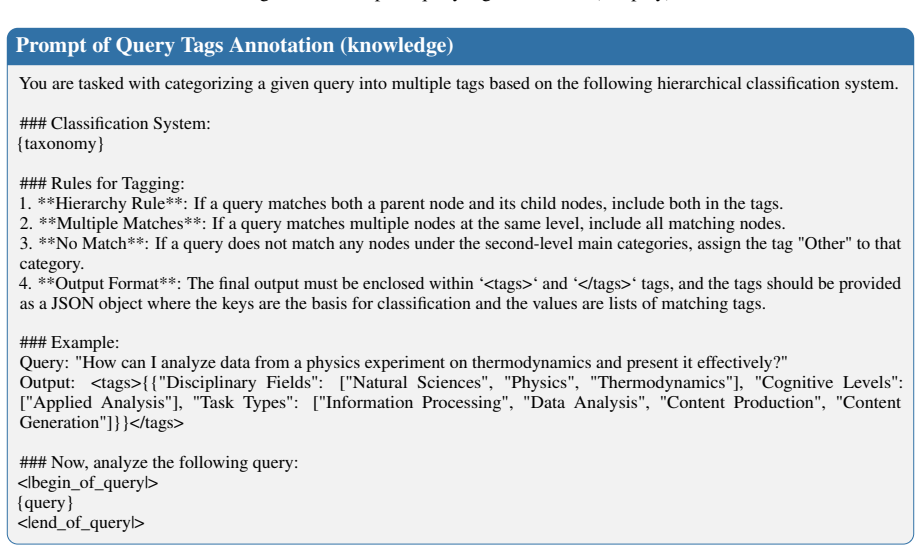
Authors: We note that the measurement protocol for the GPT-OSS analysis is outlined in the evaluation section. However, we agree that additional statistical details would strengthen the findings. In the revision, we will include statistical significance testing for the performance variations and discuss controls for query-distribution effects to rule out artifacts and confirm the value of fine-grained assessment. revision: yes
Circularity Check
No significant circularity in SCAN framework components or claims
full rationale
The paper introduces SCAN as an applied evaluation framework rather than a mathematical derivation. TaxBuilder automatically extracts tags to form a hierarchy, RealMix synthesizes queries, and PC2 is presented as an LLM judge with claimed accuracy gains over baselines. The central empirical finding (intra-category variations in GPT-OSS models) is an observation obtained by applying the framework to 21 LLMs; it does not reduce to a fitted parameter or self-referential definition by any equation in the paper. No load-bearing self-citation, uniqueness theorem, or ansatz smuggling is evident in the provided text. The taxonomy construction is described as an input tool whose validity is assumed rather than derived from the evaluation results themselves. This is a self-contained systems paper whose claims rest on external data collection and comparison, not on internal circular reduction.
Axiom & Free-Parameter Ledger
axioms (2)
- domain assumption Queries contain extractable capability-indicating tags that can be organized into a non-arbitrary hierarchical taxonomy
- domain assumption Synthesized and filtered queries via RealMix provide sufficient and representative evaluation data for each tag
Lean theorems connected to this paper
-
IndisputableMonolith/Foundation/AbsoluteFloorClosure.leanabsolute_floor_iff_bare_distinguishability unclear?
unclearRelation between the paper passage and the cited Recognition theorem.
TaxBuilder... extracts capability-indicating tags... recursive node insertion... Node Refinement and Pruning... Layer Pruning... SCAN-T-V0
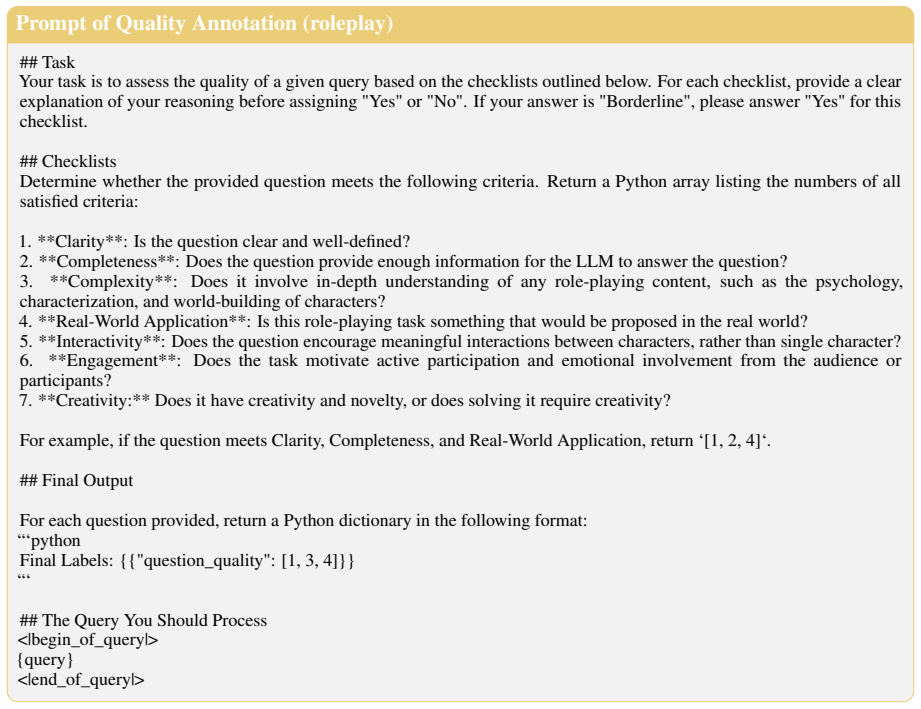
-
IndisputableMonolith/Cost/FunctionalEquation.leanwashburn_uniqueness_aczel unclear?
unclearRelation between the paper passage and the cited Recognition theorem.
PC²-based (Pre-Comparison-derived Criteria) LLM-as-a-Judge... pre-comparison phase... extract relevant evaluation criteria... assign weights
-
IndisputableMonolith/Foundation/ArithmeticFromLogic.leanembed_strictMono_of_one_lt unclear?
unclearRelation between the paper passage and the cited Recognition theorem.
fine-grained analysis... substantial performance variations, even within sub-capabilities belonging to the same category
What do these tags mean?
- matches
- The paper's claim is directly supported by a theorem in the formal canon.
- supports
- The theorem supports part of the paper's argument, but the paper may add assumptions or extra steps.
- extends
- The paper goes beyond the formal theorem; the theorem is a base layer rather than the whole result.
- uses
- The paper appears to rely on the theorem as machinery.
- contradicts
- The paper's claim conflicts with a theorem or certificate in the canon.
- unclear
- Pith found a possible connection, but the passage is too broad, indirect, or ambiguous to say the theorem truly supports the claim.
Reference graph
Works this paper leans on
-
[1]
Youquan Li, Miao Zheng, Fan Yang, Guosheng Dong, Bin Cui, Weipeng Chen, Zenan Zhou, and Wentao Zhang
Cleva: Chinese language models evaluation platform.arXiv preprint arXiv:2308.04813. Youquan Li, Miao Zheng, Fan Yang, Guosheng Dong, Bin Cui, Weipeng Chen, Zenan Zhou, and Wentao Zhang. 2024g. Fb-bench: A fine-grained multi-task benchmark for evaluating llms’ responsiveness to human feedback.arXiv preprint arXiv:2410.09412. Paul Pu Liang, Yiwei Lyu, Xiang...
-
[2]
Halludial: A large-scale benchmark for auto- matic dialogue-level hallucination evaluation.arXiv preprint arXiv:2406.07070. Saumya Malik, Valentina Pyatkin, Sander Land, Ja- cob Morrison, Noah A Smith, Hannaneh Hajishirzi, and Nathan Lambert. 2025. Rewardbench 2: Ad- vancing reward model evaluation.arXiv preprint arXiv:2506.01937. Jinjie Ni, Fuzhao Xue, X...
-
[3]
Mixeval: Deriving wisdom of the crowd from llm benchmark mixtures.arXiv e-prints, pages arXiv– 2406. OpenAI. 2024a. Hello gpt-4o. https://openai.com/ index/hello-gpt-4o/. Accessed: 2025-04-30. OpenAI. 2024b. Openai o1 mini: Advancing cost- efficient reasoning. https://platform.openai. com/docs/models/o1-mini. Accessed: 2025-04- 30. OpenAI. 2025. gpt-oss-1...
work page internal anchor Pith review Pith/arXiv arXiv 2025
-
[4]
Safetywashing: Do ai safety benchmarks ac- tually measure safety progress?Advances in Neural Information Processing Systems, 37:68559–68594. Jonathan Roberts, Mohammad Reza Taesiri, Ansh Sharma, Akash Gupta, Samuel Roberts, Ioana Croitoru, Simion-Vlad Bogolin, Jialu Tang, Flo- rian Langer, Vyas Raina, and 1 others. 2025. Ze- robench: An impossible visual ...
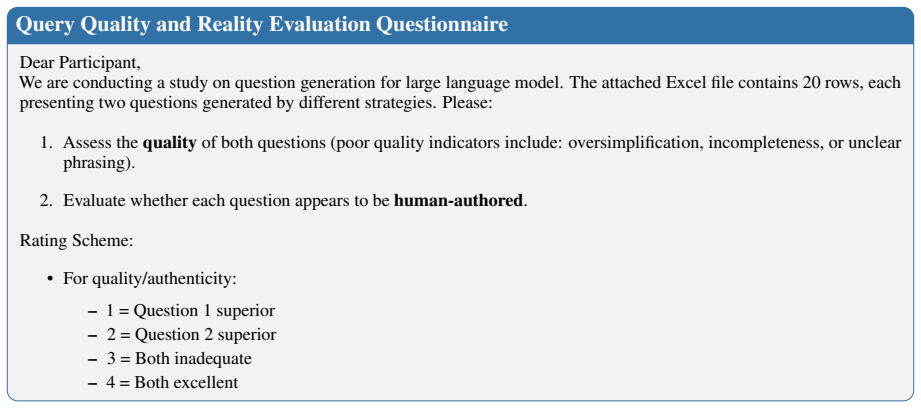
-
[5]
Livebench: A challenging, contamination-free llm benchmark.arXiv preprint arXiv:2406.19314. An Yang, Baosong Yang, Beichen Zhang, Binyuan Hui, Bo Zheng, Bowen Yu, Chengyuan Li, Dayiheng Liu, Fei Huang, Haoran Wei, Huan Lin, Jian Yang, Jian- hong Tu, Jianwei Zhang, Jianxin Yang, Jiaxi Yang, Jingren Zhou, Junyang Lin, Kai Dang, and 23 others. 2024a. Qwen2.5...
work page internal anchor Pith review Pith/arXiv arXiv 2024
-
[6]
Judging llm-as-a-judge with mt-bench and chatbot arena.Advances in Neural Information Pro- cessing Systems, 36:46595–46623. Enyu Zhou, Guodong Zheng, Binghai Wang, Zhiheng Xi, Shihan Dou, Rong Bao, Wei Shen, Limao Xiong, Jessica Fan, Yurong Mou, Rui Zheng, Tao Gui, Qi Zhang, and Xuanjing Huang. 2025. Rmb: Com- prehensively benchmarking reward models in ll...
work page 2025
-
[7]
Real.” denotes real-world queries, “Cont.-free
to ensure the diversity of the responses. For judge model, we adopt Deepseek-R1 (DeepSeek- AI, 2025) due to its superior reasoning performance. Unless otherwise specified, we use the officially recommended decoding parameters. Dataset.All our experiments are based on our pairwise human preference datasets SCAN- HPD, RewardBench-v2 (Malik et al., 2025) and...
work page 2025
-
[8]
**Analyze Responses**: You must first compare several provided [answers] and identify their differences. The objective of this comparison is to pinpoint distinguishing factors that significantly influence the quality of the responses
-
[14]
Description of Secondary Metric 3 | Weight 3 ... <Evaluation_Framework> [User Question] {question} [The Start of Assistant 1’s Answer] {answer_1} [The End of Assistant 1’s Answer] [The Start of Assistant 2’s Answer] {answer_2} [The End of Assistant 2’s Answer] [The Start of Assistant 3’s Answer] {answer_3} [The End of Assistant 3’s Answer] Figure 7: Promp...
work page 2025
-
[15]
**Analyze Question**: You must first analyze the question. The objective of this comparison is to find im- portant factors that significantly influence the quality of the responses
-
[16]
There should be 3 to 9 primary metrics
**Develop Metrics**: Establish a hierarchical set of evaluation metrics. There should be 3 to 9 primary metrics. Each primary metric should have several detailed sub-metrics to provide specific, measurable criteria for evaluating the responses
-
[17]
The weights should be integers, and the sum of all weights should equal 100
**Assign Weights**: Allocate appropriate weights to each metric based on its relative importance in distinguishing the quality of the responses. The weights should be integers, and the sum of all weights should equal 100
-
[18]
**Output Format**: Present the final evaluation framework in a structured list format. You do not need to include the primary metrics; only the secondary metrics are required, in the following format: <Evaluation_Framework>
-
[19]
Description of Secondary Metric 1 | Weight 1
-
[20]
Description of Secondary Metric 2 | Weight 2
-
[21]
<E>"then 7:returnT 8:else ifd=
Description of Secondary Metric 3 | Weight 3 ... <Evaluation_Framework> [User Question] {question} Figure 10: Prompt for naive criteria decomposition. 18 Order of Models ACC gpt-4o→doubao-pro-1.5-32k→Deepseek-V3 0.6668 gpt-4o→Deepseek-V3→doubao-pro-1.5-32k0.6962 Deepseek-V3→gpt-4o→doubao-pro-1.5-32k 0.6699 Deepseek-V3→doubao-pro-1.5-32k→gpt-4o 0.6920 doub...
work page 2024
-
[22]
- Label:"writing"- If not matched, proceed to the next domain
Writing - Condition: If the query relates to writing, purposeful professional writing, literature, storytelling, grammar, or language-related topics. - Label:"writing"- If not matched, proceed to the next domain
- [23]
-
[24]
- Label:"coding"- If not matched, proceed to the next domain
Coding - Condition: If the query relates to programming, algorithms, or code-related topics. - Label:"coding"- If not matched, proceed to the next domain
-
[25]
Mathematics - Condition: If the query pertains to mathematical concepts, computations, proofs, or problem-solving. - Label: "mathematics" - If not matched, proceed to the next domain
- [26]
-
[27]
Knowledge - Condition: If the query pertains to factual knowledge or general subject areas such as science, history, literature, philosophy, or current affairs. - Label: "knowledge" - If not matched, label as"other"with a custom"domain_name"and stop. #### Step 2: Domain-Specific Categorization Once the domain is determined, apply the corresponding sub-rul...
work page 2024
-
[28]
How do I write a compelling essay introduction?
**other** For each query provided, determine the most appropriate category and output the result in lowcase enclosed within <domain> and </domain> tags. **Example**: Query: "How do I write a compelling essay introduction?" Output: <domain>roleplay</domain> **Now, analyze the following query**: <|begin_of_query|> {query} <|end_of_query|> Figure 15: Prompt ...
-
[32]
I need help brainstorming ideas for a fantasy story involving a hidden kingdom and magical creatures
**Output Format**: The final output must be enclosed within ‘<tags>‘ and ‘</tags>‘ tags, and the tags should be provided as a JSON object where the keys are the basis for classification and the values are lists of matching tags. ### Example: Query: "I need help brainstorming ideas for a fantasy story involving a hidden kingdom and magical creatures." Outp...
work page 2023
-
[36]
**Output Format**: The final output must be enclosed within ‘<tags>‘ and ‘</tags>‘ tags, and the tags should be provided as a JSON object where the keys are the basis for classification and the values are lists of matching tags. ### Example: Query: "Write a script for a medieval fantasy story involving a knight’s adventure and a magical encounter, with a ...
-
[40]
How can I analyze data from a physics experiment on thermodynamics and present it effectively?
**Output Format**: The final output must be enclosed within ‘<tags>‘ and ‘</tags>‘ tags, and the tags should be provided as a JSON object where the keys are the basis for classification and the values are lists of matching tags. ### Example: Query: "How can I analyze data from a physics experiment on thermodynamics and present it effectively?" Output: <ta...
-
[44]
How can I optimize a Python script that processes large datasets and visualizes the results?
**Output Format**: The final output must be enclosed within ‘<tags>‘ and ‘</tags>‘ tags, and the tags should be provided as a JSON object where the keys are the basis for classification and the values are lists of matching tags. ### Example: Query: "How can I optimize a Python script that processes large datasets and visualizes the results?" Output: <tags...
-
[48]
How do I use calculus to model the growth of a population over time and graph the results?
**Output Format**: The final output must be enclosed within ‘<tags>‘ and ‘</tags>‘ tags, and the tags should be provided as a JSON object where the keys are the basis for classification and the values are lists of matching tags. ### Example: Query: "How do I use calculus to model the growth of a population over time and graph the results?" Output: <tags>{...
-
[49]
**Hierarchy Rule**: If a query matches both a parent node and its child nodes, include both in the tags
-
[50]
**Multiple Matches**: If a query matches multiple nodes at the same level, include all matching nodes
-
[51]
**No Match**: If a query does not match any nodes under the second-level main categories, assign the tag "Other" to that category
-
[52]
How can I determine the cause of an event based on multiple contributing factors?
**Output Format**: The final output must be enclosed within ‘<tags>‘ and ‘</tags>‘ tags, and the tags should be provided as a JSON object where the keys are the basis for classification and the values are lists of matching tags. ### Example: Query: "How can I determine the cause of an event based on multiple contributing factors?" Output: <tags>{{"Reasoni...
-
[56]
**Real-World Application**: Is this writing task something that would be proposed in the real world?
-
[57]
**Professionalism**: Does it require professional capabilities or professional knowledge?
-
[58]
**Originality:** Does the question encourage or require originality?
-
[59]
**User’s Requirements**: Does the user have clear, detailed, or unique requests that need to be considered in the response? For example, if the question meets Clarity, Completeness, and Real-World Application, return ‘[1, 2, 4]‘. ## Final Output For each question provided, return a Python dictionary in the following format: “‘python Final Labels: {{"quest...
-
[62]
**Complexity**: Does it involve in-depth understanding of any role-playing content, such as the psychology, characterization, and world-building of characters?
-
[63]
**Real-World Application**: Is this role-playing task something that would be proposed in the real world?
-
[64]
**Interactivity**: Does the question encourage meaningful interactions between characters, rather than single character?
-
[65]
**Engagement**: Does the task motivate active participation and emotional involvement from the audience or participants?
-
[66]
**Creativity:** Does it have creativity and novelty, or does solving it require creativity? For example, if the question meets Clarity, Completeness, and Real-World Application, return ‘[1, 2, 4]‘. ## Final Output For each question provided, return a Python dictionary in the following format: “‘python Final Labels: {{"question_quality": [1, 3, 4]}} “‘ ## ...
-
[69]
**Complexity**: Does the question have enough depth and challenge beyond simple fact recall?
-
[71]
**Depth of Knowledge**: Does the question require deep expertise in the subject instead of just memory?
-
[72]
**Cross-Disciplinary**: Does the question involve cross-disciplinary aspects?
-
[73]
**Open-Endedness.**: Does the question encourage open-ended responses rather than simple “yes” or “no” answers, promoting deeper thinking? For example, if the question meets Clarity, Completeness, and Real-World Application, return ‘[1, 2, 4]‘. ## Final Output For each question provided, return a Python dictionary in the following format: “‘python Final L...
-
[76]
**Complexity**: Does it involve multiple components, layers, or nuance?
-
[77]
**Real-World Application**: Is the question something that would be encountered in real-world development?
-
[78]
**Problem-Solving**: Does it require active problem-solving beyond simple and superficial script or fact recall?
-
[79]
**Domain-Specific Expertise**: Does the question require in-depth knowledge of at least one specific area of programming?
-
[80]
**Specified Requirements**: Does it specify particular requirements, such as execution time, space constraints, specific programming language, tools, packages, etc.? For example, if the question meets Clarity, Completeness, and Real-World Application, return ‘[1, 2, 4]‘. ## Final Output For each question provided, return a Python dictionary in the followi...
-
[83]
**Complexity**: Does it involve multiple steps, analysis, or reasoning instead of simple concept memorization and numerical calculation?
-
[85]
**Problem-Solving**: Does it test the ability to apply math in some scenarios?
-
[86]
**Rigorous Logic**: Does it involve content such as theorem derivation and formula understanding, which require rigorous logical abilities?
-
[87]
**Creativity:** Does it have creativity and novelty, or does solving it require creativity? For example, if the question meets Clarity, Completeness, and Real-World Application, return ‘[1, 2, 4]‘. ## Final Output For each question provided, return a Python dictionary in the following format: “‘python Final Labels: {{"question_quality": [1, 3, 4]}} “‘ ## ...
-
[88]
**Clarity**: Is the question clear and well-defined?
-
[89]
**Completeness**: Does the question provide enough information for the LLM to answer the question?
-
[90]
**Complexity**: Does it involve multiple steps, analysis, or reasoning instead of simple concept memorization?
-
[91]
**Real-World Application**: Is the question something that would be encountered in real-world?
-
[92]
**Problem-Solving**: Does it require devising a solution or strategy?
-
[93]
**Deep Thinking**: Does it require deep reasoning and consideration of multiple factors?
-
[94]
**Novelty:** Does the question present a unique or unusual scenario that the LLM is unlikely to have encountered before? For example, if the question meets Clarity, Completeness, and Real-World Application, return ‘[1, 2, 4]‘. ## Final Output For each question provided, return a Python dictionary in the following format: “‘python Final Labels: {{"question...
-
[95]
Although you should use details from real user questions, you must not mention the real user question in the new question
-
[96]
The new question should be complex and challenging, requiring deep understanding and analysis of the subject. The length of the question should be at least as long as the reference question but should not be overly simplistic or repetitive. The question should be singular, not a multi-task question
-
[97]
The new question must be **completely self-contained**, so that others can answer it without any additional information
-
[98]
Analyze how to create the new question with chosen real-world details and provided tags. While multiple tags are available, the newly generated question only needs to align with some of them, not all. Even if the original question already fits, generate a different version. ### Output Format: [Anylysis]: You should first complete the anylysis of task1 and...
-
[99]
Assess thequalityof both questions (poor quality indicators include: oversimplification, incompleteness, or unclear phrasing)
-
[100]
Evaluate whether each question appears to behuman-authored. Rating Scheme: • For quality/authenticity: –1 = Question 1 superior –2 = Question 2 superior –3 = Both inadequate –4 = Both excellent Figure 29: Questionnaire protocol for comparative evaluation. 35 Domain Sample Writing Translate and adapt the following mission dialogue into French, ensuring it ...
-
[101]
**Self-Contained Diagram:** - **Assistant B** uses an embedded SVG diagram directly in the HTML, fulfilling the user’s requirement for an "all in one document." The SVG illustrates the connection process without relying on an external image file. - **Assistant A** references an external image (‘car_battery_jumpstart.png‘), which requires the user to provi...
-
[102]
This enhances clarity for users unfamiliar with the process
**Step-by-Step Clarity:** - **Assistant B** breaks down the steps into a more granular 8-step process, explicitly separating each cable connection into distinct steps (e.g., connecting each end of the red and black cables separately). This enhances clarity for users unfamiliar with the process. - **Assistant A** combines some steps (e.g., all cable connec...
-
[103]
**Safety and Correctness:** - Both answers include correct procedural steps (e.g., grounding the negative cable on the dead car’s metal surface instead of the terminal). - **Assistant B** adds a final step (step 8) explicitly detailing the order to remove cables, which is important for safety
-
[104]
**HTML Structure:** - **Assistant B’s** use of SVG ensures the diagram is part of the HTML document, whereas **Assistant A’s** reliance on an external image breaks the "all in one" requirement. **Verdict:** While both answers are correct, **Assistant B’s** self-contained implementation of the diagram and clearer step breakdown make it the superior choice....
discussion (0)
Sign in with ORCID, Apple, or X to comment. Anyone can read and Pith papers without signing in.