REVIEW 5 major objections 5 minor 65 references
The OCR Quest for Generalization: Learning to recognize low-resource alphabets with model editing
T0 review · 5 major / 5 minor · reviewed 2026-08-07 · deepseek-v4-flash
Pith's one-line read This paper establishes that averaging the per-domain fine-tuning differences of OCR expert models, then briefly fine-tuning the merged model, transfers to low-resource alphabets and historical ciphers substantially better than centralized…
desk verdict A useful new application of task-vector averaging to low-resource OCR, with a strong benchmark and honest framing; the main claim is plausible but under-verified without error bars, code, and a partition-sensitivity test. read the letter →
The pith
A machine-rendered reading of the paper's core claim, the machinery that carries it, and where it could break.
The reading
What carries the argument
Load-bearing is the task vector, the difference between a per-domain fine-tuned expert and the shared pretrained seed, together with the averaging rule θ_{t+1} = θ_t + (1/N) Σ τ_t^n (Equation 2). This is the same task-arithmetic operation used in model editing; iterated, it coincides with the FedAvg and Reptile updates. The mechanism works because each expert moves only a short distance from a common HierText-pretrained seed, so their averaged displacement stays in a near-linear region and produces a generalist rather than a cancelling mixture. That generalist is then used as the initialization for short fine-tuning on the unseen script.
What would settle it
Re-run the same seven source domains from the same seed but with a larger per-domain training budget so the experts drift far apart; if the averaged model then transfers to Arabic or Borg worse than the centralized fine-tune under an identical target-data budget, the advantage depends on staying near the seed rather than on averaging itself. A more direct check is to compute pairwise cosine similarity between the task vectors: the claim predicts the two excluded domains are the least orthogonal, and that any new set of domains with uniformly high pairwise similarity reproduces the transfer gains.
Extended reading notes
Core claim
The central claim is that the model obtained by averaging per-domain task vectors, θ_ind = θ_0 + (1/N) Σ (θ_dn − θ_0), is a better starting point for low-resource transfer than a model fine-tuned centrally on the union of those same domains. Starting from that averaged seed, the same brief fine-tuning on each unseen script outperforms the centralized seed in all nine tested targets, and turns near-zero performance into usable recognition in the hardest cases. The paper also reports that the averaged model generalizes out-of-domain better than the centralized model on most held-out printed, map, form, meter-reading, and curved-text benchmarks, while staying competitive in-domain. The authors interpret the averaging as a single meta-learning step in which independent experts, kept close to a common high-resource seed, contribute a generalist displacement that preserves transferable features.
Load-bearing premise
The recipe assumes that models fine-tuned from the same starting point stay close enough in their internal parameters that averaging their differences yields a useful generalist instead of destructive cancellation; the paper inherits this assumption from earlier task-arithmetic work and had to exclude two of its own source domains because they violated it.
Editorial extensions
If this is right
- A low-resource script can be added with a small amount of target data and a short fine-tuning run, since the averaged seed already carries transferable features.
- With the same target data and training budget, transfer accuracy roughly doubles or triples compared with centralized fine-tuning on several scripts, including Arabic, Bangla, and Borg.
- Out-of-domain robustness on unseen document types improves without sacrificing in-domain accuracy, so the averaging step can replace centralized pretraining as a general-purpose seed.
- Source domains can be fine-tuned independently, which means institutions can keep historical documents local and still contribute to a shared reading model.
Reading between the lines
- If the locality assumption holds for other backbones, the same recipe could let speech or translation systems adopt low-resource languages by averaging per-domain task vectors instead of central fine-tuning.
- A practical caveat implicit in the paper is that the merge is only safe when the expert models are close in parameter space; the authors had to exclude two source domains from one averaging variant, so a deployment would need an automatic near-orthogonality check before merging.
- The paper's claim could be probed further by testing whether the benefit survives when source domains are deliberately chosen to be very dissimilar to each other, which would stress the locality condition and reveal how general the recipe really is.
Editorial analysis
A structured set of objections, weighed in public.
Referee Report
Summary. The paper proposes a distributed, model-merging approach to OCR generalization and low-resource alphabet transfer. Starting from a ViT-CTC model pretrained on HierText, the authors fine-tune separate expert models on seven OCR sub-domains (handwritten, scene, and printed), form a merged model by averaging the corresponding task vectors (Eq. 2), and use this merged model both for out-of-domain evaluation and as an initialization for fine-tuning on nine low-resource target scripts (Arabic, Chinese, Japanese, Korean, Bangla, Hindi, Vatican, Borg, Copiale). The central empirical claim is that fine-tuning this merged initialization on target data substantially outperforms fine-tuning the plain HierText seed under the same target data and hyperparameters, e.g., Arabic 17.5% to 42.2%, Bangla 11.5% to 46.2%, and Borg 0.0% to 50.5% (Table 3). The paper also studies the effect of the number of aggregation rounds T and sub-sampling of source domains, and releases model weights via a public model card.
Significance. If the central claim holds, the paper offers a practical, decentralized route to low-resource OCR with modest compute requirements, and it provides a broad evaluation across 20 datasets with a unified architecture and hyperparameter regime. The strengths are concrete: public datasets, a fixed architecture, identical target data for the compared routes, consistent large gains across nine targets, and publicly released model weights. The stress-test concern that the transfer advantage depends on hand-selecting near-orthogonal source domains does not, on my reading, land for the main transfer claim: Section 5.1 says the transfer experiments use θ_ind, the average of all seven sub-domain experts, while the orthogonal subset (Avg(Orth)) appears only as an ablation in Table 2. However, the paper should state this explicitly, because the row label 'Distributed (from Z)' in Table 3 is ambiguous. The main weakness is that the comparison in Table 3 is not fully controlled, as the distributed route consumes additional source-domain data; this is detailed in Major Comment 1.
major comments (5)
- [Table 3, Section 5.1] The claim of 'same exact training data' is not supported by the experiment as reported. The Distributed (from Z) route uses the seven source sub-domains D to build θ_ind before target fine-tuning, whereas Centralized (from Z) goes directly from the HierText seed θ0 to the target g. These two routes therefore do not consume the same training data: the distributed route has an additional training stage on D. To support the headline, the authors should add a centralized baseline that also consumes D before the same target fine-tuning (e.g., starting from the 'FT (HW, Scene)' or 'All Above' model in Table 1), or alternatively restrict the distributed route to sub-domain models trained only on data available to the centralized route. Without this control, the reported gains may be attributable to additional source-domain training rather than to the distributed averaging mechanism.
- [Table 3, ×Δ column] The summary statistic '×Δ' is never defined in the paper. The values 0.69, 1.62, and 1.04 are used to support the claim that the distributed strategy yields large improvements, but a reader cannot determine whether ×Δ is an average ratio, an average absolute gain, or some other aggregate. Please define it explicitly and, if it is used to quantify the 'almost three times' improvement, report the underlying per-target values and their uncertainty.
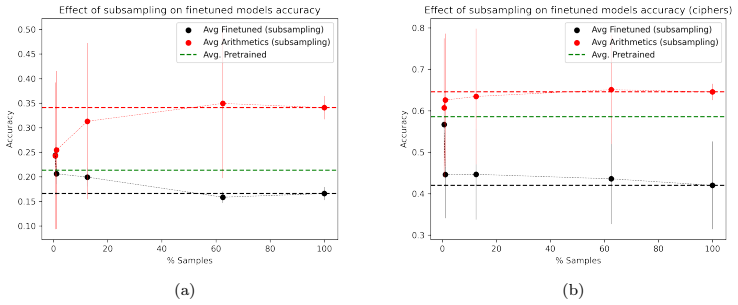
- [Section 4.2, Tables 1-4] All main results are single runs without reported seeds, error bars, or significance tests. Figure 5 reports standard deviations, but it is unclear whether these are across independent training runs or across sub-sampling proportions. For a claim of consistent superiority across nine targets, the authors should report mean±std over at least three independent seeds for the key comparisons in Table 3, or justify why single runs are sufficient given the effect size.
- [Section 5.1, Table 3] It is not stated explicitly which merged model feeds the 'Distributed (from Z)' row. The text says θ_ind is used, but the row label and the earlier discussion of Avg(Orth) leave room for ambiguity. Please state in the table caption and in Section 5.1 whether the transfer results use Avg(Ind.) (all seven experts) or Avg(Orth.) (excluding MLT and Parzival). This matters because if Avg(Orth.) is used, the orthogonal-subset selection becomes load-bearing; if Avg(Ind.) is used, the skeptic's concern about hand-selecting orthogonal domains is addressed for the transfer claim. Either way, the ambiguity should be resolved.
- [Section 4.2, Table 3] The fixed 30-epoch transfer budget is justified as 'ensuring convergence in all cases', but Table 3 shows near-zero accuracy for Borg (0.0%) and Chinese (1.03%) under Centralized (from Z), which suggests that the centralized baseline may be severely undertrained or overfit under this budget. Please show learning curves or a sweep of transfer epochs for both routes, or qualify the claim as 'under a fixed optimization budget'. This would rule out the possibility that the distributed advantage is an artifact of the chosen epoch count rather than a property of the merged initialization.
minor comments (5)
- [Throughout] There are several typos, including 'valiate' (Section 5.1), 'tunning', and 'finetunning'. A careful proofread is recommended.
- [Figure 7] The claim that performance 'decays due to over-specialization' after many meta-learning steps is not quantitatively supported in the text; please report the actual accuracies or a statistical comparison, or soften the claim.
- [Related Work / Conclusions] The paper contrasts itself with 'state-of-the-art meta-learning' but does not run any meta-learning baseline such as Reptile or MAML. If the distinction is important, please add such a baseline or reframe the claim to avoid implying a direct comparison.
- [Table 4] The ablation table has dense formatting with abbreviated task-vector names and no explicitly labeled row/column groups; adding clear group labels and a note on how 'Best' and 'Worst' are defined would improve readability.
- [Abstract / Introduction] The phrase 'Even when using the same exact training data' is potentially misleading, as discussed in Major Comment 1; consider rephrasing to 'same target training data' or 'identical fine-tuning data' once the controlled comparison is added.
Circularity Check
No significant circularity: the task-vector averaging comparison is self-contained against external baselines with no target-derived fitting.
full rationale
The paper's central claim is an empirical comparison: starting from a shared HierText seed θ0, averaging task vectors from seven independently fine-tuned Latin OCR experts (Eq. 2) gives an initialization that transfers to low-resource alphabets and ciphers better than centralized fine-tuning from the same seed. No target-derived quantity is fitted: the same k, T, learning rate, and 30 transfer epochs are used for every script, and Table 3's 'Distributed (from Z)' uses all seven domain experts (θind) without per-target selection. The averaged model is defined by Eq. 2 from source-domain task vectors only, and the transfer gain is measured against external baselines on held-out target splits, not against a quantity used to construct the model. The locality and orthogonality assumptions are imported from external prior work ([16], [37], [40]) rather than from the authors' own results; the only author-overlapping citation ([42], the Esposalles dataset) is a data source, not a load-bearing premise. The Avg(Orth) exclusion of MLT and Parzival is a post hoc ablation for the OOD table, not the route used for the main transfer results, so it does not make the headline prediction equivalent to its inputs. No equation in the paper defines a prediction in terms of the target data used to evaluate it, and no fitted parameter is renamed as a prediction; hence no significant circularity.
Assumptions & free parameters
free parameters (3)
- Default sub-domain training steps and aggregation rounds =
k = 75, T = 1
- Transfer fine-tuning epochs =
30
- Optimizer, learning rate, batch size =
Adam, lr = 1e-5, batch = 128
assumptions (4)
- domain assumption Task vectors from fine-tuned models can be linearly averaged without destructive interference (locality/linearity assumption).
- domain assumption A HierText Latin-pretrained seed is a sufficiently central initialization for all downstream OCR experts.
- standard math The FedAvg/Reptile/task-arithmetic equivalence justifies interpreting T averaging rounds as a meta-learning procedure.
- domain assumption The fixed 30-epoch transfer protocol is equally fair to centralized and distributed starting points.
Cite this review
Pith. "Pith review of The OCR Quest for Generalization: Learning to recognize low-resource alphabets with model editing." pith.science (2026). https://pith.science/paper/XVHG52IZ
@misc{pith2026250606761,
  author       = {Pith},
  title        = {Pith review of: The OCR Quest for Generalization: Learning to recognize low-resource alphabets with model editing},
  year         = {2026},
  howpublished = {\url{https://pith.science/paper/XVHG52IZ}},
  note         = {Machine review of arXiv:2506.06761}
}
read the original abstract
Achieving robustness in recognition systems across diverse domains is crucial for their practical utility. While ample data availability is usually assumed, low-resource languages, such as ancient manuscripts and non-western languages, tend to be kept out of the equations of massive pretraining and foundational techniques due to an under representation. In this work, we aim for building models which can generalize to new distributions of data, such as alphabets, faster than centralized fine-tune strategies. For doing so, we take advantage of the recent advancements in model editing to enhance the incorporation of unseen scripts (low-resource learning). In contrast to state-of-the-art meta-learning, we showcase the effectiveness of domain merging in sparse distributions of data, with agnosticity of its relation to the overall distribution or any other prototyping necessity. Even when using the same exact training data, our experiments showcase significant performance boosts in \textbf{transfer learning} to new alphabets and \textbf{out-of-domain evaluation} in challenging domain shifts, including historical ciphered texts and non-Latin scripts. This research contributes a novel approach into building models that can easily adopt under-represented alphabets and, therefore, enable document recognition to a wider set of contexts and cultures.
Figures


Figures from the paper (4 more)



Reference graph
Works this paper leans on
-
[1]
Albets, R.P.: Els arxius, la llei d’arxius i documents i el sistema d’arxius de catalunya: on som? Lligall 36, 44–67 (2013), https://raco.cat/ index.php/lligall/article/view/340107/431046, accessed: 2025- 02-13
work page 2013
-
[2]
https://cl.lingfil.uu.se/~bea/borg/ (Jan 2018)
Aldarrab, N., Knight, K., Megyesi, B.: The Borg.lat.898 Cipher. https://cl.lingfil.uu.se/~bea/borg/ (Jan 2018)
work page 2018
-
[3]
Atienza, R.: Vision transformer for fast and efficient scene text recogni- tion (2021)
work page 2021
-
[4]
Brothman, B.: The past that archives keep: memory, history, and the preservation of archival records. Archivaria pp. 48–80 (2001)
work page 2001
-
[5]
In: Proceedings of the 22nd ACM Symposium on Document Engineering
Campiotti, I., Lotufo, R.: Optical character recognition with transform- ers and ctc. In: Proceedings of the 22nd ACM Symposium on Document Engineering. pp. 1–4 (2022)
work page 2022
-
[6]
In: 32nd USENIX Security Symposium (USENIX Security 23)
Carlini, N., Hayes, J., Nasr, M., Jagielski, M., Sehwag, V., Tramer, F., Balle, B., Ippolito, D., Wallace, E.: Extracting training data from diffu- sion models. In: 32nd USENIX Security Symposium (USENIX Security 23). pp. 5253–5270 (2023)
work page 2023
-
[7]
ACM Computing Surveys (CSUR)54(2), 1–35 (2021)
Chen, X., Jin, L., Zhu, Y., Luo, C., Wang, T.: Text recognition in the wild: A survey. ACM Computing Surveys (CSUR)54(2), 1–35 (2021)
work page 2021
-
[8]
arXiv preprint arXiv:1908.00262 (2019)
Choi, J., Jeong, M., Kim, T., Kim, C.: Pseudo-labeling curriculum for unsupervised domain adaptation. arXiv preprint arXiv:1908.00262 (2019)
arXiv 2019
Show all 65 references
-
[9]
International Journal on Document Analysis and Recognition (IJDAR)23(1), 31–52 (2020)
Ch’ng, C.K., Chan, C.S., Liu, C.L.: Total-text: toward orientation ro- bustness in scene text detection. International Journal on Document Analysis and Recognition (IJDAR)23(1), 31–52 (2020)
2020
-
[10]
In: Fink, G.A., Jain, R., Kise, K., Zanibbi, R
Etter, D., Carpenter, C., King, N.: A hybrid model for multilingual ocr. In: Fink, G.A., Jain, R., Kise, K., Zanibbi, R. (eds.) Document Analysis and Recognition - ICDAR 2023. pp. 467–483. Springer Nature Switzerland, Cham (2023) 22
2023
-
[11]
Fallah, A., Mokhtari, A., Ozdaglar, A.: Personalized federated learn- ing: A meta-learning approach (2020),https://arxiv.org/abs/2002. 07948
2020
-
[12]
Pattern recognition letters33(7), 934–942 (2012)
Fischer, A., Keller, A., Frinken, V., Bunke, H.: Lexicon-freehandwritten word spotting using character hmms. Pattern recognition letters33(7), 934–942 (2012)
2012
-
[13]
In: Proceedings of the 23rd international conference on Machine learning
Graves, A., Fernández, S., Gomez, F., Schmidhuber, J.: Connection- ist temporal classification: labelling unsegmented sequence data with recurrent neural networks. In: Proceedings of the 23rd international conference on Machine learning. pp. 369–376 (2006)
2006
-
[14]
In: International Conference on Historical Cryptology
Héder, M., Megyesi, B.: The decode database of historical ciphers and keys: Version 2. In: International Conference on Historical Cryptology. pp. 111–114 (2022)
2022
-
[15]
In: Document Analysis and Recognition– ICDAR 2021: 16th International Conference, Lausanne, Switzerland, September 5–10, 2021, Proceedings, Part III 16
Huang, Y., Jin, L., Peng, D.: Zero-shot chinese text recognition via matching class embedding. In: Document Analysis and Recognition– ICDAR 2021: 16th International Conference, Lausanne, Switzerland, September 5–10, 2021, Proceedings, Part III 16. pp. 127–141. Springer (2021)
2021
-
[16]
Ilharco, G., Ribeiro, M.T., Wortsman, M., Gururangan, S., Schmidt, L., Hajishirzi, H., Farhadi, A.: Editing models with task arithmetic (2023)
2023
-
[17]
AI & society37(3), 823–835 (2022)
Jaillant, L., Caputo, A.: Unlocking digital archives: cross-disciplinary perspectives on ai and born-digital data. AI & society37(3), 823–835 (2022)
2022
-
[18]
In: 2019 International Conference on Document Analysis and Recognition Workshops (ICDARW)
Jaume, G., Ekenel, H.K., Thiran, J.P.: Funsd: A dataset for form under- standing in noisy scanned documents. In: 2019 International Conference on Document Analysis and Recognition Workshops (ICDARW). IEEE
2019
-
[19]
Jiang, Y., Konečný, J., Rush, K., Kannan, S.: Improving feder- ated learning personalization via model agnostic meta learning (2023), https://arxiv.org/abs/1909.12488
2023 arXiv
-
[20]
In: Pattern Recognition: 40th 23 German Conference, GCPR 2018, Stuttgart, Germany, October 9-12, 2018, Proceedings 40
Kang, L., Toledo, J.I., Riba, P., Villegas, M., Fornés, A., Rusinol, M.: Convolve, attend and spell: An attention-based sequence-to-sequence model for handwritten word recognition. In: Pattern Recognition: 40th 23 German Conference, GCPR 2018, Stuttgart, Germany, October 9-12,...
2019
-
[21]
In: 2013 12th international con- ference on document analysis and recognition
Karatzas, D., Shafait, F., Uchida, S., Iwamura, M., i Bigorda, L.G., Mestre, S.R., Mas, J., Mota, D.F., Almazan, J.A., De Las Heras, L.P.: Icdar 2013 robust reading competition. In: 2013 12th international con- ference on document analysis and recognition. pp. 1484–1493. IEEE (2013)
2013
-
[22]
Archives and manuscripts33(1), 44–61 (2005)
Ketelaar, E.: Sharing, collected memories in communities of records. Archives and manuscripts33(1), 44–61 (2005)
2005
-
[23]
Kingma, D.P., Ba, J.: Adam: A method for stochastic optimization (2017)
2017
-
[24]
In: Proceed- ings of the 4th Workshop on Building and Using Comparable Corpora: Comparable Corpora and the Web
Knight, K., Megyesi, B., Schaefer, C.: The Copiale Cipher. In: Proceed- ings of the 4th Workshop on Building and Using Comparable Corpora: Comparable Corpora and the Web. pp. 2–9. Association for Computa- tional Linguistics, Portland, Oregon (Jun 2011)
2011
-
[25]
Science 350(6266), 1332–1338 (2015)
Lake, B.M., Salakhutdinov, R., Tenenbaum, J.B.: Human-level concept learning through probabilistic program induction. Science 350(6266), 1332–1338 (2015)
2015
-
[26]
Journal of Electronic Imaging 28(1), 013023 (2019)
Laroca, R., Barroso, V., Diniz, M.A., Gonçalves, G.R., Schwartz, W.R., Menotti, D.: Convolutional neural networks for automatic meter reading. Journal of Electronic Imaging 28(1), 013023 (2019). https://doi.org/10.1117/1.JEI.28.1.013023
2019 doi
-
[27]
Rutgers University Press (2016)
Lawrence, S.C.: Privacy and the past: Research, law, archives, ethics. Rutgers University Press (2016)
2016
-
[28]
In: Workshop on challenges in representation learning, ICML
Lee, D.H., et al.: Pseudo-label: The simple and efficient semi-supervised learning method for deep neural networks. In: Workshop on challenges in representation learning, ICML. vol. 3, p. 896. Atlanta (2013)
2013
-
[29]
arXiv preprint arXiv:2410.11005 (2024) 24
Lin, F., Mao, S., La Malfa, E., Hofmann, V., de Wynter, A., Yao, J., Chen, S.Q., Wooldridge, M., Wei, F.: One language, many gaps: Eval- uating dialect fairness and robustness of large language models in rea- soning tasks. arXiv preprint arXiv:2410.11005 (2024) 24
2024 arXiv
-
[30]
In: Proceedings of the IEEE/CVF Conference on Computer Vision and Pattern Recognition (2022)
Long, S., Qin, S., Panteleev, D., Bissacco, A., Fujii, Y., Raptis, M.: Towards end-to-end unified scene text detection and layout analysis. In: Proceedings of the IEEE/CVF Conference on Computer Vision and Pattern Recognition (2022)
2022
-
[31]
International Journal on Document Analysis and Recognition5, 39–46 (2002)
Marti, U.V., Bunke, H.: The iam-database: an english sentence database for offline handwriting recognition. International Journal on Document Analysis and Recognition5, 39–46 (2002)
2002
-
[32]
McMahan, H.B., Moore, E., Ramage, D., Hampson, S., y Arcas, B.A.: Communication-efficient learning of deep networks from decentralized data (2023), https://arxiv.org/abs/1602.05629
2023 arXiv
-
[33]
In: 2019 Interna- tional Conference on Document Analysis and Recognition (ICDAR)
Michael, J., Labahn, R., Grüning, T., Zöllner, J.: Evaluating sequence- to-sequence models for handwritten text recognition. In: 2019 Interna- tional Conference on Document Analysis and Recognition (ICDAR). pp. 1286–1293. IEEE (2019)
2019
-
[34]
In: BMVC-British machine vision con- ference
Mishra, A., Alahari, K., Jawahar, C.: Scene text recognition using higher order language priors. In: BMVC-British machine vision con- ference. BMVA (2012)
2012
-
[35]
In: ComputerVision–ECCV2020: 16thEuropeanConference, Glasgow, UK, August 23–28, 2020, Proceedings, Part XXV 16
Musgrave, K., Belongie, S., Lim, S.N.: A metric learning reality check. In: ComputerVision–ECCV2020: 16thEuropeanConference, Glasgow, UK, August 23–28, 2020, Proceedings, Part XXV 16
2020
-
[36]
Nayef, N., Patel, Y., Busta, M., Chowdhury, P.N., Karatzas, D., Khlif, W., Matas, J., Pal, U., Burie, J.C., lin Liu, C., Ogier, J.M.: Icdar2019 robust reading challenge on multi-lingual scene text detection and recog- nition – rrc-mlt-2019 (2019)
2019
-
[37]
Nichol, A., Achiam, J., Schulman, J.: On first-order meta-learning al- gorithms (2018), https://arxiv.org/abs/1803.02999
2018 arXiv
-
[38]
Nikolaidou, K., Seuret, M., Mokayed, H., Liwicki, M.: A survey of his- torical document image datasets (2022)
2022
-
[39]
Archival Is- sues 41(1) (2021) 25
Olliff, M.T., Dill, E.: The distributed archives model: a strategy for sharing authority with partners to document communities. Archival Is- sues 41(1) (2021) 25
2021
-
[40]
Ortiz-Jimenez, G., Favero, A., Frossard, P.: Task arithmetic in the tan- gent space: Improved editing of pre-trained models (2023)
2023
-
[41]
http:// rrc.cvc.uab.es, last visited on November 11
Robust Reading Competition: Robust reading competition. http:// rrc.cvc.uab.es, last visited on November 11
-
[42]
Pat- tern Recognition46(6), 1658–1669 (2013)
Romero, V., Fornés, A., Serrano, N., Sánchez, J.A., Toselli, A.H., Frinken, V., Vidal, E., Lladós, J.: The esposalles database: An an- cient marriage license corpus for off-line handwriting recognition. Pat- tern Recognition46(6), 1658–1669 (2013)
2013
-
[43]
In: 2011 international conference on document analysis and recognition
Roy, P.P., Ramel, J.Y., Ragot, N.: Word retrieval in historical docu- ment using character-primitives. In: 2011 international conference on document analysis and recognition. pp. 678–682. IEEE (2011)
2011
-
[44]
arXiv preprint arXiv:1511.04176 (2015)
Sahu, D.K., Sukhwani, M.: Sequence to sequence learning for optical character recognition. arXiv preprint arXiv:1511.04176 (2015)
2015 arXiv
-
[45]
In: International Conference on Document Analysis and Recognition
Seuret, M., van der Loop, J., Weichselbaumer, N., Mayr, M., Molnar, J., Hass, T., Christlein, V.: Combining ocr models for reading early modern books. In: International Conference on Document Analysis and Recognition. pp. 342–357. Springer (2023)
2023
-
[46]
arXiv preprint arXiv:2411.11295 (2024)
Shu, P., Chen, J., Liu, Z., Wang, H., Wu, Z., Zhong, T., Li, Y., Zhao, H., Jiang, H., Pan, Y., et al.: Transcending language boundaries: Harnessing llms for low-resource language translation. arXiv preprint arXiv:2411.11295 (2024)
2024 arXiv
-
[47]
In: Proceedings of the IEEE/CVF conference on computer vision and pattern recognition
Singh, A., Pang, G., Toh, M., Huang, J., Galuba, W., Hassner, T.: Textocr: Towards large-scale end-to-end reasoning for arbitrary-shaped scene text. In: Proceedings of the IEEE/CVF conference on computer vision and pattern recognition
-
[48]
In: Document Analysis and Recognition–ICDAR 2021: 16th International Conference, Lausanne, Switzerland, September 5–10, 2021, Proceedings, Part III 16
Singh, S.S., Karayev, S.: Full page handwriting recognition via image to sequence extraction. In: Document Analysis and Recognition–ICDAR 2021: 16th International Conference, Lausanne, Switzerland, September 5–10, 2021, Proceedings, Part III 16. pp. 55–69. Springer (2021)
2021
-
[49]
arXiv preprint arXiv:2406.08726 (2024) 26
Smith, G., Fleisig, E., Bossi, M., Rustagi, I., Yin, X.: Standard language ideology in ai-generated language. arXiv preprint arXiv:2406.08726 (2024) 26
2024 arXiv
-
[50]
Soltero, R.: Decentralized technologies & the future of historical narra- tives
-
[51]
Pattern Recognition Letters160, 43–49 (2022)
Souibgui, M.A., Fornés, A., Kessentini, Y., Megyesi, B.: Few shots are all you need: a progressive learning approach for low resource handwrit- ten text recognition. Pattern Recognition Letters160, 43–49 (2022)
2022
-
[52]
Advances in neural information processing systems14 (2001)
Szummer, M., Jaakkola, T.: Partially labeled classification with markov random walks. Advances in neural information processing systems14 (2001)
2001
-
[53]
In: Document Recognition
Taghva, K., Borsack, J., Condit, A.: Expert system for automatically correcting ocr output. In: Document Recognition. vol. 2181, pp. 270–
-
[54]
Australian Review of Applied Linguistics (2025)
Tran, H., Stell, A.: Beyond borders or building new walls? the potential for generative ai in recolonising the learning of vietnamese dialects and mandarin varieties. Australian Review of Applied Linguistics (2025)
2025
-
[55]
In: arXiv preprint arXiv:1601.07140 (2016), http://vision
Veit, A., Matera, T., Neumann, L., Matas, J., Belongie, S.: Coco-text: Dataset and benchmark for text detection and recognition in natural images. In: arXiv preprint arXiv:1601.07140 (2016), http://vision. cornell.edu/se3/wp-content/uploads/2016/01/1601.07140v1.pdf
2016 arXiv
-
[56]
Advances in neural information process- ing systems29 (2016)
Vinyals, O., Blundell, C., Lillicrap, T., Wierstra, D., et al.: Matching networks for one shot learning. Advances in neural information process- ing systems29 (2016)
2016
-
[57]
In: International Conference on Document Analysis and Recogni- tion
Vlachou-Efstathiou, M., Siglidis, I., Stutzmann, D., Aubry, M.: An interpretable deep learning approach for morphological script type anal- ysis. In: International Conference on Document Analysis and Recogni- tion. pp. 3–21. Springer (2024)
2024
-
[58]
In: Proceedings of the IEEE/CVF Conference on Computer Vision and Pattern Recognition
Wan, Z., Zhang, J., Zhang, L., Luo, J., Yao, C.: On vocabulary reliance in scene text recognition. In: Proceedings of the IEEE/CVF Conference on Computer Vision and Pattern Recognition. pp. 11425–11434 (2020)
2020
-
[59]
In: 2011 International conference on computer vision
Wang, K., Babenko, B., Belongie, S.: End-to-end scene text recognition. In: 2011 International conference on computer vision. pp. 1457–1464. IEEE (2011) 27
2011
-
[60]
In: 2019 International Conference on Document Anal- ysis and Recognition (ICDAR)
Weinman, J., Chen, Z., Gafford, B., Gifford, N., Lamsal, A., Niehus- Staab, L.: Deep neural networks for text detection and recognition in historical maps. In: 2019 International Conference on Document Anal- ysis and Recognition (ICDAR). pp. 902–909. IEEE (2019)
2019
-
[61]
In: Proceedings of the 25th international conference on Ma- chine learning
Weston, J., Ratle, F., Collobert, R.: Deep learning via semi-supervised embedding. In: Proceedings of the 25th international conference on Ma- chine learning. pp. 1168–1175 (2008)
2008
-
[62]
In: International Conference on Document Analysis and Recognition
Wick, C., Reul, C.: One-model ensemble-learning for text recognition of historical printings. In: International Conference on Document Analysis and Recognition. pp. 385–399. Springer (2021)
2021
-
[63]
In: Proceedings of the IEEE/CVF conference on computer vision and pattern recognition
Yan, R., Peng, L., Xiao, S., Yao, G.: Primitive representation learning for scene text recognition. In: Proceedings of the IEEE/CVF conference on computer vision and pattern recognition. pp. 284–293 (2021)
2021
-
[64]
In: Proceedings of the 62nd Annual Meeting of the Association for Computational Linguistics (Volume 1: Long Papers)
Zhang, C., Tao, M., Huang, Q., Lin, J., Chen, Z., Feng, Y.: Mc2: Towards transparent and culturally-aware nlp for minority languages in china. In: Proceedings of the 62nd Annual Meeting of the Association for Computational Linguistics (Volume 1: Long Papers). pp. 8832–8850 (2024)
2024
-
[65]
arXiv preprint arXiv:2007.11462 (2020) 28
Zhang, W., Qiu, Y., Bai, S., Zhang, R., Wei, X., Bai, X.: Fedocr: Communication-efficient federated learning for scene text recognition. arXiv preprint arXiv:2007.11462 (2020) 28
2020 arXiv
Reviewed August 7, 2026 · model on record in the stance chip above.
Discussion (0). Sign in to comment.