REVIEW 3 major objections 6 minor 1 cited by
PolyMicros: Bootstrapping a Foundation Model for Polycrystalline Material Structure
T0 review · 3 major / 6 minor · reviewed 2026-08-07 · deepseek-v4-flash
Pith's one-line read A physics-driven augmentation loop converts five experimental microstructures into a training set large enough for a foundation model of polycrystalline materials.
desk verdict Bootstrapping a diffusion prior for polycrystals from five volumes is a real idea; the two zero-shot demos are suggestive but rest on one held-out volume each. read the letter →
The pith
A machine-rendered reading of the paper's core claim, the machinery that carries it, and where it could break.
The reading
What carries the argument
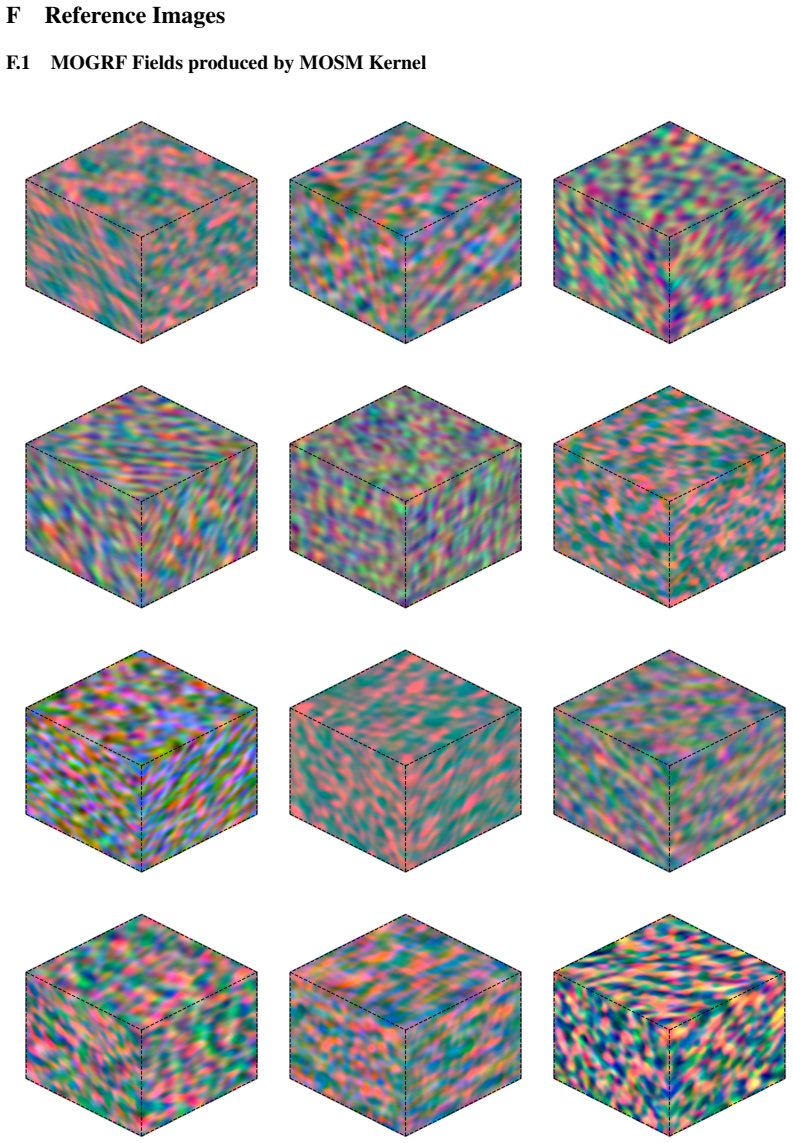
The Local-Global Decomposition (LGD) framework carries the argument: a two-stage generative scheme that decomposes microstructure generation into a global Multi-Output Gaussian Random Field (MOGRF), fixed by target 1- and 2-point statistics, and a local diffusion model that refines neighborhoods. The augmentation step uses the Multi-Output Spectral Mixture Kernel (MOSM) to propose 2000 diverse multi-output covariance fields, sampled by Latin Hypercube Sampling within heuristic parameter bounds, and coordinates five local diffusion models with those global statistics. A modified EDM sampler with replaceable conditioning functions then turns the unconditional PolyMicros prior into task-specific samplers. This decomposition is what lets five examples stand in for a dataset of 30,000.
What would settle it
Train the same augmentation pipeline on five experimental microstructures drawn from a different material class or crystal symmetry, then measure super-resolution and dimensionality-expansion error on a held-out volume from that class; if the pointwise MAPE or target-statistics error degrades by orders of magnitude, the bootstrap does not generalize as claimed.
Extended reading notes
Core claim
The central claim is that a foundation model for polycrystalline microstructures can be bootstrapped from as few as five experimental volumes by separating global and local structure. Global long-range patterns are represented by two-point spatial statistics generated from a parameterized spectral-mixture kernel with heuristic bounds, while local realism is supplied by five diffusion models, each trained on overlapping patches from one experimental volume. Combinatorial sampling yields 30,000 synthetic volumes of size $128^3$, and training an EDM-style UNet on this dataset produces PolyMicros, a generative prior over polycrystals. The paper demonstrates that this prior, used with masked inpainting or with alternating optimization-and-diffusion sampling, solves microstructure super-resolution (4.05% pointwise MAPE) and 2D-to-3D dimensionality expansion (maximum target-statistics error below $10^{-5}$) with no additional training.
Load-bearing premise
The argument hinges on the heuristic MOSM kernel parameter bounds producing covariances that the five local diffusion models can refine into realistic polycrystals without destroying the requested long-range statistics.
Editorial extensions
If this is right
- A foundation-model prior for polycrystalline microstructure can be built from single-digit experimental counts, so data-scarce structural materials are no longer ruled out from generalist generative models.
- The same PolyMicros prior can be reused for other microscopy tasks by swapping conditioning functions, such as denoising or repairing corrupted volumes, as demonstrated by additional inpainting masks in the appendix.
- Because PolyMicros is an unconditional diffusion prior, it can regularize inverse problems such as microstructure design or property prediction through Bayesian conditioning, without new experimental data.
- The augmentation recipe transfers to any statistically stationary spatial field, so other scientific domains with scarce observations could apply the same bootstrapping scheme.
- The held-out results suggest that the prior captures both local grain morphology and long-range statistical patterns, which are precisely the features needed for accelerating 3D experimental microscopy.
Reading between the lines
- The reported numbers are measured against two specific held-out volumes; a harder test would be generalization to an unseen material system whose local neighborhood is absent from the five training sources, a case the paper's own limitation discussion suggests may be constrained.
- The paper's caveat that augmentation 'cannot extend arbitrarily far' implies a testable prediction: adding more seed experimental volumes should extend the diversity horizon roughly additively, which could be checked with the PCA-variance convergence metric used in the diversity analysis.
- The success of alternating optimization and diffusion suggests the same prior could be used for matching higher-order statistics, such as three-point correlations, since the conditioning function only needs a differentiable statistic.
- If the heuristic MOSM parameter bounds are replaced by bounds learned from a larger corpus of experimental covariances, the diversity and physical plausibility of the synthetic dataset could improve beyond what the current trial-and-error bounds achieve.
Editorial analysis
A structured set of objections, weighed in public.
Referee Report
Summary. The paper proposes PolyMicros, a diffusion-based foundation model for 3D polycrystalline microstructures, trained entirely on a synthetic dataset bootstrapped from only five experimental 3D volumes. The bootstrapping pipeline uses an ensemble of Local-Global Decomposition (LGD) generative models: global 2-point statistics are sampled from a Multi-Output Spectral Mixture (MOSM) kernel parameterized by Latin Hypercube Sampling, and local neighborhood statistics are captured by five diffusion models trained on patches from the five experimental volumes. The two components are combined to generate 30,000 synthetic 128^3 microstructures, which are then used to train PolyMicros. The paper demonstrates zero-shot use of PolyMicros on two tasks: 4x microstructure super-resolution via masked inpainting (4.05% pointwise MAPE on one held-out ferritic steel volume) and 2D-to-3D dimensionality expansion via optimization-based conditioning on three orthogonal 2-point statistics (maximum 2-point statistics error below 1e-5). The authors interpret these results as evidence that a physics-driven augmentation scheme can support a useful generalist prior for data-scarce microstructure science.
Significance. If the central claims hold, this is a valuable contribution to data-efficient scientific machine learning. The core idea—using smaller physics-informed generative models to curate a large synthetic dataset that trains a generalist diffusion prior—addresses a real bottleneck in mesoscale materials science, where experimental 3D microstructure data are extremely scarce. The paper's strengths include concrete quantitative metrics on held-out experimental data, an ablation study of the conditioning schedule in super-resolution, uncertainty estimates from multiple posterior samples, and the stated intention to release models and datasets. The dataset-diversity comparison against MICRO2D, DREAM3D, and an experimental EBSD dataset is also a useful step. However, the current evaluation does not yet establish the breadth of generalization implied by the 'foundation model' framing: each downstream task is demonstrated on essentially a single held-out volume, the dimensionality-expansion metric only measures adherence to the conditioning statistics, and no comparisons are made to existing 2D-to-3D reconstruction methods.
major comments (3)
- [§5.2–5.3] The zero-shot claims are supported by exactly one held-out volume per task. The super-resolution study uses the ferritic steel reference [8] (§5.2), and the dimensionality-expansion study appears to use a single reference volume (§5.3 and App. D.2). Since the paper's stated motivation is a generalist prior that transfers across 'a wide range of material classes, manufacturing processes, and local microstructure morphology' (§3), one material system cannot establish such transfer. I recommend evaluating both tasks on multiple held-out experimental volumes spanning different crystal symmetries, grain morphologies, and processing histories, with per-volume errors reported.
- [§5.3] The headline dimensionality-expansion metric—maximum 2-point statistics error below 1e-5—measures only how closely the generated volume matches the conditioning statistics, which the conditioning procedure explicitly optimizes. It does not validate the realism of the full 3D structure, and no comparison is made to existing 2D-to-3D methods such as Kench and Cooper [47], DREAM3D-based pipelines [34,35], or the diffusion-based approach of Lee and Yun [50], all of which are cited in App. D.2. The statement that this is 'the first successful attempt at performing the microstructure dimensionality task for polycrystalline materials beyond first-order accuracy' is therefore not supported by the evidence as presented. Please add baseline comparisons and independent realism metrics, for example grain-size distributions, boundary-curvature statistics, or homogenized property predictions.
- [§3.1, App. B.1, App. E] The diversity of the synthetic dataset rests on the assumption that the MOSM kernel parameter box, selected through heuristics and 'an aspect of trial and error' (App. B.1), contains a representative set of physically feasible polycrystalline covariances. The paper itself states that the augmentation framework 'cannot extend arbitrarily far' and 'does not extend uniformly' (App. E), and that microstructures far from their seed are 'likely increasingly less plausible.' Because PolyMicros is trained entirely on LGD-generated synthetic volumes, its zero-shot behavior inherits any bias of that generator. I would like to see a direct test of out-of-distribution capability: for example, generate from target 2-point statistics deliberately chosen outside the trained MOSM box, or evaluate on additional experimental volumes whose statistics lie far from the five seeds, and report whether super-resolution and dimensionality-expansion quality degrade. This would speak directly to the weakest load-bearing assumption in the paper.
minor comments (6)
- [§5.2] The phrase '4X down-sample' should use a proper multiplication sign and clarify that the down-sampling is along one axis; the abbreviation MAPE should be defined at first use.
- [App. D.1] The ablation text says '60 − 100%' with inconsistent spacing and an en dash; this should be cleaned up for readability.
- [App. E] There is a typo, 'requirments', that should be corrected to 'requirements'.
- [§5.1] The comparison of explained-variance saturation is informative, but the two-dimensional PCA projections in Fig. 3 can obscure overlaps in a high-dimensional statistics space; a quantitative coverage or nearest-neighbor diversity measure would strengthen the diversity claim.
- [App. D.2] The term 'in-painting' is hyphenated inconsistently; use a single spelling throughout.
- [§1] The capitalization of 'Foundation Models' varies across the abstract and main text; please make it consistent.
Circularity Check
The 2D-to-3D success metric is the conditioning optimizer's own stopping criterion, making that headline result enforced by construction rather than independently predicted.
-
fitted input called prediction
[Sec. 5.3 (Reconstruction from Partial Statistics); App. D.2, Algorithm 5]
"We achieve a maximum error below 1e−5 on the target statistics across the generated samples. App. D.2 presents comparisons of the full 2-point statistics errors. Overall, this result is incredibly precise, and is the first successful attempt at performing the microstructure dimensionality task for polycrystalline materials beyond first-order accuracy."
The reported success metric is the objective function of the conditioning procedure, not an independent measurement. Algorithm 5 loops: err ← ∥f̂⊥ − f⊥∥²; while err > ϱ_i: x ← x − α_lr ∇_x err, with threshold schedule ϱ(t) = (N−t)·1e−5 + 1e−7. Thus 'maximum error below 1e−5' is guaranteed by the optimization stopping rule, so the 2-point statistics match is enforced by construction. Presenting this enforced convergence as quantitative confirmation, and as the basis for the 'beyond first-order accuracy' claim, is a fitted input renamed as a prediction: the metric cannot fail under the algorithm and does not independently validate realism or transferability.
full rationale
The PolyMicros pipeline is largely self-contained rather than circular: the synthetic dataset is produced by LGD models from five experimental volumes, PolyMicros is trained on that dataset, and the super-resolution case study is evaluated on a held-out experimental volume [8] that was not used for data generation. The reported 4.05% pointwise MAPE in super-resolution is a genuine held-out prediction, and the diversity analysis in Fig. 3 compares the synthetic dataset against external datasets (HT-EBSD-2D, MICRO2D, DREAM3D), which is independent evidence. The dimensionality-expansion case study, however, contains one concrete circular step: the 'maximum error below 1e−5 on the target statistics' is the stopping criterion of the conditioning optimizer in Algorithm 5, so that particular quantitative claim reduces by construction to the algorithm's own objective. The paper also leans heavily on prior LGD/MOGRF work by the same authors for the core extrapolation assumption, but those citations provide the modeling framework rather than the target result, and the held-out experiments give independent support for the overall utility claim; consequently that self-citation does not by itself raise the score. The score of 6 reflects the one enforced-metric prediction in an otherwise externally evaluated pipeline.
Assumptions & free parameters
free parameters (5)
- MOSM kernel parameter bounds (A, ς, ω, θ, ϕ, Q) =
A elements 1.5-5, ς between -5 and 5, ω between -0.02 and 0.02, θ between -0.5 and 0.5, ϕ between 0 and 2π, Q=4 (132…
- LGD sampling skip parameter =
skip = 12 diffusion steps out of a 25-step schedule (approximately half the sampling steps)
- Fraction of diffusion steps with mask enforcement (super-resolution) =
75% of diffusion steps
- Number of MOSM mixtures Q =
4 mixtures, 132 kernel parameters
- LHS sampling of 2000 covariance parameter sets =
2000 accepted sets, about 8% rejection rate
assumptions (5)
- domain assumption Polycrystalline microstructures can be represented as ROGSH fields, and their 1- and 2-point statistics are sufficient to quantify salient differences for generative purposes.
- domain assumption The microstructure generation process can be decomposed into a global Gaussian component (MOGRF) and local non-Gaussian corrections (diffusion model), as expressed in Eq. 11.
- ad hoc to paper The MOSM kernel parameter box contains a representative and diverse sample of physically feasible polycrystal covariances.
- domain assumption The spatial statistics and local neighborhood distributions are statistically stationary and periodic.
- domain assumption The experimental reference volumes used for evaluation are representative of the target task distribution.
invented entities (2)
-
PolyMicros foundation model
independent evidence
-
Synthetic PolyMicros dataset of 30,000 microstructures
independent evidence
Cite this review
Pith. "Pith review of PolyMicros: Bootstrapping a Foundation Model for Polycrystalline Material Structure." pith.science (2026). https://pith.science/paper/LO5AJ4ZP
@misc{pith2026250611055,
  author       = {Pith},
  title        = {Pith review of: PolyMicros: Bootstrapping a Foundation Model for Polycrystalline Material Structure},
  year         = {2026},
  howpublished = {\url{https://pith.science/paper/LO5AJ4ZP}},
  note         = {Machine review of arXiv:2506.11055}
}
read the original abstract
Recent advances in Foundation Models for Materials Science are poised to revolutionize the discovery, manufacture, and design of novel materials with tailored properties and responses. Although great strides have been made, successes have been restricted to materials classes where multi-million sample data repositories can be readily curated (e.g., atomistic structures). Unfortunately, for many structural and functional materials (e.g., mesoscale structured metal alloys), such datasets are too costly or prohibitive to construct; instead, datasets are limited to very few examples. To address this challenge, we introduce a novel machine learning approach for learning from hyper-sparse, complex spatial data in scientific domains. Our core contribution is a physics-driven data augmentation scheme that leverages an ensemble of local generative models, trained on as few as five experimental observations, and coordinates them through a novel diversity curation strategy to generate a large-scale, physically diverse dataset. We utilize this framework to construct PolyMicros, the first Foundation Model for polycrystalline materials (a structural material class important across a broad range of industrial and scientific applications). We demonstrate the utility of PolyMicros by zero-shot solving several long standing challenges related to accelerating 3D experimental microscopy. Finally, we make both our models and datasets openly available to the community.
Figures


Figures from the paper (16 more)




Forward citations
Cited by 1 Pith paper
-
Materials Behavior as Mechanism Ensembles: A Probabilistic Framework for Emergent Behaviors
Materials phenomena such as fatigue crack growth are framed as conditional probability landscapes over competing unit mechanisms, to be inferred from multiscale simulation and multimodal data and then optimized toward...
Reference graph
Works this paper leans on
-
[47]
S. Kench and S.J. Cooper. Generating three-dimensional structures from a two-dimensional slice with generative adversarial network-based dimensionality expansion. Nature Machine Intelligence, 3:299–305, 2021. doi: 10.1038/s42256-021-00322-1
-
[50]
Multi-plane denoising diffusion-based dimensionality expansion for 2d-to-3d reconstruction of microstructures with harmonized sampling
Kang-Hyun Lee and Gun Jin Yun. Multi-plane denoising diffusion-based dimensionality expansion for 2d-to-3d reconstruction of microstructures with harmonized sampling. npj Computational Materials, 10(1):99, 2024
2024
-
[1]
Phi-3 technical report: A highly capable language model locally on your phone
Marah Abdin, Jyoti Aneja, Hany Awadalla, Ahmed Awadallah, Ammar Ahmad Awan, Nguyen Bach, Amit Bahree, Arash Bakhtiari, Jianmin Bao, Harkirat Behl, et al. Phi-3 technical report: A highly capable language model locally on your phone. arXiv preprint arXiv:2404.14219, 2024
arXiv 2024
-
[2]
Marah Abdin, Jyoti Aneja, Harkirat Behl, Sébastien Bubeck, Ronen Eldan, Suriya Gunasekar, Michael Harrison, Russell J Hewett, Mojan Javaheripi, Piero Kauffmann, et al. Phi-4 technical report. arXiv preprint arXiv:2412.08905, 2024
arXiv 2024
-
[3]
Adams, S.R
B.L. Adams, S.R. Kalidindi, and D.T. Fullwood. Microstructure Sensitive Design for Perfor- mance Optimization. Butterworth-Heinemann, Waltham, MA, 2013
2013
-
[4]
Uncertainty propagation in a multiscale calphad-reinforced elastochemical phase-field model
Vahid Attari, Pejman Honarmandi, Thien Duong, Daniel J Sauceda, Douglas Allaire, and Raymundo Arroyave. Uncertainty propagation in a multiscale calphad-reinforced elastochemical phase-field model. Acta Materialia, 183:452–470, 2020
2020
-
[5]
Universal guidance for diffusion models
Arpit Bansal, Hong-Min Chu, Avi Schwarzschild, Soumyadip Sengupta, Micah Goldblum, Jonas Geiping, and Tom Goldstein. Universal guidance for diffusion models. In Proceedings of the IEEE/CVF Conference on Computer Vision and Pattern Recognition, pages 843–852, 2023
2023
-
[6]
Barber, J.A
Z.H. Barber, J.A. Leake, and T.W. Clyne. The doitpoms project: Micrograph library. URL https://www.doitpoms.ac.uk/miclib/index.php
Show all 118 references
-
[7]
Elena, Dávid P
Ilyes Batatia, Philipp Benner, Yuan Chiang, Alin M. Elena, Dávid P. Kovács, Janosh Riebesell, Xavier R. Advincula, Mark Asta, Matthew Avaylon, William J. Baldwin, Fabian Berger, Noam Bernstein, Arghya Bhowmik, Samuel M. Blau, Vlad C ˘arare, James P. Darby, Sandip De, Flaviano ...
-
[9]
Bruinsma, Ana Lucic, Megan Stanley, Anna Vaughan, Johannes Brandstetter, Patrick Garvan, Maik Riechert, Jonathan A
Cristian Bodnar, Wessel P. Bruinsma, Ana Lucic, Megan Stanley, Anna Vaughan, Johannes Brandstetter, Patrick Garvan, Maik Riechert, Jonathan A. Weyn, Haiyu Dong, Jayesh K. Gupta, Kit Thambiratnam, Alexander T. Archibald, Chun-Chieh Wu, Elizabeth Heider, Max Welling, Richard E. ...
2024 arXiv
-
[10]
Hudson, Ehsan Adeli, Russ Altman, Simran Arora, Sydney von Arx, Michael S
Rishi Bommasani, Drew A. Hudson, Ehsan Adeli, Russ Altman, Simran Arora, Sydney von Arx, Michael S. Bernstein, Jeannette Bohg, Antoine Bosselut, Emma Brunskill, Erik Brynjolfsson, Shyamal Buch, Dallas Card, Rodrigo Castellon, Niladri Chatterji, Annie Chen, Kathleen Creel, Jare...
-
[11]
Multi-task gaussian process prediction
Edwin V Bonilla, Kian Chai, and Christopher Williams. Multi-task gaussian process prediction. Advances in neural information processing systems, 20, 2007
2007
-
[12]
Brodnik, C
N.R. Brodnik, C. Muir, N. Tulshibagwale, J. Rossin, M.P. Echlin, C.M. Hamel, S.L.B. Kramer, T.M. Pollock, J.D. Kiser, C. Smith, and S.H. Daly. Perspective: Machine learning in experimen- tal solid mechanics. Journal of the Mechanics and Physics of Solids, 173:105231, 2023. doi...
2023
-
[13]
Language models are few-shot learners
Tom Brown, Benjamin Mann, Nick Ryder, Melanie Subbiah, Jared D Kaplan, Prafulla Dhariwal, Arvind Neelakantan, Pranav Shyam, Girish Sastry, Amanda Askell, et al. Language models are few-shot learners. Advances in neural information processing systems, 33:1877–1901, 2020
1901
-
[14]
Texture Analysis in Materials Science: Mathematic Methods
H-J Bunge. Texture Analysis in Materials Science: Mathematic Methods. Butterworth & Co., Berlin, 1982
1982
-
[15]
Statistically conditioned polycrystal generation using denoising diffusion models
Michael O Buzzy, Andreas E Robertson, and Surya R Kalidindi. Statistically conditioned polycrystal generation using denoising diffusion models. Acta Materialia, page 119746, 2024
2024
-
[16]
Active learning for the design of polycrystalline textures using conditional normalizing flows
Michael O Buzzy, David Montes de Oca Zapiain, Adam P Generale, Surya R Kalidindi, and Hojun Lim. Active learning for the design of polycrystalline textures using conditional normalizing flows. Acta Materialia, 284:120537, 2025
2025
-
[17]
Afrl additive manufacturing modeling series: challenge 4, 3d reconstruction of an in625 high-energy diffraction microscopy sample using multi-modal serial sectioning
Michael G Chapman, Megna N Shah, Sean P Donegan, J Michael Scott, Paul A Shade, David Menasche, and Michael D Uchic. Afrl additive manufacturing modeling series: challenge 4, 3d reconstruction of an in625 high-energy diffraction microscopy sample using multi-modal serial secti...
2021
-
[18]
Cheng, Y
S. Cheng, Y . Jiao, and Y . Ren. Data-driven learning of 3-point correlation functions as mi- crostructure representations. Acta Materialia, 229:117800, 2022. doi: 10.1016/j.actamat.2022. 117800
2022 doi
-
[19]
Nucleotide transformer: building and evaluating robust foundation models for human genomics
Hugo Dalla-Torre, Liam Gonzalez, Javier Mendoza-Revilla, Nicolas Lopez Carranza, Adam Henryk Grzywaczewski, Francesco Oteri, Christian Dallago, Evan Trop, Bernardo P de Almeida, Hassan Sirelkhatim, et al. Nucleotide transformer: building and evaluating robust foundation models...
2024
-
[20]
DeCost and Elizabeth A
Brain L. DeCost and Elizabeth A. Holm. A large dataset of synthetic sem images of powder materials and their ground truth 3d structures. Data in Brief, 9:727–731, 2016. doi: 10.1016/j. dib.2016.10.011
2016 doi
-
[21]
DeCost and Elizabeth A
Brian L. DeCost and Elizabeth A. Holm. A computer vision approach for automated analysis and classification of microstructural images. Computational Materials Science, 110:126–133,
-
[22]
DeCost, Matthew Hecht, Toby Francis, Bryan A
Brian L. DeCost, Matthew Hecht, Toby Francis, Bryan A. Webler, Yoosuf N. Picard, and Elizabeth Holm. Uhcsdb: Ultra high carbon steel micrograph database. Integrating Materials and Manufacturing Innovation, 6:197–205, 2017. doi: 10.1007/s40192-017-0097-0. 12
2017 doi
-
[23]
Bert: Pre-training of deep bidirectional transformers for language understanding, 2019
Jacob Devlin, Ming-Wei Chang, Kenton Lee, and Kristina Toutanova. Bert: Pre-training of deep bidirectional transformers for language understanding, 2019. URL https://arxiv.org/ abs/1810.04805
2019 arXiv
-
[24]
Dimiduk, E.A
D.M. Dimiduk, E.A. Holm, and S.R. Niezgoda. Perspective on the impact of machine learning, deep learning, and artificial intelligence on materials, processes, and structures engineering. Integrating Materials and Manufacturing Innovation , 7:157–172, 2018. doi: 10.1007/s40192-...
2018 doi
-
[25]
Dureth, P
C. Dureth, P. Seibert, D. Rucker, S. Handford, M. Kastner, and M. Gude. Conditional diffusion- based microstructure reconstruction. ArXiV, 2022
2022
-
[26]
Falco, J
S. Falco, J. Jiang, F. De Cola, and N. Petrinic. Generation of 3d polycrystalline microstructures with a conditioned laguerre-voronoi tessellation technique. Computational Materials Science, 136:20–28, 2017. doi: 10.1016/j.commatsci.2017.04.018
2017 doi
-
[27]
High-throughput microstructural characterization and process correlation using automated electron backscatter diffraction
J Elliott Fowler, Timothy J Ruggles, Dale E Cillessen, Kyle L Johnson, Luis J Jauregui, Robert L Craig, Nathan R Bianco, Amelia A Henriksen, and Brad L Boyce. High-throughput microstructural characterization and process correlation using automated electron backscatter diffract...
2024
-
[28]
Fullwood, B.L
D.T. Fullwood, B.L. Adams, and S.R. Kalidindi. A strong contrast homogenization formulation for multi-phase anistropic materials. Journal of the Mechanics and Physics of Solids , 56: 2287–2297, 2008
2008
-
[29]
Gao and Y
Y . Gao and Y . Liu. Relibaility-based topology optimization with stochastic heterogeneous microstructure properties. Materials and Design, 2021. doi: 10.1016/j.matdes.2021.109713
2021
-
[30]
A bayesian approach to designing microstructures and processing pathways for tailored material properties
Adam Generale, Conlain Kelly, Grayson Harrington, Andreas Robertson, Michael Buzzy, and Surya Kalidindi. A bayesian approach to designing microstructures and processing pathways for tailored material properties. In AI for Accelerated Materials Design - NeurIPS 2023 Workshop,
2023
-
[31]
Generale and S.R
A.P. Generale and S.R. Kalidindi. Reduced-order models for microstructure-sensitive effective thermal conductivity of woven ceramic matrix composites with residual porosity. Composite Structures, 274:114399, 2021. doi: 10.1016/j.compstruct.2021.114399
2021
-
[32]
Generale, A.E
A.P. Generale, A.E. Robertson, C. Kelly, and S.R. Kalidindi. Inverse stochastic microstructure design. SSRN: Preprint, 2023. doi: 10.2139/ssrn.4590691
2023 doi
-
[33]
Watmus: Wavelet transformation-induced multi-time scaling for accelerating fatigue simulations at multiple spatial scales
Somnath Ghosh, Jinlei Shen, Shravan Kotha, and Pritam Chakraborty. Watmus: Wavelet transformation-induced multi-time scaling for accelerating fatigue simulations at multiple spatial scales. Integrating Materials and Manufacturing Innovation, 10:568–587, 2021
2021
-
[34]
Groeber and M.A
M.A. Groeber and M.A. Jackson. Dream.3d: A digital representation environment for the analysis of microstructure in 3d. Integrating Materials and Manufacturing Innovation, 3:56–72,
-
[35]
Groeber, S
M.A. Groeber, S. Ghosh, M.D. Uchic, and D.M. Dimiduk. A framework for automated analysis and simulation of 3d polycrystalline microstructures. part 2: Synthetic microstructure generation. Acta Materialia, 56:1274–1287, 2008. doi: 10.1016/j.actamat.2007.11.040
2008 doi
-
[36]
Hashemi and S.R
S. Hashemi and S.R. Kalidindi. A machine learning framework for the temporal evolution of microstructure during static recrystallization of polycrystalline materials simulated by cellular automaton. Computational Materials Science, 188:110132, 2021. doi: 10.1016/j.commatsci. 2...
2021
-
[37]
Kalidindi
Sepideh Hashemi and Surya R. Kalidindi. Gaussian process autoregression models for the evo- lution of polycrystalline microstructures subjected to arbitrary stretching tensors. International Journal of Plasticity, 162:103532, 2023. doi: 10.1016/j.ijplas.2023.103532
2023
- [38]
-
[39]
J. Ho, A. Jain, and P. Abbeel. Denoising diffusion probabilistic models. NeurIPS, 2020
2020
-
[40]
Terramind: Large-scale generative multimodality for earth observation
Johannes Jakubik, Felix Yang, Benedikt Blumenstiel, Erik Scheurer, Rocco Sedona, Ste- fano Maurogiovanni, Jente Bosmans, Nikolaos Dionelis, Valerio Marsocci, Niklas Kopp, et al. Terramind: Large-scale generative multimodality for earth observation. arXiv preprint arXiv:2504.11...
2025 arXiv
-
[41]
Q-rbsa: high-resolution 3d ebsd map generation using an efficient quaternion transformer network
Devendra K Jangid, Neal R Brodnik, McLean P Echlin, Chandrakanth Gudavalli, Connor Levenson, Tresa M Pollock, Samantha H Daly, and BS Manjunath. Q-rbsa: high-resolution 3d ebsd map generation using an efficient quaternion transformer network. npj Computational Materials, 10(1)...
2024
-
[42]
Titanium 3d microstructure for physics-based generative models: a dataset and primer
Devendra Kumar Jangid, Neal R Brodnik, McLean P Echlin, Samantha Daly, Tresa Polloc, and BS Manjunath. Titanium 3d microstructure for physics-based generative models: a dataset and primer. In 1st Workshop on the Synergy of Scientific and Machine Learning Modeling@ ICML
-
[43]
Brown Jr
W.F. Brown Jr. Solid mixture permittivities. Journal of Chemical Physics, 23:1514–1517, 1955
1955
-
[44]
Highly accurate protein structure prediction with alphafold
John Jumper, Richard Evans, Alexander Pritzel, Tim Green, Michael Figurnov, Olaf Ron- neberger, Kathryn Tunyasuvunakool, Russ Bates, Augustin Žídek, Anna Potapenko, et al. Highly accurate protein structure prediction with alphafold. nature, 596(7873):583–589, 2021
2021
-
[45]
Microstruc- ture design using machine learning generated low dimensional and continuous design space
Jaimyun Jung, Jae Ik Yoon, Hyung Keun Park, Hyeontae Jo, and Hyoung Seop Kim. Microstruc- ture design using machine learning generated low dimensional and continuous design space. Materialia, 11:100690, 2020. doi: https://doi.org/10.1016/j.mtla.2020.100690
2020
-
[46]
Elucidating the design space of diffusion-based generative models, 2022
Tero Karras, Miika Aittala, Timo Aila, and Samuli Laine. Elucidating the design space of diffusion-based generative models, 2022
2022
-
[48]
net/, 2023
https://openreview. net/, 2023
2023
-
[49]
Sidharth Krishnamoorthi, Ritwik Bandyopadhyay, and Michael D. Sangid. A microstructure- based fatigue model for additively manufactured ti-6al-4v, including the role of prior β bound- aries. International Journal of Plasticity, 163:103569, 2023. doi: https://doi.org/10.1016/j....
2023
-
[51]
Towards an astronomical foundation model for stars with a transformer-based model
Henry W Leung and Jo Bovy. Towards an astronomical foundation model for stars with a transformer-based model. Monthly Notices of the Royal Astronomical Society , 527(1): 1494–1520, October 2023. ISSN 1365-2966. doi: 10.1093/mnras/stad3015. URL http: //dx.doi.org/10.1093/mnras/stad3015
2023 doi
-
[52]
Score-based diffusion models in function space
Jae Hyun Lim, Nikola B Kovachki, Ricardo Baptista, Christopher Beckham, Kamyar Az- izzadenesheli, Jean Kossaifi, Vikram V oleti, Jiaming Song, Karsten Kreis, Jan Kautz, et al. Score-based diffusion models in function space. arXiv preprint arXiv:2302.07400, 2023
2023 arXiv
-
[53]
Epting, Noel T
Rubayyat Mahbub, Tim Hsu, William K. Epting, Noel T. Nuhfer, Gregory A. Hackett, Harry Abernathy, Anthony D. Rollett, Marc De Graef, Shawn Litster, and Paul A. Salvador. A method for quantitative 3d mesoscale analysis of solid oxide fuel cell microstructures using xe-plasma fo...
2017
-
[54]
Neural operator: Learning maps between function spaces with applications to pdes
Nikola Kovachki, Zongyi Li, Burigede Liu, Kamyar Azizzadenesheli, Kaushik Bhattacharya, Andrew Stuart, and Anima Anandkumar. Neural operator: Learning maps between function spaces with applications to pdes. Journal of Machine Learning Research, 24(89):1–97, 2023
2023
-
[55]
McDowell
David L. McDowell. Viscoplasticity of heterogeneous metallic materials.Materials Science and Engineering: R: Reports, 62(3):67–123, 2008. doi: https://doi.org/10.1016/j.mser.2008.04.003
2008 doi
-
[56]
C. Meng, Y . He, Y . Song, J. Song, J. Wu, J. Zhu, and S. Ermon. Sdedit: Guided image synthesis and editing with stochastic differential equations. ArXiv, 2022
2022
-
[57]
4m: Massively multimodal masked modeling
David Mizrahi, Roman Bachmann, Oguzhan Kar, Teresa Yeo, Mingfei Gao, Afshin Dehghan, and Amir Zamir. 4m: Massively multimodal masked modeling. Advances in Neural Information Processing Systems, 36:58363–58408, 2023
2023
-
[58]
The well: a large-scale collection of diverse physics simulations for machine learning
Ruben Ohana, Michael McCabe, Lucas Meyer, Rudy Morel, Fruzsina Agocs, Miguel Beneitez, Marsha Berger, Blakesly Burkhart, Stuart Dalziel, Drummond Fielding, et al. The well: a large-scale collection of diverse physics simulations for machine learning. Advances in Neural Informa...
2024
-
[59]
Integrating neural operators with diffusion models improves spectral representation in turbulence modeling
Vivek Oommen, Aniruddha Bora, Zhen Zhang, and George Em Karniadakis. Integrating neural operators with diffusion models improves spectral representation in turbulence modeling. arXiv preprint arXiv:2409.08477, 2024
2024 arXiv
-
[60]
Marshall and S.R
A. Marshall and S.R. Kalidindi. Autonomous development of a machine-learning model for the plastic response of two-phase composites from micromechanical finite element models. JOM, 73:2085–2095, 2021. doi: 10.1007/s11837-021-04696-w
2021 doi
-
[61]
Spectral mixture kernels for multi-output gaussian processes,
Gabriel Parra and Felipe Tobar. Spectral mixture kernels for multi-output gaussian processes,
-
[62]
Paulson, M.W
N.H. Paulson, M.W. Priddy, D.L. McDowell, and S.R. Kalidindi. Reduced-order structure- property linkages for polycrystalline microstructures based on 2-point statistics. Acta Mater., 129:428, 2017. doi: 10.1016/j.actamat.2017.03.009
2017 doi
-
[63]
Gen- erating 3d images of material microstructures from a single 2d image: a denoising diffusion approach
Johan Phan, Muhammad Sarmad, Leonardo Ruspini, Gabriel Kiss, and Frank Lindseth. Gen- erating 3d images of material microstructures from a single 2d image: a denoising diffusion approach. Scientific Reports, 14(1):6498, 2024
2024
-
[64]
Pilchak, Jared Shank, Joseph C
Adam L. Pilchak, Jared Shank, Joseph C. Tucker, Shesh Srivatsa, Patrick N. Fagin, and S. Lee Semiatin. A dataset for the development, verification, and validation of microstructure-sensitive process models for near-alpha titanium alloys. Integrating Materials and Manufacturing...
2016 doi
-
[65]
Prasad, N
M.R.G. Prasad, N. Vajragupta, and A. Hartmaier. Kanapy: A python package for generating complex synthetic polycrystalline microstructures. Journal of Open Source Software, 4:1732,
-
[66]
Astroclip: a cross-modal foundation model for galaxies
Liam Parker, Francois Lanusse, Siavash Golkar, Leopoldo Sarra, Miles Cranmer, Alberto Bietti, Michael Eickenberg, Geraud Krawezik, Michael McCabe, Rudy Morel, et al. Astroclip: a cross-modal foundation model for galaxies. Monthly Notices of the Royal Astronomical Society, 531(...
2024
-
[67]
Metasynth: Meta-prompting-driven agentic scaffolds for diverse synthetic data generation
Haris Riaz, Sourav Bhabesh, Vinayak Arannil, Miguel Ballesteros, and Graham Horwood. Metasynth: Meta-prompting-driven agentic scaffolds for diverse synthetic data generation. arXiv preprint arXiv:2504.12563, 2025
2025
-
[68]
Robertson and S.R
A.E. Robertson and S.R. Kalidindi. Efficient generation of n-field microstructures from 2-point statistics using multi-output gaussian random fields. Acta Materialia, 232:117927, 2022. doi: 10.1016/j.actamat.2022.117927
2022
-
[69]
Robertson, Conlain Kelly, Michael Buzzy, and Surya R
Andreas E. Robertson, Conlain Kelly, Michael Buzzy, and Surya R. Kalidindi. Local–global decompositions for conditional microstructure generation. Acta Materialia, 253:118966, 2023. ISSN 1359-6454. doi: https://doi.org/10.1016/j.actamat.2023.118966. 15
2023
-
[70]
Micro2d: A large, statistically diverse, heterogeneous microstructure dataset.Integrating Materials and Manufacturing Innovation, pages 1–35, 2024
Andreas E Robertson, Adam P Generale, Conlain Kelly, Michael O Buzzy, and Surya R Ka- lidindi. Micro2d: A large, statistically diverse, heterogeneous microstructure dataset.Integrating Materials and Manufacturing Innovation, pages 1–35, 2024
2024
-
[71]
A monte carlo model for 3d grain evolution during welding
Theron M Rodgers, John A Mitchell, and Veena Tikare. A monte carlo model for 3d grain evolution during welding. Modelling and Simulation in Materials Science and Engineering, 25 (6):064006, 2017
2017
-
[72]
Rossin, P
J. Rossin, P. Leser, K. Pusch, C. Frey, S.C. V ogel, A.I. Saville, C. Torbet, A.J. Clarke, S. Daly, and T.M. Pollock. Single crystal elastic constants of additively manufactured components determined by resonant ultrasound spectroscopy. Materials Characterization, 192:112244,
-
[73]
Roters, P
F. Roters, P. Eisenlohr, L. Hantcherli, D.D. Tjahjanto, T.R. Bieler, and D. Raabe. Overview of constitutive laws, kinematics, homogenization and multiscale methods in crystal plasticity finite element modeling: Theory, experiments, applications. Acta Materialia, 58:1152, 2010
2010
-
[74]
Derivative-enhanced deep operator network
Yuan Qiu, Nolan Bridges, and Peng Chen. Derivative-enhanced deep operator network. Ad- vances in Neural Information Processing Systems, 37:20945–20981, 2024
2024
-
[75]
Safdari, M
M. Safdari, M. Baniassadi, H. Garmestani, and M.S. Al-Haik. A modified strong-constrast ex- pansion for estimating the effective thermal conductivity of multiphase heterogeneous materials. Journal of Applied Physics, 112:114318, 2012
2012
-
[76]
Generalized spectral kernels, 2015
Yves-Laurent Kom Samo and Stephen Roberts. Generalized spectral kernels, 2015. URL https://arxiv.org/abs/1506.02236
2015 arXiv
-
[77]
Seibert, M
P. Seibert, M. Ambati, A. Rabloff, and M. Kastner. Reconstructing random heterogeneous media through differentiable optimization. Computational Materials Science , 196:110455,
-
[78]
Seibert, A
P. Seibert, A. Rabloff, M. Ambati, and M. Kastner. Descriptor-based reconstruction of three- dimensional microstructures through gradient-based optimization. Acta Materialia, 227:117667,
- [79]
-
[80]
Two-stage 2d-to-3d reconstruction of realistic microstructures: Implementation and numerical validation by effective properties
Paul Seibert, Alexander Raßloff, Karl A Kalina, Joachim Gussone, Katrin Bugelnig, Martin Diehl, and Markus Kästner. Two-stage 2d-to-3d reconstruction of realistic microstructures: Implementation and numerical validation by effective properties. Computer Methods in Applied Mech...
2023
-
[81]
doi: 10.1016/j.matchar.2022.112244
2022
-
[82]
Consistency models
Yang Song, Prafulla Dhariwal, Mark Chen, and Ilya Sutskever. Consistency models. 2023
2023
-
[83]
Three-dimensional analysis of grain topology and interface curvature in a β-titanium alloy
DJ Rowenhorst, AC Lewis, and G Spanos. Three-dimensional analysis of grain topology and interface curvature in a β-titanium alloy. Acta Materialia, 58(16):5511–5519, 2010
2010
-
[84]
Provable probabilistic imaging using score-based generative priors
Yu Sun, Zihui Wu, Yifan Chen, Berthy T Feng, and Katherine L Bouman. Provable probabilistic imaging using score-based generative priors. IEEE Transactions on Computational Imaging, 2024
2024
-
[85]
Torquato
S. Torquato. Effective stiffness tensor of composite media: 1. exact series expansions. Journal of the Mechanics and Physics of Solids, 45:1421–1448, 1997
1997
-
[86]
Torquato
S. Torquato. Random Heterogeneous Materials. Springer, New York, NY , 2002. 16
2002
-
[87]
Turner and S
D. Turner and S. R. Kalidindi. Statistical construction of 3d microstructures from 2-d examplars collected on oblique sections. Acta Materialia, 102:136–148, 2016. doi: 10.1016/j.actamat. 2015.09.011
2016 doi
-
[88]
The mechanistic origins of heterogeneous void growth during ductile failure
MW Vaughan, H Lim, B Pham, R Seede, AT Polonsky, KL Johnson, and PJ Noell. The mechanistic origins of heterogeneous void growth during ductile failure. Acta Materialia, 274: 119977, 2024
2024
-
[89]
doi: 10.1016/j.actamat.2022.117667
2022
-
[90]
Wilson and R.P
A.G. Wilson and R.P. Adams. Gaussian process kernels for pattern discovery and extrapolation. In Proceedings of the 30th International Conference on Machine Learning , volume 28 of Proceedings of Machine Learning Research, pages 1067–1075. PMLR, 2013
2013
-
[91]
Target-aware molecule generation for drug design using a chemical language model
Yingce Xia, Kehan Wu, Pan Deng, Renhe Liu, Yuan Zhang, Han Guo, Yumeng Cui, Qizhi Pei, Lijun Wu, Shufang Xie, Si Chen, Xi Lu, Song Hu, Jinzhi Wu, Chi-Kin Chan, Shuo Chen, Liangliang Zhou, Nenghai Yu, Haiguang Liu, Jinjiang Guo, Tao Qin, and Tie-Yan Liu. Target-aware molecule g...
2024
-
[92]
A noise robust method based on completed local binary patterns for hot-rolled steel strip surface defects
Kechen Song and Yunhui Yan. A noise robust method based on completed local binary patterns for hot-rolled steel strip surface defects. Applied Surface Science, 285P:858–864, 2013. doi: 10.1016/j.apsusc.2013.09.002
2013 doi
-
[93]
Pdeformer: Towards a foundation model for one-dimensional partial differential equations,
Zhanhong Ye, Xiang Huang, Leheng Chen, Hongsheng Liu, Zidong Wang, and Bin Dong. Pdeformer: Towards a foundation model for one-dimensional partial differential equations,
-
[94]
Multi-modal dataset of a polycrystalline metallic material: 3d microstructure and deformation fields
Jean-Charles Stinville, JM Hestroffer, Marie-Agathe Charpagne, AT Polonsky, MP Echlin, CJ Torbet, Valéry Valle, KE Nygren, MP Miller, Ottmar Klaas, et al. Multi-modal dataset of a polycrystalline metallic material: 3d microstructure and deformation fields. Scientific Data, 9 (...
2022
-
[95]
Zelaia, J
P.F. Zelaia, J. Cheng, J.R. Mayeur, A.K. Ziabari, and M.M. Kirka. Digital polycrystalline microstructure generation using diffusion probabilistic models. SSRN, 2023. doi: 10.2139/ssrn. 4419461
2023 doi
-
[96]
A generative model for inorganic materials design
Claudio Zeni, Robert Pinsler, Daniel Zügner, Andrew Fowler, Matthew Horton, Xiang Fu, Zilong Wang, Aliaksandra Shysheya, Jonathan Crabbé, Shoko Ueda, et al. A generative model for inorganic materials design. Nature, pages 1–3, 2025
2025
-
[97]
process- driven
Lvmin Zhang, Anyi Rao, and Maneesh Agrawala. Adding conditional control to text-to-image diffusion models. In Proceedings of the IEEE/CVF international conference on computer vision, pages 3836–3847, 2023. 17 Appendices A Background 19 A.1 Previous Efforts in Big Dataset Desig...
2023
-
[100]
Vlassis and WaiChing Sun
Nikolaos N. Vlassis and WaiChing Sun. Denoising diffusion algorithm for inverse design of microstructures with fine-tuned nonlinear material properties.Computer Methods in Applied Me- chanics and Engineering, 413:116126, 2023. doi: https://doi.org/10.1016/j.cma.2023.116126
2023
-
[103]
A triple junction energy study using an inclination-dependent anisotropic monte carlo potts grain growth model
Lin Yang, Vishal Yadav, Joseph Melville, Joel B Harley, Amanda R Krause, and Michael R Tonks. A triple junction energy study using an inclination-dependent anisotropic monte carlo potts grain growth model. Materials & Design, 239:112763, 2024
2024
-
[106]
Vasilakos, and Thippa Reddy Gadekallu
Gokul Yenduri, Ramalingam M, Chemmalar Selvi G, Supriya Y , Gautam Srivastava, Praveen Kumar Reddy Maddikunta, Deepti Raj G, Rutvij H Jhaveri, Prabadevi B, Weizheng Wang, Athanasios V . Vasilakos, and Thippa Reddy Gadekallu. Generative pre-trained transformer: A comprehensive ...
2023 arXiv
-
[110]
(22) Importantly the EDM formulation identifies key values for various hyper parameters needed both during training and sampling which we adopt without modification [46]
(20) The denoiser then samples from a data distribution through its relationship to the score via integration of the probability flow ODE: dx = ˙σ(t)σ(t)∇x log p(x; σ(t))dt, (21) where ∇x log p(x; σ) = (D(x; σ) − x)/σ2. (22) Importantly the EDM formulation identifies key value...
-
[111]
Our intent is then to produce a diverse sampling of of covariances by sampling within these bounds
In practice we aim to convert these guidelines into bounds on the parameters which govern the MOSM Kernel, such that parameter sets within these bounds lead to meaningful covariance structures. Our intent is then to produce a diverse sampling of of covariances by sampling with...
-
[112]
A simple way to induce periodicity is to enforce that these statistics decay before the edge of the domain, such that the boundary is a homogeneous constant value
Gaussian mixture covariances A: These covariances control the anisotropic decay of the spatial statistics as the spatial vector r moves away from the meanς. A simple way to induce periodicity is to enforce that these statistics decay before the edge of the domain, such that th...
-
[113]
We limit the means to be between -5 and 5
Gaussian mixture means ς: The mean term influences the frequency content of the correlations, here we choose low absolute values to search only the low frequency space. We limit the means to be between -5 and 5
-
[114]
Our goal is to introduce correlations such that the sampled fields do not have values outside of -1 to 1 as the un- symmetrized ROGSH cannot exceed these values
Weights ω: The weights control the magnitude of the statistics. Our goal is to introduce correlations such that the sampled fields do not have values outside of -1 to 1 as the un- symmetrized ROGSH cannot exceed these values. For a symmetrized system the ROGSH values will be s...
-
[115]
Delays θ: The delays result in a spatial offset in the cross correlations, here we limit them to −0.5 to 0.5 such that the delay can be significant (with respect to a domain of -1 to 1), but will not push correlations beyond the edge of the domain and break periodicity
-
[116]
Phase ϕ: The phase shift is within a cosine term and is naturally bounded between 0 and 2π
-
[117]
We briefly investigate the effect of this complexity qualita- 3Please see App
Number of mixtures Q: The number of mixtures determines the overall complexity of the generated correlation structure. We briefly investigate the effect of this complexity qualita- 3Please see App. A.4 for the distinction between 2-Point statistics and covariances 4At this poi...
2000
-
[118]
The output is then the synthetically generated dataset D
G = 2000 global statistics Bglobal, 2) L = 5 local diffusion models Dlocal, 3) as well as two hyperparameters, the oversampling parameter R and the skip parameter. The output is then the synthetically generated dataset D. We chose R = 3 such that three samples of the MOGRF wer...
2000
-
[119]
We observed that the performance of this conditional diffusion process depended heavily on the order of Alg
to convert the unconditional diffusion process into the specific conditional diffusion processes needed to address super-resolution. We observed that the performance of this conditional diffusion process depended heavily on the order of Alg. 2. It is critical to perform condit...
-
[2014]
doi: 10.1186/2193-9772-3-5
-
[2015]
doi: 10.1016/j.commatsci.2015.08.011
2015 doi
-
[2017]
URL https://arxiv.org/abs/1709.01298
-
[2019]
doi: 10.21105/joss.01732
-
[2021]
doi: 10.1016/j.commatsci.2021.110455
2021
-
[2022]
URL https://arxiv.org/abs/2108.07258
-
[2023]
URL https://openreview.net/forum?id=zZPICTs5gB
-
[2024]
URL https://arxiv.org/abs/2401.00096
-
[2025]
URL https://arxiv.org/abs/2402.12652
Reviewed August 7, 2026 · model on record in the stance chip above.
Discussion (0). Sign in to comment.