REVIEW 4 major objections 8 minor 35 references
A deep learning and machine learning approach to predict neonatal death in the context of S\~ao Paulo
T0 review · 4 major / 8 minor · reviewed 2026-08-06 · deepseek-v4-flash
Pith's one-line read This paper claims that an LSTM neural net trained on 1.4 million São Paulo birth records predicts newborn death within 28 days with 99% accuracy, the best of seven models tested.
desk verdict The paper's headline 99% LSTM accuracy is not supported by its evaluation: balancing before splitting and majority-class accuracy on an imbalanced dataset make the central claim an artifact. read the letter →
The pith
A machine-rendered reading of the paper's core claim, the machinery that carries it, and where it could break.
The reading
What carries the argument
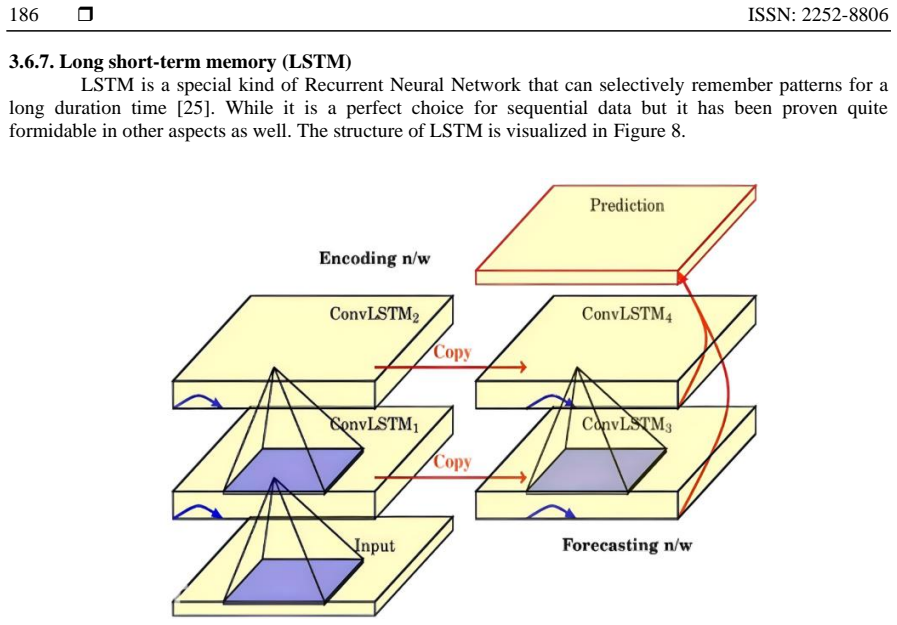
The load-bearing object is the long short-term memory (LSTM) network, a recurrent-neural-network variant that selectively retains patterns over long input sequences; here it is applied to 23 tabular birth-record features to classify the binary label. The auxiliary mechanism for the classical baselines is NearMiss undersampling, which balances the overwhelmingly common 'survived' class against the rare 'death' class before the 70:30 train/test split. The LSTM's 99% result carries the paper's claim that the deep model is the best choice for deployment, while the 94% results from XGBoost and random forest provide the comparison that makes the gap visible.
What would settle it
Re-run the pipeline on the original 1,427,906 records, splitting 70:30 before any balancing, and compute LSTM accuracy, precision, recall, and ROC-AUC on the natural-prevalence test set; if accuracy falls substantially below 99% or recall on the rare death class drops sharply, the paper's real-world performance claim is falsified.
Extended reading notes
Core claim
On the authors' own terms, the central discovery is that an LSTM classifier trained on the full São Paulo dataset predicts the 'Death within 28 Days' label with 99% accuracy, 99% precision, 99% recall, and a 0.99 F1-score. This is reported as beating a CNN (98%) and the best classical models, XGBoost and random forest (94% each). The paper interprets these numbers to mean that when a newborn's recorded parameters are passed in, the model returns the correct outcome 99 times out of 100, making LSTM the recommended choice for deciding whether precautionary care is needed. The conclusion extends this to say that such intelligent models could help doctors and health workers be aware and prepared ahead of time.
Load-bearing premise
The reported accuracy assumes that the balanced test set created by undersampling, with roughly equal numbers of survivors and deaths, represents the real São Paulo newborn population well enough for 99% accuracy to describe real-world use.
Editorial extensions
If this is right
- A hospital or public-health agency in São Paulo could use the LSTM as a screening step: a newborn's record would be flagged as at-risk, prompting earlier care.
- The five-percentage-point gap over XGBoost and random forest suggests the deep model learns patterns the tree ensembles miss, and if reproduced it justifies the added complexity of training an LSTM.
- Because the dataset spans 1.4 million births over seven years, the model's training signal is large enough to support subgroup analysis by birth weight, gestational age, or maternal characteristics.
- The reported 99% recall implies very few missed deaths in the balanced test setting, which matters for a screening tool where a false negative is the costliest error.
Reading between the lines
- My inference: the reported 99% accuracy almost certainly overstates real-world performance, because the test set was built after NearMiss undersampling and therefore contains far more deaths than the actual São Paulo newborn population; a natural-prevalence test set would be the real check.
- My inference: because the input features are tabular rather than explicitly sequential, the LSTM's apparent edge may come from model capacity or regularization rather than from its sequence memory; comparing it to a carefully tuned feed-forward network or a tabular transformer would separate those explanations.
- My inference: the same pipeline could be turned into a risk score computed at birth registration, and the approach could be applied to other Brazilian state birth cohorts to test whether the 99% result transfers.
Editorial analysis
A structured set of objections, weighed in public.
Referee Report
Summary. The paper applies six machine learning and deep learning models—logistic regression, KNN, support vector classifier, XGBoost, random forest, CNN, and LSTM—to 1,427,906 birth records from São Paulo to predict whether a newborn dies within 28 days. It reports that XGBoost and random forest achieve 94% accuracy and that LSTM achieves 99% accuracy, concluding that LSTM is the most suitable model for real-life neonatal mortality prediction. The central evaluation, however, is invalid for the stated real-world claim: for the classical models, NearMiss undersampling is applied before the 70:30 train/test split, so the test set is artificially balanced rather than representative of natural prevalence; for the deep learning models, the reported metrics on a highly imbalanced population are not interpretable without confusion matrices and natural-prevalence evaluation. The manuscript also lacks code, a correct data citation, hyperparameters, architecture details, confidence intervals, and any form of external validation.
Significance. If the 99% accuracy claim were properly validated, the work would have practical significance for early-warning systems in neonatal care, and the use of a 1.4-million-record population dataset is a clear strength. The paper also compares several standard algorithms, which is a useful framing. However, the reported results are not established as genuine predictive skill: the evaluation protocol cannot support the headline accuracy, and the manuscript does not provide the reproducibility artifacts (code, data, detailed experimental configuration) needed to verify or repair the claim. The potential significance is therefore not realized in the present manuscript.
major comments (4)
- [§2.3 and §2.4] NearMiss undersampling is applied to the entire dataset in Section 2.3, before the 70:30 train/test split described in Section 2.4. This means the test set used for logistic regression, KNN, SVC, XGBoost, and random forest has artificially equal class proportions rather than the natural prevalence of neonatal death. Accuracy, precision, recall, and F1 reported in Table 1 for these models are therefore not estimates of real-world performance on actual newborns. The split must be performed before any balancing, with NearMiss applied only to the training portion and the test set left untouched.
- [§2.6 and Table 1] For the deep learning models, Section 2.6 states that NearMiss was 'evaded' and the models were trained on the complete dataset. In a population where neonatal deaths are rare, an always-survive classifier already achieves approximately 99% accuracy, so the LSTM's reported 99% accuracy is not, by itself, evidence of predictive skill. The manuscript says confusion matrices were generated but does not show them, and no PR-AUC, recall at natural prevalence, or calibration metrics are reported. The claim that LSTM is 'most suitable' for real-life use requires evaluation on a test set with natural class prevalence and requires reporting true-positive and false-positive rates, not only rounded aggregate scores.
- [§3 and Table 1] No confidence intervals, cross-validation results, or statistical significance tests are reported for any model, and no hyperparameters, network architectures, optimizer settings, or training epochs are provided. Without these details, the observed differences between models—for example, 94% for XGBoost/random forest versus 99% for LSTM—cannot be interpreted as meaningful or reproducible. The conclusion that LSTM is the best model for deployment is therefore unsupported by the evidence presented.
- [§2.1 and reference [4]] The dataset is described as 'secondary information on Children's births and deaths in the city of São Paulo' but is cited to reference [4], which is a WHO fact sheet on newborn mortality, not a dataset source. The actual provenance, version, and access information for the São Paulo data are missing. This is a load-bearing reproducibility issue because the entire study depends on this dataset.
minor comments (8)
- [§2.6] Subsections 3.6.1 through 3.6.7 appear under Section 2.6 but are numbered as if they belong to Section 3; they should be renumbered as 2.6.1 through 2.6.7.
- [Abstract] The phrase '26.693 babies out of 1,000 births' should read '26.693 per 1,000 births', and 'Macro Trades' should be 'Macrotrends'.
- [§2.1] The text says 'All the column descriptions are given in Table 1', but Table 1 contains model comparison results, not column descriptions; the column-description table appears to be missing or mislabeled.
- [§3] The recall formula is written as TP/(TP + F); the denominator should be TP + FN. Similar notation ambiguities appear in the true-positive and false-positive rate definitions.
- [Figure 1] The flowchart shows NearMiss applied before the split for all models, but Section 2.6 says NearMiss was not used for deep learning; the flowchart should distinguish the two pipelines.
- [Figure 9] The accuracy comparison graph does not include error bars or any measure of variance, so the visual comparison is not informative.
- [§2.4] The text says the split 'randomly chooses the columns for test and training'; it should say rows or samples.
- [Throughout] There are numerous typographical and grammatical issues, including 'logical regression', 'nearest neighborhood', 'Near Miss' versus 'nearmiss' inconsistency, and 'using LSTM of the model shall be best suited'; a thorough language edit is needed.
Circularity Check
No circular derivation: the reported accuracies are empirical measurements, not results that reduce to their inputs by construction.
full rationale
The paper's derivation chain is purely empirical: it collects 1.4 million birth records, preprocesses them, applies NearMiss undersampling to the classical-ML stream, splits into 70:30 train/test, trains seven classifiers, and reports Table 1 accuracies. No parameter is fitted to a subset and then reported as a prediction of that same subset, no quantity is defined in terms of the target it is claimed to predict, and no load-bearing conclusion rests on a self-citation or an imported uniqueness theorem. The strongest concern in the manuscript is the ordering in Sections 2.3 and 2.4: NearMiss is applied before the train/test split, so the classical-model test set is artificially balanced, and the deep-learning stream in Section 2.6 is evaluated on the original imbalanced data where a majority-class predictor would already score near 99%. These are serious threats to the external validity of the claimed 99% accuracy, but they are evaluation-design flaws, not circularity: the Table 1 numbers are measured on held-out data rather than being equal to the training inputs or to a fitted parameter by construction. Since no step in the paper's own equations or citations makes the outcome equivalent to its input, the circularity score is 0.
Assumptions & free parameters
free parameters (2)
- Model hyperparameters and architectures (RF, XGBoost, CNN, LSTM) =
not reported
- NearMiss undersampling configuration =
not reported
assumptions (4)
- domain assumption The São Paulo birth-death records are complete and the 'Death within 28 Days' labels are correct.
- domain assumption Features used for prediction are available at the time a prediction would be made in practice.
- domain assumption Accuracy is an appropriate evaluation metric for a rare-event classification problem.
- standard math Scikit-learn, TensorFlow, and Keras implementations are correct and suitable for the task.
Cite this review
Pith. "Pith review of A deep learning and machine learning approach to predict neonatal death in the context of S\~ao Paulo." pith.science (2026). https://pith.science/paper/Z3GOEN47
@misc{pith2026250616929,
  author       = {Pith},
  title        = {Pith review of: A deep learning and machine learning approach to predict neonatal death in the context of S\~ao Paulo},
  year         = {2026},
  howpublished = {\url{https://pith.science/paper/Z3GOEN47}},
  note         = {Machine review of arXiv:2506.16929}
}
read the original abstract
Neonatal death is still a concerning reality for underdeveloped and even some developed countries. Worldwide data indicate that 26.693 babies out of 1,000 births die, according to Macro Trades. To reduce this number, early prediction of endangered babies is crucial. Such prediction enables the opportunity to take ample care of the child and mother so that early child death can be avoided. In this context, machine learning was used to determine whether a newborn baby is at risk. To train the predictive model, historical data of 1.4 million newborns was used. Machine learning and deep learning techniques such as logical regression, K-nearest neighbor, random forest classifier, extreme gradient boosting (XGBoost), convolutional neural network, and long short-term memory (LSTM) were implemented using the dataset to identify the most accurate model for predicting neonatal mortality. Among the machine learning algorithms, XGBoost and random forest classifier achieved the best accuracy with 94%, while among the deep learning models, LSTM delivered the highest accuracy with 99%. Therefore, using LSTM appears to be the most suitable approach to predict whether precautionary measures for a child are necessary.
Figures


Figures from the paper (6 more)



Reference graph
Works this paper leans on
-
[4]
WHO, “Newborn Mortality,” Newborn Mortality. Accessed: Oct. 01, 2022. [Online]. Available: https://www.who.int/news - room/fact-sheets/detail/levels-and-trends-in-child-mortality-report-2021
work page 2022
-
[1]
World Infant Mortality Rate 1950 -2022,
MacroTrends, “World Infant Mortality Rate 1950 -2022,” MacroTrends. Accessed: Oct. 01, 2022. [Online]. Available: https://www.macrotrends.net/countries/WLD/world/infant-mortality-rate
work page 1950
-
[2]
Mortality rate, under -5 (per 1,000 live births) | Data,
The World Bnak, “Mortality rate, under -5 (per 1,000 live births) | Data,” worldbank. Accessed: Oct. 01, 2022. [Online]. Available: https://data.worldbank.org/indicator/SH.DYN.MORT ISSN: 2252-8806 Int J Public Health Sci, Vol. 13, No. 1, March 2024: 179-190 188
work page 2022
-
[3]
A brief review of machine learning and its application,
H. Wang, C. Ma, and L. Zhou, “A brief review of machine learning and its application,” in Proceedings - 2009 International Conference on Information Engineering and Computer Science, ICIECS 2009 , IEEE, Dec. 2009, pp. 1 –4. doi: 10.1109/ICIECS.2009.5362936
-
[5]
Purwanto, C. Eswaran, and R. Logeswaran, “A comparison of ARIMA, neural network and linear regression models for the prediction of Infant Mortality Rate,” in AMS2010: Asia Modelling Symposium 2010 - 4th International Conference on Mathematical Modelling and Computer Simulation, IEEE, 2010, pp. 34–39. doi: 10.1109/AMS.2010.20
-
[6]
IDVP (intra -die variation probe) for system-on-chip (SoC) infant mortality screen,
M. A. Abdul Latif, N. B. Zain Ali, and F. A. Hussin, “IDVP (intra -die variation probe) for system-on-chip (SoC) infant mortality screen,” in Proceedings - IEEE International Symposium on Circuits and Systems , IEEE, May 2011, pp. 2055 –2058. doi: 10.1109/ISCAS.2011.5938001
-
[7]
T. Dereje, T. M. Abuhay, A. Letta, and M. Alelign, “Investigate risk factors and predict neonatal and infant mortality based on maternal determinants using homogenous ensemble methods,” in 2021 International Conference on Information and Communication Technology for Development for Africa, ICT4DA 2021 , IEEE, Nov. 2021, pp. 18 –23. doi: 10.1109/ICT4DA5326...
arXiv 2021
-
[8]
Fetal health prediction using neural networks,
A. Chowdhury, A. Chahar, R. Eswara, M. A. Raheem, S. Ehetesham, and B. K. Thulasidoss, “Fetal health prediction using neural networks,” in 8th International Conference on Advanced Computing and Communication Systems, ICACCS 2022 , IEEE, Mar. 2022, pp. 256–260. doi: 10.1109/ICACCS54159.2022.9784987
arXiv 2022
Show all 35 references
-
[9]
Prediction of clinicians’ treatment in preterm infants with suspected late -onset sepsis - An ML approach,
Y. Hu, V. C. S. Lee, and K. Tan, “Prediction of clinicians’ treatment in preterm infants with suspected late -onset sepsis - An ML approach,” in Proceedings of the 13th IEEE Conference on Industrial Electronics and Applications, ICIEA 2018 , IEEE, May 2018, pp. 1177–1182. doi:...
2018
-
[10]
Recurrent N eural networks for early detection of late onset sepsis in premature infants using heart rate variability,
C. Leon, P. Pladys, A. Beuchee, and G. Carrault, “Recurrent N eural networks for early detection of late onset sepsis in premature infants using heart rate variability,” in Computing in Cardiology, IEEE, Sep. 2021, pp. 1–4. doi: 10.23919/CinC53138.2021.9662715
2021
-
[11]
Fetal birth weight estimation in high-risk pregnancies through machine learning techniques,
M. W. L. Moreira, J. J. P. C. Rodrigues, V. Furtado, C. X. Mavromoustakis, N. Kumar, and I. Woungang, “Fetal birth weight estimation in high-risk pregnancies through machine learning techniques,” in IEEE International Conference on Communications, IEEE, May 2019, pp. 1–6. doi:...
2019
-
[12]
Application of machine learning methods for predicting infant mortality in Rwanda: analysis of Rwanda demographic health survey 2014 –15 dataset,
E. Mfateneza, P. C. Rutayisire, E. Biracyaza, S. Musafiri, and W. G. Mpabuka, “Application of machine learning methods for predicting infant mortality in Rwanda: analysis of Rwanda demographic health survey 2014 –15 dataset,” BMC Pregnancy and Childbirth, vol. 22, no. 1, p. 38...
2014 doi
-
[13]
Infant mortality rate as an indicator of population health,
D. D. Reidpath and P. Allotey, “Infant mortality rate as an indicator of population health,” Journal of Epidemiology and Community Health, vol. 57, no. 5, pp. 344–346, May 2003, doi: 10.1136/jech.57.5.344
2003 doi
-
[14]
Early warning signs: targeting neonatal and infant mortality using machine learning,
D. Brahma and D. Mukherjee, “Early warning signs: targeting neonatal and infant mortality using machine learning,” Applied Economics, vol. 54, no. 1, pp. 57–74, Jan. 2022, doi: 10.1080/00036846.2021.1958141
2022
-
[15]
Machine learning models for predicting neonatal mortality: A systematic review,
C. Mangold, S. Zoretic, K. Thallapureddy, A. Moreira, K. Chorath, and A. Moreira, “Machine learning models for predicting neonatal mortality: A systematic review,” Neonatology, vol. 118, no. 4, pp. 394–405, 2021, doi: 10.1159/000516891
2021 doi
-
[16]
Infant malnutrition, clean-water access and government interventions in India: a machine learning approach towards causal inference,
D. Brahma and D. Mukherjee, “Infant malnutrition, clean-water access and government interventions in India: a machine learning approach towards causal inference,” Applied Economics Letters , vol. 28, no. 16, pp. 1426 –1431, Sep. 2021, doi: 10.1080/13504851.2020.1822507
2021
-
[17]
Machine L earning algorithm for analysing infant mortality in Bangladesh,
A. Rahman, Z. Hossain, E. Kabir, and R. Rois, “Machine L earning algorithm for analysing infant mortality in Bangladesh,” in Lecture Notes in Computer Science (including subseries Lecture Notes in Artificial Intelligence and Lecture Notes in Bioinformatics), vol. 13079 LNCS, 2...
2021 doi
-
[18]
Predictive factors of infant mortality using data mining in Iran,
M. Hajipour et al., “Predictive factors of infant mortality using data mining in Iran,” Journal of Comprehensive Pediatrics , vol. 12, no. 1, Feb. 2021, doi: 10.5812/COMPREPED.108575
2021 doi
-
[19]
Inconsistencies in coding of race and ethnicity between birth and death in US infants. A new look at infant mortality, 1983 through 1985,
R. A. Hahn, “Inconsistencies in coding of race and ethnicity between birth and death in US infants. A new look at infant mortality, 1983 through 1985,” JAMA: The Journal of the American Medical Association, vol. 267, no. 2, pp. 259–263, Jan. 1992, doi: 10.1001/jama.267.2.259
1983 doi
-
[20]
Therapeutic drug monitoring for antifungal triazoles: pharmacologic background and current statu s,
A. H. Groll and S. Gastine, “Therapeutic drug monitoring for antifungal triazoles: pharmacologic background and current statu s,” in Handbook of Analytical Separations, vol. 7, 2020, pp. 185–224. doi: 10.1016/B978-0-444-64066-6.00009-5
2020 doi
-
[21]
Hastie, R
T. Hastie, R. Tibshirani, and J. Friedman, The Elements of Statistical Learning . in Springer Series in Statistics. New York, NY: Springer New York, 2009. doi: 10.1007/978-0-387-84858-7
2009 doi
-
[22]
Ecosystem monitoring through predictive modeling,
S. Malek, C. Hui, N. Aziida, S. Cheen, S. Toh, and P. Milow, “Ecosystem monitoring through predictive modeling,” in Encyclopedia of Bioinformatics and Computational Biology: ABC of Bioinformatics , vol. 1 –3, Elsevier, 2018, pp. 1 –8. doi: 10.1016/B978-0-12-809633-8.20060-5
2018 doi
-
[23]
Semantic segmentation for self -driving cars using deep learning,
Q. Sellat, S. K. Bisoy, and R. Priyadarshini, “Semantic segmentation for self -driving cars using deep learning,” in Cognitive Big Data Intelligence with a Metaheuristic Approach, Elsevier, 2022, pp. 211–238. doi: 10.1016/B978-0-323-85117-6.00002-9
2022 doi
-
[24]
Precision medicine in digital pathology via image analysis and machine learning,
P. D. Caie, N. Dimitriou, and O. Arandjelović, “Precision medicine in digital pathology via image analysis and machine learning,” in Artificial Intelligence and Deep Learning in Pathology, Elsevier, 2021, pp. 149–173. doi: 10.1016/B978-0-323-67538-3.00008-7
2021 doi
-
[25]
Violence detection in automated video surveillance: recent trends and comparative studi es,
S. Roshan, G. Srivathsan, K. Deepak, and S. Chandrakala, “Violence detection in automated video surveillance: recent trends and comparative studi es,” in The Cognitive Approach in Cloud Computing and Internet of Things Technologies for Surveillance Tracking Systems, Elsevier, ...
2020 doi
-
[26]
Software bug prediction using supervised machine learning algorithms,
S. Delphine Immaculate, M. Farida Begam, and M. Floramary, “Software bug prediction using supervised machine learning algorithms,” in 2019 International Conference on Data Science and Communication (IconDSC) , IEEE, Mar. 2019, pp. 1 –7, doi: 10.1109/IconDSC.2019.8816965
2019
-
[27]
R. Prasetya, “Data mining application on weather prediction using classification tree, naïve bayes and k -nearest neighbor algorithm with model testing of supervised learning probabilistic brier score, confusion matrix an d ROC,” JAICT, vol. 4, no. 2, p. 25, Jun. 2020, doi: 10...
2020 doi
-
[28]
Augmenting weighted average with confusion matrix to enhance classification accu racy,
V. M. Patro and M. Ranjan Patra, “Augmenting weighted average with confusion matrix to enhance classification accu racy,” Transactions on Machine Learning and Artificial Intelligence, vol. 2, no. 4, Aug. 2014, doi: 10.14738/tmlai.24.328
2014 doi
-
[29]
P rediction of cardiac disease using supervised machine learning algorithms ,
R. J. P. Princy, S. Parthasarathy, P. S. Hency Jose, A. Raj Lakshminarayanan, and S. Jeganathan, “P rediction of cardiac disease using supervised machine learning algorithms ,” in 2020 4th International Conference on Intelligent Computing and Control Systems (ICICCS), IEEE, Ma...
2020
-
[30]
Prediction of coronary heart disease using supervised machine learning algorithms,
D. Krishnani, A. Kumari, A. Dewangan, A. Singh, and N. S. Naik, “Prediction of coronary heart disease using supervised machine learning algorithms,” in TENCON 2019 - 2019 IEEE Region 10 Conference (TENCON), IEEE, Oct. 2019, pp. 367–372. doi: 10.1109/TENCON.2019.8929434. Int J ...
2019
-
[31]
Performance E valuation of supervised machine learning algorithms in prediction of heart disease,
P. Sujatha and K. Mahalakshmi, “Performance E valuation of supervised machine learning algorithms in prediction of heart disease,” in 2020 IEEE International Conference for Innovation in Technology (INOCON) , IEEE, Nov. 2020, pp. 1 –7. doi: 10.1109/INOCON50539.2020.9298354
2020
-
[32]
Heart disease prediction using machine learning algorithms ,
A. Singh and R. Kumar, “Heart disease prediction using machine learning algorithms ,” in 2020 International Conference on Electrical and Electronics Engineering (ICE3), IEEE, Feb. 2020, pp. 452–457. doi: 10.1109/ICE348803.2020.9122958
2020
-
[33]
Diagnosis of diabetes using machine learning algorithms,
F. Alaa Khaleel and A. M. Al -Bakry, “Diagnosis of diabetes using machine learning algorithms,” Materials Today: Proceedings, vol. 80, pp. 3200–3203, 2023, doi: 10.1016/j.matpr.2021.07.196
2023 doi
-
[34]
Study on predicting compressive strength of concrete using supervised machine learning techniques,
B. V. Varma, E. V. Prasad, and S. Singha, “Study on predicting compressive strength of concrete using supervised machine learning techniques,” Asian Journal of Civil Engineering , vol. 24, no. 7, pp. 2549 –2560, Nov. 2023, doi: 10.1007/s42107 -023- 00662-w
2023 doi
-
[35]
A supervised machine learning algorithm for detecting and predicting fraud in credit card transactions,
J. K. Afriyie et al. , “A supervised machine learning algorithm for detecting and predicting fraud in credit card transactions,” Decision Analytics Journal, vol. 6, p. 100163, Mar. 2023, doi: 10.1016/j.dajour.2023.100163. BIOGRAPHIES OF AUTHORS Mohon Raihan completed his B.Sc....
2023
Reviewed August 6, 2026 · model on record in the stance chip above.
Discussion (0). Sign in to comment.