REVIEW 4 major objections 5 minor 59 references
This paper shows that a self-organizing map storing per-unit Gaussian statistics in a VAE latent space can replay old classes without storing raw data or task labels, beating most memory-based baselines on CIFAR-10 and CIFAR-100 single-clas
Reviewed by Pith at T0; open to challenge. T0 means a machine referee read the full paper against a public rubric. the ladder, T0–T4 →
A SOM-VAE generative replay method stores per-unit Gaussian statistics instead of raw data and reports competitive class-incremental accuracy on standard benchmarks.
T0 review reviewed 2026-08-05 challenge →
load-bearing objection Useful extension of c-SOM with real headroom on one-class CIFAR, but missing c-SOM baseline, error bars, and replay-fidelity checks leave the headline margins unproven. the 4 major comments →
Class Incremental Continual Learning with Self-Organizing Maps and Variational Autoencoders Using Synthetic Replay
The pith
A machine-rendered reading of the paper's core claim, the machinery that carries it, and where it could break.
The reading
Core claim
The central claim is that per-BMU Gaussian statistics in a compressed latent space are enough to sustain an unsupervised SOM classifier across a 100-class stream. For MNIST and FashionMNIST the SOM works directly on pixels; for CIFAR-10 and CIFAR-100 a global VAE compresses images to a 128-dimensional latent, the SOM clusters those latents, and each unit's full covariance models the local latent distribution. Replay is generated by sampling N(μ, Σ) at each BMU, decoding through the VAE, and mixing with new-class data; no task identifiers and no raw examples are used. The authors report that this scheme outperforms most memory-free, memory-based, and bio-inspired baselines, including a roughl
What carries the argument
The carrying mechanism is the SOM-as-memory with per-unit running statistics. Each BMU accumulates a mean vector, a per-dimension variance vector, and a full covariance matrix over the latent codes assigned to it; Algorithm 1 regularizes the covariance by eigenvalue clamping before sampling. In the VAE-SOM variant, the VAE's latent compression drops raw CIFAR dimensionality from 3,072 to 128, making full per-BMU covariance matrices feasible, and its decoder turns sampled latents back into images for replay. The class label recorded per BMU is used only for evaluation, not for updating the model.
Load-bearing premise
The load-bearing premise is that the latent codes landing on each SOM unit are well described by a single multivariate Gaussian and that the continually retrained VAE decoder still reconstructs old-class latents faithfully at replay time; if either fails, sampled replays become poor and the reported accuracy gains collapse.
What would settle it
Measure, across the stream, each BMU's latent distribution for deviation from Gaussianity (e.g., multivariate normality tests or the fraction of variance explained by the Gaussian fit) and track the VAE decoder's reconstruction error on held-out images of early classes. If early-class reconstructions degrade substantially or per-BMU latent residuals become multimodal by the 100-class CIFAR-100 stream, the replay mechanism is falsified. A simpler decisive test: during replay, replace the sampled Gaussians with the true per-BMU empirical latent codes; a large accuracy jump would show the Gaussia
If this is right
- A fixed-size memory whose cost scales with SOM grid size, not number of classes or stream length, can support class-incremental learning without raw data storage.
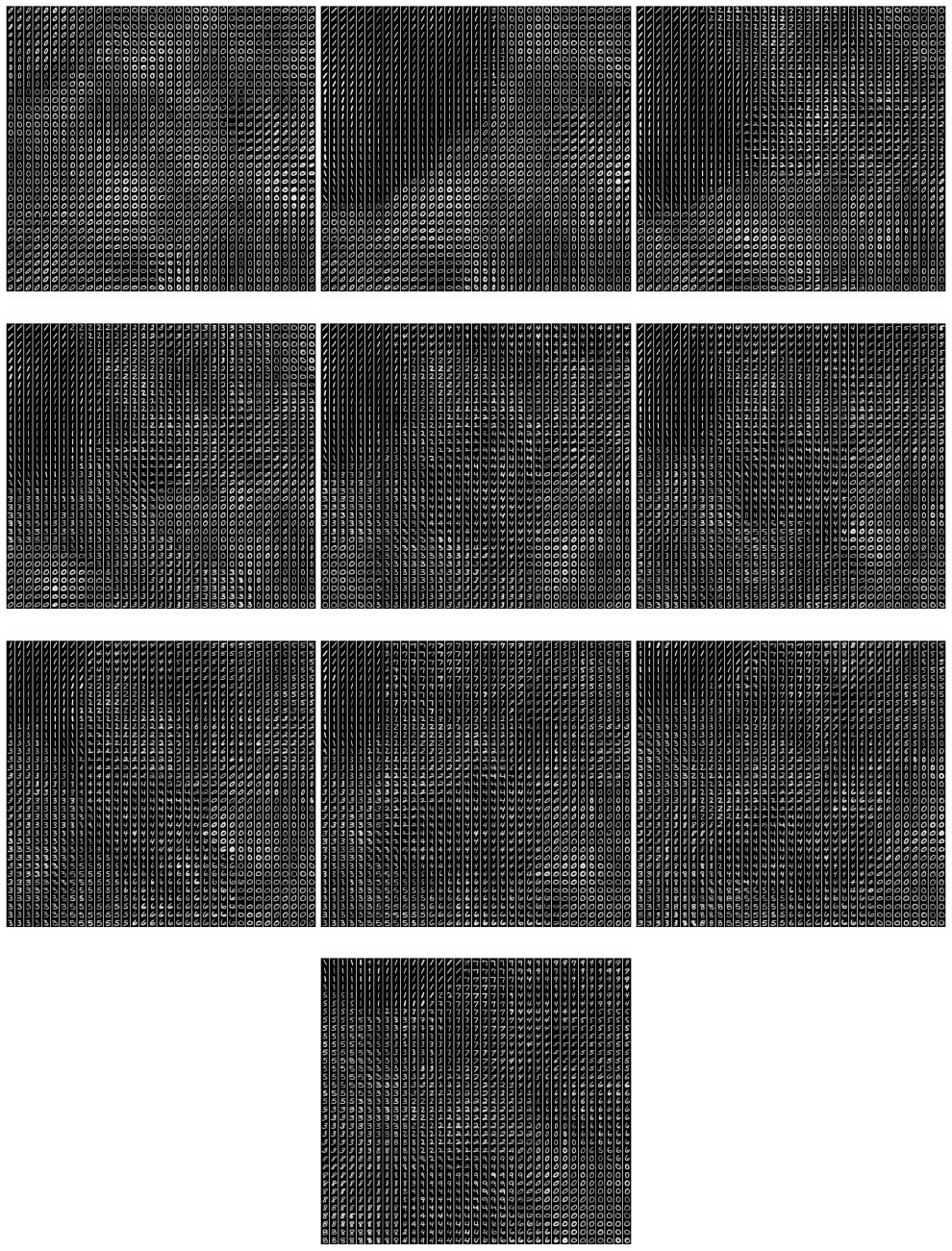
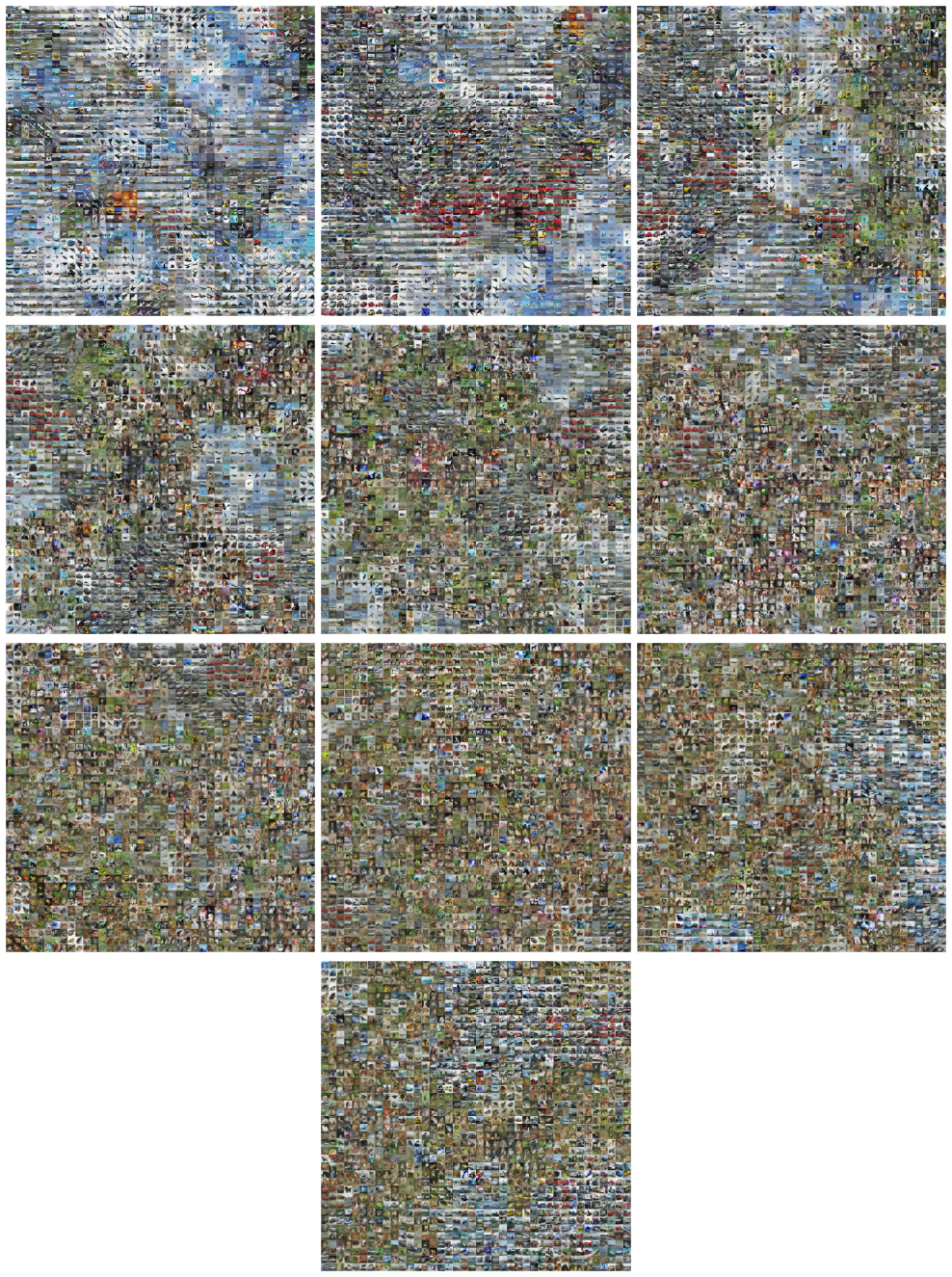
- The model doubles as a trained generative model: after the stream, sampling from BMU Gaussians and decoding yields feasible class-conditioned examples.
- Larger SOM grids improve accuracy up to a point; beyond that, sparsity and underused units hurt, so replay quality depends on matching grid resolution to latent dimensionality.
- Compact latent spaces (32x2x2 features) outperform larger ones in this framework, suggesting that too much latent capacity spreads BMUs too thin for reliable Gaussian replay.
- In the one-class-per-task stream the global VAE-SOM variant outperforms the per-BMU VAE variant even though per-BMU VAE is more complex; a shared representation supports better replay than fine-grained local decoders.
Where Pith is reading between the lines
- If per-BMU Gaussianity degrades for very large class streams, a natural extension would be to test mixture-of-Gaussians or nonparametric density estimates per BMU; the paper's own per-BMU VAE variant suggests local specialization has limits.
- The method's success implies that replay quality, not memory size, is the binding constraint in generative continual learning; future comparisons should report reconstruction fidelity of old classes over time, not just final accuracy.
- A testable extension is to replace the VAE decoder with a pretrained foundational decoder to see whether representation drift or decoder drift is the main source of forgetting; the paper names pretrained autoencoders as future work.
- Because the SOM stores class-label hit counts, the same mechanism could be used for open-set or novelty detection, flagging inputs whose BMU has no dominant class.
Editorial analysis
A structured set of objections, weighed in public.
Referee Report
Summary. The paper proposes a continual class-incremental learning framework that combines self-organizing maps (SOMs) with variational autoencoders (VAEs). For low-dimensional inputs (MNIST, Fashion-MNIST) the SOM operates directly on pixels; for CIFAR-10/100 a VAE compresses images into a latent space and the SOM operates on latent codes. Each SOM best-matching unit (BMU) stores running mean, variance, and covariance, from which synthetic replay samples are drawn. Replayed samples are decoded (where applicable) and mixed with new-class data. Three variants are presented: SOM-only, global VAE-SOM, and per-BMU VAE-SOM. The paper reports results on Split-MNIST, Split-CIFAR-10, Split-CIFAR-100, and one-class-at-a-time MNIST/CIFAR-10/CIFAR-100, claiming competitive or superior accuracy relative to memory-based and memory-free baselines, including one-class CIFAR-10 accuracy of 54.16% and CIFAR-100 accuracy of 12.41% without external exemplars or task labels.
Significance. If the empirical claims hold, the framework is a meaningful contribution: it offers a memory-efficient generative replay mechanism whose storage cost scales with the fixed SOM grid rather than the dataset, it avoids task labels during model updates, and the UML visualization of SOM units over time is a practical diagnostic tool. The algorithmic variants are described clearly with pseudocode, and the appendix gives substantial hyperparameter detail. The strongest claimed result—large gains on one-class CIFAR-10/100 over prior memory-free and even memory-based methods—would be significant for task-free class-incremental learning. However, the current experimental reporting and the absence of replay-fidelity measurements leave the central accuracy claims insufficiently supported.
major comments (4)
- [§3.3, Table 1; §3.4, Table 2] The repeated-run reporting is inconsistent and load-bearing. The text states every experiment was repeated 10 times, but Table 1's caption says results are over 5 repetitions, and Table 2 provides no error bars or repetition count at all. Since the headline is the one-class CIFAR-10 54.16% versus 44.54% (DisCOIL), the absence of variance makes it impossible to assess reliability. Additionally, all results are reported from 'best-found hyperparameter settings' (Section 3) with no validation procedure described; if configurations were selected using the test set, the accuracy claims are inflated. The authors should specify the validation protocol, report means and standard deviations for all tables, and provide significance tests for the claimed improvements, especially 53.01% vs. DER++ 52.01% in Table 1, where the DER++ standard deviation is 3.06.
- [§2.1 and Algorithm 3] The method's two core assumptions are unmeasured: (i) that latent codes assigned to each SOM BMU are well approximated by a single multivariate Gaussian N(µ, Σ), and (ii) that the continually retrained VAE decoder can still decode samples drawn from stored statistics of old classes into recognizable inputs. Algorithm 3 is a self-referential loop: the VAE is retrained on a mix of new real data and decoded replay, and the SOM is updated on latents of those decoded replay images. If decoder drift occurs or a BMU's latent distribution becomes multimodal, replay quality degrades and the reported accuracies could reflect classification of artifacts rather than retained knowledge. The paper does not report any replay-fidelity metric (e.g., FID, reconstruction error for old classes, or oracle-classifier accuracy on replayed samples). I would require such measurements, per task, as a condition fo
- [§3.3, Table 1] The claim of outperforming DER++ on Split-CIFAR-10 is not supported by the reported statistics: VAE-SOM achieves 53.01 ± 0.92 while DER++ achieves 52.01 ± 3.06. The difference is far smaller than the DER++ standard deviation, and no paired test or confidence interval is given. The abstract's 'competitive with state-of-the-art' is more accurate than 'outperforming' used later in Section 3.3. Either add proper statistical comparison or soften the claim.
- [Related work and Results] The direct predecessor continual SOM (c-SOM, Vaidya et al. 2021) is discussed in the introduction but never benchmarked. Since c-SOM also uses internal Gaussian replay (though in input space), a quantitative comparison is essential to substantiate the paper's claim that adding a VAE latent space improves scalability. Omitting this baseline weakens the novelty and contribution claims. The authors should add c-SOM to Table 1 or Table 2, or at minimum provide a dedicated ablation showing the VAE component's benefit over c-SOM under the same protocol.
minor comments (5)
- [Section 3, Table 1 caption] The text says each experiment was repeated 10 times, but Table 1's caption says '5 repetitions.' Please reconcile.
- [Section 2.1, variance update] The running variance update σ² ← (1−α)σ² + α(µ−x)² is written after µ has already been updated, so the deviation is computed relative to the new mean. This is a legitimate momentum form but should be stated explicitly to avoid confusion.
- [Appendix B, Tables 6 and 7] The latent dimension '32 × 32 × 2 × 2' in the text and table header appears to be a typo for '32 × 2 × 2'. Similarly, '128 × 32 × 2 × 2' should likely be '128 × 2 × 2'.
- [Throughout] There are minor language issues: 'widely-used used', '1 < i < n; 1 < jn;', and 'iCARL' vs. 'iCaRL' in the references. These should be corrected.
- [Section 3.2 and Figure 2] The paper notes that some generated samples are 'hallucinatory.' This is presented qualitatively; quantifying the fraction of such samples (or using a perceptual metric) would strengthen the generative-capability claims.
Circularity Check
No significant circularity: the central accuracy claims are empirical comparisons against external baselines, not reductions to fitted constants or self-citation.
full rationale
The paper's load-bearing claims are test-set classification accuracies on standard continual learning benchmarks (Section 3, Tables 1-2). These are measured on held-out inputs after training, so they are not by construction equal to the SOM's stored statistics or to any fitted parameter. The generative replay mechanism (Algorithms 2-4) does use the model's own BMU statistics to train itself, but this is the algorithm's design, not a 'prediction' that reduces to its inputs; the evidence for the method is external test accuracy. The self-citations (c-SOM, Ororbia 2021, Ororbia et al. 2022) are related-work references and are not load-bearing; no uniqueness theorem or central premise is imported from them. The paper's per-BMU Gaussian assumption and decoder stability are unvalidated and could be empirically fragile, and the paper itself concedes some generations are 'hallucinatory' (Section 3.2), but an unmeasured assumption is a correctness risk, not circularity. No passage asserts a missing proof or limitation that would constitute self-definitional circularity.
Axiom & Free-Parameter Ledger
free parameters (9)
- SOM grid size =
10x10 to 50x50; best 35x35 for MNIST/FMNIST, 40x40 for CIFAR-10, 50x50 for CIFAR-100
- VAE latent dimensionality =
32x2x2 (128 dims) best; 64x2x2 and 128x2x2 also tested
- SOM learning rate and neighborhood sigma =
0.5; sigma 0.95/0.94
- SOM training epochs =
150 for CIFAR; 10 to 50 for MNIST/FMNIST
- VAE training epochs =
200
- Running statistics momentum alpha =
not reported
- Eigenvalue regularization constant epsilon =
not reported
- Feature loss scale and KL loss scale =
1.0 each
- Number of VGG feature layers L =
not reported
axioms (6)
- domain assumption Sequential SOM updates preserve enough old-class structure for replay to work
- domain assumption Latent codes within each BMU are approximately Gaussian
- domain assumption The continually trained VAE decoder remains a valid decoder for old-class latent samples
- domain assumption Majority-vote BMU labeling is a valid inference procedure
- domain assumption Eigenvalue-clamped Gaussian sampling yields useful replay data
- standard math Eigen-decomposition and Gaussian sampling are used without proof
Cite this review
Pith. "Pith review of Class Incremental Continual Learning with Self-Organizing Maps and Variational Autoencoders Using Synthetic Replay." pith.science (2026). https://pith.science/paper/VA522FR7
@misc{pith2026250821240,
  author       = {Pith},
  title        = {Pith review of: Class Incremental Continual Learning with Self-Organizing Maps and Variational Autoencoders Using Synthetic Replay},
  year         = {2026},
  howpublished = {\url{https://pith.science/paper/VA522FR7}},
  note         = {Machine review of arXiv:2508.21240}
}
abstract
This work introduces a novel generative continual learning framework based on self-organizing maps (SOMs) and variational autoencoders (VAEs) to enable memory-efficient replay, eliminating the need to store raw data samples or task labels. For high-dimensional input spaces, such as of CIFAR-10 and CIFAR-100, we design a scheme where the SOM operates over the latent space learned by a VAE, whereas, for lower-dimensional inputs, such as those found in MNIST and FashionMNIST, the SOM operates in a standalone fashion. Our method stores a running mean, variance, and covariance for each SOM unit, from which synthetic samples are then generated during future learning iterations. For the VAE-based method, generated samples are then fed through the decoder to then be used in subsequent replay. Experimental results on standard class-incremental benchmarks show that our approach performs competitively with state-of-the-art memory-based methods and outperforms memory-free methods, notably improving over best state-of-the-art single class incremental performance on CIFAR-10 and CIFAR-100 by nearly $10$\% and $7$\%, respectively. Our methodology further facilitates easy visualization of the learning process and can also be utilized as a generative model post-training. Results show our method's capability as a scalable, task-label-free, and memory-efficient solution for continual learning.
Figures




Reference graph
Works this paper leans on
-
[1]
Aljundi, R.; Caccia, L.; Belilovsky, E.; Caccia, M.; Lin, M.; Charlin, L.; and Tuytelaars, T. 2019 a . Online Continual Learning with Maximally Interfered Retrieval. arXiv:1908.04742
Pith/arXiv arXiv 2019
-
[2]
Aljundi, R.; Lin, M.; Goujaud, B.; and Bengio, Y. 2019 b . Gradient based sample selection for online continual learning. arXiv:1903.08671
work page internal anchor Pith review Pith/arXiv arXiv 2019
-
[3]
Aly, S. 2014. Learning invariant local image descriptor using convolutional Mahalanobis self-organising map. Neurocomputing, 142: 239--247. SI Computational Intelligence Techniques for New Product Development
work page 2014
-
[4]
Ashfahani, A.; and Pratama, M. 2023. Unsupervised Continual Learning in Streaming Environments. IEEE Transactions on Neural Networks and Learning Systems, 34(12): 9992--10003
work page 2023
-
[5]
Bardes, A.; Ponce, J.; and LeCun, Y. 2022. VICReg: Variance-Invariance-Covariance Regularization for Self-Supervised Learning. arXiv:2105.04906
Pith/arXiv arXiv 2022
-
[6]
Bashivan, P.; Schrimpf, M.; Ajemian, R.; Rish, I.; Riemer, M.; and Tu, Y. 2019. Continual Learning with Self-Organizing Maps. arXiv:1904.09330
work page internal anchor Pith review Pith/arXiv arXiv 2019
-
[7]
Buzzega, P.; Boschini, M.; Porrello, A.; Abati, D.; and Calderara, S. 2020. Dark Experience for General Continual Learning: a Strong, Simple Baseline. arXiv:2004.07211
Pith/arXiv arXiv 2020
-
[8]
Caccia, L.; Aljundi, R.; Asadi, N.; Tuytelaars, T.; Pineau, J.; and Belilovsky, E. 2022. New Insights on Reducing Abrupt Representation Change in Online Continual Learning. arXiv:2104.05025
Pith/arXiv arXiv 2022
-
[9]
Chaudhry, A.; Ranzato, M.; Rohrbach, M.; and Elhoseiny, M. 2019. Efficient Lifelong Learning with A-GEM. arXiv:1812.00420
Pith/arXiv arXiv 2019
-
[10]
Cignoni, G.; Cossu, A.; Gomez-Villa, A.; van de Weijer, J.; and Carta, A. 2025. CLA: Latent Alignment for Online Continual Self-Supervised Learning. arXiv:2507.10434
Pith/arXiv arXiv 2025
-
[11]
Deng, L. 2012. The MNIST Database of Handwritten Digit Images for Machine Learning Research [Best of the Web]. IEEE Signal Processing Magazine, 29(6): 141--142
work page 2012
-
[12]
Doon, R.; Kumar Rawat, T.; and Gautam, S. 2018. Cifar-10 Classification using Deep Convolutional Neural Network. In 2018 IEEE Punecon, 1--5
work page 2018
-
[13]
Gao, R.; and Liu, W. 2023. Ddgr: Continual learning with deep diffusion-based generative replay. In International Conference on Machine Learning, 10744--10763. PMLR
work page 2023
-
[14]
Guo, Y.; Liu, M.; Yang, T.; and Rosing, T. 2020. Improved Schemes for Episodic Memory-based Lifelong Learning. In Larochelle, H.; Ranzato, M.; Hadsell, R.; Balcan, M.; and Lin, H., eds., Advances in Neural Information Processing Systems, volume 33, 1023--1035. Curran Associates, Inc
work page 2020
-
[15]
He, K.; Zhang, X.; Ren, S.; and Sun, J. 2016. Deep residual learning for image recognition. In Proceedings of the IEEE conference on computer vision and pattern recognition, 770--778
2016
-
[16]
Hirani, G.; Wang, K. I.-K.; and Abdulla, W. 2024. Continual Learning with Self-Organizing Maps: A Novel Group-Based Unsupervised Sequential Training Approach. In 2024 Asia Pacific Signal and Information Processing Association Annual Summit and Conference (APSIPA ASC), 1--6
work page 2024
-
[17]
Hirani, G. R.; Wang, K. I.-K.; and Abdulla, W. H. 2025. A Scalable Unsupervised and Back Propagation Free Learning With SACSOM: A Novel Approach to SOM-Based Architectures. IEEE Transactions on Artificial Intelligence, 6(4): 955--967
work page 2025
-
[18]
Hu, W.; Lin, Z.; Liu, B.; Tao, C.; Tao, Z.; Ma, J.; Zhao, D.; and Yan, R. 2019. Overcoming Catastrophic Forgetting via Model Adaptation. In International Conference on Learning Representations
work page 2019
-
[19]
Hu, W.; Qin, Q.; Wang, M.; Ma, J.; and Liu, B. 2021. Continual Learning by Using Information of Each Class Holistically. Proceedings of the AAAI Conference on Artificial Intelligence, 35(9): 7797--7805
work page 2021
-
[20]
Kingma, D. P.; and Welling, M. 2013. Auto-encoding variational bayes. arXiv preprint arXiv:1312.6114
Pith/arXiv arXiv 2013
-
[21]
Kingma, D. P.; and Welling, M. 2019. An Introduction to Variational Autoencoders. Foundations and Trends® in Machine Learning, 12(4): 307–392
work page 2019
-
[22]
Kirkpatrick, J.; Pascanu, R.; Rabinowitz, N.; Veness, J.; Desjardins, G.; Rusu, A. A.; Milan, K.; Quan, J.; Ramalho, T.; Grabska-Barwinska, A.; Hassabis, D.; Clopath, C.; Kumaran, D.; and Hadsell, R. 2017. Overcoming catastrophic forgetting in neural networks. Proceedings of the National Academy of Sciences, 114(13): 3521--3526
work page 2017
-
[23]
Kohonen, T. 1990. The self-organizing map. Proceedings of the IEEE, 78(9): 1464--1480
work page 1990
-
[24]
Lee, S.; Ha, J.; Zhang, D.; and Kim, G. 2020. A Neural Dirichlet Process Mixture Model for Task-Free Continual Learning. In International Conference on Learning Representations
work page 2020
-
[25]
Li, Z.; and Hoiem, D. 2017. Learning without Forgetting. arXiv:1606.09282
Pith/arXiv arXiv 2017
-
[26]
Li, Z.; and Hoiem, D. 2018. Learning without Forgetting. IEEE Transactions on Pattern Analysis and Machine Intelligence, 40(12): 2935--2947
work page 2018
-
[27]
Lopez-Paz, D.; and Ranzato, M. 2022. Gradient Episodic Memory for Continual Learning. arXiv:1706.08840
Pith/arXiv arXiv 2022
-
[28]
Lopez-Paz, D.; and Ranzato, M. A. 2017. Gradient Episodic Memory for Continual Learning. In Guyon, I.; Luxburg, U. V.; Bengio, S.; Wallach, H.; Fergus, R.; Vishwanathan, S.; and Garnett, R., eds., Advances in Neural Information Processing Systems, volume 30. Curran Associates, Inc
work page 2017
-
[29]
Madaan, D.; Yoon, J.; Li, Y.; Liu, Y.; and Hwang, S. J. 2022. Representational Continuity for Unsupervised Continual Learning. arXiv:2110.06976
Pith/arXiv arXiv 2022
-
[30]
Madireddy, S.; Yanguas-Gil, A.; and Balaprakash, P. 2023. Improving performance in continual learning tasks using bio-inspired architectures. In Conference on Lifelong Learning Agents, 992--1008. PMLR
work page 2023
-
[31]
McCloskey, M.; and Cohen, N. 1989. Catastrophic Interference in Connectionist Networks: The Sequential Learning Problem. Psychology of Learning and Motivation - Advances in Research and Theory, 24(C): 109--165
work page 1989
-
[32]
Ororbia, A.; Mali, A.; Giles, C. L.; and Kifer, D. 2022. Lifelong neural predictive coding: Learning cumulatively online without forgetting. Advances in Neural Information Processing Systems, 35: 5867--5881
work page 2022
-
[33]
Ororbia, A. G. 2021. Continual competitive memory: A neural system for online task-free lifelong learning. arXiv preprint arXiv:2106.13300
work page internal anchor Pith review Pith/arXiv arXiv 2021
-
[34]
Parisi, G. I.; Kemker, R.; Part, J. L.; Kanan, C.; and Wermter, S. 2019. Continual lifelong learning with neural networks: A review. Neural Networks, 113: 54--71
work page 2019
-
[35]
Pinitas, K.; Chavlis, S.; and Poirazi, P. 2021. Dendritic Self-Organizing Maps for Continual Learning. arXiv:2110.13611
work page internal anchor Pith review Pith/arXiv arXiv 2021
-
[36]
Rajasegaran, J.; Hayat, M.; Khan, S.; Khan, F.; Shao, L.; and Yang, M.-H. 2020. An Adaptive Random Path Selection Approach for Incremental Learning
work page 2020
-
[37]
Rao, D.; Visin, F.; Rusu, A.; Pascanu, R.; Teh, Y. W.; and Hadsell, R. 2019. Continual Unsupervised Representation Learning. In Wallach, H.; Larochelle, H.; Beygelzimer, A.; d Alch\' e -Buc, F.; Fox, E.; and Garnett, R., eds., Advances in Neural Information Processing Systems, volume 32. Curran Associates, Inc
work page 2019
-
[38]
Rebuffi, S.-A.; Kolesnikov, A.; Sperl, G.; and Lampert, C. H. 2017. iCaRL: Incremental Classifier and Representation Learning. arXiv:1611.07725
Pith/arXiv arXiv 2017
-
[39]
Roy, D.; Panda, P.; and Roy, K. 2019. Tree-CNN: A Hierarchical Deep Convolutional Neural Network for Incremental Learning. arXiv:1802.05800
work page internal anchor Pith review Pith/arXiv arXiv 2019
-
[40]
Rusu, A. A.; Rabinowitz, N. C.; Desjardins, G.; Soyer, H.; Kirkpatrick, J.; Kavukcuoglu, K.; Pascanu, R.; and Hadsell, R. 2022. Progressive Neural Networks. arXiv:1606.04671
Pith/arXiv arXiv 2022
-
[41]
Samek, W.; Montavon, G.; Lapuschkin, S.; Anders, C. J.; and Muller, K.-R. 2021. Explaining Deep Neural Networks and Beyond: A Review of Methods and Applications. Proceedings of the IEEE, 109(3): 247–278
work page 2021
-
[42]
M.; Grabska-Barwinska, A.; Teh, Y
Schwarz, J.; Luketina, J.; Czarnecki, W. M.; Grabska-Barwinska, A.; Teh, Y. W.; Pascanu, R.; and Hadsell, R. 2018. Progress & Compress: A scalable framework for continual learning. arXiv:1805.06370
Pith/arXiv arXiv 2018
-
[43]
Shin, H.; Lee, J. K.; Kim, J.; and Kim, J. 2017. Continual Learning with Deep Generative Replay. arXiv:1705.08690
Pith/arXiv arXiv 2017
-
[44]
Simonyan, K.; and Zisserman, A. 2015. Very Deep Convolutional Networks for Large-Scale Image Recognition. arXiv:1409.1556
Pith/arXiv arXiv 2015
-
[45]
Sun, W.; Li, Q.; Zhang, J.; Wang, D.; Wang, W.; and Geng, Y. 2022. Exemplar-free Class Incremental Learning via Discriminative and Comparable One-class Classifiers. CoRR, abs/2201.01488
work page internal anchor Pith review Pith/arXiv arXiv 2022
-
[46]
Thrun, S. 1998. Lifelong learning algorithms. In Learning to learn, 181--209. Springer
work page 1998
-
[47]
Vaidya, H.; Desell, T.; and Ororbia, A. 2021. Reducing Catastrophic Forgetting in Self Organizing Maps with Internally-Induced Generative Replay. CoRR, abs/2112.04728
work page internal anchor Pith review Pith/arXiv arXiv 2021
-
[48]
van de Ven, G. M.; and Tolias, A. S. 2019. Generative replay with feedback connections as a general strategy for continual learning. arXiv:1809.10635
Pith/arXiv arXiv 2019
-
[49]
M.; Tuytelaars, T.; and Tolias, A
van de Ven, G. M.; Tuytelaars, T.; and Tolias, A. S. 2022. Three types of incremental learning. Nature Machine Intelligence, 4(12): 1185--1197
work page 2022
-
[50]
Wang, L.; Zhang, X.; Su, H.; and Zhu, J. 2024. A Comprehensive Survey of Continual Learning: Theory, Method and Application. arXiv:2302.00487
Pith/arXiv arXiv 2024
-
[51]
Xiao, H.; Rasul, K.; and Vollgraf, R. 2017. Fashion-MNIST: a Novel Image Dataset for Benchmarking Machine Learning Algorithms. arXiv:1708.07747
Pith/arXiv arXiv 2017
-
[52]
Yi, H.; Shiyu, S.; Xiusheng, D.; and Zhigang, C. 2016. A study on Deep Neural Networks framework. In 2016 IEEE Advanced Information Management, Communicates, Electronic and Automation Control Conference (IMCEC), 1519--1522
work page 2016
-
[53]
Ying, H.; Song, M.; Tang, Y.; Xiao, S.; and Xiao, Z. 2024. Enhancing Deep Neural Network Training Efficiency and Performance through Linear Prediction. arXiv:2310.10958
work page internal anchor Pith review Pith/arXiv arXiv 2024
-
[54]
Yu, X.; Rosing, T.; and Guo, Y. 2024. Evolve: Enhancing Unsupervised Continual Learning With Multiple Experts. In Proceedings of the IEEE/CVF Winter Conference on Applications of Computer Vision (WACV), 2366--2377
work page 2024
-
[55]
Zeng, G.; Chen, Y.; Cui, B.; and Yu, S. 2018. Continuous Learning of Context-dependent Processing in Neural Networks. CoRR, abs/1810.01256
work page internal anchor Pith review Pith/arXiv arXiv 2018
-
[56]
Zenke, F.; Poole, B.; and Ganguli, S. 2017. Continual Learning Through Synaptic Intelligence. arXiv:1703.04200
Pith/arXiv arXiv 2017
-
[57]
Zhao, X.; Wang, H.; Huang, W.; and Lin, W. 2024. A Statistical Theory of Regularization-Based Continual Learning. arXiv:2406.06213
Pith/arXiv arXiv 2024
-
[58]
, " * write output.state after.block = add.period write newline
ENTRY address archivePrefix author booktitle chapter edition editor eid eprint howpublished institution isbn journal key month note number organization pages publisher school series title type volume year label extra.label sort.label short.list INTEGERS output.state before.all mid.sentence after.sentence after.block FUNCTION init.state.consts #0 'before.a...
-
[59]
write newline
" write newline "" before.all 'output.state := FUNCTION n.dashify 't := "" t empty not t #1 #1 substring "-" = t #1 #2 substring "--" = not "--" * t #2 global.max substring 't := t #1 #1 substring "-" = "-" * t #2 global.max substring 't := while if t #1 #1 substring * t #2 global.max substring 't := if while FUNCTION word.in bbl.in capitalize " " * FUNCT...
This paper was first reviewed by deepseek-v4-flash on August 5, 2026.
discussion (0)
Sign in with ORCID, Apple, or X to comment. Anyone can read and Pith papers without signing in.