REVIEW 4 major objections 5 minor 47 references
LegalChainReasoner: A Legal Chain-guided Framework for Criminal Judicial Opinion Generation
T0 review · 4 major / 5 minor · reviewed 2026-08-05 · deepseek-v4-flash
Pith's one-line read This paper argues that generating a criminal judicial opinion should be a single act—reasoning and sentencing together—and that decomposing statutory provisions into structured premise-situation-conclusion chains before feeding them to a la
desk verdict A genuinely new task framing with plausible gains, but the evaluation reporting needs a serious cleanup before I'd trust the headline numbers. read the letter →
The pith
A machine-rendered reading of the paper's core claim, the machinery that carries it, and where it could break.
The reading
What carries the argument
The Structured Legal Chain and the Chain-Aware Encoding module. A Legal Chain is a triplet of premise, situation, and conclusion obtained by decomposing a statutory provision along legal norm theory; it formalizes one decision pathway from fact-condition through consequence and severity to a sentencing recommendation. The Chain-Aware Encoding module tokenizes and averages each component's embeddings, concatenates them, applies multi-head self-attention with a residual connection, pools to a single vector, runs the vector through a gated combination of a general transformation shared by all crime types and a charge-specific transformation in the style of mixture-of-experts, and fuses the resu
What would settle it
A controlled corruption test would settle it: for one crime type, take the validated legal chains and shuffle the situation components among chains or delete one premise, retrain LegalChainReasoner, and check whether sentencing MAE and opinion quality degrade. If performance is unchanged, the chain structure is not carrying the reported gain. A second, cheaper check is a re-validation audit: have independent legal experts re-score a random sample of the automatically extracted chains and report per-crime-type accuracy and inter-annotator agreement; the paper reports a single 97.68% figure with
Extended reading notes
Core claim
On the paper's own terms, the discovery is that the split between legal reasoning and sentencing prediction is itself the bottleneck. Treating the two as a single generation task, guided by legal chains formalized from statutory provisions, yields opinions that are simultaneously more accurate in their reasoning text and in the predicted prison term. The framework builds each chain as a premise-situation-conclusion triplet, embeds and self-attends over the three components, applies a gated mix of a general transformation and a crime-specific transformation, and concatenates the resulting vectors with the case facts before the LLM generates the opinion. Across the LAIC-2021 and PCCD datasets,
Load-bearing premise
The automatically extracted legal chains—prompted from an LLM and checked by legal experts at a reported 97.68% accuracy—faithfully and completely capture the reasoning in the statutory provisions for all 12 crime types; the paper does not report how many chains were checked, how many experts were involved, or the agreement between them.
Editorial extensions
If this is right
- If the results hold, joint opinion generation becomes the natural evaluation setup: reasoning quality and sentencing accuracy should be reported on the same output, not on two disconnected models.
- Structured legal chains can serve as a lightweight alternative to legal-domain pretraining: chain-fused general-purpose LLMs matched or beat the legal-domain Lawyer-Llama baseline in the paper's tables.
- Simply pasting statutory text into a prompt is not enough; the paper's ablation attributes degraded sentencing to 'legal knowledge overload,' implying that knowledge representation, not just knowledge presence, drives the gain.
- The zero-shot improvement on the harder, Supreme People's Court-curated PCCD cases suggests the learned chain-attending behavior transfers to more complex cases.
Reading between the lines
- A natural next test the paper does not run: compare LLM-extracted chains against fully expert-annotated gold chains on the same cases. If gold chains do not improve over extracted ones, the reported 97.68% extraction accuracy is not the bottleneck; if they do, automatic extraction quality is.
- The premise-situation-conclusion decomposition could be lifted out of criminal law: civil and administrative statutes have the same conditional structure, so the same chain-aware encoding may transfer to non-criminal judgment generation.
- Because sentencing is framed as regression with MAE and RMSE, one can build a machine-checkable consistency audit: parse a generated opinion's situation statements, compute the statutory range implied by the legal chain, and flag any predicted sentence outside that range, turning the explainability claim into an automated guardrail.
- The paper explicitly defers charge determination; chaining premise-situation-conclusion for multiple candidate charges could let the same framework explain why one charge is selected over another, closing the loop it leaves open.
Editorial analysis
A structured set of objections, weighed in public.
Referee Report
Summary. The paper proposes a new LegalAI task, Criminal Judicial Opinion Generation, in which legal reasoning and sentencing are generated jointly in one model. The authors introduce LegalChainReasoner, a framework that (i) extracts structured 'legal chains'—premise–situation–conclusion triplets—from statutory provisions using an LLM prompt, and (ii) encodes these chains with a chain-aware attention module plus crime-specific and general transformation layers before fusing them into an LLM (Llama-3.2-3B, DeepSeek-R1-Distill-Qwen-7B, Lawyer-Llama-13B-V2) fine-tuned with LoRA. Experiments on LAIC-2021 and a zero-shot PCCD dataset report consistent improvements over several baselines on MAE/RMSE, ROUGE, BLEU, BERTScore, and GPTScore-pairwise. The paper also includes ablations, a rule-based screening evaluation, and case studies.
Significance. If the claims hold, the paper makes a useful contribution: it reframes legal reasoning and sentencing as a single generation task, and its automatic extraction of structured legal chains from statutes is more scalable than manually curated legal knowledge. The empirical pattern—LegalChainReasoner improving both generation and sentencing metrics over vanilla LLMs and over simply concatenating statutory provisions—appears in both datasets, and the zero-shot results on PCCD are a positive sign for generalization. The release of code and data after acceptance would strengthen reproducibility. However, the reliability of the headline GPTScore numbers is undermined by internal inconsistencies, and the validation of the legal chains—the most distinctive component—is seriously underspecified.
major comments (4)
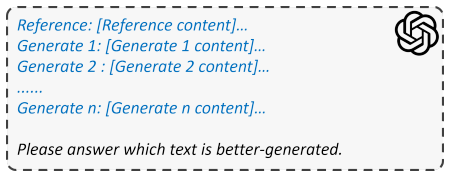
- [Tables 1 and 4] The GPTScore-pairwise scores for identical configurations differ substantially between Table 1 and Table 4. Llama-3.2-3B is 4.10 vs 8.79; + Statutory provisions is 14.90 vs 17.49; + LegalChainReasoner is 52.05 vs 64.26. This is not a typo in a single cell but a systematic inconsistency across all three rows. Since the paper cites GPTScore-pairwise as evidence of improved generation quality, and the gap between conditions (e.g., 52.05 vs 14.90 in Table 1) is of the same order as the inconsistency, the paper must either report variance/aggregation details, fix the discrepancy, or downweight GPTScore claims in favor of the more stable ROUGE/BLEU/BERTScore results.
- [Appendix A, §2.1] The validation of the extracted legal chains is reported as a single aggregate '97.68% accuracy' without specifying the number of chains evaluated, the number of experts, the unit of accuracy (whole triplet vs. component-level), or the variance across the 12 crime types. The extraction prompt in Figure 5 is presented as the validation prompt, but it is an extraction prompt, not a validation instrument. This matters because the chain-aware encoder injects the same chain set for every case of a given charge (Eq. 12); a missing or distorted sentencing-relevant condition—e.g., recidivism, amount thresholds, or in-public-place requirements—would systematically mislead the model for an entire crime type. Please report the validation protocol, per-crime-type chain fidelity, and, ideally, per-crime-type model performance so that the average gains can be separated from crime-type-specific effects
- [Section 3.5, Appendix D.5] The rule-based screening metric assesses 'situation description correctness' using 'structured legal chains extracted from the statutory provisions'. This is the same representation that LegalChainReasoner injects during training and inference. As a result, the evaluation may reward models for echoing the injected chains rather than for independently correct legal reasoning. The paper should demonstrate that the screening metric is not circular—for example, by comparing against human annotation of the generated situation descriptions, or by evaluating whether the metric agrees with independent statutory interpretation.
- [Section 3.3, Table 3] The comparison with specialized sentencing-prediction baselines (NeurJudge, R-Former, ML-LJP, etc.) is difficult to interpret. The paper states that results 'differ from those reported in the original papers' and attributes this to the regression formulation, but it does not specify how the classification-trained baselines were adapted to regression, what hyperparameters were used, or whether the baseline models receive the same factual descriptions and legal chains as the proposed method. Please provide the adaptation details; without them, the claim that 'methods based on the Criminal Judicial Opinion generation task generally achieve better average performance' is not fully supported.
minor comments (5)
- [Table 6] In the PCCD column, 'Court Opinion Average' equals 'Fact Description Average' (394.0). This is likely a typo; please correct.
- [Appendix D.4] The GPTScore-pairwise scores for AttS2S and BART are reported as averages in Tables 1 and 2, but the component values appear only in the appendix. Please mark this in the table captions and report the component values or confidence intervals.
- [References] BERTScore is cited twice as Zhang et al. 2020a and 2020b with identical content. Please deduplicate.
- [Throughout] There are typos and formatting issues: 'Prediciton' in the Section 4 heading, 'Baelines' in Appendix C, 'Dstill' in Section 3.1 ('DeepSeek-R1-Dstill-Qwen-7B'), and missing spaces in Table 1 rows such as '+ LegalChainReasoner15.41'. These should be cleaned up.
- [Section 3.1] The statement 'we found α = β = 1 is the best' is not accompanied by a search range or sensitivity analysis. Since α and β are free parameters in Eq. (14), please report at least a brief tuning procedure or a small sensitivity table.
Circularity Check
Minor evaluation circularity in rule-based screening; central method and main tables are not circular.
-
self definitional
[Appendix D.5 (Rule-based Evaluation); cf. Eq. (12) in Section 2.3]
"Second, we assess whether both opinions describe the same situation, based on structured legal chains extracted from the statutory provisions."
The situation-description component of the rule-based screening metric is defined using the same structured legal chains that LegalChainReasoner injects into the model via ECombined = [EChain; HFi] (Eq. 12). A generated opinion that mirrors the provided chains is therefore counted as 'situation correct' by construction, while baselines that never receive the chains are scored against an input they were not given. This makes the Table 5 situation-description advantage of LegalChainReasoner partly self-fulfilling. However, the main comparisons in Tables 1-4 rely on ROUGE/BLEU/BERTScore/MAE/RMSE/GPTScore, which are external to the chain representation, so the central empirical claim is not forced by this construction.
full rationale
The core method is not circular. Legal chains are derived from external statutory provisions (Section 2.1), and the chain-aware encoder is trained on real case data with a loss over reference opinions (Eq. 14). The main reported improvements are evaluated with standard generation and regression metrics that do not use the chains as the scoring rubric, and the strongest baseline comparison ('+ Statutory provisions') isolates the effect of structured chains versus raw legal text. The only genuinely circular construction I found is the rule-based screening metric in Appendix D.5: its 'situation description correctness' check is defined in terms of the exact structured legal chains that LegalChainReasoner injects, so the advantage shown in Table 5 is partly a re-statement of the input. The legal-chain validation in Appendix A is underspecified (97.68% accuracy without reporting the number of chains, experts, or per-crime-type breakdown), but that is a support/completeness concern, not a circularity concern; the 'same prompt' sentence is ambiguous but not enough to establish that the validation criterion was the generation criterion. No load-bearing self-citation or imported uniqueness theorem occurs; the citations to legal norm theory and MoE are external and non-circular. Overall, the central claim has independent content, so the paper receives a low circularity score of 2.
Assumptions & free parameters
free parameters (3)
- Loss weighting α and β =
α = β = 1
- Attention heads h in chain-aware encoding =
8
- LoRA configuration =
not specified; same as Xu et al. (2024)
assumptions (4)
- domain assumption Each statutory provision can be decomposed into premise-situation-conclusion triplets
- domain assumption The criminal charge Ci is given as input and not predicted
- domain assumption LLM-generated legal chains, after legal expert validation, faithfully represent statutory provisions
- ad hoc to paper Sentencing prediction can be optimized via token-level cross-entropy on the generated sentencing text
Cite this review
Pith. "Pith review of LegalChainReasoner: A Legal Chain-guided Framework for Criminal Judicial Opinion Generation." pith.science (2026). https://pith.science/paper/44ASFQW2
@misc{pith2026250900783,
  author       = {Pith},
  title        = {Pith review of: LegalChainReasoner: A Legal Chain-guided Framework for Criminal Judicial Opinion Generation},
  year         = {2026},
  howpublished = {\url{https://pith.science/paper/44ASFQW2}},
  note         = {Machine review of arXiv:2509.00783}
}
read the original abstract
A criminal judicial opinion represents the judge's disposition of a case, including the decision rationale and sentencing. Automatically generating such opinions can assist in analyzing sentencing consistency and provide judges with references to similar past cases. However, current research typically approaches this task by dividing it into two isolated subtasks: legal reasoning and sentencing prediction. This separation often leads to inconsistency between the reasoning and predictions, failing to meet real-world judicial requirements. Furthermore, prior studies rely on manually curated knowledge to enhance applicability, yet such methods remain limited in practical deployment. To address these limitations and better align with legal practice, we propose a new LegalAI task: Judicial Opinion Generation, which simultaneously produces both legal reasoning and sentencing decisions. To achieve this, we introduce LegalChainReasoner, a framework that applies structured legal chains to guide the model through comprehensive case assessments. By integrating factual premises, composite legal conditions, and sentencing conclusions, our approach ensures flexible knowledge injection and end-to-end opinion generation. Experiments on two real-world and open-source Chinese legal case datasets demonstrate that our method outperforms baseline models.
Figures


Figures from the paper (2 more)

Reference graph
Works this paper leans on
-
[1]
Dzmitry Bahdanau, Kyunghyun Cho, and Yoshua Bengio. 2015. http://arxiv.org/abs/1409.0473 Neural machine translation by jointly learning to align and translate . In 3rd International Conference on Learning Representations, ICLR
arXiv 2015
-
[2]
Weilin Cai, Juyong Jiang, Fan Wang, Jing Tang, Sunghun Kim, and Jiayi Huang. 2024. A survey on mixture of experts. arXiv preprint arXiv:2407.06204
arXiv 2024
-
[3]
Ilias Chalkidis, Ion Androutsopoulos, and Nikolaos Aletras. 2019. https://doi.org/10.18653/v1/P19-1424 Neural legal judgment prediction in E nglish . In Proceedings of the 57th Annual Meeting of the Association for Computational Linguistics, pages 4317--4323. Association for Computational Linguistics
-
[4]
Le, and Christopher D
Kevin Clark, Minh-Thang Luong, Quoc V. Le, and Christopher D. Manning. 2020. https://openreview.net/pdf?id=r1xMH1BtvB ELECTRA : Pre-training text encoders as discriminators rather than generators . In ICLR
2020
-
[5]
Junyun Cui, Xiaoyu Shen, and Shaochun Wen. 2023. A survey on legal judgment prediction: Datasets, metrics, models and challenges. IEEE Access, 11:102050--102071
work page 2023
-
[6]
Yongfu Dai, Duanyu Feng, Jimin Huang, Haochen Jia, Qianqian Xie, Yifang Zhang, Weiguang Han, Wei Tian, and Hao Wang. 2025. Laiw: A chinese legal large language models benchmark. In Proceedings of the 31st International Conference on Computational Linguistics, pages 10738--10766
work page 2025
-
[7]
DeepSeek-AI, Daya Guo, Dejian Yang, Haowei Zhang, Junxiao Song, Ruoyu Zhang, Runxin Xu, Qihao Zhu, Shirong Ma, Peiyi Wang, Xiao Bi, Xiaokang Zhang, Xingkai Yu, Yu Wu, Z. F. Wu, Zhibin Gou, Zhihong Shao, Zhuoshu Li, Ziyi Gao, and 181 others. 2025. https://arxiv.org/abs/2501.12948 Deepseek-r1: Incentivizing reasoning capability in llms via reinforcement lea...
arXiv 2025
-
[8]
Chenlong Deng, Kelong Mao, Yuyao Zhang, and Zhicheng Dou. 2024. https://doi.org/10.18653/v1/2024.findings-emnlp.43 Enabling discriminative reasoning in LLM s for legal judgment prediction . In Findings of the Association for Computational Linguistics: EMNLP 2024, pages 784--796, Miami, Florida, USA. Association for Computational Linguistics
Show all 47 references
-
[9]
Jacob Devlin, Ming-Wei Chang, Kenton Lee, and Kristina Toutanova. 2019. https://doi.org/10.18653/v1/N19-1423 BERT : Pre-training of deep bidirectional transformers for language understanding . In Proceedings of the 2019 Conference of the North A merican Chapter of the Associat...
2019 doi
-
[10]
Qian Dong and Shuzi Niu. 2021. Legal judgment prediction via relational learning. In Proceedings of the 44th international ACM SIGIR conference on research and development in information retrieval, pages 983--992
2021
-
[11]
Jinlan Fu, See-Kiong Ng, Zhengbao Jiang, and Pengfei Liu. 2024. https://doi.org/10.18653/v1/2024.naacl-long.365 GPTS core: Evaluate as you desire . In Proceedings of the 2024 Conference of the North American Chapter of the Association for Computational Linguistics: Human Langu...
2024 doi
-
[12]
Leilei Gan, Kun Kuang, Yi Yang, and Fei Wu. 2021. Judgment prediction via injecting legal knowledge into neural networks. In Proceedings of the AAAI conference on artificial intelligence, volume 35, pages 12866--12874
2021
-
[13]
Aaron Grattafiori, Abhimanyu Dubey, Abhinav Jauhri, Abhinav Pandey, Abhishek Kadian, Ahmad Al-Dahle, Aiesha Letman, Akhil Mathur, Alan Schelten, Alex Vaughan, Amy Yang, Angela Fan, Anirudh Goyal, Anthony Hartshorn, Aobo Yang, Archi Mitra, Archie Sravankumar, Artem Korenev, Art...
2024 arXiv
-
[14]
Edward J Hu, Yelong Shen, Phillip Wallis, Zeyuan Allen-Zhu, Yuanzhi Li, Shean Wang, Lu Wang, Weizhu Chen, and 1 others. 2022. Lora: Low-rank adaptation of large language models. ICLR, 1(2):3
2022
-
[15]
Zikun Hu, Xiang Li, Cunchao Tu, Zhiyuan Liu, and Maosong Sun. 2018. Few-shot charge prediction with discriminative legal attributes. In Proceedings of the 27th international conference on computational linguistics, pages 487--498
2018
-
[16]
Quzhe Huang, Mingxu Tao, Chen Zhang, Zhenwei An, Cong Jiang, Zhibin Chen, Zirui Wu, and Yansong Feng. 2023. https://arxiv.org/abs/2305.15062 Lawyer llama technical report . Preprint, arXiv:2305.15062
2023 arXiv
-
[17]
Herbert Keuth. 1975. http://www.jstor.org/stable/29761485 On some logical characteristics of legal norms . Jurimetrics Journal, 15(3):160--170
1975
-
[18]
Yuquan Le, Congqing He, Meng Chen, Youzheng Wu, Xiaodong He, and Bowen Zhou. 2020. Learning to predict charges for legal judgment via self-attentive capsule network. In ECAI 2020, pages 1802--1809. IOS Press
2020
-
[19]
Mike Lewis, Yinhan Liu, Naman Goyal, Marjan Ghazvininejad, Abdelrahman Mohamed, Omer Levy, Veselin Stoyanov, and Luke Zettlemoyer. 2020. https://doi.org/10.18653/v1/2020.acl-main.703 BART : Denoising sequence-to-sequence pre-training for natural language generation, translatio...
2020 doi
-
[20]
Ang Li, Yiquan Wu, Yifei Liu, Fei Wu, Ming Cai, and Kun Kuang. 2024 a . Enhancing court view generation with knowledge injection and guidance. arXiv preprint arXiv:2403.04366
2024 arXiv
-
[21]
Zhen Li, Xiaohan Xu, Tao Shen, Can Xu, Jia-Chen Gu, Yuxuan Lai, Chongyang Tao, and Shuai Ma. 2024 b . https://doi.org/10.18653/v1/2024.emnlp-main.896 Leveraging large language models for NLG evaluation: Advances and challenges . In Proceedings of the 2024 Conference on Empiric...
2024 doi
-
[22]
Chin-Yew Lin. 2004. https://aclanthology.org/W04-1013/ ROUGE : A package for automatic evaluation of summaries . In Text Summarization Branches Out, pages 74--81. Association for Computational Linguistics
2004
-
[23]
Dugang Liu, Weihao Du, Lei Li, Weike Pan, and Zhong Ming. 2022. Augmenting legal judgment prediction with contrastive case relations. In Proceedings of the 29th international conference on computational linguistics, pages 2658--2667
2022
-
[24]
Yifei Liu, Yiquan Wu, Yating Zhang, Changlong Sun, Weiming Lu, Fei Wu, and Kun Kuang. 2023. https://doi.org/10.1145/3539618.3591731 Ml-ljp: Multi-law aware legal judgment prediction . In Proceedings of the 46th International ACM SIGIR Conference on Research and Development in ...
2023
-
[25]
Saeed Masoudnia and Reza Ebrahimpour. 2014. Mixture of experts: a literature survey. Artificial Intelligence Review, 42:275--293
2014
-
[26]
Chunyun Meng, Yuki Todo, Cheng Tang, Li Luan, and Zheng Tang. 2025. Dpfsi: A legal judgment prediction method based on deontic logic prompt and fusion of law article statistical information. Expert Systems with Applications, page 126722
2025
-
[27]
Kishore Papineni, Salim Roukos, Todd Ward, and Wei-Jing Zhu. 2002. https://doi.org/10.3115/1073083.1073135 B leu: a method for automatic evaluation of machine translation . In Proceedings of the 40th Annual Meeting of the Association for Computational Linguistics, pages 311--3...
2002
-
[28]
Joseph Raz. 1980. https://doi.org/10.1093/acprof:oso/9780198253631.001.0001 The Concept of a Legal System : An Introduction to the Theory of a Legal System . Oxford University Press
1980
-
[29]
Jingyun Sun, Shaobin Huang, and Chi Wei. 2024. Chinese legal judgment prediction via knowledgeable prompt learning. Expert Systems with Applications, 238:122177
2024
-
[30]
Yiquan Wu, Kun Kuang, Yating Zhang, Xiaozhong Liu, Changlong Sun, Jun Xiao, Yueting Zhuang, Luo Si, and Fei Wu. 2020. De-biased court’s view generation with causality. In Proceedings of the 2020 Conference on Empirical Methods in Natural Language Processing (EMNLP), pages 763--780
2020
-
[31]
Yiquan Wu, Yifei Liu, Weiming Lu, Yating Zhang, Jun Feng, Changlong Sun, Fei Wu, and Kun Kuang. 2022. https://doi.org/10.18653/v1/2022.emnlp-main.316 Towards interactivity and interpretability: A rationale-based legal judgment prediction framework . In Proceedings of the 2022 ...
2022 doi
-
[32]
Yiquan Wu, Siying Zhou, Yifei Liu, Weiming Lu, Xiaozhong Liu, Yating Zhang, Changlong Sun, Fei Wu, and Kun Kuang. 2023. Precedent-enhanced legal judgment prediction with llm and domain-model collaboration. arXiv preprint arXiv:2310.09241
2023 arXiv
-
[33]
Chunyu Xia, Tieke He, Wenlong Li, Zemin Qin, and Zhipeng Zou. 2019. Similarity analysis of law documents based on word2vec. In 2019 IEEE 19th International Conference on Software Quality, Reliability and Security Companion (QRS-C), pages 354--357. IEEE
2019
-
[34]
Nuo Xu, Pinghui Wang, Long Chen, Li Pan, Xiaoyan Wang, and Junzhou Zhao. 2020. https://doi.org/10.18653/v1/2020.acl-main.280 Distinguish confusing law articles for legal judgment prediction . In Proceedings of the 58th Annual Meeting of the Association for Computational Lingui...
2020 doi
-
[35]
Qi Xu, Xiao Wei, Hang Yu, Qian Liu, and Hao Fei. 2024. https://doi.org/10.18653/v1/2024.findings-emnlp.194 Divide and conquer: Legal concept-guided criminal court view generation . In Findings of the Association for Computational Linguistics: EMNLP 2024, pages 3395--3410
2024 doi
-
[36]
Jun Yang, Weizhi Ma, Min Zhang, Xin Zhou, Yiqun Liu, and Shaoping Ma. 2021. https://doi.org/10.1145/3469887 Legalgnn: Legal information enhanced graph neural network for recommendation . ACM Trans. Inf. Syst., 40(2)
2021 doi
-
[37]
Hai Ye, Xin Jiang, Zhunchen Luo, and Wenhan Chao. 2018. Interpretable charge predictions for criminal cases: Learning to generate court views from fact descriptions. arXiv preprint arXiv:1802.08504
2018 arXiv
-
[38]
Linan Yue, Qi Liu, Binbin Jin, Han Wu, Kai Zhang, Yanqing An, Mingyue Cheng, Biao Yin, and Dayong Wu. 2021 a . Neurjudge: A circumstance-aware neural framework for legal judgment prediction. In Proceedings of the 44th international ACM SIGIR conference on research and developm...
2021
-
[39]
Linan Yue, Qi Liu, Han Wu, Yanqing An, Li Wang, Senchao Yuan, and Dayong Wu. 2021 b . https://doi.org/10.1145/3404835.3462984 Circumstances enhanced criminal court view generation . In Proceedings of the 44th International ACM SIGIR Conference on Research and Development in In...
2021
-
[40]
Linan Yue, Qi Liu, Lili Zhao, Li Wang, Weibo Gao, and Yanqing An. 2024. https://doi.org/10.1145/3626772.3657698 Event grounded criminal court view generation with cooperative (large) language models . In Proceedings of the 47th International ACM SIGIR Conference on Research an...
2024
-
[41]
Han Zhang, Zhicheng Dou, Yutao Zhu, and Ji-Rong Wen. 2023. Contrastive learning for legal judgment prediction. ACM Transactions on Information Systems, 41(4):1--25
2023
-
[42]
Tianyi Zhang, Varsha Kishore, Felix Wu, Kilian Q Weinberger, and Yoav Artzi. 2020 a . https://openreview.net/forum?id=SkeHuCVFDr Bertscore: Evaluating text generation with bert . In International Conference on Learning Representations (ICLR)
2020
-
[43]
Weinberger, and Yoav Artzi
Tianyi Zhang, Varsha Kishore, Felix Wu, Kilian Q. Weinberger, and Yoav Artzi. 2020 b . https://openreview.net/forum?id=SkeHuCVFDr Bertscore: Evaluating text generation with BERT . In 8th International Conference on Learning Representations, ICLR
2020
-
[44]
Jie Zhao, Ziyu Guan, Cai Xu, Wei Zhao, and Enze Chen. 2022. Charge prediction by constitutive elements matching of crimes. In IJCAI, pages 4517--4523
2022
-
[45]
Haoxi Zhong, Chaojun Xiao, Cunchao Tu, Tianyang Zhang, Zhiyuan Liu, and Maosong Sun. 2020. Jec-qa: a legal-domain question answering dataset. In Proceedings of the AAAI conference on artificial intelligence, volume 34, pages 9701--9708
2020
-
[46]
online" 'onlinestring :=
ENTRY address archivePrefix author booktitle chapter edition editor eid eprint eprinttype howpublished institution journal key month note number organization pages publisher school series title type volume year doi pubmed url lastchecked label extra.label sort.label short.list...
-
[47]
write newline
" write newline "" before.all 'output.state := FUNCTION n.dashify 't := "" t empty not t #1 #1 substring "-" = t #1 #2 substring "--" = not "--" * t #2 global.max substring 't := t #1 #1 substring "-" = "-" * t #2 global.max substring 't := while if t #1 #1 substring * t #2 gl...
Reviewed August 5, 2026 · model on record in the stance chip above.
Discussion (0). Sign in to comment.