REVIEW 4 major objections 5 minor 2 cited by
This paper argues that Ethereum Ponzi schemes can be classified into four source-code structures, and that those structures leave shared, detectable marks in contract code.
Reviewed by Pith at T0; open to challenge. T0 means a machine referee read the full paper against a public rubric. the ladder, T0–T4 →
A known four-way classification of Ponzi smart contracts is restated and run through the Mythril scanner on a few examples, while the claimed 500-contract batch analysis is asserted without releasing data or results.
T0 review reviewed 2026-08-04 challenge →
load-bearing objection A readable walkthrough of known Ponzi contract types, but the headline batch-detection result is asserted without any data — not a strong paper. the 4 major comments →
Security Analysis of Ponzi Schemes in Ethereum Smart Contracts
The pith
A machine-rendered reading of the paper's core claim, the machinery that carries it, and where it could break.
The reading
Core claim
The paper's central claim is that Ponzi scheme smart contracts can be categorized by the data structure their code uses to manage investors—tree, chain, waterfall, or transfer—and that this structural choice shapes both the scam's economics and its vulnerability profile. It claims that for representative contracts of each type, static reading of the source code plus dynamic symbolic execution reveals consistent mechanisms: entry thresholds exclude small investors, payouts flow disproportionately to the originator and early participants, and detected flaws center on unchecked external calls, integer overflow, and assertion or state anomalies. The paper further claims that batch analysis of 50
What carries the argument
The central machinery is a four-way structural taxonomy—tree, chain, waterfall, transfer—that classifies a Ponzi contract by the data structure its source code uses to record investors and to distribute payouts. Paired with a symbolic-execution and SMT-based vulnerability scanner, the taxonomy lets the analysis map each scam's economic design to concrete code-level risks such as unchecked calls, integer overflow, and state anomalies.
Load-bearing premise
The batch-analysis conclusions rest on accepting a public block-explorer label as correct, complete ground truth and assuming that 500 pre-2019 open-source contracts carrying that label represent all Ponzi smart contracts.
What would settle it
Take the 500 flagged contracts and a matched set of non-flagged contracts from the same period, run the same batch scan on both, and compare the rates of high entry fees, initiator-heavy payout splits, and integer-overflow or state warnings. If those patterns appear equally often in non-flagged contracts, the claimed common characteristics are not distinctive. A second check is to manually audit a random sample of the flagged contracts to see whether the public labels are independently verified or merely self-reported.
If this is right
- Auditors can use a contract's investor-storage structure as a first-pass sieve for Ponzi-style payout logic.
- The recurring warning types—unchecked external calls, integer overflow, and state anomalies—become a signature set worth checking in any contract that promises risk-free returns.
- Because entry thresholds are a stated common characteristic, unusually high minimum investments can be treated as a screening signal rather than a normal design choice.
- Detectors can be built per structural class, since each class has its own payout order and therefore its own attack surface.
Where Pith is reading between the lines
- The paper says 500 flagged contracts were scanned but never reports the raw scan results; a natural follow-up is to publish per-contract tool output so the claimed frequencies can be checked.
- An obvious control is missing: comparing flagged contracts to benign contracts. Until that comparison exists, the 'common characteristics' are candidate heuristics rather than demonstrated signals.
- The taxonomy depends on open-source code; extending it to bytecode-only contracts would test whether the four structures are truly universal or just an artifact of which contracts get open-sourced.
- If the entry-fee and payout-inequality heuristics survive a baseline test, they could become a lightweight pre-screener that flags contracts for deeper audit before funds are committed.
Editorial analysis
A structured set of objections, weighed in public.
Referee Report
Summary. The paper claims to (i) classify Ethereum Ponzi smart contracts into four structural types (tree-, chain-, waterfall-, and transfer-based), (ii) perform hybrid static/dynamic analysis of representative cases with Mythril, and (iii) conduct batch detection of 500 open-source contracts scraped from Etherscan to reveal common characteristics of Ponzi contracts. The case studies in Section 3 are concrete and the code excerpts are useful, but the central empirical contribution—the batch detection and the claimed common characteristics—is asserted without reporting any quantitative results, control comparison, or reproducibility artifacts.
Significance. If the batch-detection results were substantiated, the paper would offer a useful structural and vulnerability profile of Ponzi contracts that could complement machine-learning detectors. The paper's strengths include the use of real contract examples, the public Mythril tool, and a candid acknowledgment in Section 3.3 that Mythril can miss critical vulnerabilities. However, as written, the paper does not deliver the promised empirical evidence: no counts, rates, error bars, control group, scripts, or result files are provided. The significance of the claimed findings therefore cannot be assessed, and the paper presently reads as a preliminary survey rather than a complete security analysis.
major comments (4)
- [§4.3 (Results Analysis)] The central empirical claim—that 500 contracts share common characteristics—is unsupported. The section lists qualitative conclusions (high entry thresholds, initiator-heavy profit distribution, frequent SWC-101 and SWC-110 findings) without reporting raw detection counts, per-type breakdowns, or any statistical summary. Without these numbers, the reader cannot verify the claims. Moreover, no control group of non-Ponzi contracts from the same period is analyzed, so the prevalence of SWC-101/SWC-110 in the flagged set cannot be attributed to Ponzi-ness; these vulnerability classes are known to be common in ordinary Solidity code. This is the load-bearing contribution and it is missing.
- [§4.1–§4.2 (Data collection and batch process)] The dataset and batch-detection procedure are not reproducible. No contract addresses, no crawl timestamp, no sampling rationale, and no scripts are given. The only statement about ground truth is that the contracts were 'flagged as a Ponzi scheme' on Etherscan.io before 2019. This label is not validated, no independent labeling is performed, and there is no discussion of potential bias or incompleteness in the flag. Without a concrete data manifest, the 500-contract corpus cannot be audited or reused.
- [§3.3 (Fomo3D)] Section 3.3 explicitly states that Mythril did not detect any obvious vulnerabilities in Fomo3D, and that the contract's two exploitable flaws (predictable randomness and bypassable contract-address check) were found only by manual source-code review. This directly undercuts the inference in §4.3 that Mythril-detected vulnerabilities (SWC-101, SWC-110) constitute the 'common characteristics' of Ponzi contracts. The paper needs to reconcile this tension, at minimum by benchmarking Mythril's detection rate against a non-Ponzi control group and reporting missed-detection cases in the batch results.
- [§3.2.2 (Chain-based Ponzi scheme)] The representative analysis contains a technical inconsistency. The paper reports SWC-101 (integer overflow) in CrystalDoubler and locates the issue at 'line 21 of the source code: string public Message = "Welcome Player! Double your ETH Now!"'. A string constant assignment does not perform integer arithmetic, so attributing integer overflow to that line is not meaningful. This suggests that the Mythril findings are being described without careful mapping to the actual vulnerable operations, which weakens confidence in the other case-study vulnerability attributions.
minor comments (5)
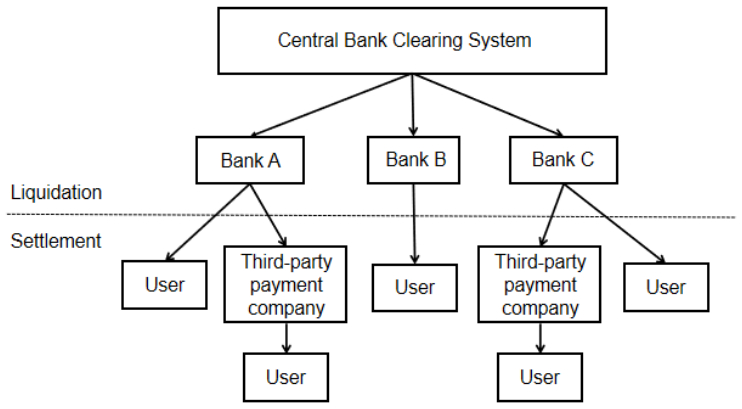
- [§2.1 and Figure 1] The background sections on blockchain architecture, consensus mechanisms, and the People's Bank of China payment system are lengthy and largely tangential to Ponzi schemes. The paper would benefit from condensing this material to a few paragraphs.
- [§3.2.2, code listing] Typo in the code: 'Aomount' should be 'Amount'. Also 'fenny' should be 'finney' in the prose.
- [§3.2.4] The vulnerability list says 'SWC-110, SWC-104, and SWC-110' for the transfer-based contract. This is redundant; the two SWC-110 instances are described as occurring in different functions, but the presentation should be clearer.
- [References] A substantial fraction of the references are to closely related arXiv preprints by the same research group. Some are relevant, but many appear tangential; pruning would improve readability and avoid the appearance of citation padding.
- [§3.1] Mythril is described as detecting 'integer removal'—presumably 'integer overflow'. Please correct this typo.
Circularity Check
No circularity: batch conclusions are under-evidenced, not definitionally forced; taxonomy and toolchain are external.
full rationale
This paper does not contain a fitted-parameter derivation or a self-definitional chain, so the 'prediction equals fit' and 'self-definitional' patterns do not apply. The four-type taxonomy is explicitly imported from Bartoletti et al. ('This is precisely the work undertaken by Massimo Bartoletti et al., who categorized Ponzi schemes into four types based on the source code'), and the vulnerability findings come from Mythril, an external tool. The batch-detection section reports qualitative conclusions ('The entry fee for investors joining the scheme is typically high', 'frequently detected by Mythril as harboring integer data overflow vulnerabilities and abnormal state vulnerabilities') without raw counts or a control group; that is an evidentiary/reproducibility weakness, not a circular reduction, because nothing in the text defines those characteristics in terms of the collection or detection process. The many Xiaoqi Li references are background and related-work citations and are not used to justify the central claims; the Fomo3D section even concedes that Mythril missed the contract's real flaws, which cuts against, rather than creates, a circular reliance on the tool. No quoted equation or fitted parameter makes an output equal to an input by construction, so no specific circular step meets the evidence bar.
Axiom & Free-Parameter Ledger
axioms (4)
- domain assumption Etherscan's 'flagged as Ponzi scheme' designation is valid ground truth for labeling the 500 contracts.
- domain assumption The four structural types defined by Bartoletti et al. are exhaustive for Ponzi smart contracts.
- domain assumption Mythril-detected vulnerability classes (SWC-101, SWC-104, SWC-110) are meaningful indicators of Ponzi-related risk.
- domain assumption Open-source contracts crawled from Etherscan represent the population of Ponzi smart contracts.
Cite this review
Pith. "Pith review of Security Analysis of Ponzi Schemes in Ethereum Smart Contracts." pith.science (2026). https://pith.science/paper/NJH3WIMQ
@misc{pith2026251003819,
  author       = {Pith},
  title        = {Pith review of: Security Analysis of Ponzi Schemes in Ethereum Smart Contracts},
  year         = {2026},
  howpublished = {\url{https://pith.science/paper/NJH3WIMQ}},
  note         = {Machine review of arXiv:2510.03819}
}
read the original abstract
The rapid advancement of blockchain technology has precipitated the widespread adoption of Ethereum and smart contracts across a variety of sectors. However, this has also given rise to numerous fraudulent activities, with many speculators embedding Ponzi schemes within smart contracts, resulting in significant financial losses for investors. Currently, there is a lack of effective methods for identifying and analyzing such new types of fraudulent activities. This paper categorizes these scams into four structural types and explores the intrinsic characteristics of Ponzi scheme contract source code from a program analysis perspective. The Mythril tool is employed to conduct static and dynamic analyses of representative cases, thereby revealing their vulnerabilities and operational mechanisms. Furthermore, this paper employs shell scripts and command patterns to conduct batch detection of open-source smart contract code, thereby unveiling the common characteristics of Ponzi scheme smart contracts.
Figures


Forward citations
Cited by 2 Pith papers
-
CKG-LLM: LLM-Assisted Detection of Smart Contract Access Control Vulnerabilities Based on Knowledge Graphs
CKG-LLM uses LLMs to generate executable queries over contract knowledge graphs for detecting access control vulnerabilities and reports superior performance versus existing tools.
-
PSR2: A Phase-based Semantic Reasoning Framework for Atomicity Violation Detection via Contract Refinement
PSR2 framework detects atomicity violations in smart contracts at 94.69% F1-score by fusing structural path analysis and semantic context reasoning, outperforming baselines.
Reference graph
Works this paper leans on
-
[1]
A survey of attacks on ethereum smart contracts (sok)
Nicola Atzei, Massimo Bartoletti, and Tiziana Cimoli. A survey of attacks on ethereum smart contracts (sok). InInternational conference on principles of secu- rity and trust, pages 164–186. Springer, 2017
2017
-
[2]
Dissecting ponzi schemes on ethereum: identification, analysis, and impact.Future Genera- tion Computer Systems, 102:259–277, 2020
Massimo Bartoletti, Salvatore Carta, Tiziana Cimoli, and Roberto Saia. Dissecting ponzi schemes on ethereum: identification, analysis, and impact.Future Genera- tion Computer Systems, 102:259–277, 2020
2020
-
[3]
A study of emerging areas in adoption of blockchain technology and it’s prospective challenges in india
Ajay Kumar Bharti et al. A study of emerging areas in adoption of blockchain technology and it’s prospective challenges in india. In2019 Women Institute of Technology Conference on Electrical and Computer Engineering (WITCON ECE), pages 146–153. IEEE, 2019
2019
-
[4]
Investigating mmm ponzi scheme on bitcoin
Yazan Boshmaf, Charitha Elvitigala, Husam Al Jawaheri, Primal Wijesekera, and Mashael Al Sabah. Investigating mmm ponzi scheme on bitcoin. InProceedings of the 15th ACM Asia Conference on Computer and Communications Security, pages 519–530, 2020
2020
-
[5]
A next-generation smart contract and decentralized applica- tion platform.white paper, 3(37):2–1, 2014
Vitalik Buterin et al. A next-generation smart contract and decentralized applica- tion platform.white paper, 3(37):2–1, 2014
2014
-
[6]
Detecting ponzi schemes on ethereum: Towards healthier blockchain technology
Weili Chen, Zibin Zheng, Jiahui Cui, Edith Ngai, Peilin Zheng, and Yuren Zhou. Detecting ponzi schemes on ethereum: Towards healthier blockchain technology. InProceedings of the 2018 world wide web conference, pages 1409–1418, 2018
2018
-
[7]
Performance evaluation of ethereum pri- vate and testnet networks using hyperledger caliper
Wonseok Choi and James Won-Ki Hong. Performance evaluation of ethereum pri- vate and testnet networks using hyperledger caliper. In2021 22nd Asia-Pacific Net- work Operations and Management Symposium (APNOMS), pages 325–329. IEEE, 2021. 28
2021
-
[8]
Majority is not enough: Bitcoin mining is vulner- able.Communications of the ACM, 61(7):95–102, 2018
Ittay Eyal and Emin G¨ un Sirer. Majority is not enough: Bitcoin mining is vulner- able.Communications of the ACM, 61(7):95–102, 2018
2018
-
[9]
Slither: a static analysis framework for smart contracts
Josselin Feist, Gustavo Grieco, and Alex Groce. Slither: a static analysis framework for smart contracts. In2019 IEEE/ACM 2nd International Workshop on Emerging Trends in Software Engineering for Blockchain (WETSEB), pages 8–15. IEEE, 2019
2019
-
[10]
In29th USENIX Security Symposium (USENIX Security 20), pages 2757–2774, 2020
Joel Frank, Cornelius Aschermann, and Thorsten Holz.{ETHBMC}: A bounded model checker for smart contracts. In29th USENIX Security Symposium (USENIX Security 20), pages 2757–2774, 2020
2020
-
[11]
Smartembed: A tool for clone and bug detection in smart contracts through structural code embedding
Zhipeng Gao, Vinoj Jayasundara, Lingxiao Jiang, Xin Xia, David Lo, and John Grundy. Smartembed: A tool for clone and bug detection in smart contracts through structural code embedding. In2019 IEEE International Conference on Software Maintenance and Evolution (ICSME), pages 394–397. IEEE, 2019
2019
-
[12]
(short paper) developing a smart storage container for a blockchain-based supply chain application
Johannes Hinckeldeyn and Kreutzfeldt Jochen. (short paper) developing a smart storage container for a blockchain-based supply chain application. In2018 Crypto valley conference on blockchain technology (CVCBT), pages 97–100. IEEE, 2018
2018
-
[13]
Evaluat- ing machine-learning techniques for detecting smart ponzi schemes
Giacomo Ibba, Giuseppe Antonio Pierro, and Marco Di Francesco. Evaluat- ing machine-learning techniques for detecting smart ponzi schemes. In2021 IEEE/ACM 4th International Workshop on Emerging Trends in Software Engi- neering for Blockchain (WETSEB), pages 34–40. IEEE, 2021
2021
-
[14]
Contractfuzzer: Fuzzing smart contracts for vulnerability detection
Bo Jiang, Ye Liu, and Wing Kwong Chan. Contractfuzzer: Fuzzing smart contracts for vulnerability detection. InProceedings of the 33rd ACM/IEEE international conference on automated software engineering, pages 259–269, 2018
2018
-
[15]
Blockchain application in metaverse: A review.arXiv preprint arXiv:2504.11730, 2025
Bingquan Jin, Hailu Kuang, and Xiaoqi Li. Blockchain application in metaverse: A review.arXiv preprint arXiv:2504.11730, 2025
arXiv 2025
-
[16]
Dechao Kong, Xiaoqi Li, and Wenkai Li. Uechecker: Detecting unchecked external call vulnerabilities in dapps via graph analysis.arXiv preprint arXiv:2508.01343, 2025
arXiv 2025
-
[17]
Interaction-aware vulner- ability detection in smart contract bytecodes.IEEE Transactions on Dependable and Secure Computing, 2025
Wenkai Li, Xiaoqi Li, Yingjie Mao, and Yuqing Zhang. Interaction-aware vulner- ability detection in smart contract bytecodes.IEEE Transactions on Dependable and Secure Computing, 2025
2025
-
[18]
Detecting malicious accounts in web3 through transaction graph
Wenkai Li, Zhijie Liu, Xiaoqi Li, and Sen Nie. Detecting malicious accounts in web3 through transaction graph. InProceedings of the 39th IEEE/ACM International Conference on Automated Software Engineering, pages 2482–2483, 2024
2024
-
[19]
Hybrid analysis of smart contracts and malicious behaviors in ethereum
Xiaoqi Li et al. Hybrid analysis of smart contracts and malicious behaviors in ethereum. 2021
2021
-
[20]
Yuhe Lu, Zhongwen Li, and Xiaoqi Li. Movescanner: Analysis of security risks of move smart contracts.arXiv preprint arXiv:2508.17964, 2025. 29
arXiv 2025
-
[21]
Mak- ing smart contracts smarter
Loi Luu, Duc-Hiep Chu, Hrishi Olickel, Prateek Saxena, and Aquinas Hobor. Mak- ing smart contracts smarter. InProceedings of the 2016 ACM SIGSAC conference on computer and communications security, pages 254–269, 2016
2016
-
[22]
Natlm: Detecting defects in nft smart contracts leveraging llm.arXiv preprint arXiv:2508.01351, 2025
Yuanzheng Niu, Xiaoqi Li, and Wenkai Li. Natlm: Detecting defects in nft smart contracts leveraging llm.arXiv preprint arXiv:2508.01351, 2025
arXiv 2025
-
[23]
Mining characteristics of vulnerable smart contracts across lifecycle stages.IET Blockchain, 5(1):e70016, 2025
Hongli Peng, Wenkai Li, and Xiaoqi Li. Mining characteristics of vulnerable smart contracts across lifecycle stages.IET Blockchain, 5(1):e70016, 2025
2025
-
[24]
Hongli Peng, Xiaoqi Li, and Wenkai Li. Multicfv: Detecting control flow vulner- abilities in smart contracts leveraging multimodal deep learning.arXiv preprint arXiv:2508.01346, 2025
arXiv 2025
-
[25]
Us securities and exchange commission.Retrieved from No-Action Letters: http://www
US Securities. Us securities and exchange commission.Retrieved from No-Action Letters: http://www. sec. gov/answers/noaction. htm, 2014
2014
-
[26]
Chengxin Shen, Zhongwen Li, Xiaoqi Li, and Zongwei Li. When blockchain meets crawlers: Real-time market analytics in solana nft markets.arXiv preprint arXiv:2506.02892, 2025
arXiv 2025
-
[27]
Verismart: A highly precise safety verifier for ethereum smart contracts
Sunbeom So, Myungho Lee, Jisu Park, Heejo Lee, and Hakjoo Oh. Verismart: A highly precise safety verifier for ethereum smart contracts. In2020 IEEE Sympo- sium on Security and Privacy (SP), pages 1678–1694. IEEE, 2020
2020
-
[28]
Smartcheck: Static analysis of ethereum smart contracts
Sergei Tikhomirov, Ekaterina Voskresenskaya, Ivan Ivanitskiy, Ramil Takhaviev, Evgeny Marchenko, and Yaroslav Alexandrov. Smartcheck: Static analysis of ethereum smart contracts. InProceedings of the 1st international workshop on emerging trends in software engineering for blockchain, pages 9–16, 2018
2018
-
[29]
Multi-class bitcoin-enabled service identification based on transaction history summarization
Kentaroh Toyoda, Tomoaki Ohtsuki, and P Takis Mathiopoulos. Multi-class bitcoin-enabled service identification based on transaction history summarization. In2018 IEEE international conference on internet of things (iThings) and IEEE green computing and communications (GreenCom) and IEEE cyber, physical and social computing (CPSCom) and IEEE smart data (Sm...
2018
-
[30]
Securify: Practical security analysis of smart contracts
Petar Tsankov, Andrei Dan, Dana Drachsler-Cohen, Arthur Gervais, Florian Buen- zli, and Martin Vechev. Securify: Practical security analysis of smart contracts. InProceedings of the 2018 ACM SIGSAC conference on computer and communi- cations security, pages 67–82, 2018
2018
-
[31]
The inefficiency of bitcoin.Economics Letters, 148:80–82, 2016
Andrew Urquhart. The inefficiency of bitcoin.Economics Letters, 148:80–82, 2016
2016
-
[32]
There’s no free lunch, even using bitcoin: Tracking the popularity and profits of virtual currency scams
Marie Vasek and Tyler Moore. There’s no free lunch, even using bitcoin: Tracking the popularity and profits of virtual currency scams. InInternational conference on financial cryptography and data security, pages 44–61. Springer, 2015
2015
-
[33]
Contractward: Automated vulnerability detection models for ethereum smart contracts.IEEE Transactions on Network Science and Engineering, 8(2):1133– 1144, 2020
Wei Wang, Jingjing Song, Guangquan Xu, Yidong Li, Hao Wang, and Chunhua Su. Contractward: Automated vulnerability detection models for ethereum smart contracts.IEEE Transactions on Network Science and Engineering, 8(2):1133– 1144, 2020. 30
2020
-
[34]
Ai-based vulnerability analysis of nft smart contracts
Xin Wang and Xiaoqi Li. Ai-based vulnerability analysis of nft smart contracts. arXiv preprint arXiv:2504.16113, 2025
arXiv 2025
-
[35]
A first look at blockchain- based decentralized applications.Software: Practice and Experience, 51(10):2033– 2050, 2021
Kaidong Wu, Yun Ma, Gang Huang, and Xuanzhe Liu. A first look at blockchain- based decentralized applications.Software: Practice and Experience, 51(10):2033– 2050, 2021
2033
-
[36]
Security analysis of chatgpt: Threats and privacy risks.arXiv preprint arXiv:2508.09426, 2025
Yushan Xiang, Zhongwen Li, and Xiaoqi Li. Security analysis of chatgpt: Threats and privacy risks.arXiv preprint arXiv:2508.09426, 2025
arXiv 2025
-
[37]
Wei Zhang, Ju Xing, and Xiaoqi Li. Penetration testing for system security: Meth- ods and practical approaches.arXiv preprint arXiv:2505.19174, 2025
arXiv 2025
-
[38]
Risk assessment and security analysis of large language models.arXiv preprint arXiv:2508.17329, 2025
Xiaoyan Zhang, Dongyang Lyu, and Xiaoqi Li. Risk assessment and security analysis of large language models.arXiv preprint arXiv:2508.17329, 2025
Pith/arXiv arXiv 2025
-
[39]
Blockchain challenges and opportunities: A survey.International journal of web and grid services, 14(4):352–375, 2018
Zibin Zheng, Shaoan Xie, Hong-Ning Dai, Xiangping Chen, and Huaimin Wang. Blockchain challenges and opportunities: A survey.International journal of web and grid services, 14(4):352–375, 2018
2018
-
[40]
Blockchain security based on cryp- tography: a review.arXiv preprint arXiv:2508.01280, 2025
Wenwen Zhou, Dongyang Lyu, and Xiaoqi Li. Blockchain security based on cryp- tography: a review.arXiv preprint arXiv:2508.01280, 2025
Pith/arXiv arXiv 2025
-
[41]
Huanhuan Zou, Zongwei Li, and Xiaoqi Li. Malicious code detection in smart contracts via opcode vectorization.arXiv preprint arXiv:2504.12720, 2025. 31
arXiv 2025
This paper was first reviewed by deepseek-v4-flash on August 4, 2026.
discussion (0)
Sign in with ORCID, Apple, or X to comment. Anyone can read and Pith papers without signing in.