Spin effects on particle creation and evaporation in f(R,T) gravity
Pith reviewed 2026-05-18 02:52 UTC · model grok-4.3
The pith
Spin of particle modes changes creation and evaporation of black holes in f(R,T) gravity.
A machine-rendered reading of the paper's core claim, the machinery that carries it, and where it could break.
Core claim
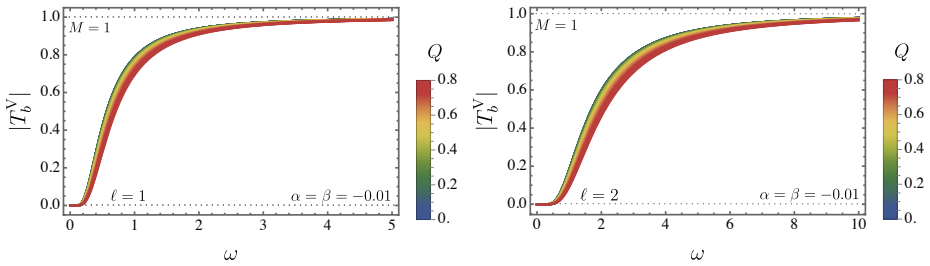
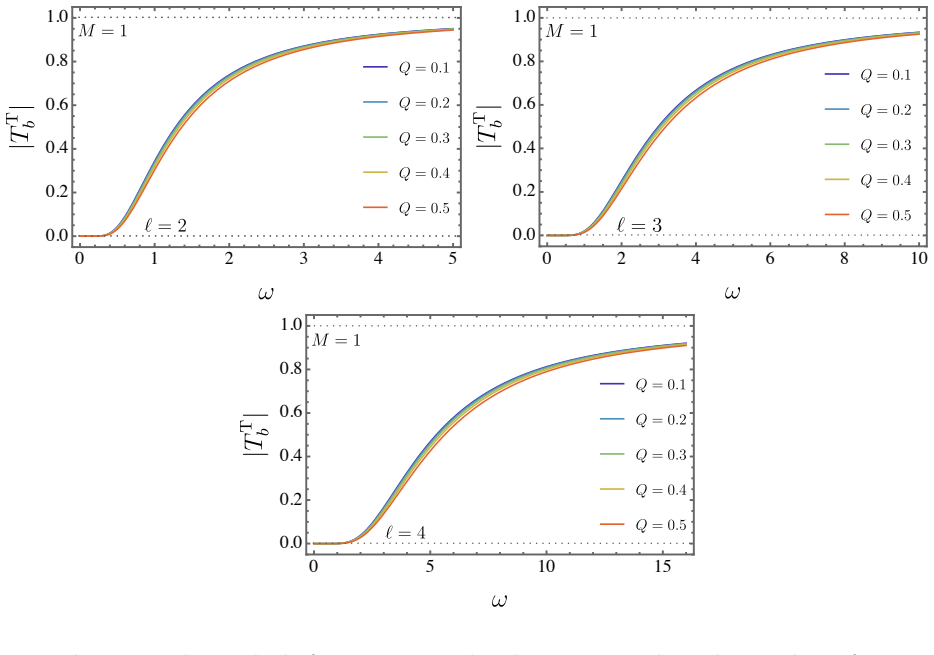
By analyzing the wave equations for massless perturbations of different spins on the black hole background in f(R,T) gravity, the authors derive the corresponding particle creation densities and greybody factors. Suitable approximations are used for the tensor and spinorial cases, the absorption cross section is evaluated numerically, and the Stefan-Boltzmann law yields estimates for the black hole evaporation lifetime, with discussion of energy and particle emission rates plus the correspondence between quasinormal modes and greybody factors.
What carries the argument
Spin-dependent greybody factors and absorption cross sections derived from the perturbation equations for scalar, vector, tensor, and spinorial fields on the f(R,T) black hole background.
If this is right
- Greybody factors and transmission probabilities differ across scalar, vector, tensor, and spinorial modes.
- Absorption cross sections vary with spin and can be obtained numerically for each sector.
- Black hole evaporation lifetimes and emission rates depend on the spin of the particles involved.
- Quasinormal modes exhibit a direct correspondence with the features of the greybody factors.
Where Pith is reading between the lines
- These spin-dependent effects could provide a route to test f(R,T) gravity via precision observations of Hawking radiation from astrophysical black holes.
- The approach might generalize to other modified gravity models to identify common or distinguishing patterns in quantum field behavior on curved backgrounds.
- Including massive fields or backreaction effects could extend the evaporation estimates toward more realistic astrophysical scenarios.
Load-bearing premise
The black-hole background solution and the modified electrodynamics coupling are taken directly from the specific f(R,T) model, and this must be physically realized for the spin-dependent rates to hold.
What would settle it
A measurement of black hole particle emission spectra showing no spin dependence in greybody factors or evaporation lifetimes, or a mismatch with the predicted numerical absorption cross sections, would falsify the central results.
Figures





read the original abstract
In this work, we study how the spin of particle modes influences particle creation, greybody factors, absorption, and evaporation of a black hole within the framework of modified electrodynamics in $f(R,T)$ gravity, recently proposed in Ref. [1]. All spin sectors -- scalar, vector, tensor, and spinorial -- are analyzed to obtain the corresponding features. For particle creation, we consider massless bosonic and fermionic perturbations to determine the respective particle densities. Analytical expressions for the greybody factors are derived, with suitable approximations for the tensor and spinorial cases. The absorption cross section is computed numerically, and using the Stefan-Boltzmann law, we estimate the black hole evaporation lifetime. The associated energy and particle emission rates are also discussed, along with the correspondence between quasinormal modes and greybody factors.
Editorial analysis
A structured set of objections, weighed in public.
Referee Report
Summary. The paper studies the influence of particle spin on creation rates, greybody factors, absorption cross-sections, and evaporation lifetimes for a black hole in f(R,T) gravity. It analyzes scalar, vector, tensor, and spinorial modes for massless bosonic and fermionic perturbations, derives analytical greybody factor expressions (with approximations for tensor and spinorial cases), computes numerical absorption cross sections, estimates evaporation lifetimes via the Stefan-Boltzmann law, and discusses energy/particle emission rates together with the quasinormal mode-greybody correspondence, all on a background taken from Ref. [1].
Significance. If the background metric and couplings are valid and the approximations are controlled, the work would offer concrete spin-dependent predictions for Hawking radiation and evaporation in modified gravity, extending standard GR results to f(R,T) models and potentially yielding observable distinctions in black-hole lifetimes. The numerical absorption computations and analytical greybody expressions constitute a useful technical contribution if properly validated.
major comments (3)
- §2 (or equivalent background section): The line element and modified electrodynamics coupling are adopted directly from Ref. [1] with no independent derivation or explicit verification that the metric satisfies the f(R,T) field equations for the stated f(R,T) function. All subsequent spin-sector analyses rest on this background; without a consistency check or re-derivation, the grounding of the particle creation rates and greybody factors is not established within the manuscript.
- Greybody factor section (tensor and spinorial approximations): The text states that suitable approximations are used for tensor and spinorial cases, yet no error bounds, validity range, or reduction to the known GR limits (where spin-dependent greybody factors are standard) are supplied. This directly affects the reliability of the claimed analytical expressions and their use in evaporation estimates.
- Numerical absorption cross-section and evaporation lifetime section: The absorption cross sections are obtained numerically and fed into Stefan-Boltzmann evaporation lifetimes, but the manuscript reports neither error bars, convergence tests with respect to integration parameters, nor sensitivity to the f(R,T) coupling strength. These omissions undermine the quantitative claims for spin-dependent lifetimes.
minor comments (2)
- Abstract: The phrase 'modified electrodynamics in f(R,T) gravity' is used without a brief clarification of how the trace-coupling term enters the perturbation equations; a single clarifying sentence would improve readability.
- Notation: The distinction between bosonic and fermionic particle densities is not always explicit when results for different spins are compared; consistent use of subscripts (e.g., s=0,1,2,1/2) throughout would aid clarity.
Simulated Author's Rebuttal
We thank the referee for the careful reading of our manuscript and the constructive comments. We address each major point below and outline the revisions we will implement to strengthen the presentation.
read point-by-point responses
-
Referee: §2 (or equivalent background section): The line element and modified electrodynamics coupling are adopted directly from Ref. [1] with no independent derivation or explicit verification that the metric satisfies the f(R,T) field equations for the stated f(R,T) function. All subsequent spin-sector analyses rest on this background; without a consistency check or re-derivation, the grounding of the particle creation rates and greybody factors is not established within the manuscript.
Authors: We agree that an explicit consistency check strengthens the foundation. In the revised manuscript we will add a short verification subsection in §2 that substitutes the adopted line element into the f(R,T) field equations for the chosen functional form, confirms the modified electrodynamics coupling, and states the resulting constraints on the parameters. This will be done without repeating the full derivation of Ref. [1] but with sufficient algebraic steps to establish internal consistency. revision: yes
-
Referee: Greybody factor section (tensor and spinorial approximations): The text states that suitable approximations are used for tensor and spinorial cases, yet no error bounds, validity range, or reduction to the known GR limits (where spin-dependent greybody factors are standard) are supplied. This directly affects the reliability of the claimed analytical expressions and their use in evaporation estimates.
Authors: We acknowledge the need for quantitative control on the approximations. We will augment the greybody-factor section with (i) explicit error estimates obtained by comparing the approximate analytic expressions to numerical solutions of the radial wave equations over the relevant frequency range, (ii) a statement of the validity domain in terms of the f(R,T) coupling parameter and the multipole index, and (iii) a direct reduction to the standard GR greybody factors in the limit where the f(R,T) corrections vanish. These additions will be supported by a new figure or table summarizing the relative errors. revision: yes
-
Referee: Numerical absorption cross-section and evaporation lifetime section: The absorption cross sections are obtained numerically and fed into Stefan-Boltzmann evaporation lifetimes, but the manuscript reports neither error bars, convergence tests with respect to integration parameters, nor sensitivity to the f(R,T) coupling strength. These omissions undermine the quantitative claims for spin-dependent lifetimes.
Authors: We accept that additional numerical validation is required. In the revised version we will include (i) error bars on the absorption cross sections derived from the numerical integration tolerances, (ii) convergence tests with respect to the radial grid spacing and the cutoff frequency, and (iii) a brief sensitivity study showing how the evaporation lifetimes vary with the f(R,T) coupling strength. The updated figures and accompanying text will make these controls explicit. revision: yes
Circularity Check
Central results rest on unverified adoption of background metric and coupling from Ref. [1]
specific steps
-
self citation load bearing
[Abstract]
"In this work, we study how the spin of particle modes influences particle creation, greybody factors, absorption, and evaporation of a black hole within the framework of modified electrodynamics in $f(R,T)$ gravity, recently proposed in Ref. [1]."
The black-hole background metric, field equations, and trace-coupling to matter are adopted wholesale from Ref. [1] without independent derivation or check against the modified field equations for the chosen perturbations. All analytic expressions for particle densities, greybody factors, numerical absorption cross-sections, and evaporation lifetimes are computed on this imported spacetime, so the central claims reduce to the validity of the cited model.
full rationale
The paper imports the black-hole spacetime and modified electrodynamics coupling directly from Ref. [1] as the foundation for all calculations. The new contributions consist of analyzing spin-dependent perturbations (scalar, vector, tensor, spinorial) on that fixed background, deriving greybody factors, absorption cross-sections, and evaporation rates. This constitutes a self-citation load-bearing step because the validity of every subsequent result hinges on the imported solution satisfying the f(R,T) equations, yet no re-derivation or consistency verification appears in the text. The spin-sector analysis itself is independent and adds content, preventing a higher circularity score. No self-definitional reductions, fitted predictions, or ansatz smuggling are present in the provided derivation chain.
Axiom & Free-Parameter Ledger
axioms (2)
- domain assumption The f(R,T) gravity model and its black-hole solution proposed in Ref. [1] correctly describe the spacetime and matter coupling.
- domain assumption Massless bosonic and fermionic perturbations can be treated with standard wave equations on the curved background.
Lean theorems connected to this paper
-
IndisputableMonolith/Cost/FunctionalEquation.leanwashburn_uniqueness_aczel unclear?
unclearRelation between the paper passage and the cited Recognition theorem.
f(r) = 1−2M/r + Q²/r² − α(2β−1)Q⁴/(10 r⁶) … greybody |Tb| ≥ sech²(∫ V/(2ω f) dr) … absorption σabs = π(2ℓ+1) |AT|² / ω²
-
IndisputableMonolith/Foundation/DimensionForcing.leanalexander_duality_circle_linking unclear?
unclearRelation between the paper passage and the cited Recognition theorem.
Effective potentials VS = f(ℓ(ℓ+1)/r² + …), VV, VT, Vψ for spins 0,1,2,1/2
What do these tags mean?
- matches
- The paper's claim is directly supported by a theorem in the formal canon.
- supports
- The theorem supports part of the paper's argument, but the paper may add assumptions or extra steps.
- extends
- The paper goes beyond the formal theorem; the theorem is a base layer rather than the whole result.
- uses
- The paper appears to rely on the theorem as machinery.
- contradicts
- The paper's claim conflicts with a theorem or certificate in the canon.
- unclear
- Pith found a possible connection, but the passage is too broad, indirect, or ambiguous to say the theorem truly supports the claim.
Forward citations
Cited by 3 Pith papers
-
Correspondence between quasinormal modes and grey-body factors of Schwarzschild--Tangherlini black holes
Quasinormal modes correspond well to grey-body factors for vector and tensor perturbations of Schwarzschild-Tangherlini black holes in all dimensions, but fail for scalar l=2 modes in D≥7 because of multiple potential...
-
Photon Sphere and Shadow of a Perturbative Black Hole in $f(R,\mathcal{G})$ Gravity
Perturbative f(R, G) corrections shift the photon-sphere radius and black-hole shadow size, with the Gauss-Bonnet sector contributing more than mixed terms.
-
Photon Sphere and Shadow of a Perturbative Black Hole in $f(R,\mathcal{G})$ Gravity
Perturbative higher-curvature corrections in f(R,G) gravity shift the photon-sphere radius and black-hole shadow size away from Schwarzschild values, with the Gauss-Bonnet sector contributing more than mixed terms.
Reference graph
Works this paper leans on
-
[1]
Charged black hole solutions in f(R,T) gravity coupled to nonlinear electrodynamics,
G. I. R´ ois, J. T. S. S. Junior, F. S. N. Lobo, M. E. Rodrigues, and T. Harko, “Charged black hole solutions in f(R,T) gravity coupled to nonlinear electrodynamics,”Phys. Rev. D, vol. 111, no. 12, p. 124044, 2025
work page 2025
-
[2]
Hubble Tension: The Evidence of New Physics,
J.-P. Hu and F.-Y. Wang, “Hubble Tension: The Evidence of New Physics,”Universe, vol. 9, no. 2, p. 94, 2023. 66
work page 2023
-
[3]
E. Di Valentinoet al., “The CosmoVerse White Paper: Addressing observational tensions in cosmology with systematics and fundamental physics,”Phys. Dark Univ., vol. 49, p. 101965, 2025
work page 2025
-
[4]
A Step in understanding the S8 tension,
M. Joseph, D. Aloni, M. Schmaltz, E. N. Sivarajan, and N. Weiner, “A Step in understanding the S8 tension,”Phys. Rev. D, vol. 108, no. 2, p. 023520, 2023
work page 2023
-
[5]
Interpreting DESI’s evidence for evolving dark energy,
M. Cortˆ es and A. R. Liddle, “Interpreting DESI’s evidence for evolving dark energy,”JCAP, vol. 12, p. 007, 2024
work page 2024
-
[6]
DESI DR2 Results II: Measurements of Baryon Acoustic Oscillations and Cosmological Constraints,
M. Abdul Karimet al., “DESI DR2 Results II: Measurements of Baryon Acoustic Oscillations and Cosmological Constraints,” 3 2025
work page 2025
-
[7]
Singularity Theorems and Their Consequences,
J. M. M. Senovilla, “Singularity Theorems and Their Consequences,”Gen. Rel. Grav., vol. 30, p. 701, 1998
work page 1998
-
[8]
Effective field theory of dark energy: A review,
N. Frusciante and L. Perenon, “Effective field theory of dark energy: A review,”Phys. Rept., vol. 857, pp. 1–63, 2020
work page 2020
-
[9]
Inflationary cosmology: from theory to obser- vations,
J. A. V´ azquez, L. E. Padilla, and T. Matos, “Inflationary cosmology: from theory to obser- vations,”Rev. Mex. Fis. E, vol. 17, no. 1, pp. 73–91, 2020
work page 2020
-
[10]
Covariant conservation of energy momentum in modified gravities,
T. Koivisto, “Covariant conservation of energy momentum in modified gravities,”Class. Quant. Grav., vol. 23, pp. 4289–4296, 2006
work page 2006
-
[11]
Extra force in f(R) modified theories of gravity,
O. Bertolami, C. G. Boehmer, T. Harko, and F. S. N. Lobo, “Extra force in f(R) modified theories of gravity,”Phys. Rev. D, vol. 75, p. 104016, 2007
work page 2007
-
[12]
T. Harko and F. S. N. Lobo, “f(R,L m) gravity,”Eur. Phys. J. C, vol. 70, pp. 373–379, 2010
work page 2010
-
[13]
Hubble tension in a nonminimally coupled curvature- matter gravity model,
M. Barroso Varela and O. Bertolami, “Hubble tension in a nonminimally coupled curvature- matter gravity model,”JCAP, vol. 06, p. 025, 2024
work page 2024
-
[14]
Generalized curvature-matter couplings in modified gravity,
T. Harko and F. S. N. Lobo, “Generalized curvature-matter couplings in modified gravity,” Galaxies, vol. 2, no. 3, pp. 410–465, 2014
work page 2014
-
[15]
T. Harko and F. S. N. Lobo,Extensions of f(R) Gravity: Curvature-Matter Couplings and Hybrid Metric-Palatini Theory. Cambridge University Press, 11 2018
work page 2018
-
[16]
Beyond Einstein’s General Relativity: Hybrid metric-Palatini gravity and curvature-matter couplings,
T. Harko and F. S. N. Lobo, “Beyond Einstein’s General Relativity: Hybrid metric-Palatini gravity and curvature-matter couplings,”Int. J. Mod. Phys. D, vol. 29, no. 13, p. 2030008, 2020
work page 2020
-
[17]
To conserve, or not to conserve: A review of nonconservative theories of gravity,
H. Velten and T. R. P. Caramˆ es, “To conserve, or not to conserve: A review of nonconservative theories of gravity,”Universe, vol. 7, no. 2, p. 38, 2021. 67
work page 2021
-
[18]
Particle creation in expanding universes,
L. Parker, “Particle creation in expanding universes,”Phys. Rev. Lett., vol. 21, pp. 562–564, 1968
work page 1968
-
[19]
Quantized fields and particle creation in expanding universes. I,
L. Parker, “Quantized fields and particle creation in expanding universes. I,”Phys. Rev., vol. 183, pp. 1057–1068, 1969
work page 1969
-
[20]
S. W. Hawking, “Black hole explosions?,”Nature, vol. 248, pp. 30–31, 1974
work page 1974
-
[21]
Particle Creation by Black Holes,
S. W. Hawking, “Particle Creation by Black Holes,”Commun. Math. Phys., vol. 43, pp. 199– 220, 1975. [Erratum: Commun.Math.Phys. 46, 206 (1976)]
work page 1975
-
[22]
Cosmological Event Horizons, Thermodynamics, and Particle Creation,
G. W. Gibbons and S. W. Hawking, “Cosmological Event Horizons, Thermodynamics, and Particle Creation,”Phys. Rev. D, vol. 15, pp. 2738–2751, 1977
work page 1977
-
[23]
Quantum Fields in Curved Space,
N. D. Birrell and P. C. W. Davies, “Quantum Fields in Curved Space,”Cambridge Monogr. Math. Phys., 1982
work page 1982
-
[24]
L. Parker and D. J. Toms,Quantum Field Theory in Curved Spacetime: Quantized Fields and Gravity. Cambridge University Press, 2009
work page 2009
-
[25]
T. Harko, F. S. N. Lobo, S. Nojiri, and S. D. Odintsov, “f(R, T) gravity,”Phys. Rev. D, vol. 84, p. 024020, 2011
work page 2011
-
[26]
Gravitationally induced particle production in scalar-tensor f(R,T) gravity,
M. A. S. Pinto, T. Harko, and F. S. N. Lobo, “Gravitationally induced particle production in scalar-tensor f(R,T) gravity,”Phys. Rev. D, vol. 106, no. 4, p. 044043, 2022
work page 2022
-
[27]
Thermodynamic interpretation of the generalized gravity models with geometry - matter coupling,
T. Harko, “Thermodynamic interpretation of the generalized gravity models with geometry - matter coupling,”Phys. Rev. D, vol. 90, no. 4, p. 044067, 2014
work page 2014
-
[28]
Gravitational induced particle pro- duction through a nonminimal curvature–matter coupling,
T. Harko, F. S. N. Lobo, J. P. Mimoso, and D. Pav´ on, “Gravitational induced particle pro- duction through a nonminimal curvature–matter coupling,”Eur. Phys. J. C, vol. 75, p. 386, 2015
work page 2015
-
[29]
Irreversible Geometrothermodynamics of Open Systems in Modified Gravity,
M. A. S. Pinto, T. Harko, and F. S. N. Lobo, “Irreversible Geometrothermodynamics of Open Systems in Modified Gravity,”Entropy, vol. 25, no. 6, p. 944, 2023
work page 2023
-
[30]
f(R, T µνT µν) gravity and Cardassian-like expansion as one of its consequences,
N. Katırcı and M. Kavuk, “f(R, T µνT µν) gravity and Cardassian-like expansion as one of its consequences,”Eur. Phys. J. Plus, vol. 129, p. 163, 2014
work page 2014
-
[31]
Gravitationally induced matter creation in scalar–tensor f(R,TµνTµν) gravity,
R. A. C. Cipriano, T. Harko, F. S. N. Lobo, M. A. S. Pinto, and J. L. Rosa, “Gravitationally induced matter creation in scalar–tensor f(R,TµνTµν) gravity,”Phys. Dark Univ., vol. 44, p. 101463, 2024
work page 2024
-
[32]
Gravitational signatures of a nonlinear electrodynamics in f (r, t) gravity,
A. A. Ara´ ujo Filho, N. Heidari, I. P. Lobo, and V. Bezerra, “Gravitational signatures of a nonlinear electrodynamics in f (r, t) gravity,”Journal of Cosmology and Astroparticle Physics, 68 vol. 2025, no. 09, p. 015, 2025
work page 2025
-
[33]
Particle creation by black holes,
S. W. Hawking, “Particle creation by black holes,” inEuclidean quantum gravity, pp. 167–188, World Scientific, 1975
work page 1975
-
[34]
Quantum gravitational corrections to particle creation by black holes,
X. Calmet, S. D. Hsu, and M. Sebastianutti, “Quantum gravitational corrections to particle creation by black holes,”Physics Letters B, vol. 841, p. 137820, 2023
work page 2023
-
[35]
A. A. Ara´ ujo Filho, N. Heidari, and A. ¨Ovg¨ un, “Quantum gravity effects on particle cre- ation and evaporation in a non-commutative black hole via mass deformation,”arXiv preprint arXiv:2409.03566, 2024
-
[36]
L. Parker and D. Toms,Quantum field theory in curved spacetime: quantized fields and gravity. Cambridge university press, 2009
work page 2009
-
[37]
How does non-metricity affect particle creation and evaporation in bum- blebee gravity?,
A. A. Ara´ ujo Filho, “How does non-metricity affect particle creation and evaporation in bum- blebee gravity?,”Journal of Cosmology and Astroparticle Physics, vol. 2025, no. 06, p. 026, 2025
work page 2025
-
[38]
Particle creation and evaporation in kalb-ramond gravity,
A. A. Ara´ ujo Filho, “Particle creation and evaporation in kalb-ramond gravity,”Journal of Cosmology and Astroparticle Physics, vol. 2025, no. 04, p. 076, 2025
work page 2025
-
[39]
Quantum fields in curved spacetime,
S. Hollands and R. M. Wald, “Quantum fields in curved spacetime,”Physics Reports, vol. 574, pp. 1–35, 2015
work page 2015
-
[40]
R. M. Wald,Quantum field theory in curved spacetime and black hole thermodynamics. Uni- versity of Chicago press, 1994
work page 1994
-
[41]
S. A. Fulling,Aspects of quantum field theory in curved spacetime. No. 17, Cambridge univer- sity press, 1989
work page 1989
-
[42]
Self-interaction correction to black hole radiance,
P. Kraus and F. Wilczek, “Self-interaction correction to black hole radiance,”Nuclear Physics B, vol. 433, no. 2, pp. 403–420, 1995
work page 1995
-
[43]
Hawking radiation as tunneling,
M. K. Parikh and F. Wilczek, “Hawking radiation as tunneling,”Physical review letters, vol. 85, no. 24, p. 5042, 2000
work page 2000
-
[44]
Tunnelling methods and hawking’s radiation: achievements and prospects,
L. Vanzo, G. Acquaviva, and R. Di Criscienzo, “Tunnelling methods and hawking’s radiation: achievements and prospects,”Classical and Quantum Gravity, vol. 28, no. 18, p. 183001, 2011
work page 2011
-
[45]
Energy Conservation and Hawking Radiation
M. K. Parikh, “Energy conservation and hawking radiation,”arXiv preprint hep-th/0402166, 2004
work page internal anchor Pith review Pith/arXiv arXiv 2004
-
[46]
A non-commutative kalb-ramond black hole,
A. A. Ara´ ujo Filho, N. Heidari, and I. P. Lobo, “A non-commutative kalb-ramond black hole,” Journal of Cosmology and Astroparticle Physics, vol. 2025, no. 09, p. 076, 2025. 69
work page 2025
-
[47]
Non-commutativity in hayward spacetime,
N. Heidari, A. A. Ara´ ujo Filho, and I. P. Lobo, “Non-commutativity in hayward spacetime,” Journal of Cosmology and Astroparticle Physics, vol. 2025, no. 09, p. 051, 2025
work page 2025
-
[48]
Particle production induced by a lorentzian non–commutative space- time,
A. A. Ara´ ujo Filho, “Particle production induced by a lorentzian non–commutative space- time,”Annals of Physics, p. 170167, 2025
work page 2025
-
[49]
Fermions tunnelling from black holes,
R. Kerner and R. B. Mann, “Fermions tunnelling from black holes,”Classical and Quantum Gravity, vol. 25, no. 9, p. 095014, 2008
work page 2008
-
[50]
A. Yale, “Exact hawking radiation of scalars, fermions, and bosons using the tunneling method without back-reaction,”Physics Letters B, vol. 697, no. 4, pp. 398–403, 2011
work page 2011
-
[51]
Fermion tunneling from a vaidya black hole,
H.-L. Li, S.-Z. Yang, T.-J. Zhou, and R. Lin, “Fermion tunneling from a vaidya black hole,” Europhysics Letters, vol. 84, no. 2, p. 20003, 2008
work page 2008
-
[52]
Charged fermions tunnelling from kerr–newman black holes,
R. Kerner and R. B. Mann, “Charged fermions tunnelling from kerr–newman black holes,” Physics letters B, vol. 665, no. 4, pp. 277–283, 2008
work page 2008
-
[53]
Charged fermions tunneling from accelerating and rotating black holes,
M. Rehman and K. Saifullah, “Charged fermions tunneling from accelerating and rotating black holes,”Journal of Cosmology and Astroparticle Physics, vol. 2011, no. 03, p. 001, 2011
work page 2011
-
[54]
Fermion tunneling from dynamical horizons,
R. Di Criscienzo and L. Vanzo, “Fermion tunneling from dynamical horizons,”Europhysics Letters, vol. 82, no. 6, p. 60001, 2008
work page 2008
-
[55]
Gravitinos tunneling from black holes,
A. Yale and R. B. Mann, “Gravitinos tunneling from black holes,”Physics Letters B, vol. 673, no. 2, pp. 168–172, 2009
work page 2009
-
[56]
Hawking temperature and higher order calculations,
B. Chatterjee and P. Mitra, “Hawking temperature and higher order calculations,”Physics Letters B, vol. 675, no. 2, pp. 240–242, 2009
work page 2009
-
[57]
There are no quantum corrections to the hawking temperature via tunneling from a fixed background,
A. Yale, “There are no quantum corrections to the hawking temperature via tunneling from a fixed background,”The European Physical Journal C, vol. 71, pp. 1–4, 2011
work page 2011
-
[58]
On the lagrangian formulation of a charged spinning particle in an external electromagnetic field,
G. Cognola, L. Vanzo, S. Zerbini, and R. Soldati, “On the lagrangian formulation of a charged spinning particle in an external electromagnetic field,”Physics Letters B, vol. 104, no. 1, pp. 67–69, 1981
work page 1981
-
[59]
Supersymmetries and the pseudoclassical rel- ativistic electron,
A. Barducci, R. Casalbuoni, and L. Lusanna, “Supersymmetries and the pseudoclassical rel- ativistic electron,”Nuovo Cimento. A, vol. 35, no. 3, pp. 377–399, 1976
work page 1976
-
[60]
S. Vagnozzi, R. Roy, Y.-D. Tsai, L. Visinelli, M. Afrin, A. Allahyari, P. Bambhaniya, D. Dey, S. G. Ghosh, P. S. Joshi,et al., “Horizon-scale tests of gravity theories and fundamental physics from the event horizon telescope image of sagittarius a,”Classical and Quantum Gravity, 2022
work page 2022
-
[61]
S. Albuquerque, I. P. Lobo, and V. B. Bezerra, “Massless dirac perturbations in a consistent 70 model of loop quantum gravity black hole: quasinormal modes and particle emission rates,” Classical and Quantum Gravity, vol. 40, no. 17, p. 174001, 2023
work page 2023
-
[62]
A. Al-Badawi and S. K. Jha, “Massless dirac perturbations of black holes in f (q) gravity: quasinormal modes and a weak deflection angle,”Communications in Theoretical Physics, vol. 76, no. 9, p. 095403, 2024
work page 2024
-
[63]
A. Arbey, J. Auffinger, M. Geiller, E. R. Livine, and F. Sartini, “Hawking radiation by spherically-symmetric static black holes for all spins: Teukolsky equations and potentials,” Physical Review D, vol. 103, no. 10, p. 104010, 2021
work page 2021
-
[64]
S. Devi, R. Roy, and S. Chakrabarti, “Quasinormal modes and greybody factors of the novel four dimensional gauss–bonnet black holes in asymptotically de sitter space time: scalar, electromagnetic and dirac perturbations,”The European Physical Journal C, vol. 80, no. 8, p. 760, 2020
work page 2020
-
[65]
V. Cardoso and J. P. Lemos, “Quasinormal modes of schwarzschild–anti-de sitter black holes: Electromagnetic and gravitational perturbations,”Physical Review D, vol. 64, no. 8, p. 084017, 2001
work page 2001
-
[66]
Scattering by regular black holes: planar massless scalar waves impinging upon a bardeen black hole,
C. F. Macedo, E. S. de Oliveira, and L. C. Crispino, “Scattering by regular black holes: planar massless scalar waves impinging upon a bardeen black hole,”Physical Review D, vol. 92, no. 2, p. 024012, 2015
work page 2015
-
[67]
D. J. Gogoi, N. Heidari, J. Kr´ ız, and H. Hassanabadi, “Quasinormal modes and greybody factors of de sitter black holes surrounded by quintessence in rastall gravity,”Fortschritte der Physik, vol. 72, no. 3, p. 2300245, 2024
work page 2024
-
[69]
Black-hole normal modes: A wkb approach. ii. schwarzschild black holes,
S. Iyer, “Black-hole normal modes: A wkb approach. ii. schwarzschild black holes,”Physical Review D, vol. 35, no. 12, p. 3632, 1987
work page 1987
-
[70]
Quasinormal modes of black holes: From astrophysics to string theory,
R. A. Konoplya and A. Zhidenko, “Quasinormal modes of black holes: From astrophysics to string theory,”Rev. Mod. Phys., vol. 83, pp. 793–836, 2011
work page 2011
-
[71]
R. Konoplya, “Quasinormal behavior of the d-dimensional schwarzschild black hole and the higher order wkb approach,”Physical Review D, vol. 68, no. 2, p. 024018, 2003
work page 2003
-
[72]
Scattering of massless scalar waves by reissner- nordstr¨ om black holes,
L. C. Crispino, S. R. Dolan, and E. S. Oliveira, “Scattering of massless scalar waves by reissner- nordstr¨ om black holes,”Physical Review D—Particles, Fields, Gravitation, and Cosmology, 71 vol. 79, no. 6, p. 064022, 2009
work page 2009
-
[73]
Absorption and scattering of a noncom- mutative black hole,
M. Anacleto, F. Brito, J. Campos, and E. Passos, “Absorption and scattering of a noncom- mutative black hole,”Physics Letters B, vol. 803, p. 135334, 2020
work page 2020
-
[74]
Absorption by dirty black holes: Null geodesics and scalar waves,
C. F. Macedo, L. C. Leite, and L. C. Crispino, “Absorption by dirty black holes: Null geodesics and scalar waves,”Physical Review D, vol. 93, no. 2, p. 024027, 2016
work page 2016
-
[75]
Y. C. Ong, “An effective black hole remnant via infinite evaporation time due to generalized uncertainty principle,”Journal of High Energy Physics, vol. 2018, no. 10, pp. 1–11, 2018
work page 2018
-
[76]
Evolution of charged evaporating black holes,
W. A. Hiscock and L. D. Weems, “Evolution of charged evaporating black holes,”Physical Review D, vol. 41, no. 4, p. 1142, 1990
work page 1990
-
[77]
Particle emission rates from a black hole. ii. massless particles from a rotating hole,
D. N. Page, “Particle emission rates from a black hole. ii. massless particles from a rotating hole,”Physical Review D, vol. 14, no. 12, p. 3260, 1976
work page 1976
-
[78]
Einstein-horndeski gravity and the ultra slowly evaporating black hole,
X. Liang, Y.-S. An, C.-H. Wu, and Y.-P. Hu, “Einstein-horndeski gravity and the ultra slowly evaporating black hole,”Physics Letters B, p. 139303, 2025
work page 2025
-
[79]
Universality of high-energy absorption cross sections for black holes,
Y. D´ ecanini, G. Esposito-Farese, and A. Folacci, “Universality of high-energy absorption cross sections for black holes,”Physical Review D, vol. 83, no. 4, p. 044032, 2011
work page 2011
-
[80]
Effects of non-commutative geometry on black hole properties,
A. A. Ara´ ujo Filho, J. R. Nascimento, A. Y. Petrov, P. J. Porf´ ırio, and A.¨Ovg¨ un, “Effects of non-commutative geometry on black hole properties,”Physics of the Dark Universe, vol. 46, p. 101630, 2024
work page 2024
-
[81]
Rotating charged black hole in 4d einstein–gauss–bonnet gravity: Photon motion and its shadow,
U. Papnoi and F. Atamurotov, “Rotating charged black hole in 4d einstein–gauss–bonnet gravity: Photon motion and its shadow,”Physics of the Dark Universe, vol. 35, p. 100916, 2022
work page 2022
discussion (0)
Sign in with ORCID, Apple, or X to comment. Anyone can read and Pith papers without signing in.