In Situ Training of Implicit Neural Compressors for Scientific Simulations via Sketch-Based Regularization
Pith reviewed 2026-05-18 01:11 UTC · model grok-4.3
The pith
Sketching lets in-situ neural compressors approximately match offline training performance.
A machine-rendered reading of the paper's core claim, the machinery that carries it, and where it could break.
Core claim
The authors show that a hypernetwork-based implicit neural compressor can be trained in situ on streaming simulation data by regularizing with sketched samples in a limited memory buffer, yielding reconstruction performance that approximately matches the equivalent offline training method.
What carries the argument
The sketch-based regularizer applied to a mixed buffer of full and sketched samples during continual training of the hypernetwork.
Load-bearing premise
That the sketched samples in the buffer provide sufficient regularization to prevent catastrophic forgetting in the continual in-situ training.
What would settle it
A direct comparison where the in-situ method with sketching produces markedly higher reconstruction errors or poorer visual quality than offline training on identical simulation data would disprove the main claim.
Figures


read the original abstract
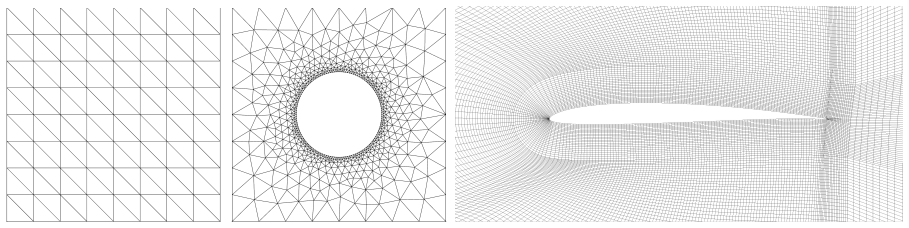
Focusing on implicit neural representations, we present a novel in situ training protocol that employs limited memory buffers of full and sketched data samples, where the sketched data are leveraged to prevent catastrophic forgetting. The theoretical motivation for our use of sketching as a regularizer is presented via a simple Johnson-Lindenstrauss-informed result. While our methods may be of wider interest in the field of continual learning, we specifically target in situ neural compression using implicit neural representation-based hypernetworks. We evaluate our method on a variety of complex simulation data in two and three dimensions, over long time horizons, and across unstructured grids and non-Cartesian geometries. On these tasks, we show strong reconstruction performance at high compression rates. Most importantly, we demonstrate that sketching enables the presented in situ scheme to approximately match the performance of the equivalent offline method.
Editorial analysis
A structured set of objections, weighed in public.
Referee Report
Summary. The paper introduces an in-situ training protocol for implicit neural representation (INR) compressors based on hypernetworks. It maintains a limited-memory buffer containing both full-resolution and sketched samples from simulation trajectories; the sketched samples are used as a regularizer to mitigate catastrophic forgetting during continual updates. A Johnson-Lindenstrauss lemma is invoked to motivate that distance preservation in the sketched buffer approximately preserves the offline training objective. Experiments on 2-D and 3-D scientific simulation data (including unstructured grids and non-Cartesian geometries) over long time horizons report reconstruction quality at high compression ratios that approximately matches the corresponding offline baseline.
Significance. If the empirical match to offline performance is shown to be attributable to the sketching mechanism rather than buffer size or schedule choices, the approach would provide a practical route to memory-efficient, high-fidelity compression of large-scale simulation data that cannot be stored offline. The combination of hypernetwork-generated INRs with JL-motivated sketching for continual learning is a concrete contribution that could influence both scientific data management and broader continual-learning research.
major comments (2)
- [theoretical motivation] Theoretical motivation section: the JL lemma is stated to bound Euclidean distances between full and sketched samples in data space, yet the training objective is a reconstruction loss on an INR whose parameters are produced by a hypernetwork. No derivation is given showing that distance preservation in the input samples implies bounded drift in the hypernetwork weights or in the decoded field values, particularly under non-uniform sampling measures on unstructured grids. This gap is load-bearing for the central claim that sketching, rather than other factors, enables the in-situ scheme to match offline performance.
- [evaluation sections] Experimental protocol and results: the abstract and evaluation sections report strong reconstruction performance but provide neither quantitative error bars across multiple runs, nor ablations that isolate the contribution of the sketched buffer versus buffer size or learning-rate schedule. Without these controls it is difficult to attribute the observed match to offline performance specifically to the JL-informed regularizer.
minor comments (2)
- [method] Notation for the hypernetwork and INR decoder should be introduced with explicit variable definitions before the loss function is written.
- [figures] Figure captions for the reconstruction visualizations should state the compression ratio and the norm used for the reported error.
Simulated Author's Rebuttal
We thank the referee for their constructive comments, which help clarify the contributions and limitations of our work. We address each major comment below.
read point-by-point responses
-
Referee: [theoretical motivation] Theoretical motivation section: the JL lemma is stated to bound Euclidean distances between full and sketched samples in data space, yet the training objective is a reconstruction loss on an INR whose parameters are produced by a hypernetwork. No derivation is given showing that distance preservation in the input samples implies bounded drift in the hypernetwork weights or in the decoded field values, particularly under non-uniform sampling measures on unstructured grids. This gap is load-bearing for the central claim that sketching, rather than other factors, enables the in-situ scheme to match offline performance.
Authors: We appreciate this observation regarding the theoretical motivation. Our use of the Johnson-Lindenstrauss lemma is intended as a motivational tool to indicate that sketching preserves important geometric properties of the data, thereby helping to approximate the offline training objective in the in-situ setting. We acknowledge that we do not provide a full derivation connecting data-space distance preservation to bounds on hypernetwork weight drift or decoded field values under non-uniform sampling. In the revision, we will add a more explicit discussion of this connection, including a heuristic argument, and note that a rigorous proof remains an open direction for future work. revision: partial
-
Referee: [evaluation sections] Experimental protocol and results: the abstract and evaluation sections report strong reconstruction performance but provide neither quantitative error bars across multiple runs, nor ablations that isolate the contribution of the sketched buffer versus buffer size or learning-rate schedule. Without these controls it is difficult to attribute the observed match to offline performance specifically to the JL-informed regularizer.
Authors: We agree that the current experimental presentation lacks sufficient controls to fully isolate the effect of the sketched regularizer. To address this, we will revise the evaluation sections to include error bars computed over multiple random seeds and introduce ablation experiments that compare variants with and without sketching while keeping buffer size and optimization schedules fixed. This will help attribute performance differences more clearly to the sketching mechanism. revision: yes
Circularity Check
No significant circularity; central claims rest on external JL lemma and independent empirical evaluations
full rationale
The paper's theoretical motivation invokes the Johnson-Lindenstrauss lemma as an external mathematical fact to justify sketching as a regularizer against catastrophic forgetting. Performance claims that sketching enables the in-situ scheme to approximately match offline results are supported by evaluations on independent simulation datasets across 2D/3D, long horizons, unstructured grids, and non-Cartesian geometries rather than any reduction to fitted parameters defined inside the paper or self-citation chains. No load-bearing derivation step reduces by construction to its own inputs, self-definition, or renamed known results.
Axiom & Free-Parameter Ledger
free parameters (1)
- sketch dimension / buffer size
axioms (1)
- domain assumption Johnson-Lindenstrauss lemma provides distance preservation sufficient to act as a regularizer against catastrophic forgetting in this continual-learning setting
Lean theorems connected to this paper
-
IndisputableMonolith/Cost/FunctionalEquation.leanwashburn_uniqueness_aczel unclear?
unclearRelation between the paper passage and the cited Recognition theorem.
Theorem 3 (JL Surrogate). ... L(Ut,Φ(θ)) ≤ 1/(1−ϵ) L(SUt, SΦ(θ)) ... motivated by manifold JL (Theorem 2)
-
IndisputableMonolith/Foundation/AlexanderDuality.leanalexander_duality_circle_linking unclear?
unclearRelation between the paper passage and the cited Recognition theorem.
sketching ... to prevent catastrophic forgetting ... FJLT ... Johnson-Lindenstrauss-informed result
What do these tags mean?
- matches
- The paper's claim is directly supported by a theorem in the formal canon.
- supports
- The theorem supports part of the paper's argument, but the paper may add assumptions or extra steps.
- extends
- The paper goes beyond the formal theorem; the theorem is a base layer rather than the whole result.
- uses
- The paper appears to rely on the theorem as machinery.
- contradicts
- The paper's claim conflicts with a theorem or certificate in the canon.
- unclear
- Pith found a possible connection, but the passage is too broad, indirect, or ambiguous to say the theorem truly supports the claim.
Reference graph
Works this paper leans on
-
[1]
Deepsdf: Learning continuous signed distance functions for shape representation
Jeong Joon Park, Peter Florence, Julian Straub, Richard Newcombe, and Steven Lovegrove. Deepsdf: Learning continuous signed distance functions for shape representation. InProceedings of the IEEE/CVF conference on computer vision and pattern recognition, pages 165–174, 2019. 1
work page 2019
-
[2]
Learning shape templates with structured implicit functions
Kyle Genova, Forrester Cole, Daniel Vlasic, Aaron Sarna, William T Freeman, and Thomas Funkhouser. Learning shape templates with structured implicit functions. InProceedings of the IEEE/CVF international conference on computer vision, pages 7154–7164, 2019. 1
work page 2019
-
[3]
Vincent Sitzmann, Julien Martel, Alexander Bergman, David Lindell, and Gordon Wetzstein. Implicit neural representations with periodic activation functions.Advances in neural information processing systems, 33:7462–7473, 2020. 1, 2, 4, 11
work page 2020
-
[4]
Implicit neural video compression
Yunfan Zhang, Ties Van Rozendaal, Johann Brehmer, Markus Nagel, and Taco Cohen. Implicit neural video compression. InICLR Workshop on Deep Generative Models for Highly Structured Data, 2022. 2, 5
work page 2022
-
[5]
Shaowu Pan, Steven L Brunton, and J Nathan Kutz. Neural implicit flow: a mesh-agnostic dimen- sionality reduction paradigm of spatio-temporal data.Journal of Machine Learning Research, 24(41): 1–60, 2023. 2, 4, 11
work page 2023
-
[6]
Jun Han, Hao Zheng, and Chongke Bi. Kd-inr: Time-varying volumetric data compression via knowledge distillation-based implicit neural representation.IEEE Transactions on Visualization and Computer Graphics, 2023. 2, 5, 11
work page 2023
-
[7]
Implicit neural compression for aerospace simulation visualisation
Robert M Sales and Graham Pullan. Implicit neural compression for aerospace simulation visualisation. InAIAA SCITECH 2024 Forum, page 0164, 2024. 2, 5, 11
work page 2024
-
[8]
David Ha, Andrew M. Dai, and Quoc V. Le. Hypernetworks. InInternational Conference on Learning Representations, 2017. 2, 4
work page 2017
-
[9]
Multitask learning.Machine learning, 28(1):41–75, 1997
Rich Caruana. Multitask learning.Machine learning, 28(1):41–75, 1997. 2
work page 1997
-
[10]
Maziar Raissi, Paris Perdikaris, and George E. Karniadakis. Physics-informed neural networks: A deep learning framework for solving forward and inverse problems involving nonlinear partial differential equations.Journal of Computational physics, 378:686–707, 2019. 3
work page 2019
-
[11]
Wire: Wavelet implicit neural representations
Vishwanath Saragadam, Daniel LeJeune, Jasper Tan, Guha Balakrishnan, Ashok Veeraraghavan, and Richard G Baraniuk. Wire: Wavelet implicit neural representations. InProceedings of the IEEE/CVF Conference on Computer Vision and Pattern Recognition, pages 18507–18516, 2023. 4
work page 2023
-
[12]
Implicit neural representations and the algebra of complex wavelets
T Mitchell Roddenberry, Vishwanath Saragadam, Maarten V de Hoop, and Richard Baraniuk. Implicit neural representations and the algebra of complex wavelets. InThe Twelfth International Conference on Learning Representations, 2024. 4
work page 2024
-
[13]
Amer Essakine, Yanqi Cheng, Chun-Wun Cheng, Lipei Zhang, Zhongying Deng, Lei Zhu, Carola- Bibiane Schönlieb, and Angelica I Aviles-Rivero. Where do we stand with implicit neural representa- tions? a technical and performance survey.Transactions on Machine Learning Research, 2025. ISSN 2835-8856. 4
work page 2025
-
[14]
A brief review of hypernetworks in deep learning.Artificial Intelligence Review, 57(9):1–29, 2024
Vinod Kumar Chauhan, Jiandong Zhou, Ping Lu, Soheila Molaei, and David A Clifton. A brief review of hypernetworks in deep learning.Artificial Intelligence Review, 57(9):1–29, 2024. 4
work page 2024
-
[15]
Kookjin Lee and Kevin T Carlberg. Model reduction of dynamical systems on nonlinear manifolds using deep convolutional autoencoders.Journal of Computational Physics, 404:108973, 2020. 4 19
work page 2020
-
[16]
James Kirkpatrick, Razvan Pascanu, Neil Rabinowitz, Joel Veness, Guillaume Desjardins, Andrei A Rusu, Kieran Milan, John Quan, Tiago Ramalho, Agnieszka Grabska-Barwinska, et al. Overcoming catastrophic forgetting in neural networks.Proceedings of the national academy of sciences, 114(13): 3521–3526, 2017. 4
work page 2017
-
[17]
Continual learning with hypernetworks
Johannes Von Oswald, Christian Henning, Benjamin F Grewe, and João Sacramento. Continual learning with hypernetworks. InInternational Conference on Learning Representations, 2020. 4
work page 2020
-
[18]
Experience replay for continual learning.Advances in neural information processing systems, 32, 2019
David Rolnick, Arun Ahuja, Jonathan Schwarz, Timothy Lillicrap, and Gregory Wayne. Experience replay for continual learning.Advances in neural information processing systems, 32, 2019. 4
work page 2019
-
[19]
Liyuan Wang, Xingxing Zhang, Hang Su, and Jun Zhu. A comprehensive survey of continual learning: Theory, method and application.IEEE Transactions on Pattern Analysis and Machine Intelligence,
-
[20]
Peter Lindstrom. Fixed-rate compressed floating-point arrays.IEEE Transactions on Visualization and Computer Graphics, 20(12):2674–2683, 2014. doi: 10.1109/TVCG.2014.2346458. 4
-
[21]
Gok, Jiannan Tian, Junjing Deng, Jon C
Xin Liang, Kai Zhao, Sheng Di, Sihuan Li, Robert Underwood, Ali M. Gok, Jiannan Tian, Junjing Deng, Jon C. Calhoun, Dingwen Tao, Zizhong Chen, and Franck Cappello. Sz3: A modular framework for composing prediction-based error-bounded lossy compressors.IEEE Transactions on Big Data, 9 (2):485–498, 2023. doi: 10.1109/TBDATA.2022.3201176. 4
-
[22]
Kevin Doherty, Stephen Becker, and Alireza Doostan. Mesh-float-zip (mfz): Manifold harmonic bases for unstructured spatial data compression.Applied Mathematics for Modern Challenges, 2(4):465–489,
-
[23]
doi: 10.3934/ammc.2024023. 4
-
[24]
Sheng Di, Jinyang Liu, Kai Zhao, Xin Liang, Robert Underwood, Zhaorui Zhang, Milan Shah, Yafan Huang, Jiajun Huang, Xiaodong Yu, et al. A survey on error-bounded lossy compression for scientific datasets.ACM computing surveys, 57(11):1–38, 2025. 4
work page 2025
-
[25]
The approximation of one matrix by another of lower rank.Psychometrika, 1(3):211–218, 1936
Carl Eckart and Gale Young. The approximation of one matrix by another of lower rank.Psychometrika, 1(3):211–218, 1936. 5
work page 1936
-
[26]
Nathan Halko, Per-Gunnar Martinsson, and Joel A Tropp. Finding structure with randomness: Probabilistic algorithms for constructing approximate matrix decompositions.SIAM review, 53(2): 217–288, 2011. 5
work page 2011
-
[27]
Single-pass pca of large high-dimensional data
Wenjian Yu, Yu Gu, and Jian Li. Single-pass pca of large high-dimensional data. InProceedings of the 26th International Joint Conference on Artificial Intelligence, pages 3350–3356, 2017. 5
work page 2017
-
[28]
Alec M Dunton, Lluís Jofre, Gianluca Iaccarino, and Alireza Doostan. Pass-efficient methods for compression of high-dimensional turbulent flow data.Journal of Computational Physics, 423:109704,
-
[29]
Heather Pacella, Alec Dunton, Alireza Doostan, and Gianluca Iaccarino. Task-parallel in situ temporal compression of large-scale computational fluid dynamics data.The International Journal of High Performance Computing Applications, 36(3):388–418, 2022. 5
work page 2022
-
[30]
Angran Li, Stephen Becker, and Alireza Doostan. Online randomized interpolative decomposition with a posteriori error estimator for temporal pde data reduction.Computer Methods in Applied Mechanics and Engineering, 434:117538, 2025. 5
work page 2025
-
[31]
Kevin Doherty, Cooper Simpson, Stephen Becker, and Alireza Doostan. Quadconv: Quadrature-based convolutions with applications to non-uniform pde data compression.Journal of Computational Physics, 498:112636, 2024. 5 20
work page 2024
-
[32]
Autoencoding implicit neural representations for image compression
Tuan Pham, Yibo Yang, and Stephan Mandt. Autoencoding implicit neural representations for image compression. InICML 2023 Workshop Neural Compression: From Information Theory to Applications,
work page 2023
-
[33]
Tinc: Tree-structured implicit neural compression
Runzhao Yang. Tinc: Tree-structured implicit neural compression. InProceedings of the IEEE/CVF Conference on Computer Vision and Pattern Recognition, pages 18517–18526, 2023. 5
work page 2023
-
[34]
Miner: Multiscale implicit neural representation
Vishwanath Saragadam, Jasper Tan, Guha Balakrishnan, Richard G Baraniuk, and Ashok Veeraragha- van. Miner: Multiscale implicit neural representation. InEuropean Conference on Computer Vision, pages 318–333. Springer, 2022. 5
work page 2022
-
[35]
Ecnr: efficient compressive neural representation of time-varying volumetric datasets
Kaiyuan Tang and Chaoli Wang. Ecnr: efficient compressive neural representation of time-varying volumetric datasets. In2024 IEEE 17th Pacific Visualization Conference (PacificVis), pages 72–81. IEEE Computer Society, 2024. 5
work page 2024
-
[36]
Implicit neural representations for image compression
Yannick Strümpler, Janis Postels, Ren Yang, Luc Van Gool, and Federico Tombari. Implicit neural representations for image compression. InEuropean Conference on Computer Vision, pages 74–91. Springer, 2022. 5
work page 2022
-
[37]
Coin: Compression with implicit neural representations
Emilien Dupont, Adam Golinski, Milad Alizadeh, Yee Whye Teh, and Arnaud Doucet. Coin: Compression with implicit neural representations. InNeural Compression: From Information Theory to Applications–Workshop@ ICLR 2021, 2021. 5
work page 2021
-
[38]
Hao Chen, Bo He, Hanyu Wang, Yixuan Ren, Ser Nam Lim, and Abhinav Shrivastava. Nerv: Neural representations for videos.Advances in Neural Information Processing Systems, 34:21557–21568, 2021. 5
work page 2021
-
[39]
Signal compression via neural implicit representations
Francesca Pistilli, Diego Valsesia, Giulia Fracastoro, and Enrico Magli. Signal compression via neural implicit representations. InICASSP 2022-2022 IEEE International Conference on Acoustics, Speech and Signal Processing (ICASSP), pages 3733–3737. IEEE, 2022. 5
work page 2022
-
[40]
Compressive neural representations of volumetric scalar fields
Yuzhe Lu, Kairong Jiang, Joshua A Levine, and Matthew Berger. Compressive neural representations of volumetric scalar fields. InComputer Graphics Forum, volume 40, pages 135–146. Wiley Online Library, 2021. 5
work page 2021
-
[41]
Sandeep Madireddy, Ji Hwan Park, Sunwoo Lee, Prasanna Balaprakash, Shinjae Yoo, Wei-keng Liao, Cory D Hauck, M Paul Laiu, and Richard Archibald. In situ compression artifact removal in scientific data using deep transfer learning and experience replay.Machine Learning: Science and Technology, 2(2):025010, 12 2020. doi: 10.1088/2632-2153/abc326. 5
-
[42]
Alec Michael Dunton and Alireza Doostan. Deterministic matrix sketches for low-rank compression of high-dimensional simulation data.arXiv preprint arXiv:2105.01271, 2021. 7
-
[43]
Nir Ailon and Bernard Chazelle. The fast johnson–lindenstrauss transform and approximate nearest neighbors.SIAM Journal on computing, 39(1):302–322, 2009. 7
work page 2009
-
[44]
Extensions of Lipschitz mappings into a Hilbert space
William B Johnson and Joram Lindenstrauss. Extensions of Lipschitz mappings into a Hilbert space. Contemporary mathematics, 26(189-206):1, 1984. 7, 8
work page 1984
-
[45]
Haim Avron, Petar Maymounkov, and Sivan Toledo. Blendenpik: Supercharging lapack’s least-squares solver.SIAM Journal on Scientific Computing, 32(3):1217–1236, 2010. 8
work page 2010
-
[46]
Zhishen Huang and Stephen Becker. Spectral estimation from simulations via sketching.Journal of Computational Physics, 447:110686, 2021. 8
work page 2021
-
[47]
Springer, New York, 2 edition, 2012
John Lee.Introduction to Smooth manifolds, 2nd ed. Springer, New York, 2 edition, 2012. 8
work page 2012
-
[48]
Random projections of smooth manifolds.Foundations of computational mathematics, 9(1):51–77, 2009
Richard G Baraniuk and Michael B Wakin. Random projections of smooth manifolds.Foundations of computational mathematics, 9(1):51–77, 2009. 9 21
work page 2009
-
[49]
Armin Eftekhari and Michael B. Wakin. New analysis of manifold embeddings and signal recovery from compressive measurements.Applied and Computational Harmonic Analysis, 39(1):67–109, 2015. ISSN 1063-5203. doi: https://doi.org/10.1016/j.acha.2014.08.005. 9
- [50]
-
[51]
Angran Li and Yongjie Jessica Zhang. Modeling intracellular transport and traffic jam in 3D neurons using PDE-constrained optimization.Journal of Mechanics, 38:44–59, 2022. 10
work page 2022
-
[52]
J Graham, K Kanov, XIA Yang, M Lee, N Malaya, CC Lalescu, R Burns, G Eyink, A Szalay, RD Moser, et al. A web services accessible database of turbulent channel flow and its use for testing a new integral wall model for les.Journal of Turbulence, 17(2):181–215, 2016. 10
work page 2016
-
[53]
Yi Li, Eric Perlman, Minping Wan, Yunke Yang, Charles Meneveau, Randal Burns, Shiyi Chen, Alexander Szalay, and Gregory Eyink. A public turbulence database cluster and applications to study lagrangian evolution of velocity increments in turbulence.Journal of Turbulence, 9:N31, 2008. 10
work page 2008
-
[54]
Jason Ansel, Edward Yang, Horace He, Natalia Gimelshein, Animesh Jain, Michael Voznesensky, Bin Bao, Peter Bell, David Berard, Evgeni Burovski, Geeta Chauhan, Anjali Chourdia, Will Constable, Alban Desmaison, Zachary DeVito, Elias Ellison, Will Feng, Jiong Gong, Michael Gschwind, Brian Hirsh, Sherlock Huang, Kshiteej Kalambarkar, Laurent Kirsch, Michael L...
-
[55]
Cooper Simpson. Implicit-Neural-Compression. https://github.com/RS-Coop/ Implicit-Neural-Compression, 2024. 11
work page 2024
-
[56]
IEEE Standard for Binary Floating-Point Arithmetic
IEEE. IEEE Standard for Binary Floating-Point Arithmetic. Technical Report ANSI/IEEE Std 754-1985, IEEE Standards Association, 1985. 11
work page 1985
-
[57]
An algorithm for finding intrinsic dimensionality of data
Keinosuke Fukunaga and David R Olsen. An algorithm for finding intrinsic dimensionality of data. IEEE Transactions on computers, 100(2):176–183, 1971. 13
work page 1971
-
[58]
Jonathan Bac. scikit-dimension, ver. 0.3.4. https://scikit-dimension.readthedocs.io/, 2021. 13 22
work page 2021
discussion (0)
Sign in with ORCID, Apple, or X to comment. Anyone can read and Pith papers without signing in.