ENDF/B-VIII.1: Updated Nuclear Reaction Data Library for Science and Applications
Pith reviewed 2026-05-18 01:11 UTC · model grok-4.3
The pith
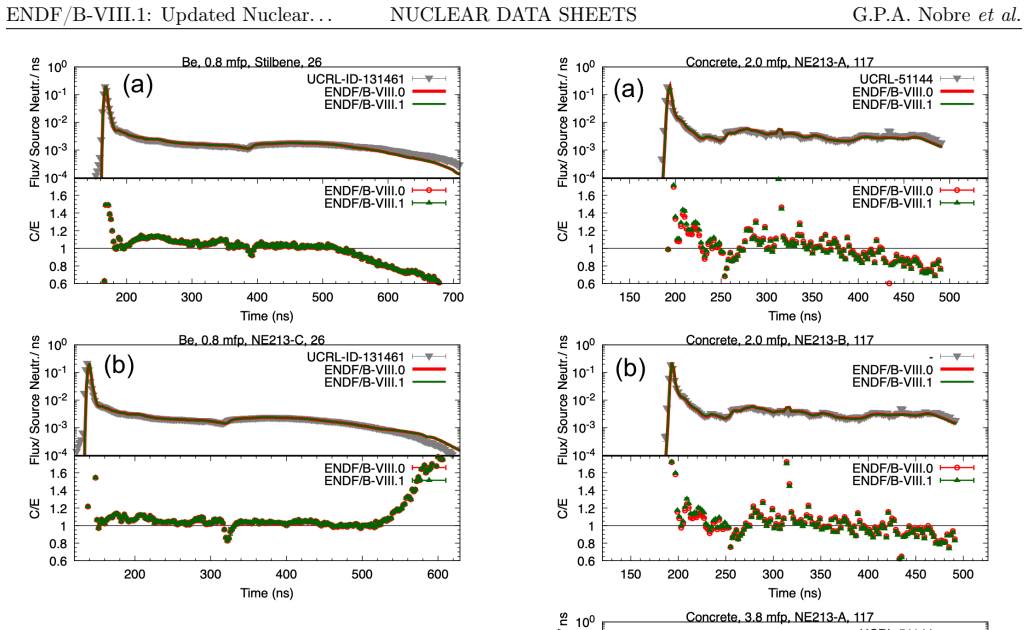
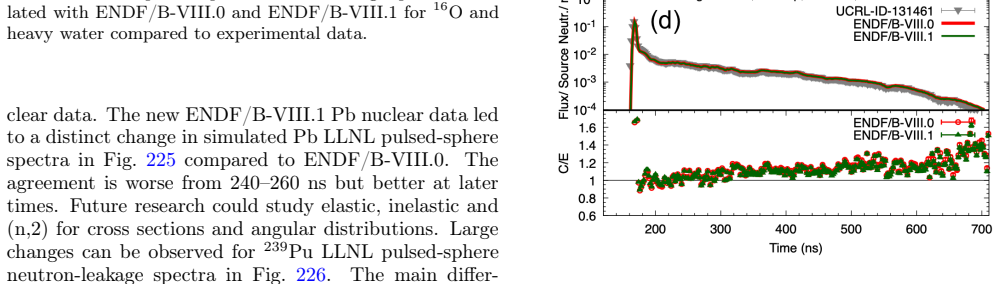
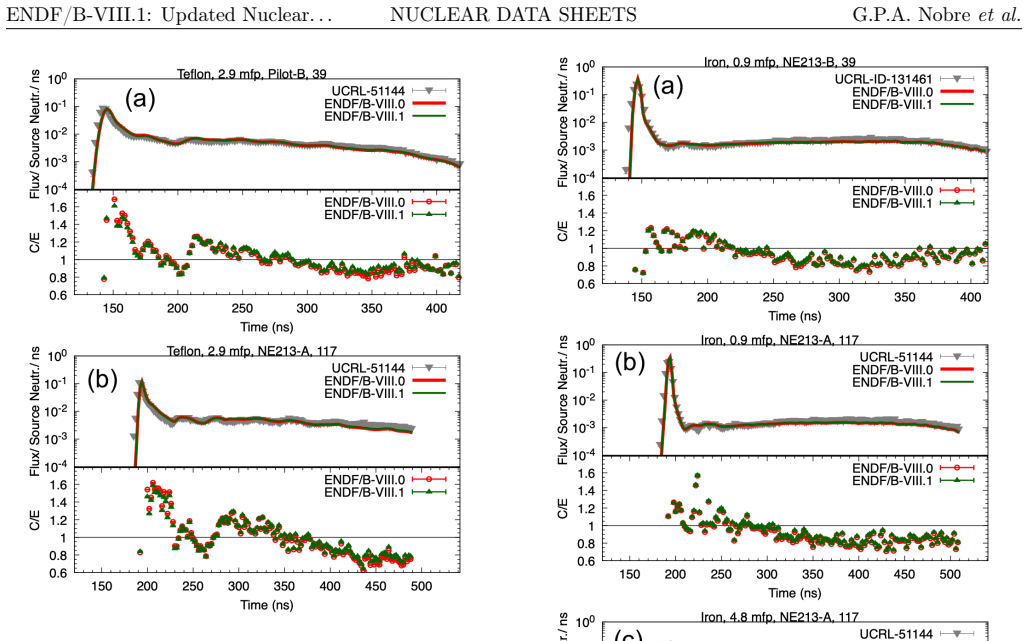
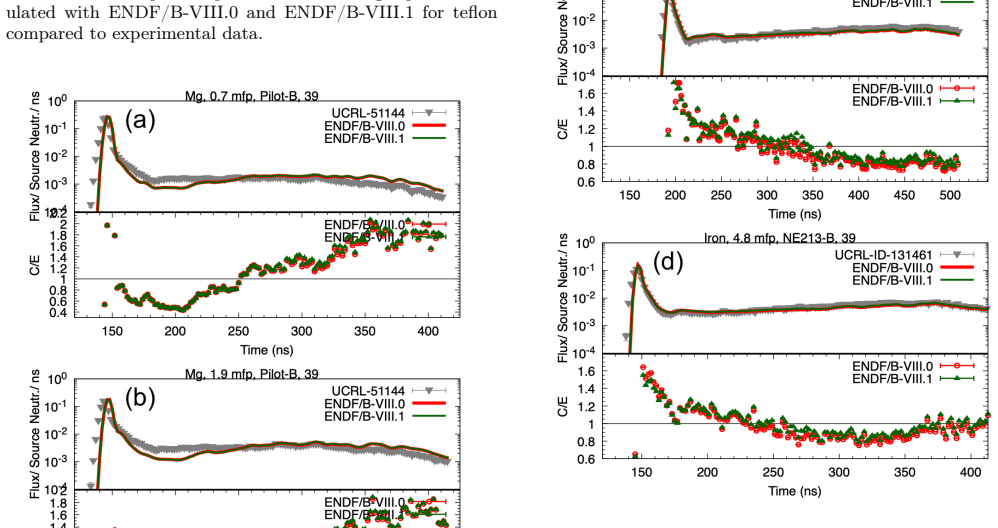
The ENDF/B-VIII.1 library updates nuclear reaction data for key isotopes and reduces biases in simulations of integral experiments for fluorine, copper, and stainless steel.
A machine-rendered reading of the paper's core claim, the machinery that carries it, and where it could break.
Core claim
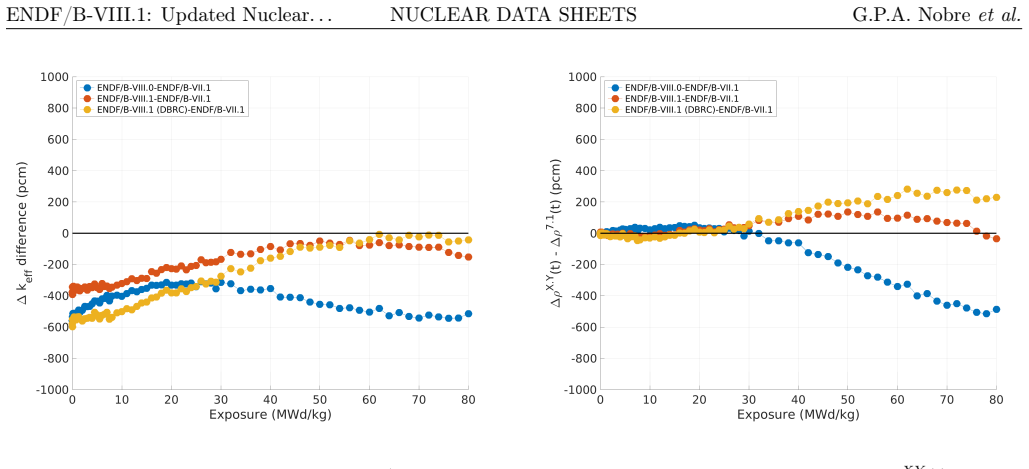
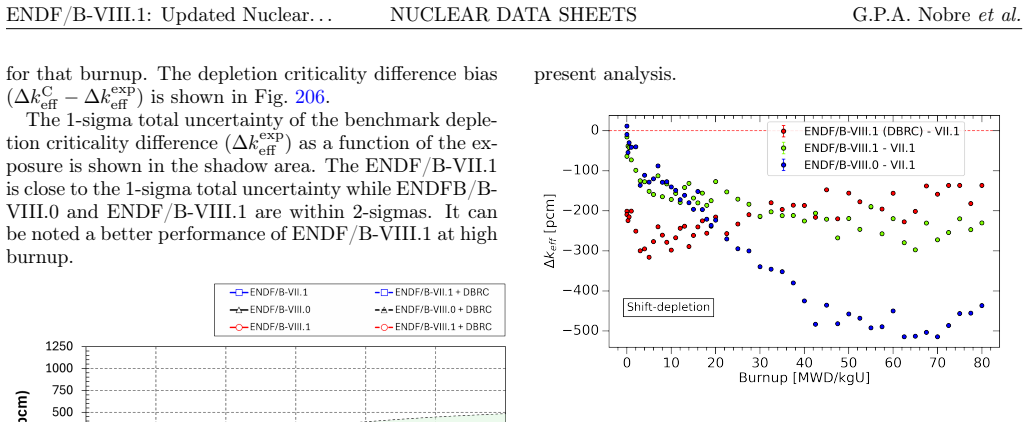
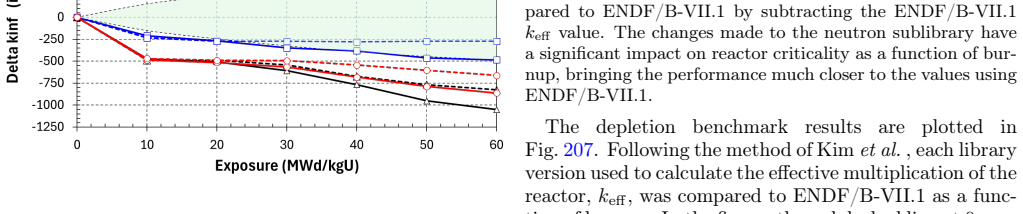
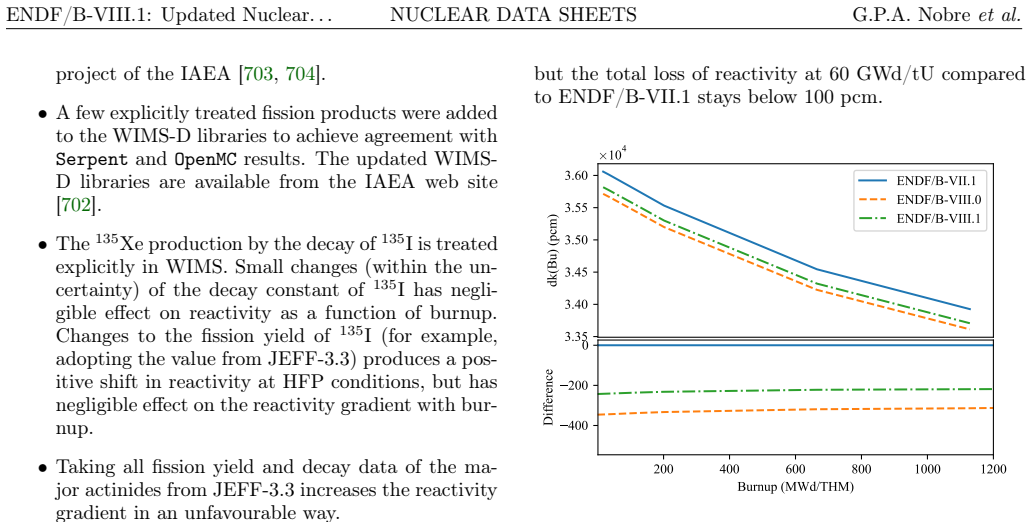
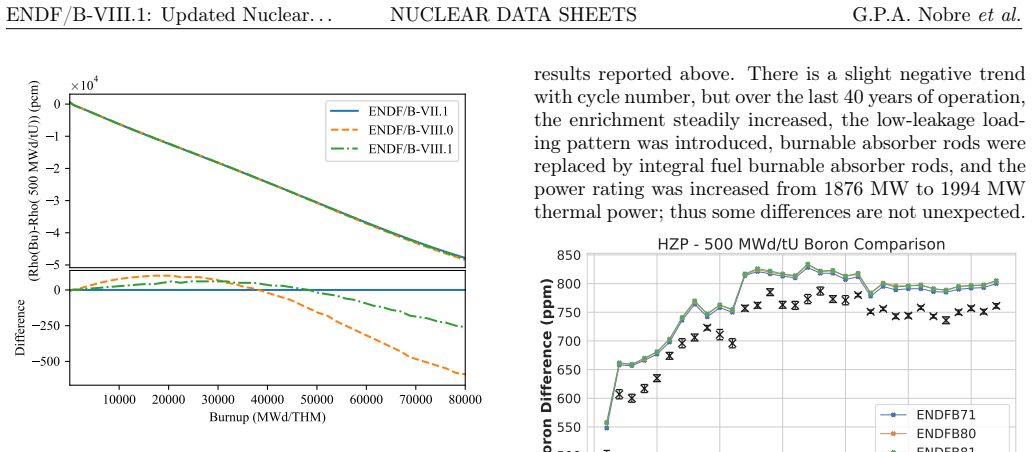
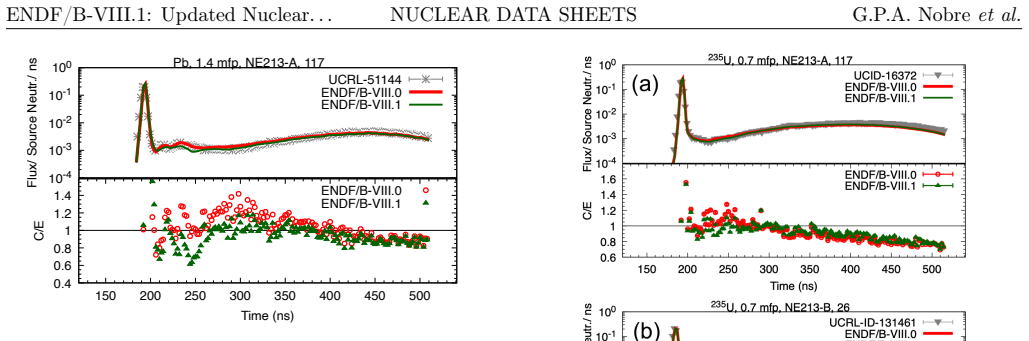
The central claim is that reevaluating important nuclides and adopting updated cross sections and resonance parameters has reduced bias in simulations of many integral experiments, with particular progress for fluorine, copper, and stainless steel containing benchmarks. Improvements to the 238U and 239,240,241Pu files in the resonance region address previous data issues in high burnup applications, restoring performance similar to the reference ENDF/B-VII.1 library while adding new photonuclear, charged-particle, and atomic data plus numerous thermal scattering kernels.
What carries the argument
The ENDF/B-VIII.1 evaluated nuclear data library, which assembles updated resonance parameters, cross sections, and scattering kernels for dozens of nuclides and carries the revised uncertainty information.
If this is right
- Simulations of reactor systems containing fluorine, copper, or stainless steel components gain accuracy and require smaller corrections for data bias.
- High-burnup fuel performance predictions become reliable enough to support commercial power applications without the limitations seen in the prior release.
- Dosimetry calculations improve through the inclusion of over sixty updated cross sections.
- Uncertainty estimates for calculations become more consistent due to revised covariance standards and testing procedures.
- New applications in photonuclear and charged-particle reactions become feasible with the added sublibraries.
Where Pith is reading between the lines
- Design studies for advanced reactors could use the reduced biases to lower conservative margins in safety analyses for the highlighted materials.
- The library's improved resonance data for actinides may extend naturally to burnup calculations in other fuel cycles not yet benchmarked.
- Availability in both ENDF-6 and GNDS formats could speed integration into modern transport codes that prefer structured data objects.
Load-bearing premise
The reevaluated resonance parameters and cross sections accurately capture the true nuclear physics without introducing new systematic biases that would appear only in untested integral experiments.
What would settle it
A new integral experiment benchmark using a material or irradiation condition outside the current validation set that exhibits larger simulation bias than with the previous library version.
Figures







































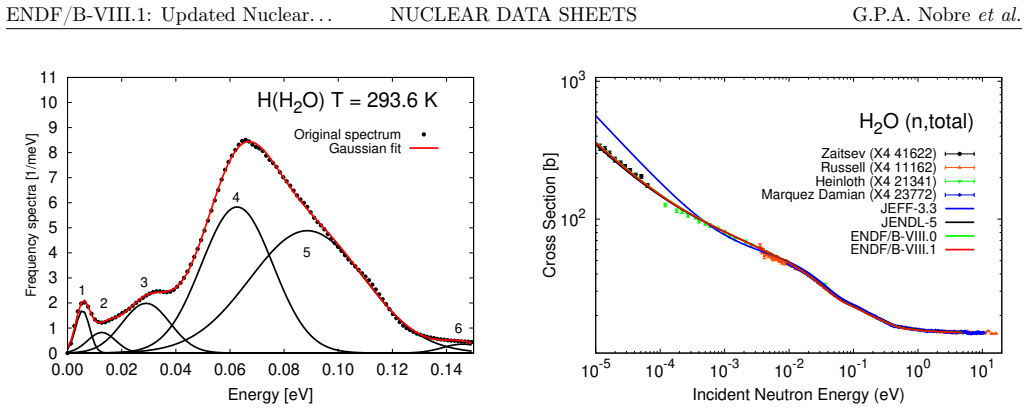
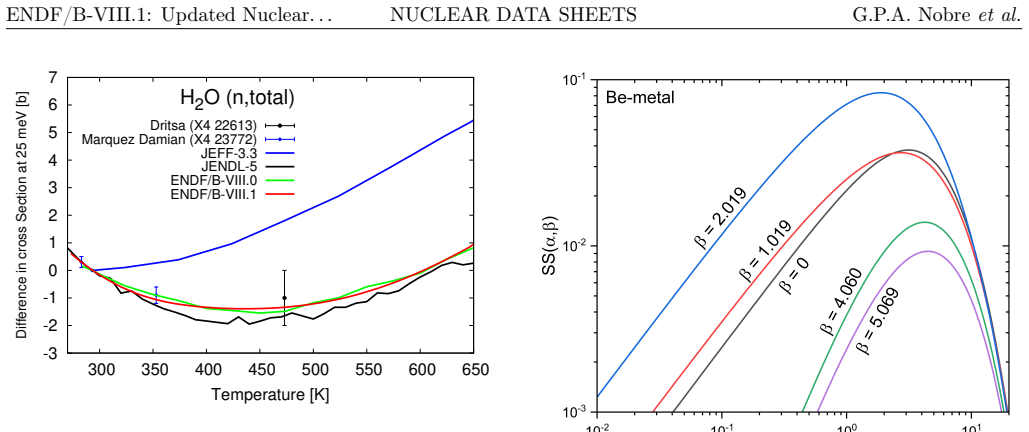
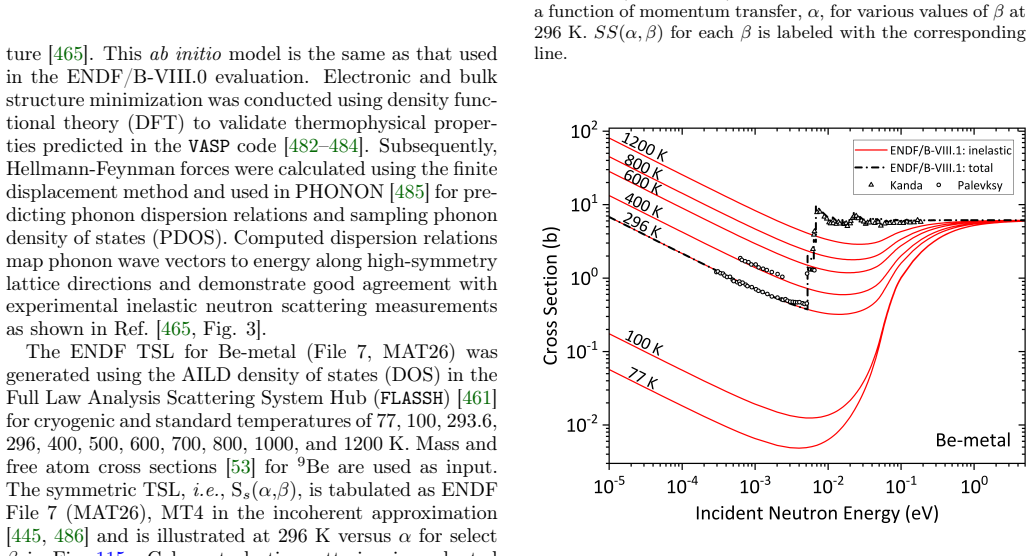


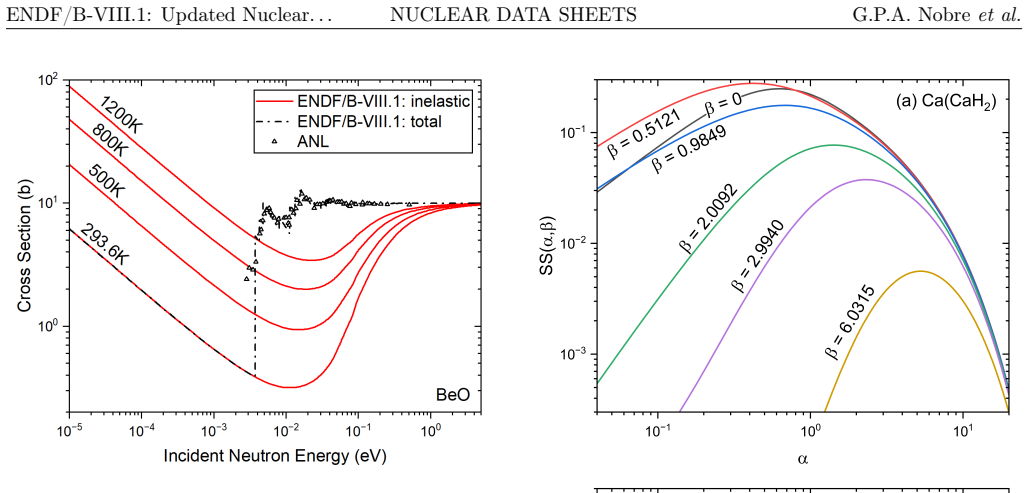





































read the original abstract
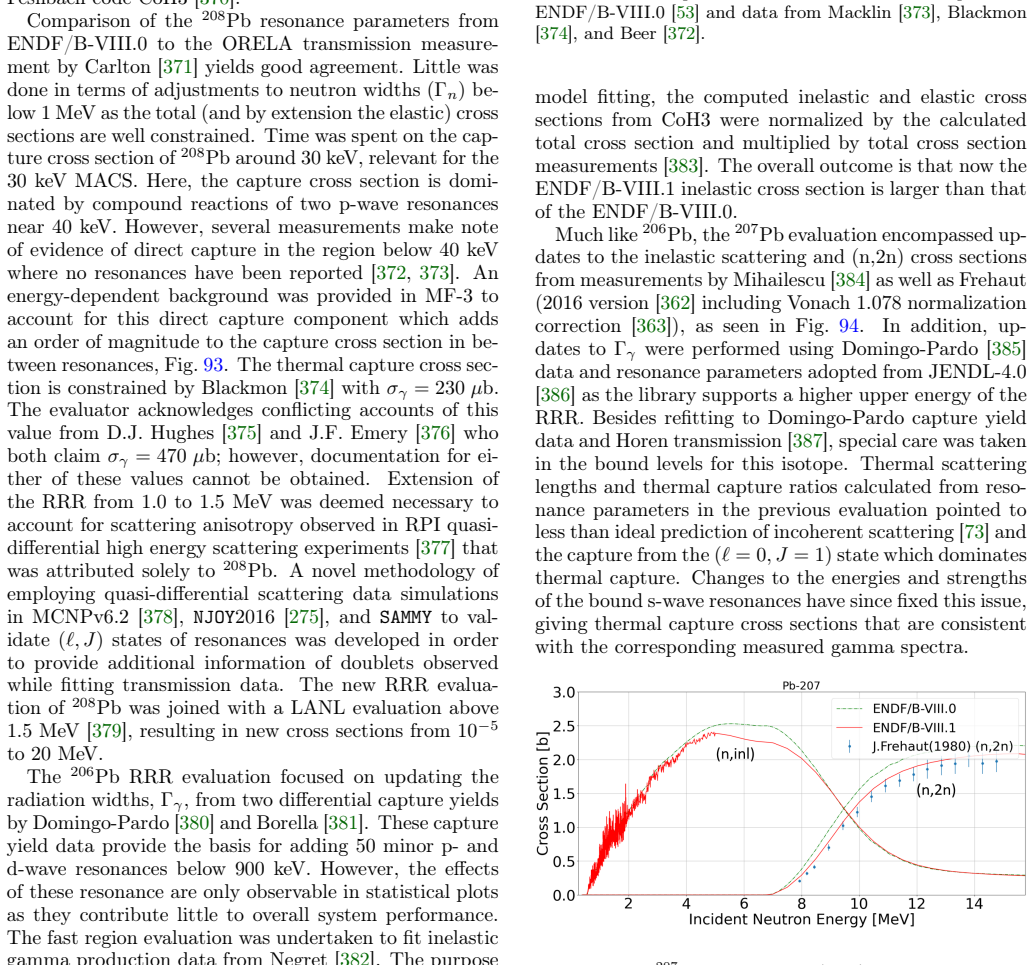
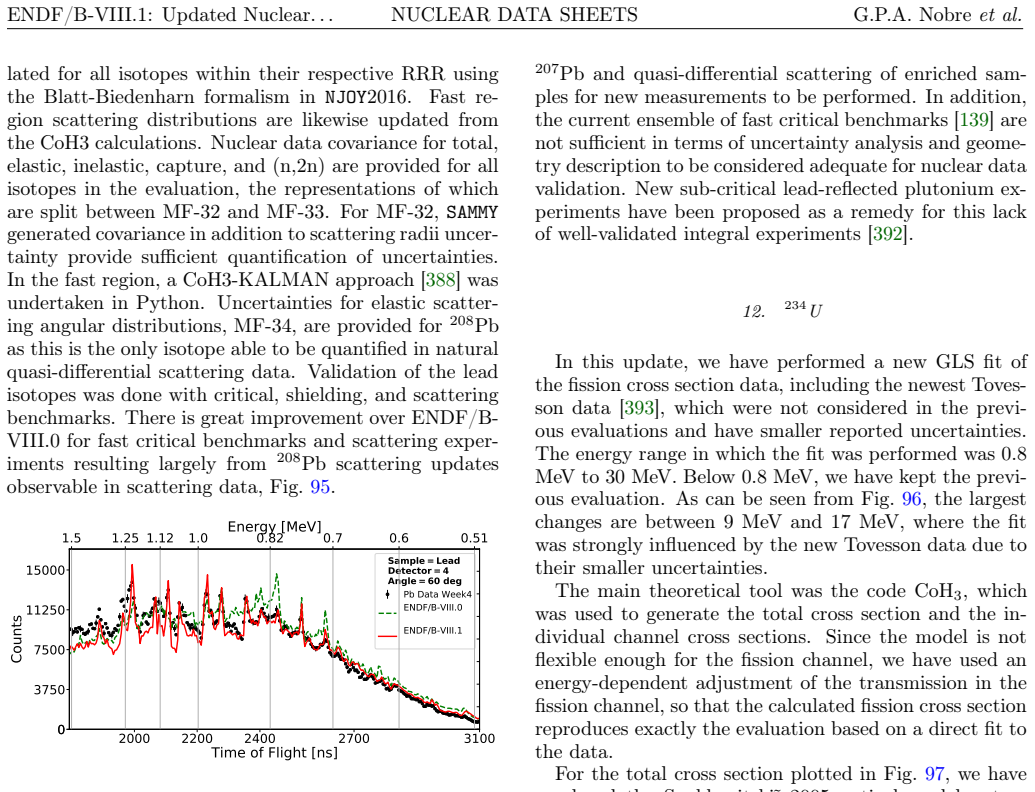
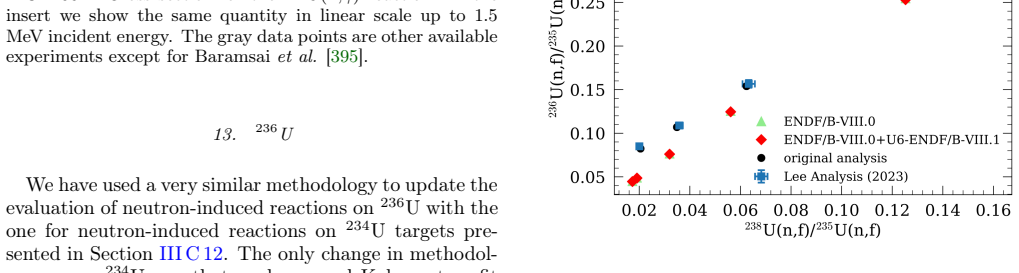
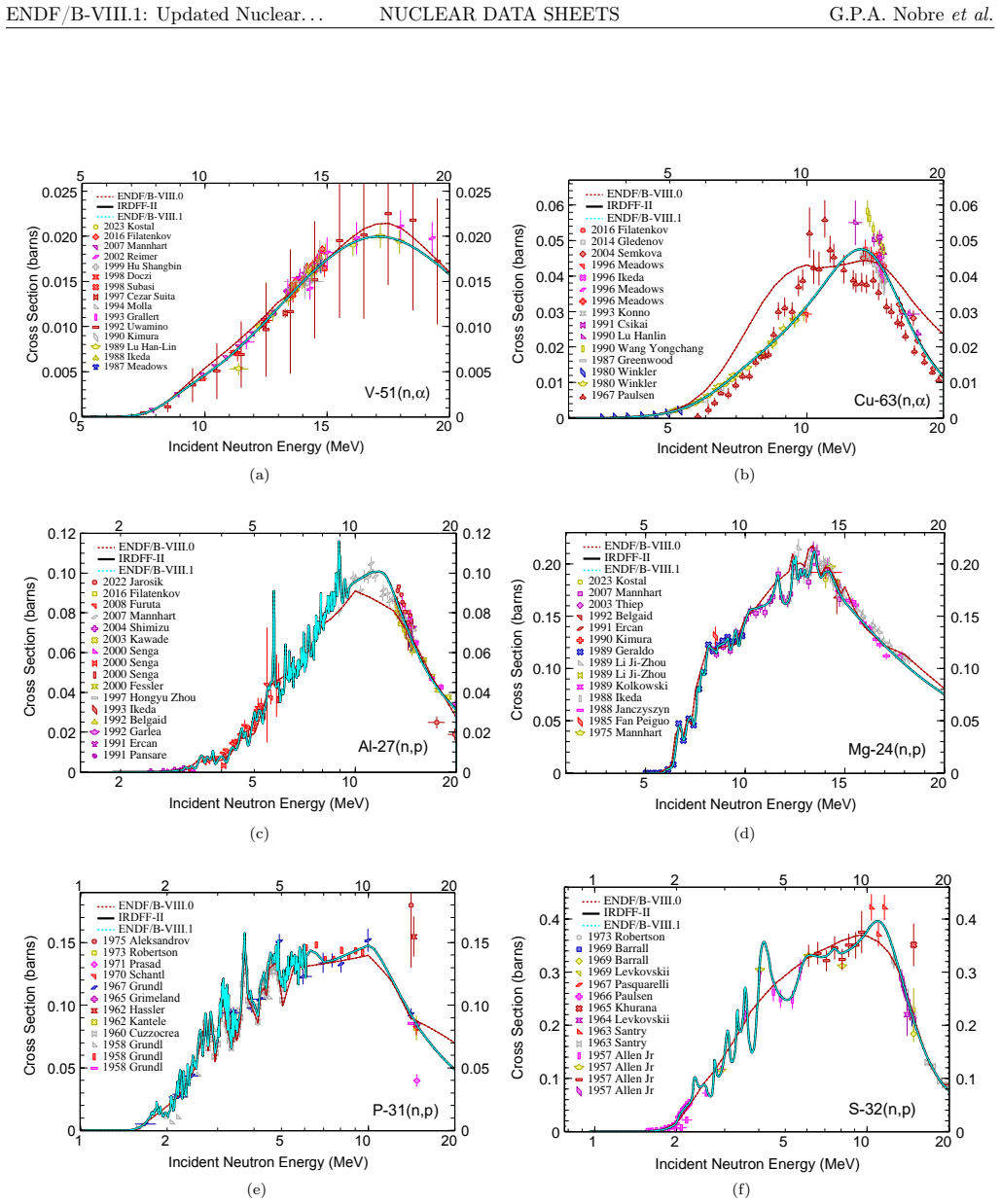
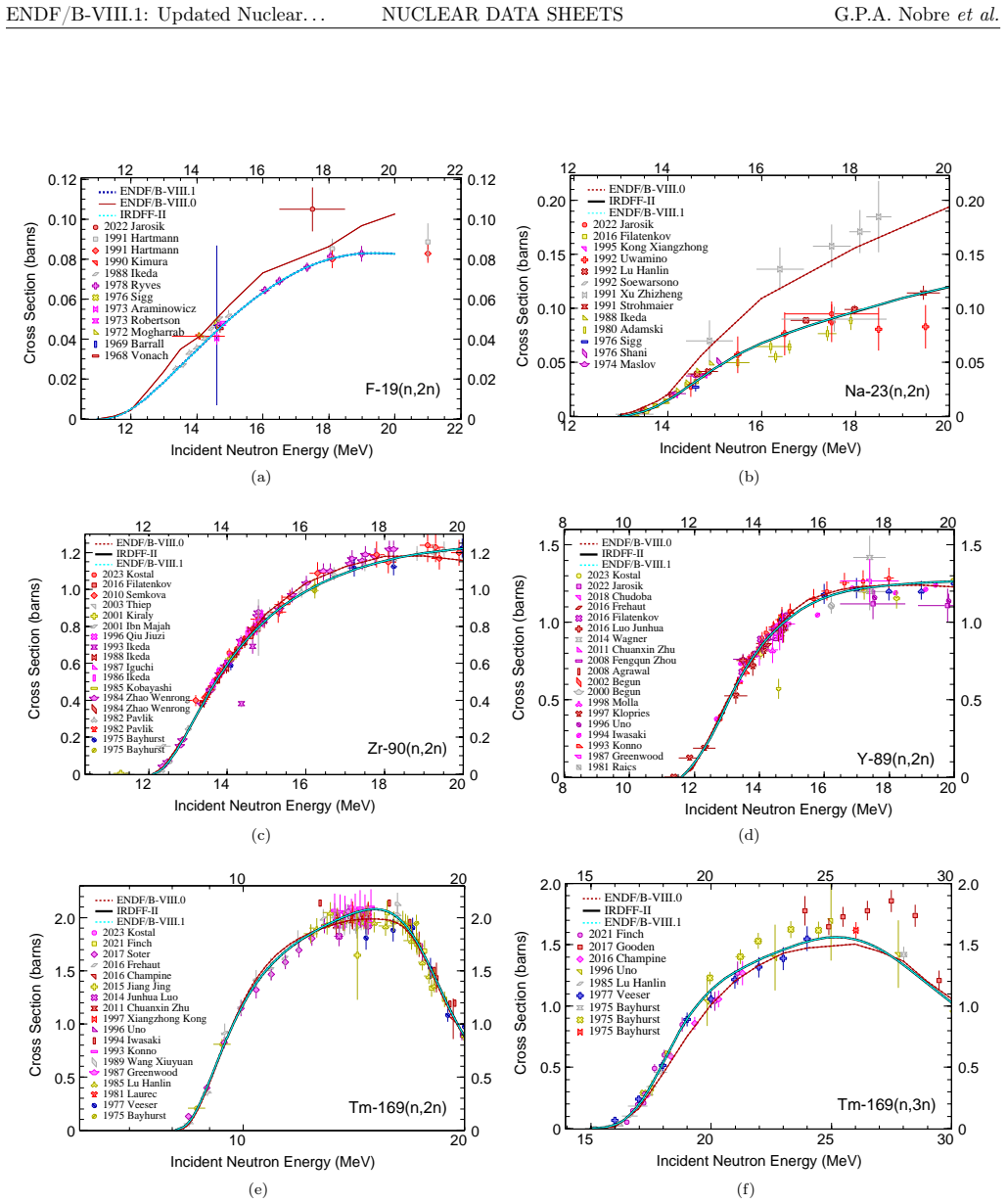
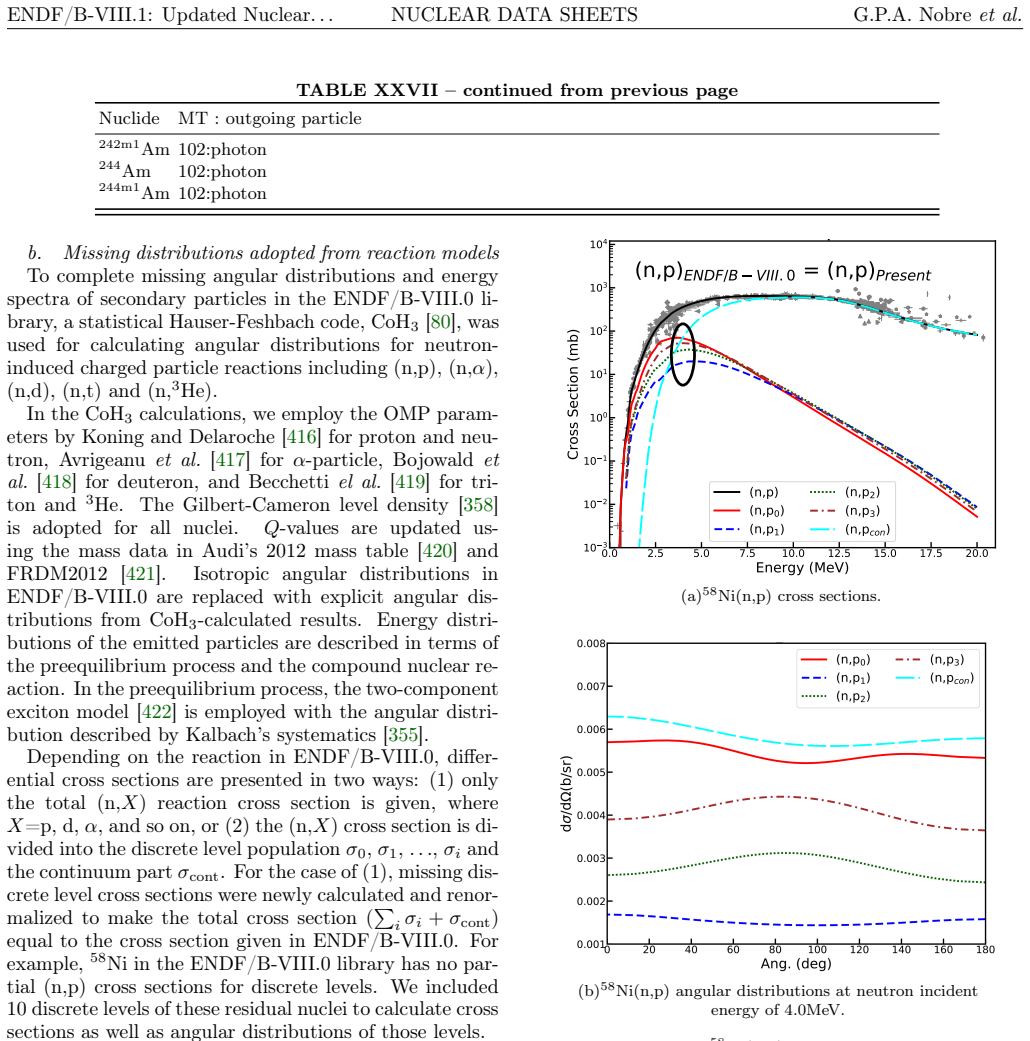
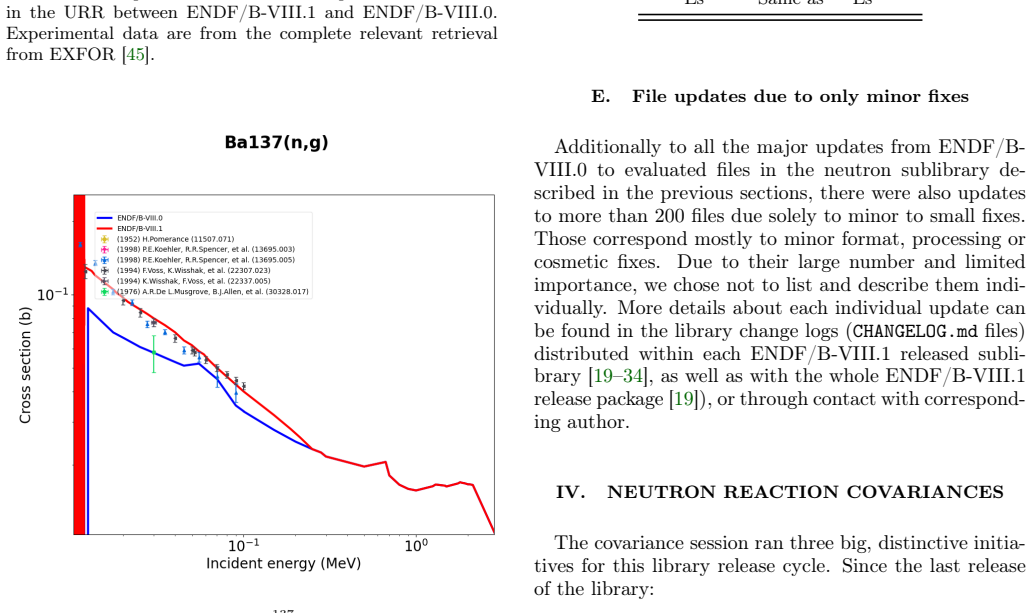
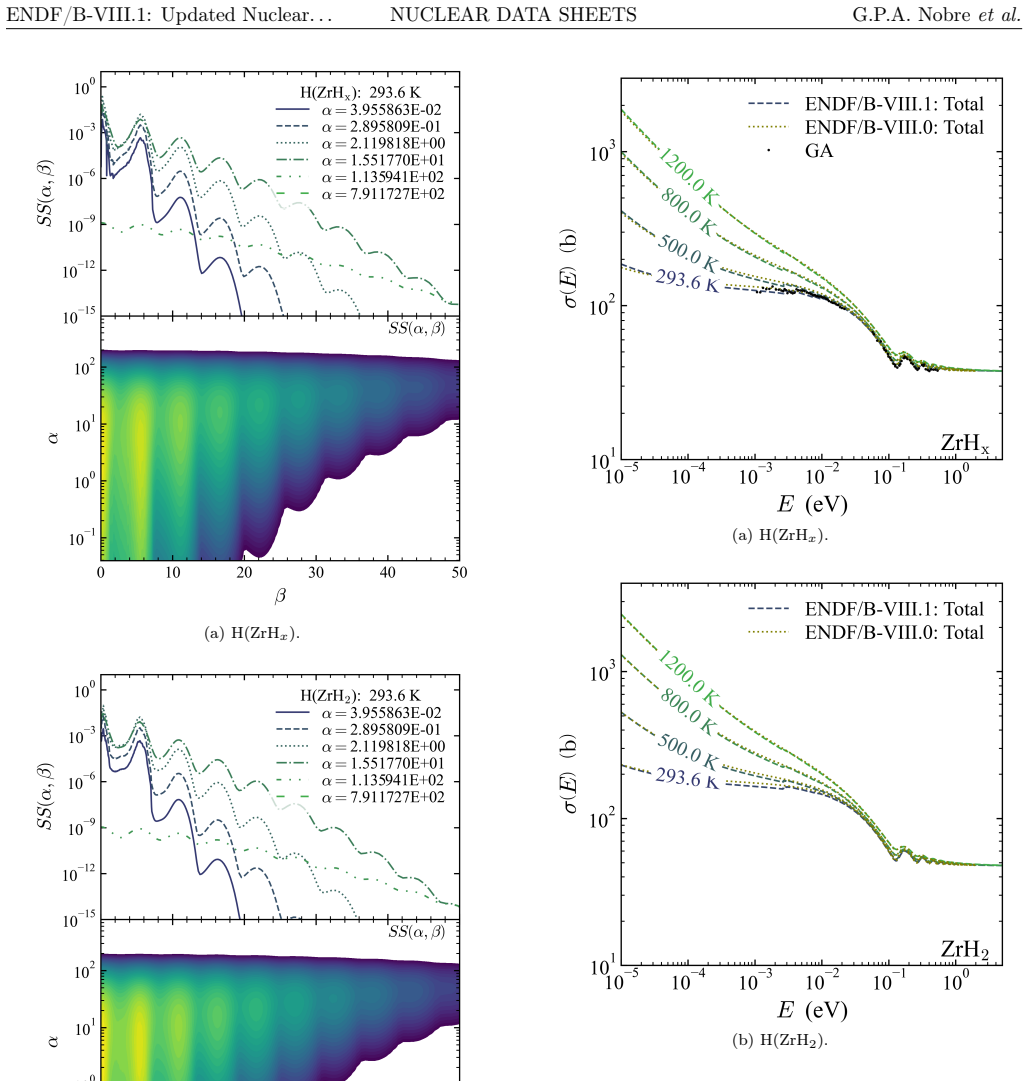
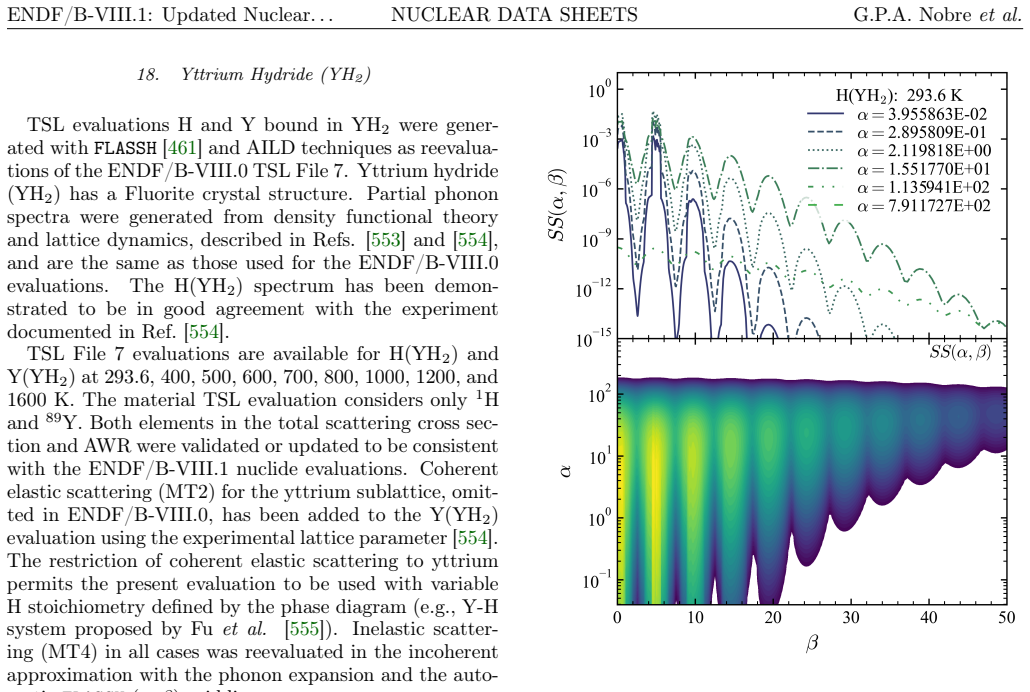
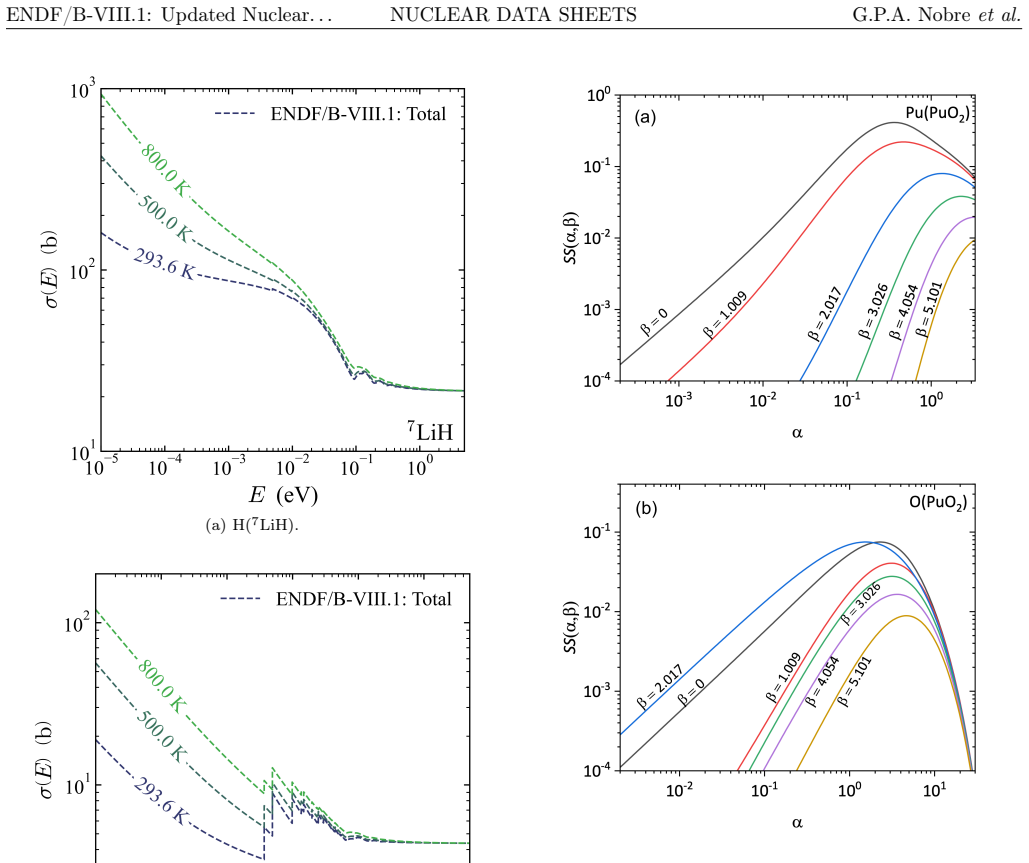
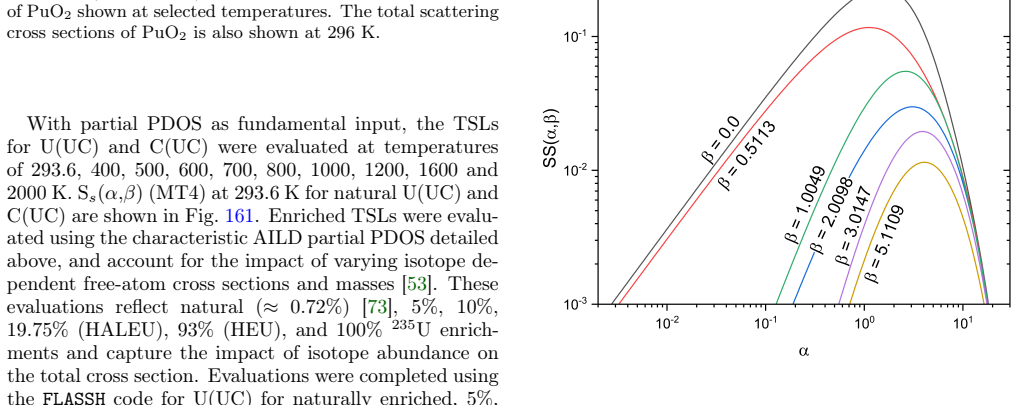
The ENDF/B-VIII.1 library is the newest recommended evaluated nuclear data file by the Cross Section Evaluation Working Group (CSEWG) for use in nuclear science and technology applications, and incorporates advances made in the six years since the release of ENDF/B-VIII.0. Among key advances made are that the $^{239}$Pu file was reevaluated by a joint international effort and that updated $^{16,18}$O, $^{19}$F, $^{28-30}$Si, $^{50-54}$Cr, $^{55}$Mn, $^{54,56,57}$Fe, $^{63,65}$Cu, $^{139}$La, $^{233,235,238}$U, and $^{240,241}$Pu neutron nuclear data from the IAEA coordinated INDEN collaboration were adopted. Over 60 neutron dosimetry cross sections were adopted from the IAEA's IRDFF-II library. In addition, the new library includes significant changes for $^3$He, $^6$Li,$^9$Be, $^{51}$V, $^{88}$Sr, $^{103}$Rh, $^{140,142}$Ce, Dy, $^{181}$Ta, Pt, $^{206-208}$Pb, and $^{234,236}$U neutron data, and new nuclear data for the photonuclear, charged-particle and atomic sublibraries. Numerous thermal neutron scattering kernels were reevaluated or provided for the very first time. On the covariance side, work was undertaken to introduce better uncertainty quantification standards and testing for nuclear data covariances. The significant effort to reevaluate important nuclides has reduced bias in the simulations of many integral experiments with particular progress noted for fluorine, copper, and stainless steel containing benchmarks. Data issues hindered the successful deployment of the previous ENDF/B-VIII.0 for commercial nuclear power applications in high burnup situations. These issues were addressed by improving the $^{238}$U and $^{239,240,241}$Pu evaluated data in the resonance region. The new library performance as a function of burnup is similar to the reference ENDF/B-VII.1 library. The ENDF/B-VIII.1 data are available in ENDF-6 and GNDS format at https://doi.org/10.11578/endf/2571019.
Editorial analysis
A structured set of objections, weighed in public.
Referee Report
Summary. The manuscript presents the ENDF/B-VIII.1 evaluated nuclear data library, the latest recommended file from the Cross Section Evaluation Working Group. It incorporates a joint reevaluation of the 239Pu file, adoption of updated neutron data for 16,18O, 19F, 28-30Si, 50-54Cr, 55Mn, 54,56,57Fe, 63,65Cu, 139La, 233,235,238U, and 240,241Pu from the IAEA INDEN collaboration, over 60 dosimetry cross sections from the IRDFF-II library, additional changes to 3He, 6Li, 9Be, 51V, 88Sr, 103Rh, 140,142Ce, Dy, 181Ta, Pt, 206-208Pb, and 234,236U, new photonuclear/charged-particle/atomic data, and numerous reevaluated or new thermal neutron scattering kernels. The paper states that these updates reduce bias in integral experiment simulations (with particular progress for fluorine, copper, and stainless-steel benchmarks), address prior issues with 238U and 239,240,241Pu in the resonance region for high-burnup applications, and yield performance similar to ENDF/B-VII.1 as a function of burnup. Data are released in ENDF-6 and GNDS formats.
Significance. If the performance claims are substantiated, this library constitutes a meaningful incremental advance for nuclear science and applications. The international INDEN collaboration, adoption of IRDFF-II dosimetry standards, and explicit attention to high-burnup resonance data address documented limitations of ENDF/B-VIII.0. Improved covariance practices and expanded thermal-scattering coverage would benefit reactor physics, dosimetry, and radiation-transport modeling. The open release in standard formats supports reproducibility and community use.
major comments (2)
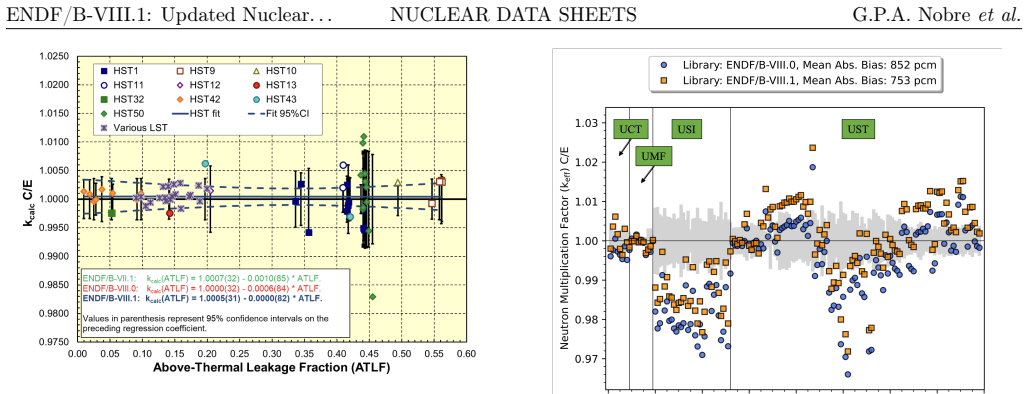
- [Abstract / integral benchmarks section] Abstract and integral-benchmark discussion: the claim of reduced bias in fluorine-, copper-, and stainless-steel-containing benchmarks is presented without accompanying C/E tables, quantitative bias reductions, covariance-propagation results, or coverage of the full integral-experiment suite. This evidence gap is load-bearing for the headline assertion that the INDEN adoptions constitute net improvements.
- [INDEN collaboration adoptions] Section describing INDEN adoptions for 19F, 63,65Cu, Fe/Cr isotopes, etc.: the manuscript assumes the reevaluated resonance parameters and cross sections are improvements over prior evaluations, yet provides no explicit test for introduction of new systematic biases in regimes outside the cited benchmarks (e.g., high-burnup spectra or specific reflector materials).
minor comments (3)
- [References / data sources] Add explicit references or DOIs for the specific INDEN collaboration papers and the IRDFF-II library documentation to improve traceability of adopted data.
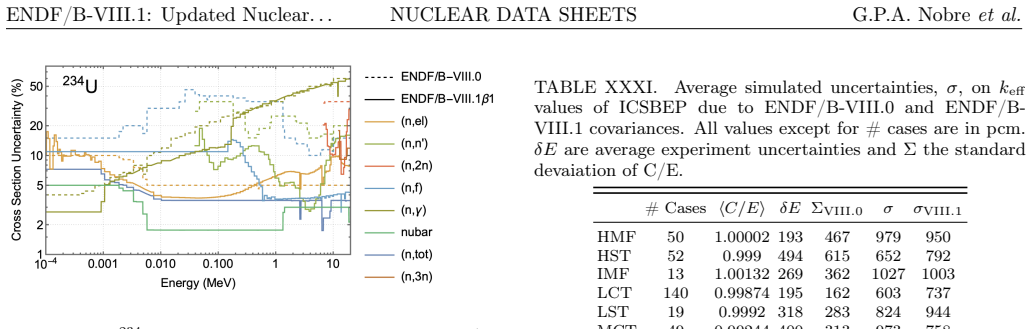
- [Covariance section] Clarify the concrete changes made to covariance uncertainty quantification standards and testing procedures; the current description remains high-level.
- [Summary table of changes] Consider including a short table summarizing the key nuclides updated, their sources (INDEN, IRDFF-II, etc.), and the nature of the change (reevaluation vs. adoption).
Simulated Author's Rebuttal
We thank the referee for the constructive review and recommendation of minor revision. The comments help clarify the presentation of evidence supporting the ENDF/B-VIII.1 updates. We respond to each major comment below.
read point-by-point responses
-
Referee: [Abstract / integral benchmarks section] Abstract and integral-benchmark discussion: the claim of reduced bias in fluorine-, copper-, and stainless-steel-containing benchmarks is presented without accompanying C/E tables, quantitative bias reductions, covariance-propagation results, or coverage of the full integral-experiment suite. This evidence gap is load-bearing for the headline assertion that the INDEN adoptions constitute net improvements.
Authors: The full manuscript includes a benchmarks section with integral experiment comparisons that support the reduced-bias statement for the cited materials. To strengthen the abstract and address the evidence gap, we will add quantitative bias-reduction values and a compact C/E summary table for the fluorine-, copper-, and stainless-steel benchmarks. A complete covariance-propagation study across the entire integral suite lies outside the scope of this library-overview paper and is typically reported in dedicated validation studies; the present work instead emphasizes the improved covariance standards now included in the library. These changes will make the headline claims more directly substantiated while preserving the paper's focus. revision: partial
-
Referee: [INDEN collaboration adoptions] Section describing INDEN adoptions for 19F, 63,65Cu, Fe/Cr isotopes, etc.: the manuscript assumes the reevaluated resonance parameters and cross sections are improvements over prior evaluations, yet provides no explicit test for introduction of new systematic biases in regimes outside the cited benchmarks (e.g., high-burnup spectra or specific reflector materials).
Authors: The INDEN evaluations adopted here were produced by an international collaboration that performed extensive validation against both differential data and a range of integral benchmarks. The manuscript already notes targeted improvements for high-burnup resonance behavior in the 238U and 239,240,241Pu files. For the additional isotopes (19F, Cu, Fe/Cr, etc.), we will insert a clarifying paragraph stating that the INDEN process included checks in representative spectra and that application-specific validation remains the user's responsibility. This addition directly responds to the concern without requiring new calculations. revision: yes
Circularity Check
No circularity: ENDF/B-VIII.1 updates rely on external reevaluations and benchmarks
full rationale
The paper reports adoption of reevaluated neutron data for specific nuclides from the external INDEN collaboration, IAEA IRDFF-II library, and prior ENDF versions, with performance claims tied to comparisons against independent integral experiments. No equations, fitted parameters, or derivations appear that reduce by construction to quantities defined inside this work; the bias-reduction statement references external benchmarks rather than self-referential inputs. Self-citations exist but are not load-bearing for any central claim, satisfying the criteria for a self-contained compilation report.
Axiom & Free-Parameter Ledger
free parameters (2)
- resonance parameters for 238U, 239Pu and other key isotopes
- thermal scattering kernel parameters for numerous materials
axioms (1)
- domain assumption Experimental nuclear data and nuclear reaction models provide a reliable basis for evaluation
Lean theorems connected to this paper
-
IndisputableMonolith/Foundation/RealityFromDistinction.leanreality_from_one_distinction unclear?
unclearRelation between the paper passage and the cited Recognition theorem.
The significant effort to reevaluate important nuclides has reduced bias in the simulations of many integral experiments with particular progress noted for fluorine, copper, and stainless steel containing benchmarks.
-
IndisputableMonolith/Cost/FunctionalEquation.leanwashburn_uniqueness_aczel unclear?
unclearRelation between the paper passage and the cited Recognition theorem.
updated 16,18O, 19F, … 63,65Cu, … 238U … neutron nuclear data from the IAEA coordinated INDEN collaboration were adopted
What do these tags mean?
- matches
- The paper's claim is directly supported by a theorem in the formal canon.
- supports
- The theorem supports part of the paper's argument, but the paper may add assumptions or extra steps.
- extends
- The paper goes beyond the formal theorem; the theorem is a base layer rather than the whole result.
- uses
- The paper appears to rely on the theorem as machinery.
- contradicts
- The paper's claim conflicts with a theorem or certificate in the canon.
- unclear
- Pith found a possible connection, but the passage is too broad, indirect, or ambiguous to say the theorem truly supports the claim.
Forward citations
Cited by 3 Pith papers
-
Resonance Statistics -Informed Fitting Applied to Automated Cross Section Evaluation
Resonance statistics-informed methods in automated fitting reduce spin group bias, enhance Wigner statistics consistency, and stabilize resonance density with minimal impact on cross section fit quality.
-
Monte Carlo Simulations of Suprathermal Enhancement in Advanced Nuclear Fusion Fuels
Monte Carlo simulations indicate suprathermal fusion enhancements are overestimated in prior deuterium work, with only DT reaching criticality without neutron leakage and p11B gains capped below 40 percent of beam energy.
-
ALPHANSO: Open-Source Modeling of ($\alpha$,n) Neutron Source Terms
ALPHANSO is an open-source Python tool that computes (α,n) neutron source terms with updated nuclear data and validates its outputs against experiments and other codes.
Reference graph
Works this paper leans on
-
[1]
-THERM-049-006 1.00120 0.00250 1.00792 0.00013 1.00671 1.00597 0.00013 1.00476 HEU-SOL-THERM-049-007 1.00120 0.00240 1.00851 0.00013 1.00730 1.00664 0.00013 1.00543 HEU-SOL-THERM-049-008 1.00120 0.00240 1.00725 0.00012 1.00605 1.00556 0.00012 1.00435 HEU-SOL-THERM-049-009 1.00120 0.00200 0.99968 0.00014 0.99848 0.99782 0.00014 0.99662 HEU-SOL-THERM-049-01...
work page 1973
discussion (0)
Sign in with ORCID, Apple, or X to comment. Anyone can read and Pith papers without signing in.