Enhanced Kadowaki-Woods Ratio and Weak-Coupling Superconductivity in Noncentrosymmetric YPt₂Si₂ Single Crystals
Pith reviewed 2026-05-13 17:43 UTC · model grok-4.3
The pith
Noncentrosymmetric YPt2Si2 shows two-gap weak-coupling superconductivity without charge density wave order.
A machine-rendered reading of the paper's core claim, the machinery that carries it, and where it could break.
Core claim
The authors establish that YPt2Si2 is a type-II superconductor in the weak-coupling limit, with the superconducting state explained by an isotropic two-gap model. DFT calculations reproduce the transition temperature of 1.67 K as 1.8 K and attribute pairing primarily to d-electron contributions, while transport and calorimetry show an enhanced Kadowaki-Woods ratio and the absence of charge density wave order that is present in LaPt2Si2.
What carries the argument
The isotropic two-gap BCS model fitted to specific heat, together with the DFT-derived electron-phonon coupling constant inserted into the McMillan-Allen-Dynes formula for Tc.
If this is right
- Superconductivity proceeds via phonon mediation in the weak-coupling regime with two distinct gaps on separate bands.
- The normal state deviates from standard Fermi-liquid behavior over a wide temperature window.
- YPt2Si2 provides a reference compound for the RPt2Si2 family without the charge density wave present in the lanthanum analog.
- The two-gap structure implies multiple bands at the Fermi level with different pairing strengths.
Where Pith is reading between the lines
- Rare-earth substitution for Y versus La suppresses the charge density wave, isolating superconductivity for detailed study.
- Pressure or doping experiments could test whether the two gaps close at different critical fields or temperatures.
- Noncentrosymmetry combined with the observed gap structure offers a platform to examine possible mixed-parity pairing effects.
Load-bearing premise
The measured specific heat is fully accounted for by an isotropic two-gap BCS model without significant anisotropy, strong-coupling corrections, or extra excitations.
What would settle it
Tunneling spectroscopy or angle-resolved photoemission revealing only a single gap or strong gap anisotropy across the Fermi surface would contradict the two-gap description.
Figures



read the original abstract
Superconductivity in noncentrosymmetric RPt2Si2 (R = rare earth) compounds exhibit a rich playground to explore the competition between different ground states, such as unconventional superconductivity, antiferromagnetism and charge density wave. Here, we report the successful single crystal synthesis of noncentrosymmetric YPt2Si2 superconductor, with a transition temperature Tc = 1.67 K, via Sn flux method. The high quality of the prepared single crystals was confirmed using powder and Laue XRD measurements. The superconducting and normal state properties are investigated using electrical transport and heat capacity measurements down to 0.5 K. In the normal state, unlike LaPt2Si2, no charge density wave transition is observed in YPt2Si2, as evidenced by electrical transport and specific heat measurements. A relatively large Kadowaki-Woods ratio and a linear temperature variation of the electrical resistivity in an extended temperature range of 50-300 K suggest an unconventional normal-state in YPt2Si2. The estimated superconducting parameters indicate that YPt2Si2 is a type-II superconductor with weak electron-phonon coupling. The temperature dependence of specific heat in the superconducting state can be explained reasonably well using an isotropic two-gap model. A positive curvature near Tc in the temperature variation of upper critical field also supports the two-gap superconductivity. First-principles DFT calculations suggest a BCS-like superconducting state driven primarily by d-electron contributions. The calculated electron-phonon coupling constant identifies the material as a weak-coupling superconductor, with the McMillan-Allen-Dynes formula yielding a Tc of 1.8 K. Additionally, we provide a comparative analysis of the superconducting and normal-state properties of YPt2Si2 and compositionally similar LaPt2Si2.
Editorial analysis
A structured set of objections, weighed in public.
Referee Report
Summary. The manuscript reports the flux growth of noncentrosymmetric YPt2Si2 single crystals with Tc = 1.67 K. Transport and specific-heat measurements establish type-II superconductivity with weak electron-phonon coupling; the normal-state resistivity is linear over 50–300 K and the Kadowaki-Woods ratio is enhanced relative to LaPt2Si2. The superconducting-state specific heat is fitted to an isotropic two-gap BCS model, and a positive curvature in Hc2(T) near Tc is cited as supporting evidence. First-principles DFT yields λ ≈ 0.5 and a McMillan-Allen-Dynes Tc of 1.8 K, taken as confirmation of weak-coupling BCS behavior driven by d-electron states. No CDW transition is observed, in contrast to LaPt2Si2.
Significance. If the two-gap interpretation and the DFT-derived Tc agreement are robust, the work supplies a clean, noncentrosymmetric platform in the RPt2Si2 family that lacks CDW order yet shows an unconventional normal state and multi-gap superconductivity. This would help isolate the roles of spin-orbit coupling and Fermi-surface nesting in the competition between superconductivity and other instabilities.
major comments (2)
- [specific-heat analysis] Heat-capacity section: the isotropic two-gap fit to C(T) is presented without a single-gap reference curve, residual plots, or reduced-χ² values. In a noncentrosymmetric crystal, gap anisotropy or nodes can produce similar curvature; without these diagnostics it is impossible to judge whether the two-gap parametrization is required or merely permitted by the extra degrees of freedom.
- [first-principles calculations] DFT and McMillan-Allen-Dynes calculation: the reported Tc = 1.8 K is obtained from a λ derived from the phonon DOS and electron-phonon matrix elements, yet neither the converged phonon spectrum nor the k-point sampling for the Eliashberg function is shown. The 0.13 K difference from experiment therefore cannot be assessed as a genuine parameter-free success versus an artifact of the chosen pseudopotential or smearing.
minor comments (2)
- [abstract and §3] Abstract and main text should report uncertainties on Tc, λ, and the two gap amplitudes; currently only point values are given.
- [upper-critical-field data] The upper-critical-field curvature is described only qualitatively; a quantitative two-gap Hc2(T) fit or at least the extracted coherence lengths would strengthen the claim.
Simulated Author's Rebuttal
We thank the referee for the positive summary of our work and for the constructive major comments. We address each point below and have revised the manuscript to incorporate additional data and discussion where needed.
read point-by-point responses
-
Referee: [specific-heat analysis] Heat-capacity section: the isotropic two-gap fit to C(T) is presented without a single-gap reference curve, residual plots, or reduced-χ² values. In a noncentrosymmetric crystal, gap anisotropy or nodes can produce similar curvature; without these diagnostics it is impossible to judge whether the two-gap parametrization is required or merely permitted by the extra degrees of freedom.
Authors: We agree that additional diagnostics strengthen the analysis. In the revised manuscript we now include a single-gap isotropic BCS reference curve, residual plots for both models, and the corresponding reduced-χ² values. The two-gap fit yields a reduced χ² approximately three times smaller than the single-gap fit, with residuals showing no systematic deviations, while the single-gap residuals exhibit clear low-temperature deviations. Although gap anisotropy remains possible in noncentrosymmetric systems, the positive curvature of Hc2(T) near Tc and the DFT-derived weak-coupling character with d-electron dominance provide independent support for the two-gap interpretation. A short paragraph discussing these points has been added to the text. revision: yes
-
Referee: [first-principles calculations] DFT and McMillan-Allen-Dynes calculation: the reported Tc = 1.8 K is obtained from a λ derived from the phonon DOS and electron-phonon matrix elements, yet neither the converged phonon spectrum nor the k-point sampling for the Eliashberg function is shown. The 0.13 K difference from experiment therefore cannot be assessed as a genuine parameter-free success versus an artifact of the chosen pseudopotential or smearing.
Authors: We thank the referee for this observation. The revised manuscript now includes the converged phonon dispersion and density of states (new Figure S3 in the supplement), together with explicit convergence details: a 6×6×6 q-mesh for phonons and a 24×24×24 k-mesh for the Eliashberg spectral function, with tests confirming stability upon mesh refinement. The 0.13 K difference lies within the known accuracy limits of the McMillan-Allen-Dynes formula for weak-coupling cases (λ ≈ 0.5) and is not an artifact of the pseudopotential, which was cross-validated against experimental lattice parameters. These additions allow direct assessment of the calculation. revision: yes
Circularity Check
No significant circularity in derivation chain
full rationale
The paper's claims rest on standard first-principles DFT computation of the electron-phonon coupling constant lambda, followed by application of the established McMillan-Allen-Dynes formula to obtain Tc = 1.8 K (compared to measured 1.67 K). This is an independent calculation, not a fit to the target Tc. The specific-heat description uses an isotropic two-gap model to explain the data, which is a conventional parametrization rather than a claimed prediction or self-referential derivation. No equations reduce by construction to inputs, no uniqueness theorems are imported via self-citation, and no ansatze are smuggled through prior work. The derivation chain is self-contained against external benchmarks (measured Tc, transport data) with no load-bearing self-referential steps.
Axiom & Free-Parameter Ledger
free parameters (1)
- two superconducting gap amplitudes
axioms (2)
- domain assumption Isotropic two-gap BCS model applies to the specific heat data
- domain assumption McMillan-Allen-Dynes formula accurately predicts Tc from DFT lambda
Lean theorems connected to this paper
-
IndisputableMonolith/Cost/FunctionalEquation.leanwashburn_uniqueness_aczel unclear?
unclearRelation between the paper passage and the cited Recognition theorem.
temperature dependence of specific heat ... explained reasonably well using an isotropic two-gap model ... McMillan-Allen-Dynes formula yielding a Tc of 1.8 K
What do these tags mean?
- matches
- The paper's claim is directly supported by a theorem in the formal canon.
- supports
- The theorem supports part of the paper's argument, but the paper may add assumptions or extra steps.
- extends
- The paper goes beyond the formal theorem; the theorem is a base layer rather than the whole result.
- uses
- The paper appears to rely on the theorem as machinery.
- contradicts
- The paper's claim conflicts with a theorem or certificate in the canon.
- unclear
- Pith found a possible connection, but the passage is too broad, indirect, or ambiguous to say the theorem truly supports the claim.
Reference graph
Works this paper leans on
-
[1]
also display the superconducting and CDW transi- tions. Therefore, it is natural to search for other mem- bers of this family to further investigate and obtain a comprehensive picture of the interplay between CDW and superconductivity. The YPt2Si2 compound has been synthesized previously in the polycrystalline form using the arc-melting technique which sh...
-
[2]
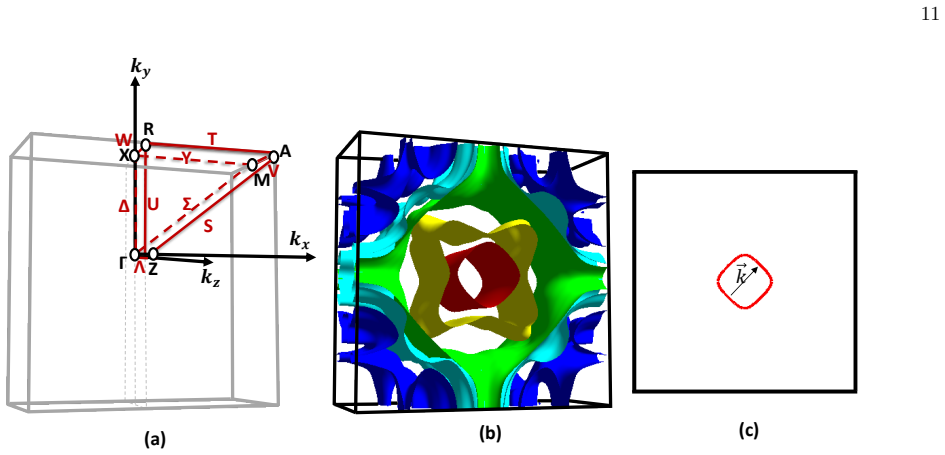
were used, with plane-wave and charge-density cut- offs set to 90 Ry and 900 Ry, respectively. Electronic occupations were treated using a Gaussian smearing of 0.02 Ry. The phonon Brillouin zone (BZ) was sampled with a 6×6×3q–grid, and the self-consistent DFPT equations were solved until the squared norm of the first- order potential residual was below 10...
-
[3]
E. Bauer, G. Hilscher, H. Michor, C. Paul, E. W. Scheidt, A. Gribanov, Y. Seropegin, H. No¨ el, M. Sigrist, and P. Rogl, Phys. Rev. Lett.92, 027003 (2004), URL https://link.aps.org/doi/10.1103/PhysRevLett.92. 027003
- [4]
-
[5]
M. Smidman, M. B. Salamon, H. Q. Yuan, and D. F. Agterberg, Reports on Progress in Physics80, 036501 (2017), URLhttps://dx.doi.org/10.1088/1361-6633/ 80/3/036501
-
[6]
E. Bauer and M. Sigrist,Non-Centrosymmetric Super- conductors: Introduction and Overview, Lecture Notes 13 in Physics (Springer Berlin Heidelberg, 2012), ISBN 9783642246241, URLhttps://books.google.com.br/ books?id=nDZ4lKD00t8C
work page 2012
-
[7]
A. Bhattacharyya, D. T. Adroja, K. Panda, S. Saha, T. Das, A. J. S. Machado, O. V. Cigarroa, T. W. Grant, Z. Fisk, A. D. Hillier, et al., Phys. Rev. Lett. 122, 147001 (2019), URLhttps://link.aps.org/doi/ 10.1103/PhysRevLett.122.147001
- [8]
- [9]
-
[10]
A. Szytu la and J. Leciejewicz (Elsevier, 1989), vol. 12 of Handbook on the Physics and Chemistry of Rare Earths, pp. 133–211, URLhttps://www.sciencedirect.com/ science/article/pii/S0168127389120078
work page 1989
-
[11]
R. Shelton, H. Braun, and E. Musick, Solid State Communications52, 797 (1984), ISSN 0038- 1098, URLhttps://www.sciencedirect.com/science/ article/pii/0038109884900085
-
[12]
M. Valiˇ ska, J. Posp´ ıˇ sil, J. Prokleˇ ska, M. Diviˇ s, A. Rudajevov´ a, and V. Sechovsk´ y, Journal of the Physical Society of Japan81, 104715 (2012), https://doi.org/10.1143/JPSJ.81.104715, URL https://doi.org/10.1143/JPSJ.81.104715
-
[13]
N. Yutaro, A. Nobutaka, M. Akihiro, Y. Hideki, W. Hi- rofumi, I. Masaki, I. Masahiko, and U. Yutaka, Jour- nal of the Physical Society of Japan82, 064715 (2013), https://doi.org/10.7566/JPSJ.82.064715, URLhttps:// doi.org/10.7566/JPSJ.82.064715
- [14]
-
[15]
M. Falkowski, P. Doleˇ zal, A. V. Andreev, E. Duverger- N´ edellec, and L. Havela, Phys. Rev. B100, 064103 (2019), URLhttps://link.aps.org/doi/10.1103/ PhysRevB.100.064103
work page 2019
-
[16]
D. Das, R. Gupta, A. Bhattacharyya, P. K. Biswas, D. T. Adroja, and Z. Hossain, Phys. Rev. B97, 184509 (2018), URLhttps://link.aps.org/doi/10. 1103/PhysRevB.97.184509
work page 2018
-
[17]
B. Shen, F. Du, R. Li, A. Thamizhavel, M. Smidman, Z. Y. Nie, S. S. Luo, T. Le, Z. Hossain, and H. Q. Yuan, Phys. Rev. B101, 144501 (2020), URLhttps://link. aps.org/doi/10.1103/PhysRevB.101.144501
-
[18]
D. J. Mukkattukavil, J. Hellsvik, A. Ghosh, E. Chatzige- orgiou, E. Nocerino, Q. Wang, K. von Arx, S.-W. Huang, V. Ekholm, Z. Hossain, et al., Journal of Physics: Con- densed Matter34, 324003 (2022), URLhttps://dx. doi.org/10.1088/1361-648X/ac7500
-
[19]
E. Nocerino, U. Stuhr, I. San Lorenzo, F. Mazza, D. Mazzone, J. Hellsvik, S. Hasegawa, S. Asai, T. Ma- suda, S. Itoh, et al., Journal of Science: Advanced Materials and Devices8, 100621 (2023), ISSN 2468- 2179, URLhttps://www.sciencedirect.com/science/ article/pii/S2468217923000904
work page 2023
-
[21]
K. Kudo, Y. Nishikubo, and M. Nohara, Journal of the Physical Society of Japan79, 123710 (2010), https://doi.org/10.1143/JPSJ.79.123710, URLhttps:// doi.org/10.1143/JPSJ.79.123710
-
[22]
C. Y. Guo, W. B. Jiang, M. Smidman, F. Han, C. D. Malliakas, B. Shen, Y. F. Wang, Y. Chen, X. Lu, M. G. Kanatzidis, et al., Phys. Rev. B94, 184506 (2016), URLhttps://link.aps.org/doi/10. 1103/PhysRevB.94.184506
work page 2016
-
[23]
A. P. Pikul, M. Samsel–Czeka la, G. Chajewski, T. Ro- manova, A. Hackemer, R. Gorzelniak, P. Wi´ sniewski, and D. Kaczorowski, Journal of Physics: Condensed Matter 29, 195602 (2017), URLhttps://dx.doi.org/10.1088/ 1361-648X/aa6832
work page 2017
-
[24]
P. E. Bl¨ ochl, Physical review B50, 17953 (1994)
work page 1994
- [25]
- [26]
-
[27]
J. P. Perdew, A. Ruzsinszky, G. I. Csonka, O. A. Vydrov, G. E. Scuseria, L. A. Constantin, X. Zhou, and K. Burke, Physical review letters100, 136406 (2008)
work page 2008
-
[28]
S. Baroni, S. de Gironcoli, A. Dal Corso, and P. Gi- annozzi, Rev. Mod. Phys.73, 515 (2001), URLhttps: //link.aps.org/doi/10.1103/RevModPhys.73.515
-
[29]
Advanced capabilities for materials modelling with
P. Giannozzi, O. Andreussi, T. Brumme, O. Bunau, M. Buongiorno Nardelli, M. Calandra, R. Car, C. Cavaz- zoni, D. Ceresoli, M. Cococcioni, et al., Journal of Physics: Condensed Matter29, 465901 (2017), URL https://doi.org/10.1088/1361-648X/aa8f79
-
[30]
P. Giannozzi, S. Baroni, N. Bonini, M. Calandra, R. Car, C. Cavazzoni, D. Ceresoli, G. L. Chiarotti, M. Cococ- cioni, I. Dabo, et al., Journal of Physics: Condensed Matter21, 395502 (2009), URLhttps://doi.org/10. 1088/0953-8984/21/39/395502
work page 2009
-
[31]
A. Dal Corso, Computational Materials Sci- ence95, 337 (2014), ISSN 0927-0256, URL https://www.sciencedirect.com/science/article/ pii/S0927025614005187
work page 2014
-
[32]
M. Wierzbowska, S. de Gironcoli, and P. Giannozzi,Ori- gins of low- and high-pressure discontinuities oft c in nio- bium(2006), cond-mat/0504077, URLhttps://arxiv. org/abs/cond-mat/0504077
-
[33]
P. E. Bl¨ ochl, O. Jepsen, and O. K. Andersen, Phys. Rev. B49, 16223 (1994), URLhttps://link.aps.org/doi/ 10.1103/PhysRevB.49.16223
-
[34]
K. Hiebl and P. Rogl, Journal of Magnetism and Magnetic Materials50, 39 (1985), ISSN 0304- 8853, URLhttps://www.sciencedirect.com/science/ article/pii/0304885385900848
-
[35]
M. Samsel–Czeka la, G. Chajewski, P. Wi´ sniewski, T. Romanova, A. Hackemer, R. Gorzelniak, A. Pikul, and D. Kaczorowski, Physica B: Con- densed Matter536, 816 (2018), ISSN 0921-4526, URL https://www.sciencedirect.com/science/article/ pii/S0921452617307305
work page 2018
-
[36]
R. M. Fernandes, A. I. Coldea, H. Ding, I. R. Fisher, P. J. Hirschfeld, and G. Kotliar, Nature (London)601, 35 (2022), URLhttps://www.nature.com/articles/ s41586-021-04073-2#citeas. 14
work page 2022
-
[37]
E. H. Hwang and S. Das Sarma, Phys. Rev. B99, 085105 (2019), URLhttps://link.aps.org/doi/10. 1103/PhysRevB.99.085105
work page 2019
-
[38]
J. Ziman,Electrons and Phonons: The Theory of Transport Phenomena in Solids, International series of monographs on physics (OUP Oxford, 2001), ISBN 9780198507796, URLhttps://books.google.com.br/ books?id=UtEy63pjngsC
work page 2001
-
[39]
J. A. N. Bruin, H. Sakai, R. S. Perry, and A. P. Mackenzie, Science339, 804 (2013), URLhttps://www. science.org/doi/abs/10.1126/science.1227612
-
[40]
Z. Yang, Z. Yang, Q. Su, E. Fang, J. Yang, B. Chen, H. Wang, J. Du, C. Wu, and M. Fang, Phys. Rev. B 106, 224501 (2022), URLhttps://link.aps.org/doi/ 10.1103/PhysRevB.106.224501
-
[41]
T. Takayama, K. Kuwano, D. Hirai, Y. Katsura, A. Yamamoto, and H. Takagi, Phys. Rev. Lett.108, 237001 (2012), URLhttps://link.aps.org/doi/10. 1103/PhysRevLett.108.237001
work page 2012
- [42]
-
[43]
T. Yamada, D. Hirai, H. Yamane, and Z. Hiroi, Journal of the Physical Society of Japan90, 034710 (2021), URL https://doi.org/10.7566/JPSJ.90.034710
-
[44]
C. C. Yu and P. W. Anderson, Phys. Rev. B 29, 6165 (1984), URLhttps://link.aps.org/doi/10. 1103/PhysRevB.29.6165
work page 1984
-
[45]
T. Matsuura and K. Miyake, Journal of the Physical Society of Japan55, 610 (1986), https://doi.org/10.1143/JPSJ.55.610, URLhttps: //doi.org/10.1143/JPSJ.55.610
-
[46]
A. C. Jacko, J. O. Fjærestad, and B. J. Powell, Nature Physics5, 422 (2009), ISSN 1745-2481, URLhttps:// doi.org/10.1038/nphys1249
-
[47]
A. Tari,The Specific Heat of Matter at Low Temperatures(Imperial College Press, 2003), ISBN 9781860943140, URLhttps://books.google.com.br/ books?id=ymFQ0pRezKwC
work page 2003
-
[48]
T. P. Orlando, E. J. McNiff, S. Foner, and M. R. Beasley, Phys. Rev. B19, 4545 (1979), URLhttps://link.aps. org/doi/10.1103/PhysRevB.19.4545
-
[49]
de Gennes,Superconductivity of Metals and Alloys, Frontiers in physics (W.A
P. de Gennes,Superconductivity of Metals and Alloys, Frontiers in physics (W.A. Benjamin, 1966), URLhttps: //books.google.com.br/books?id=KtJEAAAAIAAJ
work page 1966
-
[50]
W. L. McMillan, Phys. Rev.167, 331 (1968), URL https://link.aps.org/doi/10.1103/PhysRev.167. 331
-
[51]
X. Wu, D. Vanderbilt, and D. R. Hamann, Phys. Rev. B72, 035105 (2005), URLhttps://link.aps.org/doi/ 10.1103/PhysRevB.72.035105
- [52]
- [53]
-
[54]
A. D. Becke and K. E. Edgecombe, The Journal of chem- ical physics92, 5397 (1990)
work page 1990
- [55]
-
[56]
K. S., K. K., and M. B., Sci Rep5(2015), URLhttps: //doi.org/10.1038/srep15052
-
[57]
Z. Y. Nie, L. C. Yin, A. Thamizhavel, A. Wang, B. Shen, L. Q. Che, F. Du, Z. Hossain, M. Smidman, X. Lu, et al., Phys. Rev. B103, 014515 (2021), URLhttps://link. aps.org/doi/10.1103/PhysRevB.103.014515
-
[58]
X. Zhu, Y. Cao, J. Zhang, E. W. Plum- mer, and J. Guo, Proceedings of the Na- tional Academy of Sciences112, 2367 (2015), https://www.pnas.org/doi/pdf/10.1073/pnas.1424791112, URLhttps://www.pnas.org/doi/abs/10.1073/pnas. 1424791112
-
[59]
R. E. Thorne, Physics Today49, 42 (1996), ISSN 0031-9228, https://pubs.aip.org/physicstoday/article- pdf/49/5/42/8309683/42 1 online.pdf, URLhttps: //doi.org/10.1063/1.881498
-
[60]
V. Petkov, R. Baumbach, A. M. Milinda Abeykoon, and J. A. Mydosh, Phys. Rev. B107, 245101 (2023), URLhttps://link.aps.org/doi/10.1103/PhysRevB. 107.245101
-
[61]
M. Falkowski, P. Doleˇ zal, E. Duverger-N´ edellec, L.-M. Chamoreau, J. Fort´ e, A. V. Andreev, and L. Havela, Phys. Rev. B101, 174110 (2020), URLhttps://link. aps.org/doi/10.1103/PhysRevB.101.174110
-
[62]
M. Kumar, V. K. Anand, C. Geibel, M. Nicklas, and Z. Hossain, Phys. Rev. B81, 125107 (2010), URLhttps: //link.aps.org/doi/10.1103/PhysRevB.81.125107
discussion (0)
Sign in with ORCID, Apple, or X to comment. Anyone can read and Pith papers without signing in.