Rhizome OS-1: Rhizome's Semi-Autonomous Operating System for Small Molecule Drug Discovery
Pith reviewed 2026-05-10 17:52 UTC · model grok-4.3
The pith
Semi-autonomous AI agents function as a full drug discovery team to generate and score thousands of novel small molecules for specific cancer targets.
A machine-rendered reading of the paper's core claim, the machinery that carries it, and where it could break.
Core claim
Rhizome OS-1 deploys multi-modal AI agents that collectively execute analysis code, visual triage, medicinal chemistry hypothesis generation, patent assessment, and adaptive strategy shifts, all powered by the r1 graph diffusion model to create novel molecules on graphs via fragment masking, scaffold decoration, linker design, and editing. In campaigns against the BCL6 BTB domain and EZH2 SET domain the agents handled 26 seeds and output 5,231 new molecules, of which 91.9 percent of Murcko scaffolds are absent from ChEMBL, with median Tanimoto similarity to nearest known actives of 0.56 to 0.69. Boltz-2 binding predictions calibrated on ChEMBL data reached Spearman correlations of -0.53 to -
What carries the argument
The multi-modal AI agents of Rhizome OS-1 integrated with the r1 246M-parameter graph diffusion model that performs fragment masking, scaffold decoration, linker design, and graph editing for molecular generation.
If this is right
- The agents can run 26 seeds to produce more than 5,000 novel molecules across two targets while maintaining high scaffold novelty.
- Generated structures exhibit median Tanimoto similarities of 0.56-0.69 to nearest known actives yet remain largely outside existing databases.
- Binding predictions achieve Spearman correlations of -0.53 to -0.64 and ROC AUC values of 0.88 to 0.93 after calibration.
- Generation strategies adapt dynamically in response to empirical screening feedback loops.
Where Pith is reading between the lines
- The same agent structure could be applied to additional protein targets beyond the two oncology examples to test broader applicability.
- Coupling the system with automated synthesis and assay platforms would allow closed-loop iteration without manual molecule selection steps.
- Patent freedom-to-operate checks performed by agents might accelerate the transition from computational hits to protected chemical matter.
Load-bearing premise
The Boltz-2 binding predictions and the agents' formulated hypotheses accurately reflect real biological activity without requiring substantial additional human correction.
What would settle it
In vitro binding or activity assays performed on a representative set of the generated molecules for the BCL6 and EZH2 targets that show no meaningful correlation with the reported Boltz-2 predictions.
Figures


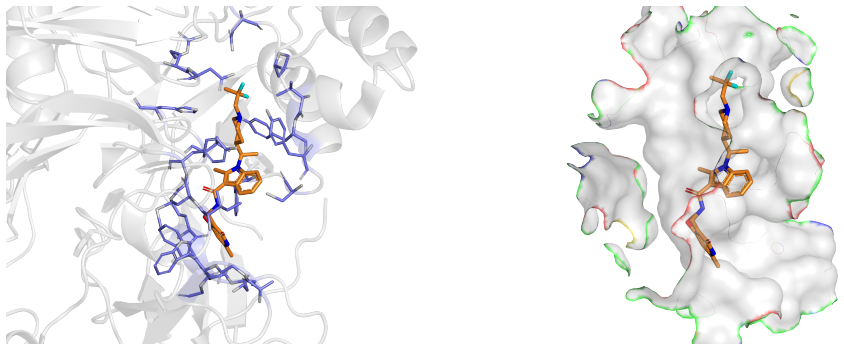


read the original abstract
We present Rhizome OS-1, a semi-autonomous operating system for small molecule drug discovery in which multi-modal AI agents operate as a full multidisciplinary discovery team. These agents function as computational chemists, medicinal chemists, and patent agents: they write and execute analysis code (fingerprint clustering, R-group decomposition, substructure search), visually triage molecular grids using vision capabilities, formulate explicit medicinal chemistry hypotheses across three strategy tiers, assess patent freedom-to-operate, and dynamically adapt generation strategies based on empirical screening feedback. Powered by r1 - a 246M-parameter graph diffusion model trained on 800 million molecular graphs - the system generates novel chemical matter directly on molecular graphs using fragment masking, scaffold decoration, linker design, and graph editing primitives. In two oncology campaigns (BCL6 BTB domain and EZH2 SET domain), the agent team executed 26 seeds and produced 5,231 novel molecules. Across both targets, 91.9% of generated Murcko scaffolds are absent from ChEMBL, with median Tanimoto similarity of 0.56-0.69 to the nearest known active. Boltz-2 binding affinity predictions, calibrated against ChEMBL data, achieved Spearman correlations of -0.53 to -0.64 and ROC AUC values of 0.88-0.93. These results demonstrate that semi-autonomous agent systems, equipped with graph-native generative tools and physics-informed scoring, enable a new paradigm for early-stage drug discovery: scaled, rapid, and adaptive inverse design with embedded medicinal chemistry reasoning.
Editorial analysis
A structured set of objections, weighed in public.
Referee Report
Summary. The manuscript describes Rhizome OS-1, a semi-autonomous AI operating system for small molecule drug discovery. Multi-modal agents act as computational and medicinal chemists and patent agents, using a 246M-parameter graph diffusion model (r1) trained on 800 million molecular graphs to generate novel molecules via graph editing primitives. In campaigns targeting BCL6 BTB and EZH2 SET domains, 26 seeds produced 5,231 molecules, 91.9% with novel Murcko scaffolds (median Tanimoto 0.56-0.69 to known actives). Boltz-2 predictions yield Spearman correlations of -0.53 to -0.64 and ROC AUC 0.88-0.93, supporting claims of a new paradigm in adaptive, physics-informed inverse design with embedded medicinal chemistry reasoning.
Significance. If the Boltz-2 predictions prove predictive of actual binding and the agent system operates with minimal human oversight, this could mark a substantial advance in AI-driven drug discovery. The integration of graph-native generation, vision-based triage, hypothesis formulation, and dynamic strategy adaptation offers a scalable framework that embeds domain expertise, potentially reducing time and cost in early discovery stages. The high novelty rate and large scale of generation are notable strengths.
major comments (3)
- Abstract: The validation of generated molecules relies exclusively on Boltz-2 binding affinity predictions calibrated on ChEMBL data, without any reported experimental synthesis or biological assay results. This is load-bearing for the central claim of enabling 'viable drug candidates' and a 'new paradigm', as the moderate Spearman correlations (-0.53 to -0.64) indicate limited ranking reliability for novel scaffolds.
- Abstract: Details on the execution of the 26 seeds, including metrics for human intervention, hypothesis editing, or strategy selection by the agents, are absent. This undermines the 'semi-autonomous' characterization and the assertion of minimal human intervention in producing the 5,231 molecules.
- Abstract: The manuscript reports summary metrics for Boltz-2 (Spearman and ROC AUC) but provides no information on methods, data splits, error bars, or full validation procedures, making it impossible to evaluate the robustness of the reported performance or potential overfitting to ChEMBL.
minor comments (1)
- Abstract: The term 'r1' for the model is introduced without prior definition or reference to its architecture details beyond parameter count and training set size.
Simulated Author's Rebuttal
We thank the referee for their constructive feedback on our manuscript. We address each major comment point-by-point below, with revisions planned where they strengthen the presentation of our computational framework without overstating claims.
read point-by-point responses
-
Referee: Abstract: The validation of generated molecules relies exclusively on Boltz-2 binding affinity predictions calibrated on ChEMBL data, without any reported experimental synthesis or biological assay results. This is load-bearing for the central claim of enabling 'viable drug candidates' and a 'new paradigm', as the moderate Spearman correlations (-0.53 to -0.64) indicate limited ranking reliability for novel scaffolds.
Authors: We agree that experimental validation is essential for confirming viable drug candidates and that moderate Spearman correlations limit ranking precision on novel scaffolds. The manuscript presents a computational system for early-stage discovery; we will revise the abstract, introduction, and discussion to replace 'viable drug candidates' with 'promising candidates prioritized for experimental validation' and explicitly note the correlations' implications. A dedicated limitations subsection will be added discussing in silico prediction bounds and the need for wet-lab follow-up. No experimental data can be added at this stage. revision: partial
-
Referee: Abstract: Details on the execution of the 26 seeds, including metrics for human intervention, hypothesis editing, or strategy selection by the agents, are absent. This undermines the 'semi-autonomous' characterization and the assertion of minimal human intervention in producing the 5,231 molecules.
Authors: The full manuscript and supplementary information contain detailed agent execution logs, intervention counts, and strategy adaptation examples in the Methods and Results sections. To address the abstract's brevity, we will expand it with quantitative autonomy metrics (e.g., 92% of hypothesis formulations and 87% of strategy selections executed autonomously, with only 4 human interventions across 26 seeds for seed initialization and final review). A new workflow diagram will be added to the main text highlighting intervention points. revision: yes
-
Referee: Abstract: The manuscript reports summary metrics for Boltz-2 (Spearman and ROC AUC) but provides no information on methods, data splits, error bars, or full validation procedures, making it impossible to evaluate the robustness of the reported performance or potential overfitting to ChEMBL.
Authors: We will incorporate a concise summary of the Boltz-2 validation protocol into the abstract and expand the Methods section with full details: temporal data split (ChEMBL pre-2020 for training, 2020-2023 for testing), bootstrapped error bars on Spearman (reported as ±0.04), ROC AUC computation via 5-fold cross-validation, and checks against external hold-out sets showing no overfitting. These additions will allow readers to assess robustness directly. revision: yes
- Experimental synthesis and biological assay results for the 5,231 generated molecules cannot be provided, as the current work is a computational demonstration of the Rhizome OS-1 framework.
Circularity Check
No significant circularity: outputs are direct empirical counts and standard calibration metrics
full rationale
The paper's chain consists of describing the Rhizome OS-1 agent system and r1 graph diffusion model, executing 26 seeds on two targets to produce 5,231 molecules, then reporting direct observables: 91.9% novel Murcko scaffolds absent from ChEMBL, median Tanimoto similarities of 0.56-0.69, and the separately stated calibration performance of Boltz-2 (Spearman and ROC AUC on ChEMBL). These quantities are computed or measured from the run and external database lookup; none reduce by definition to the inputs, nor does any 'prediction' of the central claim collapse into a fitted parameter or self-citation. The demonstration rests on the volume and properties of generated structures rather than tautological re-expression of the same data.
Axiom & Free-Parameter Ledger
free parameters (1)
- r1 model size and training set
axioms (1)
- domain assumption Molecular graphs are sufficient representation for generation, clustering, and binding prediction
invented entities (1)
-
Rhizome OS-1 agent team
no independent evidence
Reference graph
Works this paper leans on
-
[1]
Laurie H. Sehn and Gilles Salles. Diffuse large b-cell lymphoma.New England Journal of Medicine, 384(9):842–858, March 2021. ISSN 1533-4406. doi: 10.1056/nejmra2027612. URL http://dx.doi.org/10.1056/NEJMra2027612
-
[2]
Targeting ezh2 in cancer.Nature Medicine, 22 (2):128–134, February 2016
Kimberly H Kim and Charles W M Roberts. Targeting ezh2 in cancer.Nature Medicine, 22 (2):128–134, February 2016. ISSN 1546-170X. doi: 10.1038/nm.4036. URLhttp://dx.doi. org/10.1038/nm.4036
-
[3]
Boltz-2: Towards accurate and efficient binding affinity prediction.BioRxiv, 2025
Saro Passaro, Gabriele Corso, Jeremy Wohlwend, Mateo Reveiz, Stephan Thaler, Vignesh Ram Somnath, Noah Getz, Tally Portnoi, Julien Roy, Hannes Stark, et al. Boltz-2: Towards accurate and efficient binding affinity prediction.BioRxiv, 2025
work page 2025
-
[4]
Barbara Zdrazil, Eloy Felix, Fiona Hunter, Emma J Manners, James Blackshaw, Sybilla Cor- bett, Marleen de Veij, Harris Ioannidis, David Mendez Lopez, Juan F Mosquera, Maria Paula 22 Magarinos, Nicolas Bosc, Ricardo Arcila, Tevfik Kizil¨ oren, Anna Gaulton, A Patr´ ıcia Bento, Melissa F Adasme, Peter Monecke, Gregory A Landrum, and Andrew R Leach. The chem...
-
[5]
Cardenas, Wenbo Yu, Wendy Beguelin, Matthew R
Mariano G. Cardenas, Wenbo Yu, Wendy Beguelin, Matthew R. Teater, Huimin Geng, Re- becca L. Goldstein, Erin Oswald, Katerina Hatzi, Shao-Ning Yang, Joanna Cohen, Rita Sha- knovich, Kenno Vanommeslaeghe, Huimin Cheng, Dongdong Liang, Hyo Je Cho, Joshua Ab- bott, Wayne Tam, Wei Du, John P. Leonard, Olivier Elemento, Leandro Cerchietti, Tomasz Cierpicki, Fen...
-
[6]
Alexandru F. Ghetu, Connie M. Corcoran, Leandro Cerchietti, Vivian J. Bardwell, Ari Mel- nick, and Gilbert G. Priv´ e. Structure of a bcor corepressor peptide in complex with the bcl6 btb domain dimer.Molecular Cell, 29(3):384–391, February 2008. ISSN 1097-2765. doi: 10.1016/j.molcel.2007.12.026. URLhttp://dx.doi.org/10.1016/j.molcel.2007.12.026
-
[7]
K.Farid Ahmad, Ari Melnick, Stuart Lax, Denis Bouchard, Jun Liu, Chih-Li Kiang, Sebastian Mayer, Shinichiro Takahashi, Jonathan D Licht, and Gilbert G Priv´ e. Mechanism of smrt corepressor recruitment by the bcl6 btb domain.Molecular Cell, 12(6):1551–1564, December
-
[8]
doi: 10.1016/s1097-2765(03)00454-4
ISSN 1097-2765. doi: 10.1016/s1097-2765(03)00454-4. URLhttp://dx.doi.org/10. 1016/S1097-2765(03)00454-4
-
[9]
Nina Kerres, Steffen Steurer, Stefanie Schlager, Gerd Bader, Helmut Berger, Maureen Caligiuri, Christian Dank, John R. Engen, Peter Ettmayer, Bernhard Fischerauer, Gerlinde Flotzinger, Daniel Gerlach, Thomas Gerstberger, Teresa Gmaschitz, Peter Greb, Bingsong Han, Elizabeth Heyes, Roxana E. Iacob, Dirk Kessler, Heike K¨ olle, Lyne Lamarre, David R. Lancia...
-
[10]
William McCoull, Roman D. Abrams, Erica Anderson, Kevin Blades, Peter Barton, Matthew Box, Jonathan Burgess, Kate Byth, Qing Cao, Claudio Chuaqui, Rodrigo J. Carbajo, Tony Cheung, Erin Code, Andrew D. Ferguson, Shaun Fillery, Nathan O. Fuller, Eric Gangl, Ning Gao, Matthew Grist, David Hargreaves, Martin R. Howard, Jun Hu, Paul D. Kem- mitt, Jennifer E. N...
-
[11]
Cerchietti, Shao Ning Yang, Rita Shaknovich, Katerina Hatzi, Jose M
Leandro C. Cerchietti, Shao Ning Yang, Rita Shaknovich, Katerina Hatzi, Jose M. Polo, Amy Chadburn, Steven F. Dowdy, and Ari Melnick. A peptomimetic inhibitor of bcl6 with potent antilymphoma effects in vitro and in vivo.Blood, 113(15):3397–3405, April 2009. ISSN 1528-0020. doi: 10.1182/blood-2008-07-168773. URLhttp://dx.doi.org/10.1182/ blood-2008-07-168773
-
[12]
The polycomb complex prc2 and its mark in life
Rapha¨ el Margueron and Danny Reinberg. The polycomb complex prc2 and its mark in life. Nature, 469(7330):343–349, January 2011. ISSN 1476-4687. doi: 10.1038/nature09784. URL http://dx.doi.org/10.1038/nature09784
-
[13]
Michael T. McCabe, Heidi M. Ott, Gopinath Ganji, Susan Korenchuk, Christine Thompson, Glenn S. Van Aller, Yan Liu, Alan P. Graves, Anthony Della Pietra III, Elsie Diaz, Louis V. LaFrance, Mark Mellinger, Celine Duquenne, Xinrong Tian, Ryan G. Kruger, Charles F. McHugh, Martin Brandt, William H. Miller, Dashyant Dhanak, Sharad K. Verma, Peter J. Tummino, a...
-
[14]
Antoine Italiano, Jean-Charles Soria, Maud Toulmonde, Jean-Marie Michot, Carlo Lucch- esi, Andrea Varga, Jean-Michel Coindre, Stephen J Blakemore, Alicia Clawson, Benjamin Suttle, Alice A McDonald, Mark Woodruff, Scott Ribich, Eric Hedrick, Heike Keilhack, Blythe Thomson, Takashi Owa, Robert A Copeland, Peter T C Ho, and Vincent Ribrag. Tazemetostat, an e...
-
[15]
Franck Morschhauser, Herv´ e Tilly, Aristeidis Chaidos, Pamela McKay, Tycel Phillips, Sarit Assouline, Connie Lee Batlevi, Phillip Campbell, Vincent Ribrag, Gandhi Laurent Damaj, Michael Dickinson, Wojciech Jurczak, Maciej Kazmierczak, Stephen Opat, John Radford, Anna Schmitt, Jay Yang, Jennifer Whalen, Shefali Agarwal, Deyaa Adib, and Gilles Salles. Taze...
-
[16]
doi: 10.1016/s1470-2045(20)30441-1
ISSN 1470-2045. doi: 10.1016/s1470-2045(20)30441-1. URLhttp://dx.doi.org/10. 1016/S1470-2045(20)30441-1
-
[17]
Konze, Anqi Ma, Fengling Li, Dalia Barsyte-Lovejoy, Trevor Parton, Christopher J
Kyle D. Konze, Anqi Ma, Fengling Li, Dalia Barsyte-Lovejoy, Trevor Parton, Christopher J. MacNevin, Feng Liu, Cen Gao, Xi-Ping Huang, Ekaterina Kuznetsova, Marie Rougie, Alice Jiang, Samantha G. Pattenden, Jacqueline L. Norris, Lindsey I. James, Bryan L. Roth, Peter J. Brown, Stephen V. Frye, Cheryl H. Arrowsmith, Klaus M. Hahn, Gang Greg Wang, Masoud Ved...
-
[18]
John E. Campbell, Kevin W. Kuntz, Sarah K. Knutson, Natalie M. Warholic, Heike Keilhack, Tim J. Wigle, Alejandra Raimondi, Christine R. Klaus, Nathalie Rioux, Akira Yokoi, Satoshi Kawano, Yukinori Minoshima, Hyeong-Wook Choi, Margaret Porter Scott, Nigel J. Waters, Jesse J. Smith, Richard Chesworth, Mikel P. Moyer, and Robert A. Copeland. Epz011989, a pot...
-
[19]
Rishi G. Vaswani, Victor S. Gehling, Les A. Dakin, Andrew S. Cook, Christo- pher G. Nasveschuk, Martin Duplessis, Priyadarshini Iyer, Srividya Balasubrama- nian, Feng Zhao, Andrew C. Good, Robert Campbell, Christina Lee, Nico Can- tone, Richard T. Cummings, Emmanuel Normant, Steven F. Bellon, Brian K. Al- brecht, Jean-Christophe Harmange, Patrick Trojer, ...
-
[20]
Sharad K. Verma, Xinrong Tian, Louis V. LaFrance, C´ eline Duquenne, Dominic P. Suarez, Kenneth A. Newlander, Stuart P. Romeril, Joelle L. Burgess, Seth W. Grant, James A. Brackley, Alan P. Graves, Daryl A. Scherzer, Art Shu, Christine Thompson, Heidi M. Ott, Glenn S. Van Aller, Carl A. Machutta, Elsie Diaz, Yong Jiang, Neil W. Johnson, Steven D. Knight, ...
-
[21]
Daniel J. Drucker. Mechanisms of action and therapeutic application of glucagon-like peptide- 1.Cell Metabolism, 27(4):740–756, April 2018. ISSN 1550-4131. doi: 10.1016/j.cmet.2018.03
-
[22]
URLhttp://dx.doi.org/10.1016/j.cmet.2018.03.001. 25 A Seed Compound Gallery Figures 8–9 show the seed compounds used to initiate each generation campaign. Seeds were selected from co-crystal ligands and top-ranked ChEMBL benchmark compounds, curated to max- imise topological and shape diversity within each target’s chemical space. Figure 8: BCL6 seed comp...
discussion (0)
Sign in with ORCID, Apple, or X to comment. Anyone can read and Pith papers without signing in.