A Dual-Positive Monotone Parameterization for Multi-Segment Bids and a Validity Assessment Framework for Reinforcement Learning Agent-based Simulation of Electricity Markets
Pith reviewed 2026-05-10 15:52 UTC · model grok-4.3
The pith
A dual-positive monotone parameterization lets RL agents output feasible multi-segment bids without breaking gradient flow or invertibility in electricity market simulations.
A machine-rendered reading of the paper's core claim, the machinery that carries it, and where it could break.
Core claim
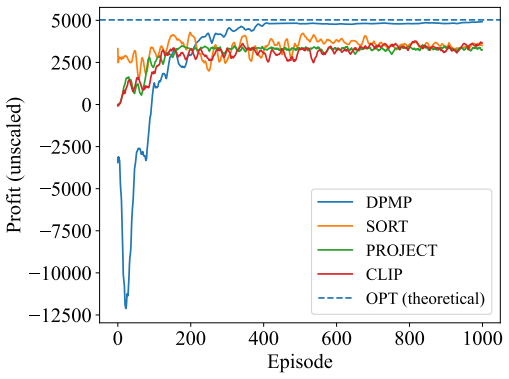
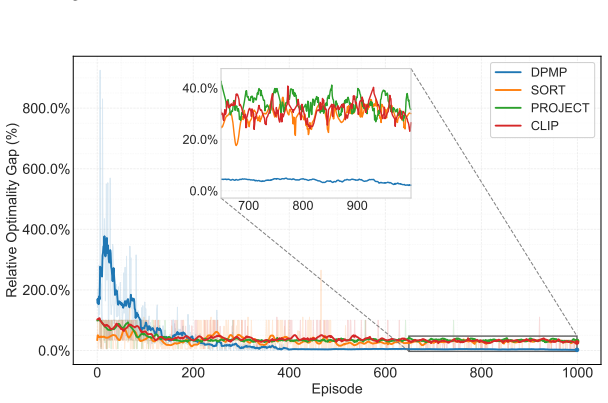
The central claim is that the dual-positive monotone parameterization ensures continuous differentiability, injectivity, and invertibility at boundaries or kinks for multi-segment stepwise bids, thereby preventing gradient distortion and spurious convergence in RL-ABS, while the validity assessment framework rigorously measures the distance between simulation outcomes and Nash equilibrium beyond training-curve convergence.
What carries the argument
The dual-positive monotone parameterization, a mapping that converts policy-network actions into monotone bounded multi-segment bids while retaining continuous differentiability, injectivity, and invertibility at kinks and boundaries.
Load-bearing premise
The parameterization can be inserted into standard RL policy networks without creating new optimization instabilities or producing infeasible bids, and the distance metric accurately reflects true equilibrium deviation without extra assumptions on agent rationality.
What would settle it
Train agents on a small market instance whose analytical Nash equilibrium is known in advance; measure whether bid curves generated by the new parameterization reach that equilibrium with stable gradients at segment boundaries while post-processing baselines exhibit vanishing gradients or premature plateaus.
Figures




read the original abstract
Reinforcement learning agent-based simulation (RL-ABS) has become an important tool for electricity market mechanism analysis and evaluation. In the modeling of monotone, bounded, multi-segment stepwise bids, existing methods typically let the policy network first output an unconstrained action and then convert it into a feasible bid curve satisfying monotonicity and boundedness through post-processing mappings such as sorting, clipping, or projection. However, such post-processing mappings often fail to satisfy continuous differentiability, injectivity, and invertibility at boundaries or kinks, thereby causing gradient distortion and leading to spurious convergence in simulation results. Meanwhile, most existing studies conduct mechanism analysis and evaluation mainly on the basis of training-curve convergence, without rigorously assessing the distance between the simulation outcomes and Nash equilibrium, which severely undermines the credibility of the results. To address these issues, this paper proposes...
Editorial analysis
A structured set of objections, weighed in public.
Referee Report
Summary. The paper identifies limitations in existing post-processing mappings (sorting, clipping, projection) for enforcing monotonicity and boundedness on multi-segment stepwise bids in RL-ABS for electricity markets; these mappings often violate continuous differentiability, injectivity, and boundary invertibility, distorting gradients and producing spurious convergence. It proposes a dual-positive monotone parameterization that directly parameterizes feasible bid curves while preserving the required analytic properties, together with a validity assessment framework that quantifies the distance of learned outcomes to Nash equilibrium rather than relying solely on training-curve convergence.
Significance. If the parameterization indeed supplies continuous differentiability, injectivity, and boundary invertibility without introducing new optimization instabilities, and if the validity metric reliably reflects equilibrium deviation, the work would strengthen the credibility of RL-ABS studies in electricity-market mechanism design. The constructions appear internally consistent under the paper's own definitions, with no hidden circularities or contradictory assumptions.
major comments (2)
- [§3.1–3.3] §3.1–3.3: the dual-positive parameterization is shown to satisfy the headline analytic properties by construction, yet the manuscript does not provide an explicit verification (e.g., derivative calculation or injectivity proof) for the multi-segment case at interior kinks; a short lemma or numerical check would make the gradient-preservation claim load-bearing rather than asserted.
- [§4.2] §4.2: the validity framework defines a Nash-distance metric, but the paper does not demonstrate that this metric remains informative when agents employ the new parameterization; an ablation comparing distance values before and after parameterization would confirm that the framework is not merely re-labeling training convergence.
minor comments (2)
- [§2–3] Notation for bid-segment indices and positivity constraints is introduced in §2 but reused without re-definition in §3; a single consolidated notation table would improve readability.
- [Abstract] The abstract states the problems clearly but supplies no equation numbers or key definitions; moving one illustrative equation from §3 into the abstract would help readers immediately grasp the parameterization.
Simulated Author's Rebuttal
We thank the referee for the constructive feedback and the recommendation of minor revision. We address each major comment below and will incorporate the suggested clarifications and additions into the revised manuscript.
read point-by-point responses
-
Referee: [§3.1–3.3] §3.1–3.3: the dual-positive parameterization is shown to satisfy the headline analytic properties by construction, yet the manuscript does not provide an explicit verification (e.g., derivative calculation or injectivity proof) for the multi-segment case at interior kinks; a short lemma or numerical check would make the gradient-preservation claim load-bearing rather than asserted.
Authors: We agree that an explicit verification strengthens the claim. In the revised manuscript we will add a short lemma establishing continuous differentiability and injectivity at interior kinks for the multi-segment case, together with a brief numerical check confirming that gradients are preserved through the parameterization. revision: yes
-
Referee: [§4.2] §4.2: the validity framework defines a Nash-distance metric, but the paper does not demonstrate that this metric remains informative when agents employ the new parameterization; an ablation comparing distance values before and after parameterization would confirm that the framework is not merely re-labeling training convergence.
Authors: We accept the suggestion. The revised version will include an ablation study that reports Nash-distance values both before and after applying the dual-positive parameterization, thereby showing that the metric continues to reflect equilibrium deviation rather than merely tracking training convergence. revision: yes
Circularity Check
No significant circularity in derivation chain
full rationale
The paper proposes a dual-positive monotone parameterization explicitly constructed to enforce continuous differentiability, injectivity, and boundary invertibility, along with a separate validity assessment framework for Nash equilibrium distance. These are presented as novel definitions and metrics addressing gaps in prior post-processing methods, without any load-bearing steps that reduce the claimed properties or predictions back to fitted inputs, self-citations, or ansatzes by construction. The abstract and description frame the contributions as independent solutions rather than derivations that loop to their own premises. No equations or self-referential chains are indicated that would trigger the enumerated circularity patterns.
Axiom & Free-Parameter Ledger
Reference graph
Works this paper leans on
-
[1]
Y . Song, S. Huang, L. Chen, S. Cui, S. Mei, Optimal bidding framework for integrated renewable-storage plant in high-dimensional real-time markets, Sustainability 17 (18) (2025) 8159
work page 2025
-
[2]
S. Glismann, Ancillary services acquisition model: Considering market interactions in policy design, Applied Energy 304 (2021) 117697
work page 2021
-
[3]
P . Ringler, D. Keles, W. Fichtner, Agent-based modelling and simulation of smart electricity grids and markets–a literature review, Renewable and Sustainable Energy Reviews 57 (2016) 205–215. 34
work page 2016
-
[4]
Z. Pan, Z. Jing, T. Ji, Y . Song, A multi-agent simulation model considering the bounded rationality of market participants: an example of gencos participation in the electricity spot market, in: International Workshop on Multi-Agent Systems and Agent-Based Simulation, Springer, 2023, pp. 129–145
work page 2023
-
[5]
A. Sridhar, S. Honkapuro, F. Ruiz, J. Stoklasa, S. Annala, A. Wol ff, Residential consumer enrollment in demand response: An agent based approach, Applied Energy 374 (2024) 123988
work page 2024
-
[6]
M. V entosa, A. Baıllo, A. Ramos, M. Rivier, Electricity market modeling trends, Energy policy 33 (7) (2005) 897–913
work page 2005
- [7]
-
[8]
B. F. Hobbs, C. B. Metzler, J.-S. Pang, Strategic gaming analysis for electric power systems: An mpec approach, IEEE transactions on power systems 15 (2) (2000) 638–645
work page 2000
-
[9]
M. Shafie-Khah, J. P . Catalão, A stochastic multi-layer agent-based model to study electricity market participants behavior, IEEE Transactions on Power Systems 30 (2) (2014) 867–881
work page 2014
-
[10]
C. Fraunholz, E. Kraft, D. Keles, W. Fichtner, Advanced price forecasting in agent-based electricity market simulation, Applied Energy 290 (2021) 116688
work page 2021
-
[11]
V . Nanduri, T. K. Das, A reinforcement learning model to assess market power under auction-based energy pricing, IEEE transactions on Power Systems 22 (1) (2007) 85–95
work page 2007
-
[12]
M. Rahimiyan, H. R. Mashhadi, An adaptive q-learning algorithm developed for agent-based computational modeling of electricity market, IEEE Transactions on Systems, Man, and Cybernetics, Part C (Applications and Reviews) 40 (5) (2010) 547–556
work page 2010
-
[13]
L. Y u, P . Wang, Y . Zhang, N. Li, R. Cherkaoui, A reinforcement-probability bayesian approach for strategic bidding and market clearing for renewable energy sources with uncertainty, Journal of Cleaner Production 429 (2023) 139403
work page 2023
- [14]
-
[15]
K. V . Chandrakala, P . Kiran, Multi-agent based modeling and learning approach for intelligent day-ahead bidding strategy in wholesale electricity market, Expert Systems with Applications 233 (2023) 121014
work page 2023
-
[16]
P . Rokhforoz, M. Montazeri, O. Fink, Multi-agent reinforcement learning with graph convolutional neural net- works for optimal bidding strategies of generation units in electricity markets, Expert Systems with Applications 225 (2023) 120010
work page 2023
-
[17]
B. Yin, H. Weng, Y . Hu, J. Xi, P . Ding, J. Liu, Multi-agent deep reinforcement learning for simulating centralized double-sided auction electricity market, IEEE Transactions on Power Systems 40 (1) (2024) 518–529
work page 2024
-
[18]
H. Weng, Y . Hu, M. Liang, J. Xi, B. Yin, Optimizing bidding strategy in electricity market based on graph convolutional neural network and deep reinforcement learning, Applied Energy 380 (2025) 124978
work page 2025
-
[19]
J. Wu, J. Wang, X. Kong, Intelligent strategic bidding in competitive electricity markets using multi-agent sim- ulation and deep reinforcement learning, Applied Soft Computing 152 (2024) 111235
work page 2024
- [20]
- [21]
-
[22]
Z. Pan, Z. Jing, Decision-making and cost models of generation company agents for supporting future electricity market mechanism design based on agent-based simulation, Applied Energy 391 (2025) 125881
work page 2025
-
[23]
R. S. Sutton, A. G. Barto, et al., Reinforcement learning: An introduction, V ol. 1, MIT press Cambridge, 1998
work page 1998
-
[24]
Zhao, Mathematical foundations of reinforcement learning, Springer Nature, 2025
S. Zhao, Mathematical foundations of reinforcement learning, Springer Nature, 2025
work page 2025
-
[25]
Manual, 11: Energy and ancillary services market operations revision: 122 (2021)
P . Manual, 11: Energy and ancillary services market operations revision: 122 (2021)
work page 2021
-
[26]
N. Löhndorf, D. Wozabal, S. Minner, Optimizing trading decisions for hydro storage systems using approximate dual dynamic programming, Operations Research 61 (4) (2013) 810–823
work page 2013
-
[27]
Y . Fujita, S.-i. Maeda, Clipped action policy gradient, in: International conference on machine learning, PMLR, 2018, pp. 1597–1606
work page 2018
-
[28]
L. Y u, P . Wang, Z. Chen, D. Li, N. Li, R. Cherkaoui, Finding nash equilibrium based on reinforcement learning for bidding strategy and distributed algorithm for iso in imperfect electricity market, Applied Energy 350 (2023) 121704
work page 2023
-
[29]
Openspiel: A frame- work for reinforcement learning in games.arXiv preprint arXiv:1908.09453,
M. Lanctot, E. Lockhart, J.-B. Lespiau, V . Zambaldi, S. Upadhyay, J. Pérolat, S. Srinivasan, F. Timbers, K. Tuyls, S. Omidshafiei, et al., Openspiel: A framework for reinforcement learning in games, arXiv preprint arXiv:1908.09453 (2019)
-
[30]
J. De Leeuw, K. Hornik, P . Mair, Isotone optimization in r: pool-adjacent-violators algorithm (pava) and active set methods, Journal of statistical software 32 (2010) 1–24. Appendix A. A.1 Proof of Necessary Condition 1 (NC1) for Post-Processing Operations Necessary Condition 1 (NC1): The post-processing mapping h should satisfy 8a0, Ph(x) = a0j s = 0 Pr...
work page 2010
discussion (0)
Sign in with ORCID, Apple, or X to comment. Anyone can read and Pith papers without signing in.