Topological charge of fermions and Landau theory of Fermi liquid
Pith reviewed 2026-05-10 16:06 UTC · model grok-4.3
The pith
The electric charge of a fermion is identical to its topological charge.
A machine-rendered reading of the paper's core claim, the machinery that carries it, and where it could break.
Core claim
In fermionic liquids the Fermi surface is topologically stable. This stability comes from a topological invariant in the Green's function. The paper shows that this invariant is a property of the fermionic particle itself, so the particle charge (for example the electric charge of an electron) equals the topological charge of the fermion. Consequently the conservation of fermionic charge is equivalent to the conservation of topological charge. The same framework is applied to the Landau theory of Fermi liquids, to non-Fermi liquids, and to crystalline insulators in connection with the Luttinger theorem.
What carries the argument
The topological invariant of the Green's function, which remains nonzero at the Fermi surface and encodes the winding or pole residue that counts the enclosed states.
If this is right
- The Landau Fermi liquid exists under the condition that the Green's function has a pole with nonzero residue Z.
- Non-Landau Fermi liquids such as the Luttinger liquid are still described by the same topological invariant.
- Conservation of particle charge follows directly from conservation of the topological charge.
- The Luttinger theorem for crystalline insulators is a direct consequence of this topological charge.
Where Pith is reading between the lines
- This equivalence implies that charge conservation remains protected even when well-defined quasiparticles cease to exist.
- The topological charge supplies a unified counting rule that connects metallic Fermi surfaces to the gapped states of insulators.
Load-bearing premise
That the topological invariant obtained from the Green's function is numerically and physically identical to the electric charge of the fermion, without extra coefficients or dependence on interaction strength or lattice details.
What would settle it
An experimental measurement, such as quantum oscillations or ARPES, showing that the volume enclosed by a Fermi surface does not match the expected particle density given by the topological invariant.
Figures


read the original abstract
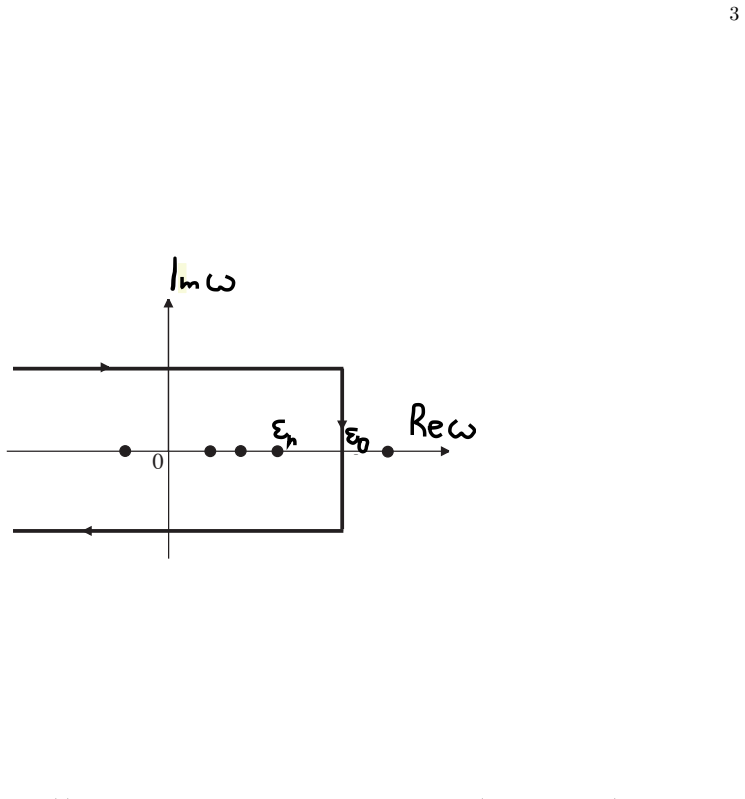
In the fermionic liquids, the Fermi surface is topologically stable,\cite{Volovik2003} which is at the origin of the applicability of the Landau theory of Fermi liquid (LFL). The LFL exists under special condition, when the Green's function has a pole with nonzero residue $Z$. Otherwise one has non-Landau Fermi liquid (NLFL), such as Luttinger liquid, which is described by the same topological invariant. It appears that in general this topological invariant is the property of the fermionic particle, i.e. the particle charge (or the electric charge of electron) is equivalent to the topological charge of the fermion. The conservation of the fermionic charge is equivalent to the conservation of the topological charge. We consider the application of this topological charge to the Landau theory of Fermi liquids. We also consider the application to non-Fermi liquids and crystalline insulators in relation to the Luttinger theorem.
Editorial analysis
A structured set of objections, weighed in public.
Referee Report
Summary. The manuscript claims that the topological invariant of the Fermi surface (extracted from the Green's function pole structure) is identical to the conserved U(1) charge of the fermion. This identification is said to explain the stability of Landau Fermi liquid theory when the residue Z is nonzero, to apply equally to non-Landau Fermi liquids such as the Luttinger liquid, and to extend to crystalline insulators via the Luttinger theorem. Conservation of the topological charge is asserted to be equivalent to conservation of electric charge.
Significance. If the asserted numerical and physical identity between the topological winding number (or pole residue) and the electric charge holds without renormalization factors or additional assumptions, the work would supply a topological underpinning for both the applicability of Landau theory and the Luttinger sum rule in interacting systems. It would also unify the description of LFL and NLFL states under a single invariant.
major comments (2)
- [Abstract] Abstract: The central claim that 'the particle charge ... is equivalent to the topological charge of the fermion' is introduced with the qualifier 'it appears that' and is not accompanied by an explicit operator mapping or step-by-step calculation showing that the topological invariant N_top extracted from G(k,ω) equals the conserved charge Q exactly (rather than N_top = Z Q or a lattice-dependent multiple). This equivalence is load-bearing for all subsequent applications to LFL, NLFL, and the Luttinger theorem.
- The manuscript states that the same topological invariant describes both LFL (pole with Z ≠ 0) and NLFL states, yet provides no derivation demonstrating that the invariant remains numerically equal to the charge when the quasiparticle residue vanishes or when interactions are strong. Without this step, the extension to non-Fermi liquids rests on identification rather than equality.
minor comments (1)
- [Abstract] The abstract cites Volovik2003 but does not indicate which specific result from that reference is being used to define the topological invariant in the interacting case.
Simulated Author's Rebuttal
We thank the referee for the careful reading and for highlighting the need for greater rigor in establishing the central equivalence. We address the two major comments point by point below.
read point-by-point responses
-
Referee: [Abstract] Abstract: The central claim that 'the particle charge ... is equivalent to the topological charge of the fermion' is introduced with the qualifier 'it appears that' and is not accompanied by an explicit operator mapping or step-by-step calculation showing that the topological invariant N_top extracted from G(k,ω) equals the conserved charge Q exactly (rather than N_top = Z Q or a lattice-dependent multiple). This equivalence is load-bearing for all subsequent applications to LFL, NLFL, and the Luttinger theorem.
Authors: We agree that the abstract phrasing is tentative and that an explicit demonstration is required. In the revised manuscript we will insert a dedicated subsection (immediately following the definition of N_top) that derives the equality N_top = Q from the analytic continuation of the Green's function and the Ward identity associated with U(1) particle-number conservation. The derivation shows that the winding number around the singularity equals the conserved charge without a residue factor Z or lattice-dependent prefactor, because the phase accumulation is fixed by the residue theorem applied to the closed contour in the complex frequency plane. This step will be placed before the applications to LFL, NLFL and the Luttinger theorem. revision: yes
-
Referee: The manuscript states that the same topological invariant describes both LFL (pole with Z ≠ 0) and NLFL states, yet provides no derivation demonstrating that the invariant remains numerically equal to the charge when the quasiparticle residue vanishes or when interactions are strong. Without this step, the extension to non-Fermi liquids rests on identification rather than equality.
Authors: The topological invariant is defined via the Green's function G(k,ω) for arbitrary interaction strength; its value is the winding number of arg G around the Fermi surface in the (k,ω) plane. When Z = 0 the singularity changes from a simple pole to a branch point, yet the contour integral that extracts the winding number remains unchanged because it depends only on the existence of the singularity and the asymptotic behavior at infinity, both of which are protected by particle-number conservation. We will add an explicit calculation for the Luttinger-liquid case (using the known form of G) that confirms N_top = 1 per spin per branch, identical to the conserved charge. This derivation will be inserted in the section discussing NLFL states. revision: yes
Circularity Check
No significant circularity detected
full rationale
The paper builds its claims on the topological stability of the Fermi surface (cited to Volovik2003) and the standard pole/winding structure of the Green's function to identify the topological invariant with fermionic charge and conservation laws. This identification is presented as an observation ('it appears that') rather than a closed mathematical reduction or fitted prediction. No equations are shown to equal their inputs by construction, no parameters are fitted then relabeled as predictions, and the applications to LFL/NLFL/Luttinger theorem follow from the premises without self-referential loops or load-bearing self-citation chains that lack external content. The derivation remains self-contained against the definitions of Green's functions and U(1) conservation.
Axiom & Free-Parameter Ledger
axioms (2)
- domain assumption The Fermi surface is topologically stable, as established in Volovik2003
- domain assumption A pole in the Green's function with nonzero residue Z defines the Landau Fermi liquid regime
Reference graph
Works this paper leans on
-
[1]
Volovik, The Universe in a Helium Droplet , Clarendon Press, Oxford (2003)
G.E. Volovik, The Universe in a Helium Droplet , Clarendon Press, Oxford (2003)
work page 2003
-
[2]
J. Nissinen, T.T. Heikkil\"a and G.E. Volovik, Topological polarization, dual invariants, and surface flat band in crystalline insulators, Phys. Rev. B 103 , 245115 (2021), arXiv:2008.02158
-
[3]
J. Nissinen and G.E. Volovik, Elasticity tetrads, mixed axial-gravitational anomalies, and (3+1)-d quantum Hall effect, Physical Review Research 1 , 023007 (2019), arXiv:1812.03175
-
[4]
J.M. Luttinger and J.C. Ward, Ground-State Energy of a Many-Fermion System. II. Phys. Rev. 118 , 1417--1427 (1960)
work page 1960
-
[5]
J.M. Luttinger, Fermi Surface and Some Simple Equilibrium Properties of a System of Interacting Fermions, Phys. Rev. 119 , 1153 (1960)
work page 1960
-
[6]
I.E. Dzyaloshinskii, Some consequences of the Luttinger theorem: The Luttinger surfaces in non-Fermi liquids and Mott insulators, Phys. Rev. B 68 , 085113 (2003)
work page 2003
-
[7]
Breakdown of the Luttinger sum rule within the Mott-Hubbard insulator
Behnam Farid and A.M. Tsvelik, Comment on "Breakdown of the Luttinger sum rule within the Mott-Hubbard insulator", by J. Kokalj and P. Prelovsek, Phys. Rev. B 78 , 153103 (2008), arXiv:0909.2886
-
[8]
Violation of the Luttinger sum rule within the Hubbard model on a triangular lattice
B. Farid, Comment on “Violation of the Luttinger sum rule within the Hubbard model on a triangular lattice”, by J. Kokalj and P. Prelovsek [Eur. Phys. J. B 63 , 431 (2008)], arXiv:0909.2887
-
[9]
V.A. Khodel and V.R. Shaginyan, Superfluidity in system with fermion condensate, JETP Lett. 51 , 553 (1990)
work page 1990
-
[10]
Volovik, A new class of normal Fermi liquids, Pisma ZhETF 53 , 208--211(1991), JETP Lett
G.E. Volovik, A new class of normal Fermi liquids, Pisma ZhETF 53 , 208--211(1991), JETP Lett. 53 , 222--225 (1991)
work page 1991
-
[11]
V.T. Dolgopolov, M.Yu. Melnikov, A.A. Shashkin and S.V. Kravchenko, Band Flattening and Landau Level Merging in Strongly-Correlated Two-Dimensional Electron Systems, JETP Lett. 116 ,156 (2022)
work page 2022
- [12]
-
[13]
T. W. B. Kibble, G. Lazarides and Q. Shafi, Walls bounded by strings, Phys. Rev. D 26 , 435 (1982)
work page 1982
-
[14]
J.T. M\"akinen, V.V. Dmitriev, J. Nissinen, J. Rysti, G.E. Volovik, A.N. Yudin, K. Zhang and V.B. Eltsov, Half-quantum vortices and walls bounded by strings in the polar-distorted phases of topological superfluid ^3 He, Nat. Comm. 10 , 237 (2019), arXiv:1807.04328
-
[15]
G.E. Volovik, Composite topological objects in topological superfluids, ZhETF 158 , 17--23 (2020), JETP 131 , 11--17 (2020), arXiv:1912.05962
- [16]
-
[17]
T.T. Heikkil\"a and G.E. Volovik, Dimensional crossover in topological matter: Evolution of the multiple Dirac point in the layered system to the flat band on the surface, Pis'ma ZhETF 93 , 63--68 (2011); JETP Lett. 93 , 59--65 (2011); arXiv:1011.4185
-
[18]
S.T. Belyaev, On the nature of the first excited states of even-even spherical nuclei, JETP 12 , 968--976 (1961)
work page 1961
-
[19]
Y. Kawashima, Possible room temperature superconductivity in conductors obtained by bringing alkanes into contact with a graphite surface, AIP Adv. 3 , 052132 (2013)
work page 2013
-
[20]
Pablo Esquinazi, Tero T. Heikkila, Yury V. Lysogorskiy, Dmitrii A. Tayurskii and Grigory E. Volovik, On the superconductivity of graphite interfaces, Pis'ma ZhETF 100 , 374--378 (2014); JETP Lett. 100 , 336--339 (2014), arXiv:1407.2060
-
[21]
Y. Kawashima, Observation of the Meissner effect at room temperature in single-layer graphene brought into contact with alkanes, arXiv:1801.09376
-
[22]
Manuel Nunez-Regueiro, Thibaut Devillers, Eric Beaugnon, Armand de Marles, Thierry Crozes, Sebastien Pairis, Christopher Swale, Holger Klein, Olivier Leynaud, Abdelali Hadj-Azzem, Frederic Gay and Didier Dufeu, Magnetic field sorting of superconducting graphite particles with T_c > 400 K, arXiv:2410.18020
-
[23]
Y. Wang, T. H. Koo, R. Huang, Y. H. Ng, T. T. Lortz, T. Zhang, W. M. Chan, Y. Hou, J. Pan, S. Krämer, A. Demuer, R. Lortz, N. Wang and P. Sheng, Signature of high temperature superconductivity with giant pressure effect in networks of boron doped ultra-thin carbon nanotubes, arXiv:2509.19255
work page internal anchor Pith review Pith/arXiv arXiv
-
[24]
Vadim Ksenofontov, Vasily S. Minkov, Alexander P. Drozdov, Ulrich Pöschl and [Mikhail I. Eremets], Signs of Possible High-Temperature Superconductivity in Graphite Intercalated with Lithium-Based Alloys, arXiv:2510.03256
- [25]
-
[26]
Pickett, van Hove singularities and spectral smearing in high temperature superconducting H3S, Phys
Yundi Quan and Warren E. Pickett, van Hove singularities and spectral smearing in high temperature superconducting H3S, Phys. Rev. B 93 , 104526 (2016), arXiv:1508.04491
-
[27]
Haowei Xu, Olivia Schneble, Rafael Jaramillo, Marek Polanski and Ju Li, Prediction of ambient-pressure high-temperature superconductivity in electronically modified transition-metal hydrides, NPJ Comput Mater (2026), https://doi.org/10.1038/s41524-026-02040-x
-
[28]
Volovik, The Fermi condensate: near the saddle point and within the vortex core, JETP Lett
G.E. Volovik, The Fermi condensate: near the saddle point and within the vortex core, JETP Lett. 59 , 830 (1994)
work page 1994
-
[29]
Dmitry Yudin, Daniel Hirschmeier, Hartmut Hafermann, Olle Eriksson, Alexander I. Lichtenstein and Mikhail I. Katsnelson, Fermi condensation near van Hove singularities within the Hubbard model on the triangular lattice, Phys. Rev. Lett. 112 , 070403 (2014)
work page 2014
-
[30]
I.E. Dzyaloshinskii and G.E. Volovick, Poisson brackets in condensed matter physics, Ann. Phys. 125 , 67--97 (1980)
work page 1980
-
[31]
Sachin Vaidya, André Grossi Fonseca, Mark R. Hirsbrunner, Taylor L. Hughes and Marin Soljačić, Quantized crystalline-electromagnetic responses in insulators, Phys. Rev. Lett. 135 , 256602 (2025), arXiv:2503.09970
-
[32]
H. Sumiyoshi and S. Fujimoto, Torsional chiral magnetic effect in a Weyl semimetal with a topological defect, Phys. Rev. Lett. 116 , 166601 (2016)
work page 2016
-
[33]
Z.V. Khaidukov and M.A. Zubkov, Chiral torsional effect, JETP Lett. 108 , 670--674 (2018)
work page 2018
discussion (0)
Sign in with ORCID, Apple, or X to comment. Anyone can read and Pith papers without signing in.