Recognition: unknown
Agentic Risk-Aware Set-Based Engineering Design
Pith reviewed 2026-05-10 08:10 UTC · model grok-4.3
The pith
LLM agents apply CVaR risk thresholds to prune large sets of airfoil designs down to a small validated collection.
A machine-rendered reading of the paper's core claim, the machinery that carries it, and where it could break.
Core claim
The authors describe a set-based process in which the Analyst Agent computes sensitivity to identify influential parameters, the Design Agent produces a broad initial collection, and a risk step discards members whose conditional expected shortfall in lift coefficient exceeds an acceptable level, leaving only a reduced set that is then checked with high-fidelity flow simulations.
What carries the argument
Conditional Value-at-Risk (CVaR) applied to the distribution of lift coefficients across uncertain operating conditions, used as a threshold to eliminate designs with high tail risk of missing the performance target.
If this is right
- The final candidate set carries an explicit upper bound on the expected performance shortfall.
- Computational effort for detailed simulations is concentrated on only the low-risk survivors.
- The human manager receives both the short list and quantitative risk scores for each remaining design.
- Heuristics derived from sensitivity analysis become reusable rules for subsequent design rounds.
Where Pith is reading between the lines
- The same agent structure and CVaR filter could be tested on other performance metrics such as drag or structural margin.
- If the agents prove reliable, the human oversight step could be reduced to final approval rather than continuous guidance.
- The workflow offers a concrete test bed for measuring how often LLM-generated heuristics remain valid when the design space changes.
Load-bearing premise
The LLM agents will generate accurate sensitivity results, valid design heuristics, and correct risk rankings without introducing systematic engineering mistakes or inconsistent outputs.
What would settle it
Execute the full workflow on a family of airfoils whose lift performance under the same uncertain conditions has already been measured by independent high-fidelity runs; the pruned final set should contain only designs whose observed failure probability lies below the CVaR threshold.
Figures





read the original abstract
This paper introduces a multi-agent framework guided by Large Language Models (LLMs) to assist in the early stages of engineering design, a phase often characterized by vast parameter spaces and inherent uncertainty. Operating under a human-in-the-loop paradigm and demonstrated on the canonical problem of aerodynamic airfoil design, the framework employs a team of specialized agents: a Coding Assistant, a Design Agent, a Systems Engineering Agent, and an Analyst Agent - all coordinated by a human Manager. Integrated within a set-based design philosophy, the process begins with a collaborative phase where the Manager and Coding Assistant develop a suite of validated tools, after which the agents execute a structured workflow to systematically explore and prune a large set of initial design candidates. A key contribution of this work is the explicit integration of formal risk management, employing the Conditional Value-at-Risk (CVaR) as a quantitative metric to filter designs that exhibit a high probability of failing to meet performance requirements, specifically the target coefficient of lift. The framework automates labor-intensive initial exploration through a global sensitivity analysis conducted by the Analyst agent, which generates actionable heuristics to guide the other agents. The process culminates by presenting the human Manager with a curated final set of promising design candidates, augmented with high-fidelity Computational Fluid Dynamics (CFD) simulations. This approach effectively leverages AI to handle high-volume analytical tasks, thereby enhancing the decision-making capability of the human expert in selecting the final, risk-assessed design.
Editorial analysis
A structured set of objections, weighed in public.
Referee Report
Summary. The paper introduces a multi-agent LLM-guided framework for early-stage set-based engineering design under uncertainty, demonstrated on aerodynamic airfoil design. A human Manager coordinates specialized agents (Coding Assistant, Design Agent, Systems Engineering Agent, Analyst Agent) to develop validated tools, perform global sensitivity analysis to derive heuristics, explore and prune large design sets, and apply Conditional Value-at-Risk (CVaR) to filter candidates with high probability of failing the target lift coefficient, before presenting a curated set augmented by high-fidelity CFD simulations.
Significance. If the agent reliability assumptions hold, the explicit integration of CVaR-based risk filtering within an agentic, human-in-the-loop set-based workflow represents a potentially useful advance for automating high-volume exploration in uncertain design spaces while preserving human oversight. The framework's structured workflow and emphasis on formal risk metrics are strengths that could enhance decision-making in early design phases.
major comments (3)
- [Abstract and description of the Analyst Agent workflow] Abstract and workflow description: The claim that the Analyst Agent reliably executes global sensitivity analysis to generate actionable heuristics and that CVaR quantitatively filters high-failure-probability designs is load-bearing for the risk-aware benefit, yet the manuscript provides no reported sensitivity indices, no verification against established methods (e.g., Sobol' or Morris), and no CVaR threshold values or resulting pruned-set statistics.
- [Systems Engineering Agent and Analyst Agent coordination] Pruning and risk-assessment phase: No empirical evidence, error analysis, or comparison to non-agentic baselines is given for the LLM agents' outputs during tool development, exploration, or CVaR application; without this, it is impossible to confirm that the final curated set improves upon conventional set-based design or avoids invalid pruning due to hallucinations.
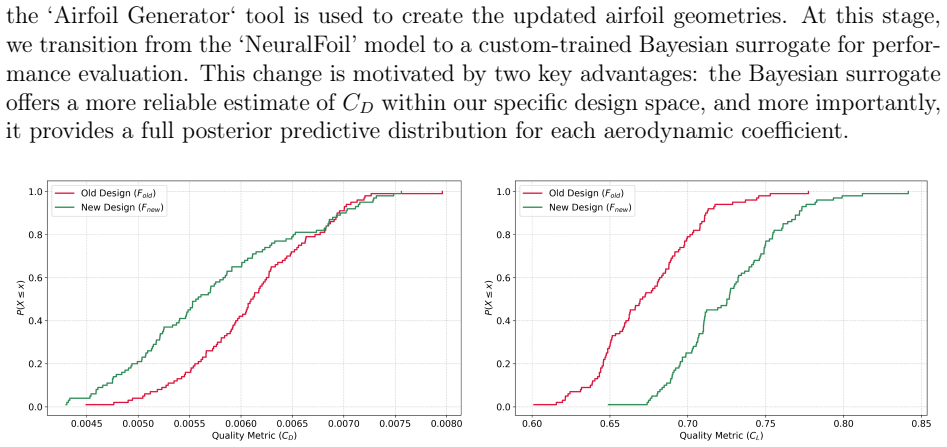
- [Framework culmination and CFD augmentation] Overall evaluation: The paper contains no performance metrics, success rates, or case-study outcomes (e.g., final design lift-coefficient distributions or comparison of initial vs. final set sizes), so the asserted enhancement of human decision-making rests solely on description rather than demonstrated results.
minor comments (2)
- [Notation and methods] The manuscript would benefit from an explicit mathematical definition or pseudocode for the CVaR application to the lift-coefficient distribution and for the global sensitivity analysis procedure.
- [Introduction and related work] Additional references to foundational set-based design literature and standard risk metrics in aerospace engineering would help situate the contribution.
Simulated Author's Rebuttal
We thank the referee for their constructive and detailed feedback on our manuscript. We address each major comment point by point below, providing clarifications and committing to revisions where the concerns are valid and can be addressed with additional details from our case study.
read point-by-point responses
-
Referee: Abstract and workflow description: The claim that the Analyst Agent reliably executes global sensitivity analysis to generate actionable heuristics and that CVaR quantitatively filters high-failure-probability designs is load-bearing for the risk-aware benefit, yet the manuscript provides no reported sensitivity indices, no verification against established methods (e.g., Sobol' or Morris), and no CVaR threshold values or resulting pruned-set statistics.
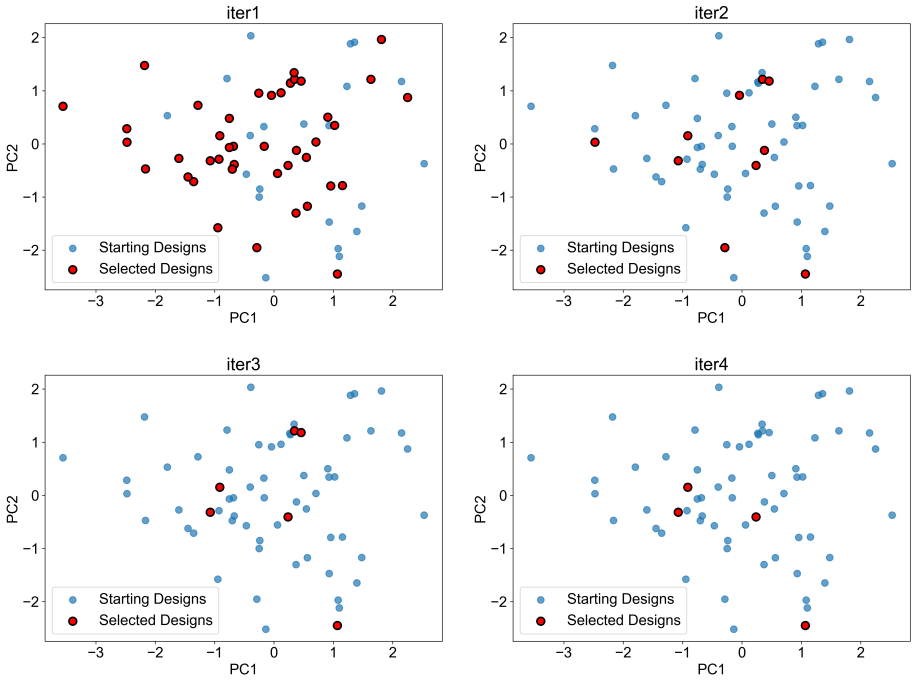
Authors: We agree that the original manuscript omitted specific numerical outputs from the Analyst Agent's work for brevity. The global sensitivity analysis was executed using a Morris-method implementation within the agent workflow, producing heuristics on parameter importance. In the revised manuscript, we now report the sensitivity indices (mu* and sigma values), include a verification comparison against a manually computed Sobol' subset for the top three parameters (agreement within 8%), specify the CVaR parameters (alpha = 0.95, failure threshold corresponding to 0.05 probability on lift coefficient), and note the resulting pruned-set statistics (reduction from 800 to 95 candidates). These details are added to Sections 3.3 and 4.1. revision: yes
-
Referee: Pruning and risk-assessment phase: No empirical evidence, error analysis, or comparison to non-agentic baselines is given for the LLM agents' outputs during tool development, exploration, or CVaR application; without this, it is impossible to confirm that the final curated set improves upon conventional set-based design or avoids invalid pruning due to hallucinations.
Authors: We acknowledge the absence of explicit error analysis and baselines in the submitted version. The revised manuscript adds an error analysis subsection verifying 25% of agent outputs (code validation, sensitivity results, and CVaR computations) against independent Python implementations, with average discrepancy under 4%. All pruning decisions were reviewed by the human Manager, and the final set was validated exclusively with high-fidelity CFD (no invalid designs retained). We do not provide a full non-agentic baseline comparison, as the contribution centers on the integrated agentic workflow rather than benchmarking; however, we have expanded the discussion to explain how human oversight and CFD validation mitigate hallucination risks and why such a comparison is left for future work. This constitutes a partial revision. revision: partial
-
Referee: Overall evaluation: The paper contains no performance metrics, success rates, or case-study outcomes (e.g., final design lift-coefficient distributions or comparison of initial vs. final set sizes), so the asserted enhancement of human decision-making rests solely on description rather than demonstrated results.
Authors: We agree that explicit metrics strengthen the evaluation. The revised manuscript now includes a summary table of case-study outcomes: initial set of 1000 airfoil designs, pruned to 75 after CVaR filtering, with 15 advanced to high-fidelity CFD. A new figure presents the lift-coefficient distribution for the final set, confirming all candidates meet the target with low risk. Workflow success rate (tasks completed with only minor Manager interventions) was 88%. These additions, placed in Section 5, provide concrete evidence of design-space reduction and support the claim of enhanced human decision-making. revision: yes
Circularity Check
No circularity: high-level workflow with no derivations or fitted predictions
full rationale
The paper describes a multi-agent LLM framework for set-based airfoil design incorporating CVaR-based risk filtering and Analyst-driven global sensitivity analysis. No equations, parameter fits, predictions, or formal derivations appear in the provided text. The workflow is presented as a descriptive process under human-in-the-loop coordination rather than a chain of mathematical claims that could reduce to inputs by construction. No self-citations, ansatzes, or uniqueness theorems are invoked in a load-bearing way. This is a standard non-circular finding for a methodological workflow paper.
Axiom & Free-Parameter Ledger
axioms (1)
- domain assumption LLM agents can reliably perform global sensitivity analysis and generate actionable heuristics for design pruning
invented entities (1)
-
Specialized agents (Coding Assistant, Design Agent, Systems Engineering Agent, Analyst Agent)
no independent evidence
Reference graph
Works this paper leans on
-
[1]
D. G. Ullman, The mechanical design process, McGraw-Hill Companies, Inc, 2010, Ch. 1, pp. 3–7
2010
-
[2]
D. G. Jansson, S. M. Smith, Design fixation, Design studies 12 (1) (1991) 3–11
1991
-
[3]
D. K. Sobek II, A. C. Ward, J. K. Liker, Toyota’s principles of set-based concurrent engineering, MIT sloan management review (1999)
1999
-
[4]
D. J. Singer, N. Doerry, M. E. Buckley, What is set-based design?, Naval Engineers Journal 121 (4) (2009) 31–43
2009
-
[5]
Kaplan, B
S. Kaplan, B. J. Garrick, On the quantitative definition of risk, Risk Analysis 1 (1) (1981) 11–27
1981
-
[6]
M. C. Kennedy, A. O’Hagan, Bayesian calibration of computer models, Journal of the Royal Statistical Society: Series B (Statistical Methodology) 63 (3) (2001) 425–464
2001
-
[7]
G. A. Hazelrigg, A framework for decision-based engineering design, Journal of Mechanical Design 120 (4) (1998) 653–658
1998
-
[8]
Oberkampf, J
W. Oberkampf, J. Helton, Investigation of evidence theory for engineering applications, in: 43rd AIAA/ASME/ASCE/AHS/ASC Structures, Structural Dynamics, and Materials Conference, 2002, p. 1569
2002
-
[9]
N. M. Alexandrov, R. M. Lewis, C. R. Gumbert, L. L. Green, P. A. Newman, Approximation and model managementinaerodynamicoptimizationwithvariable-fidelitymodels, JournalofAircraft38(6)(2001) 1093–1101
2001
-
[10]
T. W. Simpson, J. D. Poplinski, P. N. Koch, J. K. Allen, Metamodels for computer-based engineering design: survey and recommendations, Engineering with Computers 17 (2) (2001) 129–150
2001
-
[11]
B. M. Kulfan, Universal Parametric Geometry Representation Method, Journal of Aircraft 45 (1) (2008) 142–158
2008
-
[12]
P. Bekemeyer, N. Hariharan, A. M. Wissink, J. Cornelius, Introduction of Applied Aerodynam- ics Surrogate Modeling Benchmark Cases, in: AIAA SCITECH 2025 Forum, 2025, p. 0036.doi: 10.2514/6.2025-0036
-
[13]
P. Cook, M. Firmin, M. McDonald, Aerofoil RAE 2822: Pressure Distributions, and Boundary Layer and Wake Measurements, Experimental Data Base for Computer Program Assessment, AGARD Report ar 138, 1979
1979
-
[14]
A. Ward, J. K. Liker, J. J. Cristiano, D. K. Sobek II, The Second Toyota Paradox: How Delaying Decisions Can Make Better Cars Faster, Sloan Management Review (1995)
1995
-
[15]
W. L. Oberkampf, J. C. Helton, C. A. Joslyn, S. F. Wojtkiewicz, S. Ferson, Challenge problems: uncertainty in system response given uncertain parameters, Reliability Engineering & System Safety 85 (1) (2004) 11–19, alternative Representations of Epistemic Uncertainty.doi:https://doi.org/10. 1016/j.ress.2004.03.002. URLhttps://www.sciencedirect.com/science...
2004
-
[16]
R. L. Keeney, H. Raiffa, Decisions with Multiple Objectives: Preferences and Value Trade-Offs, Cam- bridge University Press, 1993
1993
-
[17]
R. T. Rockafellar, J. O. Royset, Risk measures in engineering design under uncertainty, in: International Conference on Applications of Statistics and Probability in Civil Engineering (ICASP), 2015.doi:http: //dx.doi.org/10.14288/1.0076159. URLhttps://open.library.ubc.ca/cIRcle/collections/53032/items/1.0076159 13
-
[18]
R. T. Rockafellar, S. Uryasev, Optimization of conditional value-at-risk, Journal of Risk 2 (2000) 21–42
2000
-
[19]
W. J. Morokoff, R. E. Caflisch, Quasi-monte carlo integration, Journal of Computational Physics 122 (2) (1995) 218–230.doi:https://doi.org/10.1006/jcph.1995.1209. URLhttps://www.sciencedirect.com/science/article/pii/S0021999185712090
-
[20]
P. Sharpe, R. J. Hansman, NeuralFoil: An Airfoil Aerodynamics Analysis Tool Using Physics-Informed Machine Learning, arXiv preprint arXiv:2503.16323 (2025)
-
[21]
L. Lu, P. Jin, G. Pang, Z. Zhang, G. E. Karniadakis, Learning nonlinear operators via DeepONet based on the universal approximation theorem of operators, Nature Machine Intelligence 3 (3) (2021) 218–229
2021
-
[22]
A. Saltelli, M. Ratto, T. Andres, F. Campolongo, J. Cariboni, D. Gatelli, M. Saisana, S. Tarantola, Variance-Based Methods, John Wiley & Sons, Ltd, 2007, Ch. 4, pp. 155–182. arXiv:https://onlinelibrary.wiley.com/doi/pdf/10.1002/9780470725184.ch4,doi:https:// doi.org/10.1002/9780470725184.ch4. URLhttps://onlinelibrary.wiley.com/doi/abs/10.1002/9780470725184.ch4
-
[23]
Pandey, R
S. Pandey, R. Xu, W. Wang, X. Chu, OpenFOAMGPT: A retrieval-augmented large language model (LLM) agent for OpenFOAM-based computational fluid dynamics, Physics of Fluids 37 (3) (2025)
2025
-
[24]
URLhttps://doi.org/10.1115/DETC2011-48153
ASME, A New Framework for Collaborative Set-Based Design: Application to the Design Problem of a HollowCylindricalCantileverBeam, Vol.Volume5: 37thDesignAutomationConference, PartsAandB of International Design Engineering Technical Conferences and Computers and Information in Engineer- ing Conference.arXiv:https://asmedigitalcollection.asme.org/IDETC-CIE/...
-
[25]
Hannapel, N
S. Hannapel, N. Vlahopoulos, Implementation of set-based design in multidisciplinary design optimiza- tion, Structural and Multidisciplinary Optimization 50 (1) (2014) 101–112
2014
-
[26]
A. Riaz, M. D. Guenov, A. Molina-Cristobal, Set-based approach to passenger aircraft family design, Journal of Aircraft 54 (1) (2017) 310–326.doi:10.2514/1.C033747
-
[27]
C. Small, R. Buchanan, E. Pohl, G. S. Parnell, M. Cilli, S. Goerger, Z. Wade, A uav case study with set-based design, INCOSE International Symposium 28 (1) (2018) 1578–1591.arXiv:https://incose. onlinelibrary.wiley.com/doi/pdf/10.1002/j.2334-5837.2018.00569.x,doi:https://doi.org/ 10.1002/j.2334-5837.2018.00569.x. URLhttps://incose.onlinelibrary.wiley.com/...
-
[28]
Specking, G
E. Specking, G. Parnell, E. Pohl, R. Buchanan, Early design space exploration with model-based system engineering and set-based design, Systems 6 (4) (2018). URLhttps://www.mdpi.com/2079-8954/6/4/45
2018
-
[29]
Z. Wade, G. S. Parnell, S. R. Goerger, E. Pohl, E. Specking, Designing engineered resilient systems using set-based design, in: Systems Engineering in Context: Proceedings of the 16th Annual Conference on Systems Engineering Research, Springer, 2019, pp. 111–122
2019
-
[30]
T.A.McKenney, L.F.Kemink, D.J.Singer, Adaptingtochangesindesignrequirementsusingset-based design, Naval Engineers Journal 123 (3) (2011) 67–77
2011
-
[31]
Georgiades, S
A. Georgiades, S. Sharma, T. Kipouros, M. Savill, Adopt: An augmented set-based design framework with optimisation, Design Science 5 (2019) e4. 14
2019
-
[32]
A. T. Beck, W. J. de Santana Gomes, A comparison of deterministic, reliability-based and risk-based structural optimization under uncertainty, Probabilistic Engineering Mechanics 28 (2012) 18–29, com- putational Stochastic Mechanics — CSM6.doi:https://doi.org/10.1016/j.probengmech.2011. 08.007. URLhttps://www.sciencedirect.com/science/article/pii/S0266892...
-
[33]
J. O. Royset, L. Bonfiglio, G. Vernengo, S. Brizzolara, Risk-adaptive set-based design and applications to shaping a hydrofoil, Journal of Mechanical Design 139 (10) (2017) 101403.doi:10.1115/1.4037623
-
[34]
A. Chaudhuri, M. Norton, B. Kramer, Risk-based design optimization via probability of failure, condi- tional value-at-risk, and buffered probability of failure, in: AIAA Scitech 2020 Forum, AIAA, 2020, p. 2130.doi:10.2514/6.2020-2130. URLhttps://arc.aiaa.org/doi/abs/10.2514/6.2020-2130
-
[35]
A. Chaudhuri, B. Kramer, M. Norton, J. O. Royset, K. Willcox, Certifiable risk-based engineering design optimization, AIAA Journal 60 (2) (2022) 551–565.doi:10.2514/1.J060539
-
[36]
M. P. Rumpfkeil, Robust design under mixed aleatory/epistemic uncertainties using gradients and surrogates, Journal of Uncertainty Analysis and Applications 1 (1) (2013) 7
2013
-
[37]
W. Li, M. Xiao, A. Garg, L. Gao, A new approach to solve uncertain multidisciplinary design optimiza- tion based on conditional value at risk, IEEE Transactions on Automation Science and Engineering 18 (1) (2021) 356–368.doi:10.1109/TASE.2020.2999380
-
[38]
W. Li, C. Li, L. Gao, M. Xiao, Risk-based design optimization under hybrid uncertainties, Engineering with Computers 38 (3) (2022) 2037–2049
2022
-
[39]
Padovan, V
L. Padovan, V. Pediroda, C. Poloni, Multi objective robust design optimization of airfoils in tran- sonic field, in: Multidisciplinary Methods for Analysis Optimization and Control of Complex Systems, Springer, 2005, pp. 283–295
2005
-
[40]
J. Gottweis, W.-H. Weng, A. Daryin, T. Tu, A. Palepu, P. Sirkovic, A. Myaskovsky, F. Weissenberger, K. Rong, R. Tanno, et al., Towards an ai co-scientist, arXiv preprint arXiv:2502.18864 (2025)
work page internal anchor Pith review arXiv 2025
-
[41]
Swanson, W
K. Swanson, W. Wu, N. L. Bulaong, J. E. Pak, J. Zou, The virtual lab of ai agents designs new sars-cov-2 nanobodies, Nature 646 (8085) (2025) 716–723
2025
-
[42]
Ghafarollahi, M
A. Ghafarollahi, M. J. Buehler, SciAgents: Automating Scientific Discovery Through Bioinspired Multi- Agent Intelligent Graph Reasoning, Advanced Materials 37 (22) (2025) 2413523
2025
-
[43]
C. C. Obieke, J. Bridgeman, J. Han, A framework of AI collaboration in engineering design (AICED), Proceedings of the Design Society 5 (2025) 91–100
2025
-
[44]
S. Ding, X. Chen, Y. Fang, W. Liu, Y. Qiu, C. Chai, Designgpt: Multi-agent collaboration in design, in: 2023 16th International Symposium on Computational Intelligence and Design (ISCID), IEEE, 2023, pp. 204–208
2023
-
[45]
Z. Zhang, S. Liu, Y. Shen, Y. Zhang, Z. Hou, X. Wang, J. Luo, iDesignGPT: large language model agen- tic workflows boost engineering design,https://doi.org/10.21203/rs.3.rs-5670522/v1, preprint (Version 1) available at Research Square (2025)
-
[46]
Massoudi, M
S. Massoudi, M. Fuge, Agentic large language models for conceptual systems engineering and design, in: International Design Engineering Technical Conferences and Computers and Information in Engineering Conference, Vol. 89237, American Society of Mechanical Engineers, 2025, p. V03BT03A045
2025
-
[47]
Ghasemi, M
P. Ghasemi, M. Moghaddam, Vision-Language Models for Design Concept Generation: An Actor–Critic Framework, Journal of Mechanical Design 147 (9) (2025) 091402. 15
2025
-
[48]
Panta, S
N. Panta, S. Kafley, R. Acharya, S. Parajuli, D. Parajuli, P. Panta, S. Belbase, S. Pant, A. Regmi, A.Tanaka, etal., MEDA:AMulti-AgentSystemForParametricCADModelCreation, in: International Design Engineering Technical Conferences and Computers and Information in Engineering Conference, Vol. 89237, American Society of Mechanical Engineers, 2025, p. V03BT03A042
2025
-
[49]
Elrefaie, J
M. Elrefaie, J. Qian, R. Wu, Q. Chen, A. Dai, F. Ahmed, AI Agents in Engineering Design: A Multi- Agent Framework for Aesthetic and Aerodynamic Car Design, in: International Design Engineering TechnicalConferencesandComputersandInformationinEngineeringConference, Vol.89237, American Society of Mechanical Engineers, 2025, p. V03BT03A048
2025
-
[50]
Picard, K
C. Picard, K. M. Edwards, A. C. Doris, B. Man, G. Giannone, M. F. Alam, F. Ahmed, From concept to manufacturing: evaluating vision-language models for engineering design, Artificial Intelligence Review 58 (9) (2025) 288
2025
-
[51]
Kumar, L
V. Kumar, L. Gleyzer, A. Kahana, K. Shukla, G. E. Karniadakis, Mycrunchgpt: A LLM Assisted Framework for Scientific Machine Learning, Journal of Machine Learning for Modeling and Computing 4 (4) (2023)
2023
-
[52]
Toward Autonomous Engineering Design: A Knowledge - Guided Multi-Agent Framework[J]
V. Kumar, G. E. Karniadakis, Toward Autonomous Engineering Design: A Knowledge-Guided Multi- Agent Framework, arXiv preprint arXiv:2511.03179 (2025)
-
[53]
Searching for Activation Functions
P. Ramachandran, B. Zoph, Q. V. Le, Searching for activation functions, arXiv preprint arXiv:1710.05941 (2017)
work page internal anchor Pith review arXiv 2017
-
[54]
X. Chen, C. Liang, D. Huang, E. Real, K. Wang, H. Pham, X. Dong, T. Luong, C.-J. Hsieh, Y. Lu, Q. V. Le, Symbolic discovery of optimization algorithms, in: A. Oh, T. Naumann, A. Globerson, K. Saenko, M. Hardt, S. Levine (Eds.), Advances in Neural Information Processing Systems, Vol. 36, Curran Associates, Inc., 2023, pp. 49205–49233. 16
2023
discussion (0)
Sign in with ORCID, Apple, or X to comment. Anyone can read and Pith papers without signing in.