Signatures of Quantum Gravity In Relativistic Quantum Systems
Pith reviewed 2026-05-10 07:25 UTC · model grok-4.3
The pith
Gravitons interacting with matter produce observable signatures that specific detector models can capture within a few years.
A machine-rendered reading of the paper's core claim, the machinery that carries it, and where it could break.
Core claim
In linearized quantum gravity, the coupling of quantized gravitational fluctuations to matter degrees of freedom generates concrete effects including memory phenomena, altered uncertainty relations, graviton absorption and emission processes, and decoherence between entangled states, which can be exploited in two-particle and Bose-Einstein condensate detector designs to register these signatures.
What carries the argument
The graviton-matter interaction in linearized quantum gravity applied to two-particle systems and relativistic scalar Bose-Einstein condensates, which produces measurable quantum responses such as decoherence and memory effects.
If this is right
- Gravitons induce a memory effect in simple two-particle matter systems.
- Gravitational fluctuations modify the uncertainty relation obeyed by detector degrees of freedom.
- Trapped detector systems exhibit stimulated absorption and spontaneous emission of gravitons.
- Entangled relativistic Bose-Einstein condensates display graviton-mediated decoherence usable as a detection channel.
- These interactions support detector constructions that operate on laboratory timescales of a few years.
Where Pith is reading between the lines
- The same interaction framework could be applied to other quantum platforms such as trapped ions or superconducting qubits to widen the search for graviton signatures.
- Detection of the predicted decoherence would supply a low-energy window into quantum gravity that complements high-energy approaches.
- Absence of the effects in the proposed setups would indicate either stronger noise backgrounds or the breakdown of the linearization assumption at these scales.
Load-bearing premise
The linearized approximation remains accurate at the energy and length scales of the proposed detectors and graviton-induced signals can be isolated from ordinary environmental noise.
What would settle it
An experiment with the entangled Bose-Einstein condensate detector that records no excess decoherence traceable to gravitons, after subtracting all standard quantum and thermal contributions, would show the signatures are not observable as claimed.
Figures










read the original abstract
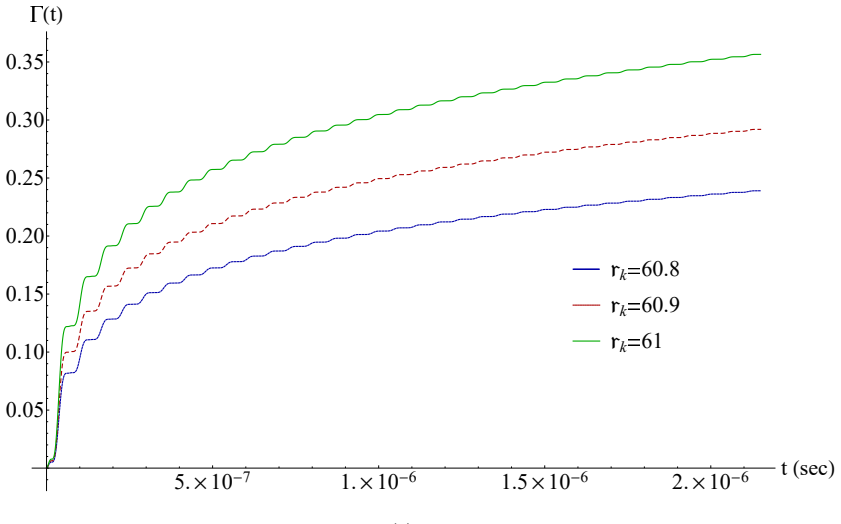
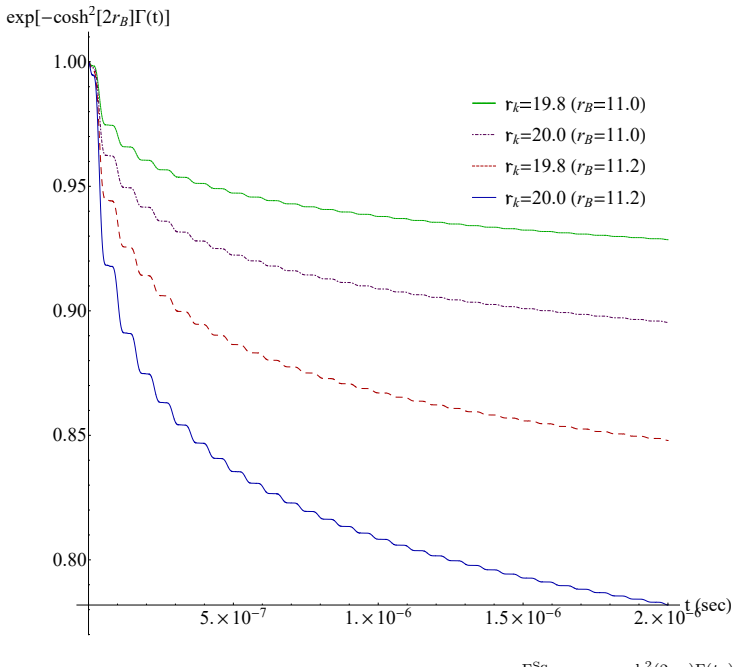
In this thesis, we have used a linearized quantum gravity setting to investigate the effects of gravitons on matter systems. Based on the graviton-matter interaction, we have then proposed detector models that may be able to pick up graviton-induced signatures in a matter of a few years. We start with the simple model of a two-particle model detector system interacting with quantized gravitational fluctuations while the detector degrees of freedom obey the generalized uncertainty principle (GUP). For the first part we have hinted at the existence of quantum gravity induced memory effect as well as obtained a quantum gravity modified uncertainty relation. For the next part of the thesis, we have mainly focused on the phenomenological aspects of a linearized quantum gravity theory. For the initial phenomenological model, we have considered the same two-particle model detector system interacting with gravitational fluctuations where the entire set-up is placed inside a harmonic trap potential and looked at the stimulated absorption and spontaneous emission scenario for gravitons. In order to inspect a more involved phenomenological aspect, instead of the standard matter-detector system, we make use of a relativistic scalar Bose-Einstein condensate (BEC) and investigated the response of the BEC based model towards incoming gravitons and proposed a graviton detector based on graviton mediated decoherence from entangled BECs.
Editorial analysis
A structured set of objections, weighed in public.
Referee Report
Summary. The manuscript explores signatures of quantum gravity in relativistic quantum systems using a linearized quantum gravity approach. It examines a two-particle detector model with generalized uncertainty principle (GUP) to identify memory effects and modified uncertainty relations, then analyzes a trapped two-particle system for graviton absorption and emission, and finally proposes a detector based on decoherence in an entangled relativistic scalar Bose-Einstein condensate (BEC). The key claim is that these setups could detect graviton-induced effects within a few years.
Significance. If the missing quantitative validations were supplied, the work could offer novel phenomenological models for graviton detection, extending quantum gravity effects to matter systems in a way that might inform experimental efforts. The use of GUP, trapped systems, and BEC provides a range of approaches, but without error analyses, the significance remains potential rather than demonstrated.
major comments (3)
- Abstract and concluding sections: The claim that proposed detector models 'may be able to pick up graviton-induced signatures in a matter of a few years' is central to the paper's phenomenological contribution but is not supported by any signal-to-noise calculations, decoherence rate comparisons to environmental noise, or integration time estimates.
- Two-particle GUP model and trapped system sections: The derivations of the quantum gravity induced memory effect and modified uncertainty relation, as well as the stimulated absorption/emission scenarios, rely on the linearized gravity approximation; however, there is no analysis of the validity regime for detector scales or energies where this approximation holds.
- BEC-based detector section: The proposal for a graviton detector using graviton-mediated decoherence from entangled BECs lacks quantitative error budgets or background subtraction protocols, which are necessary to assess whether the effects can be isolated from thermal, electromagnetic, or other noise sources.
minor comments (1)
- Notation and presentation: Ensure consistent use of symbols across sections for the interaction Hamiltonian and detector parameters to improve readability.
Simulated Author's Rebuttal
We thank the referee for the careful reading and constructive feedback on our manuscript. The comments identify key areas where additional analysis would strengthen the phenomenological claims. We respond to each major comment below and indicate the revisions planned for the next version.
read point-by-point responses
-
Referee: Abstract and concluding sections: The claim that proposed detector models 'may be able to pick up graviton-induced signatures in a matter of a few years' is central to the paper's phenomenological contribution but is not supported by any signal-to-noise calculations, decoherence rate comparisons to environmental noise, or integration time estimates.
Authors: We agree that the statement lacks supporting quantitative calculations such as signal-to-noise ratios or integration times. The phrasing was meant to indicate the order-of-magnitude scale suggested by the derived interaction rates, but it is not rigorously justified in the text. In the revised manuscript we will either remove the specific claim or replace it with a more qualified statement that reflects the absence of detailed noise and timing analyses. revision: yes
-
Referee: Two-particle GUP model and trapped system sections: The derivations of the quantum gravity induced memory effect and modified uncertainty relation, as well as the stimulated absorption/emission scenarios, rely on the linearized gravity approximation; however, there is no analysis of the validity regime for detector scales or energies where this approximation holds.
Authors: The linearized gravity framework is the standard starting point for weak-field, low-energy graviton-matter interactions in laboratory settings. We acknowledge that an explicit discussion of its regime of validity (e.g., conditions on the metric perturbation amplitude and detector energy scales relative to the Planck scale) is missing. We will add a dedicated paragraph or subsection outlining these validity conditions and confirming that the parameters chosen in the two-particle and trapped-system models lie within the regime where higher-order corrections remain negligible. revision: yes
-
Referee: BEC-based detector section: The proposal for a graviton detector using graviton-mediated decoherence from entangled BECs lacks quantitative error budgets or background subtraction protocols, which are necessary to assess whether the effects can be isolated from thermal, electromagnetic, or other noise sources.
Authors: The BEC section develops the theoretical mechanism of graviton-induced decoherence but does not include a full error budget or detailed background-subtraction protocol. We will expand the discussion to identify the leading environmental noise channels (thermal, electromagnetic, and vibrational) and outline possible subtraction strategies at a qualitative level. A complete quantitative error analysis would require experimental design details that lie beyond the scope of the present theoretical work; we will therefore note this limitation explicitly. revision: partial
Circularity Check
No circularity: abstract and model sequence contain no equations or self-referential reductions.
full rationale
The provided abstract outlines a progression from a two-particle GUP detector under linearized quantum gravity (memory effect, modified uncertainty) to a trapped variant (absorption/emission) and then a BEC-based decoherence detector. No equations appear in the abstract, precluding any inspection for self-definitional mappings, fitted inputs renamed as predictions, or ansatz smuggling. Repeated use of the two-particle model across sections is a consistent modeling choice rather than a reduction of later outputs to earlier fitted quantities. No self-citations are quoted that load-bear uniqueness theorems or central premises. The derivation chain is therefore self-contained against external benchmarks with no exhibited circular steps.
Axiom & Free-Parameter Ledger
Reference graph
Works this paper leans on
-
[1]
Zur Elektrodynamik bewegter Körper
A. Einstein, “ Zur Elektrodynamik bewegter Körper ”, Ann. der Physik 17 (1905) 891 ; Translated version: “On the Electrodynamics of Moving Bodies ”
1905
-
[2]
On an Improvement of Wien ’s Equation for the Spectrum
M. Planck, “ On an Improvement of Wien ’s Equation for the Spectrum ”, Verhandl. Dtsch. phys. Ges. 2 (1900) 202
1900
-
[3]
On the Theory of the Energy Distribution Law of the Normal Spectrum
M. Planck, “ On the Theory of the Energy Distribution Law of the Normal Spectrum ”, Verhandl. Dtsch. phys. Ges. 2 (1900) 237
1900
-
[4]
Ueber das Gesetz der Energieverteilung im Normalspectrum
M. Planck, “ Ueber das Gesetz der Energieverteilung im Normalspectrum ”, Ann. der Phys. 309 (1901) 553
1901
-
[5]
On the Law of the Energy Distribution in the Normal Spectrum
M. Planck, “ On the Law of the Energy Distribution in the Normal Spectrum ”, Ann. Phys. 309 (1901) 553 ; (English translation)
1901
-
[6]
Über einen die Erzeugung und Verwandlung des Lichtes betreffenden heuris- tischen Gesichtspunkt
A. Einstein, “ Über einen die Erzeugung und Verwandlung des Lichtes betreffenden heuris- tischen Gesichtspunkt ”, Ann. der Physik 17 (1905) 132
1905
-
[7]
Über den Einflußder Schwerkraft auf die Ausbreitung des Lichtes
A. Einstein, “ Über den Einflußder Schwerkraft auf die Ausbreitung des Lichtes ”, Ann. der Physik 35 (1911) 898
1911
-
[8]
Lichtgeschwindigkeit und Statik des Gravitationsfeldes
A. Einstein, “ Lichtgeschwindigkeit und Statik des Gravitationsfeldes ”, Ann. der Physik 343 (1912) 355
1912
-
[9]
Zur Theorie des statischen Gravitationsfeldes
A. Einstein, “ Zur Theorie des statischen Gravitationsfeldes ”, Ann. der Physik 343 (1912) 443
1912
-
[10]
Die formale Grundlage der allgemeinen Relativitätstheorie
A. Einstein, “ Die formale Grundlage der allgemeinen Relativitätstheorie ”, Sitz. der Kön. Preuß. Akad. Wiss. XLI (1914) 1030
1914
-
[11]
Die Feldgleichungen der Gravitation
A. Einstein, “ Die Feldgleichungen der Gravitation ”, Sitz. der Kön. Preuß. Akad. Wiss. (1915) 844
1915
-
[12]
Towards Singularity- and Ghost- Free Theories of Gravity
T. Biswas, E. Gerwick, T. Koivisto, and A. Mazumder, “ Towards Singularity- and Ghost- Free Theories of Gravity ”, Phys. Rev. Lett. 108 (2012) 031101
2012
-
[13]
Gravitation and quantum mechanics of macroscopic objects
F. Karolyhazy, “ Gravitation and quantum mechanics of macroscopic objects ”, Nuovo Cimento A 42 (1966) 390 . 200
1966
-
[14]
On gravity’s role in quantum state reduction
R. Penrose, “ On gravity’s role in quantum state reduction ”, Gen. Relativ. Gravit. 28 (1996) 581
1996
-
[15]
Models for universal reduction of macroscopic quantum fluctuations
L. Diósi, “ Models for universal reduction of macroscopic quantum fluctuations ”, Phys. Rev. A 40 (1989) 1165
1989
-
[16]
Models of wave-function collapse, underlying theories, and experimental tests
A. Bassi, K. Lochan, S. Satin, T. P. Singh, and H. Ulbricht, “ Models of wave-function collapse, underlying theories, and experimental tests ”, Rev. Mod. Phys. 85 (2013) 471
2013
-
[17]
Gravitational decoherence
A. Bassi, A. Großardt, and H. Ulbricht, “ Gravitational decoherence”, Class. Quant. Grav. 34 (2017) 193002
2017
-
[18]
Small-scale structure of spacetime as the origin of the gravitational constant
P. K. Townsend, “ Small-scale structure of spacetime as the origin of the gravitational constant”, Phys. Rev. D 15 (1977) 2795
1977
-
[19]
Can spacetime be probed below the string size
D. Amati, M. Ciafaloni, and G. Veneziano, “ Can spacetime be probed below the string size”, Phys. Lett. B 216 (1989) 41
1989
-
[20]
Minimum physical length and the generalized uncertainty principle in string theory
K. Konishi, G. Paffuti, and P. Provero, “ Minimum physical length and the generalized uncertainty principle in string theory ”, Phys. Lett. B 234 (1990) 236
1990
-
[21]
Gravitational quantum limit for length measurements
M.-T. Jaekel and S. Reynaud, “ Gravitational quantum limit for length measurements ”, Phys. Lett. A 185 (1994) 143
1994
-
[22]
QUANTUM GRA VITY AND MINIMUM LENGTH
L. J. Garay, “ QUANTUM GRA VITY AND MINIMUM LENGTH ”, Int. J. Mod. Phys. A 10 (1995) 145
1995
-
[23]
Volume 1: An Introduction to the Bosonic String , STRING THEORY
J. Polchinski, “ Volume 1: An Introduction to the Bosonic String , STRING THEORY”, Cambridge University Press (1998) , Cambridge
1998
-
[24]
Volume 2: Superstring Theory and Beyond , STRING THEORY
J. Polchinski, “ Volume 2: Superstring Theory and Beyond , STRING THEORY”, Cam- bridge University Press (1998) , Cambridge
1998
-
[25]
Loop Quantum Gravity
C. Rovelli, “ Loop Quantum Gravity ”, Living Rev. Reltiv. 1 (1998) 1
1998
-
[26]
Quantum Gravity
C. Rovelli, “ Quantum Gravity ”, Cambridge University Press (2004) , Cambridge
2004
-
[27]
Quantum gravity: a progress report
S. Carlip, “ Quantum gravity: a progress report ”, Rep. Prog. Phys. 64 (2001) 885
2001
-
[28]
Covariant Loop Quantum Gravity
C. Rovelli and F. Vidotto, “ Covariant Loop Quantum Gravity ”, Cambridge University Press (2014) , Cambridge
2014
-
[29]
Noncommutative geometry
A. Connes, “ Noncommutative geometry”, Academic Press (1994), California
1994
-
[30]
Deformed special relativity as an effective flat limit of quantum gravity
F. Gireli, E. R. Livine, and D. Oriti, “ Deformed special relativity as an effective flat limit of quantum gravity ”, Nucl. Phys. B 708 (2005) 411 . 201
2005
-
[31]
Meaning of Noncommutative Geometry and the Planck-Scale Quantum Group
S. Majid, “ Meaning of Noncommutative Geometry and the Planck-Scale Quantum Group” (2000). In: J. Kowalski-Glikman (eds), “ Towards Quantum Gravity ” . Lecture Notes in Physics, vol 541. Springer, Berlin, Heidelberg. Link for the conference paper
2000
-
[32]
Näherungswise integration der feldgleichungen der gravitation
A. Einstein, “ Näherungswise integration der feldgleichungen der gravitation ”, Sitz. der Kön Preuß. Akad. Wiss. (1916) 688
1916
-
[33]
Observation of gravitational waves from a binary black hole merger
B. P. Abott et. al., “Observation of gravitational waves from a binary black hole merger ”, Phys. Rev. Lett. 116 (2016) 061102
2016
-
[34]
GW150914: Implication for the stochastic gravitational-wave back- ground from binary black holes
B. P. Abott et. al. , “ GW150914: Implication for the stochastic gravitational-wave back- ground from binary black holes ”, Phys. Rev. Lett. 116 (2016) 131102
2016
-
[35]
Localization and broadband follow-up of the gravitational -wave transient GW150914
B. P. Abbott et al ., “ Localization and broadband follow-up of the gravitational -wave transient GW150914 ”, Astrophys. J. Lett. 826 (2016) L13
2016
-
[36]
Matvei Bronstein and quantum gravity: 70th anniversary of the unsolved problem
G. E. Gorelik, “ Matvei Bronstein and quantum gravity: 70th anniversary of the unsolved problem”, Phys. Usp. 48 (2005) 1039
2005
-
[37]
The Role of Gravitation in Physics: Report from the 1957 Chapel Hill Conference
R. Feynman, in “ The Role of Gravitation in Physics: Report from the 1957 Chapel Hill Conference”, (Berlin, 1957)
1957
-
[38]
Summary of the Chapel Hill Conference
P. G. Bergmann, “ Summary of the Chapel Hill Conference ”, Rev. Mod. Phys. 29 (1957) 352
1957
-
[39]
Quantentheorie Schwacher gravitationsfelder
M. P. Bronstein, “ Quantentheorie Schwacher gravitationsfelder ”, Phys. Z. Sowjetunion 9 (1936) 140
1936
-
[40]
Kvantovanie gravitatsionnykh voln
M. P. Bronstein, “ Kvantovanie gravitatsionnykh voln ”, Zh. Eksp. Teor. Fiz. 6 (1936) 195
1936
-
[41]
Quantization of Einstein ’s gravitational field: Linear approximation
S. N. Gupta, “ Quantization of Einstein ’s gravitational field: Linear approximation ”, Proc. Phys. Soc. London Sect. A. 65 (1952) 161
1952
-
[42]
Quantization of Einstein’s gravitational field: General treatment
S. N. Gupta, “Quantization of Einstein’s gravitational field: General treatment”, Proc. Phys. Soc. London Sect. A 56 (1952) 608
1952
-
[43]
Quantum Gravity in the First Half of the Twentieth Century: A Sourcebook, edited by A. S. Blum and D. Rickels (Max-Planck-Gesellschaft zur Förderung der Wissenschaften, Berlin, 2018)
2018
-
[44]
Hilbert space representation of the minimal length uncertainty relation
A. Kempf, G. Mangano, and R. Mann, “ Hilbert space representation of the minimal length uncertainty relation ”, Phys. Rev. D 52 (1995) 1108
1995
-
[45]
Quantum group-symmetric fock spaces with bargmann-fock representation
A. Kempf, “ Quantum group-symmetric fock spaces with bargmann-fock representation ”, Lett. Math. Phys. 26 (1992) 1 . 202
1992
-
[46]
Uncertainty relation in quantum mechanics with quantum group symmetry
A. Kempf, “ Uncertainty relation in quantum mechanics with quantum group symmetry ”, J. Math. Phys. 35 (1994) 4483
1994
-
[47]
Witness gravity’s quantum side in the lab
C. Marletto and V. Vedral, “ Witness gravity’s quantum side in the lab ”, Nature (London) 547 (2017) 156
2017
-
[48]
Spin entanglement witness for quantum gravity
S. Bose, A. Mazumdar, G. W. Morley, H. Ulbricht, M. Toroš, M. Paternostro, A. A. Geraci, P. F. Barker, M. S. Kim, and G. Milburn, “ Spin entanglement witness for quantum gravity”, Phys. Rev. Lett. 119 (2017) 240401
2017
-
[49]
Gravitationally induced entanglement between two massive particles is sufficient evidence of quantum effects in gravity
C. Marletto and V. Vedral, “ Gravitationally induced entanglement between two massive particles is sufficient evidence of quantum effects in gravity ”, Phys. Rev. Lett. 119 (2017) 240402
2017
-
[50]
Locality and entanglement in table-top testing of the quantum nature of linearized gravity
R. J. Marshman, A. Mazumdar, and S. Bose, “ Locality and entanglement in table-top testing of the quantum nature of linearized gravity ”, Phys. Rev. A 101 (2020) 052110
2020
-
[51]
Mechanism for the quantum natured gravitons to entangle masses
S. Bose, A. Mazumdar, M. Schut, and M. Toroš, “ Mechanism for the quantum natured gravitons to entangle masses ”, Phys. Rev. D 105 (2022) 106028
2022
-
[52]
The noise of gravitons
M. Parikh, F. Wilczek, and G. Zahariade, “ The noise of gravitons ”, Int. J. Mod. Phys. D 29 (2020) 2042001
2020
-
[53]
Quantum Mechanics of Gravitational Waves
M. Parikh, F. Wilczek, and G. Zahariade, “ Quantum Mechanics of Gravitational Waves”, Phys. Rev. Lett. 127 (2021) 081602
2021
-
[54]
Signatures of the quantization of gravity at gravitational wave detectors
M. Parikh, F. Wilczek, and G. Zahariade, “ Signatures of the quantization of gravity at gravitational wave detectors ”, Phys. Rev. D 104 (2021) 046021
2021
-
[55]
Noise and decoherence induced by gravitons
S. Kanno, J. Soda, and J. Tokuda, “ Noise and decoherence induced by gravitons ”, Phys. Rev. D 103 (2021) 044017
2021
-
[56]
Indirect detection of gravitons through quantum entanglement
S. Kanno, J. Soda, and J. Tokuda, “ Indirect detection of gravitons through quantum entanglement”, Phys. Rev. D 104 (2021) 083516
2021
-
[57]
Quantum gravity corrections to the fall of an apple
S. Chawla and M. Parikh, “ Quantum gravity corrections to the fall of an apple ”, Phys. Rev. D 107 (2023) 066024
2023
-
[58]
Über den anschaulichen inhalt der quantentheoretischen Kinematik und Mechanik
W. Heisenberg, “ Über den anschaulichen inhalt der quantentheoretischen Kinematik und Mechanik”, Z. Physik 43 (1927) 172
1927
-
[59]
Uncertainty principle in quantum mechanics with Newton ’s gravity
V. E. Kuzmichev and V. V. Kuzmichev, “ Uncertainty principle in quantum mechanics with Newton ’s gravity”, Eur. Phys. J. C 80 (2020) 248
2020
-
[60]
Introduction to Quantum Mechanics
D. J. Griffiths and D. F. Schroeter, “ Introduction to Quantum Mechanics ” (3rd edition), Cambridge University Press (2018), Cambridge. 203
2018
-
[61]
Modern Quantum Mechanics
J. J. Sakurai and J. Napolitano, “ Modern Quantum Mechanics” (3rd edition), Cambridge University Press (2020), Cambridge
2020
-
[62]
Quantum Mechanics
N. Zettili, “ Quantum Mechanics ” (2nd edition), Wiley (2009), United Kingdom
2009
-
[63]
Possible Connection Between Gravitation and Fundamental Length
C. A. Mead, “ Possible Connection Between Gravitation and Fundamental Length ”, Phys. Rev. 135 (1964) B849
1964
-
[64]
Implications of spectrum of dynamically generated string tension theories
E. I. Guendelman, “ Implications of spectrum of dynamically generated string tension theories”, “ Int. J. Mod. Phys. D 30 (2021) 21422028 ”
2021
-
[65]
The algebraic structure of the generalized uncertainty principle
M. Maggiore, “ The algebraic structure of the generalized uncertainty principle ”, Phys. Lett. B 319 (1993) 83
1993
-
[66]
Generalized uncertainty principle in quantum gravity from micro-black hole gedanken experiment
F. Scardigli, “ Generalized uncertainty principle in quantum gravity from micro-black hole gedanken experiment”, Phys. Lett. B 452 (1999) 39
1999
-
[67]
ON GRA VITY AND THE UNCERTAINTY PRINCI- PLE
R. J. Adler and D. I. Santiago, “ ON GRA VITY AND THE UNCERTAINTY PRINCI- PLE”, Mod. Phys. Lett. A 14 (1999) 1371
1999
-
[68]
The Generalized Uncertainty Principle and Black Hole Remnants
R. J. Adler and D. I. Santiago, “ The Generalized Uncertainty Principle and Black Hole Remnants”, Gen. Relativ. Gravit. 33 (2001) 2101
2001
-
[69]
Quantum black hole and the modified uncertainty principle
B. Majumder, “ Quantum black hole and the modified uncertainty principle ”, Phys. Lett. B 701 (2011) 384
2011
-
[70]
Generalized uncertainty principle and black hole thermodynamics
S. Gangopadhyay, A. Dutta, and A. Saha, “ Generalized uncertainty principle and black hole thermodynamics ”, Gen. Relativ. Gravit. 46 (2014) 1661
2014
-
[71]
Gravitational tests of the generalized uncertainty principle
F. Scardigli and R. Casadio, “ Gravitational tests of the generalized uncertainty principle”, Eur. Phys. J. C 75 (2015) 425
2015
-
[72]
Rainbow black hole thermody- namics and the generalized uncertainty principle
R. Mandal, S. Bhattacharyya, and S. Gangopadhyay, “ Rainbow black hole thermody- namics and the generalized uncertainty principle ”, Gen. Relativ. Gravit. 50 (2018) 143
2018
-
[73]
Generalized uncertainty principle, black holes, and white dwarfs: a tale of two infinities
Y. C. Ong, “ Generalized uncertainty principle, black holes, and white dwarfs: a tale of two infinities ”, J. Cosmo. Astropart. Phys. 09 (2018) 015
2018
-
[74]
Generalized uncertainty principle and corpuscular gravity
L. Buoninfante, G. G. Luciano, and L. Petruzzeillo, “ Generalized uncertainty principle and corpuscular gravity ”, Eur. Phys. J. C 79 (2019) 663
2019
-
[75]
Probing Planck- Scale physics with quantum optics
I. Pikovski, M. R. Vanner, M. Aspelmeyer, M. S. Kim, and Č. Brukner, “ Probing Planck- Scale physics with quantum optics ”, Nat. Phys. 8 (2012) 393
2012
-
[76]
Amplified transduction of Planck-scale effects using quantum optics
P. Bosso, S. Das, I. Pikovski, and M. R. Vanner, “ Amplified transduction of Planck-scale effects using quantum optics ”, Phys. Rev. A 96 (2017) 023849
2017
-
[77]
Quantum-optical tests of Planck-scale physics
S. P. Kumar and M. B. Pleino, “ Quantum-optical tests of Planck-scale physics ”, Phys. Rev. A 97 (2018) 063855 . 204
2018
-
[78]
Probing the generalized uncertainty principle through quantum noises in optomechanical systems
S. Sen, S. Bhattacharyya, and S. Gangopadhyay, “ Probing the generalized uncertainty principle through quantum noises in optomechanical systems ”, Class. Quant. Grav. 39 (2022) 075020
2022
-
[79]
Quantum gravitational decoherence from fluctuating minimal length and deformation parameter at the Planck scale
L. Petruzziello and F. Illuminati, “ Quantum gravitational decoherence from fluctuating minimal length and deformation parameter at the Planck scale ”, Nat. Commun. 12 (2021) 4449
2021
-
[80]
A novel mechanism for probing the Planck scale
S. Das and S. K. Modak, “ A novel mechanism for probing the Planck scale ”, Class. Quant. Grav. 39 (2022) 015005
2022
discussion (0)
Sign in with ORCID, Apple, or X to comment. Anyone can read and Pith papers without signing in.