Recognition: unknown
The two-level systems in cryogenic solids, or how to avoid stressful memories
Pith reviewed 2026-05-09 22:05 UTC · model grok-4.3
The pith
Two-level systems persist in amber because its stability comes from bonding, not entropy reduction like in vapor-deposited glasses.
A machine-rendered reading of the paper's core claim, the machinery that carries it, and where it could break.
Core claim
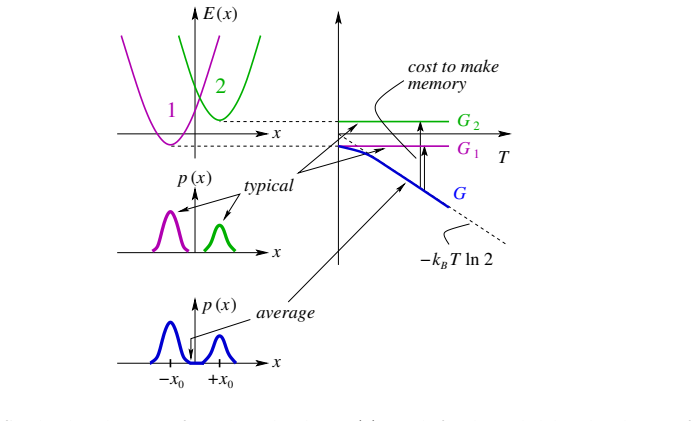
A depletion of the TLSs, if any, means the configurational entropy of the material is lower than that of conventional glasses made by bulk-quenching a melt. Ageing does induce reduction in configurational entropy, but amber, we speculate, achieves enthalpic stabilization through increased bonding, not ageing.
What carries the argument
The distinction between configurational entropy reduction, which depletes TLSs, and enthalpic stabilization via increased bonding, which preserves them.
If this is right
- Vapor-deposited and swap Monte Carlo glasses exhibit TLS depletion because their configurational entropy lies below that of melt-quenched material.
- Amber's retained TLSs indicate its stability does not involve the same entropy reduction seen in other ultrastable solids.
- Different preparation routes to enthalpic stability produce different densities of low-energy excitations.
- Existing models of TLS cooperativity disagree and require experimental resolution to align with observed depletion patterns.
Where Pith is reading between the lines
- Materials designers could select stabilization methods to control TLS density for cryogenic or quantum applications.
- The bonding-versus-entropy distinction may extend to other long-term stabilized amorphous solids beyond amber.
- If bonding increases dominate in amber, related changes in mechanical or density properties could be tested against entropy-reduced glasses.
Load-bearing premise
That a reduction in TLSs directly signals lower configurational entropy than in melt-quenched glasses, and that amber's enthalpic stability arises specifically from bonding rather than ageing.
What would settle it
Direct measurement of configurational entropy in amber versus vapor-deposited and melt-quenched glasses; if amber shows entropy equal to conventional glasses despite its stability and TLS persistence, the bonding mechanism is supported.
Figures




read the original abstract
Structural glasses prepared by bulk quenching a liquid melt universally exhibit puzzling low-energy excitations commonly known as the ``two-level systems'' (TLSs). Recent studies indicate that ultrastable glassy films made by vapor deposition exhibit substantially fewer TLSs and, at the same time, are more stable enthalpically than conventional glasses made by quenching a melt. A similar phenomenon is observed in very stable glasses of model liquid mixtures prepared using swap Monte Carlo sampling. However, in a separate set of enthalpically stable solids, exemplified by amber matured over geological times, the two-level systems persist. In addressing this seeming conflict, we emphasize that a depletion of the TLSs, if any, means the configurational entropy of the material is lower than that of conventional glasses made by bulk-quenching a melt. Ageing does induce reduction in configurational entropy, but amber, we speculate, achieves enthalpic stabilization through increased bonding, not ageing. We separately comment on the discrepancy among existing predictions for the extent of cooperativity of the two-level systems. Several experiments are suggested to test the present picture.
Editorial analysis
A structured set of objections, weighed in public.
Referee Report
Summary. The manuscript synthesizes literature on two-level systems (TLS) in structural glasses, claiming that depletion of TLS in ultrastable glasses (vapor-deposited films or swap Monte Carlo samples) indicates lower configurational entropy than in melt-quenched glasses, while speculating that amber's enthalpic stability arises from increased bonding rather than ageing; it also comments on TLS cooperativity discrepancies and proposes experiments to test the picture.
Significance. If the proposed interpretive framework holds, it offers a unifying perspective reconciling TLS observations across preparation methods and distinguishes entropy reduction from other stabilization routes, with the suggested experiments providing concrete falsifiable tests. The paper's strength lies in its synthesis of independent prior observations without introducing new fitted parameters or self-referential equations.
major comments (2)
- [Abstract] Abstract: The central claim that 'a depletion of the TLSs, if any, means the configurational entropy of the material is lower' lacks a quantitative derivation or explicit mapping from TLS density (set by low-energy barrier distributions) to configurational entropy S_c (set by the number of inherent structures); these quantities can in principle decouple if barrier heights or asymmetry statistics vary independently of landscape multiplicity.
- [Abstract] Abstract: The speculation that amber achieves enthalpic stabilization through increased bonding (rather than ageing) is presented without a specific bonding metric, quantitative comparison to ageing-induced changes, or reference to a particular section deriving this distinction.
Simulated Author's Rebuttal
We thank the referee for their careful reading of the manuscript and for the constructive comments. We appreciate the positive assessment of the paper's synthesis of TLS observations across preparation protocols. We address each major comment below and will make revisions to improve clarity and precision.
read point-by-point responses
-
Referee: [Abstract] Abstract: The central claim that 'a depletion of the TLSs, if any, means the configurational entropy of the material is lower' lacks a quantitative derivation or explicit mapping from TLS density (set by low-energy barrier distributions) to configurational entropy S_c (set by the number of inherent structures); these quantities can in principle decouple if barrier heights or asymmetry statistics vary independently of landscape multiplicity.
Authors: We agree that the manuscript does not provide a new quantitative derivation mapping TLS density directly to configurational entropy, as the work is an interpretive synthesis of existing literature rather than a theoretical calculation. The statement is motivated by the standard potential-energy-landscape picture in which TLS correspond to tunneling transitions between nearby inherent structures; a reduction in the density of such low-barrier excitations is therefore expected to reflect a lower multiplicity of accessible low-energy states. While we acknowledge that barrier-height or asymmetry distributions could in principle vary independently of the total number of inherent structures, the empirical correlation observed in ultrastable glasses (vapor-deposited films and swap-MC samples) supports the interpretive link. To address the concern, we will revise the abstract to replace the phrasing with 'is consistent with a lower configurational entropy' and will add a concise paragraph in the main text (with appropriate references to landscape studies) that explicitly notes the absence of a strict one-to-one mapping and the possible role of barrier statistics. revision: yes
-
Referee: [Abstract] Abstract: The speculation that amber achieves enthalpic stabilization through increased bonding (rather than ageing) is presented without a specific bonding metric, quantitative comparison to ageing-induced changes, or reference to a particular section deriving this distinction.
Authors: The distinction drawn for amber is indeed presented concisely and is speculative. It rests on the key observation that TLS remain abundant in amber despite its high enthalpic stability, in contrast to the TLS depletion seen in other ultrastable glasses. In the body of the manuscript we cite literature indicating that amber undergoes slow chemical evolution (cross-linking, oxidation) that strengthens intermolecular bonding over geological time, thereby lowering enthalpy without the same reduction in configurational-state multiplicity that accompanies physical ageing. We accept that the abstract lacks an explicit metric or cross-reference. We will therefore revise the abstract to include a brief parenthetical reference to the relevant discussion section and will add one or two additional citations to studies that quantify bonding changes in aged resins. Because the claim remains interpretive and no new quantitative data are introduced, we will keep the language as a hypothesis rather than a definitive conclusion. revision: partial
Circularity Check
No circularity in derivation chain; claims are interpretive synthesis of external observations
full rationale
The paper's central statements equate TLS depletion with lower configurational entropy and attribute amber stability to bonding rather than ageing, but these are presented as logical inferences from cited experimental results on vapor-deposited films, swap Monte Carlo glasses, and geological amber. No equations, fitted parameters, or self-citations are used to derive these equivalences; the text contains no self-referential definitions, predictions that reduce to inputs by construction, or load-bearing uniqueness theorems from the author's prior work. The argument remains self-contained against external benchmarks and does not reduce any result to its own premises.
Axiom & Free-Parameter Ledger
axioms (1)
- domain assumption Depletion of TLSs implies lower configurational entropy than in bulk-quenched glasses
Reference graph
Works this paper leans on
-
[1]
Bevzenko and V
D. Bevzenko and V. Lubchenko, Self-consistent elastic continuum theory of degenerate, equilibrium aperiodic solids , J. Chem. Phys. 141 (2014), p. 174502
2014
-
[2]
Dayan, G.E
P. Dayan, G.E. Hinton, R.M. Neal, and R.S. Zemel, The Helmholtz machine , Neural Comput. 7 (1995), pp. 889–904
1995
-
[3]
He and V
Y. He and V. Lubchenko, Knowledge as a breaking of ergodicity , Neural Comput. 37 (2025), pp. 742–792
2025
- [4]
-
[5]
Mott and R.W
N.F. Mott and R.W. Gurney, Note on the theory of liquids , Trans. Faraday Soc. 35 (1939), pp. 364–368
1939
-
[6]
Lubchenko, Theory of the structural glass transition: A pedagogical review , Adv
V. Lubchenko, Theory of the structural glass transition: A pedagogical review , Adv. Phys. 64 (2015), pp. 283–443
2015
-
[7]
Zeller and R.O
R.C. Zeller and R.O. Pohl, Thermal conductivity and specific heat of noncrystalline solids , Phys. Rev. B 4 (1971), pp. 2029–2041
1971
-
[8]
Golding and J.E
B. Golding and J.E. Graebner, Phonon echoes in glass , Phys. Rev. Lett. 37 (1976), pp. 852–855
1976
-
[9]
Hunklinger and A.K
S. Hunklinger and A.K. Raychaudhuri, in Progress in Low Temperature Physics , D.F. Brewer, ed., Vol. 9, Elsevier, New York (1986)
1986
-
[10]
Anderson, B.I
P.W. Anderson, B.I. Halperin, and C.M. Varma, Anomalous low-temperature thermal properties of glasses and spin glasses , Philos. Mag. 25 (1972), pp. 1–9
1972
-
[11]
Phillips, Tunneling states in amorphous solids , J
W.A. Phillips, Tunneling states in amorphous solids , J. Low Temp. Phys. 7 (1972), pp. 351–360
1972
-
[12]
J¨ ackle,Ultrasonic attenuation in glasses at low temperatures , Z
J. J¨ ackle,Ultrasonic attenuation in glasses at low temperatures , Z. Phyzik 257 (1972), pp. 212–223
1972
-
[13]
Boiron, P
A.M. Boiron, P. Tamarat, B. Lounis, R. Brown, and M. Orrit, Are the spectral trails of single molecules consistent with the standard two-level system model of glasses at low temperatures?, Chem. Phys. 247 (1999), pp. 119–132
1999
-
[14]
V. Lubchenko and P.G. Wolynes, The microscopic quantum theory of low temperature 18 amorphous solids , Adv. Chem. Phys. 136 (2007), pp. 95–206, https://arxiv.org/abs/cond- mat/0506708
-
[15]
Lubchenko, Low-temperature anomalies in disordered solids: a cold case of contested relics?, Advances in Physics: X 3 (2018), p
V. Lubchenko, Low-temperature anomalies in disordered solids: a cold case of contested relics?, Advances in Physics: X 3 (2018), p. 1510296
2018
-
[16]
Freeman and A.C
J.J. Freeman and A.C. Anderson, Thermal conductivity of amorphous solids , Phys. Rev. B 34 (1986), pp. 5684–5690
1986
-
[17]
Yu and A.J
C.C. Yu and A.J. Leggett, Low temperature properties of amorphous materials: Through a glass darkly , Comments Cond. Mat. Phys. 14 (1988), pp. 231–251
1988
-
[18]
Lubchenko and P.G
V. Lubchenko and P.G. Wolynes, Intrinsic quantum excitations of low temperature glasses , Phys. Rev. Lett. 87 (2001), p. 195901
2001
-
[19]
R.O. Pohl, X. Liu, and E. Thompson, Low-temperature thermal conductivity and acoustic attenuation in amorphous solids , Rev. Mod. Phys. 74 (2002), pp. 991–1013
2002
-
[20]
Lubchenko and P.G
V. Lubchenko and P.G. Wolynes, The origin of the boson peak and thermal conductivity plateau in low temperature glasses , Proc. Natl. Acad. Sci. U. S. A. 100 (2003), pp. 1515– 1518
2003
-
[21]
Moratalla, M
M. Moratalla, M. Rodr ´ ıguez-L´ opez, C. Rodr ´ ıguez-Tinoco, J. Rodr ´ ıguez-Viejo, R.J. Jim´ enez-Riob´ oo, and M.A. Ramos,Depletion of two-level systems in highly stable glasses with different molecular ordering , Communications Physics 6 (2023), p. 274
2023
-
[22]
Mocanu, L
F.C. Mocanu, L. Berthier, S. Ciarella, D. Khomenko, D.R. Reichman, C. Scalliet, and F. Zamponi, Microscopic observation of two-level systems in a metallic glass model , J. Chem. Phys. 158 (2023), p. 014501
2023
-
[23]
P´ erez-Casta˜ neda, R.J
T. P´ erez-Casta˜ neda, R.J. Jim´ enez-Riob´ oo, and M.A. Ramos,Two-level systems and boson peak remain stable in 110-million-year-old amber glass , Phys. Rev. Lett. 112 (2014), p. 165901
2014
-
[24]
Angell, Formation of glasses from liquids and biopolymers , Science 267 (1995), pp
C.A. Angell, Formation of glasses from liquids and biopolymers , Science 267 (1995), pp. 1924–1935, Available at http://www.jstor.org/stable/2886440
-
[25]
Lubchenko and P
V. Lubchenko and P. Rabochiy, On the mechanism of activated transport in glassy liquids , J. Phys. Chem. B 118 (2014), pp. 13744–13759
2014
-
[26]
Swallen, K.L
S.F. Swallen, K.L. Kearns, M.K. Mapes, Y.S. Kim, R.J. McMahon, M.D. Ediger, T. Wu, L. Yu, and S. Satija, Organic glasses with exceptional thermodynamic and kinetic stability , Science 315 (2007), pp. 353–356
2007
-
[27]
P´ erez-Casta˜ neda, C
T. P´ erez-Casta˜ neda, C. Rodr ´ ıguez-Tinoco, J. Rodr ´ ıguez-Viejo, and M.A. Ramos,Sup- pression of tunneling two-level systems in ultrastable glasses of indomethacin , Proc. Natl. Acad. Sci. U. S. A. 111 (2014), pp. 11275–11280
2014
-
[28]
Ninarello, L
A. Ninarello, L. Berthier, and D. Coslovich, Models and algorithms for the next generation of glass transition studies , Phys. Rev. X 7 (2017), p. 021039
2017
-
[29]
Berthier, P
L. Berthier, P. Charbonneau, D. Coslovich, A. Ninarello, M. Ozawa, and S. Yaida, Con- figurational entropy measurements in extremely supercooled liquids that break the glass ceiling, Proceedings of the National Academy of Sciences 114 (2017), pp. 11356–11361
2017
-
[30]
Lubchenko and P.G
V. Lubchenko and P.G. Wolynes, Theory of Structural Glasses and Supercooled Liquids , Annu. Rev. Phys. Chem. 58 (2007), pp. 235–266
2007
-
[31]
Singh, J.P
Y. Singh, J.P. Stoessel, and P.G. Wolynes, The hard sphere glass and the density functional theory of aperiodic crystals , Phys. Rev. Lett. 54 (1985), pp. 1059–1062
1985
-
[32]
Lubchenko and P.G
V. Lubchenko and P.G. Wolynes, Theory of aging in structural glasses , J. Chem. Phys. 121 (2004), pp. 2852–2865
2004
-
[33]
Lubchenko, A Universal Criterion of Melting , J
V. Lubchenko, A Universal Criterion of Melting , J. Phys. Chem. B 110 (2006), pp. 18779– 18786
2006
-
[34]
Herrero, C
C. Herrero, C. Scalliet, M.D. Ediger, and L. Berthier, Two-step devitrification of ultra- stable glasses , Proc. Natl. Acad. Sci. U. S. A. 120 (2023), p. e2220824120
2023
-
[35]
Ediger, M
M.D. Ediger, M. Gruebele, V. Lubchenko, and P.G. Wolynes, Glass dynamics deep in the energy landscape, JPCB 125 (2021), pp. 9052–9068
2021
-
[36]
Stevenson and P.G
J.D. Stevenson and P.G. Wolynes, On the surface of glasses , J. Chem. Phys. 129 (2008), p. 234514
2008
-
[37]
Rabochiy, P.G
P. Rabochiy, P.G. Wolynes, and V. Lubchenko, Microscopically based calculations of the 19 free energy barrier and dynamic length scale in supercooled liquids: The comparative role of configurational entropy and elasticity , J. Phys. Chem. B 117 (2013), pp. 15204–15219
2013
-
[38]
Lubchenko and P.G
V. Lubchenko and P.G. Wolynes, Barrier softening near the onset of nonactivated trans- port in supercooled liquids: Implications for establishing detailed connection between ther- modynamic and kinetic anomalies in supercooled liquids , J. Chem. Phys. 119 (2003), pp. 9088–9105
2003
-
[39]
Bevzenko and V
D. Bevzenko and V. Lubchenko, Stress distribution and the fragility of supercooled melts , J. Phys. Chem. B 113 (2009), pp. 16337–16345
2009
-
[40]
Capaccioli, G
S. Capaccioli, G. Ruocco, and F. Zamponi, Dynamically correlated regions and configu- rational entropy in supercooled liquids , J. Phys. Chem. B 112 (2008), pp. 10652–10658
2008
-
[41]
Berthier, G
L. Berthier, G. Biroli, J.P. Bouchaud, L. Cipelletti, D. El Masri, D. L’Hˆ ote, F. Ladieu, and M. Perino, Direct experimental evidence of a growing length scale accompanying the glass transition , Science 310 (2005), pp. 1797–1800
2005
-
[42]
Kauzmann, The nature of the glass state and the behavior of liquids at low tempera- tures, Chem
W. Kauzmann, The nature of the glass state and the behavior of liquids at low tempera- tures, Chem. Rev. 43 (1948), pp. 219–256
1948
-
[43]
Rabochiy and V
P. Rabochiy and V. Lubchenko, Liquid state elasticity and the onset of activated transport in glass formers , J. Phys. Chem. B 116 (2012), pp. 5729–5737
2012
-
[44]
Xia and P.G
X. Xia and P.G. Wolynes, Fragilities of liquids predicted from the random first order transition theory of glasses , Proc. Natl. Acad. Sci. U. S. A. 97 (2000), pp. 2990–2994
2000
-
[45]
Lubchenko and P.G
V. Lubchenko and P.G. Wolynes, Theories of Structural Glass Dynamics: Mosaics, Jam- ming, and All That , in Structural Glasses and Supercooled Liquids: Theory, Experiment, and Applications , P.G. Wolynes and V. Lubchenko, eds., John Wiley & Sons (2012), pp. 341–379
2012
-
[46]
Gerlach and H
B. Gerlach and H. L¨ owen, Analytical properties of polaron systems or: Do polaronic phase transitions exist or not? , Rev. Mod. Phys. 63 (1991), pp. 63–90
1991
-
[47]
Brazovskii and N
S. Brazovskii and N. Kirova, Excitons, polarons, and bipolarons in conducting polymers , JETP Lett. 33 (1981), pp. 4–8
1981
-
[48]
Heeger, S
A.J. Heeger, S. Kivelson, J.R. Schrieffer, and W.P. Su, Solitons in conducting polymers , Rev. Mod. Phys. 60 (1988), pp. 781–850
1988
-
[49]
Zhugayevych and V
A. Zhugayevych and V. Lubchenko, An intrinsic formation mechanism for midgap elec- tronic states in semiconductor glasses , J. Chem. Phys. 132 (2010), p. 044508
2010
-
[50]
Zhugayevych and V
A. Zhugayevych and V. Lubchenko, Electronic structure and the glass transition in pnic- tide and chalcogenide semiconductor alloys. II: The intrinsic electronic midgap states , J. Chem. Phys. 133 (2010), p. 234504
2010
-
[51]
Lukyanov, J.C
A. Lukyanov, J.C. Golden, and V. Lubchenko, Structural origin of the midgap electronic states and the urbach tail in pnictogen-chalcogenide glasses , J. Phys. Chem. B 122 (2018), pp. 8082–8097
2018
-
[52]
Kurnosov and V
A. Kurnosov and V. Lubchenko, The mechanism of electrical conduction in glassy semi- conductors, Proc. Natl. Acad. Sci. U. S. A. 122 (2025), p. e2414650122
2025
-
[53]
Cukierman, Et tu, Grotthuss! and other unfinished stories , Biochimica et Biophysica Acta (BBA) - Bioenergetics 1757 (2006), pp
S. Cukierman, Et tu, Grotthuss! and other unfinished stories , Biochimica et Biophysica Acta (BBA) - Bioenergetics 1757 (2006), pp. 876–885
2006
-
[54]
Witten, Supersymmetry and Morse theory , J
E. Witten, Supersymmetry and Morse theory , J. Differential Geom. 17 (1982), pp. 661– 692
1982
-
[55]
D. Lang, C. Scalliet, and C.P. Royall, Anticorrelation between excitations and locally favored structures in glass-forming systems , Phys. Rev. E 111 (2025), p. 055415
2025
-
[56]
Stevenson, J
J.D. Stevenson, J. Schmalian, and P.G. Wolynes, The shapes of cooperatively rearranging regions in glass-forming liquids , Nature Physics 2 (2006), pp. 268–274
2006
-
[57]
Stevenson and P.G
J.D. Stevenson and P.G. Wolynes, A universal origin for secondary relaxations in super- cooled liquids and structural glasses , Nature Physics 6 (2010), p. 6268
2010
-
[58]
Lubchenko and P.G
V. Lubchenko and P.G. Wolynes, Photon activation of glassy dynamics: A mechanism for photoinduced fluidization, aging, and information storage in amorphous materials , J. Phys. Chem. B 124 (2020), pp. 8434–8453
2020
-
[59]
He and V
Y. He and V. Lubchenko, Emergence of pseudo-time during optimal Monte Carlo sampling and temporal aspects of symmetry breaking and restoration , J. Chem. Phys. 158 (2023), 20 p. 124119
2023
-
[60]
Lubchenko and P.G
V. Lubchenko and P.G. Wolynes, Aging, jamming, and the limits of stability of amorphous solids, J. Phys. Chem. B 122 (2018), pp. 3280–3295
2018
-
[61]
Pogna, A.I
E.A.A. Pogna, A.I. Chumakov, C. Ferrante, M.A. Ramos, and T. Scopigno, Tracking the connection between disorder and energy landscape in glasses using geologically hyperaged amber, The Journal of Physical Chemistry Letters 10 (2019), pp. 427–432
2019
-
[62]
Kovacs, J.M
A.J. Kovacs, J.M. Hutchinson, and J.J. Aklonis, Isobaric volume and enthalpy recovery of glasses (I) A critical survey of recent phenomenological approaches , in The Structure of Non-Crystalline Materials , P.H. Gaskell, ed., Taylor and Francis, Oxford (1977), pp. 153–163
1977
-
[63]
Roland, S
C.M. Roland, S. Hensel-Bielowka, M. Paluch, and R. Casalini, Supercooled dynamics of glass-forming liquids and polymers under hydrostatic pressure , Rep. Prog. Phys. 68 (2005), p. 1405
2005
-
[64]
Stillinger, Energy Landscapes, Inherent Structures, and Condensed-Matter Phenomena , Princeton University Press, Princeton, NJ, 2015
F. Stillinger, Energy Landscapes, Inherent Structures, and Condensed-Matter Phenomena , Princeton University Press, Princeton, NJ, 2015
2015
-
[65]
Boninsegni and N.V
M. Boninsegni and N.V. Prokof’ev, Colloquium: Supersolids: What and where are they? , Rev. Mod. Phys. 84 (2012), pp. 759–776
2012
-
[66]
Deptuch, M
A. Deptuch, M. Koziel, M. Piwowarczyk, M. Urbanska, and E. Juszynska-Galazka, Low- temperature structural study of smectic ca* glass by x-ray diffraction , J. Phys. Chem. B 129 (2025), pp. 6455–6463
2025
-
[67]
A convex polyhedron without Rupert’s property.arXiv preprint arXiv:2508.18475, 2025
J. Steininger and S. Yurkevich, A convex polyhedron without Rupert’s property (2025). Available at https://arxiv.org/abs/2508.18475
-
[68]
Y. Yue, L. Wondraczek, H. Behrens, and J. Deubener, Glass transition in an isostatically compressed calcium metaphosphate glass , J. Chem. Phys. 126 (2007), p. 144902
2007
-
[69]
Lubchenko and R.J
V. Lubchenko and R.J. Silbey, Molecular binoculars: How to spatially resolve environ- mental fluctuations by following two or more single-molecule spectral trails at a time , J. Phys. Chem. B 117 (2013), pp. 12734–12741. 21
2013
discussion (0)
Sign in with ORCID, Apple, or X to comment. Anyone can read and Pith papers without signing in.