Recognition: 2 theorem links
· Lean TheoremPhoton Spheres and shadow of modified black-hole entropies
Pith reviewed 2026-05-14 21:34 UTC · model grok-4.3
The pith
A first-law correspondence maps black-hole entropy corrections to modified metrics that shift photon-sphere radii and shadow sizes.
A machine-rendered reading of the paper's core claim, the machinery that carries it, and where it could break.
Core claim
Starting from the first law of black hole thermodynamics with fixed energy and horizon position, an explicit correspondence is established between the corrected entropy and the metric function. The corrected metric is then used to compute photon sphere radius and shadow size, and comparison with EHT observations of Sgr A* constrains the parameter range in the corrected entropy.
What carries the argument
The explicit correspondence between corrected entropy and metric function obtained from the first law under fixed black-hole energy and horizon position.
If this is right
- Different entropy corrections produce distinct shifts in photon sphere radius and shadow size.
- EHT observations of Sgr A* constrain the allowed parameter ranges for those corrections.
- The method supplies an observational test for generalized entropy frameworks that deviate from the Bekenstein-Hawking area law.
Where Pith is reading between the lines
- The same fixed-energy, fixed-horizon mapping could be applied to other families of black-hole solutions or other thermodynamic corrections.
- The resulting parameter bounds could be compared directly with specific quantum-gravity models that predict particular forms of entropy modification.
- Higher-resolution shadow data from future instruments could test whether the assumption of fixed energy and horizon continues to hold.
Load-bearing premise
The corrected entropy can be mapped onto a modified metric function while the black hole energy and horizon radius remain exactly fixed.
What would settle it
An independent measurement of the shadow size of Sgr A* that falls outside the range predicted by the allowed parameter values for the entropy corrections.
Figures


read the original abstract
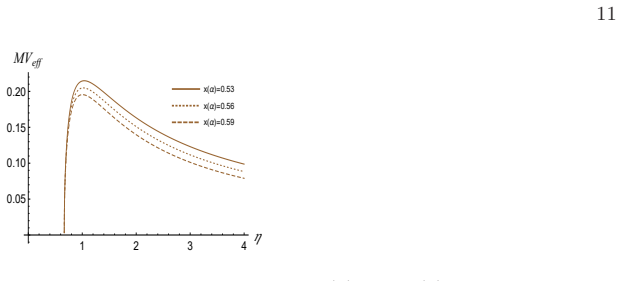
Starting from the first law of black hole thermodynamics, we establish an explicit correspondence between the corrected entropy and the metric function under the condition of fixed black hole energy and horizon position. Using the corrected metric, we further compute the photon sphere radius and shadow size, demonstrating that different entropy corrections lead to characteristic optical shifts. By comparing with the Event Horizon Telescope observations of Sgr A*, we constrain the parameter range introduced in the corrected entropy. This provides a feasible approach for testing generalized entropy frameworks and probing deviations from the Bekenstein-Hawking area law.
Editorial analysis
A structured set of objections, weighed in public.
Referee Report
Summary. The paper claims to derive an explicit correspondence between corrected black-hole entropies and modified metric functions f(r) by applying the first law dM = T dS while holding black-hole energy M and horizon radius r_h fixed. From the resulting metrics it computes photon-sphere radii and shadow sizes for several entropy corrections, then constrains the correction coefficient by matching the predicted shadow radius to the EHT measurement for Sgr A*.
Significance. If the entropy-to-metric mapping can be placed on a firm footing, the approach would offer a concrete route to test deviations from the Bekenstein-Hawking area law using shadow observables. The work is timely given current EHT data, but its impact is limited by the under-determination of the global metric profile required for photon-sphere calculations.
major comments (2)
- [§2 (entropy-metric correspondence)] The central construction (detailed after the statement of the first-law correspondence) fixes only the horizon temperature via surface gravity while holding M and r_h constant. This supplies no information on f'(r) for r > r_h, yet the photon-sphere condition 2f(r) − r f'(r) = 0 and the critical impact parameter both require the full radial profile of f(r). Without an additional, independently motivated ansatz for f(r), the subsequent shadow-radius predictions are not uniquely determined by the entropy correction.
- [§4 (EHT comparison)] The parameter constraint obtained by fitting the computed shadow radius to the single Sgr A* datum is effectively a consistency check rather than an independent test: the same coefficient enters both the metric deformation and the fit. This circularity weakens the claim that EHT data meaningfully bounds the entropy-correction coefficient.
minor comments (2)
- Notation for the entropy correction coefficient is introduced without a dedicated symbol table; a short table listing all modified quantities would improve readability.
- Figure captions should explicitly state the numerical values of the correction parameter used in each curve.
Simulated Author's Rebuttal
We thank the referee for the careful reading and constructive comments on our manuscript. We address each major point below and indicate where revisions will be made to clarify the assumptions and strengthen the presentation.
read point-by-point responses
-
Referee: [§2 (entropy-metric correspondence)] The central construction (detailed after the statement of the first-law correspondence) fixes only the horizon temperature via surface gravity while holding M and r_h constant. This supplies no information on f'(r) for r > r_h, yet the photon-sphere condition 2f(r) − r f'(r) = 0 and the critical impact parameter both require the full radial profile of f(r). Without an additional, independently motivated ansatz for f(r), the subsequent shadow-radius predictions are not uniquely determined by the entropy correction.
Authors: We agree that the first-law relation with fixed M and r_h determines only the horizon temperature (and thus f'(r_h)) via the surface-gravity definition. The manuscript adopts the standard ansatz that the metric remains asymptotically flat with f(r_h)=0 and that the entropy correction enters by rescaling the effective gravitational potential while preserving the Schwarzschild-like form outside the horizon. This ansatz is motivated by the requirement of matching the corrected thermodynamics at the horizon and is commonly employed in studies of modified black-hole metrics. We will add an explicit paragraph in §2 of the revised manuscript stating this ansatz and its motivation, thereby making the global profile used for the photon-sphere calculation fully transparent. revision: yes
-
Referee: [§4 (EHT comparison)] The parameter constraint obtained by fitting the computed shadow radius to the single Sgr A* datum is effectively a consistency check rather than an independent test: the same coefficient enters both the metric deformation and the fit. This circularity weakens the claim that EHT data meaningfully bounds the entropy-correction coefficient.
Authors: We respectfully disagree that the procedure is circular. The correction coefficient is an independent theoretical parameter introduced by the chosen entropy modification. Computing the shadow radius as a function of this coefficient and comparing it with the EHT datum for Sgr A* yields an observational upper bound on the coefficient's magnitude; this is the standard method of constraining new-physics parameters. Nevertheless, we acknowledge that the result is model-dependent and will revise the discussion in §4 to present the outcome explicitly as a constraint on the entropy-correction parameter rather than a model-independent test of the underlying framework. revision: partial
Circularity Check
No significant circularity; derivation proceeds from first law to metric to observables without definitional reduction
full rationale
The paper starts from the first law with a corrected entropy, imposes fixed M and r_h to obtain a modified metric function, computes photon-sphere radius and shadow size from that metric, and finally compares the resulting shadow radius to the single EHT datum for Sgr A* to bound the correction parameter. None of these steps reduces by construction to its own inputs: the metric is obtained from an explicit thermodynamic relation rather than by redefining the target observable, the shadow calculation uses the standard geodesic condition on the derived f(r), and the final comparison is an external observational constraint rather than a fit that is then relabeled as a prediction. No self-citation load-bearing step, uniqueness theorem, or ansatz smuggling is present in the provided derivation chain. The construction is therefore self-contained against external benchmarks.
Axiom & Free-Parameter Ledger
free parameters (1)
- entropy correction coefficient
axioms (2)
- domain assumption First law of black-hole thermodynamics holds for the corrected entropy
- ad hoc to paper Energy and horizon radius remain fixed while the metric is deformed
Lean theorems connected to this paper
-
IndisputableMonolith/Cost/FunctionalEquationwashburn_uniqueness_aczel contradicts?
contradictsCONTRADICTS: the theorem conflicts with this paper passage, or marks a claim that would need revision before publication.
we take f(r,α,β,⋯)=∂S_BH/∂S f(r) … under the premise that r+=2M remains unchanged
-
IndisputableMonolith/Foundation/RealityFromDistinctionreality_from_one_distinction contradicts?
contradictsCONTRADICTS: the theorem conflicts with this paper passage, or marks a claim that would need revision before publication.
Constrained by Eq.(27), the range of the parameter Δ … 0≤Δ≤0.004 (1σ)
What do these tags mean?
- matches
- The paper's claim is directly supported by a theorem in the formal canon.
- supports
- The theorem supports part of the paper's argument, but the paper may add assumptions or extra steps.
- extends
- The paper goes beyond the formal theorem; the theorem is a base layer rather than the whole result.
- uses
- The paper appears to rely on the theorem as machinery.
- contradicts
- The paper's claim conflicts with a theorem or certificate in the canon.
- unclear
- Pith found a possible connection, but the passage is too broad, indirect, or ambiguous to say the theorem truly supports the claim.
Reference graph
Works this paper leans on
-
[1]
investigated the relation between the number of stable and uns table photon spheres outside the black hole horizon. Motivated by these developments, recent studies on the optical properties of various deformed black holes have attracted our attention [53–59]. A central goal of modern theoretical physics is to understand th e microscopic origin of black ho...
-
[2]
55 ≤ bpsα ≤ 5. 22, 4. 55 3 = bpsα ≈ 1. 516, b psα = 5. 22 3 ≈ 1. 74, (1σ ),
-
[3]
21 ≤ bpsα ≤ 5. 56, 4. 21 3 = bpsα ≈ 1. 403, b psα = 5. 56 3 ≈ 1. 85, (2σ ). (27) Constrained by Eq. (27), the range of the parameter ∆ in the Barr ow entropy is determined as 0 ≤ ∆ ≤
-
[4]
004(1σ ) (corresponding to point A in Fig. 2 and 0 ≤ ∆ ≤ 0. 062 (corresponding to point B in Fig. 2). The region between the two red lines is the constraint interval of (1 σ ) , and the region between the two orange lines is the constraint interval of (2 σ ). 7 B. R ´enyi Entropy Substituting Eq. (2) into Eq. (9), we obtain the spacetime metric co rrespon...
-
[5]
(40) Figure 6 presents the rpsy 3M − y(β ) curve and bpsy 3M − y(β ) curve when M = 1 , x (α ) = 0
( 1 − 4y 1− √ 1− 12y ) . (40) Figure 6 presents the rpsy 3M − y(β ) curve and bpsy 3M − y(β ) curve when M = 1 , x (α ) = 0. It can be seen from rpsy 3 M -y(β) bpsy 3 M -y(β) A(0.030,1.516) B(0.049,1.403) 0.00 0.01 0.02 0.03 0.04 0.05 0.06y(β)1.0 1.2 1.4 1.6 1.8 2.0 rpsy 3 M / bpsy 3 M FIG. 6: the rpsy 3M − y(β ) curve and bpsy 3M − y(β ) curve when M = 1...
-
[6]
583, (1 σ ) (corresponding to points A and A′ in Fig. 7(c)) and 0 . 462 ≤ y(β ) ≤ 0. 636, (2 σ ) (corresponding to points B and B′ in Fig. 7(c)). It can be seen from Fig. 9 and Fig. 10 that for a fixed value of y(β ), the photon sphere radius rpsx of the black hole associated with Sharma-Mittal entropy decreases as th e correction parameter x(α ) increases...
-
[7]
J. P. Luminet, Image of a spherical black hole with thin ac cretion disk, Astron. Astrophys. 75, (1979) 228-235
work page 1979
-
[8]
F. Atamurotov, A. Abdujabbarov and W. B. Han, Effect of pla sma on gravitational lensing by a Schwarzschild black hole immersed in perfect fluid dark matter, Phys. Rev. D 104, (2021) 084015
work page 2021
-
[9]
Biesiada, Strong lensing systems as a probe of dark ene rgy in the universe, Phys
M. Biesiada, Strong lensing systems as a probe of dark ene rgy in the universe, Phys. Rev. D 73, (2006) 023006
work page 2006
-
[10]
S. Cao, M. Biesiada, R. Gavazzi, A. Pi´ orkowska and Z. H. Zhu, Cosmology With Strong-lensing System s, Astrophys. J. 806, (2015) 185, arXiv:1509.07649 [astro-ph.CO]
work page internal anchor Pith review Pith/arXiv arXiv 2015
-
[11]
K. Liao, Z. Li, S. Cao, M. Biesiada, X. Zheng and Z. H. Zhu, T he Distance Duality Relation From Strong Gravita- tional Lensing, Astrophys. J. 822, (2016) 74, arXiv:1511.01318 [astro-ph.CO]
work page internal anchor Pith review Pith/arXiv arXiv 2016
-
[12]
Tsukamoto, Retrolensing by two photon spheres of a bla ck-bounce spacetime, Phys
N. Tsukamoto, Retrolensing by two photon spheres of a bla ck-bounce spacetime, Phys. Rev. D 105, (2022) 084036, arXiv:2202.09641 [gr-qc]
-
[15]
First M87 Event Horizon Telescope Results. VI. The Shadow and Mass of the Central Black Hole
K. Akiyama, et al., (Event Horizon Telescope), First Sag ittarius A* Event Horizon Telescope Results. VIII. Physica l Interpretation of the Polarized Ring, Astrophys. J. Lett. 964, (2024) L26, arXiv:1906.11243 [astroph.GA]
work page internal anchor Pith review Pith/arXiv arXiv 2024
- [16]
-
[17]
S. Capozziello, S. De Bianchi, E. Battista, Avoiding si ngularities in Lorentzian-Euclidean black holes: the role of atemporality, Phys. Rev. D 109, (2024) 104060, arXiv:2404.17267 [gr-qc]
-
[18]
S. De Bianchi, S. Capozziello, E. Battista, Atemporali ty from Conservation Laws of Physics in Lorentzian-Euclide an Black Hole, Found. Phys. 55, (2025)3, 36, arXiv:2504.17570 [gr-qc]
-
[19]
S. Capozziello, E. Battista, S. De Bianchi, Null geodes ics, causal structure, and matter accretion in Lorentzian- Euclidean black holes, Phys. Rev. D 112, (2025)4, 044009, arXiv:2507.08431 [gr-qc]
- [22]
-
[23]
Shadow signatures and energy accumulation in Lorentzian-Euclidean black holes
E. Battista, S. Capozziello, C. Y. Yang, Shadow signatu res and energy accumulation in Lorentzian-Euclidean black holes, arXiv:2601.10806 [gr-qc]
work page internal anchor Pith review Pith/arXiv arXiv
- [24]
-
[25]
X. X. Zeng, H. Ye, M. I. Aslam, R. Saleem, Shadows and Pola rization Images of a Four-dimensional Gauss-Bonnet Black Hole Irradiated by a Thick Accretion Disk, arXiv:2603 .07185 [gr-qc]
- [26]
- [27]
- [28]
- [29]
- [30]
- [31]
- [32]
-
[33]
J. W. Li, Z. L. Wang, T. T. Sui, Shadows of quintessence bl ack holes: spherical accretion, photon trajectories, and geodesic observers, Eur. Phys. J. C 86, (2026) 335, arXiv:2603.09159 [gr-qc]
work page internal anchor Pith review Pith/arXiv arXiv 2026
- [34]
-
[36]
Hod, Lower bound on the radii of black-hole shadows, Phys
S. Hod, Lower bound on the radii of black-hole shadows, Phys. Rev. D 113, (2026)2, 024064, arXiv:2603.03421 [gr-qc]
- [37]
- [38]
- [39]
- [40]
-
[41]
M. Khodadi, S. Vagnozzi, J. T. Firouzjaee, Event Horizo n Telescope observations exclude compact objects in baseli ne mimetic gravity, Sci. Rep. 14, (2024)1, 26932, arXiv:2408.03241 [gr-qc]
-
[42]
P. K. Yerra, C. Bhamidipat, Topological charge and blac k hole photon spheres in massive gravity, arXiv:2509.04261 [gr-qc]
work page internal anchor Pith review Pith/arXiv arXiv
- [43]
- [44]
-
[45]
A. Errehymy, Null geodesics and shadows of Dekel-Zhao- type dark matter black holes with a quintessential field: Constraints from EHT observations of M87* and Sgr A*, Phys. Lett. B 870, (2025), 139945
work page 2025
- [46]
- [47]
-
[48]
M. I. Aslama, R. Saleemb, A shadow study for a static dyon ic black hole with a global monopole surrounded by perfect fluid, Eur. Phys. J. C 84, (2024) 37
work page 2024
-
[49]
H. Lekbich, N. Parbin, D. J. Gogoi, A. E. Boukil, M. B. Sed ra, The optical features of noncommutative charged 4D-AdS-EinsteinCGaussCBonnet black hole: shadow and defle ction angle, Eur. Phys. J. C 84, (2024) 350
work page 2024
-
[50]
A. Sadeghi , F. Shoja, A class of -dimensional regular bl ack holes: Shadows, Thermodynamics and Gravitational collapse, arXiv:2602.10269 [gr-qc]
- [51]
- [52]
-
[53]
Y. Z. Du, H. F. Li, Y. B. Ma, Q. Gu, Phase structure and opti cal properties of the de Sitter Spacetime with KR field based on the Lyapunov exponent, Eur. Phys. J. C 85, (2025) 78
work page 2025
-
[54]
J. Sharipov, J. Khasanov, P. Sheoran, S. Shaymatov, B. A hmedov, Optical Signatures of a Schwarzschild Black Hole in a Dehnen-Type Dark Matter Halo, arXiv:2602.09168 [gr-qc ]
- [55]
- [56]
- [57]
-
[58]
K. J. He, G. P. Li, L. F. Li, X. X. Zeng, Gravitational lens ing and observational features of a dynamic black hole, arXiv:2603.27606 [gr-qc]
work page internal anchor Pith review Pith/arXiv arXiv
-
[59]
H. E. Gong, J. L. Qin, Y. S. Wang, B. F. Wu, Z. F. Mai, S. Guo, E. W. Liang, The shadows and photon rings of two minimal deformations of Schwarzschild black holes, arX iv:2508.20419 [gr-qc]
work page internal anchor Pith review Pith/arXiv arXiv
- [60]
- [61]
- [62]
- [63]
- [64]
- [65]
- [66]
- [67]
-
[68]
E. Elizalde, S. Nojiri, S. D. Odintsov, Black Hole Therm odynamics and Generalised Non-Extensive Entropy, Universe 11, (2025)2, 60, arXiv:2502.05801 [gr-qc]
- [69]
- [70]
- [71]
- [72]
- [73]
- [74]
- [75]
-
[76]
A. R´enyi, On measures of entropy and information, Proceedings of the Fourth Berkeley Symposium on Mathematic al Statistics and Probability 1: Contributions to the Theory o f Statistics , (1961) 547 − 561
work page 1961
-
[77]
C. Promsiri, E. Hirunsirisawat, and W. Liewrian, Therm odynamics and Van der Waals phase transition of charged black holes in flat spacetime via R´ enyi statistics, Phys. Rev. D 102, (2020) 064014
work page 2020
-
[78]
Non-extensive Statistical Mechanics and Black Hole Entropy From Quantum Geometry
A. Majhi, Non-extensive statistical mechanics and bla ck hole entropy from quantum geometry, Phys. Lett. B 775, (2017) 32 − 43, arXiv:1703.09355 [gr-qc]
work page internal anchor Pith review Pith/arXiv arXiv 2017
-
[79]
A. S. Jahromi, S. A. Moosavi, H. Moradpour, J. P. Morais G ra?a, I. P. Lobo, I. G. Salako, A. Jawad, Generalized entropy formalism and a new holographic dark energy model, Phys. Lett. B 780, (2018) 21 − 24, arXiv:1802.07722 [gr-qc]
work page internal anchor Pith review Pith/arXiv arXiv 2018
-
[80]
A. Errehymy, Y. Khedif, M. Daoud, K. Myrzakulov, B. Turi mov, T. Myrzakul, Quantum corrections to Dymnikova- Schwinger black holes in Einstein-Gauss-Bonnet gravity, Phys. Lett. B 870, (2025) 139915, arXiv:2509.17630 [gr-qc]
- [81]
- [83]
-
[84]
R. Carballo-Rubio, F. D. Filippo, S. Mukohyama, K. Okab ayashi, Imprints of quantum vacuum fluctuations on the gravitational field of a spherical mass, JHEP 02, (2026), 129, arXiv:2509.10667 [gr-qc]
-
[85]
S. Vagnozzi et al., Horizon-scale tests of gravity theo ries and fundamental physics from the Event Horizon Telesco pe image of Sagittarius A*, Class. Quant. Grav. 40, (2026) 165007, arXiv:2205.07787 [gr-qc]
-
[86]
Reggie C. Pantig, Ali ¨Ovg¨un, Durmu¸ s Demir, Testing Symmergent gravity through the sh adow image and weak 15 field photon deflection by a rotating black hole using the M87* and Sgr. A* results, Eur. Phys. J. C 83, (2023)3, 250, arXiv:2208.02969 [gr-qc]
discussion (0)
Sign in with ORCID, Apple, or X to comment. Anyone can read and Pith papers without signing in.