Recognition: no theorem link
Approximation of Maximally Monotone Operators : A Graph Convergence Perspective
Pith reviewed 2026-05-13 07:15 UTC · model grok-4.3
The pith
Any maximally monotone operator can be approximated in local graph convergence by continuous encoder-decoder architectures while preserving maximal monotonicity via resolvent parameterizations.
A machine-rendered reading of the paper's core claim, the machinery that carries it, and where it could break.
Core claim
The paper shows that every maximally monotone operator admits approximations in the sense of local graph convergence by continuous encoder-decoder architectures. It additionally constructs structure-preserving versions of these approximations that remain maximally monotone through resolvent-based parameterizations.
What carries the argument
Local graph convergence (Painlevé-Kuratowski sense) of continuous encoder-decoder architectures, with resolvent-based parameterizations to enforce maximal monotonicity.
If this is right
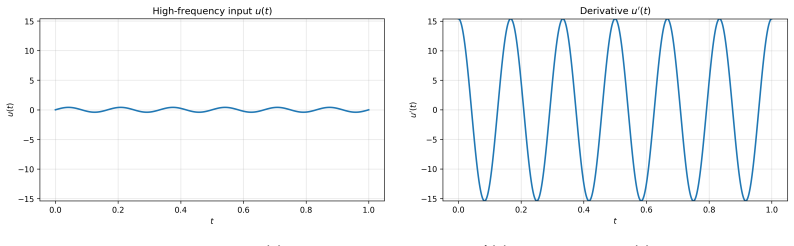
- Uniform and L^p approximations are inadequate for closed operators.
- Continuous encoder-decoder architectures suffice for local graph convergence approximations of all maximally monotone operators.
- Resolvent-based constructions yield approximating operators that remain maximally monotone.
- Operator learning becomes feasible for discontinuous and set-valued maps outside classical continuous frameworks.
Where Pith is reading between the lines
- The framework could support learning of solution maps for variational inequalities or optimization problems involving monotone operators.
- Numerical schemes for physical systems governed by such operators might gain stability from these approximations.
- Similar graph-convergence ideas could be tested on other classes of closed operators beyond the monotone case.
Load-bearing premise
That local graph convergence is the appropriate notion for practical approximation of maximally monotone operators.
What would settle it
A concrete maximally monotone operator together with a proof that no continuous encoder-decoder sequence achieves local graph convergence to it, or that the resolvent parameterization fails to preserve monotonicity.
Figures

read the original abstract
Operator learning has been highly successful for continuous mappings between infinite-dimensional spaces, such as PDE solution operators. However, many operators of interest-including differential operators-are discontinuous or set-valued, and lie outside classical approximation frameworks. We propose a paradigm shift by formulating approximation via graph convergence (Painlev\'e-Kuratowski convergence), which is well-suited for closed operators. We show that uniform and $L^p$ approximation are fundamentally inadequate in this setting. Focusing on maximally monotone operators, we prove that any such operator can be approximated in the sense of local graph convergence by continuous encoder-decoder architectures, and further construct structure-preserving approximations that retain maximal monotonicity via resolvent-based parameterizations.
Editorial analysis
A structured set of objections, weighed in public.
Referee Report
Summary. The manuscript develops a framework for approximating maximally monotone operators using graph convergence (Painlevé-Kuratowski) instead of uniform or L^p norms, which are shown to be inadequate for closed set-valued operators. It proves existence of local graph-convergence approximations by continuous encoder-decoder architectures and provides explicit resolvent-based constructions that preserve maximal monotonicity.
Significance. If the central existence results and constructions hold, the work supplies a theoretically grounded extension of operator learning to discontinuous and set-valued operators arising in PDEs and optimization. The explicit resolvent parameterizations and emphasis on structure preservation are concrete strengths that could support downstream numerical work.
major comments (2)
- [Section 4] The local graph convergence result (likely Theorem 3.1 or 4.2) establishes approximation but does not address whether the approximating operators converge in the sense of resolvents or Yosida regularizations; this is load-bearing for applications to proximal algorithms and should be stated explicitly or shown via an additional corollary.
- [Theorem 5.3] The encoder-decoder construction appears to rely on density arguments in the graph topology, yet the manuscript does not quantify the modulus of continuity or the dimension of the latent space needed to achieve a prescribed graph-convergence tolerance; without such control the existence statement remains non-constructive for practical purposes.
minor comments (3)
- [Abstract and §2] The abstract and introduction use 'local graph convergence' without a self-contained definition or pointer to the precise metric; add a short paragraph in §2.
- [Throughout] Notation for the graph G(A) and the resolvent J_λ is introduced inconsistently across sections; standardize and include a notation table.
- [Figure 1] Figure 1 caption should clarify whether the plotted sets are exact graphs or numerical approximations.
Simulated Author's Rebuttal
We thank the referee for the positive evaluation and the detailed comments, which have helped us strengthen the manuscript. We address each major comment below.
read point-by-point responses
-
Referee: [Section 4] The local graph convergence result (likely Theorem 3.1 or 4.2) establishes approximation but does not address whether the approximating operators converge in the sense of resolvents or Yosida regularizations; this is load-bearing for applications to proximal algorithms and should be stated explicitly or shown via an additional corollary.
Authors: We agree that explicit resolvent convergence is important for proximal algorithms. The structure-preserving constructions already produce maximally monotone operators, and local graph convergence of maximal monotone operators implies resolvent convergence in the strong topology. We have added Corollary 4.3, which states this implication with a short proof using the Minty parametrization of the graphs. revision: yes
-
Referee: [Theorem 5.3] The encoder-decoder construction appears to rely on density arguments in the graph topology, yet the manuscript does not quantify the modulus of continuity or the dimension of the latent space needed to achieve a prescribed graph-convergence tolerance; without such control the existence statement remains non-constructive for practical purposes.
Authors: The referee correctly observes that the proof of Theorem 5.3 is existential via density and supplies no explicit modulus or latent-dimension bound. The paper's focus is the theoretical existence result rather than quantitative rates, which would require additional regularity assumptions on the operator. We have inserted a remark after Theorem 5.3 that acknowledges the non-constructive character and indicates how the latent dimension may be chosen in practice by appealing to known approximation rates for continuous functions on compact sets. revision: partial
Circularity Check
No significant circularity in the derivation chain
full rationale
The paper establishes an existence result: any maximally monotone operator admits local graph-convergence approximation by continuous encoder-decoder maps, together with an explicit resolvent-based construction that preserves maximal monotonicity. These claims rest on standard properties of monotone operators, resolvents, and Painlevé-Kuratowski convergence in reflexive Banach spaces. No step reduces by definition to its own inputs, no parameter is fitted on a subset and then relabeled as a prediction, and no load-bearing premise is justified solely by self-citation. The argument that uniform and L^p notions are inadequate for closed set-valued operators follows directly from the definition of those convergences and is internally consistent without circular reduction.
Axiom & Free-Parameter Ledger
axioms (2)
- domain assumption Maximally monotone operators are closed and satisfy the standard monotonicity inequality.
- domain assumption Local graph convergence is a suitable notion of approximation for discontinuous operators.
Reference graph
Works this paper leans on
-
[1]
Lecture Notes in Applied and Computational Mechanics
Vincent Acary and Bernard Brogliato.Numerical methods for nonsmooth dynamical systems: Applications in mechanics and electronics. Lecture Notes in Applied and Computational Mechanics. Springer, Berlin, Germany, 2008
work page 2008
-
[2]
Preservation or not of the maximally monotone property by graph-convergence
Samir Adly, Hédy Attouch, and Ralph Tyrrell Rockafellar. Preservation or not of the maximally monotone property by graph-convergence. 2022
work page 2022
-
[3]
Sorting out lipschitz function approximation
Cem Anil, James Lucas, and Roger Grosse. Sorting out lipschitz function approximation. In International conference on machine learning, pages 291–301. PMLR, 2019
work page 2019
-
[4]
Gunnar Aronsson, Michael Crandall, and Petri Juutinen. A tour of the theory of absolutely minimizing functions.Bulletin of the American mathematical society, 41(4):439–505, 2004
work page 2004
-
[5]
Heinz H Bauschke, Xianfu Wang, and Liangjin Yao. Examples of discontinuous maximal monotone linear operators and the solution to a recent problem posed by bf svaiter.Journal of Mathematical Analysis and Applications, 370(1):224–241, 2010
work page 2010
-
[6]
Convex analysis and monotone operator theory in hilbert spaces, 2011
HH Bauschke. Convex analysis and monotone operator theory in hilbert spaces, 2011
work page 2011
-
[7]
Younes Belkouchi, Jean-Christophe Pesquet, Audrey Repetti, and Hugues Talbot. Learning truly monotone operators with applications to nonlinear inverse problems.SIAM Journal on Imaging Sciences, 18(1):735–764, 2025
work page 2025
-
[8]
Irene Benedetti, Luisa Malaguti, and Manuel DP Monteiro Marques. Differential equations with maximal monotone operators.Journal of Mathematical Analysis and Applications, 539(1):128484, 2024
work page 2024
-
[9]
Modern regularization methods for inverse problems.Acta numerica, 27:1–111, 2018
Martin Benning and Martin Burger. Modern regularization methods for inverse problems.Acta numerica, 27:1–111, 2018
work page 2018
-
[10]
Kaushik Bhattacharya, Bamdad Hosseini, Nikola B Kovachki, and Andrew M Stuart. Model reduction and neural networks for parametric pdes.The SMAI journal of computational mathematics, 7:121–157, 2021
work page 2021
-
[11]
DeepMoD: Deep learning for model discovery in noisy data.J
Gert-Jan Both, Subham Choudhury, Pierre Sens, and Remy Kusters. DeepMoD: Deep learning for model discovery in noisy data.J. Comput. Phys., 428(109985):109985, March 2021
work page 2021
-
[12]
A mathematical guide to operator learning
Nicolas Boullé and Alex Townsend. A mathematical guide to operator learning. InHandbook of Numerical Analysis, volume 25, pages 83–125. Elsevier, 2024
work page 2024
-
[13]
Learning firmly nonex- pansive operators.arXiv:2407.14156, 2024
Kristian Bredies, Jonathan Chirinos-Rodriguez, and Emanuele Naldi. Learning firmly nonex- pansive operators.arXiv:2407.14156, 2024
-
[14]
Haim Brezis.Operateurs maximaux monotones et semi-groupes de contractions dans les espaces de Hilbert, volume 5. Elsevier, 1973
work page 1973
-
[15]
Leon Bungert and Martin Burger. Asymptotic profiles of nonlinear homogeneous evolution equations of gradient flow type.Journal of Evolution Equations, 20(3):1061–1092, 2020
work page 2020
-
[16]
Gradient flows and nonlinear power methods for the com- putation of nonlinear eigenfunctions
Leon Bungert and Martin Burger. Gradient flows and nonlinear power methods for the com- putation of nonlinear eigenfunctions. InHandbook of numerical analysis, volume 23, pages 427–465. Elsevier, 2022
work page 2022
-
[17]
Leon Bungert and Yury Korolev. Eigenvalue problems inL∞: optimality conditions, duality, and relations with optimal transport.Communications of the American Mathematical Society, 2(08):345–373, 2022
work page 2022
-
[18]
Introduction to nonlinear spectral analysis.arXiv:2506.08754, 2025
Leon Bungert and Yury Korolev. Introduction to nonlinear spectral analysis.arXiv:2506.08754, 2025. 10
-
[19]
Physics-informed learning of governing equations from scarce data.Nat
Zhao Chen, Yang Liu, and Hao Sun. Physics-informed learning of governing equations from scarce data.Nat. Commun., 12(1):6136, October 2021
work page 2021
-
[20]
G-convergence of monotone operators
Valeria Chiado’Piat, Gianni Dal Maso, and Anneliese Defranceschi. G-convergence of monotone operators. InAnnales de l’Institut Henri Poincaré C, Analyse non linéaire, volume 7, pages 123–160. Elsevier, 1990
work page 1990
-
[21]
George Cybenko. Approximation by superpositions of a sigmoidal function.Mathematics of control, signals and systems, 2(4):303–314, 1989
work page 1989
-
[22]
Springer Science & Business Media, 1996
Heinz Werner Engl, Martin Hanke, and Andreas Neubauer.Regularization of inverse problems, volume 375. Springer Science & Business Media, 1996
work page 1996
-
[23]
Janek Gödeke and Pascal Fernsel. New universal operator approximation theorem for encoder- decoder architectures (preprint).arXiv:2503.24092, 2025
-
[24]
Approximating continuous functions by relu nets of minimal width.arXiv:1710.11278, 2017
Boris Hanin and Mark Sellke. Approximating continuous functions by relu nets of minimal width.arXiv:1710.11278, 2017
-
[25]
Multilayer feedforward networks are universal approximators.Neural networks, 2(5):359–366, 1989
Kurt Hornik, Maxwell Stinchcombe, and Halbert White. Multilayer feedforward networks are universal approximators.Neural networks, 2(5):359–366, 1989
work page 1989
-
[26]
CFO: Learning continuous-time PDE dynamics via flow-matched neural operators
Xianglong Hou, Xinquan Huang, and Paris Perdikaris. CFO: Learning continuous-time PDE dynamics via flow-matched neural operators. InThe Fourteenth International Conference on Learning Representations, 2025
work page 2025
-
[27]
Petri Juutinen, Peter Lindqvist, and Juan J Manfredi.The infinity Laplacian: examples and observations. Institut Mittag-Leffler, 1999
work page 1999
-
[28]
Yury Korolev. Two-layer neural networks with values in a banach space.SIAM Journal on Mathematical Analysis, 54(6):6358–6389, 2022
work page 2022
-
[29]
Nikola Kovachki, Samuel Lanthaler, and Siddhartha Mishra. On universal approximation and error bounds for fourier neural operators.Journal of Machine Learning Research, 22(290):1–76, 2021
work page 2021
-
[30]
Nikola Kovachki, Zongyi Li, Burigede Liu, Kamyar Azizzadenesheli, Kaushik Bhattacharya, Andrew Stuart, and Anima Anandkumar. Neural operator: Learning maps between function spaces with applications to pdes.Journal of Machine Learning Research, 24(89):1–97, 2023
work page 2023
-
[31]
Operator learning: Algorithms and analysis.Handbook of Numerical Analysis, 25:419–467, 2024
Nikola B Kovachki, Samuel Lanthaler, and Andrew M Stuart. Operator learning: Algorithms and analysis.Handbook of Numerical Analysis, 25:419–467, 2024
work page 2024
-
[32]
Samuel Lanthaler, Zongyi Li, and Andrew M Stuart. Nonlocality and nonlinearity implies universality in operator learning.Constructive Approximation, 62(2):261–303, 2025
work page 2025
-
[33]
Samuel Lanthaler, Siddhartha Mishra, and George E Karniadakis. Error estimates for deeponets: A deep learning framework in infinite dimensions.Transactions of Mathematics and its Applications, 6(1):tnac001, 2022
work page 2022
-
[34]
PDE-net: Learning PDEs from data
Zichao Long, Yiping Lu, Xianzhong Ma, and Bin Dong. PDE-net: Learning PDEs from data. InInternational Conference on Machine Learning, pages 3208–3216. PMLR, July 2018
work page 2018
-
[35]
Lu Lu, Pengzhan Jin, and George Em Karniadakis. Deeponet: Learning nonlinear operators for identifying differential equations based on the universal approximation theorem of operators. arXiv:1910.03193, 2019
work page internal anchor Pith review arXiv 1910
-
[36]
Spectral Normalization for Generative Adversarial Networks
Takeru Miyato, Toshiki Kataoka, Masanori Koyama, and Yuichi Yoshida. Spectral normalization for generative adversarial networks.arXiv:1802.05957, 2018
work page Pith review arXiv 2018
-
[37]
Approximation theory for 1-lipschitz resnets.arXiv:2505.12003, 2025
Davide Murari, Takashi Furuya, and Carola-Bibiane Schönlieb. Approximation theory for 1-lipschitz resnets.arXiv:2505.12003, 2025
-
[38]
Nicholas H. Nelsen and Yunan Yang. Operator learning meets inverse problems: A probabilistic perspective.arxiv:2508.20207, 2025. 11
-
[39]
Sebastian Neumayer, Alexis Goujon, Pakshal Bohra, and Michael Unser. Approximation of lipschitz functions using deep spline neural networks.SIAM Journal on Mathematics of Data Science, 5(2):306–322, 2023
work page 2023
-
[40]
Jean-Christophe Pesquet, Audrey Repetti, Matthieu Terris, and Yves Wiaux. Learning maxi- mally monotone operators for image recovery.SIAM Journal on Imaging Sciences, 14(3):1206– 1237, 2021
work page 2021
-
[41]
Deep hidden physics models: deep learning of nonlinear partial differential equations.J
Maziar Raissi. Deep hidden physics models: deep learning of nonlinear partial differential equations.J. Mach. Learn. Res., 19(1):932–955, 2018
work page 2018
-
[42]
R Tyrrell Rockafellar and Roger JB Wets.Variational analysis. Springer, 1998
work page 1998
-
[43]
Variational methods in imaging, volume 167
Otmar Scherzer, Markus Grasmair, Harald Grossauer, Markus Haltmeier, and Frank Lenzen. Variational methods in imaging, volume 167. Springer
-
[44]
Yeh Wang. Finite element analysis of the duct flow of bingham plastic fluids: an application of the variational inequality.Int. J. Numer. Methods Fluids, 25(9):1025–1042, 1997
work page 1997
-
[45]
Error bounds for approximations with deep relu networks.Neural networks, 94:103–114, 2017
Dmitry Yarotsky. Error bounds for approximations with deep relu networks.Neural networks, 94:103–114, 2017. 12 A Proofs A.1 Proof of Example 2 Proof.Suppose, for contradiction, there is a continuousA ε :D(A ε)⊂H→HwithK⊂D(A ε) sup u∈K ∥Aε(u)−A(u)∥ L2(0,1) ≤ε. In particular, ∥Aε(0)∥L2(0,1) =∥A ε(0)−A(0)∥ L2(0,1) ≤ε. We observe that since∥Av n∥L2(0,1) = π√ 2...
discussion (0)
Sign in with ORCID, Apple, or X to comment. Anyone can read and Pith papers without signing in.