On the maximum neutrino flux of blazars in the one-zone leptohadronic model
Pith reviewed 2026-06-30 14:47 UTC · model grok-4.3
The pith
The one-zone leptohadronic model caps blazar neutrino fluxes below levels needed to explain IceCube associations.
A machine-rendered reading of the paper's core claim, the machinery that carries it, and where it could break.
Core claim
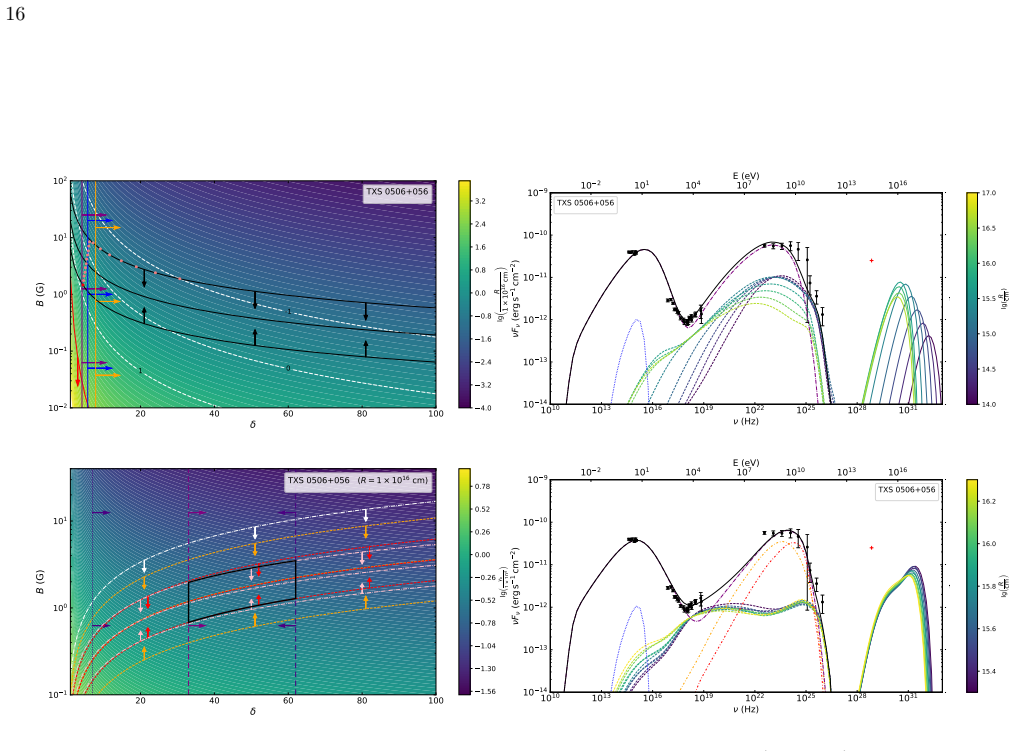
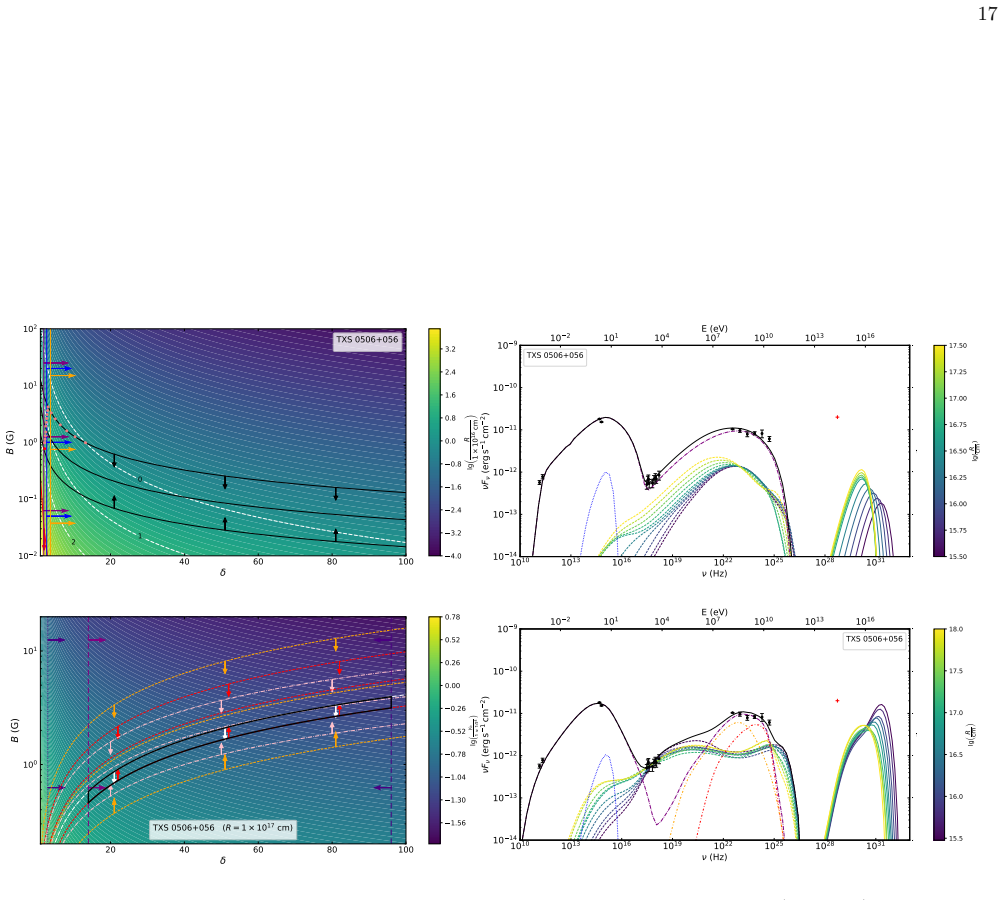
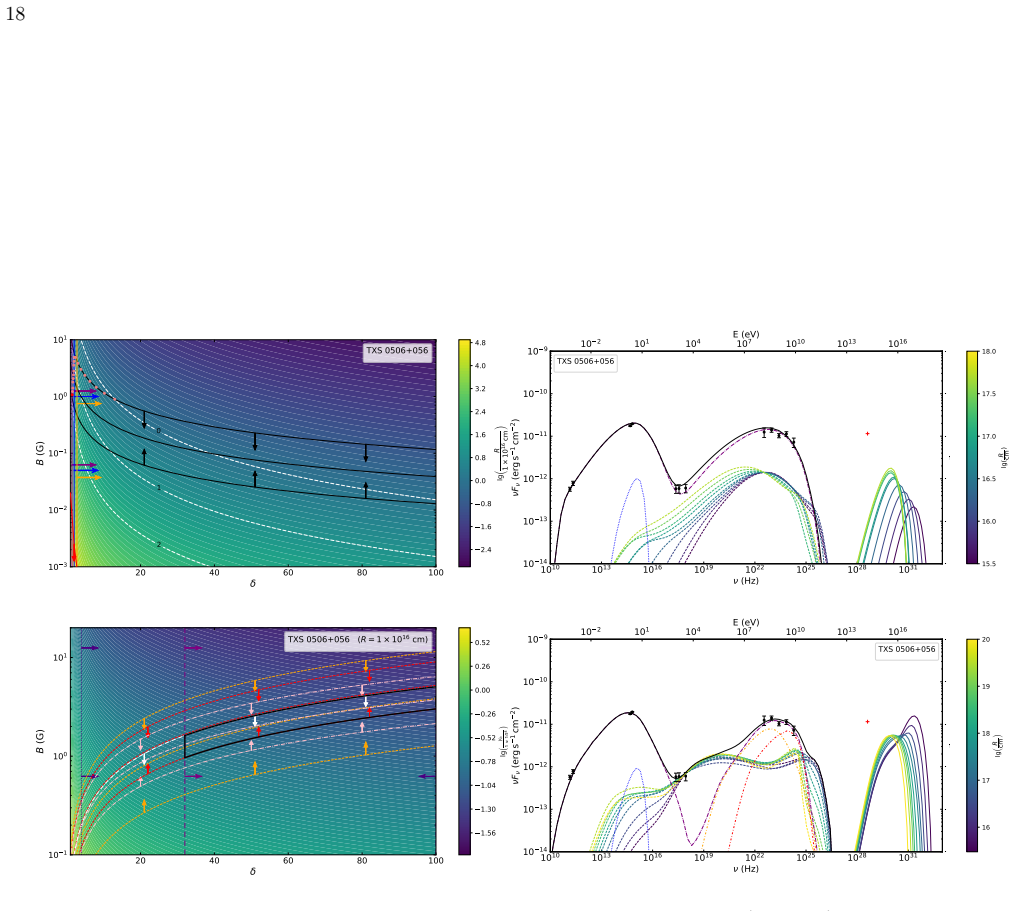
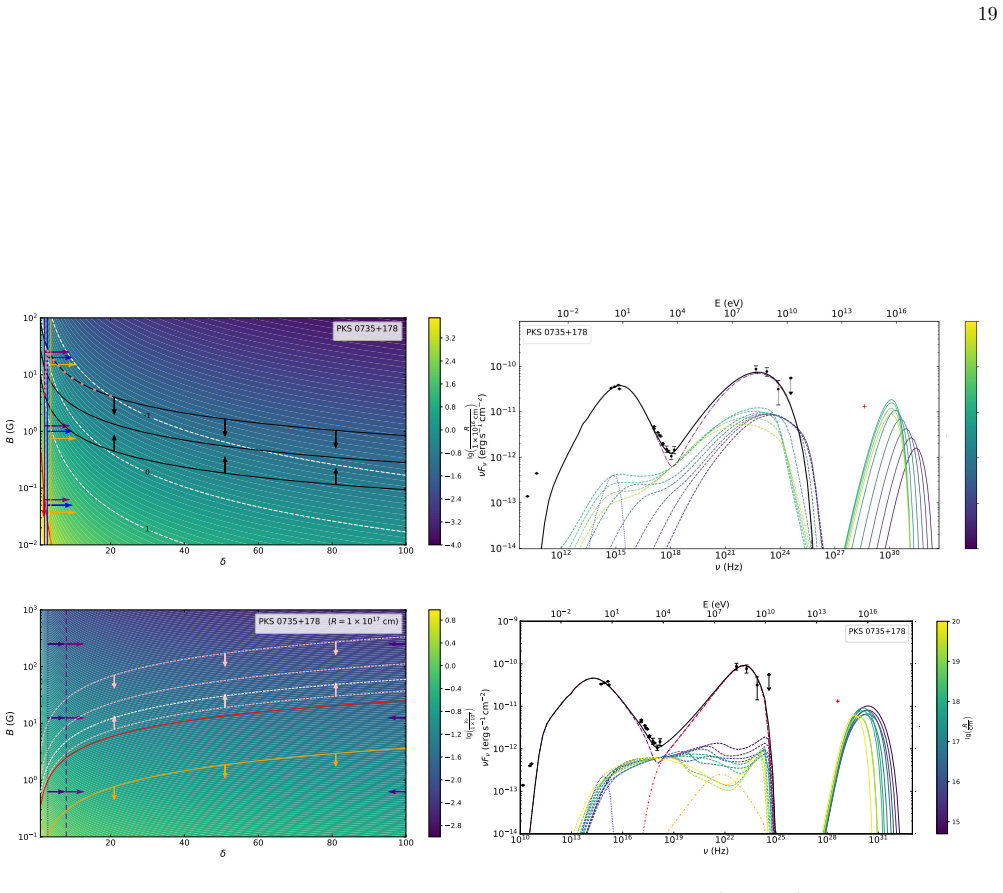
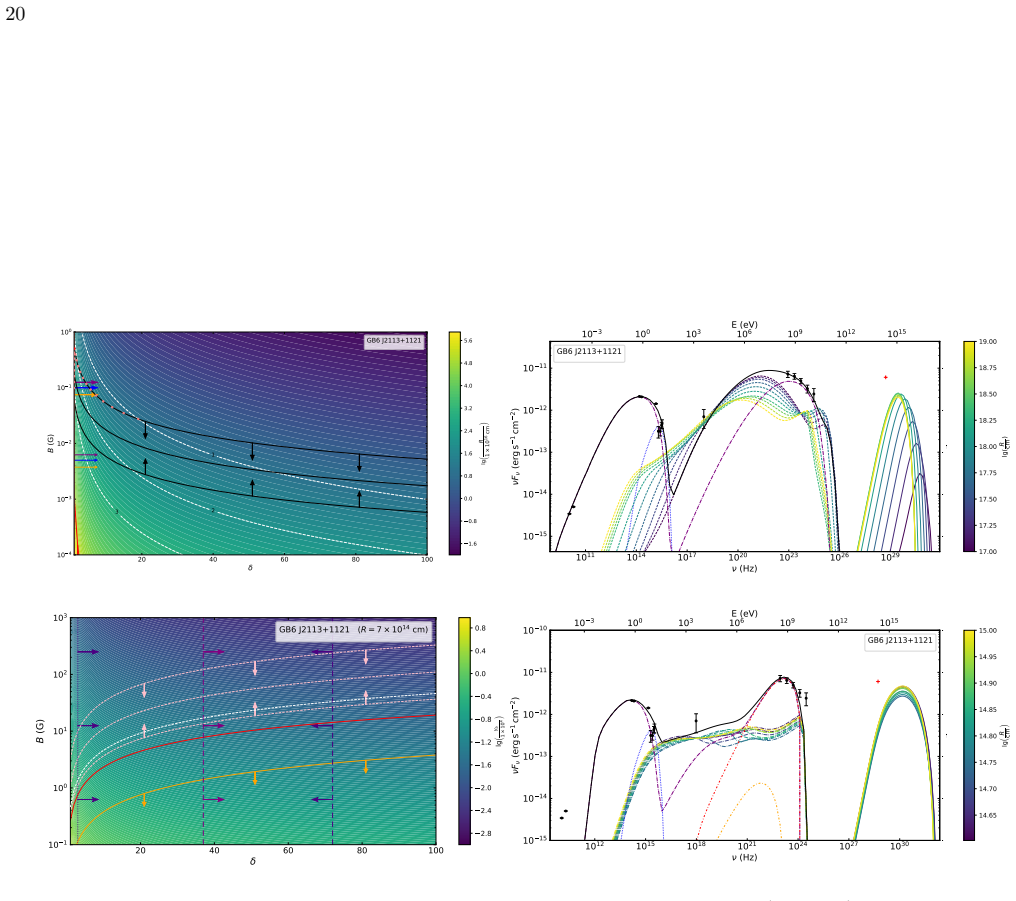
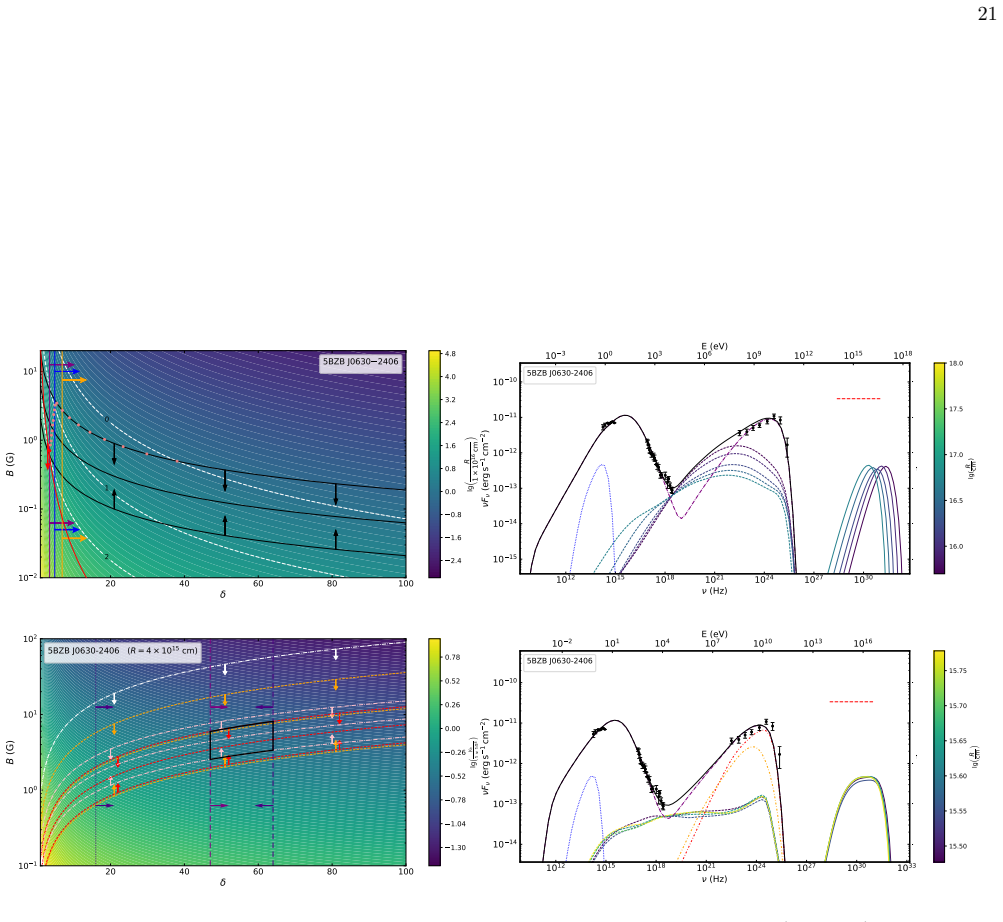
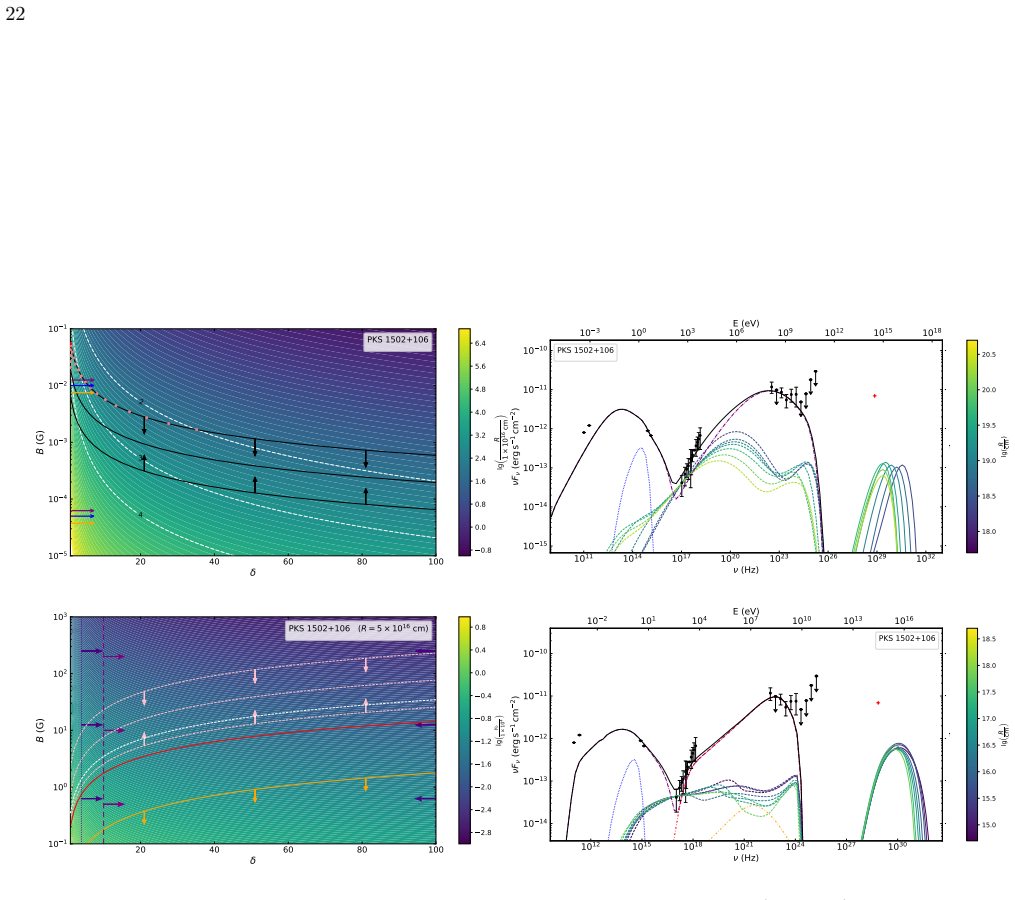
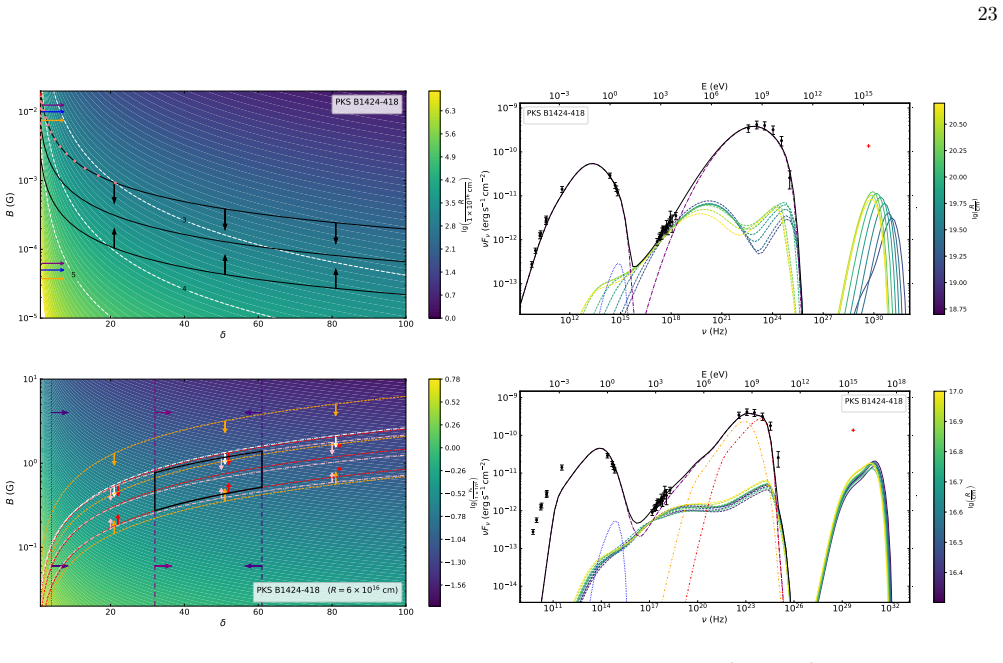
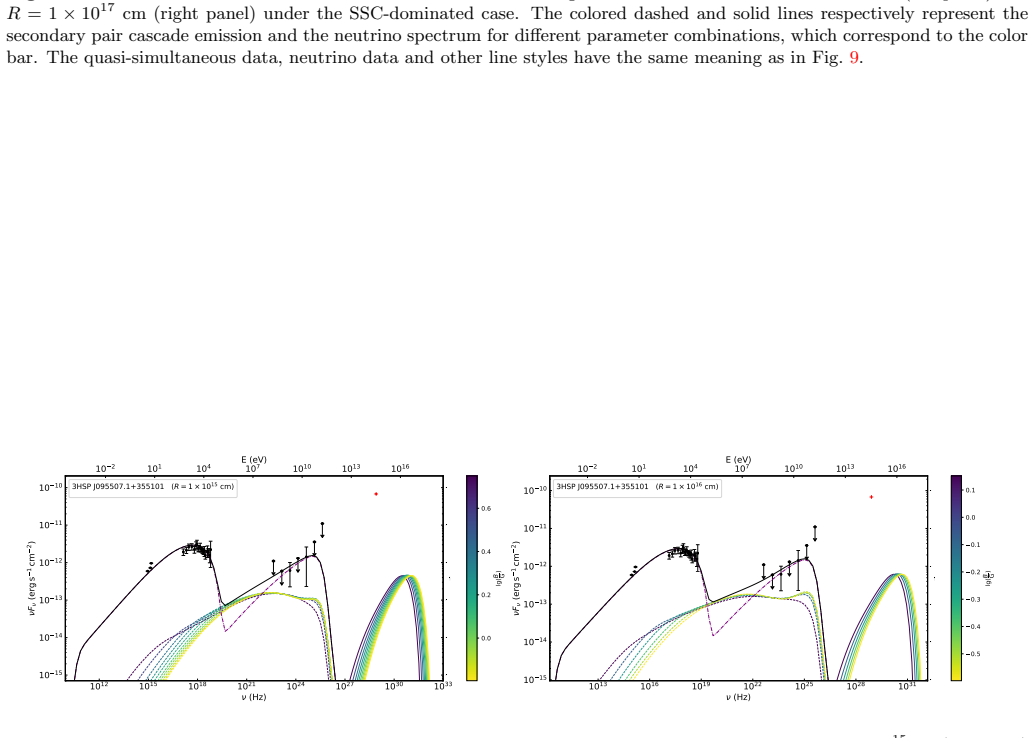
An analytical derivation yields the maximum neutrino flux as a function of observed X-ray flux within attainable one-zone leptohadronic parameters; application to candidate blazars and comparison with numerical models show that these fluxes do not significantly exceed prior one-zone results and remain below IceCube-inferred levels, indicating that the one-zone scenario alone is unlikely to explain high-energy neutrino-blazar associations.
What carries the argument
Analytical expression for the maximum neutrino flux in terms of the observed X-ray flux under one-zone leptohadronic constraints.
If this is right
- One-zone leptohadronic models reach their neutrino ceiling at values already explored in earlier studies.
- X-ray constraints set a firm upper limit on neutrino output that single-zone jets cannot surpass.
- Alternative sites such as the jet base or hot corona must be considered to reach higher neutrino fluxes.
Where Pith is reading between the lines
- If multi-zone models are required, the relative contribution of each zone to the total neutrino output becomes a testable quantity with future multi-messenger data.
- The analytical bound offers a quick filter for ruling out one-zone explanations for new neutrino-blazar coincidences without full numerical fitting.
Load-bearing premise
The physical parameters that maximize neutrino output while respecting X-ray limits can actually be attained inside a single emission zone.
What would settle it
A measured neutrino flux from a blazar that exceeds the analytical maximum while its X-ray flux and other parameters remain within the range assumed for that maximum.
Figures
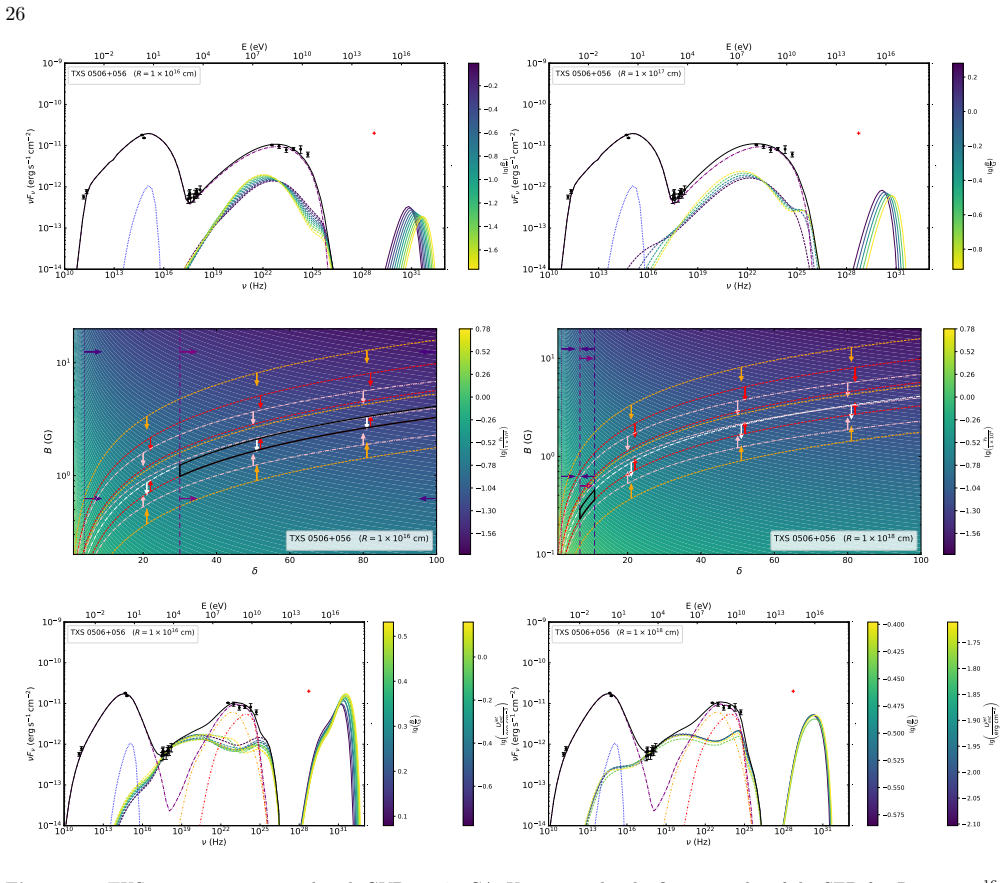
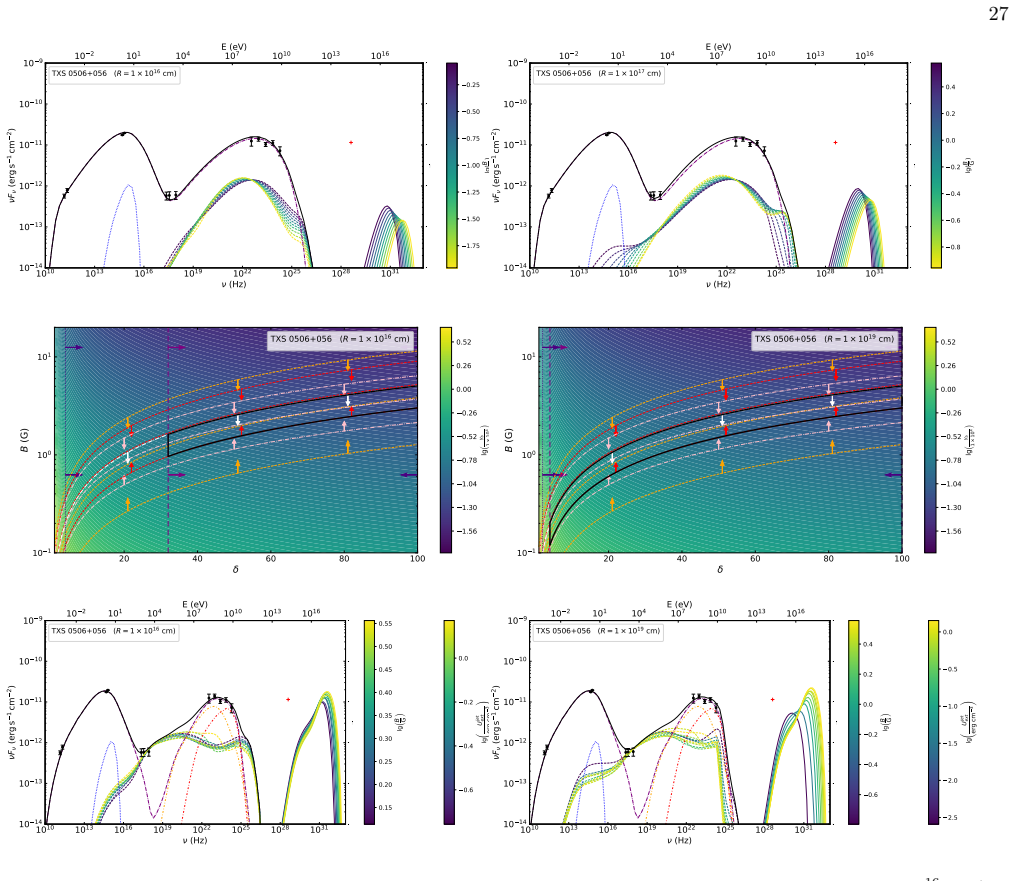
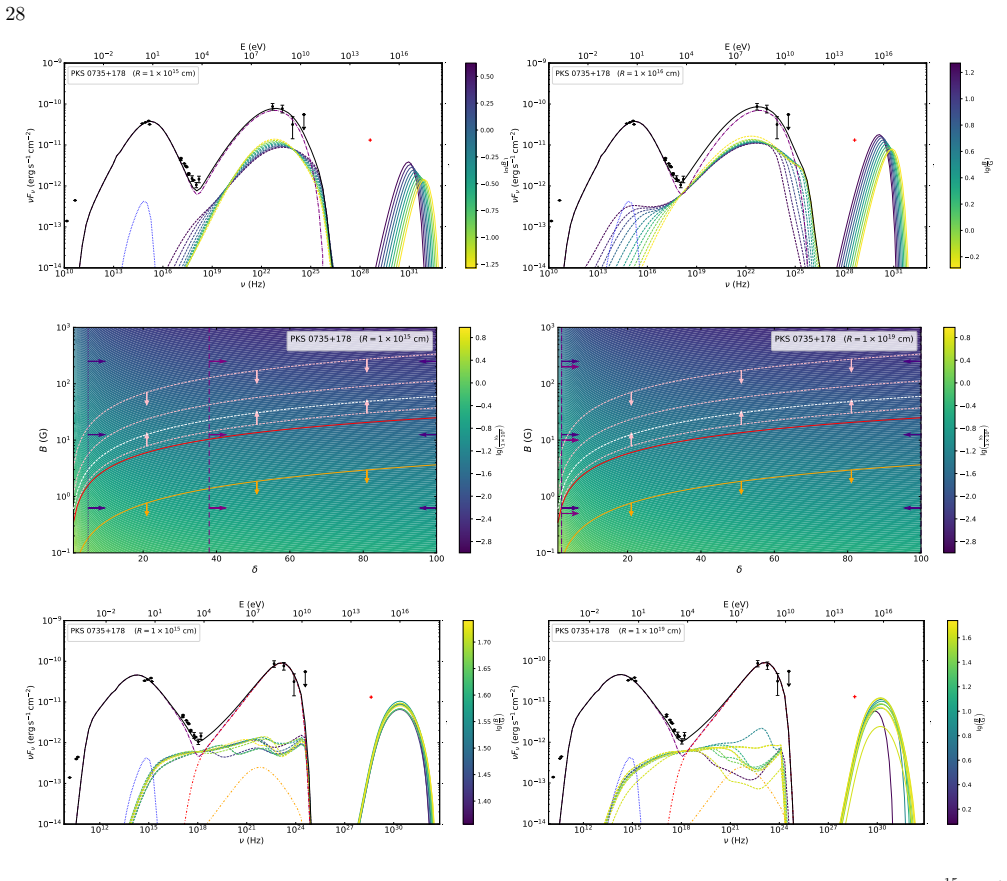
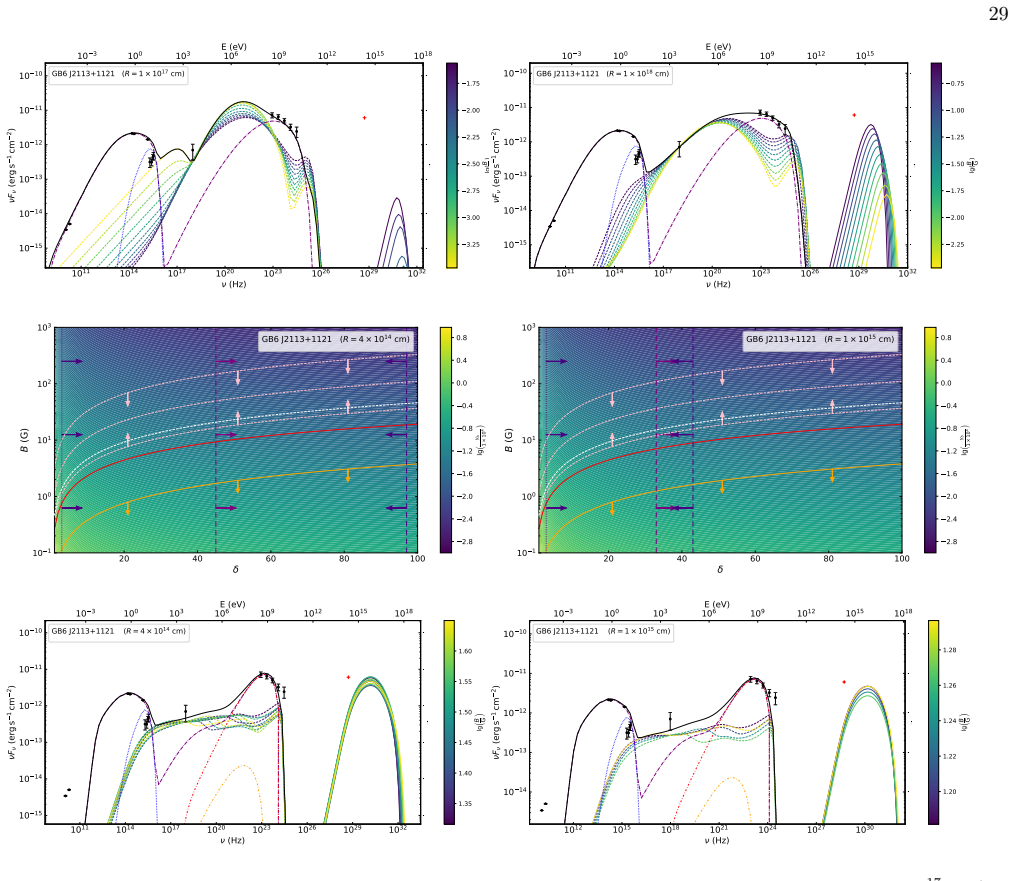
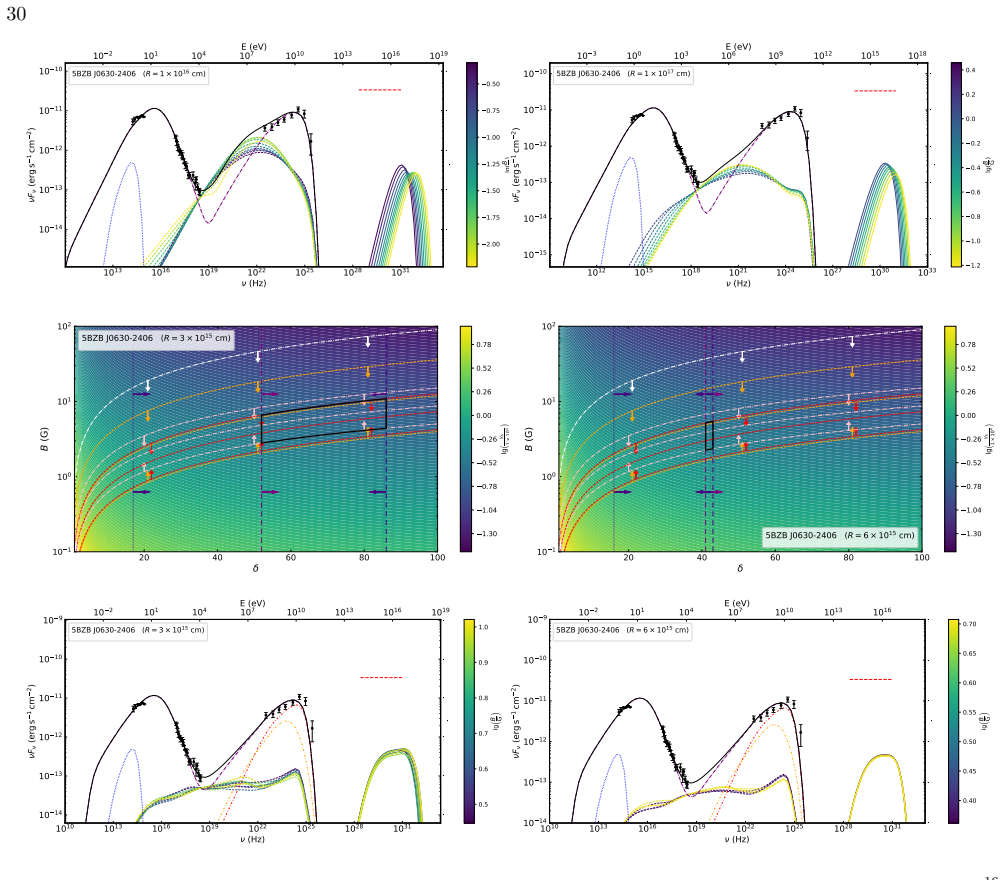
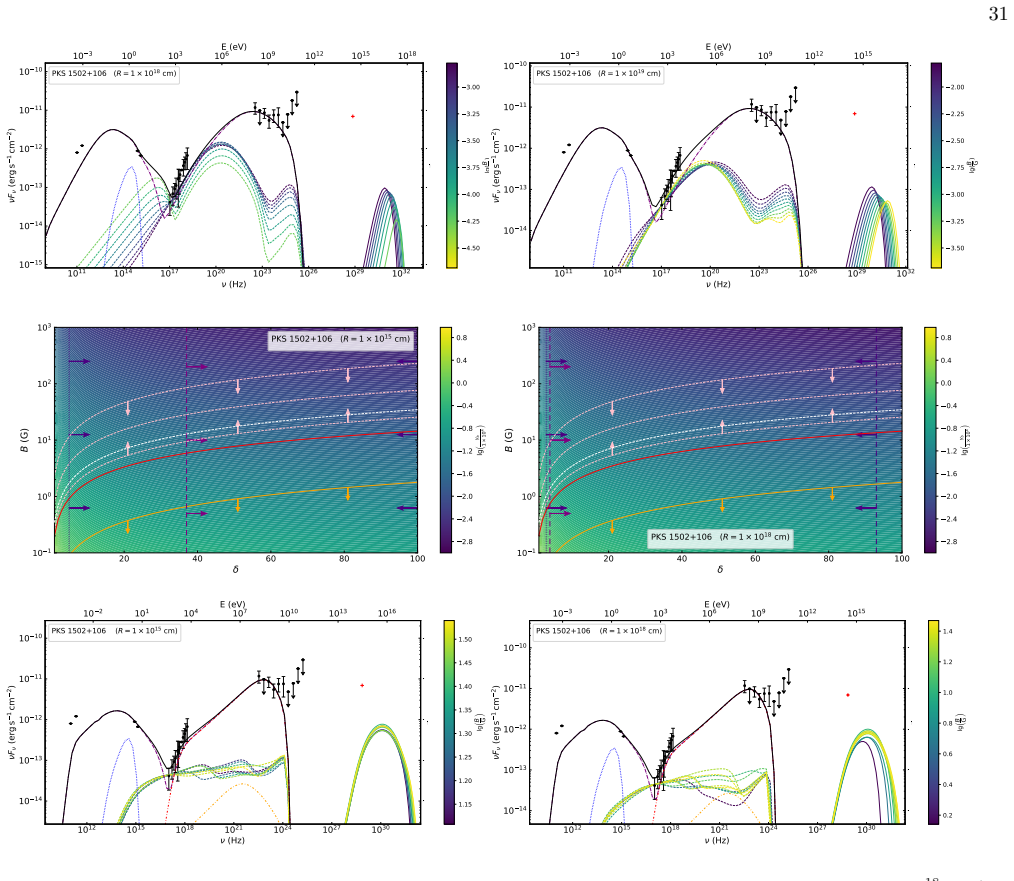
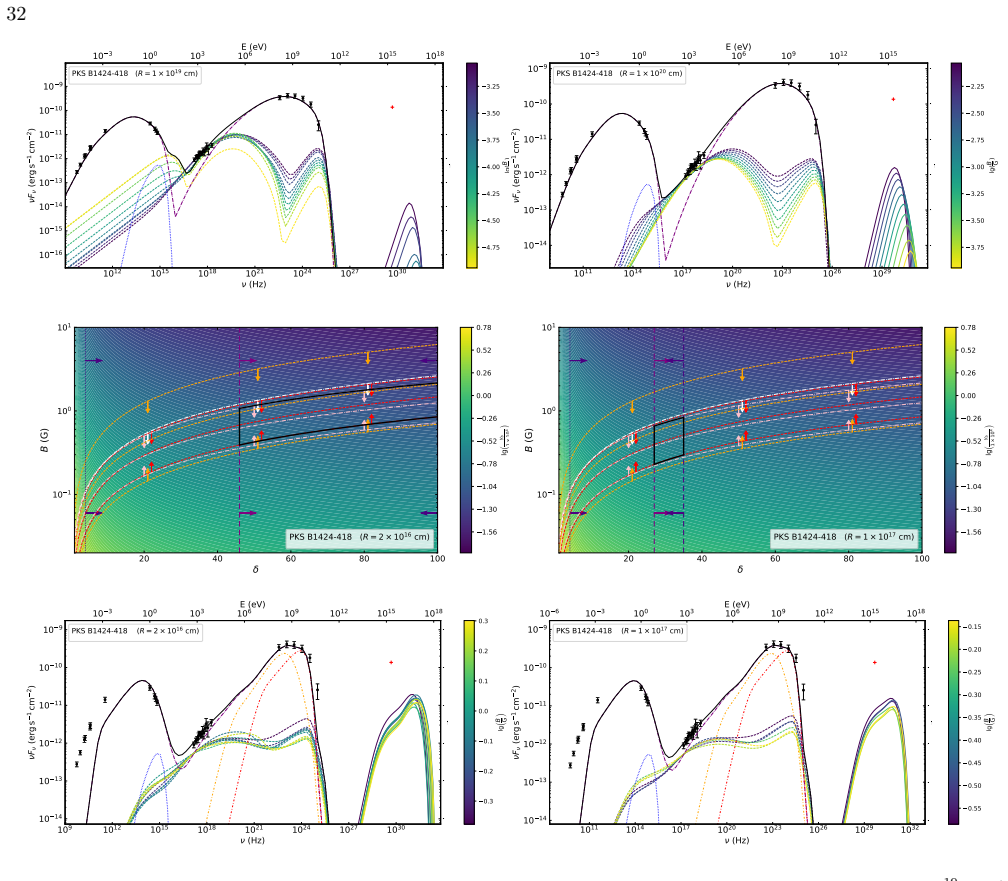
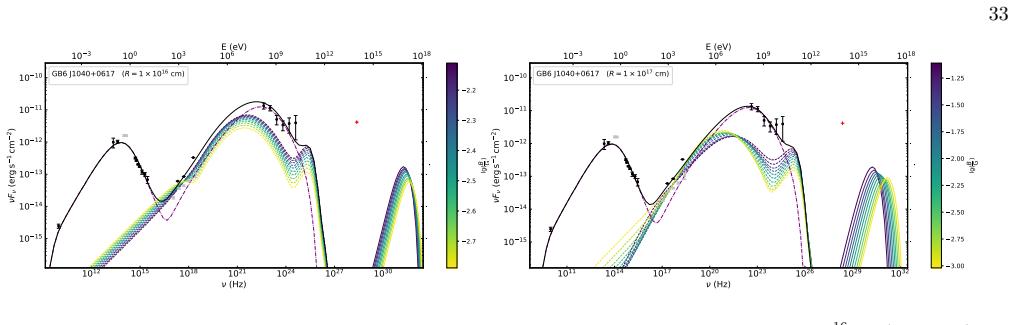
read the original abstract
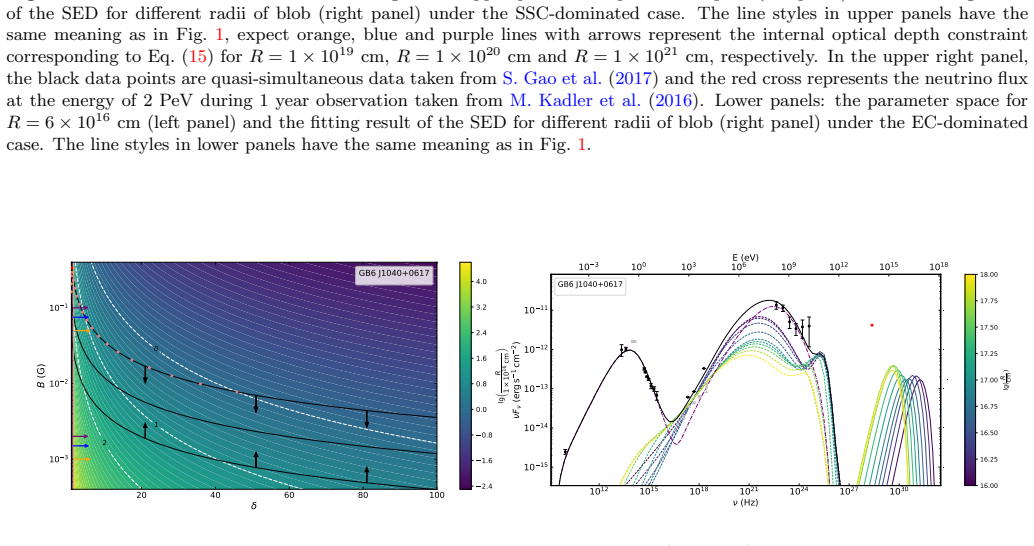
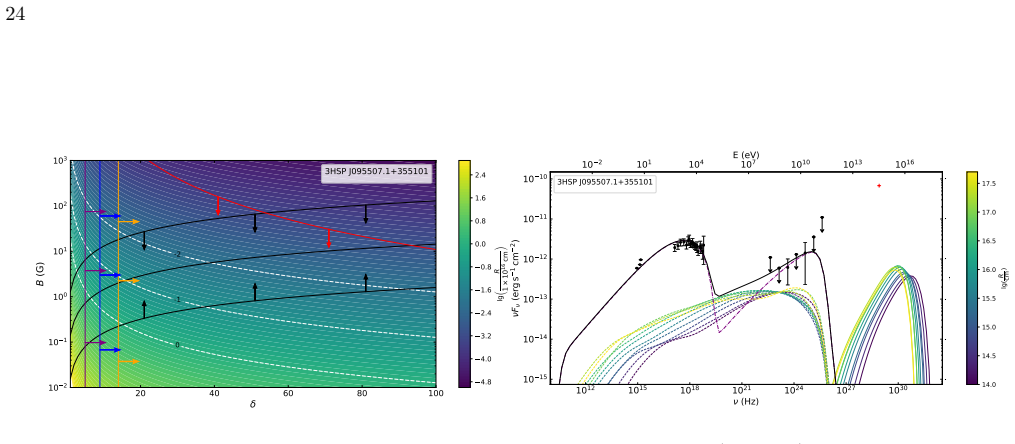
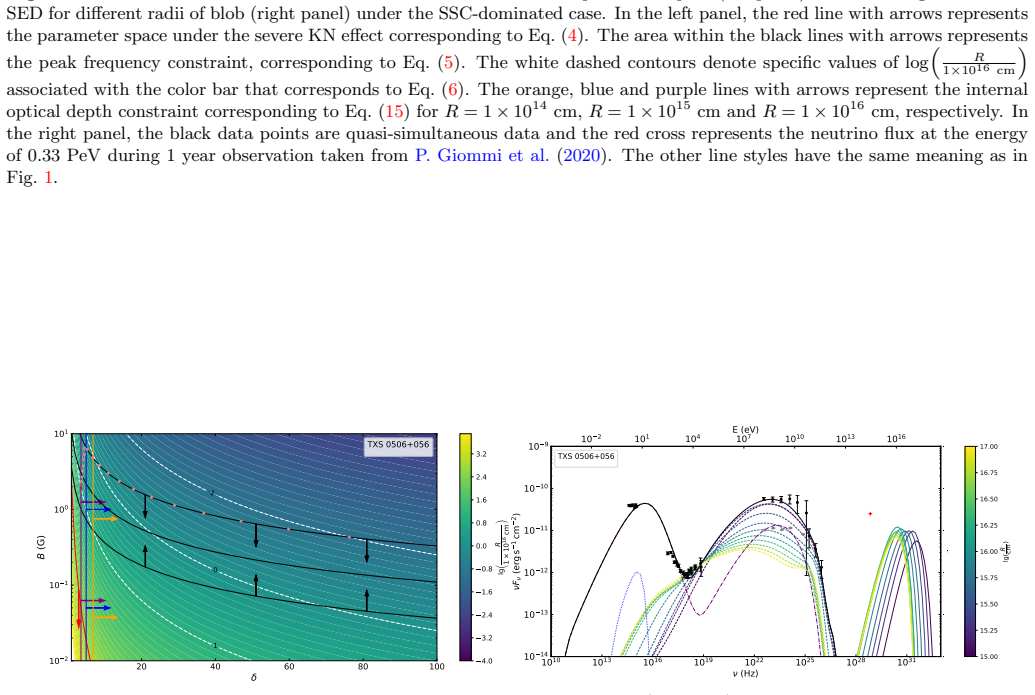
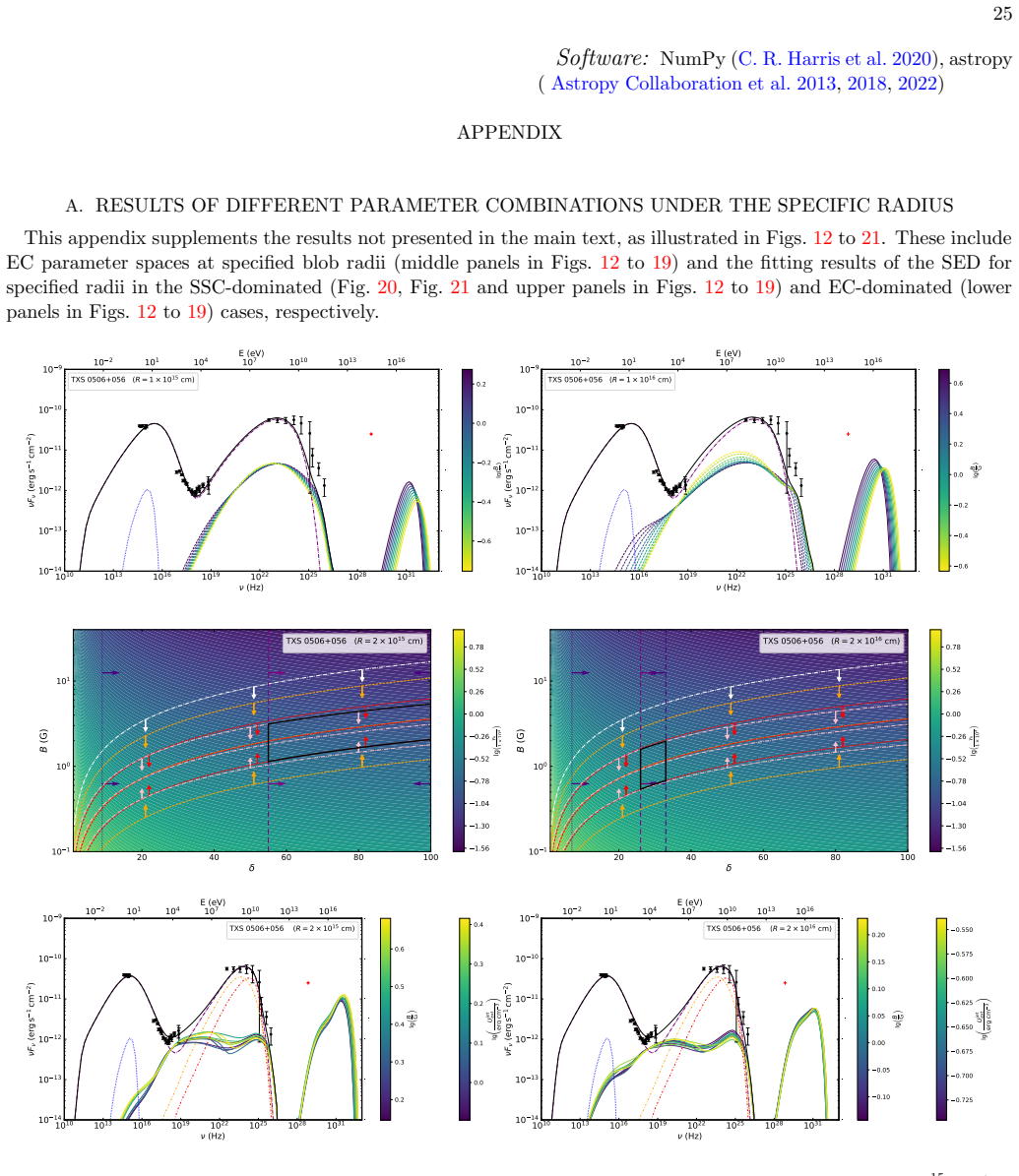
The origin of extragalactic high-energy neutrinos remains a major mystery in astrophysics, with blazars as leading candidate sources. The widely adopted one-zone leptohadronic jet model, however, faces severe challenges from stringent X-ray observational constraints. In this work, we present an analytical approach that derives the maximum neutrino flux as a function of the observed X-ray flux and the corresponding physical parameters attainable within the one-zone leptohadronic framework. Applying this approach to a sample of neutrino candidate blazars, we further perform numerical modeling and find agreement between analytical and numerical results. Both approaches consistently show that the model-predicted neutrino fluxes do not significantly exceed those obtained in previous one-zone studies and remain below the flux levels inferred from IceCube observations, suggesting that the one-zone scenario alone is unlikely to fully account for high-energy neutrino-blazar associations. This highlights the importance of considering multi-zone models or alternative production sites (e.g., jet base, hot corona) to better explain high-energy neutrino origins in blazars.
Editorial analysis
A structured set of objections, weighed in public.
Referee Report
Summary. The manuscript derives an analytical upper bound on the neutrino flux from blazars in the one-zone leptohadronic model, expressed as a function of the observed X-ray flux and attainable physical parameters (magnetic field, Doppler factor, particle densities). It applies the bound to a sample of neutrino-candidate blazars, performs numerical modeling on those sources, and reports agreement between the two approaches. Both indicate that predicted neutrino fluxes remain consistent with prior one-zone studies and below IceCube-inferred levels, leading to the conclusion that the one-zone scenario alone is unlikely to explain high-energy neutrino-blazar associations.
Significance. If the bound is correctly derived and the attainable-parameter premise holds, the work supplies a practical, observationally grounded constraint that quantifies the tension between X-ray limits and neutrino production in single-zone leptohadronic jets. The explicit agreement between the analytical expression and numerical results on real sources is a methodological strength that increases the result's utility for future modeling.
major comments (2)
- [Analytical derivation and parameter selection (likely §3)] The central claim that the derived maximum is attainable within a single emission zone without violating other multi-wavelength constraints rests on the choice of parameter values; the manuscript should explicitly demonstrate, for at least one source, that the optimizing values (B, δ, n_p, etc.) simultaneously satisfy the observed SED shape outside the X-ray band.
- [Comparison of analytical and numerical results (likely §4)] The abstract and main text state that analytical and numerical results agree, yet no quantitative metric (fractional difference, χ², or propagated uncertainty on the neutrino flux) is provided; without this, the robustness of the bound against parameter variations cannot be assessed.
minor comments (2)
- [Throughout] Notation for the maximum neutrino flux (e.g., Φ_ν^max) should be introduced once and used consistently; currently the abstract and body appear to switch between descriptive phrases and symbols.
- [Application to candidate sources] A short table listing the adopted parameter ranges for the analytical bound (B, δ, etc.) and the corresponding X-ray flux values for the sample sources would improve readability.
Simulated Author's Rebuttal
We thank the referee for their constructive comments and the recommendation for minor revision. We address the points below.
read point-by-point responses
-
Referee: [Analytical derivation and parameter selection (likely §3)] The central claim that the derived maximum is attainable within a single emission zone without violating other multi-wavelength constraints rests on the choice of parameter values; the manuscript should explicitly demonstrate, for at least one source, that the optimizing values (B, δ, n_p, etc.) simultaneously satisfy the observed SED shape outside the X-ray band.
Authors: We agree that an explicit demonstration is valuable to support the attainability of the maximum neutrino flux. In the revised version of the manuscript, we will add a subsection or appendix showing, for one representative source such as TXS 0506+056, that the parameter set (including B, δ, and particle densities) used to achieve the maximum neutrino flux also reproduces the observed multi-wavelength SED outside the X-ray band, thereby satisfying the one-zone model constraints. revision: yes
-
Referee: [Comparison of analytical and numerical results (likely §4)] The abstract and main text state that analytical and numerical results agree, yet no quantitative metric (fractional difference, χ², or propagated uncertainty on the neutrino flux) is provided; without this, the robustness of the bound against parameter variations cannot be assessed.
Authors: We concur that providing a quantitative metric would enhance the assessment of agreement. We will revise the manuscript to include the fractional differences between the analytical upper bounds and the numerical neutrino flux predictions for the sources in our sample, as well as any relevant uncertainties from parameter variations. revision: yes
Circularity Check
No significant circularity
full rationale
The central derivation expresses the maximum neutrino flux as an analytical function of directly observed X-ray flux together with physical parameters attainable inside the one-zone leptohadronic framework. This supplies an external observational anchor rather than defining the neutrino quantity in terms of itself or fitting it to neutrino data. Numerical modeling on candidate sources is used only for confirmation and does not alter the bound. No self-citation chain is invoked to justify the uniqueness of the bound, and the conclusion that one-zone predictions remain below IceCube levels follows from the X-ray constraint without reduction to the target result.
Axiom & Free-Parameter Ledger
axioms (1)
- domain assumption The one-zone leptohadronic jet model provides a complete description of the relevant emission processes in blazars.
Forward citations
Cited by 1 Pith paper
-
Locating the Production Sites of High-Energy Neutrinos in Blazar Jets
Efficient neutrino production requires an external radiation field stronger than the magnetic field near the broad-line region, but this conflicts with single-zone broadband emission, implying the neutrino site must b...
Reference graph
Works this paper leans on
-
[1]
G., Ackermann, M., Adams, J., et al
Aartsen, M. G., Ackermann, M., Adams, J., et al. 2017, ApJ, 849, 67, doi: 10.3847/1538-4357/aa8dfb
-
[2]
G., Ackermann, M., Adams, J., et al
Aartsen, M. G., Ackermann, M., Adams, J., et al. 2020, PhRvL, 124, 051103, doi: 10.1103/PhysRevLett.124.051103
-
[3]
2023, ApJS, 269, 25, doi: 10.3847/1538-4365/acfa95
Abbasi, R., Ackermann, M., Adams, J., et al. 2023, ApJS, 269, 25, doi: 10.3847/1538-4365/acfa95
-
[4]
A., Ackermann, M., Agudo, I., et al
Abdo, A. A., Ackermann, M., Agudo, I., et al. 2010, ApJ, 716, 30, doi: 10.1088/0004-637X/716/1/30
-
[5]
Adelman-McCarthy, J. K., Ag¨ ueros, M. A., Allam, S. S., et al. 2008, ApJS, 175, 297, doi: 10.1086/524984
-
[6]
2023, Galaxies, 11, 117, doi: 10.3390/galaxies11060117
Aguilar-Ruiz, E., Galv´ an-G´ amez, A., & Fraija, N. 2023, Galaxies, 11, 117, doi: 10.3390/galaxies11060117
-
[7]
Aharonian, F. A. 2000, NewA, 5, 377, doi: 10.1016/S1384-1076(00)00039-7
-
[8]
A., Atoian, A
Aharonian, F. A., Atoian, A. M., & Nagapetian, A. M. 1983, Astrofizika, 19, 323
1983
-
[9]
P., Alexandroff, R., Allende Prieto, C., et al
Ahn, C. P., Alexandroff, R., Allende Prieto, C., et al. 2012, ApJS, 203, 21, doi: 10.1088/0067-0049/203/2/21
-
[10]
2017, PhRvD, 96, 082001, doi: 10.1103/PhysRevD.96.082001
Albert, A., Andr´ e, M., Anghinolfi, M., et al. 2017, PhRvD, 96, 082001, doi: 10.1103/PhysRevD.96.082001
-
[11]
2020, ApJ, 892, 92, doi: 10.3847/1538-4357/ab7afb
Albert, A., Andr´ e, M., Anghinolfi, M., et al. 2020, ApJ, 892, 92, doi: 10.3847/1538-4357/ab7afb
-
[12]
Allakhverdyan, V. A., Avrorin, A. D., Avrorin, A. V., et al. 2024, MNRAS, 527, 8784, doi: 10.1093/mnras/stad3653
-
[13]
Anchordoqui, L. A. 2019, PhR, 801, 1, doi: 10.1016/j.physrep.2019.01.002
-
[14]
Ansoldi, S., Antonelli, L. A., Arcaro, C., et al. 2018, ApJL, 863, L10, doi: 10.3847/2041-8213/aad083 Astropy Collaboration, Robitaille, T. P., Tollerud, E. J., et al. 2013, A&A, 558, A33, doi: 10.1051/0004-6361/201322068 Astropy Collaboration, Price-Whelan, A. M., Sip˝ ocz, B. M., et al. 2018, AJ, 156, 123, doi: 10.3847/1538-3881/aabc4f Astropy Collabora...
-
[15]
Bennett, C. L., Larson, D., Weiland, J. L., & Hinshaw, G. 2014, ApJ, 794, 135, doi: 10.1088/0004-637X/794/2/135
-
[16]
Bhowmick, S., Ghosh, D., & Sachdeva, D. 2023, JCAP, 2023, 039, doi: 10.1088/1475-7516/2023/07/039 B la˙ zejowski, M., Sikora, M., Moderski, R., & Madejski, G. M. 2000, ApJ, 545, 107, doi: 10.1086/317791
-
[17]
2022, ApJL, 933, L43, doi: 10.3847/2041-8213/ac7d5b
Buson, S., Tramacere, A., Pfeiffer, L., et al. 2022, ApJL, 933, L43, doi: 10.3847/2041-8213/ac7d5b
-
[18]
Kinman, T. D., & Serkowski, K. 1974, ApJL, 190, L101, doi: 10.1086/181516
-
[19]
2019, in International Cosmic Ray Conference, Vol
Carver, T. 2019, in International Cosmic Ray Conference, Vol. 36, 36th International Cosmic Ray Conference (ICRC2019), 851, doi: 10.22323/1.358.0851
-
[20]
2019, MNRAS, 483, L12, doi: 10.1093/mnrasl/sly210
Cerruti, M., Zech, A., Boisson, C., et al. 2019, MNRAS, 483, L12, doi: 10.1093/mnrasl/sly210
-
[21]
2015, MNRAS, 448, 910, doi: 10.1093/mnras/stu2691
Cerruti, M., Zech, A., Boisson, C., & Inoue, S. 2015, MNRAS, 448, 910, doi: 10.1093/mnras/stu2691
-
[22]
2026, ApJS, 282, 22, doi: 10.3847/1538-4365/ae1d5f
Cerruti, M., Rudolph, A., Petropoulou, M., et al. 2026, ApJS, 282, 22, doi: 10.3847/1538-4365/ae1d5f
-
[23]
2007, ApJ, 660, 117, doi: 10.1086/511969
Meier, D. 2007, ApJ, 660, 117, doi: 10.1086/511969
-
[24]
2021, ApJ, 910, 100, doi: 10.3847/1538-4357/abe4cd
Das, S., Gupta, N., & Razzaque, S. 2021, ApJ, 910, 100, doi: 10.3847/1538-4357/abe4cd
-
[25]
2022, A&A, 668, A146, doi: 10.1051/0004-6361/202244653 de Gouveia Dal Pino, E
Das, S., Gupta, N., & Razzaque, S. 2022, A&A, 668, A146, doi: 10.1051/0004-6361/202244653 de Gouveia Dal Pino, E. M., Rodr´ ıguez-Ram´ ırez, J. C., & del Valle, M. V. 2025, MNRAS, doi: 10.1093/mnras/staf251 De Marchi, A. G., Granelli, A., Nava, J., & Sala, F. 2025a, PhRvD, 112, 043042, doi: 10.1103/lwqt-p598 De Marchi, A. G., Granelli, A., Nava, J., & Sal...
-
[26]
2024, PASA, 41, e062, doi: 10.1017/pasa.2024.54
Deng, C.-B., Shi, Y.-Y., Song, Y.-J., et al. 2024, PASA, 41, e062, doi: 10.1017/pasa.2024.54
-
[27]
Drury, L. O. 1983, Reports on Progress in Physics, 46, 973, doi: 10.1088/0034-4885/46/8/002
-
[28]
A., Suvorova, O., & Baikal-GVD Collaboration
Dzhilkibaev, Z. A., Suvorova, O., & Baikal-GVD Collaboration. 2021, The Astronomer’s Telegram, 15112, 1
2021
-
[29]
2021, The Astronomer’s Telegram, 15132, 1
Falomo, R., Treves, A., & Paiano, S. 2021, The Astronomer’s Telegram, 15132, 1
2021
-
[30]
Fang, K., Gallagher, J. S., & Halzen, F. 2024, Nature Astronomy, 8, 241, doi: 10.1038/s41550-023-02128-0
-
[31]
Ferrer, F., Herrera, G., & Ibarra, A. 2023, JCAP, 2023, 057, doi: 10.1088/1475-7516/2023/05/057 Fichet de Clairfontaine, G., Buson, S., Pfeiffer, L., et al. 2023, ApJL, 958, L2, doi: 10.3847/2041-8213/ad0644
-
[32]
2025, ApJ, 986, 104, doi: 10.3847/1538-4357/add267
Winter, W. 2025, ApJ, 986, 104, doi: 10.3847/1538-4357/add267
-
[33]
2020, ApJ, 893, 162, doi: 10.3847/1538-4357/ab8307
Franckowiak, A., Garrappa, S., Paliya, V., et al. 2020, ApJ, 893, 162, doi: 10.3847/1538-4357/ab8307
-
[34]
2019, Nature Astronomy, 3, 88, doi: 10.1038/s41550-018-0610-1
Gao, S., Fedynitch, A., Winter, W., & Pohl, M. 2019, Nature Astronomy, 3, 88, doi: 10.1038/s41550-018-0610-1
-
[35]
2017, ApJ, 843, 109, doi: 10.3847/1538-4357/aa7754
Gao, S., Pohl, M., & Winter, W. 2017, ApJ, 843, 109, doi: 10.3847/1538-4357/aa7754
-
[36]
2019, ApJ, 880, 103, doi: 10.3847/1538-4357/ab2ada 35
Garrappa, S., Buson, S., Franckowiak, A., et al. 2019, ApJ, 880, 103, doi: 10.3847/1538-4357/ab2ada 35
-
[37]
2008, MNRAS, 387, 1669, doi: 10.1111/j.1365-2966.2008.13360.x
Ghisellini, G., & Tavecchio, F. 2008, MNRAS, 387, 1669, doi: 10.1111/j.1365-2966.2008.13360.x
-
[38]
Ghisellini, G., Tavecchio, F., Foschini, L., et al. 2010, MNRAS, 402, 497, doi: 10.1111/j.1365-2966.2009.15898.x
-
[39]
Ghisellini, G., Tavecchio, F., Foschini, L., et al. 2012, MNRAS, 425, 1371, doi: 10.1111/j.1365-2966.2012.21554.x
-
[40]
2020, A&A, 640, L4, doi: 10.1051/0004-6361/202038423
Giommi, P., Padovani, P., Oikonomou, F., et al. 2020, A&A, 640, L4, doi: 10.1051/0004-6361/202038423
-
[41]
2013, MNRAS, 431, 1914, doi: 10.1093/mnras/stt305
Giommi, P., Padovani, P., & Polenta, G. 2013, MNRAS, 431, 1914, doi: 10.1093/mnras/stt305
-
[42]
2023, in The Encyclopedia of Cosmology
Halzen, F., & Kheirandish, A. 2023, in The Encyclopedia of Cosmology. Set 2: Frontiers in Cosmology. Volume 2: Neutrino Physics and Astrophysics, ed. F. W. Stecker, 107–235, doi: 10.1142/9789811282645 0005
-
[43]
Harris, C. R., Millman, K. J., van der Walt, S. J., et al. 2020, Nature, 585, 357, doi: 10.1038/s41586-020-2649-2
-
[44]
Hayashida, M., Madejski, G. M., Nalewajko, K., et al. 2012, ApJ, 754, 114, doi: 10.1088/0004-637X/754/2/114
-
[45]
2024, MNRAS, 528, 7587, doi: 10.1093/mnras/stae522 IceCube Collaboration
Hu, H.-B., Wang, H.-Q., Xue, R., Peng, F.-K., & Wang, Z.-R. 2024, MNRAS, 528, 7587, doi: 10.1093/mnras/stae522 IceCube Collaboration. 2013, Science, 342, 1242856, doi: 10.1126/science.1242856 IceCube Collaboration. 2019, GRB Coordinates Network, 25913, 1 IceCube Collaboration. 2021, GRB Coordinates Network, 31191, 1 IceCube Collaboration, Aartsen, M. G., ...
-
[46]
2020, ApJL, 891, L33, doi: 10.3847/2041-8213/ab7661
Inoue, Y., Khangulyan, D., & Doi, A. 2020, ApJL, 891, L33, doi: 10.3847/2041-8213/ab7661
-
[47]
2019, ApJ, 880, 40, doi: 10.3847/1538-4357/ab2715
Inoue, Y., Khangulyan, D., Inoue, S., & Doi, A. 2019, ApJ, 880, 40, doi: 10.3847/1538-4357/ab2715
-
[48]
2025, ApJ, 979, 1, doi: 10.3847/1538-4357/ad9f40
Ji, S., Wang, Z., & Zheng, D. 2025, ApJ, 979, 1, doi: 10.3847/1538-4357/ad9f40
-
[49]
2024, ApJL, 965, L2, doi: 10.3847/2041-8213/ad36b9
Jiang, X., Liao, N.-H., Wang, Y.-B., et al. 2024, ApJL, 965, L2, doi: 10.3847/2041-8213/ad36b9
-
[50]
2025, ApJ, 986, 110, doi: 10.3847/1538-4357/add1b5
Jiang, X., Liao, N.-H., Xue, R., Fan, Y.-Z., & Wei, D.-M. 2025, ApJ, 986, 110, doi: 10.3847/1538-4357/add1b5
-
[51]
2016, Nature Physics, 12, 807, doi: 10.1038/nphys3715
Kadler, M., Krauß, F., Mannheim, K., et al. 2016, Nature Physics, 12, 807, doi: 10.1038/nphys3715
-
[52]
2024, JCAP, 2024, 006, doi: 10.1088/1475-7516/2024/07/006 Katarzy´ nski, K., Sol, H., & Kus, A
Karavola, D., & Petropoulou, M. 2024, JCAP, 2024, 006, doi: 10.1088/1475-7516/2024/07/006 Katarzy´ nski, K., Sol, H., & Kus, A. 2001, A&A, 367, 809, doi: 10.1051/0004-6361:20000538
-
[53]
2018, ApJ, 864, 84, doi: 10.3847/1538-4357/aad59a
Keivani, A., Murase, K., Petropoulou, M., et al. 2018, ApJ, 864, 84, doi: 10.3847/1538-4357/aad59a
-
[54]
Kelner, S. R., & Aharonian, F. A. 2008, PhRvD, 78, 034013, doi: 10.1103/PhysRevD.78.034013
-
[55]
Kiehlmann, S., Hovatta, T., Kadler, M., Max-Moerbeck, W., & Readhead, A. C. S. 2019, The Astronomer’s Telegram, 12996, 1
2019
-
[56]
2025, ApJ, 995, 38, doi: 10.3847/1538-4357/ae1cc2
Lian, J.-S., Wang, Z.-R., & Zhang, J. 2025, ApJ, 995, 38, doi: 10.3847/1538-4357/ae1cc2
-
[57]
2022, ApJL, 932, L25, doi: 10.3847/2041-8213/ac756f
Liao, N.-H., Sheng, Z.-F., Jiang, N., et al. 2022, ApJL, 932, L25, doi: 10.3847/2041-8213/ac756f
-
[58]
2019, PhRvD, 99, 063008, doi: 10.1103/PhysRevD.99.063008
Liu, R.-Y., Wang, K., Xue, R., et al. 2019, PhRvD, 99, 063008, doi: 10.1103/PhysRevD.99.063008
-
[59]
2020, PhRvD, 102, 083028, doi: 10.1103/PhysRevD.102.083028
Liu, R.-Y., Xi, S.-Q., & Wang, X.-Y. 2020, PhRvD, 102, 083028, doi: 10.1103/PhysRevD.102.083028
-
[60]
Marscher, A. P., & Gear, W. K. 1985, ApJ, 298, 114, doi: 10.1086/163592
-
[61]
2015, Ap&SS, 357, 141, doi: 10.1007/s10509-015-2372-x
Maselli, A., Massaro, F., D’Abrusco, R., et al. 2015, Ap&SS, 357, 141, doi: 10.1007/s10509-015-2372-x
-
[62]
2013, MNRAS, 434, 2684, doi: 10.1093/mnras/stt1210
Mastichiadis, A., Petropoulou, M., & Dimitrakoudis, S. 2013, MNRAS, 434, 2684, doi: 10.1093/mnras/stt1210
-
[63]
Mondal, S. K., Das, S., & Gupta, N. 2023, ApJ, 948, 75, doi: 10.3847/1538-4357/acc46b
-
[64]
2022, ApJL, 941, L17, doi: 10.3847/2041-8213/aca53c
Murase, K. 2022, ApJL, 941, L17, doi: 10.3847/2041-8213/aca53c
-
[65]
2012, A&A, 547, A1, doi: 10.1051/0004-6361/201219848
Nilsson, K., Pursimo, T., Villforth, C., et al. 2012, A&A, 547, A1, doi: 10.1051/0004-6361/201219848
-
[66]
2021, JCAP, 2021, 082, doi: 10.1088/1475-7516/2021/10/082
Oikonomou, F., Petropoulou, M., Murase, K., et al. 2021, JCAP, 2021, 082, doi: 10.1088/1475-7516/2021/10/082
-
[67]
2025, A&A, 695, A266, doi: 10.1051/0004-6361/202452143
Omeliukh, A., Garrappa, S., Fallah Ramazani, V., et al. 2025, A&A, 695, A266, doi: 10.1051/0004-6361/202452143
-
[68]
2025, ApJ, 980, 19, doi: 10.3847/1538-4357/ada3bc
Ouyang, Z., Xiao, H., Manganaro, M., et al. 2025, ApJ, 980, 19, doi: 10.3847/1538-4357/ada3bc
-
[69]
2019, MNRAS, 484, L104, doi: 10.1093/mnrasl/slz011
Padovani, P., Oikonomou, F., Petropoulou, M., Giommi, P., & Resconi, E. 2019, MNRAS, 484, L104, doi: 10.1093/mnrasl/slz011
-
[70]
2022, MNRAS, 510, 2671, doi: 10.1093/mnras/stab3630
Padovani, P., Giommi, P., Falomo, R., et al. 2022, MNRAS, 510, 2671, doi: 10.1093/mnras/stab3630
-
[71]
2020, MNRAS, 495, L108, doi: 10.1093/mnrasl/slaa056
Paiano, S., Falomo, R., Padovani, P., et al. 2020, MNRAS, 495, L108, doi: 10.1093/mnrasl/slaa056
-
[72]
2018, ApJL, 854, L32, doi: 10.3847/2041-8213/aaad5e
Paiano, S., Falomo, R., Treves, A., & Scarpa, R. 2018, ApJL, 854, L32, doi: 10.3847/2041-8213/aaad5e
-
[73]
S., B¨ ottcher, M., Olmo-Garc´ ıa, A., et al
Paliya, V. S., B¨ ottcher, M., Olmo-Garc´ ıa, A., et al. 2020, ApJ, 902, 29, doi: 10.3847/1538-4357/abb46e
-
[74]
B., Novoseltsev, Y
Petkov, V. B., Novoseltsev, Y. F., Novoseltseva, R. V., & Baksan Underground Scintillation Telescope Group. 2021, The Astronomer’s Telegram, 15143, 1 36
2021
-
[75]
2024, A&A, 685, A110, doi: 10.1051/0004-6361/202347809
Petropoulou, M., Mastichiadis, A., Vasilopoulos, G., et al. 2024, A&A, 685, A110, doi: 10.1051/0004-6361/202347809
-
[76]
2020a, ApJ, 899, 113, doi: 10.3847/1538-4357/aba8a0
Petropoulou, M., Oikonomou, F., Mastichiadis, A., et al. 2020a, ApJ, 899, 113, doi: 10.3847/1538-4357/aba8a0
-
[77]
2017, MNRAS, 464, 2213, doi: 10.1093/mnras/stw2453
Petropoulou, M., Vasilopoulos, G., & Giannios, D. 2017, MNRAS, 464, 2213, doi: 10.1093/mnras/stw2453
-
[78]
2020b, ApJ, 891, 115, doi: 10.3847/1538-4357/ab76d0
Petropoulou, M., Murase, K., Santander, M., et al. 2020b, ApJ, 891, 115, doi: 10.3847/1538-4357/ab76d0
-
[79]
2024, MNRAS, 527, 8746, doi: 10.1093/mnras/stad3804
Prince, R., Das, S., Gupta, N., Majumdar, P., & Czerny, B. 2024, MNRAS, 527, 8746, doi: 10.1093/mnras/stad3804
-
[80]
Pursimo, T., Ojha, R., Jauncey, D. L., et al. 2013, ApJ, 767, 14, doi: 10.1088/0004-637X/767/1/14
discussion (0)
Sign in with ORCID, Apple, or X to comment. Anyone can read and Pith papers without signing in.